An October 29, 1777 Estate Sale

Did you know that the State Archives in Raleigh is the repository of the original copies of some estate sale records dating back to the 1700s when Cabarrus County was part of Mecklenburg County, North Carolina? These fascinating records for persons known to have lived in the area that later became Cabarrus County are also accessible on microfilm in the local history room at the main branch of the Cabarrus County Public Library in Concord, NC.

John Morrison’s Estate Sale

My great-great-great-great-grandfather, John Morrison, died in 1777 in old Mecklenburg County. A native of Campbeltown, Scotland, he lived his last thirteen years in the vicinity of the present-day Cabarrus-Mecklenburg County line. His estate papers provide a record not only of his possessions but also the names of many local people. I’m very proud to say that he was a farmer.

Robert Harris, Jr. served as clerk at John’s estate sale on October 29, 1777 – exactly 240 years ago today. Mr. Harris made note of every item sold, who bought it, and how many pounds, pence, or shillings they paid.

Buyers

The buyers were James Moore, Joseph Robb, Evan Shelby, Isaac Sellers, John Robinet, John Murphy, Francis Miller, William Driskill, James Alexander, James McCall, John and James McGinty, Joseph Bigger, Hugh Kimmons, Archibald McCurdy, John Springs, John Carothers, Joseph Calbreath, Alexander Allen, Benjamin and Robert Cochran, Steven Pritchet, Peter Borris, Robert Harris, James Stafford, John Ross, Alexander Finley, James Finney, Hector McClain, Samuel Montgomery, William Wylie, and John Finley.

Most of the surnames listed above are no longer found in our community because many families moved west in the 1790s and early 1800s. Some of the buyers lived in the area that remained in Mecklenburg County after the formation of Cabarrus in 1792, so some of the names are probably from the Mint Hill area.

Summary of Items Sold at Estate Sale

Items sold at the estate sale included eight horses; 19 sheep; 25 head of cattle; 17 hogs and a parcel of pigs; three hives of bees; 17 geese and ganders; 25 pounds of wool; a parcel of books; a great coat; two straight coats and jackets; one pair of blue britches; a pair of old buckskin britches; and a fur hat.

Also, four saddles; five bells and collars; five other collars; six bridles; two sets of horse gears; an “M” branding iron; three augurs; a drawing knife; nailing and stone hammers; a broadax; three weeding hoes; two maulrings; a wedge; a clivish; a sprouting hoe; a mattock; two falling axes; three spinning wheels; two horse trees and hangings; a cutting knife and stone; a sythe and cradle; four sickles; a flax brake; a pair of wool cards; and a pair of cotton cards.

Also, barrels for flour, rice, beef, and salt; a tapper vessel; two cedar churns; oak and walnut chests; two smoothing irons; a looking glass; one whiskey keg; and various other tools, household items, and pieces of furniture.

Other items included 6.5 pounds of iron and 14.5 pounds of steel. Steel as we know it today had not yet been developed. In 1777, steel was the name for sharpening rods used to sharpen knives and other cutting edges.

Half a wagon?

The most puzzling record in John Morrison’s estate papers is that John Springs bought half a wagon and half the wagon implements. Since no one bought the other half, it has been speculated that Mr. Springs knew that John’s wife, Mary, needed the use of the wagon but also needed the proceeds from the sale of the wagon and implements. After all, Mary was a widow with seven children still at home and a baby on the way. Perhaps Mr. Springs made a verbal agreement to let Mary Morrison keep the wagon even though he paid half the value of the wagon at the estate sale.

Another possibility is that John Morrison had bought the wagon and implements from John Springs but had only paid half the bill at the time of his death. Mr. Springs, instead of saddling Mary Morrison with the additional debt of the unpaid balance chose to simply buy back that half of the wagon and implements. When Mary Morrison died in 1781, there is no mention of a wagon in her will or her estate sale.

Lots of ammunition!

Other intriguing items sold at John Morrison’s estate sale were the 17 pounds of gun powder and 55.5 pounds of lead. That’s more gun powder and lead than a farmer needed. So why did John Morrison have so much of both?

John wrote his will on August 30, 1777. By September 3, he was dead. It is speculated that he was stockpiling munitions for the patriots’ cause in the American Revolution and that he was shot by Tories, but we will never know the real story.

My sources

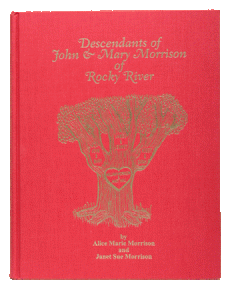
The sources I relied on for writing this blog post are as follows:  John Morrison’s Mecklenburg County estate papers on file at the State Archives of North Carolina in Raleigh, NC; What Did They Mean By That? – A Dictionary of Historical Terms for Genealogists, by Paul Drake, 1994; and Descendants of John & Mary Morrison of Rocky River, by Alice Marie Morrison and Janet Sue Morrison, 1996.
Red
The Descendants of John & Mary Morrison of Rocky River, by Alice Marie Morrison and Janet Sue Morrison

I regret that Marie and I did not know about the existence of John and Mary Morrison’s estate papers when we compiled and published Descendants of John & Mary Morrison of Rocky River in 1996.

Until my next blog post

I hope you have a good book to read. If you’re a writer, I hope you have productive writing time.

Janet

In Search of Grandma’s Chow-Chow

When I Googled “images of chow-chow,” I only found photos of chow dogs and pandas. (I’m not sure why a few panda pictures were scattered among those of dog, but that’s what I got.)  I wasn’t looking for dog pictures. I’m not talking about grandma’s lost dog. I’m talking about a condiment made up of green tomatoes, cabbage, onions, bell peppers, spices, and vinegar.

I finally found some pictures of chow-chow but, not wanting to risk breaking copyright laws, I chose not to include one in today’s post. Pictures are an important aspect of blogging, so I try to include at least one in each post.

But I digress.

Story’s inspiration

When fall came, my mother started looking for homemade chow-chow to buy. She liked to eat it along with turnip and mustard greens and black-eyed peas. That memory of my mother inspired me to write the following short story. Since it’s fewer than 1,000 words, it qualifies as flash fiction – which is something I didn’t think I was capable of writing!

The following story is pure fiction. I never knew either of my grandmothers. All names are fictitious. It’s all a bit of surprise to me. I never dreamed I’d write a story about chow-chow!

A Short Story/Flash Fiction:  “In Search of Grandma’s Chow-Chow”

Millie walked up and down the rows of tents at the farmers’ market. Her eyes quickly scanned each stall for canned homemade chow-chow. A stroke had left her mother unable to speak or write. The chow-chow recipe, which had been Millie’s grandmother’s, was trapped in her mother’s head, unable to get out.

She thought if she could find someone else’s chow-chow that tasted like her mother’s, maybe she could get the recipe. Nothing would please her more than to duplicate the special condiment that her mother liked so much.

Millie visited every farmer’s market, country store, and produce stand she found. She’d bought enough chow-chow and pickle relish in the last five years to sink a ship. Every time she came home with another jar of chow-chow, her mother’s eyes danced in anticipation.

“Maybe this will be the one, Mama,” Millie said one day as she held up the jar of chow-chow she’d bought that afternoon. Her mother smiled a lopsided smile and nodded in silence.

The next day Millie cooked pinto beans and cornbread. The latest jar of chow-chow was given a place of honor in the center of the table.

“Oh no. Not more chow-chow!” 14-year-old Darrell said. “I don’t think I can face it anymore.”

“You don’t have to eat it,” Millie said. “Just humor me and your grandmother, okay?”

Millie spooned a big helping of beans on her mother’s plate with a wedge of cornbread on the side. Then, with great fanfare, she topped the beans with a spoonful of chow-chow and put the plate in front of her mother. Millie waited expectantly, almost praying this would be “the one.”

Yet again, her mother struggled to get a spoonful of beans and chow-chow to her crooked mouth. After a few seconds of deliberate chewing, and with all eyes on her, she shook her head.

Millie slumped in her chair and let out an audible sigh. “I never thought it would be so hard to find chow-chow like Mama used to make.”

“Don’t give up,” Millie’s husband, John, said. “Maybe the next jar will be the charm.”

“I suppose you’re right,” Millie said. “I can’t give up now. Let’s drive to the mountains this Sunday to see the fall leaves. I bet I’ll find lots of good chow-chow up there.”

“It’s worth a try,” John said. “The trip might do us all good.”

The next Sunday, Millie packed a picnic lunch. The family went to the early worship service at their church before heading for the Blue Ridge Mountains. They stopped at every country store and produce stand by the side of the road. Millie left each one armed with at least one jar of chow-chow and a carefully written note giving the name and address of the person who made it.

At the last place they stopped, the shop keeper handed her a pre-printed piece of paper. “Here’s the name of the lady who made it,” he said. She folded it up without reading it and put it in the bag with the chow-chow.

The next morning, Millie lined up the new jars of chow-chow on the kitchen counter. She studied each one. She selected the jar she would open that night. When the family gathered for supper, all eyes fell on Millie’s mother. Darrell suggested that his father include in the evening’s blessing a plea asking God to let this be the last jar of chow-chow his mother would have to buy.

“God has better things to do with his time than worry about chow-chow,” John said. Darrell couldn’t help but wonder if his father secretly prayed for God to make this jar be “the one.”

Millie put a plate of greens and black-eyed peas in front of her mother and smiled. Her mother tasted the beans and chow-chow. A broad smile filled her face and she gave a slow but deliberate nod of her head.

“Eureka!” Millie shouted. She jumped up and gave her mother a big hug. Then she rushed to the kitchen counter and unfolded the note that accompanied that jar of chow-chow.

“Drum roll!” Darrell said.

“And the winner is . . .” John said.

“Marjorie Holbrooks of Shady Creek!” Millie said.

After supper, Millie took her cell phone out of her pocket and called the number on the piece of paper. “Mrs. Holbrooks?” Millie asked when a woman answered the phone. “You don’t know me, but I bought a jar of your chow-chow yesterday. It tastes just like what my mother and grandmother used to make. I wondered if you could give me the recipe.”

Mrs. Holbrooks told Millie that it was an old family recipe but she’d be happy to e-mail it to her.  Millie told Mrs. Holbrooks that it seemed like more than a coincidence that her chow-chow tasted just like the one that had been passed down in her family, too. They each named their mothers’ maiden names and grandmothers’ names only to discover a connection.

When Millie got off the phone she couldn’t wait to tell her mother about the conversation. “Guess what! Marjorie Holbrooks is the granddaughter of your Grandma Bradley’s cousin Rachel. She’s sending me the recipe tonight. It’s been passed down in her branch of the family, too.”

Millie’s mother smiled and a tear rolled down her cheek. She mouthed the words, “Small world. Thank you.”

Until my next blog post

I hope you have a good book to read. I finished reading The Last Ballad, by Wiley Cash last night and started reading The Stolen Marriage, by Diane Chamberlain. I’m listening to A Gentleman in Moscow, by Amor Towles as I can find the time. Too bad I can’t read one book and listen to another one at the same time!

The Rocky River Readers Book Club will discuss Signs in the Blood, by Vicki Lane tonight. I read it a few years ago and immediately became a fan of this North Carolina writer. If you’re looking for good southern Appalachian Mountain fiction, I suggest you read this book. It is the first in a series by Vicki Lane.

If you’re a writer, I hope you have quality writing time.

Janet

Correlation Between Writing and Azheimer’s?

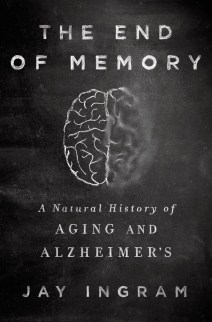
In addition to the novels I’m reading this month, I read The End of Memory: A Natural History of Aging and Alzheimer’s, by Jay Ingram. After finding a connection between writing and Alzheimer’s Disease, I decided to give this book attention in a blog post by itself.

The author, Jay Ingram, has no medical training; however, he is a science writer and was the co-host and producer of Discovery Channel Canada’s “Daily Planet” program. The book is well-documented with sources to back up his writing.

9781466887916
The End of Memory: A Natural History of Aging and Alzheimer’s, by Jay Ingram

The book gives good explanations of plaques and tangles, which are the hallmarks of Alzheimer’s. It goes into more scientific detail than I wanted to process, but it appeared to give a good overview of where Alzheimer’s knowledge stood at the time of its publication in 2014.

The more I read in the book, the more I came to realize just how complicated the research is. The cause of the disease remains elusive. Do the plaques and tangles cause Alzheimer’s? Or does Alzheimer’s cause the plaques and tangles? Why do some people with numerous plaques and tangles in their brains show no signs of having Alzheimer’s?

The End of Memory: A Natural History of Aging and Alzheimer’s gives good explanations of what is known about the disease and pulls no punches when it comes to how far we probably still are from identifying its cause. In the meantime, drugs attempt to treat the symptoms.

As a writer, I was intrigued by Chapter Nine about the Nuns Study. I’m referring to the 1990s study directed by Dr. David Snowdon with 678 School Sisters of Notre Dame. As Mr. Ingram explained, “They’d have their lives measured, their minds challenged, and in the end, their brains autopsied.”

The ninth chapter of the book is about some of the study findings. The study result that grabbed my attention was that it found a correlation between the idea density in essays the nuns wrote when they were 20 to 22 years old and their incidence of dementia 60 or 70 years later.

Idea density is defined as how many ideas are expressed in every 10 words. According to the Nuns Study, as reported by Jay Ingram in The End of Memory: A Natural History of Aging and Azheimer’s, the lower the idea density in an essay written as a young adult, the higher the likelihood of developing Alzheimer’s Disease 60 or 70 years later.

The biographical essays the nuns had written in their early 20s were also evaluated for grammatical complexity. Mr. Ingram wrote, “Grammatical complexity challenges working memory as you struggle either to follow someone else’s edifice of a sentence or to keep your own words under control. Each additional clause soaks up mental resources.”

Working memory generally decreases with age, of course, but no correlation was found in the Nun Study between grammatical complexity and the chance of getting Alzheimer’s. Mr. Ingram stated in the book, “Only idea density has that mysterious relationship.”

The correlation between idea density and Alzheimer’s might turn out to mean nothing. Most of us don’t have copies of essays we wrote when we were 20 years old. I’m glad I don’t. I might be embarrassed by my writing skills at that age. If my idea density was low at age 20, I don’t want to know at 64 that there is a higher probability that I’ll develop Alzheimer’s than if I’d been a better writer back then.

That is just one example of the complexities of Alzheimer’s Disease and the effort to determine cause and effect. The End of Memory: A Natural History of Aging and Alzheimer’s tells about numerous other studies and their findings. Some recent studies indicate that the “epidemic” of Alzheimer’s might be slowing. Drug and other treatment trials continue.

The book addresses the part DNA might play in the disease as well as some information about treatments. It tells about the theory from the 1970s into the 1990s that aluminum causes Alzheimer’s. Other food items have been considered for possible connections with the disease.

Mr. Ingram tells about Suzanne de la Monte of Brown University and her theory that there might be a connection between sugar and Alzheimer’s. In fact, her article in a 2012 issue of Current Alzheimer’s Research makes the case for thinking of Alzheimer’s as possibly being Type 3 Diabetes.

According to Mr. Ingram’s book, Alzheimer’s accounts for 65-75% of all dementia cases, but we need to be mindful that 25-35% of dementia cases are not connected to Alzheimer’s Disease.

I found this book to be enlightening and helpful. I am not an authority on Alzheimer’s Disease, but I was impressed with the documentation Mr. Ingram gives. It was the most thorough book about Alzheimer’s that I found at the public library from the last several years of publication.

Until my next blog post

I hope you have a good book to read. I’m reading The Deep Dark Descending, by Allen Eskens and News of the World, by Paulette Jiles.

If you’re a writer, I hope you have productive writing time.

Janet

More Great September Reads

Last Monday I blogged (Some Great September Reads) about five of the nine books I read in September. Today I’ll tell you about the other four books I read.

The Light Between Oceans, by M.L. Stedman

the-light-between-oceans-9781451681758_lg
The Light Between Oceans, by M.L. Stedman

I thoroughly enjoyed reading this novel. I chose it to fulfill an item on my 2017 Reading Challenge – a book set in Australia in the 1920s. It was published in 2012, so I’m a little slow getting around to it.

The Light Between Oceans is a story about good people making bad decisions for all the right reasons. Tom and Isabel Sherbourne live alone on a remote Australian island where Tom is the lighthouse keeper. Their world is turned upside down the day a boat washes up on the shore. In the boat are a man’s body and a wee baby.

Isabel has been unable to carry a baby to full-term, and her multiple miscarriages have taken an emotional toll on her and on tom. Do they keep the baby and claim it is their own, or do they report the incident and risk having to return the baby girl to her biological mother?

The Gifts of Imperfection, by Dr. Brené Brown

the-gifts-of-imperfection-9781592858491_lg
The Gifts of Imperfection, by Brene Brown, Ph.D., L.M.S.W.

My niece recently introduced me to the writings of Dr. Brené Brown. In September I read her book, The Gifts of Imperfection. Dr. Brown is a research professor at the University of Houston. She has studied courage, vulnerability, empathy, and shame for 16 years.

I had the privilege of hearing Dr. Brown speak in Charlotte on September 14, thanks to my niece. It was a wonderful evening. Dr. Brown “tells it like it is,” as the saying goes.

Here’s a quote from the book I read:

“The greatest challenge for most of us is believing that we are worthy now, right this minute. Worthiness doesn’t have prerequisites.” – Dr. Brené Brown in The Gifts of Imperfection

I look forward to reading other books by Dr. Brown.

The Saboteur, by Andrew Gross

9781250079510
The Saboteur, by Andrew Gross

I rarely listen to a book on CD but, as I mentioned in my blog last week, I listened to The Saboteur, by Andrew Gross. It is a thriller based on a true story about a mission by The Allies in 1943 to destroy a “heavy water” laboratory the Germans had built in Norway. “Heavy water” is another name for a hydrogen isotope called deuterium oxide. Germany needed to produce just a small additional amount of heavy water in order to have enough to make an atomic bomb.

The Allies and the Germans were both trying to create an atomic bomb. If this German plant in Norway was not destroyed, the Germans could have developed the atomic bomb first and won World War II. To say that would have changed the course of history would be a vast understatement.

The descriptions of the training and experiences this team of Allies had – which included traversing on skis and surviving in dangerously cold conditions – reminded me of a 91-year-old friend of mine. He served in the United States Army, 10th Mountain Division in Europe in World War II.

The Saboteur is the second of Andrew Gross’s historical thrillers I’ve read. Having read The One Man, I expected to enjoy The Saboteur. I was not disappointed.

Gone Without a Trace, by Mary Torjussen

9780399585012
Gone Without a Trace, by Mary Torjussen

Gone Without a Trace is Mary Torjusussen’s debut novel. From the blurb on the back of the book, I thought I knew what I was getting into by checking it out from the public library; however, this book was full of surprises.

This is a psychological thriller that turned out to be about domestic abuse, but it takes an unexpected slant on the subject. Is one of the main characters suffering from mental illness or is someone trying to make her think she or he is? I’ll just leave it at that. If you like psychological thrillers, I think you’ll like this one.

Until my next blog post

I hope you have a good book to read. I’m still reading Love and Other Consolation Prizes, by Jamie Ford and listening to A Gentleman in Moscow, by Amor Towles on CD.­­­­­­­

If you’re a writer, I hope you have productive writing time.

Janet
Some Great September Reads

Just about the time I think I will cut back on my reading time so I can increase my writing time, a bunch of books become available to me and I’m compelled to keep reading. September was one of those months. I read seven novels and two nonfiction books.

Once again, I find to write about all nine books makes a blog post that is longer than anyone wants to read. Therefore, I’ll write about five of the books today and the other four books next Monday. I tried to insert photos of each of the five books I wrote about today, but I had technical problems with all except one of them.

State of Wonder, by Ann Patchett

I was drawn to State of Wonder, by Ann Patchett because it is set in Brazil. One of my goals in 2017 was to read a book set on each of the seven continents.

The premise of the book is that a pharmaceutical firm in Minnesota has sent an employee, Anders Eckman, to Brazil to report back on a drug they are developing in the jungle there. Anders fails to report back and word is sent that he died of a fever.

The pharmaceutical company then sends a female employee, Marina Singh, to Brazil to learn what happened to Anders and to determine the status of the drug being developed.

Marina embarks on quite an adventure along the Amazon River and its surrounding jungle. There are numerous twists and turns in the story and I believe some of them will surprise you. I highly recommend the book. The description of the jungle and the river put the reader right there!

If the Creek Don’t Rise, by Leah Weiss

If the Creek Don’t Rise is Leah Weiss’s debut novel, and I hope it won’t be her only one. Set in the Appalachian Mountains in western North Carolina in the 1970s, it is the story of Sadie Blue, who gets pregnant as a teenager and marries the baby’s father, Roy Tupkin. Roy is a ne’er do well, if there ever was one, but his worst character flaw is that he is a wife beater.

Sadie’s story is told from the viewpoints of herself, and nine other people including the local preacher, the new one-room school teacher, and Sadie’s good-for-nothing husband.

I was in college at Appalachian State University in the early 1970s, so I found the time in which If the Creek Don’t Rise was set to be hard to believe. It felt more like the 1930s to me. As a college student in Boone I just wasn’t exposed to people living the way the book’s characters live.

However, Ms. Weiss did a wonderful job developing her characters! I can only hope to come close to her when I write my characters. It was truly a pleasure to read about these fictitious people and be able to picture them and hear them so vividly in my mind.

The plot kept me turning pages to see what would happen next to Sadie Blue and to see if Roy Tupkin would get his comeuppance.

The Silent Sister, by Diane Chamberlain

The Silent Sister is the second of Diane Chamberlain’s novels that I’ve read. I got to hear her speak and meet her last September at the One the Same Page book festival in West Jefferson, North Carolina.

The Silent Sister is about a family that held many secrets. Riley MacPherson grew up thinking that her older sister Lisa had committed suicide when Riley was just a toddler. Riley returns to New Bern, North Carolina to clean out her deceased father’s house. She finds evidence that Lisa might still be alive and sets out on a mission to find Lisa. Her search takes her all the way to California.

There are many twists, turns, and surprises in this 2014 novel, so I will say no more about the plot in case you haven’t read it yet. It will keep you guessing!

What We Lose, by Zinzi Clemmons

This debut novel by Zinzi Clemmons reads like a memoir. Written in the form of short vignettes, the book takes us on a journey of losses.

Though not morbid, at the root of the book is the death of Thandi’s South African mother. Her American father distances himself from Thandi after her mother’s death. He is able to move on to future happiness much more easily than Thandi.

The novel takes us through Thandi’s growing up years and her young adult years with her various friendship, marriage, and motherhood. All the while, she is haunted by memories of her mother. Thandi never fits in.

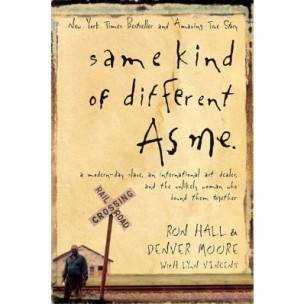
Same Kind of Different as Me, by Ron Hall and Denver Moore with Lynn Vincent

0849900417.jpg.1458336228
Same Kind of Different as Me, by Ron Hall and Denver Moore, with Lynn Vincent

Ron Hall and Denver Moore with Lynn Vincent couldn’t have been less alike. Ron was a wealthy white art dealer. Denver was a homeless black man. At Ron’s wife’s insistence, he accompanied Debbie to serve a meal at the homeless shelter. Debbie kept trying to “break the ice” with Denver, to no avail. He wondered why this white woman was harassing him. Debbie told Ron that he had to make friends with Denver. It was a slow process, but Ron and Debbie finally broke through and Denver became a close friend.

This book will teach you some things you probably don’t know about being homeless unless you’ve been in that situation. Based on a true story, it will break your heart and make you cheer. It was the September book choice for Rocky River Readers Book Club.

Until my next blog post

I hope you have a good book to read. I’ve started off October with Love and Other Consolation Prizes, by Jamie Ford. If you’re a writer, I hope you have productive writing time.

Janet