Contentment and Peace in 2020

Photo by Paul M on Unsplash

I’ve tried to camouflage my New Year’s Resolutions by calling this blog post “A Look Ahead to 2020” or “Physical, Spiritual, and Emotional Balance in 2020,” and finally, “Contentment and Peace in 2020.” I’m sure no one was fooled. 

The title “A Look Ahead to 2020” seemed less daunting, less frightening, less set in concrete than “My New Year’s Resolutions.” “Physical, Spiritual, and Emotional Balance in 2020” sounded too braggadocious.

The more time I spent contemplating and writing today’s blog post, I realized that by addressing four or five areas of my life, perhaps I can find a higher level of peace and contentment 2020. I concluded that is “the bottom line.” That is what I’m trying to attain in the new year.

I live in a peaceful community and a peaceful home. I’m on solid ground in my faith. I don’t yearn to have material riches. As long as I have the basic necessities for life, in that regard, I am content.

What are some things I can address in 2020 in order to find a higher level of contentment and peace?


Get My To Be Read (TBR) List Under Control
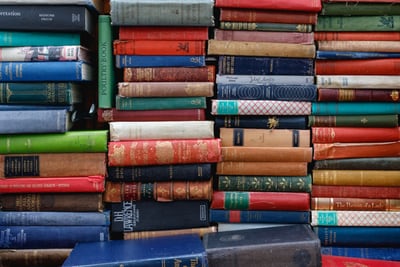
Photo by Ed Robertson on Unsplash

There are 302 books on my “want to read” list on Goodreads.com. This is ridiculous! Back in October, I read a good blog post about how to attack one’s TBR. We’ve followed each other’s blogs for a year or so. She is black; I am white. She is a young adult college student; I’m 66 years old. What we have in common is a love of books.

On October 14, 2019 she wrote the tenth in a series of blog posts about tackling her TBR. I should have heeded her advice that very day, but I have procrastinated. (No one who knows me well will be surprised by that admission!)

Her October 14 blog, https://educatednegra.blog/2019/10/14/down-the-tbr-hole-10/comment-page-1/#comment-3704, resonated with me. I like her suggestion for purging one’s TBR by reading the Goodreads synopsis of a few books at a time on your TBR. After reading the synopsis, you’re bound to be able to delete some of the books from your list. As I scan down my TBR, there are many books there for which I have no idea now why I ever put them on my list. If I no longer know why a book is on the list, perhaps it’s time to delete it and get rid of the clutter.

If you haven’t discovered the beauty of Goodreads.com, I invite you to check it out the first chance you get. It’s a place where readers and writers cross paths and readers like you and I (not professional book reviewers) rate books on a one- to five-star scale and can leave an optional review. You can keep a list of books you want to read and a list of the books you’ve read.

Conclusion: Zone in on what I want to read.


Find My Niche as a Blogger

Photo by Plush Design Studio on Unsplash

The title of my blog is “Janet’s Writing Blog,” but it seems like more and more it has become a blog about my reading to the neglect of my writing. That is a direct reflection of my life this fall as I spent more and more time reading and less and less time writing.

By falling into the habit of blogging about the books I read one or two Mondays each month, my reading for pleasure has almost become my job. I refuse to let that happen! To address this in 2020, I need to reevaluate how I approach my blog. This is not a contest. The one who reads the most books does not win.

I usually challenge myself to read a certain number of books each year. It gives me a good feeling for a few seconds when I reach my goal; however, I’m setting myself up for failure by making a goal of reading an arbitrary number of books. Why do that?

Conclusion: Make a new editorial calendar for my blog for 2020. Would my blog posts be of higher quality if I blogged twice-a-month instead of four- or five-times-a-month?


Get My Novel on the Road to Publication

Those of you who have followed my blog for the last decade have probably given up on ever seeing my novel as a real book you can hold in your hands and read. You aren’t alone. Many days it seems like a “pipe dream” to me.

Photo by hannah grace on Unsplash

“Get my novel on the road to publication” can mean many things. What that meant to me a year ago was the following:  get my novel manuscript into the hands of a literary agent who will put it in the hands of a publisher. After all, I’m not getting any younger.

Over the last several months I’ve started questioning my motives. Few authors get rich. I don’t aspire to become rich. I’m content to have what I need to live a life free of fear of ending up homeless and free of worry of being a burden to my family.

What I have come to realize recently is that I am equally afraid of failure and success. Does that sound crazy? I fear rejection, which is inevitable. My fear of success, though, is equal to – if not stronger than – my fear of failure.

My fear of success stems from my physical health and limitations. When my vintage postcard book, The Blue Ridge Mountains of North Carolina, was published in 2014, I pushed myself to make presentations at libraries and bookstores and to make “cold calls” at bookstores to introduce my book to store management. I traveled throughout the piedmont and mountains of North Carolina doing that. Do I have the energy now to do that again?

What publication of my novel looked like for the last 10 years might not be what it looks like in 2020. I’m working through that.

Conclusion:  Ask myself WHY I want my novel to be published. Figure out what my novel can look like without the pressure of meeting deadlines set by a publisher. I’ve shied away from self-publishing because I wanted the stamp of approval of a “real publisher.” Self-publishing deserves my attention as a viable option. I need to get my novel published or stop talking about it.


Make Time for Hobbies
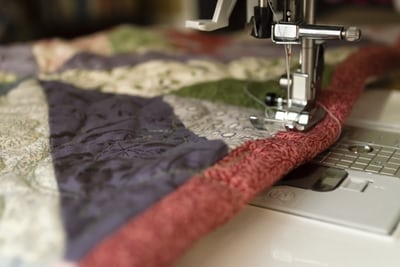
Photo by Jeff Wade on Unsplash

I have varied interests. Although I’m retired, I still can’t seem to find time to sew, quilt, play the dulcimer, work on genealogy, knit, crochet, do needlepoint, and cross-stitch. This needs to change.

Conclusion:  “Schedule” time for my hobbies instead of leaving them to chance. I’ll be a more interesting person if I do that.


Find Contentment and Peace

I seek contentment and peace. In the above list, one item sort of led to the next one. By the time I got to “Make Time for Hobbies,” I concluded that if I do what I’ve proposed today, I will surely find a higher level of contentment and peace in 2020.


Until my next blog post

I hope you have a good book to read. I’m listening to Beneath a Scarlet Sky, by Mark T. Sullivan. With only two of 14 discs remaining, I hate to see the book end.

If you’re a writer, I hope you have quality writing time and attain your writing goals – however small or large they may be.

Thank you for reading my blog today. You had many things vying for your time, but you took a few minutes to read my blog. Thank you!


Let’s continue the conversation

How do you feel about New Year’s Resolutions?

What brings you contentment and peace?

I wish for each of you to have contentment and peace in 2020.

Janet

#OnThisDay: The Battle of the Bulge began

Today is the 75th anniversary of the beginning of the Battle of the Bulge in the Ardennes region of Belgium in the European Theatre of World War II.

In my short blog post I will not attempt to give an in-depth analysis of the Battle of the Bulge. That would be ridiculous, impossible, and well beyond my abilities. I will merely highlight a few facts and pay tribute to my Uncle Rozzelle, who participated as a member of the United States Army in that awful winter battle.

Also known as the Ardennes Counteroffensive, it was the last major offensive campaign by Germany on the Western Front during World War II. Great Britain Prime Minister Winston Churchill called it “the greatest American battle of the war.”

The Boston Globe reported last Wednesday https://www.bostonglobe.com/metro/2019/12/11/wwii-veterans-head-belgium-commemorate-anniversary-battle-bulge/LwtvSgw7iBx0jhTAWgJAbI/story.html that 17 World War II veterans from across the United States had flown out of Boston for France that day in order to participate in the 75th anniversary ceremonies. Their itinerary includes the dedication of a monument plate at the Bastogne War Museum in Belgium in memory of those who were killed in the Battle of the Bulge.

Battle of the Bulge Statistics

The Battle of the Bulge was fought along an 80-mile front from southern Belgium, through the Ardennes Forest to the middle of Luxembourg. Some 600,000 Germans, 500,000 American, and 55,000 British troops took part in the battle, which lasted until January 25, 1945.

Casualties were high in the battle. The Allies suffered 20,876 killed, 42, 893 wounded, and 23,554 captured or missing. German losses were equally high, with 15,652 killed, 41,600 wounded, and 27,582 captured or missing.

Environmental Conditions of the Battle

Photo by Viktor Omy on Unsplash

Casualty figures don’t provide the whole picture, though. Conditions on the battlefield were extreme and physically and mentally trying. There was an average of eight inches of snow on the ground and the average temperature was about 20 degrees Fahrenheit/-7 Celsius.

Bad weather grounded US planes at the beginning of the battle, giving Germany an early advantage in addition to the edge the Nazis had due to the surprise launch of the attack in the pre-dawn hours on December 16, 1944.

The Ardennes Forest is a mix of deciduous trees such as oak, poplar, willow, acacia, and birch.

Source of the Battle’s Name

The Germans pushed through the Allies’ defensive line, creating a wedge or “bulge” in the Allied position in the Ardennes forest area.

Most Famous Quote from the Battle

General Anthony Clement McAuliffe was the acting commander of the U.S. 101st Airborne Division troops that were defending the city of Bastogne, Belgium during the Battle of the Bulge. When the Germans asked if the Americans wanted to surrender, Gen. McAuliffe is quoted as responding, “Nuts!”

Outcome of the Battle

Germany lost men and materiel in numbers from which it was unable to recover.

Significance of the Battle of the Bulge

It is believed that the Battle of the Bulge brought an end to World War II in Europe faster than it would have happened otherwise. It was the last major Nazi offensive of World War II and Germany’s last attempt to push the Allies out of mainland Europe.

A few words about Uncle Rozzelle

After this somewhat sterile statistical description of the Battle of the Bulge, I’ll now attempt to put a human face on it.

I never heard my Uncle Rozzelle talk about his experiences in World War II. My mother recalled that the main thing he ever talked about was being so very cold in a wet foxhole during the Battle of the Bulge. He ended up in a hospital in France and was then transferred to a hospital in England.

When I think about the Battle of the Bulge, the image I have in my head is my 29-year-old Uncle Rozzelle almost freezing to death in a foxhole.

Janet

Four Other Books I Read in November 2019

After reading seven books (and parts of a couple others) in November, It soon became obvious that I needed to split the seven read books up between two blog posts. Last week’s blog, https://janetswritingblog.com/2019/12/02/i-stretched-my-reading-horizons-in-november/ was about three of the books I read last month. Today’s post covers the other four.


The Water Dancer, by Ta-Nehisi Coates

#HistoricalFiction #UndergroundRailroad
The Water Dancer, by Ta-Nehisi Coates

This historical novel combines history with a touch of fantasy. The main character, Hiram, is a slave who was fathered by a Virginia plantation’s white master. Early in the book, while Hiram is a young boy, the author tells much of Hiram’s story from the point-of-view of Hiram knowing his father’s white son is his half-brother. I found that to be an intriguing way to introduce Hiram and to explore his feelings and mindset. It made me stop and think about how that reality must have felt like for slaves who had to live in situations where that was true.

In The Water Dancer, Hiram has some supernatural powers that he inherited from his slave ancestors. Those powers come in handy in his later life when he is part of the workings of the Underground Railroad. Being the child of the white master, he has a unique opportunity to study under a white tutor – who just happens to be part of the Underground Railroad.

Before reading The Water Dancer, I thought slaves had to find their own way to safe houses on the Underground Railroad after escaping. In The Water Dancer, many slaves were actually chosen by workers and agents on the Underground Railroad to be helped to escape and travel north to freedom. People involved in the Underground Railroad in The Water Dancer forged identification papers and other documents to assist slaves.

I want to learn more about the workings of the Underground Railroad after reading The Water Dancer.


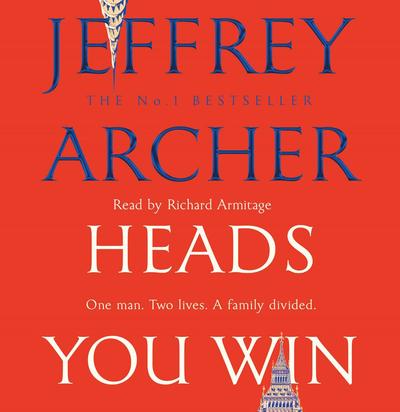
Heads You Win, by Jeffrey Archer

I don’t know why, but this is the first book I’ve read by Jeffrey Archer. It certainly won’t be the last! I enjoyed listening to Heads Your Win on CD while I muddled my way through a fibromyalgia flare.

#SovietUnion #HistoricalFiction
Heads You Win, by Jeffrey Archer

This novel got a little long for me, but I found the premise of the book clever and intriguing. It starts in 1968 Soviet Union. Alexander’s father is murdered for trying to organize a trade union. Alexander and his mother flee to the docks where they must decide whether to be smuggled onto a ship heading to America or one heading to England.

At this point, the plot splits into two scenarios. One assumes they get on the ship to America, and it follows Alexander’s business life in pizza parlors. Through a friend, he gets involved in the underworld of priceless art. The other scenario assumes Alexander (a.k.a., Sasha) and his mother get on the ship to England where Alexander gets involved in politics.

The story alternates between Alexander and Sasha and illustrates just how much in our lives can depend on “the luck of the draw.” Alexander and Sasha both wonder from time-to-time how their lives would have turned out differently if they’d chosen “the other crate” at the dock.

In checking reviews of Heads You Win, I discovered reactions all across the spectrum. I don’t think I’ve ever seen a book get reviews so evenly spread between one, two, three, four, and five stars.

Many reviews state that the ending of the book confused them. I’ll add myself to that category. Someone I thought was dead, apparently wasn’t. And then the very last sentence in the book is one many readers say they didn’t see coming.


The Family Upstairs, by Lisa Jewell

This was the first book I’ve read by Lisa Jewell. The Family Upstairs is a psychological thriller. It might have been easier for me to follow in written form, but I listened to it on CD. The repeated use of the “f-word” might have been easier to take in written form, too. I guess some people have a limited vocabulary and talk like that all the time. This appears to be the case with one of the characters.

#FamilySecrets #FamilyDynamics
The Family Upstairs, by Lisa Jewell

Twenty-five years ago, police found the parents dead in their home. All their children were missing except for their 10-month-old daughter who was found unscathed. The baby is adopted and her name becomes Libby Jones. She knows nothing of her biological family. Fast-forward 25 years and Libby receives a letter informing her that she has inherited the mansion in Chelsea that had belonged to her parents.

Libby learns who she was, and her long-lost siblings start coming out of the woodwork. This isn’t my type of book. I found it to be very strange.


Selected Poems, by Carl Sandburg

I borrowed this book from the public library early in the month and enjoyed reading ten pages of Carl Sandburg’s poetry each day until I finished it. There were poems I was familiar with along with many that I’d never read. I’d forgotten how raw Carl Sandburg’s poetry was.

Reading this collection of his poetry brought to my attention more than ever before just how far removed his retirement home in the mountains of North Carolina was from the rough and tumble life in Chicago that he wrote about so eloquently.


Until my next blog post

I hope you have a good book to read. I’m reading A Woman is No Man, by Etaf Rum.

If you’re a writer, I hope you have quality writing time.

Thank you for reading my blog. You could have spent the last few minutes doing something else, but you chose to read my blog.

If you enjoy my blog posts, please share that on social media and with your real life friends. Don’t be shy about telling others about my blog!


Let’s continue the conversation

I’m always interested to know what you’re reading. What are you reading or what have you read recently that you’d recommend to others?

Janet

I stretched my reading horizons in November

The books I read in November took me to Auschwitz, Barcelona, Boston, Philadelphia, a plantation in Virginia, and a gulag in Siberia. Today I’ll write about three of the seven books I read in November. Four of the seven were written by authors that were new to me.


The Shadow of the Wind, by Carlos Ruiz Zafόn

This author was recommended to me by my cousin, Jerome Williams. Actually, he recommended celebrated Spanish novelist Señor Zafόn’s latest book, The Labyrinth of Spirits. It being the fourth and final book in the Cemetery of Forgotten Books series, I thought it best that I read the first book in the series first – The Shadow of the Wind.

The Shadow of the Wind, by Carlos Ruiz Zafon

When I read reviews of The Shadow of the Wind, I discovered people either raved about it or hated it. People who didn’t like it wrote scathing reviews. Author Kristin Hannah gave it five stars on Goodreads.com and author Diana Gabaldon gave it four stars on that same website. I tend to trust Jerome’s judgment and that of Ms. Hannah and Ms. Gabaldon, so I downloaded the MP3 edition of the book onto my tablet.

I was immediately drawn into the book with its beautiful description of books! In fact, it was the author’s wit and descriptive language are what I liked most about the book. The book continued more off-color language than books I usually read, but the language suited the characters. I mention this, in case you are overly-offended by such language. You might not want to read it, if that’s the case.

Nevertheless, I enjoyed listening to the book and laughed out loud on numerous occasions. I wish I had mastered Spanish in high school and college so I could read The Shadow of the Wind in its original language.

What is the book about? It’s a coming of age tale that begins with a ten-year-old boy, Daniel. His father, a bookseller, takes him to the Cemetery of Forgotten Books. This secret “library” of endless shelves and twists and turns houses rare books – books that have been forgotten. Daniel is instructed to select a book to save. He chooses The Shadow of the Wind, by Julian Carax.

Daniel is obsessed with finding out everything he can about Julian Carax and, in particular, why his books weren’t well-known. This obsession leads Daniel into a string of dangers and a host of characters. It is believed his copy of The Shadow of the Wind is the last surviving copy of Julian Carax’s book because someone is methodically stealing and burning copies of the book. We eventually find out about the sad life of Julian Carax.


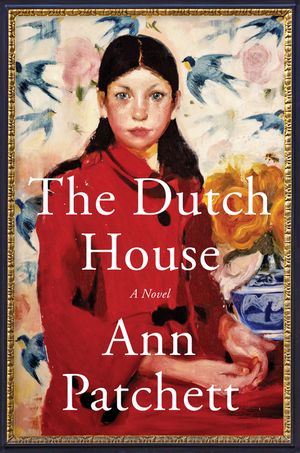
The Dutch House, by Ann Patchett

I started reading The Dutch House, by Ann Patchett and immediately liked it. Not far into it, the CD edition became available at the public library and I switched to listening to the novel. It was read by actor Tom Hanks. I should say, it was read to perfection by Tom Hanks.

The Dutch House, by Ann Patchett

The Dutch House is a novel about a dysfunctional family. The breaking point is when the mother leaves and doesn’t come back. There are two children. Maeve is the older of the two and is very protective of her younger brother, Danny. The story is told from Danny’s viewpoint from his childhood and well into his adulthood.

Things spiral downward when Maeve and Danny’s father remarries and brings his new wife and her two small daughters into The Dutch House. There are many layers to this novel as all the family dynamics are explored, as well as how the individuals who worked at the house played into the scenario.

The house in which Maeve and Danny lived as young children is called The Dutch House because it was built by a couple from the Netherlands. It is a grand house and it is as important in the story as any of the characters. The house is, in a way, the main character.

Although the overall plot is a sad and tragic tale, there are moments of humor which Tom Hanks presents as only he can. Reading the book is enjoyable, but I highly recommend the CD edition. That might be a first for me!


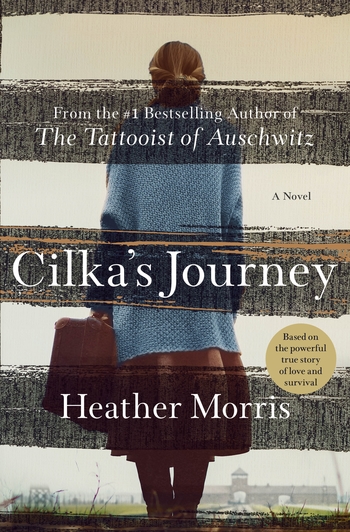
Cilka’s Journey, by Heather Morris

This historical novel left me in awe of the real-life Cilka as well as the author. You may recall that I read The Tattooist of Auschwitz, by Heather Morris, in October of last year. Here’s a link to the blog post in which I wrote about that historical novel:  https://janetswritingblog.com/2018/11/05/many-good-books-read-in-october/. That book really made an impression on me, so I jumped at the chance to read Ms. Morris’ new novel.

Cilka’s Journey, by Heather Morris

In Cilka’s Journey, the author expands on the life of a teenage girl being held at Auschwitz-Birkenau Concentration Camp in her earlier novel. Ms. Morris is a master of historical fiction and makes me wonder if I have what it takes to write in that genre.

Cilka spent three years in captivity at Auschwitz-Birkenau. At the end of World War II in Europe, [SPOILER ALERT:  instead of being set free by her Russian liberators she is charged with sleeping with the enemy (which was not by choice!) and is sentenced to 15 years in a gulag in Siberia!]

Cilka is a natural-born caregiver and learns the nursing profession while a prisoner. She lives a life of unbelievable loss, suffering, and abuse before being allowed to return to her native Czechoslovakia in the 1950s. (Czechoslovakia is, of course, now the Czech Republic.)

It is historical novels like this that remind me that I have lived a charmed and sheltered life compared to millions of other people in the world. I highly recommend Cilka’s Journey. I listened to it on CD. It was beautifully-read by Louise Brealey and contains lots of background information and an interview with the author at the end.

Lale Sokolov, the real-life Auschwitz survivor we learned about in The Tattooist of Auschwitz, said of Cilka, “She was the bravest person I ever met.”


Until my next blog post

I hope you have a good book to read. I’m reading Nothing More Dangerous, by Allen Eskens and listening to Talking to Strangers, by Malcolm Gladwell.

If you’re a writer, I hope you have productive writing time.

Thank you for reading my blog. You could have spent the last few minutes doing something else, but you chose to read my blog.

If you enjoy my blog posts, please share that on social media and with your real life friends. Don’t be shy about telling others about my blog!


Let’s continue the conversation

I’m always interested to know what you’re reading. Please tell me in a comment.

Janet