I write southern historical fiction, local history, and I've written a devotional book. The two novels I'm writing are set in Virginia and the Carolinas in the 1760s. My weekly blog started out to follow my journey as a writer and a reader, but in 2025 it has been greatly expanded to include current events and politics in the United States as I see our democracy under attack from within. The political science major in me cannot sit idly by and remain silent.
In last Monday’s blog post, I wrote about three of the books I read in June. Today, I write about three other books I read last month.
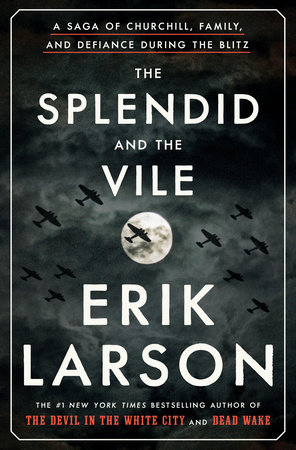
The Splendid and the Vile, by Erik Larson
Having read and liked Erik Larson’s The Devil in the White City: Murder, Magic and Madness and the Fair that Changed America in February, I was eager to read his new book, The Splendid and the Vile. I listened to The Splendid and the Vile and thoroughly enjoyed it.
The Splendid and the Vile, by Erik Larson
This nonfiction book reads like fiction, and I mean that as a compliment. It doesn’t read like a history book. Erik Larson has a way of doing that. If you aren’t a fan or student of history – specifically World War II era – you might not enjoy The Splendid and the Vile as much as I did.
It follows Winston Churchill and his family and friends. His teenage daughter, Mary, plays an important role as she gives us a glimpse of how a teenage girl would perhaps react to the London Blitz. She very much just wanted to be a teenager.
Mr. Larson weaves a fascinating story of Mr. Churchill and his associates. Being Prime Minister of Great Britain, he was in a position to make friendships and acquaintances with people of power. There were some connections he had with Americans that I hadn’t been aware of. Churchill’s son was a constant source of concern, along with the son’s wife, to put it mildly.
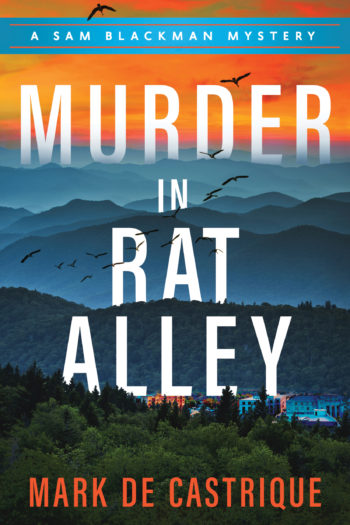
Murder in Rat Alley, by Mark de Castrique
If you’re a mystery fan, you might want to check out Murder in Rat Alley, by Mark de Castrique. This is the seventh book in his Sam Blackman series, but you don’t need to have read any of the earlier books in the series to enjoy this one. If Mark de Castrique is a new author for you, this is a good novel to start with.
Murder in Rat Alley, by Mark de Castrique
Set in Asheville, North Carolina and the Pisgah Forest area, Iraq War veteran and amputee Sam Blackman is a private investigator. His side kick and love interest is Nakayla Robertson. When a body is discovered on the grounds of the Pisgah Astronomical Research Institute, Blackman is called in to unravel a decades old mystery.
When they get too close to solving the murder, their lives are in more danger than they even imagine.
This novel gives interesting background information about the former space program monitoring facility that now collects weather data. It also brings in the flavor of the Asheville music scene. It is sprinkled with the humor that keep Sam and Nakayla together and which balances their private lives with the serious work they do.
If you like a good mystery and want to mentally escape to the North Carolina mountains, give Murder in Rat Alley a try.
The Engineer’s Wife, by Tracey Enerson Wood
The Chief Engineer for the design and construction of the Brooklyn Bridge, William Roebling becomes quite ill during the years it took to build the bridge. His wife, Emily, had taken a deep interest in his work and started studying his engineering books.
The day comes when William is no longer physically able to go to the worksite. Emily starts going in his place and takes on more and more responsibility for the construction of the bridge.
This is a work of historical fiction based on a bit of truth, but the majority of the novel is indeed fiction. I thoroughly enjoyed the book, but I was somewhat disappointed to read in the author notes at the end of the book that so much of it was fiction.
I still recommend it as a good read, but you might want to read the author’s notes before reading the book instead of afterwards like I did. For instance, P.T. Barnum plays a major role in the novel, but it turns out he was probably no more than an acquaintance of the Roeblings.
My apologies to the author, Tracey Enerson Wood, for not being able to insert an image of her book in my blog post today. This is her debut novel. I can’t wait to see what she writes next!
Until my next blog post
I hope you have a good book to read.
If you’re a writer or other artist, I hope you have good creative time this week.
Stay safe. Stay well. Wear a mask out of respect for other people until the Covid-19 pandemic is under control.
A variety of events threw my blog off schedule this month. If you are a regular reader of my blog, you know that on the first or sometimes first and second Mondays of the month I write about the books I read the previous month. In July, I had to split my “Books Read in June 2020” blog posts into two installments. The first installment is posted today. The second installment will follow next Monday, if my computer cooperates.
June came with a host of good books to read. After being closed for nearly three months due to the Covid-19 pandemic, the public libraries in our area reopened for patrons to pick up books they had on reserve. I got on the waitlists specifically for MP3 books I could download to my tablet and for newly-released books “on order,” so I could be assured of checking out new books that had not yet been in circulation.
Of course, when the library system reopened for pick-up service only, I had six books to pick up immediately. Some months are overloaded with good reads, and June was definitely in that category. It was a wonderful “problem” to have!
I hope my remarks about these books will pique your interest. Perhaps you’ll discover an author you’ve never read before – or a new book by an author you like. I don’t consider myself a book reviewer. I think true book reviewers have some rules to follow. I just enjoy sharing what I think and what I learn from some of the books I read.
The Book of Lost Friends, by Lisa Wingate
The Book of Lost Friends, by Lisa Wingate
Lisa Wingate showed us in Before We Were Yours that she has a talent for taking a little-known fact from history, thoroughly researching it, and writing a novel that educates and entertains. The Book of Lost Friends is another such book.
In the years following the American Civil War, former slaves tried to reconnect with their relatives and friends. The slavery culture often tore families apart by parents and their children and brothers and sisters often being sold to different masters. Ms. Wingate discovered that the Methodist denomination offered a place in one of its newspaper-like publications where people could post information about a relative or friend they wanted to reconnect with. Those published notices adopted the name, “Lost Friends.”
The Book of Lost Friends follows two plot lines. One is in Louisiana in 1875 and introduces us to Hannie, a former slave; Juneau Jane, her illegitimate Creole half-sister, and Lavinia, the heir to a plantation now in shambles. The three women head for Texas. Along the way, Hannie becomes hopeful that she will find her long lost mother and eight siblings.
The other plot line is in Louisiana in 1987 and introduces us to a teacher, Benedetta Silva, who is trying to make history and literature come alive for her high school students. Seen as “an outsider,” “Benny” works to make her way in a small town on the Mississippi River. She is appalled at the poverty many of her students live in. Warned to stay away from a certain abandoned plantation house, curiosity gets the best of Benny. What she finds hidden in that house could change her life and the lives of her students forever.
One of the things I liked in the book was the “Negativity Rule” “Benny” enforced in her classroom. Under that rule, if a student spoke negatively about another student, the student in the wrong had to say three positive things about the other student. The author’s use of this rule to illustrate that it takes three times the work to undo the damage done by a negative is a lesson we could all learn.
The Man from Spirit Creek, by Barbara Kyle
The Man from Spirit Creek, by Barbara Kyle
I never win anything, so I was shocked when I received an email from book coach and author Barbara Kyle telling me I had won a copy of her new novel, The Man from Spirit Creek on Audible! I had just picked up six library books that afternoon that had been held for me – some since a couple of days before the libraries had to close on March 15 due to the Covid-19 pandemic. I had just started listening to The Book of Lost Friends, by Lisa Wingate, but I was tempted to go ahead and start listening to Barbara Kyle’s book.
I took an online writing course taught by Barbara Kyle a couple of years ago, and I’d meant ever since then to read one of her novels. She lives in Canada and The Man from Spirit Springs is set in Alberta.
Ms. Kyle’s novel puts the reader smack-dab in this western Canadian province. She weaves the geography and geology (oil) of this prairie land into the story so well that you can taste the dust in your mouth and smell the rotten eggs smell of “sour” gas. This present-day story gets into the nitty-gritty of the clash between ranchers and big oil. It’s full of suspense, betrayal, revenge, family ties, the love between two sisters, and the romantic loves of both of them.
Liv Gardner is the attorney for Falcon Oil, the oil and gas company she and her fiancé, Mickey Havelock, own in Houston, Texas. Someone is sabotaging their rigs in Alberta. Liv goes to Spirit Creek, Alberta under the guise of having a temporary job with a lawyer there as she tries to figure out how to get the saboteur to give up his tactics and sell out to them.
The saboteur is sheep farmer Tom Wainwright. His beef with Falcon Oil? He blames Falcon’s “sour” gas, which is released 24/7, for his wife’s miscarriages and eventual death and for the miscarriages and deaths of many of his sheep.
Even as Liv and Mickey plan their wedding, Liv gets personally involved with Wainwright in spite of the fact that she went to Alberta to stop his efforts to ruin Falcon Oil. She discovers his human-side and lets her heart overtake her good sense. There’s a murder. Wainwright is arrested. But is he the killer? And will Liv and Mickey get back together?
You’ll love all the twists and turns in this contemporary Canadian western novel of suspense. It transported me all the way to Alberta for several days. What better way to “get away” during this pandemic than to curl up with a very engaging book?
How to Be An Antiracist, by Ibram X. Kendi
How to Be an Antiracist, by Ibram X. Kendi
There are many eye-opening things to take from Ibram X. Kendi’s book, How to Be An Antiracist, but the most important lesson I learned from reading it is the difference being “not racist” and “antiracist.” I’ve been guilty of saying, “I’m not a racist.” It’s possible I’ve even said, although I hope I haven’t, “I’m not a racist, but….” “But” says, “Oh yes you are!”
In the words of Mr. Kendi in his book, “What’s the problem with being ‘not racist?’ It is a claim that signifies neutrality…. The opposite of racist isn’t not racist it is antiracist.”
Mr. Kendi anticipates the reader asking, “What’s the difference?” That’s what I wanted to know. In the introductory pages of his book, he eloquently answers that question. In fact, if you don’t want to or don’t have time to read the entire book, I recommend you read the introduction. You might not agree with it. It might not change your mind but, if you’ll read it with an open and curious mind, it will definitely give you something to think about.
What’s the difference between “not racist” and “anti-racist?” Mr. Kendi explains it as follows: “One endorses either the idea of a racial hierarchy as a racist or racial equality as an antiracist. One either believes problems are rooted in groups of people as a racist or locates the roots of problems in power and policies as in antiracist. One either allows racial inequalities to persevere as a racist or confronts racial inequities as an antiracist. There is no in-between safe space of not racist. The claim of not racist neutrality is a mask for racism.”
He goes on to say that “color-blindness” and “not a racist” means you fail to see race and you fail to see racism. Something I got from the book was to claim you don’t see race is disrespectful of people of another race. We need to recognize race and not pretend it doesn’t exist or that we don’t notice it. We need to celebrate it for what it is.
Mr. Kendi addresses his own racism in the book and how people of any race can be racist. As he states in the book’s introduction: “This book is ultimately about the basic struggle we’re all in: The Struggle to be fully human and to see that others are fully human.” He describes antiracism as “an unlit dirt road.” It’s not easy to find one’s way on an unlit dirt road. He calls on all of us to look at power and policy. He says, “We know how to be racist. We know how to pretend to be not racist. Now let’s know how to be anti-racist.”
The big picture that made a lasting impression on me was that to be anti-racist is to stand up and speak out when you see injustice. To sit idly by, is to be complicit. As long as you see yourself as “not a racist,” you give yourself permission to sit idly by and ignore evil because you think it doesn’t affect you.
People of various religion and no religion read my blog around the world. I’m a Christian. I think Jesus Christ is calling on Christians to call out injustice when we see it. I’m pointing to myself. I’ve been guilty of sitting idly by, turning the other way, keeping my mouth shut because I didn’t want to cause an argument or hurt someone’s feelings. I am, by nature, a quiet person. My voice often gets drowned out by louder voices and more assertive people. It is my challenge now to stop being “not racist” and start being “anti-racist” as I feel I’m being called to be.
(Since I listened to the audio edition of the book, I hope I got all the quotes right. My apologies to Mr. Kendi if I made any errors.)
Until my next blog post
I hope you have at least one good book to read.
I hope you have quality creative time, if you’re a writer or other artist.
I hope you stay safe and well. I hope you wear a mask to protect others.
If you haven’t told your best friend how much you love them recently, call or write them a note and tell them now. Tomorrow might be too late.
Perhaps you noticed my weekly Monday blog post never showed up last week. My nearly life-long friend, Kay Jewett Nalbone, died on Sunday. Although not unexpected, it was difficult to accept.
When you’ve been friends for 57 years and shared each other’s joys and struggles, you have a bond. What it boils down to is that I no longer have a friend with the same memories I have.
Another long-time friend from my graduate school days, Ray Griffin, didn’t know Kay and was not aware of her declining condition. It was serendipitous that Ray’s new book of poetry arrived in the mail on Monday. If ever I needed a collection of poems to sit down with and relax, it was Monday and Tuesday.
The name of Ray’s book is Winsome Morning Breeze: A Collection of Sonnets and Tanka. It is available online or you can request it at your favorite independent bookstore. It is beautifully illustrated with watercolors by Marti Dodge.
Many selections in Ray’s book resonated with me for different reasons. Having lost two good friends since February, the last two lines of “I Was a Fool” on page 21 has special meaning for me:
“To live one’s life most fully and with zest,
One must not ever let the moment rest.”
“On Dragon’s Tail” on page 19, on the other hand, brought a smile to my face as Ray eloquently wrote about his experience of driving the portion of US-129/TN-115/NC-115 in the Appalachian Mountains known as The Dragon’s Tail due to its 318 curves in 11 miles. It is a favorite of motorcycle and sports car enthusiasts and a fun drive for those of us who love to drive in the mountains. What fun!
Photo by Jordan Whitt on Unsplash
And here’s a lovely turn of phrase from Ray’s sonnet, “Fallen Leaves” on page 109: “I feel as though I am within a large kaleidoscope.”
“Daughter” on page 107 brought tears to my eyes as Ray recalls the birth of his and Ida’s daughter 31 years prior. I remember sitting on the floor and playing with their precious daughter when she was just four or five years old.
Ray and I studied political science and public administration. He had a successful 26-year career as a city manager. He is now an adjunct professor of politics in Virginia. His poems, “Barbara Jordan” on pages 85-87 and “I’m But an Old Man” on pages 73-79 are as heartfelt as any pieces in the book. I could hear Barbara Jordan’s distinctive voice from the Watergate hearings as I read the poem he named after her.
I hope I’ve shared just enough from Winsome Morning Breeze: A Collection of Sonnets and Tanka, by Ray Griffin to whet your appetite. It will be a book I will reach for often. I will read it over and over, and I believe you will, too.
Until my next blog post
I hope you have a good book to read. I’m reading Shiner, by Amy Jo Burns and We Wear the Mask: 15 True Stories of Passing in America, edited by Brando Skyhorse and Lisa Frazier Page.
If you’re a writer or other artist, I hope you have productive creative time during the Covid-19 pandemic.
Be safe. Be well. Wear a mask in respect for other people.





 Janet's Writing Blog