I write southern historical fiction, local history, and I've written a devotional book. The two novels I'm writing are set in Virginia and the Carolinas in the 1760s. My weekly blog started out to follow my journey as a writer and a reader, but in 2025 it has been greatly expanded to include current events and politics in the United States as I see our democracy under attack from within. The political science major in me cannot sit idly by and remain silent.
My first blog post about an idiom was on January 25, 2021. It was #Idioms: Reading the Riot Act. Today’s blog post is about the idiom “as all get out.” It’s an expression I don’t hear as much as I used to.
When was it first used?
Other people have researched this, and I’ll rely on their findings. It appears that the expression
“as get out” was first used by American writer Joseph C. Neal in his Character Sketches in 1838.
In that piece, he wrote, “We look as elegant and as beautiful as get out.”
“As get out” sounds odd today because we know the expression as “as all get out.” Without the “all,” it just sounds strange. Or, perhaps you’ve never heard the expression before, so it sounds strange to you either way.
What does it mean?
The idiom “as all get out” is used to describe something taken to it’s extreme.
When it became “as all get out”
Credit goes to American author Mark Twain for adding the word “all” to the expression. In the 38th chapter of Huckleberry Finn, Huck, Tom Sawyer, and Jim are working on a coat-of-arms. Tom says to Huck, “We got to dig in like all git-out.” Of course, Twain wrote in dialect in that novel.
It would be interesting to know if Twain coined the new phrase. Perhaps people were already saying, “All get out” and Twain just incorporated it into his writing in 1884.
Some examples of how the idiom is used
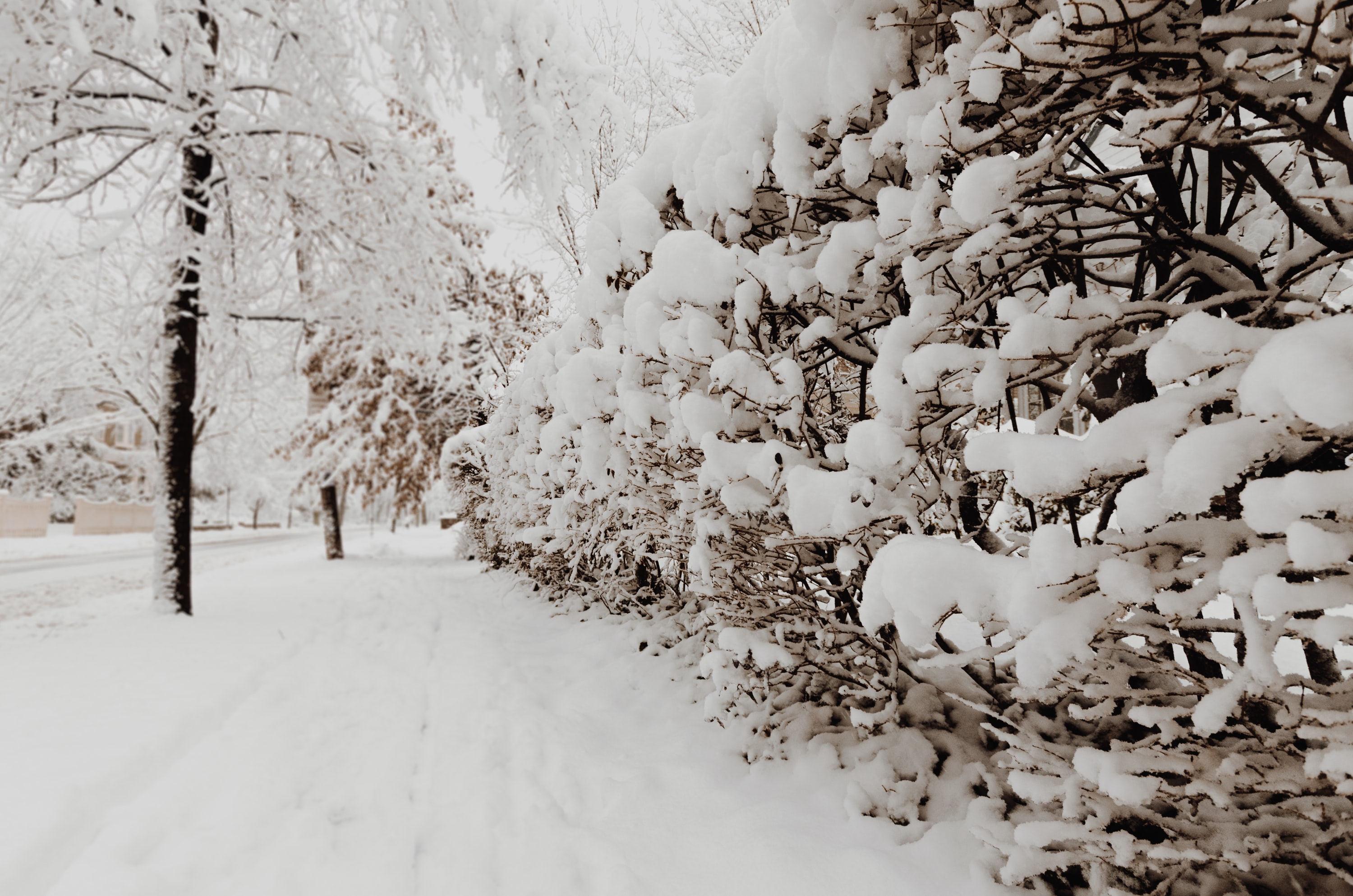
It was cold as all get out.
Photo credit: Kelly Sikkemaon unsplash.com
The track stars ran fast as all get out.
Photo credit: Jonathan Chng on unsplash.com
The red velvet cake was good as all get out.
Photo credit: Estefania Escalante Fernandez on unsplash.com
As language loses its color
As I commented at the beginning of this blog post, I don’t hear “all get out” as much as I used to. I’m afraid English becomes a less colorful language as we lose such expressions. That’s why I chose “all get out” for my topic today.
Is “all get out” an expression you’re familiar with? Is it an idiom that’s used all across the United States? Have those of you who live in other English-speaking countries heard this expression?
Since my last blog post
It looks and feels more like spring by the day, but there’s a possible hard freeze in the weather prediction for later in the week. That will be a shame, since my peonies have sprouted and the blueberry bushes are in bloom. It’s my favorite time of the year.
I stirred up a bit of a hornet’s nest on Facebook by posting a meme I borrowed from someone else. It is about the gun problem we have here in the United States. Just by saying “gun problem,” I’ve probably offended some people. I don’t know what else to call it. One of my high school classmates and a fellow church member have responded by educating me about the intricacies of firearms and gun registration.
At first, I was taken aback and wished I hadn’t posted the meme, but as days passed and I reflected on the issue and got deeper into the discussion I was glad I’d done it. Without being my intention, it has turned into “that difficult conversation” Janet Givens’ Zoom discussion group is addressing this year in monthly meetings. The basis for our meetings is Ms. Givens’ book, LEAPFROG: How to Hold a Civil Conversation in an Uncivil Era.
How do you have “that difficult conversation” with someone with whom your opinion or world view differs greatly? How do you have “that difficult conversation” with someone when you suddenly find yourself in the middle of a discussion that you and the other party or parties maybe weren’t in the best mood to have?
People rarely react to anything I put on Facebook, so it was shocking when this particular meme created as much discussion as it has continued to have since I posted it on Thursday. Lessons I’ve learned: Fact check memes before you post them, and don’t post anything controversial unless you’re ready to defend your viewpoint and calmly listen to the viewpoints of others.
I returned to church yesterday for the first time in 14 months. It felt great going back into the sanctuary in which I’ve worshipped my entire life and in which my ancestors have worshipped since 1861, and it brought tears to my eyes.
Until my next blog post
I hope you have at least one good book to read this week. As usual, I’m reading several at the same time. My mood and library due dates determine which one I pick up.
I hope you have time to follow your passion this week and spend some relaxing time on a hobby.
It’s now been more than two weeks since I got my second Covid-19 vaccination. I look forward to getting out in public more than I have in the last 14 months.
Note: Get ready for April. It’s D.E.A.R. Month (Drop Everything and Read Month), so let’s all give it our best shot starting on Thursday!
I was tempted to write about the Stamp Act of 1765 today, but I was afraid I’d scare off my audience. Let it suffice for me to say that today is the 256th anniversary of the Stamp Act of 1765 that contributed so much to the American Revolution.
Photo credit: Brett Jordan on unsplash.com
Today’s blog post is a little less serious than the last two. As a writer and the daughter of a former English teacher, I have many grammar pet peeves. Today I’m writing about 11 of my favorites. (By the way, this started out as my three favorites. I need to put this out there in cyberspace soon before my list becomes unmanageable.)
February 8, 2021 was National Grammar Day here in the United States. I mentioned it in my blog post that day but, due to the length of the post, I didn’t elaborate as much as I wanted. Therefore, I’m taking the opportunity to air my grammar grievances today.
I’ve found a new “label” for myself. It has come to my attention that I am on the verge of becoming a pedant. I sometimes get distracted by minutiae. I can’t see the forest for the trees. You get the point. Below, I offer examples of what I mean.
Who hijacked “fewer?”
Have you noticed that reporters on TV and some of the people they interview have completely abandoned the word “fewer” and have replaced it with “less?” Is this a new guideline? Whatever it is, I don’t like it. It is my newest grammar pet peeve.
I’m a native-born American. I was taught at an early age that “fewer” was used when referring to something that could be counted and “less” was used when referring to something that could be measured. That’s a little vague, and is probably a difficult concept for anyone learning English as a second language. To a native-born American, though, one grows up with certain things just sounding right.
For instance, I would say “fewer minutes” but “less time.” I would say “fewer dollars” but “less money.” I would say “fewer people” but “less population.” Substituting “less” for “fewer” in each of those examples just sounds wrong to me; however, the English language is ever-evolving. If the general consensus is to abandon the word “fewer” and use “less” in every instance, the day may come when it will no longer sound wrong to me. But I doubt it.
Right near
Another relatively recent pet peeve of mine is the use of the term “right near.” TV news anchors tend to say it. “The accident was right near the intersection of ….” “Our reporter is right near the scene of the crime.” Why and when did people start saying that? The word “right” is unnecessary. Think about it.
So
It was maybe eight or ten years ago that I first heard someone start a presentation or speech with the word, “So.” She was a young college student. The first word out of her mouth was, “So.” It wasn’t long until I heard other people falling into that habit. Today it has become so widespread I fear it’s here to stay.
Lie or Lay
Please take a minute to think about this one, people. You know who you are. You don’t think “lie” is a verb. You think it’s only a noun. A liar tells lies. I’m here to tell you that you also lie down. I lie down. He lies down. I don’t lay down. You don’t lay down. He doesn’t lay down. I lay down a book. You lay down a book. He lays down a book. All God’s children lay things down, but they don’t lay down. They lie down. Got it?
I want to…OR I’d like to…
This pet peeve is one I hear speakers make. It is in speeches or interviews on TV that I usually hear this. It causes me to talk back to the TV, usually at a higher volume than my usual speaking voice.
If you want to apologize, say, “I apologize for…” or “I’m sorry for.…” Don’t say, “I want to apologize” or “I’d like to apologize” and then not follow that with an apology. When I hear someone say they want to apologize but then they don’t, this is what goes through my mind: “What you’re saying is, ‘I want to apologize, but I can’t.’”
If you say, “I want to thank you…” but that’s not followed by an expression of appreciation, what I hear you say is, “I want to thank you but I can’t” or “I want to thank you but I’m not going to.”
Just go ahead and tell me you’re sorry. Just go ahead and say, “Thank you.” Don’t just say you want to.
Very unique, most unique
I suppose I’m nitpicking here, but something is either unique or it isn’t. There are no gradations in uniqueness.
Awesome
God is awesome. God’s creation is awesome. Your team winning a ballgame is not awesome, although the Carolina Panthers winning the Super Bowl would be something to celebrate. A new outfit is not awesome. McDonald’s fries taste good, but they aren’t awesome. The overuse of any such word weakens it and leaves it powerless. That’s what’s happened to awesome.
Normalcy vs. Normality
This is a new one for me. Apparently, the two words are interchangeable. I’ve heard “normalcy” all my life, but it seems like the last several months we’ve been inundated with people on TV saying “normality” instead. Is it just me, or have you noticed a change? “Normality” sounds more hoity-toity to me, but maybe that’s just me.
Come on guys, it’s prostate
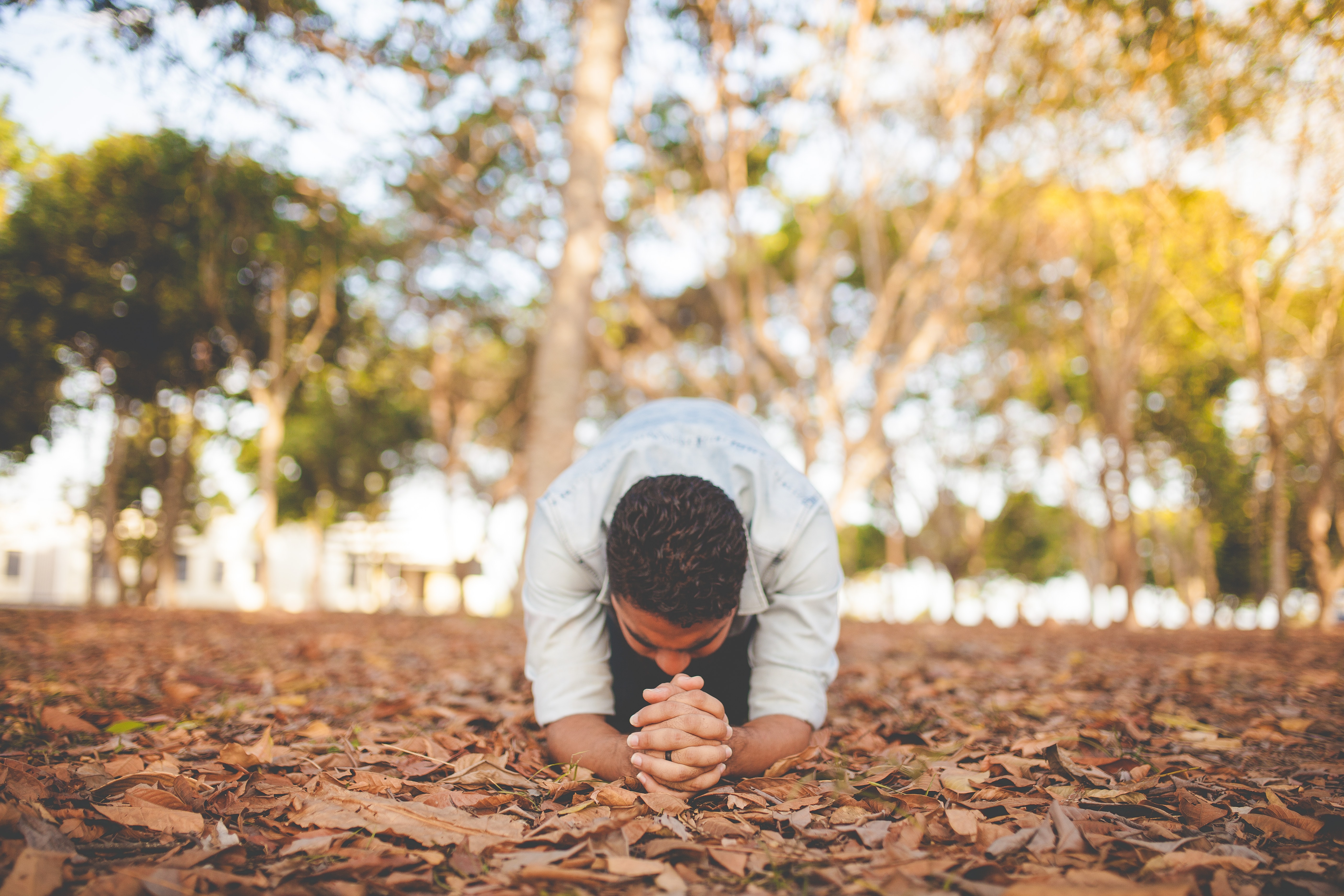
This illustrates prostrate. Get it? Photo credit: Naassom Azevedo on unsplash.com
Maybe it’s none of my business, guys, but the name of that gland y’all have is a prostate. It’s not a prostrate. This mistake is made so often that when you search for the word prostrate on Microsoft Bing, it comes up with a kazillion sites about prostate and asks, “Do you want results only for prostrate?” I’m not kidding.
Hot water heater
It’s just a water heater. It’s not a hot water heater unless there’s such a thing as a cold water heater. The term “hot water heater” is especially irritating when it is used in printed material from a large electric utility company.
Apostrophe s
I hope I’m not stepping on your toes, but whoever wrote the computer program for the automated grammar checker got this completely wrong and has confused people to no end. The program insists that an s at the end of a word should always, always, always be preceded by an apostrophe.
Sometimes, a word is simply a plural. An apostrophe indicates a possessive. If you ever receive a Christmas card from “The Morrison’s” instead of “The Morrisons,” you’ll know I’ve gone around the bend.
A confession
I make grammatical errors. I still have to look up “affect” and “effect” because I’m unsure which one to use when. I still have to stop and think sometimes to figure out if I should say “I” or “me.” I make many punctuation errors. The use of commas has always tripped me up. My errors are probably some of your pet peeves. Point them out to me in your comments below. Go ahead. I can take it.
I feel better now. Thank you.
Since my last blog post
I had several rough days after getting my second Covid-19 shot, but it sure beats getting a bad case of the virus! The high fever was the worst part for me. It varies from one person to another. Some people just have a sore arm. Don’t let my experience deter you from getting vaccinated.
Until my next blog post
Try not to get too hung up on grammatical errors. In the big scheme of things, they aren’t life-and-death matters. On the other hand, ….
I hope you have a good book or two to read. I’m listening to Truths I Never Told You, by Kelly Rimmer, and I’m reading The Train to Crystal City: FDR’s Secret Prisoner Exchange Program and America’s Only Family Internment Camp During World War II, by Jan Jarboe Russell. Ms. Russell’s nonfiction book has been a real eye-opener for me. I’ll share more about it in my April 5, 2021 blog post.
Last week I blogged about four of the books I read last month. Today, I write about the other four books I read in February.
The Unwilling, by John Hart
The Unwilling, by John Hart
John Hart being a southern piedmont North Carolina writer, I looked forward to his new novel, The Unwilling. It did not disappoint. I listened to it on CD. It is a slice of American history when we were divided over the Vietnam War.
It is a riveting story about three brothers. Two were in the military and served in Vietnam. One didn’t survive the war, and the other one came home with problems for the rest of his life. Their youngest brother, Gibby, is the main character. At 18 years old, he is struggling to find his way in life. His mother is over-protective, and his father is a police detective in Charlotte. His parents want him to stay away from the middle brother, Jason, but Gibby can’t help but idolize him and is drawn to hang out with him. This leads to untold trouble.
The seedy, corruptive underbelly of the prison systems comes into play in a gruesome way. This novel is not for the squeamish, but the story really drew me in, and I couldn’t stop listening to it because I wanted to know what was going to happen next to Gibby and Jason. If you like a coming-of-age story wrapped in a police thriller, set in the winding down years of the Vietnam War, with some troubled family dynamics and prison time thrown in, this should be your next read.
Mr. Hart’s inspiration for this novel was Hugh Thompson, the US Army helicopter pilot credited with stopped the My Lai Massacre on March 16, 1968. It is not a war story per se but is the story of what a soldier sees and does that follows him or her home — the things those who have not been there cannot imagine; but more than that, it is a story of a small city in which the evil one fears isn’t always faraway but sometimes just up the street.
Southern Writers on Writing, edited by Susan Cushman
Southern Writers on Writing, edited by Susan Cushman
This delightful book is a collection of 26 essays by Southern writers, each giving their unique take on writing and how The South influences their writing.
One of my favorite essays in the book is “Southern Fiction: A Tool to Stretch the Soul and Soften the Heart,” by author Julie Cantrell.
Ms. Cantrell hails from Louisiana and writes vividly in her essay about the extremes of life in her home state. I love what she writes about Southern fiction about halfway down page 53 in the book:
“In literature, the South works as a lure by tapping all the senses. When we set a story here, we not only deliver a cast of colorful characters, we share their sinful secrets while serving a mouth-watering meal. We draw readers in with soul-stirring music and landscapes that would make anyone want to disappear beneath the mossy oaks. The South offers a fantasy, a place where time slows and anxieties melt like the ice in a glass of sugar cane rum.”
On page 54, Ms. Cantrell writes: “Many in life say the earth is our mother. If that’s the case, then the South is the lap into which we all crawl to hear her story…. The South is nothing less than a sanctuary for story. It is the porch swing, the rocking chair, the barstool, the back pew. It is everything that made me and shaped me and saved me. As a southern writer, I aim only to invite my readers to enter this sacred space.”
And then I read “The Burden of Southern Literature,” by Katherine Clark. She concisely explained how Southern literature came to be – how the South was looked down on after the Civil War and why would anyone want to read about such a place? Southern writers were weighed down by the region’s history. Writers like William Faulkner struggled to “strike a chord with a national audience.” Then, Faulkner and other southern writers learned to embrace the South and their southern-ness.
Ms. Clark writes on page 56, “Now, at the beginning of the twenty-first century, the writer in the South is not plagued by the burden of southern history, but by the burden of southern literature. Our literary tradition is revered all over the world and has produced many of the best writers to come out of our country. Southern literature is the strongest tradition in American literature, and one of the greatest gifts that American culture has given the world.”
What the southern writer is left with today is the burden not so much of the history of the South, but the wealth of literature that has come out of the South. To paraphrase Ms. Clark, it is inspiring and intimidating. I can vouch for that!
I also liked what Ms. Clark writes about not wallowing in what she calls, “southern-ness.” Here’s a little of what she writes on the topic:
“Whereas 100 years ago, writers had to learn to embrace the differences of the South, nowadays the tendency can be to positively wallow in the eccentricities and grotesqueries of the southern experience, usually of an earlier era. We shouldn’t be wallowing in southern-ness, and we don’t need to embrace it either, because that’s been done. That’s a given now, thanks to our great literary ancestors. Our job today is not to stick to the foundation they laid for us, but to use it as a springboard launching us in the new and different directions demanded by a changing culture.”
River Jordan, another author contributing to Southern Writers on Writing, writes the following about how she can tell when she’s reading the work of a southern writer and when she’s reading the work of New York writer: “…when I read a writer from say New York I think, oh, they are so smart. I could swear I actually hear their brain ticking. But when I read a southern writer I can feel their heart beating. That’s how I know it’s southern. By the heartbeat.”
Ms. Jordan also writes the following about the danger of southern writing disappearing as our lifestyles change: “When the porches all finally disappear, when the backyard steps are replaced with the kind of yards manicured to perfection, then the days of real southern writers will shift and slip away. Assimilation will be complete and southern will be no more.”
I hope she’s wrong, but I worry about the assimilation. I worry as I hear aspects of southern accents disappearing. I worry when I notice that my great-nieces in metro Atlanta sound much less southern than I do.
Speaking of southern accents, the next contributor in Southern Writers on Writing is Lee Smith. I love to hear her talk. Her contribution to the book is from her book, Dimestore: A Writer’s Life, which I thoroughly enjoyed reading five or six years ago. Ms. Smith is southern through-and-through, and her writing oozes “southern.”
About writing, Ms. Smith writes, “Whether we are writing fiction or nonfiction, journaling or writing for publication, writing itself is an inherently therapeutic activity. Simply to line up words one after another upon a page is to create some order where it did not exist, to give a recognizable shape to the chaos of our lives.”
30 Short Stories, by Laleh Chini
30 Short Stories, by Laleh Chini
My blogger friend, Laleh Chini, just keeps writing books. You may recall in last week’s blog post (4 Books I Read in February 2021) I told you about her new novel, Soroosh. Also, I’ve blogged about her book Climbing Over Grit in my November 5, 2018 blog post, Many Good Books Read in October!
Laleh is a fantastic storyteller. 30 Short Stories is her new picture book. I don’t often read picture books now, but I just had to purchase and read Laleh’s. Although written for children, this book can be enjoyed by people of all ages. Each of the 30 stories teaches a life lesson. My favorite was the last story in the book, “Racism.” In it, Laleh relates a story of how as a Muslim from Iran she experienced racism in a store in Canada, where she has lived for decades. It’s heartbreaking.
In the spirit of cultural acceptance and respecting and valuing people, no matter their ethnicity or religion, I recommend this book to everyone who is open to seeing that people are just people. We need to take a step back and stop making snap judgments about people just because they are of a different culture than ours.
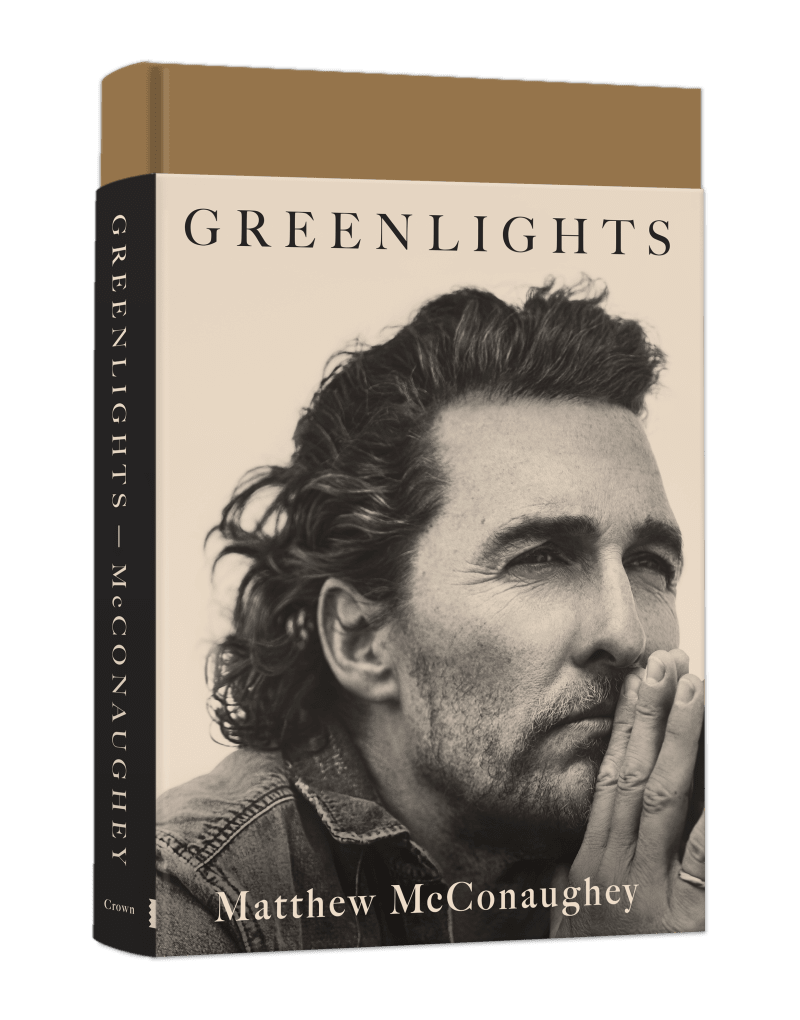
Greenlights, by Matthew McConaughey
Greenlights, by Matthew McConaughey
From TV interviews, I know that actor Matthew McConaughey is a good storyteller. Wanting to hear his book in his own voice, I got on the waitlist for the CD edition of Greenlights at the public library as soon as it showed up on the online catalog.
I must admit that listening to Greenlights on CD was probably not the best way to read the book. Mr. McConaughey is an enthusiastic storyteller, and he relates many very entertaining stories in Greenlights; however, as a good storyteller is prone to do, Mr. McConaughey varies the volume of his voice greatly as he spins a yarn. This can create discomfort while listening to the book on CD.
I read a review on Goodreads.com that gave the book a very high rating and recommended listening to it instead of reading it but with the caveat that it should be listened to in a quiet environment. That’s good advice. I would also say you shouldn’t attempt to listen to it with headphones or earbuds. Also, trying to listen to it in one room while someone is trying to sleep in the next room is not a good idea. Just sayin’.
I also admit that I have moderate hearing loss, but I don’t think that was the root of the problem I had in listening to Greenlights. If I set the volume to a comfortable level for the shouting, I could not hear much of the rest of the book. This meant I couldn’t hear the near-whisper parts at all. I had to constantly adjust the volume, so the CD edition of the book was a great disappointment.
Early on, the book talks about Mr. McConaughey’s home life as a child and teen. His parents had a volatile relationship, which couldn’t help but have a profound effect on him. He relates some very funny experiences he had as an exchange student in Australia. In fact, that was my favorite part of the book. He tells interesting and humorous stories about his world travels and how he more or less fell into the occupation of actor.
The overriding theme of the book is that we should learn from all life’s experiences. Don’t let the obstacles in life keep you down. Learn from them and keep going.
If you’re a Matthew McConaughey fan, you’ll enjoy reading the book. Listening to it? Maybe not so much.
Since my last blog post
I’m still reading good books and working on my historical novel manuscript for a partial critique by a professional editor.
I got my second Moderna Covid 19 shot on Saturday. I’m grateful that I live in a country where such things are available, and I’m grateful to all the people who worked to develop and distribute the vaccine. I had some unpleasantness for about 48 hours after the shot, but it surely beats contracting a bad case of Covid-19.
On Wednesday night, I enjoyed participating in the third virtual gathering of a group discussing Janet Givens’ book, LEAPFROG: How to have a civil conversation during an uncivil era. We had an interesting conversation about racial prejudice and our common humanity. I mentioned Ms. Givens’ book in my blog posts on January 18, 2021 ( Fictional Characters Can Take on Lives of Their Own), on December 14, 2020 (Favorite Books Read in 2020), and on April 13, 2020 (LEAPFROG and The Immoral Majority.)
Until my next blog post
I hope you have a good book to read. I’m listening to In the Garden of Beasts, by Erik Larson, and I’m reading Cicely Tyson’s memoir, Just As I Am. Other library books are piling up and calling my name. What a wonderful “problem” to have!
I hope you have some time for creativity and hobbies this week.
Wear a mask and get vaccinated as soon as that’s possible for your age and location so we can rediscover “normal.”
Without further explanation, I’ll launch right into my impressions of four of the eight books I read in February.
The Last Year of the War, by Susan Meissner
The Last Year of the War, by Susan Meissner
I listened to this novel. It was mesmerizing. It is told from the point-of-view of an American woman, Elise, whose father immigrated from Germany. Due to lies a neighbor boy told about her father during World War II, she (as a teen) and her parents were scooped up and sent to a family internment camp in Texas. Her best friend there was an American teenage girl of Japanese descent.
I was immediately drawn into the story as the book starts with Elise as an older woman suffering from dementia. More than perhaps anything else I’ve read, the author put me inside the body of this woman who knew she was losing her memory but refused to give in to the disease. She even had a name for her memory-deficient self — Agnes.
Her coping skills were quite impressive. Elise got on a plane to track down her long-loss internment camp friend so they would reconnect before she completely lost her memory. I was right there with her on her physical journey, and then the book took me on a trip through their experiences in the internment camp.
I was unaware of this family internment camp in Crystal City, Texas. After giving the reader an idea of what life was like in the camp – where German- and Japanese-Americans were held captive until they could be sent to their ancestral countries in exchange for Americans who had been caught behind enemy lines when the war started, the novel takes you on Elise’s journey as she and her family spend the last year of the war living in Germany. It then follows Elise’s life after the war and ends by jumping back to the beginning of the book in Los Angeles in 2010 on her trip to look for her long-lost Japanese-American friend, Mariko Inoue.
It was a lovely story to listen to. It was well-written and I found myself pulling for Elise from the first page to the last page. I found myself listening to it at bedtime and struggling to stay awake long enough to listen to just one more chapter. If you’re an avid reader, you know what I mean.
If you want to know more about the Crystal City, Texas internment camp, Jan Jarboe Russell has written a nonfiction book about it, The Train to Crystal City: FDR’s Secret Prisoner Exchange Program and America’s Only Family Internment Camp During World War II.
Soroosh, by Laleh Chini
Soroosh, by Laleh Chini
Laleh Chini is a blogger I follow. Soroosh is Laleh’s new novel. In the beginning, Soroosh is a 10-year-old boy who has to become the man of the house and find a way to support his mother and younger siblings. Living in the port city of Abadan, Iran — home to an enormous refinery — Soroosh’s mother is between the proverbial rock and a hard place as she isn’t allowed to work or go into public places alone since she’s a woman in a Muslim country.
Soroosh takes his new role very seriously and starts brainstorming to figure out a way to earn money to support the family. He starts by purchasing handmade Persian rugs one at a time from a woman and sitting by the side of the street to sell them. He is industrious and a good salesperson.
Mid-way through the book, Soroosh is a young adult and has continued to work hard to provide for his s extended family. I don’t want to give the plot away, so I won’t give more story details. Always eager to step out of his comfort zone, Soroosh is constantly looking for a way to expand his business interests so he can help others – whether that is providing jobs or bringing in enough income that he and his wife can do charity work.
Although Soroosh and his family face many challenges and sad events, it is an uplifting story of what persons of strong faith can do when they work hard, remember their meager beginnings, and look for ways to give back to society.
Ms. Chini is an excellent storyteller, which comes through in this novel. She writes in a way that enables the reader to visualize the scenes she describes. Written in first-person, it reads like a memoir as it follows Soroosh for decades of his life. I’m impressed at Ms. Chini’s ability to write a novel in English, as it was a second language for her. She also brings in some history and historic sites as Soroosh travels for his business endeavors, as Iran has such a rich and long history.
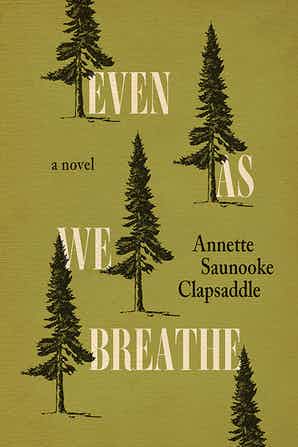
Even As We Breathe, by Annette Saunooke Clapsaddle
Even As We Breathe, by Annette Saunooke Clapsaddle
I can’t remember how I heard about this book, but I’m so glad I did. It is the kind of novel that’s hard to put down. The characters are developed well and I really wanted both of the main characters to find happiness and what they were looking for.
A young Cherokee man, Cowney Sequoyah, and a young Cherokee woman, Essie Stamper, get jobs working at the Grove Park Inn in Asheville, North Carolina, during World War II. The resort had been taken over by the US Government and housed foreign diplomats and their families.
Even As We Breathe is the story of the pull the Qualla Boundary has on Cowney and Essie. (The Qualla Boundary is the land trust in North Carolina that the descendants of the Cherokee people who hid out in the Great Smoky Mountains to avoid the Trail of Tears to Oklahoma in 1838 live on.) Even as they yearn to get away from Cherokee and the Qualla Boundary, they are drawn to it. The story shines a light on the white world’s prejudice against Cherokee Indians in the World War II era.
(Before you get upset that I use the term “Indian” instead of the politically-correct term “Native American,” when I did the research for my book, The Blue Ridge Mountains of North Carolina, I learned that, since the term Native American can be used to describe anyone born in America, the North American Indian Women’s Association recommends using the term American Indians. Therefore, I use the word Indian in this blog post and I used it in my vintage postcard book referenced herein.)
There are many, many layers to this story. Cowney’s club foot prevents his being able to serve in the US military during the war, which is a constant guilt he must deal with. There are family secrets that unfold throughout the book. His Uncle Bud plays heavily in Cowney’s life – and not in a good way.
The young daughter of one of the diplomats disappears. Through a series of bad decisions made by Cowney, Essie, and one of the US soldiers on duty at the Grove Park Inn – and the fact that Cowney is a Cherokee Indian and, thereby, is immediately suspect – things go badly for Cowney.
I hope I’ve given you enough information to make you want to read the book and not enough details to spoil it for you. Perhaps I especially enjoyed this book since I live in North Carolina and have visited Cherokee and Asheville many times, but I think you’ll like it, too.
The author, Annette Saunooke Clapsaddle is a member of the Eastern Band of Cherokee Indians and holds degrees from Yale and the College of William and Mary.
Below is a postcard of the Grove Park Inn that I included in my vintage postcard book, The Blue Ridge Mountains of North Carolina, published by Arcadia Publishing. If you’re interested in learning more about the Great Smoky Mountains, Cherokee and the Qualla Boundary, and Asheville, my book is available on Amazon and from the publisher.
A portion of a linen vintage postcard of Grove Park Inn.
Since I was on the waitlist at the public library for The Last Year of the War and Even As We Breathe for quite some time, it was coincidental that I read them at the same time and both were set against the backdrop of internment during World War II. Another Cherokee connection was in Step into the Circle: Writers in Modern Appalachia, edited by Amy Greene and Trent Thomson, which I read in January. (See my February 8, 2021 blog post, 4 Other Books I Read in January 2021.) My favorite part of that book was the section about Cherokee translator Marie Junaluska.
Dead Wake: The Last Crossing of the Lusitania, by Erik Larson
Dead Wake: The Last Crossing of the Lusitania, by Erik Larson
I can’t say enough about the way Erik Larson writes nonfiction books. He has a way of bringing history alive and holding me spellbound. Granted, I’m a bit of a history buff, but I think many of you would enjoy this book even if you don’t think you would.
The Lusitania was an ocean liner of the Cunard Cruise Line out of England. Ignoring the danger all British ships – military and otherwise – faced from German U-boats in 1915 (during World War I, of course), the Lusitania sailed out of New York City toward Liverpool, England, with more than 1,900 people on board.
Mr. Larson researched the backgrounds of the people who sailed on that voyage of the Lusitania and shares with us tidbits of their lives and why some were going to England. He weaves into the book the hot potato issue of the day: Were cruise ships fair game for German U-boats?
Germany maintained that they were fair game because they were probably carrying munitions as well as passengers.
Tension grows chapter-by-chapter as we alternate between seeing the war and enemy ships from the perspective of the captain of U-Boat 20 and from the perspective of passengers on and the captain of the Lusitania.
I found listening to Dead Wake: The Last Crossing of the Lusitania to be a painless way to learn details about its fateful voyage as well as more than I’d known before about German U-boats and torpedoes. The book goes beyond the sinking of the Lusitania as US President Woodrow Wilson hesitated to enter the war. In fact, it was two years after the sinking of the ocean liner before US troops arrived in England to help “the mother country” out of its dire situation.
Since my last blog post
I’ve had more books vying for my attention than I had time to read or listen to them. At the same time, I’m getting the first 50 pages of my manuscript for my historical novel The Doubloon (or perhaps The Spanish Coin) ready for a professional critique. It’s time to take the plunge!
Spring is in the air here in North Carolina. The daffodils are blooming. They’ve been the harbinger of spring my entire life. I can still remember running into the house clutching a fistful of daffodils and announcing to my mother, “The daffodils are blooming! The daffodils are blooming!” I suppose I’ve had Seasonal Affective Disorder all my life. They just didn’t have a name for it until recent years.
Until my next blog post
I hope you have one or more good books to read this week. Maybe one of the books I wrote about today will catch your eye.
If you’re a writer or other artist, I hope you have productive creative time.
I hope you stay safe and well. I’ll get my second Covid shot before my next blog post. I’m excited about that and the promise it brings. I’ll keep wearing a mask and maintain social distancing as long as necessary, though. I hope you can get vaccinated soon.
If you’ve visited my blog today expecting to find out what books I read last month, please forgive me. I felt compelled to write about an event in American history today. I’ll share with you my thoughts about the books I read in February in my blog posts on March 8 and 15.
#OnThisDay
It was 240 years ago today that the Articles of Confederation were ratified by the State of Maryland – the last of the 13 states to ratify the document, making it the law of the land.
As a writer and reader of historical fiction and nonfiction, I need to keep in mind what the federal government could and could not do before 1789. Today’s blog post is a “crash course” about the Articles of Confederation. I hope it will be a painless way to refresh your memory about the document and some of the reasons it had to be replaced by the US Constitution.
What were the Articles of Confederation?
The Articles of Confederation were spelled out in a five-page document that served as a constitution for the former American colonies after they won independence from Great Britain in the American Revolutionary War. It took the Continental Congress 16 months to draw up the document. The document was adopted on November 15, 1777, in York, Pennsylvania. York was serving as the temporary capital of the new country.
The Articles of Confederation loosely held the 13 states together. It mandated a single house in Congress, and each state had one vote. The Articles gave Congress authority over foreign affairs, the power to raise a national army, and the power to declare war and declare peace; however, the Articles did not give the Congress the power to levy taxes.
How durable were the Articles of Confederation?
It didn’t take long for people to identify problems with the Articles of Confederation.
Not wanting to risk being accused of “taxation without representation” the framers of the Article of Confederation gave states the authority to impose taxes but they did not give that authority to the United States government. Having hindsight, we can see today that such a setup was unsustainable, and it’s difficult for me to see how the framers couldn’t anticipate that. Since the new nation was in debt at the end of the American Revolution, it was difficult to raise funds to pay off that indebtedness without the power to impose taxes.
Another problem with the Articles of Confederation was that each state could issue their own currency. Imagine if that were the case today!
Photo credit: Alexander Schimmeck on unsplash.com
The Articles of Confederation failed to create a sense of nation. With a weak central government, allegiances were often more to one’s state than to the country. Indeed, that mindset continued in some ranks and contributed to the formation of the Confederate States of America and the outbreak of the American Civil War. Robert E. Lee’s almost blind allegiance to the State of Virginia comes to mind.
The US Constitution
Seeing the problems with the Articles of Confederation, the US Constitution was drawn up. It replaced the Articles of Confederation on March 4, 1789. For more information about the creation of the US Constitution, please see my May 25, 2020 blog post, #OnThisDay: 1787 US Constitutional Convention.
Photo credit: Anthony Garand on unsplash.com
Since my last blog post
I’ve enjoyed reading some books that I’ll blog about later. After having trouble concentrating on anything in January, it’s been gratifying to once again enjoy reading.
Until my next blog post
I hope you have a good book to read and quality writing time if you’re a writer, blogger, or like to journal just for your own edification. Writing is therapeutic.
I hope you have time to enjoy a favorite hobby.
Keep wearing that facemask out of respect for others.










 Janet's Writing Blog