How My First 50 Pages Stood up for Critique

Those of you who have been reading my blog for years know that (for years) I’ve promised to get my historical novel finished, critiqued by a professional, and published. You also know that I failed to take that second step until this year.

Since this is called “Janet’s Writing Blog” and is supposed to be about my journey as a writer, I promised somewhere in a blog post that I would report in my blog all the good, bad, and ugly of writing a novel. That includes the important part of getting a professional to critique my work. Hence, today’s post is about the ugly.

Photo credit: Pim Chu on unsplash.com

In mid-July I decided to go for it! After reading several of her books about the craft of writing, I hired C.S. Lakin to critique the first 50 pages of my 303-page manuscript. I’m pleased to announce that I’ve received her detailed evaluation of those 50 pages. I hate it for Ms. Lakin but, as they say, “Somebody had to do it.”


The Good News

The good news is that Ms. Lakin liked five things about those 50 pages. To be specific,

she thought I had an intriguing premise and story idea;

she liked my couching this murder mystery/theft in the American colonial era;

she liked how I showed Sarah (my protagonist) shaking her fist in the air in pain as her dream is shattered;

she liked how the walls closed in on Sarah as the first rain drops of a sudden downpour pelted the windows; and

she liked how Sarah felt clammy, her heart raced, and everything started going black.


The Not-as-Glowing, Yet Much-Needed News

I don’t know where to begin. Ms. Lakin made numerous detailed comments and asked many questions throughout my manuscript. Proverbial red ink was all over the 50 pages. So much negative (yet constructive) criticism was difficult to swallow all in one evening. Having found out earlier in the day that I need a root canal and a crown on a back molar, receiving the critique was the ending of a not-so-perfect day.

I’ve heard that every writer goes through the anguish of being told their work is lacking no good. The initial read-through of the critique comments left me wondering if I even knew how to write a coherent sentence.

That was last Monday. After having a brief pity party, though, I got back to work.

On Tuesday, I reread Ms. Lakin’s comments and started forming a plan of what I needed to do in order to improve as a fiction writer. This is what I came up with, in no particular order:

Photo credit: unsplash.com
  1. I need to reread C.S. Lakin’s book, Layer Your Novel: The Innovative Method for Plotting Your Scenes. I’d read the first third of the book some time ago, but rereading it in light of her critique made the book make more sense to me;
  2. I need to study how to demonstrate emotion in my writing. In my manuscript draft I relied too much on the reader “hearing” the tone and emotion in the dialogue and descriptions I wrote. Sometimes I told what emotions a character was feeling instead of describing those emotions and how those emotions were affecting them physically. I need to work on what the characters are thinking;
  3. I need to put more time into making the setting of the story come alive so the reader will visual the time and place to a greater degree;
  4. I need to put more effort into getting into my point-of-view characters’ heads and show their reactions and what they’re feeling;
  5. I need to study story structure and the framework of a successful novel;
  6. I need to move some scenes around because some of them appear to be a bit early in the overall scheme of things;
  7. I need to work on pacing because some scenes seem rushed;
  8. I need to study deep point-of-view;
  9. I haven’t spent enough time in the book showing Sarah striving to overcome the inciting incident – which was the premise of the book that I described to Ms. Lakin in my one-page synopsis. In other words, I’m waiting too long into the story to have Sarah actively put a plan of action in place. Her efforts along those lines should be “well underway” before page 50;
  10. I haven’t adequately explained the purpose of some of the secondary characters;
  11. Ms. Lakin recommends that I take her Emotional Mastery course;
  12. Some of the dialogue sounds too modern; however, I don’t want to fall into the easy trap of using dialect that is expected in novels set in the South – especially the dialect that we’ve all been conditioned to expect slaves to have used. I’m adamant that the Black characters – free or enslaved – in my novel will be portrayed as the human beings they were and not mythical stereotypes;
  13. I need to pay attention to scene breaks and chapter breaks. For instance, Ms. Lakin said when skipping ahead several hours or days, it’s best to start a new chapter;
  14. I need to be sure every scene advances the plot;
  15. I need to remove the predictable, mundane, and boring lines and paragraphs;
  16. I need to explain why William had a will in order for his widow to inherit anything, including her own kitchen utensils. In the colonial era, a wife didn’t automatically inherit anything from her husband or the lives they’d built together. If particulars weren’t spelled out in the husband’s will, the wife was legally left with nothing;
  17. I need to explain why Sarah couldn’t just free a slave on a whim. Manumission papers or a statement of granting freedom in a will were necessary, but that only becomes evident later in the novel;
  18. I have too much dialogue in the manuscript;
  19. Ms. Lakin recommends that I take her course, The Ten Key Scenes That Frame Up Your Novel;
  20. Ms. Lakin recommends that the best course for me to take is her 8 Weeks to Writing a Commercially Successful Novel. Before taking this course, I need to read Layer Your Novel: The Innovative Method for Plotting Your Scenes and The 12 Key Pillars of Novel Construction, both by C.S. Lakin;
  21. Although I’ve already written 303 pages and almost 90,000 words, Ms. Lakin encouraged me “to put off writing a whole novel until you get these key elements of fiction writing under your belt. It takes time and practice and effort, but it’s really the best advice I can give you at this point.”

What I’ve done since making that list on Tuesday afternoon

It is said that ignorance is bliss. A couple of weeks ago I knew I had much to learn about writing fiction, but I didn’t know how much I didn’t know or have a good grasp on. Bliss is over now. Reality has set in.

I’ve visited Ms. Lakin’s website to read about the courses she offers and how much they cost.

I’ve looked at my bookshelves and my library of e-books. I own many books about the art and craft of writing. Some of them, I’ve not read. Some of them, I need to read again. Those are on my “to-be-read” list now alongside some novels I’ve been on the waitlist for at the public library for a while. I’ve listed those books (along with writing books I can borrow from the library) in the order in which I think I need to read them.

I started rereading Layer Your Novel: The Innovative Method for Plotting Your Scenes, by C.S. Lakin, as a result of number 20 on the above list. The assignment at the end of the first chapter is to write what each scene is about on index cards. The purpose of that exercise is to make it possible for you to lay out all the scenes in order on a table. By doing that, you can see the natural sections of the plot.

Photo Credit: Kelly Sikkema on unsplash.com

In light of number 21 on the above list, my doing this exercise now is getting the cart before the horse; however, reading that assignment prompted me to look at all 68 scenes in my current draft. With all of Ms. Lakin’s comments swimming around in my head, I was able to readily pick up on some problem scenes as I reviewed the entire manuscript.

I made notes to remind myself to rewrite some scenes in Sarah’s (my protagonist’s) point-of-view instead of a secondary character’s point-of-view. There were some “aha” moments when I thought of new plot twists or thought some early scenes could better take place later in the story or vice versa. It refreshed the entire story in my mind.

Photo credit: Daniel McCullough on unsplash.com

As Ms. Lakin recommended in number 21 in the above list, I need to learn more about the key elements of fiction writing before tackling the entire novel. Ms. Lakin compares constructing a novel with building a house. In order to hold up, both must have a solid foundation. And solid foundations require careful planning, skill, practice, and an eye for detail.


What’s My Next Step?

In the near future I’ll dedicate more time to my writing. I’ll read everything I can about constructing a novel, constructing a scene, emotion, deep point-of-view, description of time and place, and speech in the backcountry of South Carolina in 1769.

I’m afraid this means I won’t get to read as much fiction and nonfiction about contemporary issues as I’d like. I will need to read certain types of fiction to see how successful authors construct a novel.

This week’s plan: Delve deeper into setting and description of setting. The question before me this week: How can I write about the setting of my novel more vividly and succinctly in order to plunge my reader into the Carolina backcountry in 1769?


Until my next blog post

Next week I plan to blog about two books I read in July that enlightened me about some issues of racial injustice and some of the lessons I’ve been taught that just weren’t true.

I hope you have a good book to read.

If you’re an aspiring author, I hope you get good advice and roll with the punches like I’m learning to do. It’s definitely a journey.

Janet

Taking Stock of Historical Fiction

I changed my topic for today’s blog post several times. In fact, I had it pretty much written and ready to go last Monday. Everything changed on Tuesday morning, when I checked for comments on my blog.

Last Tuesday, one of my blog readers who is Jewish left a heartfelt comment about what I had written about Pam Jenoff’s historical novel, The Woman with the Blue Star, in my July 12, 2021 blog post, 4 Other Books I Read in June 2021.

That reader has more intimate knowledge of the Holocaust than I have and, through an acquaintance who lived in the Krakow sewers, says that the premise of Ms. Jenoff’s book is impossible. I read Ms. Jenoff’s novel as a work of fiction, knowing the story was not true. I didn’t think about the possibility that some readers would be offended by the premise of the book. Prior to reading the novel, I wasn’t aware that some of the Jews in Poland had to hide for their lives in the nasty city sewers. For Ms. Jenoff’s bringing that fact to my attention, I am grateful.

This comment and my response to it served is a reminder about historical fiction – and it’s important to me as a fan of the genre and also a writer of it.

The Woman with the Blue Star, by Pam Jenoff

In fairness to Pam Jenoff, I heard her interviewed about her process in writing this novel. She did extensive research. It is a fact that some Jews took refuge in the sewers in Poland. There were many anti-Semitic people in Poland, but there were also sympathetic Poles who risked their lives to try to save Jews.

I heard Ms. Jenoff interviewed about this novel some weeks ago. I wish I’d taken some notes, so I could share them with you and with the reader who contacted me last week.


Admitting my own bias

I have lived my entire life in North Carolina. Two older ladies were friends of my family. By older, I mean older. Sisters, they were born in 1883 and 1888. Their father fought for the South in the American Civil War. Those sisters drilled it into me that it was “the War Between the States” and not “the Civil War.” That statement was always followed quickly with, “There was nothin’ civil about it.”

That really made an impression on me and even recently I’ve referred to the American Civil War as “the War Between the States.” I’ve written it that way in various things I’ve written and self-published.

I now see my bias. In the future, I will refer to it as “the American Civil War” or “the US Civil War.” It was a war between the Confederate States of America and the United States of America. For me to call it anything else is to twist history and reveal my bias.

I think it was Oprah Winfrey who said, “When you know better, you do better.” Those are words I try to live by. I hope I never get too old to learn new things and new ways to look at things.


The unwritten pact between fiction author and reader

A reader of historical fiction should always keep in mind that they’re reading fiction. Fiction is made up. It’s a story created in the author’s mind; however, there is an unwritten pact between the author and the reader. There should be enough factual information – whether in event or time and place – that the reader can trust that the story is plausible.

It is incumbent upon the writer of historical fiction to do due diligence in research. I heard author Sharyn McCrumb speak a few years ago about her research and writing methodology. As an aspiring historical fiction writer, I was impressed with all she said.

One thing Ms. McCrumb said, though, stood out and remains in the back of my head. I think about it as I’m doing my research, and I think about it every time I hear someone say they don’t read historical fiction. They often go on to say they only read history books.

Ms. McCrumb’s statement that stood out to me that evening was that (and I paraphrase) some historical fiction is better researched than some history books.


History books and their bias

We only need to stop and think about some of the history textbooks we had 50 or 60 years ago. (I can’t speak for the content of current school curriculum history textbooks.) Aside from the recitation of dates of birth and death of persons of alleged import and the dates of battles and the like, much of the way history was presented to students depended upon the author’s point-of-view. Textbooks are usually written from the winner’s perception.

For example, the textbooks I had as a student presented the white settlers’ “conquering” of the frontier as a positive thing. No time was spent trying to view the 1600s to the present through the eyes of a Native American. If the Cherokee Trail of Tears was even mentioned, it was only in passing.

Some Southerners still maintain that the American Civil War was fought over “states’ rights.” (Many of those same people still refer to that war as “the War of Northern Aggression.”)  I have relatives who still maintain that as the truth and will argue me down that it had nothing to do with slavery. Some people learned certain things about the Civil War and no facts today will change their minds.

If we are to be true students of history, I believe we should read both sides of the story. Both sides are tainted by the personal experience of the writer but, by the same token, both sides of the story probably contain some truth.

The antebellum American South has been romanticized to the hilt by such novels as Gone With the Wind. Confederate generals have been portrayed as dashing and religious Southern gentleman who fought for the honor of hearth and home. In some cases, that’s who they were. But they were basically fighting to maintain the status quo. Even if they didn’t own slaves, they didn’t have any quarrel with the institution of slavery. The economy was built upon it. What would happen if there were no slaves? They couldn’t imagine such a world.

Renowned historical novelist James Alexander Thom wrote a book called The Art and Craft of Writing Historical Fiction. In it, he wrote the following: “History contains many errors because each person sees the same incident differently or remembers it differently. History textbooks are biased depending on the agenda of the writer, the publisher, the state, the school board.”


What James Alexander Thom wrote about historical fiction

The Art and Craft of Writing Historical Fiction, by James Alexander Thom

Here are four quotes from The Art and Craft of Writing Historical Fiction, by James Alexander Thom:

But fiction is not the opposite of truth. Fiction means ‘created by imagination.’ And there is plenty of evidence everywhere in literature and art that imagination can get as close to truth as studious fact-finding can.”

“Most early American white men thought women should be seen but not heard. As a historical novelist, you might wish to make your hero ‘politically correct’ by today’s standards, but if you do that, you’ll be lying to your readers.”

To be really good historical novelists, though (and that’s what I want us to be), we have to take our obligation to historical truth just as seriously as the historians do theirs. But we don’t have to bear the burden of being the authority on every factual detail. Our disclaimer is right there on the cover: a novel.”

But here’s the key: Whether your historical story is ancient or recent history, what you want to do is re-create it in full – live, colorful, smelly, noisy, savory, painful, repugnant, scary, all the ways it actually was – and then set the reader down smack in the midst of it.”

I’ve referred to James Alexander Thom in a number of my blog posts over the years. One of them was my February 12, 2019 blog post, Two for Tuesday: Two Books that Helped Me Fall in Love with Reading.


Until my next blog post

Time will tell what my blog will be about next Monday. I hope you’ll come back next week to find out.

I’ll continue to read and write historical fiction. Mr. Thom says good historical novelists are respected by historians. That’s what I aspire to be.

Let me know what you like or don’t like about my blog. I’m especially trying to reach people who like reading historical fiction and have an interest in Early American history. I also enjoy exploring current events and discussing them with people from around the world. It amazes me every week to see that people from around the world have read my blog. In that respect alone, I think blogging and the internet are wondrous avenues for the sharing of ideas.

You never know. A comment you make about one of my blog posts might stop me in my tracks and force me to dig a little deeper into a subject or even admit I’ve been wrong.

Thank you for reading my blog. All comments, opinions, criticisms, and corrections are welcome.

Janet

4 Other Books I Read in June 2021

My blog post last Monday was about three historical novels I read in June, so today’s post is about the other four novels I read last month. I was amazed at how many good books I got to read or listen to.


The Plot, by Jean Hanff Korelitz

The Plot, by Jean Hanff Korelitz

As an aspiring novelist, I really enjoyed this book. The premise of The Plot is that a wannabe writer teaches writing one summer at a failing college in Vermont. One of his students is a real pain in the neck but a good writer.

The student shared with the instructor his idea for a novel. The instructor thought it was a brilliant idea. When the instructor found out the student had died and supposedly left no living relatives, the instructor writes a novel based on the student’s plot. He becomes famous and is much sought after. Just as his second novel is to be released, though, he receives a scary message: “You’re a thief.”

I think I’ll stop there and let you read the book to find out what happens. Is the writing instructor really a thief? And are the messages coming from his student’s long-lost niece or someone else? The ending surprised me.


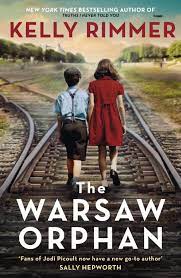
The Warsaw Orphan, by Kelly Rimmer

The Warsaw Orphan, by Kelly Rimmer

After liking Kelly Rimmer’s earlier historical novels, The Things We Cannot Say (See my September 9, 2019 blog post: #BringBackOurGirls) and Before I Let Her Go (See my October 7, 2019 blog post: Thrillers and a Dark Novel I Read Last Month) I got on the waitlist at the public library for her new novel, The Warsaw Orphan, as soon as it showed up on the library’s catalog as having been order. I was able to check out the book on CD a couple of weeks ago, and it did not disappoint.

I highly recommend this book to anyone who enjoys reading novels set in World War II Europe. This story grabbed my attention immediately and never lagged. Sometimes plots lag in the middle of a book, but not this one.

As you might surmise from the title, this novel is set in Warsaw, Poland beginning in the spring of 1942. Elzbieta Rabinek is a teen girl who grows more and more afraid of the German police patrolling the city streets and ever more aware of and concerned for the Jews who were confined in the ghetto behind the city wall.

You’ll find that Elzbieta is not necessarily who she passes as, and this is the case for more than one major character in the book. She befriends a young man who lives in the ghetto while she volunteers with a nurse who is secretly smuggling children out of the ghetto. There is danger, terror, and courage at every turn. This book will keep you turning the pages or wanting to listen to “just one more CD” before you turn the light off at night.


The Woman with the Blue Star, by Pam Jenoff

The Woman with the Blue Star, by Pam Jenoff

I’ll start by saying this novel is not a pleasant read, but it’s an important historical novel. It opened my eyes to the horrors of the Jews who escaped capture by the Nazis by hiding in the sewers. This is unimaginable to me, but it is true.

The book brings out the stench and filth in which these people lived for more than a year. In that respect, the sewer itself becomes a character in the book. The protagonist, Sadie, is a teen girl who looks up through a sewer grate one day and sees a girl, Ella, about her age. Sadie and Ella make eye contact and Ella returns to the grate to look down into the sewer to talk to Sadie. Ella’s family is not Jewish and they enjoy a comfortable life. Both girls must keep their friendship secret.

The Jews hiding in the sewer are at the mercy of a young man who brings them scraps of food. It is barely enough to keep them alive. To compound the situation, Sadie’s mother is pregnant.

This story is filled with suspense. The ending was bittersweet, but I loved the epilogue.

I’ve read and enjoyed two of Pam Jenoff’s other novels, The Orphan’s Tale (See my August 7, 2017 blog post, Late July Reading) and The Lost Girls of Paris (See my May 3, 2021 blog post, 5 Historical Novels I Read in April 2021.)


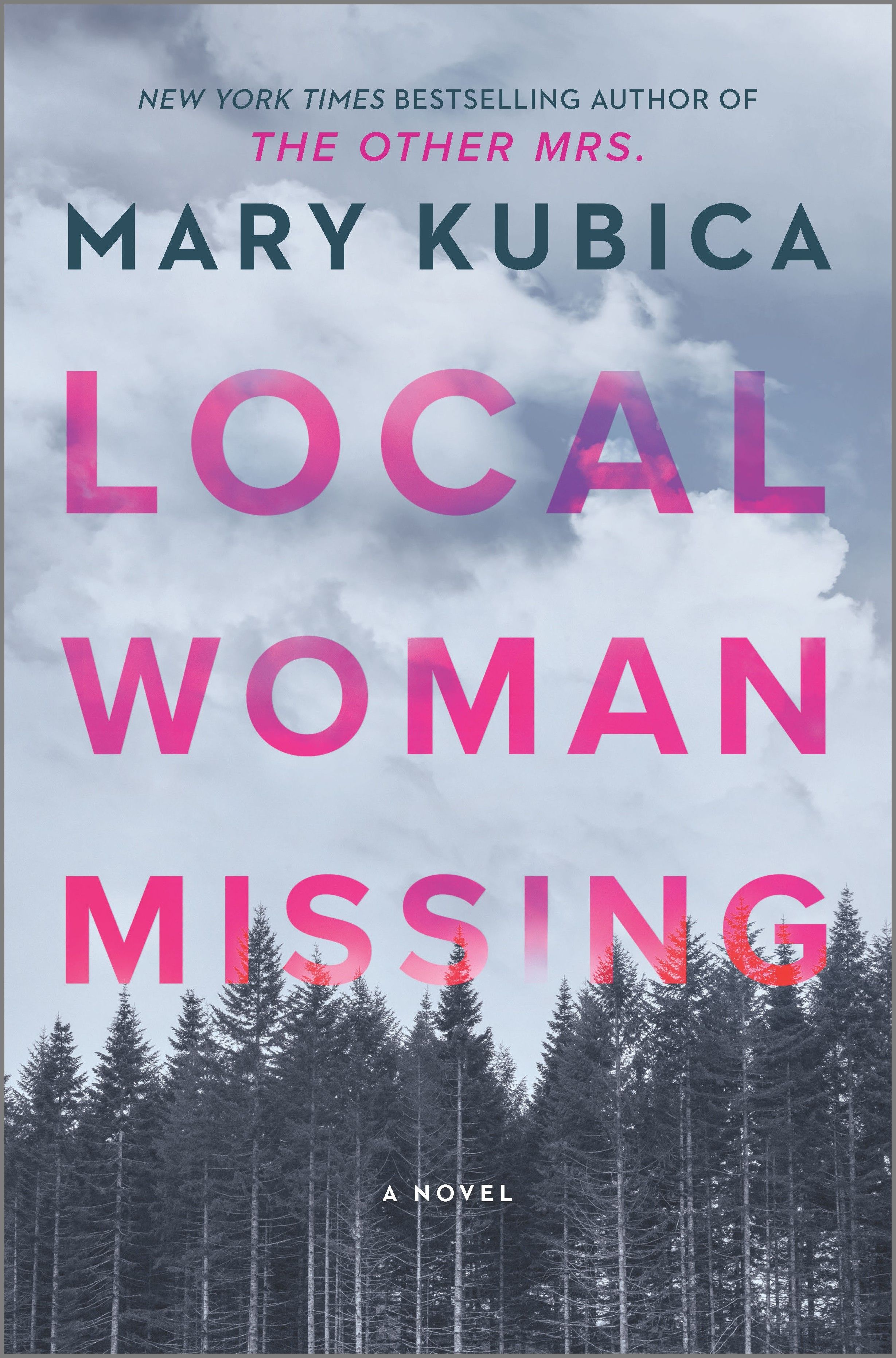
Local Woman Missing, by Mary Kubica

Local Woman Missing, by Mary Kubica

I’d heard and read good things about this novel and looked forward to listening to it. I had trouble keeping up with whose point-of-view I was hearing, though, so I returned the book on CD to the public library.

Reading the printed book might be easier, when I get a chance to do that. I think the problem was mine and not the writer’s. With Chronic Fatigue Syndrome, I sometimes have concentration difficulties.

One thing in the book made me laugh out loud. You may recall that on March 29, 2021, my blog post title was #Idiom: As All Get Out. Several of you responded to let me know you’d never heard that expression before, while others said that you had but not in a long time. I was absolutely delighted that one of the characters in Local Woman Missing used “as all get out” several times.

I’ll probably give this book another chance when I can read it on my Kindle and adjust the font size.

Since my last blog post

I’ve worked on my historical novel manuscript. It feels great to be back on it! I’ve arranged for a professional editor to evaluate the first 50 pages of my 303-page manuscript. I’ll let you know what she has to say about it in a future blog post.

Until my next blog post

I hope you have at least one good book to read. I’m reading several.

I hope you’ve been able to get your Covid-19 vaccination, if you’re health allows you to take it. Variants of the virus will continue to develop until a greater percentage of us receive the vaccine. How fortunate we are to live in the 21st century when such vaccines are possible!

Enjoy your week, whatever you’re doing.

Janet

3 Historical Novels I Read in June 2021

I read a bunch of good books in June, so without any delay I’ll jump right in to tell you what I thought of three of them.


The Girls in the Stilt House, by Kelly Mustian

The Girls in the Stilt House, by Kelly Mustian

I hardly know what to say about this debut historical novel by Kelly Mustian, a native of Mississippi. Wow! What a great book!

I’ll be careful not to give away anything about the plot. Ada is a white teen. Matilda is a black teen just a little older than Ada. They both live along the Natchez Trace in Mississippi in the early 1920s. When the book begins, they don’t know each other.

A string of ill-fated events throw the girls together in the stilt shack Ada lives in on the swamp. Both of them have secrets, some of which they don’t learn about one another until near the end of the book.

This book will keep you turning pages and yearning for Ada and Matilda to get the opportunities they deserve to have better lives. Ms. Mustian is a true wordsmith. She writes beautifully and even weaves a touch of humor here and there in this book of tragedies. She carefully crafted every sentence. I can’t wait to see what she writes for us next!


The Elephant of Belfast, by S. Kirk Walsh

The Elephant of Belfast, by S. Kirk Walsh

The Elephant of Belfast, by S. Kirk Walsh was inspired by true events in Belfast during the early days of World War II.

Denise Weston Austin was one of the first female zookeepers at the Belfast Zoo. Ms. Austin took a baby elephant named Sheila out of the zoo so she could escape being killed when the Ireland government ordered the zoo animals to be killed after Germany started bombing Belfast.

Government officials feared that if the zoo enclosures were damaged in future bombings, the animals could escape and pose a threat to local residents. Ms. Austin took the elephant to her home north of Belfast!

Author Sheila Kirk Walsh took that information and more historical facts and wove a fascinating novel about a fictional character – Hettie Quin — based on Denise Weston Austin and Violet – the name of the elephant in the book.

It was a frightening time with much death and destruction in Belfast. Ms. Walsh drew on her own experience in Manhattan on 9/11 to bring to this novel a feeling of insecurity and not knowing what might happen next.

There is depth to this novel, as Hettie Quin loses much that is near and dear to her. She not only saves Violet, Violet saves her.

Charlotte McCurry read the book for the CD edition. Her lovely Irish brogue added an air of authenticity to the story.

My apologies to Ms. Walsh. I was unable to capture a clear photograph of the book.


The Library of Legends, by Janie Chang

The Library of Legends, by Janie Chang

The premise of this novel enticed me to check it out. It’s based on a real event. In 1937, during the Second Sino-China War, university students and faculty members took 500-year-old Chinese writings (“the Library of Legends”) more than 1,000 miles on foot in an effort to save them from the bombings of the major cities by the Japanese. The premise intrigued me.

What I didn’t know, was that these ancient writings were just that: legends. Some of those legends are interwoven into the book. While that fantasy element appeals to some readers, it doesn’t especially appeal to me. I’m just not a fan of fantasy novels.

That said, I enjoyed the parts of the book that described the actual arduous journey taken by a group from one university, but I found myself skipping the pages about the legends. Halfway through the book, I stopped to read reviews of the novel. Some reviewers loved it because it is a combination historical novel/fantasy novel, while others disliked it for that very reason. I’m afraid I fall into that second camp.

It is said that China was fighting two wars at the same time. They were fighting Japan and they were fighting to keep communism out of their country. The communist influence is brought out in the book.

It was definitely worth my while to read as much of this book as I did. I learned something about Chinese history. It amazes me that university students and faculty members walked more than 1,000 miles in order to save some of the most treasured Chinese writings. I had no idea!

Until my next blog post

I hope you have a good book to read. Remember – you don’t have to finish reading a book just because you started reading it. That’s been a difficult lesson for me to learn. I don’t know why. That lesson finally became real to me last month when I was able to walk away from The Library of Legends, by Janie Chang. I had learned what I was meant to learn from it.

I’m listening to Caste: The Origins of Our Discontent, by Isabel Wilkerson. I highly recommend it!

Caste: The Origins of Our Discontents, by Isabel Wilkerson

I hope you enjoy your vocation or your retirement, and that you have time to enjoy a hobby.

Janet