#OnThisDay: Three Mile Island, 1979

I’ve had two relatively close encounters with Three Mile Island. Both were unexpected.

While on vacation in the Pennsylvania Dutch Country in the early 1980s, my sister and I sought out a unique restaurant, Alfred’s Victorian Restaurant, for dinner one night in Middletown. It was only upon arriving that we realized that Middletown was actually the location of the Three Mile Island Nuclear Power Plant. We joked about glowing in the dark later that evening, but I know it’s really not a laughing matter.

On a later trip to work on our family’s genealogy, my sister and I flew into the airport in Harrisburg, Pennsylvania. On our approach, the plane banked so close to the cooling towers of the power plant, I swear I could have reached out and touched them if the windows had been open!

In retrospect, it’s astounding that a commercial jet was allowed to fly so close to a nuclear power plant, but that was well before 9/11. Maybe it wasn’t supposed to do that.


What happened at Three Mile Island?

Can it be 43 years since this happened? I’m feeling older by the day!

A pressure valve in the Unit-2 nuclear reactor at Three Mile Island near Middletown, Pennsylvania failed to close at 4:00 a.m., March 28, 1979. The result was the worst nuclear power generating facility disaster up until that time.

This cooling malfunction caused part of the core of Unit-2 to melt. The reactor was destroyed, but there were no injuries. A small amount of radioactive gas was released two days after the accident, but it wasn’t enough to cause any adverse health problems.

Personnel operating the facility were unable to tell where the malfunction was in the beginning, which contributed to the emergency. As a result of what happened at Three Mile Island, a raft of changes were made in operating procedures, training, emergency response planning, and other aspects of nuclear power production required by the United States Nuclear Regulatory Commission (NRC).

According to the NRC, “A combination of equipment malfunctions, design-related problems and worker errors led to the TMI-2’s partial meltdown and very small off-site releases of radioactivity.”

If you’re too young to remember this accident or desire to know more about it, here’s the link to an NRC report: https://www.nrc.gov/docs/ML0402/ML040280573.pdf?msclkid=551c40f7a7cd11ec8bde7e38f7758305.


What’s the status of Three Mile Island?

The other nuclear reactor, Unit 1, was shut down on September 20, 2019. The dismantling of the facility and clean-up is estimated to take 60 years and cost more than $1 billion.


The good news?

Many problems were identified due to the accident at Three Mile Island. The resulting regulatory changes have made nuclear power production in the United States and other countries much safer.


Since my last blog post

I continued to work on that old cemetery project I’ve mentioned in a couple of recent blog posts. It’s troubling how much damage the elements have done to some of the grave stones since I took photographs of them in 2006. I continue to try to decipher some of the inscriptions.

I’ve started working my way through Blueprint for a Book: Build Your Novel from the Inside Out, by Jennie Nash as I continue to work out the plot for The Heirloom.


Until my next blog post

I hope you have a good book to read. I’m reading parts of several.

Watch and listen to the news and read news articles from reputable sources. Stay informed about current events.

Thank you for spending some time reading my blog.

Janet

How much do you value your public library?

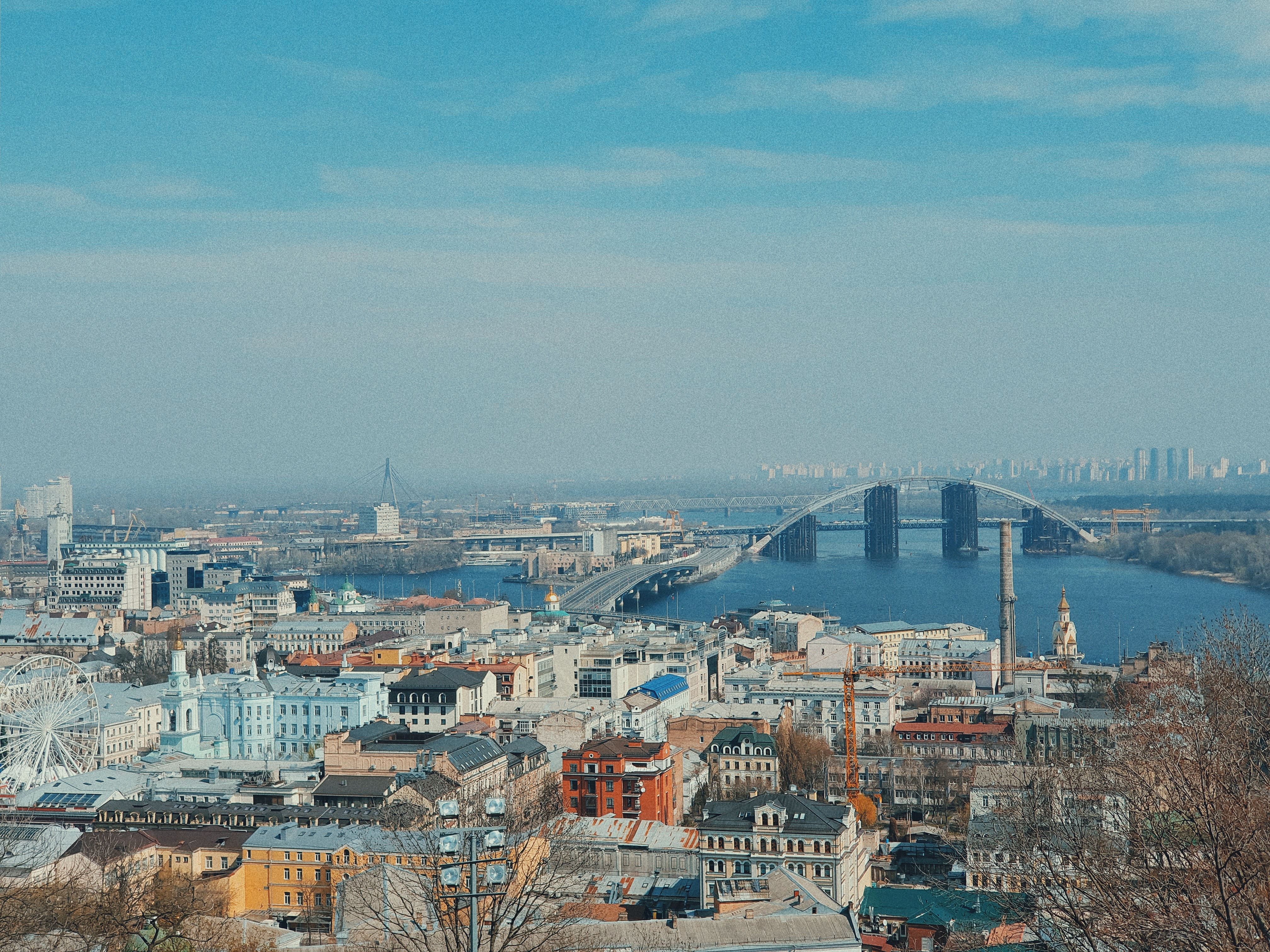
When I planned today’s topic, the war had not begun in Ukraine. When I wrote the rough draft, the people of Ukraine were not fleeing for their lives. What has happened in the last month put the topic of public libraries in a whole new light.

Kyiv, Ukraine before mid-February 2022. Photo credit: hristo sahatchiev on unsplash.com

National Public Radio (NPR) here in the United States reported this week that libraries in Ukraine are doing what libraries do. Just as historic statues are being sand-bagged and stained-glass windows in 13th century churches are being covered in metal shields, the library staffs and volunteers are working around the clock to save what they can. Irreplaceable library items and collections are being taken to other countries for safe keeping.

According to this NPR report, https://www.npr.org/2022/03/09/1085220209/ukraine-libraries-bomb-shelters, libraries there are offering classes on making camouflage and are serving as bomb shelters. It’s what libraries do when push comes to shove.

I can’t image living in such a situation as the Ukrainians are dealing with. A couple of months ago, they were working, playing, going to school, eating in restaurants, going shopping, and enjoying the benefits of libraries. Today they are fighting for their very lives and the survival of their democracy.

Lviv, Ukraine. Photo credit: Nataliia Kvitovska on unsplash.com

My library experience

It’s odd how some months I read quite a few books and some months I read only one or two. I couldn’t afford to purchase most of those books, so how did a I manage to read so much?

I have two free public library systems to thank for all of them. Before you say, “Public libraries aren’t free; I pay for those libraries and their books with my tax dollars,” I agree; however, regardless of your tax status or how much or how little you pay in taxes, you can use those libraries.

Harrisburg Branch of Cabarrus County Public Library System

In the big scheme of things, only a few of your tax dollars are earmarked for public libraries. When you want or need to use the vast resources of your public library, it doesn’t cost you one cent.

I have access to the public library system in the county in which I live. A few years ago, my sister and I paid $100 to have lifetime household access to the library system in the adjacent county in which we used to live. It’s the best $100 we ever spent. Some adjacent counties have reciprocal agreements. You might want to check into that.

If you despair of paying local property tax, just pretend that all your tax dollars go to support the public libraries in your city or county. When local government funds get tight, the library system is usually the first service to bite the dust.

We saw library hours drastically cut during The Great Recession, and it took longer for operations to get back to normal than it did for the doors to be locked almost overnight.

In my county, at least, each branch manager can tell you how many people come through the doors and how many books are checked out every month. The director of the public library system uses those statistics every May and June to prove to the county commissioners how important the library system is. The more the commissioners know how much the system is being used, the harder it will be for them to cut library budgets.

A library card is free. All you need is proof of residency to get one. The public library has computers for the public to use, newspapers for you to read, books in various formats for you to check out, magazines for you to read on-site and sometimes to check out, and music CDs for you to borrow.

Most public library branches offer programs for adults and children and classes you can take. For instance, a few years ago I took a free course about Excel at my local library. The library is also a good, safe, public place for your child to meet with a tutor.

I borrow e-books, borrow books on CD, download books on MP3, borrow large print books, and regular print books. I borrow past issues of magazines. I borrow music CDs. I attend programs and get to hear authors speak (or did before the pandemic.) There are reference books I can use on site. I can do research and read microfilmed records in the local history/genealogy room.

If your hobby is genealogy, but you prefer not to pay for a subscription to a service such as Ancestry.com, inquire about it at your local public library. The one in my town has an Ancestry.com membership that’s free to the public. Through it, you can access all US Census records that have been released as public information.

If you aren’t taking advantage of your local public library, please remedy that immediately! While you’re there, see if it has a copy of my book, The Blue Ridge Mountains of North Carolina, on the shelf. If it doesn’t, ask if it can be added to the collection. Did you know you can do that? You can inquire in person at your local branch or you can probably submit a request through your library’s website. There are no guarantees, but such requests will be given consideration by the library system’s administrators.

Free public libraries help to “level the playing field.” We need more of that in this time when the gap between “the haves” and “the have nots” seems to be widening.

Where else can you get all that and more?

Never, never, never take public libraries for granted!

Since my last blog post

Do you ever have one of those weeks when you feel like you were busy but when Friday rolls around you can’t remember anything you accomplished? That sounds like me last Friday when I sat down to type this paragraph.

I didn’t work on my novel like I should have or planned to do, but I made a lot of progress on the old graveyard photography project I mentioned in last Monday’s blog post.

I’ve also been taking pictures of items my sister and I have that belonged to our parents or grandparents. We’re adding them to a photo album we’ve dedicated to such items in which we write the history of each item so future generations that end up with them will know where they came from. It will be up to future generations to decide what to keep and what to discard, but at least they’ll know why each item held importance to us.

I also did some cross-stitching and college basketball watching. After all, it was the first week of “March Madness” in the United States.

Until my next blog post

Keep checking out library books! I hope you have a good one to read this week.

Find time for a hobby.

Read newspapers, listen to NPR, and watch reputable news broadcasts on TV. Don’t shy away from watching the news because “it’s all bad” or you “don’t want to see that.” You owe it to yourself and your fellow residents of your country and this world to keep up with current events.

I cringe every time someone tells me they don’t watch the news – like someone did last week. Just because you choose not to be aware of what’s happening doesn’t mean it’s not happening.

Janet

Using ALL your senses in your writing

One of my favorite quotes about writing is this one from Russian playwright and short story writer, Anton Pavlovich Chekhov: “Don’t tell me the moon is shining, show me the glint of light on broken glass.”

I included that quote when I touched on the topic of writing all the senses in my February 14, 2022, blog post, Can Movies Help You Write? Today I’m going a bit deeper into the subject.

As an aspiring novelist, I have a lot to learn. To try to remember all the things a scene needs to include can be overwhelming. It’s not enough to stay in the head of your point-of-view character at all times. It’s not enough to be cognizant of pacing. It’s not enough to remember to throw in a red herring once in a while or to vary the length of your sentences and paragraphs. It’s not enough to include all characters’ body language (but only what the point-of-view character notices.) A writer must also remember to include what the point-of-view character sees, hears, smells, tastes, and touches.

In addition, a writer today is told to keep in mind that today’s reader has a short attention span. If that’s true, I probably lost most of my audience midway through the previous paragraph.

For those of you still reading this blog post, I’ll continue. I say all this (1) to make fiction readers appreciate some of the work it takes to write a novel you’ll enjoy; and (2) to lead up to a recommended blog series you might benefit from if you’re studying the art and craft of writing.

In 2020, Joan Hall wrote a series of blog posts about using all the senses, including the 6th Sense, in your writing. Here are the links to Ms. Hall’s six blog posts about the senses:

Sight: Photo Credit: Davidson Luna on Unsplash.com

Post number one in Joan Hall’s Story Empire blog series about the senses: https://storyempirecom.wordpress.com/2020/02/14/using-the-five-senses-sight/.


Smell: Photo Credit: Motunrayo Babtunde on Unsplash.com

Post number two in Joan Hall’s Story Empire blog series about the senses: https://storyempirecom.wordpress.com/2020/02/26/using-the-five-senses-smell/.

Taste: Photo Credit: Engin Akyurt on Unsplash.com

Post number three in Joan Hall’s Story Empire blog series about the senses: https://storyempirecom.wordpress.com/2020/03/11/using-the-five-senses-taste/.

Sound: Photo Credit: Marcus Woodbridge on Unsplash.com

Post number four in Joan Hall’s Story Empire blog series about the senses: https://storyempirecom.wordpress.com/2020/03/27/using-the-five-senses-sound/.

Touch: Photo Credit: Jocelyn Morales on Unsplash.com

Post number five in Joan Hall’s Story Empire blog series about the senses: https://storyempirecom.wordpress.com/2020/04/13/using-the-five-senses-touch/.

I couldn’t find a photo to represent the Sixth Sense in the way I wanted to here, so use your own imagination for the sense of knowing in advance that something is going to happen. Have you experienced it? I have, and it can be unsettling.

Post number six in Joan Hall’s Story Empire blog series about the senses: https://storyempirecom.wordpress.com/2020/04/29/the-sixth-sense/.

I might be accused of cheating here by giving you the links to Joan Hall’s blog posts about writing the senses, but she’s far more experienced in writing and more knowledgeable of the subject than I.

The Internet has made it possible for writers to learn from others in ways that weren’t possible before the 1990s. It gives us a marvelous platform on which to share ideas and give each other feedback. I’ve learned a great deal from writers like Joan Hall through blog posts and online articles.

I hope you find Joan Hall’s blog series helpful if, like me, you’re learning to write. I started to say, “write fiction,” but creative nonfiction also entails using all the senses.

I felt vindicated when I read Ms. Hall’s article about the sixth sense, for I was already using it in my The Doubloon novel manuscript. I was pleased that I thought to do that before being told that I should consider it.


Since my last blog post

I took a short break from writing last week to work on a project I started 20 years ago for my church. It involves taking photographs of the grave markers in four of the church’s cemeteries. When a congregation has a 271-years history, it can end up with multiple cemeteries on the different sides of various creeks.

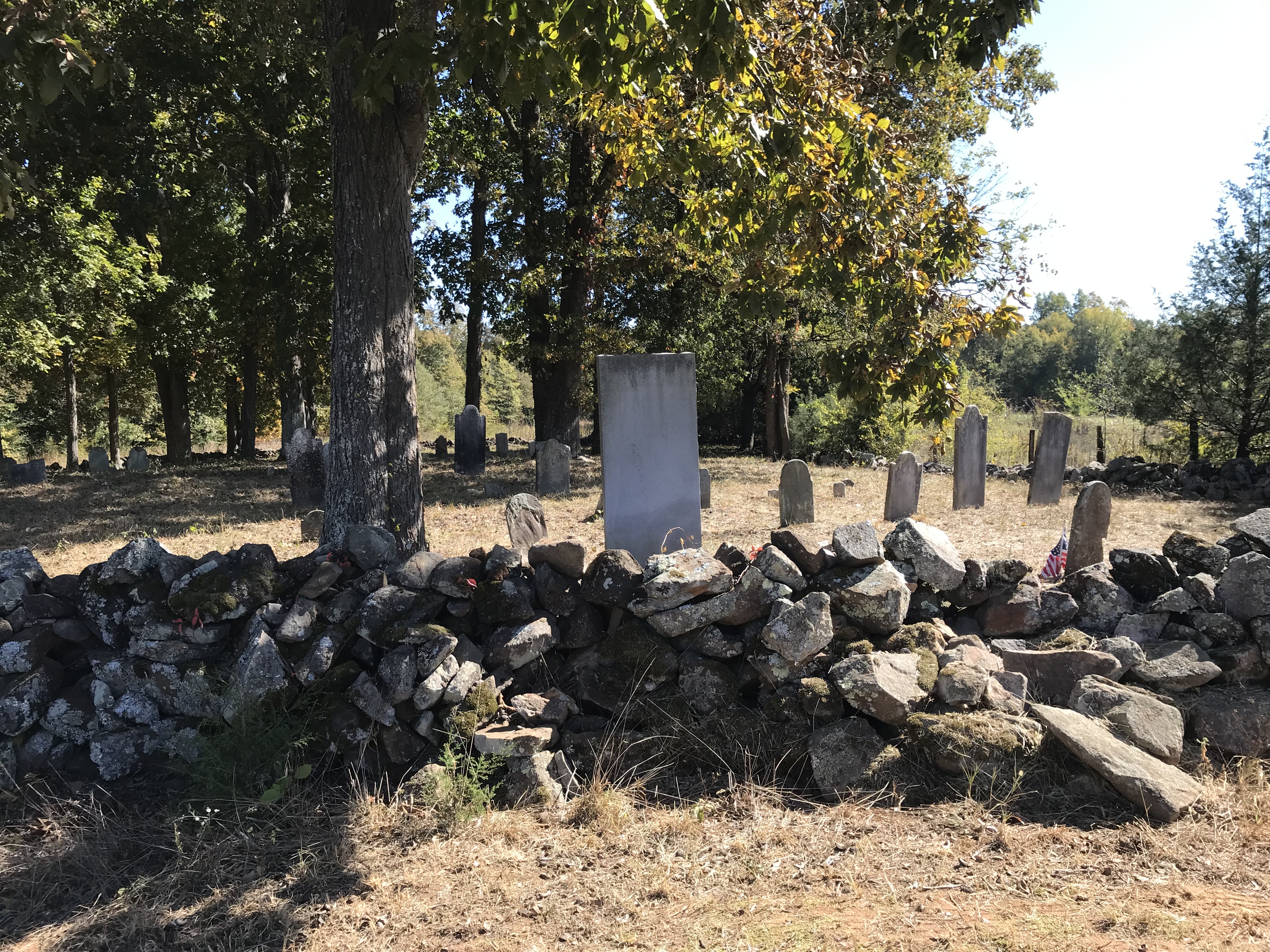
Old Rocky River Graveyard, October 2021

Digital photography allows me to read the inscription on many of the markers that cannot be read in person due to the ravages of time. March and October are the best months to take pictures in these rural cemeteries due to the angle of the sunlight and the number of large trees that surround and have grown up inside them. I’m taking advantage of the month of March to get back to a project I’ve neglected for a few years.

My project might sound morbid to some of you, but I don’t see it like that at all. Some of my immigrant ancestors are buried in each of the four cemeteries, so I feel like I’m honoring them in a small way by making a permanent record of the inscriptions on their grave markers.


Until my next blog post

I hope you have a good book to read — one that you can’t wait to get back to.

If you’re writing, painting, or endeavoring to do anything creative, I hope you produce some rewarding and satisfying work this week.

Stay safe and well. Please come back next week to see what my next blog post is about.

By the way, on Wednesday, pause to consider that it’s National Book Smuggler Day in Lithuania. Here’s the scoop:

In 1864, Russian authorities outlawed the printing of books using the Latin alphabet in Lithuania and tried to force the Cyrillic alphabet on Lithuanian speakers. A newspaperman, Jurgis Bielinis, created an underground network to get Lithuanian books smuggled into the country. Some who were caught were banished to Siberia or shot in the head. The ban lasted until 1904 but is still remembered on March 16, which is the date of Bielinis’ birth. You can find more about this online. It’s an inspiring bit of history I wasn’t aware of until recently.

There are two lessons we can learn from this: (1) The Russian government never stops being Russia; and (2) Regardless of what a book contains, it’s never a good idea to withhold access to it, for book banning and the banning of knowledge never have positive results.

May the free world continue to support the people of Ukraine.

Janet

Three Books Read in February 2022

If you’ve been following my blog lately, you know February was not an easy month for me. Various events cut into my reading time, but today I’m writing about the books I read during that short month of 28 days. They represent three different genres. That’s appropriate because my reading interests are all over the place.


Violeta, by Isabel Allende

Violeta, by Isabel Allende

Isabel Allende is becoming one of my favorite novelists. I listened to her latest novels, Violeta, on CD and thoroughly enjoyed it. I listened to the English translation of the Spanish original.

Violeta is written in the form of a letter to Violeta’s adult grandson and follows Violeta from her birth in 1920 during the Influenza Pandemic to the end of her life during the Covid-19 Pandemic. Born into a wealthy family, her father loses everything in the Great Depression which hits South America a little later than in the United States and Europe. The family loses their house and must move out into the hinterlands where they must adapt to life without luxuries such as electricity.

Woven into this story is a character who comes into Violeta’s life at an early age to serve as her English governess; however, it turns out the woman isn’t from England and isn’t at all what Violeta’s parents are expecting.

This is a delightful novel. Violeta would be a good Isabel Allende book for you to start with, if you’ve never read one of her novels. If you’ve read her other books, you know what a treat this one will be.


Our North Carolina Heritage, compiled by Charlotte Ivey Hastings, 1960

This book is well off the beaten path and one you probably can’t find. Just by happenstance, I purchased a copy dirt cheap at a public library used book sale several years ago. I added it to my to-be-read shelves and forgot about it.

I saw it on my bookshelf in February and decided to read it. It isn’t a history book that one can totally rely on for accuracy because it is a compilation of oral history stories. Many of them were written by junior high students.

However… (and that’s a huge HOWEVER), I found lots of little gems of North Carolina history in it that I’ve never seen or heard elsewhere. They are the bits of history that never made it into the history books but offer someone like me a jumping off point to do additional research.

One thing I was particularly glad to find was that the book gave information about a number of women and their bravery and contributions to the patriot cause in the American Revolution. Women have generally been omitted from the history books.

Here’s an example of something I don’t recall hearing or reading elsewhere: By the end of the 18th century, Jewish peddlers in North Carolina traded for eggs since they couldn’t easily come by Kosher meat.

The book reminds me of the series of local history books compiled in the 1960s by Mrs. Mabel Rumple Blume’s North Carolina history students at Harrisburg School in Harrisburg, NC. Every year for five or so years, Mrs. Blume’s students were sent out into the then rural Cabarrus County to interview the oldest residents to capture local history. The students won statewide first-place honors year after year for their books which covered general history, mail delivery and post offices, and grist mills. Much of that history would have been lost forever if not for Mrs. Blume and her students.

With that work in mind, I very much appreciated the contents of Our North Carolina Heritage. It made me sad that the Charlotte-Mecklenburg Public Library system had made the decision several years ago to weed the book from its collection and sell it for pennies. Sometimes people are put in positions of decision-making who don’t appreciate the true value of what they have.


The War of Art: Break Through the Blocks and Win Your Inner Creative Battles, by Steven Pressfield

This nonfiction book was recommended by Jane Friedman in her January 11, 2022 article, “To Everyone Who Wants Me to Read Their Writing and Tell Them What to Do.” Here’s the link: (To Everyone Who Wants Me to Read Their Writing and Tell Them What to Do | Jane Friedman Ms. Friedman has never steered me wrong, so I checked it out of the public library.

The book is divided into the following three parts: “Resistance ~ Defining the Enemy;” “Combating Resistance ~ Turning Pro;” and “Beyond Resistance ~ The Higher Realm.”

Part One explains that, “Resistance is the enemy within” when we attempt to do something worthwhile. Mr. Pressfield wrote that the rule of thumb for resistance is, “The more important a call or action is to our soul’s evolution, the more Resistance we will feel toward pursuing it.” We fear that inner resistance, but once we “Master that fear… we conquer resistance.”

Mr. Pressfield wrote that resistance is often manifested in the form of procrastination, which can become a habit.

In Part Two, Mr. Pressfield wrote that an artist must stop thinking of himself as an amateur and start seeing himself as a professional. He wrote, “A professional does not take failure (or success) personally.”

He also wrote, “A professional recognizes her limitations. She gets an agent, she gets a lawyer, she gets an accountant. She knows she can only be a professional at one thing.”

In Part Three, Mr. Pressfield wrote that we just do it. We do it every day. It’s work, and we do it. He also cautions artists from thinking of themselves in a hierarchy. In other words, art of all types is not a competition.


Since my last blog post

Every day has brought horrifying images of the suffering and destruction in Ukraine.

I’m disappointed that I didn’t receive an acknowledgement for some research advice I sought for the writing of my novel, but I won’t let that slow me down any longer. That’s life.

I got back to work on a project that relates to my church. I started it 20 years ago and it’s been on the back burner now for 15 years. I’ve been inventorying my unfinished projects lately. It’s overwhelming. I need to complete some, even if doing so cuts into my writing and reading time.


Until my next blog post

I hope you have a good book to read. I’m reading an interesting book about 1816 – known as “The Year Without a Summer.”

May the world continue to condemn Vladimir Putin for his unprovoked invasion of Ukraine.

Thank you for taking the time to read my blog.

Janet