I write southern historical fiction, local history, and I've written a devotional book. The two novels I'm writing are set in Virginia and the Carolinas in the 1760s. My weekly blog started out to follow my journey as a writer and a reader, but in 2025 it has been greatly expanded to include current events and politics in the United States as I see our democracy under attack from within. The political science major in me cannot sit idly by and remain silent.
A few weeks ago I blogged about book banning. (See Book Banning is Democracy Banning! June 19, 2023.) I planned to blog about “How do you decide what to read next?” on July 14, but my computer had other ideas. I’m saving that post for August because I felt compelled to take a different approach today.
Book challenges and book banning
I didn’t plan to bash anyone in this post; however, I keep reading about more and more cases of book challenges and book banning across the United States and how various state legislatures (Arkansas, to name one) are passing laws that are putting our society on the slippery slope of censorship.
Fortunately, on Saturday, in response to a lawsuit filed by libraries, librarians, bookstore, and publishing companies, a federal judge temporarily blocked portions of Act 372 in Arkansas, which would criminalize librarians who knowingly let a minor see objectionable sexual content.
Senate Bill 90 in North Carolina is tame by comparison to Arkansas’s Act 372, which had been scheduled to become law tomorrow. NC Senate Bill 90 is still under review and, if signed into law, will add new constraints on public libraries and public school libraries, and will add additional hoops through which librarians, school superintendents, and local school boards must jump. As if their jobs weren’t challenging enough!
Warren County, Virginia and the Houston Independent School District in Texas have been in the news recently, too, on this topic.
This terrifies me! This is the United States of America, and a vocal narrow-minded group of people are yanking local and state governing bodies around as if they have rings in their noses.
Book by book…
Book by book, library by library, school system by school system, the whittling away of our right to read is eating away the foundations on which our country was founded. If not for public education in the United States, how many of our citizens would know how to read?
Public education is under attack by many state legislatures, including the one here in North Carolina. Vouchers to give parents money to send their children to private school? Give me a break! Why would a state legislature give money for private education when one of its responsibilities is to fund and support public education?
The ignorant few will soon decide what we can read and cannot read. Politicians are usurping the roll of professional librarians in deciding which books can go on library shelves.
Pay attention! What’s happening in your state and in your county? The state legislature in North Carolina has a history of voting in the dead of the night. You just never know what you’re going to wake up to in the morning.
This leads me to the question I ask in the blog post title today: Who decides what you can and cannot read?
There’s a connection between today’s question and the current trend toward banning books in the United States.
Do you want politicians deciding what you can and cannot read? Do you want local politicians deciding what your child can or cannot read?
Since my last blog post
I didn’t intend to take a three-week break from blogging this month, but my computer had other ideas. I won’t bore you with the details. I’ll just say, it was unsettling and frustrating being unable to log into my WordPress account for 18 days.
I hope you missed me. I missed y’all!
Until my next blog post
If you haven’t subscribed to my newsletter through my website, https://www.janetmorrisonbooks.com, please do so before you miss any more newsletters. For subscribing, you’ll receive a free downloadable copy of “Slip Sliding Away: A Southern Historical Short Story,” so you can get a feel for my historical fiction writing.
I hope you have a good book to read and time to read it. Read! Read! Read! And please support your local public library!
Make time for friends and relatives, even if you don’t agree with them about politics.
June turned out to be a strange month of reading for me. If my blog post last week didn’t convince you of that, just wait until you read today’s post.
Yellowface, by R.F. Kuang
Yellowface, by R.F. Kuang
I heard R.F. Kuang interviewed about her new novel on “Friends and Fiction” on Facebook on May 24, 2023 – the same night Lee Smith was a guest. The New York Times called it, “a blistering satire about publishing.”
This novel might appeal more to writers than “normal” readers. It’s about two young women who barely know one another. One is an outrageously successful author, while the other on is living hand to mouth. When the successful writer chokes to death, the other writer steals her unfinished manuscript and gets it published under her name. No one will be the wiser… or will they?
One of the threads throughout the book is racism. Not the usual way we tend to think of racism: white versus black. The racism running through this book is white versus Asian.
There was an unexpected twist at the end of the book.
I Will Find You, by Harlan Coben
I Will Find You, by Harlan Coben
It had been a while since I’d read a Harlan Coben novel, so I decided to give his new one a try. I listened to it on CD. The nine discs last just a little more than 10 hours, so I was able to set aside time to listen to one disc per day.
In this novel, David Burroughs is wrongly imprisoned for killing his three-year-old son. But did his son really die? After five years in prison, David is determined to find his son.
Time Management for Writers, by Sandra Gerth
Time Management for Writers, by Sandra Gerth
I needed this! I have all the time in the world, and yet I don’t seem to get anything accomplished. This little gem of a book gave me some practical suggestions and a systematic way to organize my time. I read it the first week in June, so I’ve had almost month to work out some new scheduling ideas. I say “almost a month” because I spent five days in Georgia to attend the wedding of one of my great-nieces.
The book addresses such time killers as email and social media and recommended that those things only be checked twice a day. It suggested “bundling” similar tasks such as working on the content for several blogs on the same day, selecting the photographs to illustrate those posts another time or day, and scheduling the blogs another time.
I’ve always given myself goals for when to complete certain tasks involved in writing a book or short story, but this book was a strong reminder that I need to be serious about those “deadlines” and be accountable to someone else for meeting those goals.
If you feel overwhelmed, this book might help you even if you aren’t a writer.
Grow Your Own Herbs: The 40 Best Culinary Varieties for Home Gardens, by Susan Belsinger and Arthur O. Tucker
This is a book I checked out from the public library to look for some specific information I need for the historical novel I’m writing. I decided to include it in today’s blog post because some of my readers might be interested in the book.
I you have any interest in growing herbs and using them in your kitchen, I recommend this book. It contains detailed information for growing, harvesting, and using 40 herbs. It includes recipes for herb butters, pastes, oils, and vinegar infusions.
The 180-page section about those 40 herbs is beautifully illustrated and organized in a way that makes it easy to find specific information you’re looking for. It made me wish I could grow all 40 of them! Unfortunately, I don’t have much of a green thumb when it comes to growing herbs.
Three books I won’t elaborate on because I read them for research purposes:
The Ultimate Guide to Old-Fashioned Country Skills, edited by Abigail R. Gehring
Edible Paradise: How to Grow Herbs, Flowers, Veggies and Fruit in Any Space, by Vera Greutink
How to Write a Series: A Guide to Series Types and Structure plus Troubleshooting Tips and Marketing Tactics, by Sara Rosett (Kindle) – This was a second reading of this book. I read it the first time in December 2021 and wrote about it in my January 3, 2022 blog post, Books Read in December 2021.
Books I didn’t finish reading in June and why:
Loyalty, by Jodi Picoult
I made the mistake of requesting this novel on CD from the public library. I eagerly popped the first disc into my CD player and settled back to enjoy another Jodi Picoult novel. Unfortunately, right off the bat, the narrator in his Italian accent (which should have been – and maybe was – a good match for a story set in Sicily) immediately read a list of the characters in the book along with their occupations or how they were related to the other characters.
After listening to a seemingly endless cast of characters whose names I’d never be able to understand or remember, I stopped the CD before getting to the first chapter.
I should have counted the characters. I’m guessing there must have been 20 or so.
Reading the novel might be easier than listening to it, but I don’t plan to try.
The Castle Keepers, by Aimie K. Runyan, J’nell Ciesielski, and Rachel McMillan
This book is a collection of three novellas written by Aimie K. Runyan, J’nell Ciesielski, and Rachel McMillan. When I first read about the book, I was under the conception that each author wrote one novella, and perhaps that’s true. My surprise, upon getting the book from the public library was to learn that it is not revealed which author wrote which novella in the collection.
The book follows one family. The first novella takes place in 1870. The second novella is set in 1917, and the last one is set in 1945. Most of the reviews I read mentioned that the first two novellas were better than the third one.
Due to the small print and my attention being pulled to historical research, I ended up returning this book to the public library unread. Maybe I can give it another try at a later date.
The Lost English Girl, by Julia Kelly and The Midwife of Auschwitz, by Anna Stuart
I returned these two historical novels to the public library after realizing I wasn’t going to have time to read them, even though the Julia Kelly book was large print. Maybe another time will work for me to read and enjoy them.
Since my last blog post
I was able to send out my Janet Morrison Books July 2023 Newsletter after overcoming some technical issues. I hope you received your issue via email. If you have subscribed, please visit http://www.janetmorrisonbooks.com and click on the “subscribe” button. As a bonus, you’ll receive a downloadable copy of “Slip Sliding Away: A Southern Historical Short Story” I enjoyed writing.
Yardwork keeps calling my name, but with the heat index of around 100 to 106 degrees F. nearly every day, I have to pick and choose the time of day and length of time I work. Progress has been at a snail’s pace.
I’ve been working on several historical short stories.
Until my next blog post
I hope you have a good book to read – one that will whisk you away from the stresses in your life, entertain you, educate you, and give you a new perspective. I’m reading Cradles of the Reich, an historical novel about part of Hitler’s plan for creating a master race, by Jennifer Coburn.
Cradles of the Reich, by Jennifer Coburn
Spend time with friends and family. Remember the treasure they are, even if they don’t agree with you about politics.
I didn’t get much fiction read in June, but I read a variety of nonfiction books. I hope you’ll find one in the bunch that piques your interest.
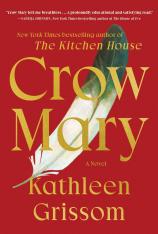
Crow Mary, by Kathleen Grissom
If you like American historical fiction, novels with strong female protagonists, or novels set in the Great Plains in the US and Canada, I think you’ll like this book. Ms. Grissom did a wonderful job of researching the woman on whose life this novel is based – and just as good a job of weaving in the history without creating any “information dumps.”
I enjoyed The Kitchen House, by Ms. Grissom, so I got on the waitlist at the public library for Crow Mary as soon as I heard about it.
Crow Mary, by Kathleen Grissom
In a nutshell, Crow Mary was a woman in the Crow tribe who married a white trader in the early 1870s. His work as a trader took them away from her family and to Canada. They endure disappointment and trials as they try to make a go of it. Crow Mary isn’t going to take any grief from anyone, and she doesn’t shy away from taking matters into her own hands when her husband lets her down or isn’t there to take charge.
The book does a good job of pointing out how white settlers and the white government failed to see Native Americans as people and, therefore, seldom made the effort to take into consideration their intelligence and ways of life.
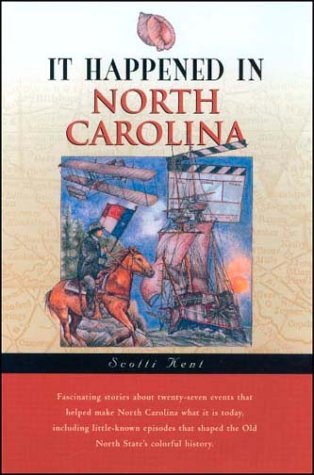
It Happened in North Carolina, by Scotti Kent
This delightful little book is a collection of 27 stories about things that happened in North Carolina. (No surprise there!) Some of the incidents I’d heard of and others I hadn’t. The stories are written in an informal yet informative way that makes the reading pleasurable.
It Happened in North Carolina, by Scotti Kent
The stories are presented in chronological order and start with a description of the Poskito (a renewal celebration) held by the Pee Dee Native Americans in the 13th century A.D. It was quite interesting and prompted me to put a day trip to the Town Creek Indian Mound in Montgomery County, NC on my “field trip” list.
The most heart-breaking story in the book is “The Story of Tsali, 1838” about the terrible mistreatment of the Cherokee Indians in western NC during the administration of President Andrew Jackson.
I was pleased to find two Cabarrus County stories in the book on topics that I wrote at length about in my book, Harrisburg, Did You Know? Cabarrus History, Book 1: the story of the Cabarrus Black Boys in 1771 and the story of Ellen Harris of the Rocky River Community swallowing a thimble in 1896.
This is a neat little 139-page paperback book. By the way, I purchased the book for a few cents at a book sale held by the public library several years ago when the collection was being severely weeded.
It makes me sad to see books containing local history being pulled from the shelves. I suppose my Harrisburg history books will be sold for a few cents sometime in the not-so-distant future because decision makers see no value in local history books.
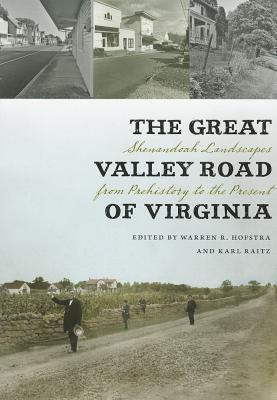
The Great Valley Road of Virginia: Shenandoah Landscapes from Prehistory to the Present, edited by Warren R. Hofstra and Karl Raitz
I happened upon this book as I researched The Great Wagon Road for the novel I’m working on. I took copious notes from the chapter titled, “The Colonial Road.” Other parts of the book were interesting, but it was that third chapter that I very helpful to me. The following chapters dealt with the post-colonial era to the present.
The Great Valley Road of Virginia, edited by Warren R. Hof
Anyone interested in the development of the United States will enjoy this book. It’s full of history and geography and helps the reader visualize how the Virginia portion of the Great Wagon Road took shape.
One point the book reminded me of is that in earlier times the government did not decide where to put roads, did not lay them out, and did not maintain them. Such was the case with The Great Wagon Road. Citizens had to petition the county and then do all the work themselves. Once the work was completed and approved, the county appointed an overseer who was then responsible to get the citizens to maintain the road. One can only imagine how well that worked!
I’m still left to determine how the family in my novel would have traveled from Windy Cove to the Great Wagon Road….
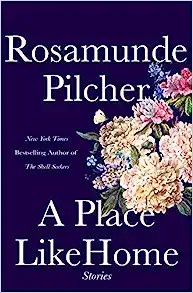
A Place Like Home (short stories), by Rosamunde Pilcher
I thoroughly enjoyed reading all of Rosamunde Pilcher’s Cornwall, England novels back in the 1980s. Reading this collection of her short stories immediately reminded me what an engaging writer she was.
A Place Like Home, by Rosamunde Pilcher
A Place Like Home contains 15 of her short stories. Each one puts the reader right there in England. Ms. Pilcher had a talent for describing the setting and her characters in a way that made you feel like you were there and knew them.
Since my last blog post
I had the pleasure of traveling to Marietta, Georgia the last weekend in June for the wedding of one of my great-nieces! It was a lovely outdoor event and I wouldn’t have missed it for the world. It was nice to spend several days with immediate family for a happy event.
I took the opportunity while in Georgia to visit the Kennesaw Mountain National Battlefield Park. One of my ancestors was wounded in the Kolb’s Farm Battle there on June 22, 1864.
In case I seem confused and distracted…
Unfortunately, the hack experienced in June by Windstream, our household email provider, resulted in the suspension of the Windstream email account my sister and I shared. All the company’s customer service in India can say is, “Yes, Windstream got hacked. We’re sorry.” After having that email address for some 20 years, you can imagine what a tedious chore it has been and will continue to be to change my email address with utility companies, doctors’ offices, insurance companies, relatives, friends, and various organizations.
Within hours of Windstream being hacked, our email and my Facebook and LinkedIn accounts were hacked, so I am no longer on either of those social media platforms. I miss many of my friends, but I don’t plan to get involved with Facebook or LinkedIn again. Due to general frustration, I’ve also closed by Twitter account.
Therefore, as of last week, my only platforms are my blog, my newsletter, and my website.
Speaking of my newsletter… I attempted to send out my Janet Morrison Books July Newsletter on Saturday. However, a box popped up saying that Mailchimp “might be having issues, or it may have moved permanently to a new web address.”
I thought things usually happened in threes, but I’ve honestly lost count of the computer program and app issues I’ve had in the last month. Perhaps God is trying to tell me to stop trying to be a writer. I’m filled with self-doubt, and I’m earnestly seeking His will. I’m hitting roadblocks at every turn. When I started this blog many years ago, my intention was to share with you the ups and downs of being a writer. I’m not whining; I’m telling you like it is.
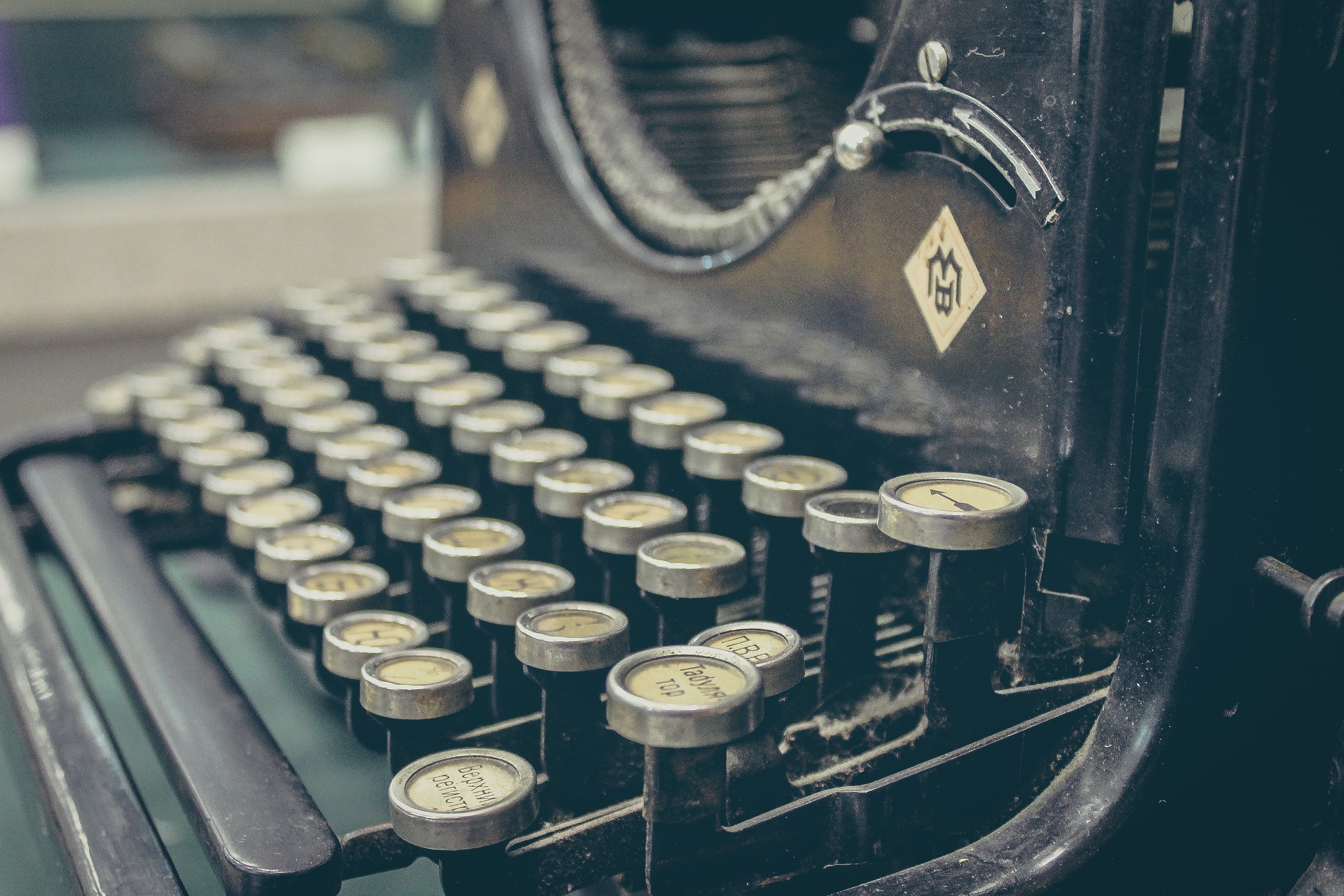
At my age, the technology side of writing is overwhelming. Please be patient with those of us who learned to type on a manual typewriter, learned to “calculate” on a ten-key adding machine, grew up with radio and black-and-white TV, and telephones connected to the wall.
In case I’m able to send out my newsletter…
Among other items of interest, it included details about and photographs from the Open Hearth Cooking Class I took in May at Hart Square Village and my trip to Georgia.
I hope you have a good book to read – one that will take you away from the stresses in your life, entertain you, educate you, and give you a new perspective.
Spend time with friends and family. Remember the treasure they are, even if they don’t agree with you about politics.
Think of the people being hurt by recent rulings by the US Supreme Court. After all, we’re all God’s children.




 Janet's Writing Blog