How do you decide what to read next?

My question for you today is, “How do you decide what to read next?”

Is it FOMO (fear of missing out)? Do you scan the NY Times Bestseller List every week and take your reading cues from it? Do you just read books in a certain genre and never dip your toes in something different to shake things up? For instance, instead of just reading western romance novels, do you ever check out a science fiction book from the library?

Photo by Susan Q Yin on Unsplash.

Do you gravitate to the “New Releases” section in your public library? Do you pick up a free copy of Book Page at the public library each month to learn about new books? Do you ask a librarian for recommendations? Do you and your friends tell each other about books you or they have enjoyed?

How I decide what to read

I got the idea for today’s topic from a blog post I read back in May: https://readingladies.com/2023/05/23/10-things-that-make-me-instantly-want-to-read-a-certain-book-toptentuesday/. It got me to thinking about how I decide what to read next. I honestly didn’t connect it with book banning at the time.

I recently divided my to-be-read (TBR) list into four categories: books about the craft of writing; books I need to read for historical research to enhance my historical fiction writing, novels and short story collections; fiction; and nonfiction books of general interest.

I listed the books in each category in the order in which I want or need to read them.

This was no easy task. There are more than 300 books on my TBR. Chances are, I won’t get to read all of them. You see, I add titles to my TBR faster than I can read the books already on the list. I console myself by thinking it’s a nice “problem” to have.

Everyone has preferences

I must admit, I don’t care for sappy romance, science fiction, horror, or fantasy, but I’ll march in the street to defend your right to read those genres. My “go to” genre is historical fiction – especially set in colonial and revolutionary America, but I also enjoy World War II historical fiction, some thrillers, and an occasional memoir.

I enjoy following a number of book review bloggers. I often learn of new authors or books that have slipped in under my radar.

More and more, I’m becoming a fan of certain authors. I try to stay on top of when their next novels will be published. Armed with that information, I get on the waitlist at the public library for those books as soon as they show up in the system’s online catalog.

The authors I tend to look for (in no particular order) include Sally Hepworth, Vicki Lane, Lelah Chini, Isabel Allende, Anna Jean Mayhew, Pam Jenoff, Diane Chamberlain, John Grisham, Kathleen Grissom, Kelly Rimmer, Mark de Castrique, Annette Saunooke Clapsaddle, Susan Meissner, Erik Larson, Barbara Kyle, Lisa Wingate, Anne Weisgarber, Aimie K. Runyan, John Hart, Jennifer Ryan, Kristin Hannah, Andrew Gross, Ann Patchett, Heather Morris, Mark Sullivan, Wiley Cash, Kathy Reichs, Jennifer Chiaverini, V.S. Alexander, Jodi Picoult, Kate Quinn, Ron Rash, Jamie Ford, Leah Weiss, and Kelly Mustian.

Whew! That’s 35, or about 25 more than I would have guessed! I’m sure I’ve left others off my list. Some authors come and go from my list.

Are any of those 35 names on your list of favorites?

Who are your favorite authors?

What’s your favorite genre?

Back to my original question

How do you decide what to read next? Is it based on the cover, an author you’ve read and liked before, the blurb on the back of the book, a positive review you read, the genre, or something else?

I’d like to hear your thoughts on this.

Since my last blog post

I’ve had a productive week. I haven’t put many words on paper, but I have done some on-site historical research for the historical novel I’m writing. Be sure to subscribe to my e-Newsletter if you want to read about where I went and why.

Until my next blog post

If you are going to be in the Charlotte area between 2:00 and 4:00 next Saturday afternoon, November 4, please drop by Second Look Books at 4519 School House Commons in Harrisburg for our Meet & Greet highlighting The Aunts in the Kitchen: Southern Family Recipes.

I hope you have access to so many good books that you don’t have time to read all of them.

My November e-Newsletter will be sent via email in a couple of days. If you have not subscribed to it, please do so by visiting https://www.janetmorrisonbooks.com and clicking on the “Subscribe” button. Just for subscribing, you’ll receive a downloadable e-copy of my American historical short story, “Slip Sliding Away.”

Make time for friends and relatives, even if you don’t agree with them about politics.

Remember the brave people of Ukraine as a cold winter is racing toward them and the innocent people in the Middle East. People in both these areas are the victims of dictators and terrorists.

And, of course, remember the people of Maine in light of last week’s mass shooting. When will the elected officials in the US learn that most Americans want tighter gun regulations? When is enough, enough?

Janet

How publishing a cookbook helped me as a writer

Since my main interests in writing are historical fiction and history, it would seem that publishing a cookbook has nothing to do with either one of those or my pursuit of a career as a writer. I beg to differ.

If one wants practice in proofreading, I recommend they proofread a cookbook. At least two typos got past my sister and me in the proofreading stages. Proofreading a cookbook is a humbling experience. It should serve me well in my next short stories and books.

The Aunts (A U N T S) in the Kitchen: Southern Family Recipes, by Janet and Marie Morrison
The Aunts in the Kitchen: Southern Family Recipes, by Janet Morrison and Marie Morrison

Proofreading a cookbook is part paying extreme detail to numbers and part writing directions in a concise yet thorough way. It means trying to put yourself in the shoes of someone making the recipe for the first time – or even a novice cook or baker.

Are the instructions not only correct in sequence of method but also clear enough to give the cook the best chance to follow the directions with ease instead of confusion and frustration? Are the recipes presented in a way to give the cook the best chance to be pleased with the final product?

Proofreading is tedious work and it is always a good idea to have a second set of eyes. In fact, if my sister and I had not worked together proofreading the 289 recipes in our cookbook, half the errors we found probably would have slipped past us.

A few words about the software I use

Is there a book in you that is begging to come out? Do you think self-publishing is not within your reach? That is where I was two years ago. I never expected to be able to format a book in a form acceptable for Amazon or any other self-publication platform.

The Atticus.io app has enabled me to publish two local history books (Harrisburg, Did You Know? Cabarrus History, Books 1 and 2); two short stories (“Slip Sliding Away” and “Ghost of the Battle of Guilford Courthouse: An American Revolutionary War Ghost Story”); and a cookbook (The Aunts in the Kitchen: Southern Family Recipes) since last November!

BookBrush.com has made it possible for me to design the book covers for each of those books. I am not computer savvy, in the big scheme of things; however, I have been able to accomplish all this self-publishing in a little less than one year.

In addition, I have created memes for Facebook and bookmarks related to my books on BookBrush.com. That is just a fraction of what one can do through BookBrush.com tools.

Disclaimer: I am receiving no compensation in any form whatsoever for mentioning Atticus.io or BookBrush.com. I just want other writers who are considering going the self-publishing route to know about these tools I have used. What they have made possible for me has been life-changing.

The formatting and book design tools are not without challenges. There are learning curves with both but, if I can do it, anyone can do it.

The Atticus.io support team is extraordinary. Hands down, they are the best tech support group of people I have ever worked with. They have job security as long as I am self-publishing books!

Both BookBrush.com and Atticus.io have free workshops to help you understand how to use their various features.

Self-publishing is an education, and I have found it to be a beneficial introduction into the publishing world. It remains to be seen if any of my current projects (historical short stories, a devotional book, and historical novels) will be self- or traditionally-published.

Regardless of which path my current and future writing projects take, my self-publishing experience will serve me well. That definitely includes proofreading!

The rewards

So far, I have learned that by the time I paid for:

  • website redesign;
  • maintaining a website and blog;
  • the right to use Atticus.io and BookBrush.com;
  • printing bookmarks designed on BookBrush.com
  • printing and shipping costs for author copies;
  • books about the craft of writing;
  • online writing courses;
  • etc…

it can be difficult to break even financially.

I consider the two short stories I have self-published to be ways to get my name out there as an historical fiction writer. It all falls under the adage: “To make money, you have to spend money.” I offer one of my short stories as a gift to everyone who subscribes to my e-newsletter.

It is not easy to get established as a writer. It has been a winding road and at times a daunting endeavor; however, my reward already is to see my name as the author on the spine of several books.

If I accomplish nothing else, I am happy that someday my heirs will know that I had a dream to write and I persevered to realize that dream.

Since my last blog post

Some weeks I can’t remember what I’ve done since my last blog post. It isn’t until I look back over my to-do list and find items checked off as completed that I realize I am making steady progress in my writing.

I did research for a short story I’m writing; typed notes from The Author Estate Handbook, by M.L. Ronn and added to the list of the things I need to take care of before I update my will; researched Fort Dobbs State Historic Site near Statesville, NC, Shallow Ford on the Yadkin River, and Bethabara State Historic Site for the novel I am writing; and planned a trip to visit several sites pertinent to that novel.

I watched a BookBrush.com free presentation on Zoom about book marketing on Pinterest. It was a real eye-opener. Good news/bad news: Now I have a thousand new tasks to add to my to-do list.

Until my next blog post

If you want to write a book, do it!

I hope you have at least one good book to read this week. I have more than I can find time to read!

Make time for your friends and family.

Don’t forget to visit https://www.janetmorrisonbooks.com and subscribe to my e-newsletter.

Remember the innocent people of Ukraine and the Middle East. It is the innocent citizens who are so often caught in the middle and pay the ultimate price for the actions of dictators and terrorists.

Janet

As a Reader of Historical Novels, Do You Read the Author’s Notes Before or After you Read the Book?

Do you like having Author’s Notes at the end of an historical novel so you’ll know what was true, what was fiction, and what actually happened but was adjusted time-wise or by location to fit the flow of the story?

The Author’s Notes are almost always found at the back of an historical novel. I used to wait and read the Author’s Notes after I had finished reading an historical novel, but now I always read those notes first. The notes not only give insight about the story, but also make clear which parts of the book are based on fact and which parts are fictional.

Do you read the Author’s Notes before or after you read an historical novel?

An example from my ghost story

I thought it only fitting to include Author’s Notes at the end of my short story: Ghost of the Battle of Guilford Courthouse: An American Revolutionary War Ghost Story. In case you haven’t purchased the short story yet, here is my Author’s Note from the ghost story:

“I’ve never believed in ghosts, but this story is based on the events my sister and her housemate experienced in their condominium in Greensboro, North Carolina in the 1980s. The upstairs commode would flush when no one was upstairs. Cans occasionally fell off the pantry shelf. A house guest was frightened by the sensation that someone had walked into her bedroom and stood at the foot of the bed. In fact, she thought this person had called her by name – Mary. She had no knowledge of the unexplained incidents the residents had experienced.

“Peter Francisco was an actual American soldier in the Battle of Guilford Courthouse. At six-feet-six-inches tall and 260 pounds, he was much larger than the average American man during that era. He was credited with being ruthless with his broadsword. There is a visitors’ center on the grounds of the Battle of Guilford Courthouse; however, the rest of the story is fiction.”

After reading my Author’s Note, are you more interested or less interested in reading my ghost story?

Since my last blog post

I’ve edited three of the historical short stories I drafted a few months ago. I took inventory of my historical short stories. I want to write five more from scratch before I publish the collection. Something to look forward to in 2024!

I’ve done more research about the colonial settlement of Bethabara, North Carolina and read more resources about Shallowford on the Yadkin River. This is needed research for my first historical novel. Something else to look forward to!

Until my next blog post

If you haven’t subscribed to my newsletter through my website, https://www.janetmorrisonbooks.com, please do so before you miss any more newsletters. The next one will go out around November 1. For subscribing, you’ll receive a free downloadable copy of “Slip Sliding Away: A Southern Historical Short Story,” so you can get a feel for my historical fiction writing. I have a “field trip” planned before October is over, but you’ll have to subscribe to my newsletter to hear about it.

Have you ordered my American Revolution e-ghost story?  “Ghost of the Battle of Guilford Courthouse: An American Revolutionary War Ghost Story” is available from Amazon, along with my other books: https://www.amazon.com/dp/B0CH7JCP11/. October is the perfect time to read a ghost story!

Anytime is the perfect time to purchase a cookbook! Have you ordered your copy of The Aunts I the Kitchen: Southern Family Recipes? Order one for yourself and one for each of your aunts at https://www.amazon.com/dp/B0CJLKFDPR/. (It’s not too early to start your Christmas shopping.)

Make time for your friends and family.

Remember the people of Ukraine and Israel. Terrorism has no place in our world.

Janet

The Wide Range of Books I Read in September 2023

Although September gave me 30 days in which to read, I had more books on my list to read than time allowed. Nevertheless, I enjoyed the three novels and the one nonfiction book I managed to squeeze into my schedule.

You Can Run, by Karen Cleveland

You Can Run, by Karen Cleveland

Karen Cleveland is a former CIA analyst. She writes spy thrillers now. You Can Run, like the other books of hers I have read, Need to Know (see my April 2, 2018 blog post: More March 2018 Reading) and The New Neighbor (see my October 10, 2022 blog post: Spy Thriller, WWI Novel, Nonfiction, and Historical Mystery Read Last Month are real page turners. When you read one of her books in bed at night, don’t plan on getting any sleep. You’ll have to read “just one more chapter.”

In You Can Run, the protagonist, Jill, works for the CIA. She is being blackmailed. To save the life of her young son, she does something illegal. She spends the rest of the novel looking over her shoulder. Saying she spends the rest of the novel “looking over her shoulder” hardly does the plot justice. One bad thing after another happens, as she and her family and others get pulled deeper into the spiral and they can’t get out. No matter what you do, do not under any circumstances read the “Epilogue” until you have finished reading the entire book, including the last chapter. The “Epilogue” will ruin the story for you. I didn’t see it coming!

The Wind Knows My Name, by Isabel Allende

The Wind Knows My Name, by Isabel Allende

I usually don’t enjoy novels that flip back and forth between protagonists, and when I got to page 67 in the large print edition of The Wind Knows My Name, I was so invested in Samuel Adler that I was quite jolted when a turned the page and found myself reading about a new protagonist.

But… Isabel Allende is a masterful writer, and I was soon just as invested in the little girl who illegally crossed the Rio Grande and into the United States on her father’s tired back. The story of that little girl took me directly to the Mexican-US border of today and the desperation the “illegal aliens” experience in their home countries. How desperate must they be to risk their lives to try to get themselves – or even only their children – into the United States?

And how desperate did Samuel Adler’s mother feel when she put her young son on a train to get him away from the clutches of the Nazis and to relative safety in England?

In The Wind Knows My Name, Isabel Allende weaves compelling stories about these individuals and then makes a connection between the characters. I recommend everything that Isabel Allende writes.

And on top of that, she is a very nice person. She donated an autographed copy of one of her novels to the Friends of the Harrisburg Library for our autographed book sale a decade or so ago.

Falling, by T.J. Newman

Falling, by T.J. Newman

Falling is T.J. Newman’s debut novel, and it’s a good one! My sister read it and recommended it to me and our book club.

I recently read that one of the keys to writing good fiction is to give the protagonist an impossible choice. Falling fits that perfectly. In a nutshell, a commercial airline pilot is forced to decide whether to crash the plane and save his wife and children, or not crash the plane and let his wife and children be murdered.

This novel takes you minute-by-minute through the scenario. There are red herrings and there is a surprise twist. The author is a former flight attendant, so she knows the inside of a commercial jet and protocols well.

What will the pilot decide to do?

According to her “About the Author” page on Goodreads.com, Universal Pictures is making a movie based on the novel.

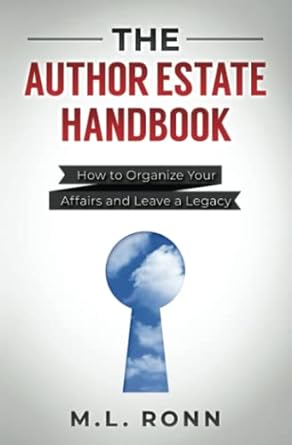
The Author Estate Handbook: How to Organize Your Affairs and Leave a Legacy, by M.L. Ronn

The Author Estate Handbook: How to Organize Your Affairs and Leave a Legacy, by M.L. Ronn

I mention this book in case other writers out there are interested in its topic. By reading the book, I discovered that I have done some things right but I’ve overlooked other things I need to take care of before I die.

The author explains how an author’s estate is different from everyone else’s estate. As an author, you own “intellectual property.” You own copyrights that will live on for 70 years after your death. If those things are not properly addressed in your will, you are leaving a mess for your heirs.

I’m not just talking about published books here. If you blog, your blog posts are “intellectual property,” so you need to tell your heirs what you want done with your blog when you die.

Each chapter lists specific tasks you need to take care of, if you’re a writer. I highly recommend this book to writers.

Since my last blog post

Our first shipment of author copies of The Aunts in the Kitchen: Southern Family Recipes arrived and the book is now available at Second Look Books in Harrisburg, NC as well as on Amazon! Plans are being made to have a book event on November 4 at the bookstore! Stay tuned.

I got the new Covid vaccine and am happy to report I had no ill effects. Those people who insist on belittling Covid 19 have obviously not known someone who has died from the virus or been severely sickened by it. I’m growing weary of Covid jokes by the fortunate few who have escaped it or have not known someone who has or is suffering through it. I thought we had gotten beyond the jokes, but I learned differently last week.

Until my next blog post

Have you ordered my American Revolution e-ghost story?  “Ghost of the Battle of Guilford Courthouse: An American Revolutionary War Ghost Story” is available from Amazon, along with my other books: https://www.amazon.com/dp/B0CH7JCP11/. Don’t let October slip past you without reading my ghost story!

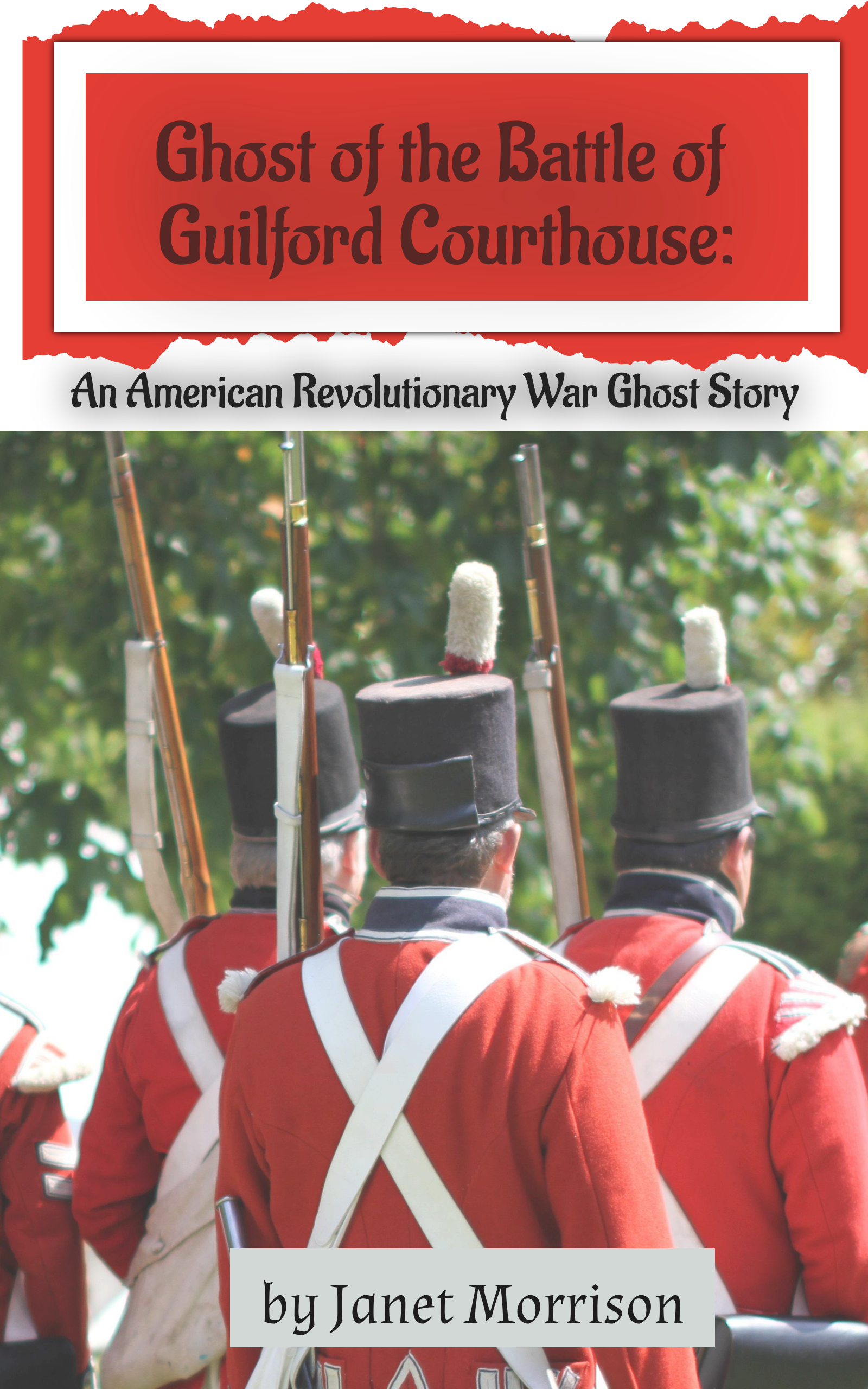
“Ghost of the Battle of Guilford Courthouse: An American Revolutionary War Ghost Story,” by Janet Morrison

Have you ordered The Aunts in the Kitchen: Southern Family Recipes? I think it would be a wonderful present for a friend’s birthday or other special occasion, but it’s impossible for me to be objective. If you’re in the Charlotte area, it’s available at Second Look Books, 4519 School House Commons in Harrisburg. If not, you can find it at https://www.amazon.com/dp/B0CJLKFDPR/.

The Aunts in the Kitchen: Southern Family Recipes, by Janet Morrison and Marie Morrison

Don’t forget to subscribe to my e-newsletter at https://www.janetmorrisonbooks.com and receive a free downloadable copy of my southern historical short story, “Slip Sliding Away.”

Make time for your friends and family.

Remember the people of Ukraine and Israel. Terrorism cannot be tolerated.

Janet

The Aunts in the Kitchen: Southern Family Recipes

When my sister, Marie, and I were growing up in the 1950s, Sunday afternoons occasionally called for our family to get in our parents’ Ford two-door sedan and ride a few miles to visit our mother’s paternal aunts. I knew that the elderly ladies we visited were Aunt Lula, Aunt Sallie, and Aunt Ella, but we always referred to them collectively as “The Aunts.”

“The Aunts” lived in the house their father, Lee, (our great-grandfather) built in the 1860s. He had married our great-grandmother, Sarah, in 1862. My hunch is that the Civil War probably postponed the building of their house until at least 1865. Perhaps they lived with Sarah’s parents until they could get materials to build the house.

Nevertheless, the house fascinated me. For starters, there was always a fire in the fireplace and my mind can still conjure up the smoky smell of a house of that era that was warmed only by a wood-burning fireplace.

One of “The Aunts” was bedridden. We sat around the room in which she was confined by illness. I was enamored by the crackling fire in the fireplace because we did not have a fireplace in our house. Our house was heated by an oil stove in the living room. It’s where Mama would put yeast dough to rise. But I digress.

I spent so much time staring at the dancing flames and glowing wood embers in the fireplace at The Aunts’ house that I have no recollection of what my great-aunts looked like. I was seven years old when the last one of them died.

I was too young to appreciate the fact that my Great-Grandpa Lee had built the house or that my Great-Grandma Sarah had died there just hours after giving birth to their tenth child in 1881, leaving Lee to bury her and the baby born the day before and to raise their seven surviving children alone.

Fast-forward to the 21st century

Marie and I are “The Aunts.” It is a moniker we carry with pride and affection when our niece, nephew, and their young adult daughters refer to us as “The Aunts.”

We have very few recipes from those original women who were known as “The Aunts.” We have fewer still from our grandmothers who died in 1930 and 1946; however, we had many aunts on both sides of the family and our mother was a beloved aunt to our cousins. They were all good cooks. They all spoiled us with good food and helped make us the people we are today.

All our aunts are gone now, along with our mother. We hope this cookbook will help keep their memories alive by sharing the recipes for some of our favorite dishes they made, as well as some of our own, and recipes from other women in our family who were or are aunts.

Although we especially hope that our relatives will treasure this cookbook, we also want it to introduce you to the special aunts and cooks in our family even if you have no knowledge of or connection to them.

How the cookbook took shape

A couple of years ago Marie or I had the idea of compiling the recipes from our aunts. The project soon took shape and it seemed only right to name the book, The Aunts in the Kitchen: Southern Family Recipes.

The writing, editing, and book formatting software from Atticus.io (a Progressive Web App) enabled us to format 289 family recipes in a way that was acceptable to Kindle Direct Publishing, an arm of Amazon. Bookbrush.com made it possible for us to design the book cover in a way that Amazon could use. A friend who is a wonderful photographer took the photographs for the front and back cover, along with a separate photo of a treasured Morrison Dairy Farm milk bottle from the 1920s/1930s.

Milk Bottle from 1920s/1930s Morrison Dairy Farm, Harrisburg, North Carolina

The items on the front and back cover are all from our family, so each piece holds a special meaning to us. We describe each item in the book.

How you can purchase a copy

The Aunts in the Kitchen: Southern Family Recipes will be available around mid-October in paperback at Second Look Books in Harrisburg, North Carolina, and it is already available in paperback on Amazon: https://www.amazon.com/Aunts-Kitchen-Southern-Family-Recipes/dp/B0CJLKFDPR?ref_=ast_author_dp.

If we can get other independent bookstores to sell it, we will do so and will give that information in my blog and on my website, https://www.janetmorrisonbooks.com. Most independent bookstores will not sell books printed by Amazon, so we are depending on word of mouth to publicize the cookbook.

We do not anticipate publishing the cookbook in electronic form.

Since my last blog post

Marie and I still look at last week’s proof copy of The Aunts in the Kitchen: Southern Family Recipes. Imagine our excitement in finally holding that 303-page cookbook in our hands! It is no longer a figment of our imaginations and dreams.

Until my next blog post

I hope you have a good book to read. By the way, I can sit and read a cookbook for hours. Perhaps you can, too. (Hint, hint.)

Treasure your time with friends and family, even if you disagree on politics. Record their stories (and their recipes!), even if you disagree with their politics. I think you will be glad you did.

Remember the people of Ukraine.

Janet