I Feel Like the World has Passed Me By

I recently read a blog post that made my head spin. It left me wondering if I can make it as a writer. The world is changing at warp speed, and I cannot keep up.

My post today is a bit of a rant. Please bear with me. I’m curious. Do you feel the same way, or am I just an old fuddy-duddy? (Granted, if I casually use the term “fuddy-duddy,” I probably am one.)


What set off this particular rant (a.k.a., blog post)?

The blog post I’m referring to is https://writersinthestormblog.com/2024/02/social-media-best-practices-for-authors-in-2024/. This is a blog I have followed for years and I usually benefit from reading the posts. This particular one gave me pause.

I didn’t realize how much I was lagging behind in the world of social media until I learned that “you might want to consider IG Thread, Mastodon, or Bluesky (still in Beta and by invite only). The stated goal of Threads is to become part of the Fediverse (of which Mastodon is a part) so many people have just jumped straight over to Mastodon.”

WHAT?

That one paragraph was confusing on so many levels.

I continued reading and learned that there is also a social media platform called BeReal, in case I want people to know where I am at all times.

No thanks.

I learned that Reddit “has released an API in preparation for its upcoming IPO.” I have used Reddit, but I don’t know an API from an IPO. In fact, I have very little interest in learning the difference. (I’ve looked them up before, but I don’t have enough brain cells to clutter up my head with information I don’t need to recall.) It’s frustrating to read an article about what authors need to know about social media when you don’t understand the abbreviations. It’s overwhelming.

Granted, API and IPO were clickable, but the assumption is that I should already know what they are. It just reinforces my feelings that I’m so far behind there’s no hope for me to catch up. And, oh… in my spare time, when I’m not studying the latest technological advances and numerous social media platforms, I can do historical research and turn that into a novel.

I also learned from the Writers in the Storm blog post that “Google has been talking about E-A-T for a few years now, but with the extensive use of generative AI, they have added another E. This is good news for us, as their requirements and Quality Rater Guidelines for good content will almost certainly exclude most AI-created content. E-E-A-T stands for Expertise, Experience, Authoritativeness, and Trustworthiness.”

The explanation of E-E-A-T was much appreciated because I had never heard of E-A-T in the first sentence of that paragraph, much less E-E-A-T.

My readers know I’m not the most computer-savvy person in the world, but I have managed to write a blog on a regular basis since January 24, 2010, format and publish two local history books, two short stories, and a cookbook for publication. All but the cookbook are available in electronic as well as print form. I’m on Facebook and have many boards of interest on Pinterest. I’ve learned how to create book covers and memes. I put a new meme on Pinterest six days a week to publicize my various books and short stories. I’ve created bookmarks, flyers, and business cards. I publish an e-newsletter. I have my own website.

Apparently, it is not enough.

I should not have to be a technology whiz to be an author, but I have read and heard a multitude of times that I need tens of thousands of followers on social media if I stand a chance of catching the eye of a literary agent or book publisher.

Perhaps I was born in the wrong century.


And did I mention the scammers I have to deal with several times a week?

I’m proud of my vintage postcard book, The Blue Ridge Mountains of North Carolina, published by Arcadia Publishing in 2014; however, I can’t visualize it as a movie. I get numerous phone calls from people speaking broken English telling me that I can make boatloads of money if I agree to let them turn the book into a movie. I received a call a couple of weeks ago from someone claiming to be with HBO promising me $300,000 if I would allow them to turn my postcard book into a made-for-TV movie.

The Blue Ridge Mountains of North Carolina, by Janet Morrison

Yeah, right! I’m sure it would be a blockbuster.


Since my last blog post

I’m putting the finishing touches on my March newsletter. If you have not subscribed to my newsletter, please go to https://www.janetmorrisonbooks.com, click on the “Subscribe” button, and fill in your email address. In return, you will receive a free downloadable copy of one of my short stories, “Slip Sliding Away: A Southern Historical Short Story” and you will receive my newsletter every other month.

In my newsletters I give details of the “field trips” I take to do research for my historical short stories and the historical novels I’m working on as well as photographs from those trips. I give more information about the things I’m doing to move my writing career forward than I do in my weekly blog posts.

I promise I won’t bombard your inbox with emails!


Until my next blog post

I hope you have a good book to read. As usual, I’m reading several books. So many books… so little time!

Please get your news from more than one reliable source.

Remember the people of Ukraine and let your representatives in Washington, DC know how you feel about aid to that country. It just might get through to them and make a difference.

Janet

Four More Books I Read in January 2024

This is a first! I’ve never read so many books in one month that I had to dedicate three blog posts to those books the following month!

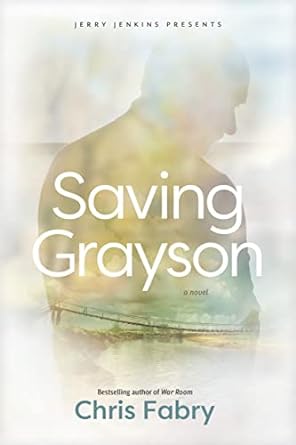
Saving Grayson, by Chris Fabry

Photo of book cover for Saving Grayson, by Chris Fabry
Saving Grayson, by Chris Fabry

I requested this book at the public library after reading that it was about a man with Alzheimer’s Disease. This terrible disease has struck my immediate family and I’m trying to learn as much about the condition as possible.

It wasn’t until I brought the book home that I saw that Jerry B. Jenkins had anything to do with it. The author credits Mr. Jenkins as giving him invaluable editorial advice. The front cover says, “Jerry Jenkins Presents.”

I’m not a fan of Jerry B. Jenkins’ Left Behind books. I think his books blurred the lines between fiction and nonfiction and too many people latched onto that series as being nonfiction. I tried to put those feelings aside and started reading Saving Grayson.

I immediately became invested in the main character, Grayson “Gray” Hayes; however, by the time I was one-third into the novel I was no longer able to suspend disbelief.

There were too many instances where Gray was doing and saying things that a person in his stage of Alzheimer’s Disease would not be able to do. I know that every case of Alzheimer’s Disease is uniquely manifested, but for Gray to be able to go from hardly recognizing his traveling companion to climbing up the concrete embankment under an interstate bridge to give a mattress and advice to a homeless man was difficult for me to believe.

After his dog was hit and killed on the highway after he’d completely lost track of the beloved pet after getting out of his van which had run out of gas – the van he was driving without a driver’s license – and telling a police officer he didn’t know Josh, the traveling companion he’d sneaked away from, but the next minute was able to give a stranger marital advice in nuanced language… I decided I didn’t need to finish reading the book. I carefully select the books I have time to read, so I’m always disappointed when I decide I can’t finish a book.

Perhaps from my description you will know if this book is your “cup of tea.”

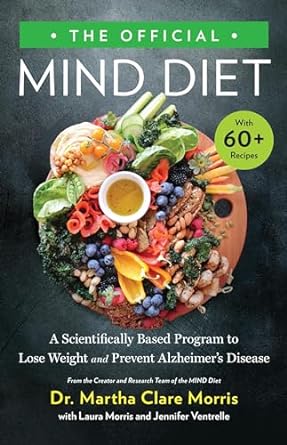
The Official Mind Diet: A Scientifically Based Program to Lose Weight and Prevent Alzheimer’s Disease, by Dr. Martha Clare Morris

Photo of book cover for The Official Mind Diet: A Scientifically Based Program to Lose Weight and Prevent Alzheimer's Disease, by Dr. Martha Clare Morris
The Official Mind Diet: A Scientifically Based Program to Lose Weight and Prevent Alzheimer’s Disease, by Dr. Martha Clare Morris

I have been semi-following the MIND Diet for a year or two, but it was not until last month that I read The Official Mind Diet: A Scientifically Based Program to Lose Weight and Prevent Alzheimer’s Disease, by Dr. Martha Clare Morris, the diet’s creator. It is the potential for delaying the onset of Alzheimer’s Disease that drew me to the diet. It is named one of the best diets by scientists, doctors, and organization such as the Alzheimer’s Association. It combines the Mediterranean and DASH diets, and I find it relatively easy to follow. It’s a lot of common sense and information we all know but most of us have chosen not to follow. It isn’t a diet you must strictly follow. Following it to various degrees is supposed to help you.

The MIND Diet has recommendations for how many servings of leafy green vegetables, other vegetables, certified extra-virgin olive oil, and whole grains you should eat every day and how many servings of berries, nuts and seeds, fish, poultry, and beans and legumes you should eat every week. There is a list of things you should limit, such as red meat and processed meat, butter and stick margarine, full-fat cheese, fried food, and sweets. No surprises there!

If you are interested in giving yourself a chance at avoiding or at least postponing the onset of Alzheimer’s Disease, I highly recommend this book. Whatever steps you can take in following the recommendations of this book will be positive.

Annals of Bath County, Virginia, by Oren Morton

Photo of book cover for Annals of Bath County, Virginia, by Oren Frederic Morton
Annals of Bath County, Virginia, by Oren Frederic Morton

I read this book for free online via Internet Archives. I needed the information it held so I could more effectively write the first chapter in my historical novel, The Heirloom. Since the history of Bath County, Virginia is of limited interest to the readers of my blog, I’ll just leave it at that. It was a Godsend for me, however!

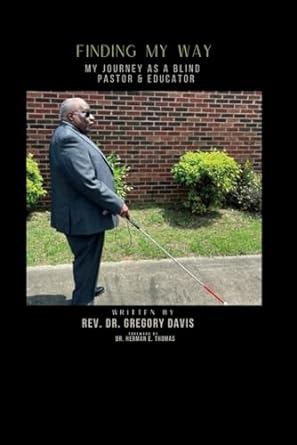
Finding My Way: My Journey as a Blind Educator & Pastor, by Dr. Gregory Davis

Finding My Way: My Journey as a Blind Pastor & Educator, by Rev. Dr. Gregory Davis

I dedicated my January 15, 2024 blog post to this book. I’m so excited by this book, I’m writing about it again today.

This is a book of the Rev. Dr. Gregory Davis’ memoirs. I don’t care what you have accomplished in your life, this book will leave you feeling like you should have done more. To say it is inspirational is an understatement.

Dr. Davis completely lost his sight as a teenager. He never once used blindness as an excuse or a crutch. In the book he chronicles his childhood; his time as a student at the Governor Morehead School for the Blind in Raleigh, North Carolina; his time as a student at Central Piedmont Community College in Charlotte; his time as a student at the University of North Carolina at Charlotte; and his time in the School of Divinity at Duke University.

Everywhere he studied, he excelled not only as a student but also as a leader. He served in student government associations and all along the way encouraged other students to be all they could be.

Originally aspiring to be an attorney, he came to realize that God meant for him to be a Minister of the Gospel and a college professor. He taught and mentored at the University of North Carolina at Charlotte, and he also served as pastor of Bellefonte Presbyterian Church, USA in Harrisburg, North Carolina for nearly 30 years.

I have been acquainted with Dr. Davis for nearly 30 years and I knew he was a remarkable person; however, I had no idea about most of his challenges and accomplishments until I read his book. If you want to read about someone beating the odds in life and never giving up, you need to read this book.

By the way, did I mention that Dr. Davis accomplished all this while not only being blind but also being a black man?

In case you missed them…

I blogged about three books on February 5 (Three of the 10 Books I Read in January 2024) and three books on February 12 (Three Other Books I Read in January 2024).

Until my next blog post

I hope you have a good book to read this week.

Take advantage of the resources available through your local public library system.

Remember the people of Ukraine.

Janet

Three Other Books I Read in January 2024

January brought me lots of books and time to read them. Last week’s blog post talked about three books I read last month. Today’s blog is about three other books I read. Next week, I’ll blog about the other four books I read in January.

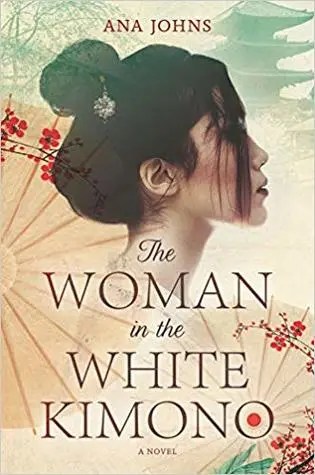
The Woman in the White Kimono, by Ana Johns

Photo of book cover for The Woman in the White Kimono by Ana Johns features a profile image of a Japanese woman with her hair up and her face partially hidden by her black hair.
The Woman in the White Kimono, by Ana Johns

It is not often I get to read a book that I hate to put down – one I just have to read “one more chapter” before stopping to do something else. The Woman in the White Kimono was one of those novels.

I learned about this historical novel by being a member of the Historical Fictionistas group on Goodreads.com.

This is one of the best historical novels I’ve read in a long time. Well-researched, it takes the stories of mixed-race babies born to Japanese women and American military personnel before, during, and after the post-World War II Allied Occupation of Japan. There were 10,000 such babies, and the ones that survived were ostracized.

This novel grew out of the author’s own father’s story. Hearing bits and pieces of his story spurred her on to do extensive research in Japan and weave a compelling piece of fiction.

This is a can’t-put-downable novel of racial prejudice and the power of love. I don’t usually like novels with alternating timelines, but this one worked – and maybe wouldn’t have worked well chronologically.

In additional being based on good research, I was captivated by the beautifully-written prose.


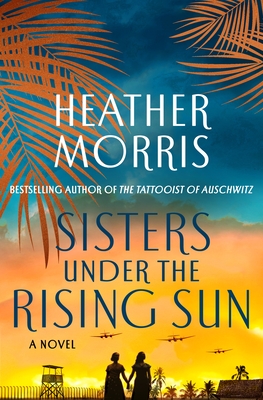
Sisters Under the Rising Sun, by Heather Morris

Photo of book cover for Sisters Under the Rising Su
Sisters Under the Rising Sun, by Heather Morris

If you have followed my blog for several years, you may recall that I have blogged about three earlier historical novels and one nonfiction book by Heather Morris. (The Tattooist of Auschwitz in Many Good Books Read in October! on November 5, 2018; Cilka’s Journey in I stretched my reading horizons in November on December 2, 2019; Three Sisters in Books Read in December 2021 on January 3, 2022; and Listening Well: Bringing Stories of Hope to Life in Spy Thriller, WWI Novel, Nonfiction, and Historical Mystery Read Last Month on October 10, 2022.)

I praised each of those books, and I recommend Sisters Under the Rising Sun to you, too.

Heather Morris, a New Zealand author, has a way of taking a great amount of information from historical research and in-depth interviews with the survivors of an event – or their descendants – and turning their experiences into unforgettable historical fiction.

Sisters Under the Rising Sun is the story of 65 nurses in the Australian military and some British, American, and Dutch civilians who were captured by the Japanese and held prisoner for three years and seven months on Sumatra, Indonesia during World War II. Although only 24 of the 65 nurses and an undisclosed number of civilians survived the war, this is the remarkable story of their heroism, tenacity, and dedication to each other. It is a story of sisterhood and self-sacrifice. It is based on real people and their experiences under horrendous conditions.

More than 65 individuals are mentioned by name in the narrative portion of this book, so I recommend that you keep a running list of characters as they are introduced because, unless you read the Author’s Notes at the end of the novel first, you won’t know which characters you need to remember.

There are a couple of biological sisters whose stories are woven throughout the book as well as the stories of the Australian nurses. It is the practice in Australia to refer to a nurse as “Sister,” so the title of the book has a double meaning.

There has been a spate of World War II novels published over the last few years, so you might be growing weary of them. I recommend you read one more: Sister Under the Rising Sun, by Heather Morris.


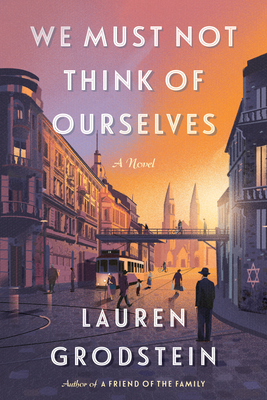
We Must Not Think of Ourselves, by Lauren Grodstein

Photo of book cover for We Must Not Think of Ourselves: A Novel, by Lauren Grodstein. It is a downtown street scene and the Star of David is on one of the buildings.,
We Must Not Think of Ourselves, by Lauren Grodstein

Although a novel, the author bases this book on real life accounts she has researched. The premise is that certain Jews in Warsaw, Poland were selected to write notes about their treatment and what they observed starting in 1940 so, if they were survived by their notes, the world would eventually learn what persecutions the Jews endured under Nazi Germany. The project was called Oneg Shabbat.

The story follows a Jewish widower, Adam Paskow, who had been an English teacher and was fluent in five languages. The gradual persecution of the Jews is chronicled as one right after another is taken from them until their homes and businesses were confiscated and they were forced behind locked gates into crowded and deplorable circumstances in what came to be called the Warsaw Ghetto.

The author artfully takes written accounts from many people and turns them into Adam’s story and reflections. The narrative chapters are interspersed with interview-type chapters.

I liked how the author, through dialog at the Oneg Shabbat meetings, included bits of news about the war. For instance, by the spring of 1941 the Oneg Shabbat participants knew about the gas chambers at Auschwitz. That information filtered down from Polish resistance spies, POW escapees, and Russian soldiers captured by the British.

One thing that comes through in the book is how the people of Poland were wondering why the United States wasn’t yet willing in 1941 to send troops to help them. They reasoned that if they knew it in the Warsaw Ghetto, surely the United States knew it. They wondered why the US was willing to help convey ships across the Atlantic Ocean while unwilling to commit troops to the war.

Interwoven throughout the novel is the love story of Adam and his wife, Kasia. She dies before he is forced into the ghetto to live in a cramped apartment with strangers. Over time, he and Sala fall in love; however, Sala’s husband lives there, too, which creates an awkward situation. Adam and Sala’s story reflects the desperation and hopelessness the Jews lived with. It was a hopelessness that grew by the day.

The people in the ghetto survived by selling or bartering with their meager possessions. Adam carefully sold every item of his wife’s that he’d been able to take into the ghetto. Will he have anything of value left in the end to secure papers that will give him a chance to escape from Poland before he’d shipped to Auschwitz?


Until my next blog post

I hope you have a good book to read. I’m reading a novel and a nonfiction book.

Remember the people of Ukraine.

Janet

Three of the 10 Books I Read in January 2024

Being a cold month and more than a little wet in North Carolina, January turned out to be a great 31 days of reading opportunities for me. Today I’m blogging about three of the 10 books I read last month. I’ll blog about the other books February 11 and 19.

As I often have in the past, I begin this post about the books I’ve read by stating that I am not a book reviewer. True book reviewers have some rules they go by. I have no such rules; I just write my reactions to the books I read. Sometimes my political leanings come through. I majored in political science in college. I can’t help myself!

I enjoy a variety of genres. Much of my reading is more or less dictated by when my name reaches the top of the waitlist at the public library. If not for the public library, my reading selections would be severely limited. Never miss a chance to support your local public library!

That said, here are my thoughts about three of the books I read in January.

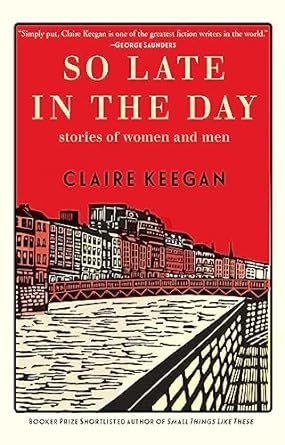
So Late in the Day: Stories of Women and Men, by Claire Keegan

Bright red cover of So Late in the Day: Stories of Women and Men, by Claire Keegan
So Lat in the Day: Stories of Women and Men, by Claire Keegan

This book is made up of three short stories, each taking a look at the relationships between women and men – each from a different perspective. The publisher calls this book a “triptych of stories about love, lust, betrayal, and the ever-intriguing interchanges between women and men.”

The first story shares the title of the book. In it, Ms. Keegan, an Irish author, explores what Irishmen think of women in general. What she portrays is a man who never in any way thinks of a woman as his equal. It is demonstrated through a love story that goes sour when the bride-to-be sees the groom-to-be for what he is. Underlying the story is the premise that this man is the way he is because that’s what his father was like.

“The Long and Painful Death” is the second story in this book. It’s about a writer who goes to live in the basement of a house on an island to be the writer-in-residence for two months. She has a strange encounter with a scary German man.

“Antartica” is the third story. It’s a dark tale about a married woman who goes to London under the guise of doing Christmas shopping for her husband and children, but in reality she goes to find out what it would be like to sleep with a different man. This tale begins nicely and (spoiler alert!) ends badly.

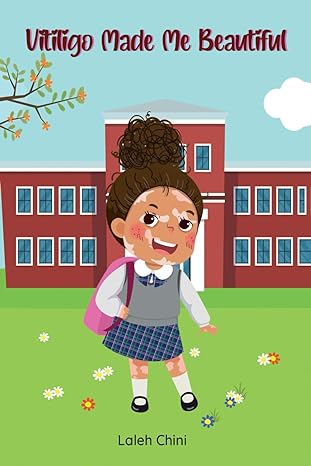
Vitiligo Made Me Beautiful, by Laleh Chini

Book cover of a brown-skin little girl in front of her school. Book title: Vitiligo Made Me Beautiful, by Lalah Chini
Vitiligo Made Me Beautiful, by Laleh Chini

This is the latest book published by my dear blogger friend, Laleh Chini. Although the book is meant for children ages 7-12 years of age, it can serve as a reminder to adults, too, that we need to always be kind to one another.

The main character in the book is a little girl who wakes up one day with white patches on her skin. A few days later she is diagnosed with Vitiligo. It is a condition in which patches of a person’s skin lose their color. This, of course, is especially difficult for a person with dark skin.

In the book, the little girl’s classmates rally around her as they focus on what they like about her and her qualities and talents. Don’t we adults need to do that more often, too?

If you want to read a compelling book by Laleh Chini, I recommend Climbing Over Grit. It is the story of her mother’s growing up years in Iran and the child bride culture there. Fortunately, Laleh’s family escaped life under that regime when she was 16 years old, and they made their way to the United States. Here’s the link to Climbing Over Grit: https://www.amazon.com/dp/9176375536/. It won the Canada Book Award

Book cover for Climbing Over Grit, by Marzeeh Laleh Chini & Abnoos Mosleh-Shirazi
Climbing Over Grit, by Marzeeh Laleh Chini & Abnoos Mosleh-Shirazi

If you’d like to read what I said about Climbing Over Grit on my blog right after I read it, please follow this link to my November 5, 2018 post: Many Good Books Read in October!

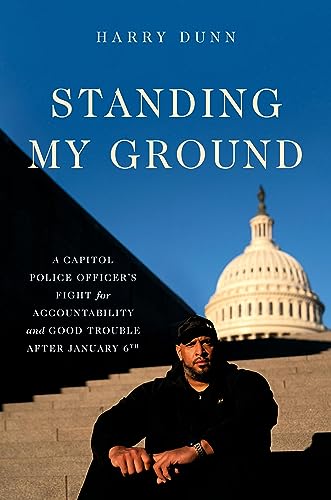
Standing My Ground: A Capitol Police Officer’s Fight for Accountability and Good Trouble After January 6th, by Harry Dunn

Standing My Ground: A Capitol Police Officer's Fight for Accaountability and Good Trouble After January 6th, by Harry Dunn
Standing My Ground: A Capitol Police Officer’s Fight for Accountability and Good Trouble After January 6th, by Harry Dunn

Harry Dunn was on duty at the US Capitol on January 6, 2021 – that infamous day of the insurrection and attempted coup. I’ll never be able to erase the images of that day as I watched TV in horror.

In his book, Mr. Dunn talks about the honor it is to serve as a US Capitol police officer. He talks about our country’s history and how proud he has always been to serve in that complex government building, to protect the US Constitution and the people inside that building. He talks about how he enjoys interacting with people who visit that building.

And he talks about the unexpected vicious attack on our democracy on January 6, 2021 and how it has changed him forever. He talks about the violence and the racial slurs, the bear spray, the WD-40 spray, the pepper spray, the beatings, and the hatred the mob showed toward police officers and our country that day.

He talks about the fact that some in the mob were already convicted felons with a history of violence. He talks about some in the mob being swept up in the moment after being hoodwinked by Trump’s big lie.

He talks about the fragility of democracy.

This is a gutsy, no-holds-barred, raw book. I highly recommend it, especially if you have any doubts about what happened on January 6, 2021.

Since my last blog post

I learn from comments from readers of my blog. One of the comments I got in response to last week’s post prompted me to add a postscript to that blog post. I’m afraid my reference to the side effects of my second Shingrix injection might deter others from getting the Shingles vaccination. That was not my intent. I had Shingles in my right eye a few years ago. It felt like a knife in my eye for weeks; therefore, I was eager to get the Shingrix vaccine as soon as it was available free of charge for Medicare patients. The discomfort of the side effects of the shot pale in comparison to the pain of having Shingles, so please talk to your doctor about the Shingrix two-injection vaccine, and take it if you are a good candidate for it.

My research about the route of The Great Wagon Road/The Carolina Road in Virginia continues as I work on my historical novel tentatively titled The Heirloom.

Until my next blog post

You have no idea how much I appreciate the moral support my blog readers give me – even when I fail to read all their blog posts!

I hope you have at least one good book to read.

I hope you will pay attention to reputable news sources and keep up with the events in the world. If you are a citizen of the USA, I pray you will do so to be an informed voter this year more than ever before.

Remember the people of Ukraine as they are the only ones standing between Vladimir Putin and his invasion of NATO countries. When a dictator or a dictator-wannabe announces his plans, believe him.

Janet