
Between the piedmont of North Carolina and the Outer Banks there are many interesting places to visit. Here’s a sampling of the places my sister and I stopped to enjoy in the northeastern coastal plain on our way to and from the Outer Banks a month ago.
Somerset Place State Historic Site and Lake Phelps
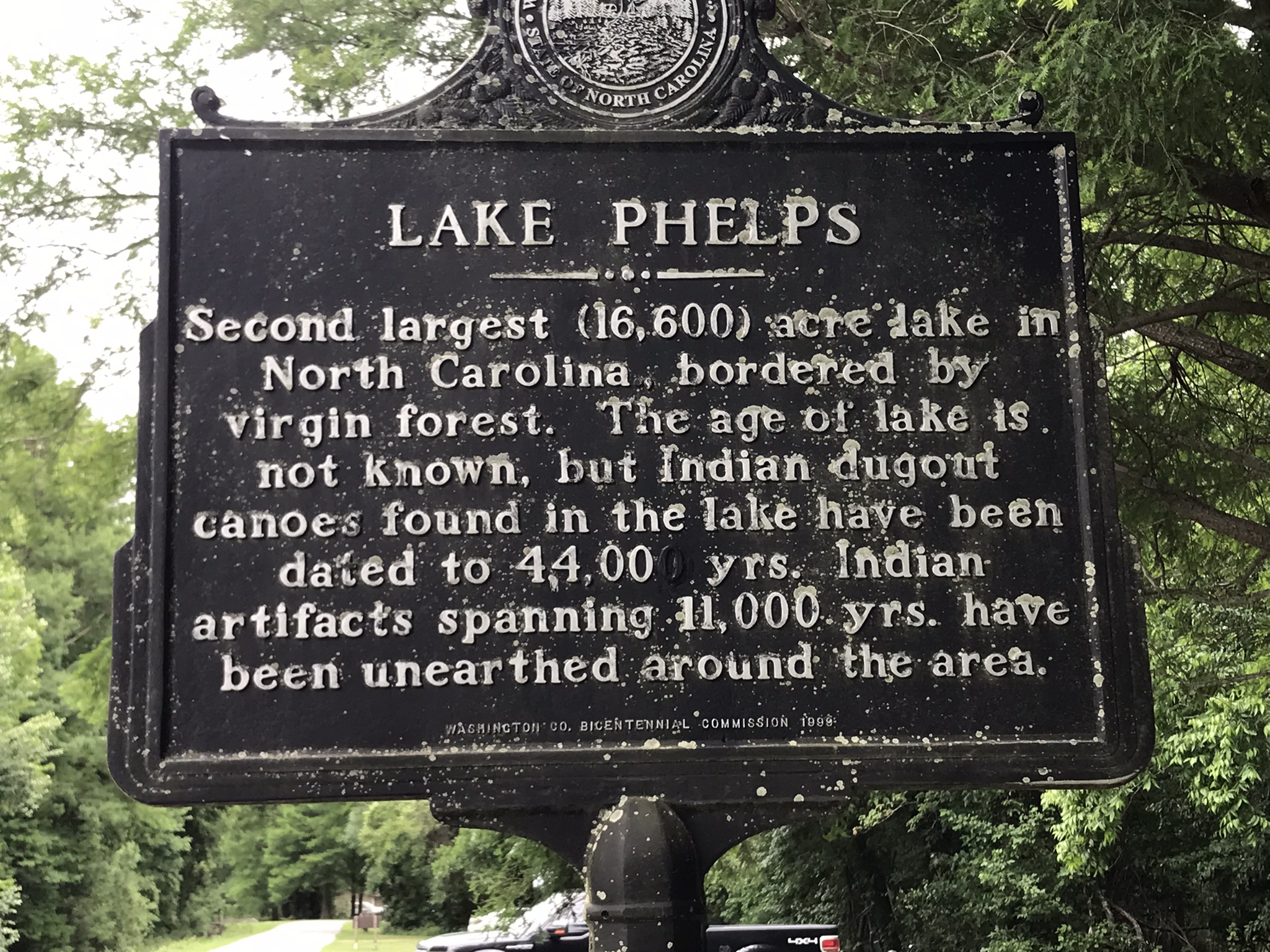
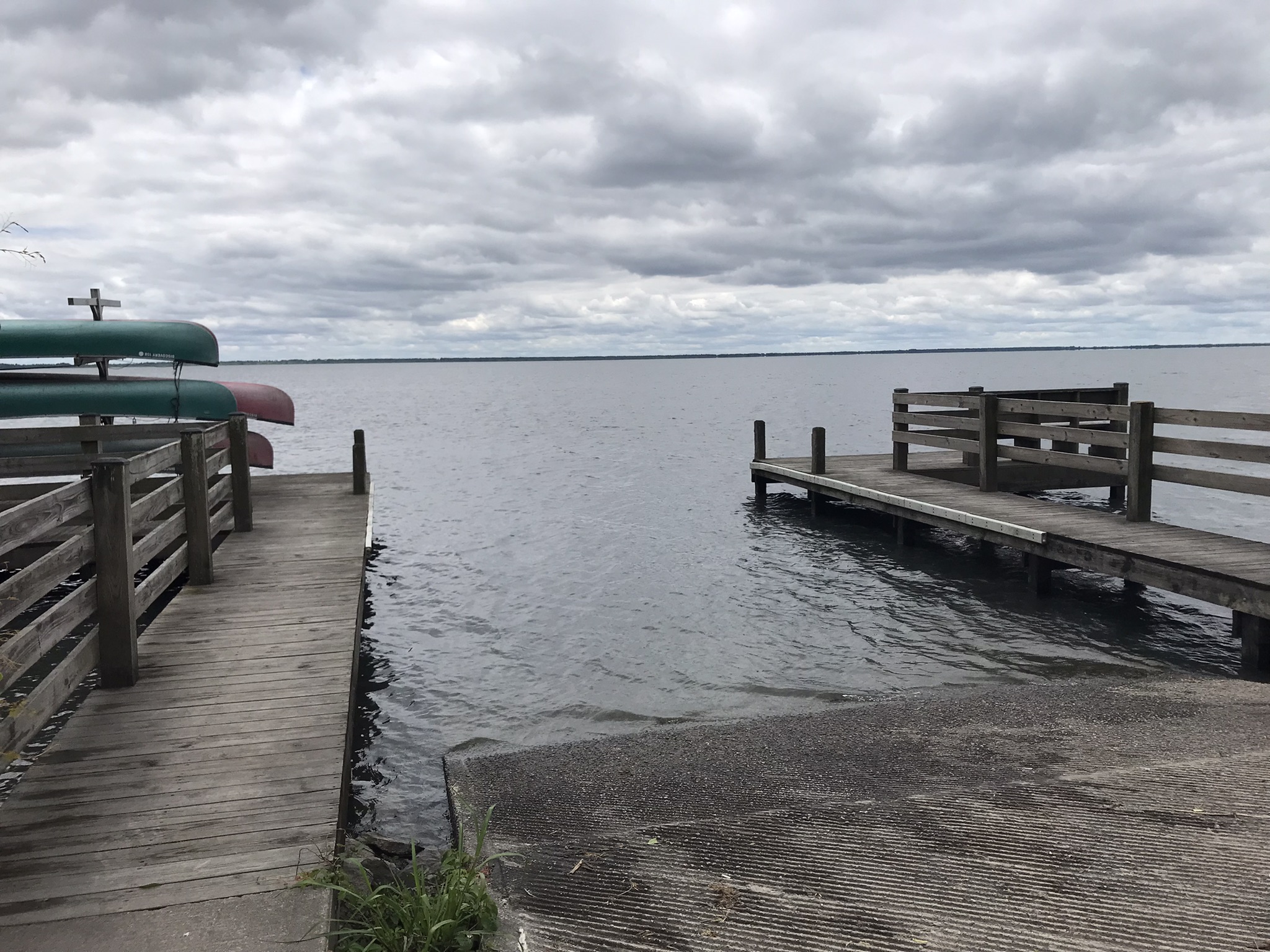
On the way, we visited Somerset Place State Historic Site (https://historicsites.nc.gov/all-sites/somerset-place) again and ate a picnic lunch at Pettigrew State Park (https://www.ncparks.gov/state-parks/pettigrew-state-park) on Lake Phelps. Somerset Place is a restored plantation.
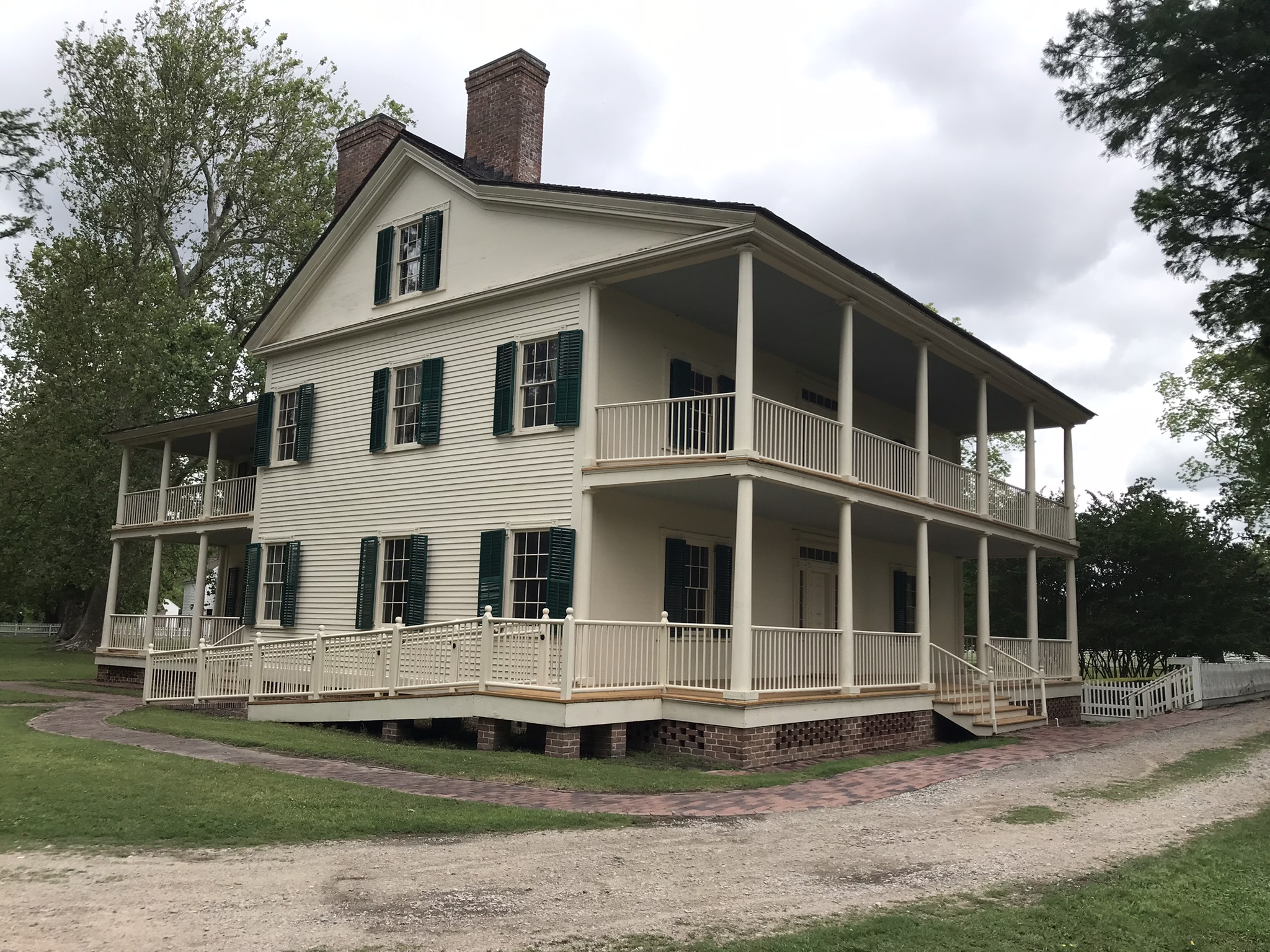
The plantation house was not open for tours on this trip, but we were more interested in seeing some of the slave buildings. The foundations of some of the buildings used by the Africans who were enslaved there in the 18th and early 19th centuries have been excavated. Several have been identified as buildings that were used by the slaves to prepare their midday and communal Sunday meals.
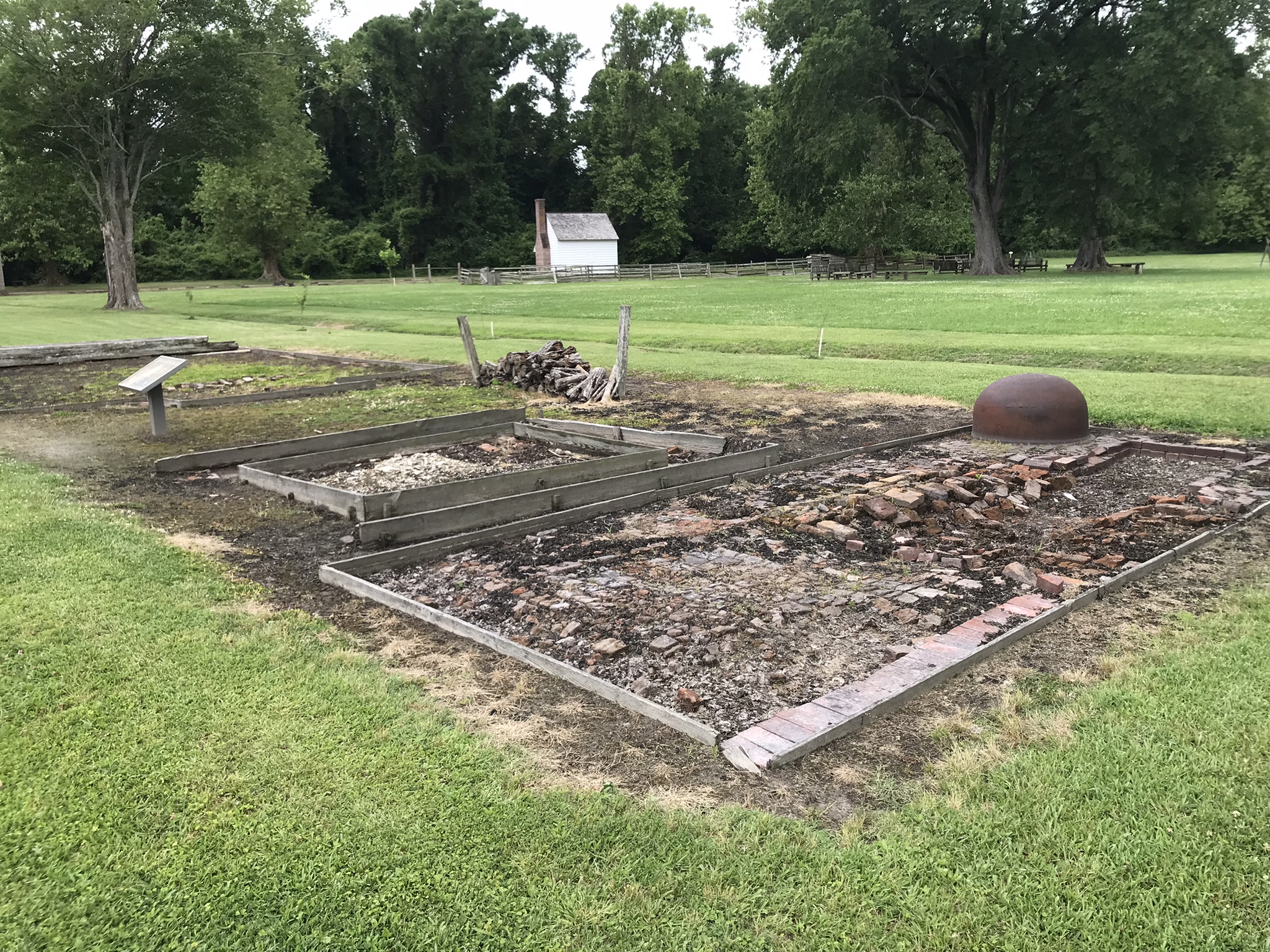
There was also an on-site jail, stocks, and descriptions of the punishment meted out to some of the slaves who attempted to escape.

Below is a photo of a building called Old Sucky’s House. It is a reconstruction of one of the many dormitory-like structures at Somerset Place that housed as many of 26 people. Old Sucky Davis was known as a matriarch among the hundreds of slaves that were held at Somerset Place.


Needless to say, Somerset Place was a somber first stop on our trip. If you want to learn more about this plantation, I highly recommend Somerset Homecoming: Recovering a Lost Heritage, by Dorothy Spruill Redford with Michael D’Orso.
Pocosin Lakes National Wildlife Refuge
Our next stop was the visitor center for Pocosin Lakes National Wildlife Refuge on the Scuppernong River in Columbia, NC. This is on the Inner Banks on the Albemarle-Pamlico Peninsula in the northeastern part of the state. In case you are not familiar with the word “pocosin,” it is derived from a Native American word that means “swamp on a hill.”

The refuge has a sponge-like organic soil called peat. It varies in depth there from two inches to 12 feet, and it takes 100 years for one inch of peat to be created. Tree stumps four feet in diameter have been found there which indicates there was once a white cedar and cypress swamp forest there.

Peat can burn underground and even as it floats on water. Some peat fires here have burned for months on end. As one can imagine, it is difficult to extinguish such a fire. The pond pine and some other plants there depend on fire for their propagation. The heat from fire is necessary for the pond pine cones to release their seeds.
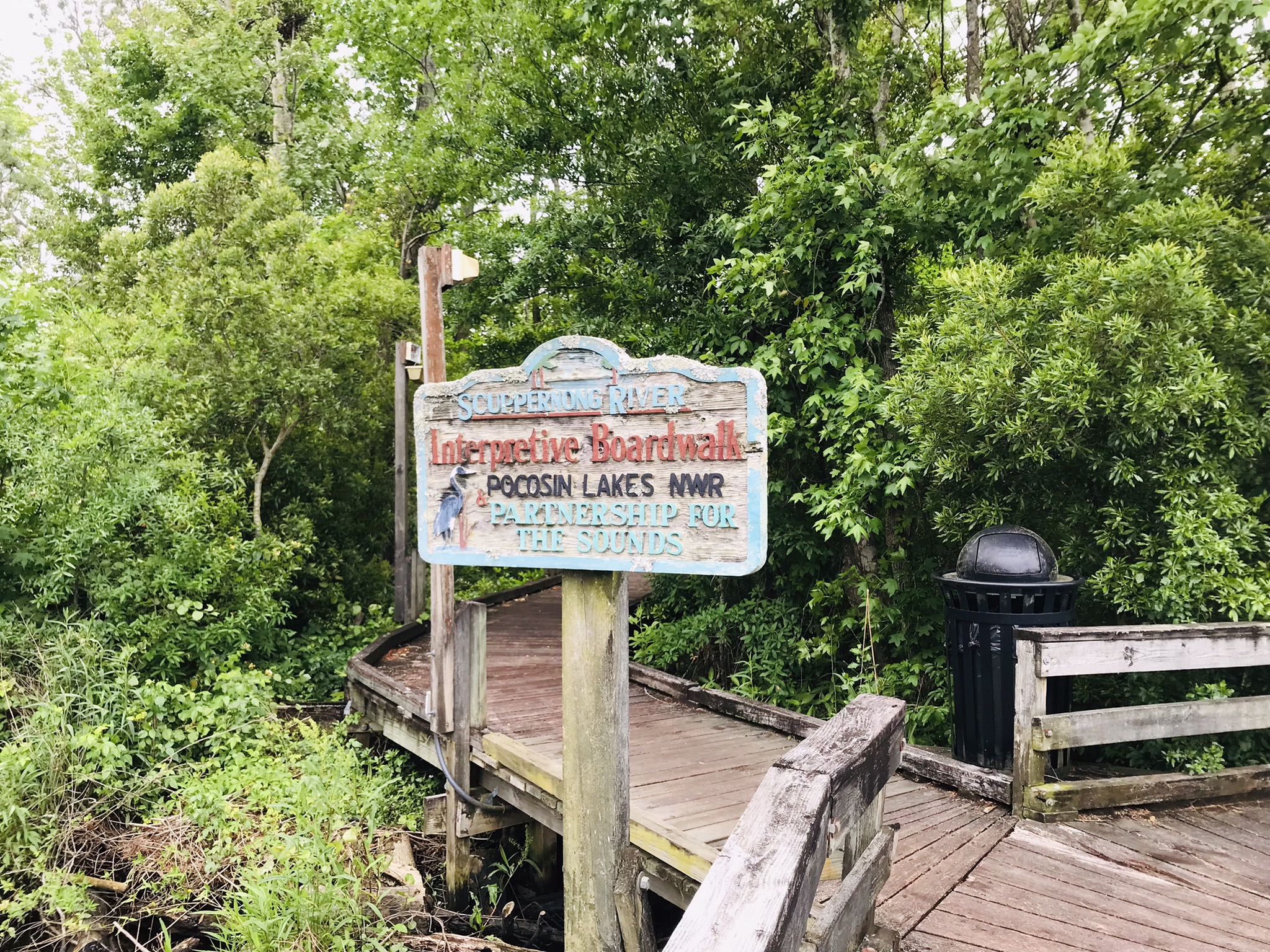
Wild irises were in bloom the day of our visit. More than 100,000 ducks, geese, and swans over-winter on the refuge. The refuge and surrounding area are home to an estimated 8,000 black bears. To learn more about the refuge, visit https://www.fws.gov/refuge/pocosin-lakes/about-us.

On the way home, we visited Jarvisburg Historic Colored School, the Great Dismal Swamp Canal (https://dismalswampwelcomecenter.com/), Merchant’s Millpond State Park (https://www.ncparks.gov/state-parks/merchants-millpond-state-park), and Sylvan Heights Bird Park (https://www.shwpark.com/) – three places I’d never made time for before.
Jarvisburg Historic Colored School
First, we stopped at Jarvisburg Historic Colored School at Jarvisburg, NC. (Yes, that’s the official name. I’m not being disrespectful.) Established in 1868, the school building is on the National Register of Historic Places. Unfortunately, it was closed for restoration. (That was a recurring theme on our trip!)

Great Dismal Swamp
We saw just a miniscule part of the Great Dismal Swamp, a portion of which is in Virginia. It once covered a million square miles. The canal was created by slave labor in the 1700s. It is unimaginable the miserable work that was in the heat and humidity of northeastern North Carolina, not to mention the poisonous snakes, alligators, and mosquitoes.

Constructed about 1805, the canal is now part of the Intracoastal Waterway and is listed on the National Register of Historic Places. There were five boats and small yachts moored at the landing near the visitor center when we arrived. One was from Maine, one was from Toronto, and one was from Washington State.

Across the canal is the Dismal Swamp State Park. It has a visitor center and walking trails. Exhibits in the visitor center include wildlife, early Native American, commercial logging in the swamp, and the swamp’s participation in the Underground Railroad during the American Civil War.

Unfortunately, every acre of the Great Dismal Swamp has been logged at least once.
When we were leaving the walking trails on the other side of the drawbridge, we got to see a small vessel cross through. The canal traffic has right-of-way over pedestrians, but we were entertained by seeing both ends of the bridge rise while the middle section of it swung to the side.

Merchant’s Millpond State Park
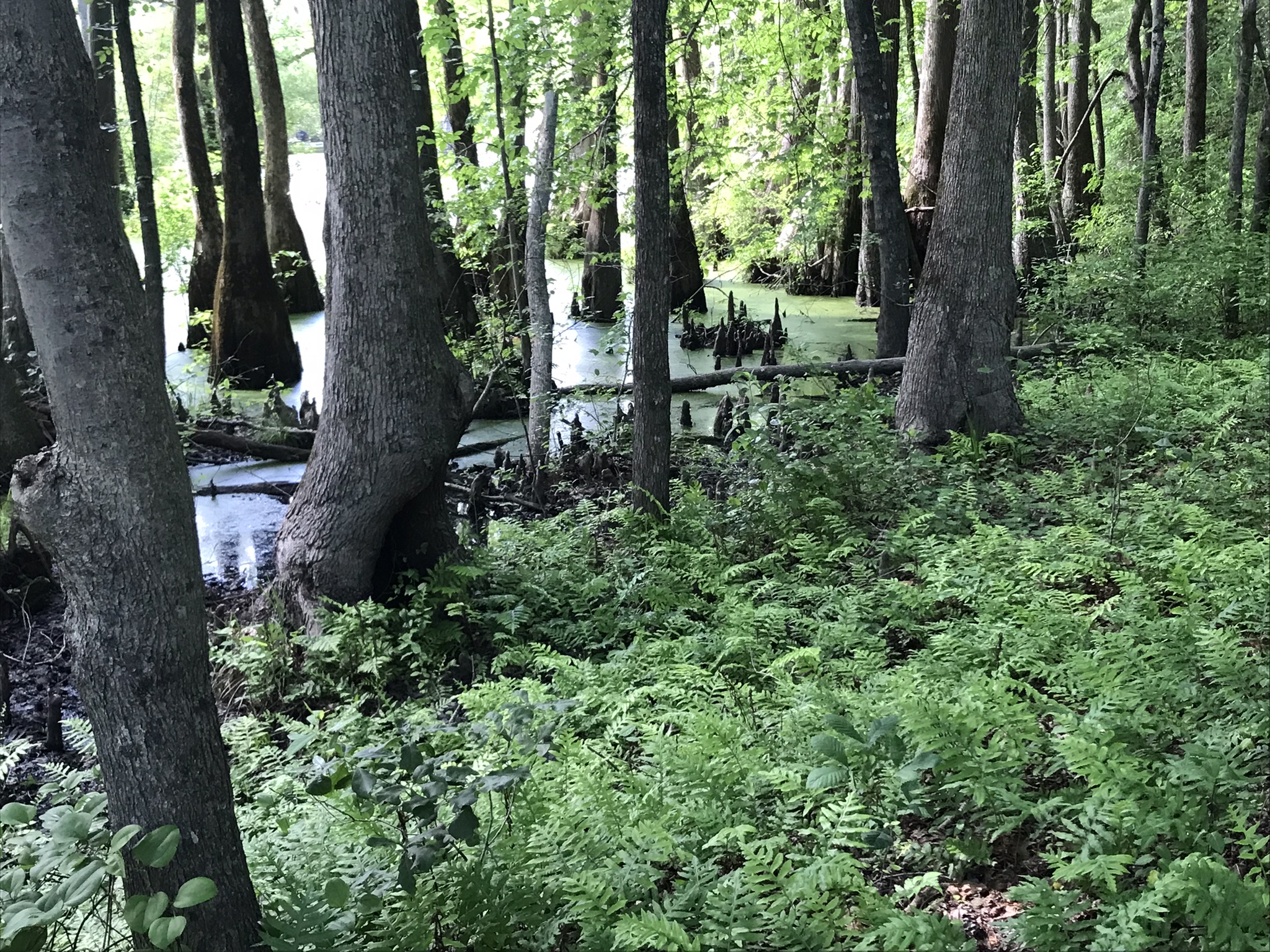

Merchant’s Millpond State Park is just a few miles west of the Great Dismal Swamp Canal. There is a 19.5-foot dugout canoe from the 1800s on display in the visitor center.


We thoroughly enjoyed walking on the trail there. It was quite something to see. The park includes 3,500 acres, the millpond, and Lassiter Swamp. We did not see any of the native alligators, but that’s okay.


Sylvan Heights Bird Park

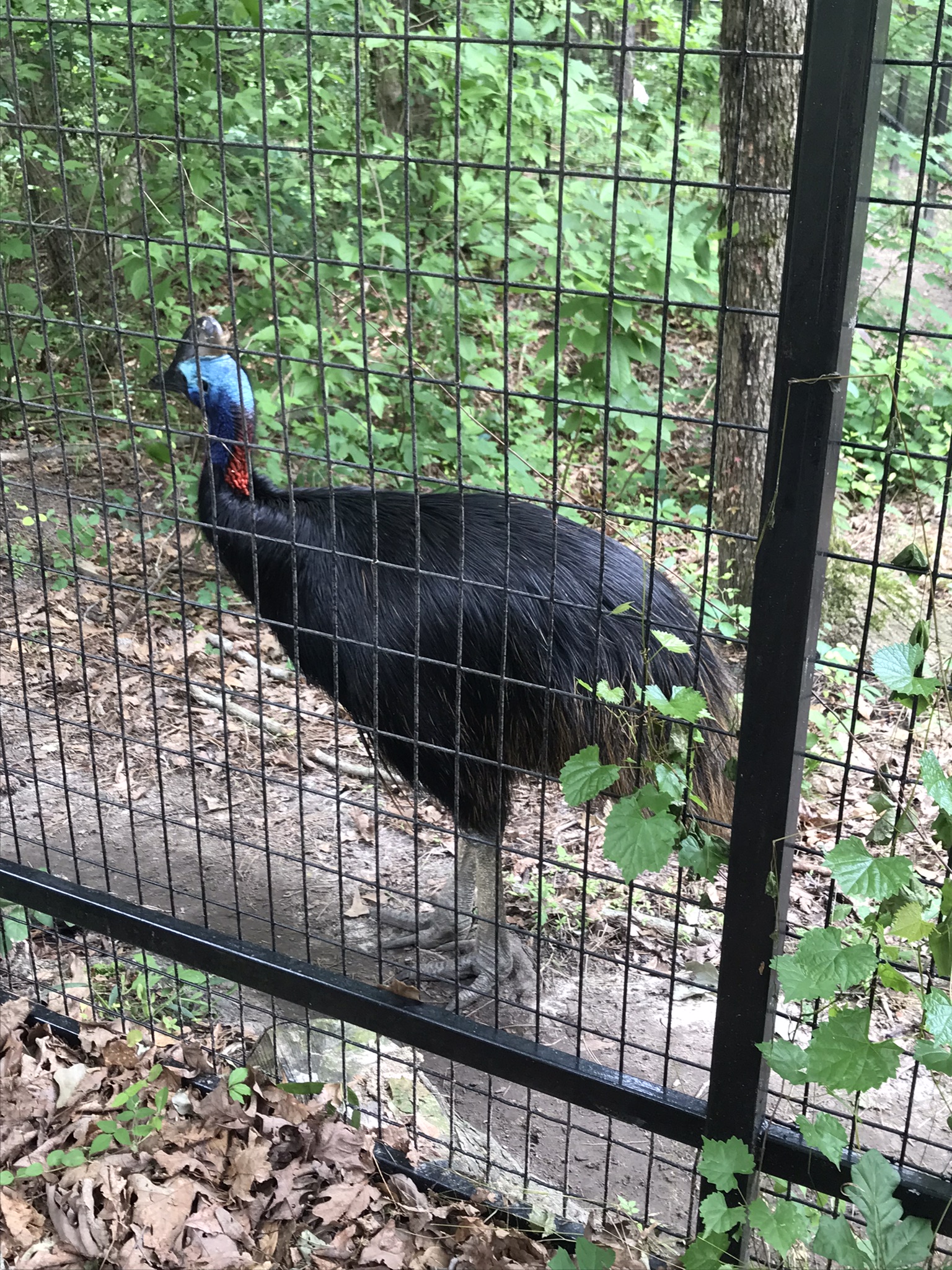
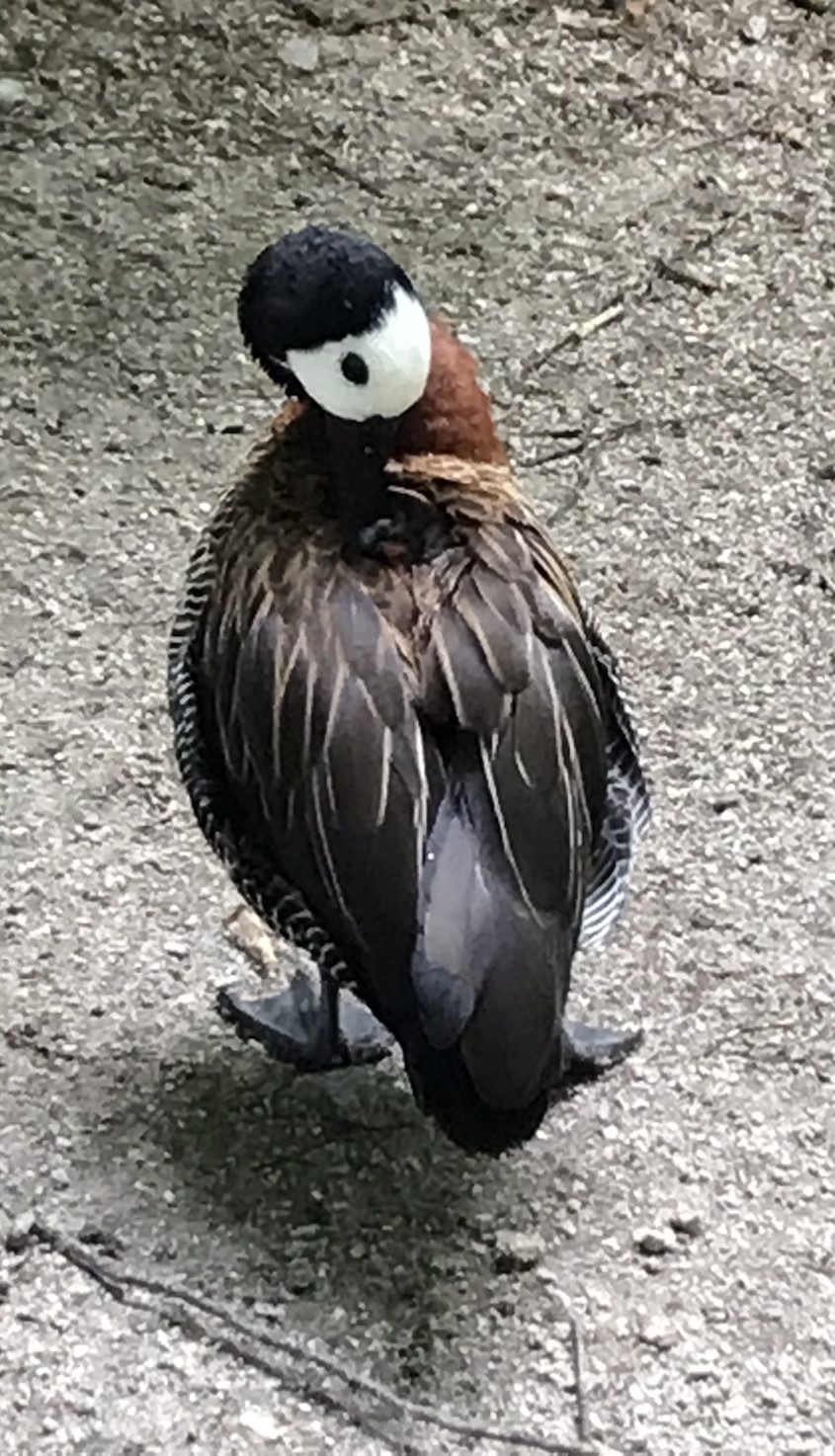
The last destination on our trip before visiting a friend in the Raleigh area was Sylvan Heights Bird Park at Scotland Neck, NC. The Sylvan Heights Bird Park and adjacent Sylvan Heights Avian Breeding Center just might be North Carolina’s best keep secret! In today’s blog post I’m sharing just a small fraction of the photos I took at the park.


It was a perfect last stop on our trip home from the 120-mile string of barrier islands that form the outer coast of North Carolina. Here’s a bit of the history of the park and avian breeding center…

Mike and Ali Lubbock moved to the United States from England in 1981. They had extensive waterfowl knowledge and founded Sylvan Heights Waterfowl in the mountain town of Sylva, NC.
In 1989 the internationally-known aviculturist Lubbocks moved their entire collection and operation to Scotland Neck in northeastern North Carolina where they founded the Sylvan Heights Avian Breeding Center. Today, the center cares for more than 2,500 individual birds, including more than 1,000 hatchlings every year.
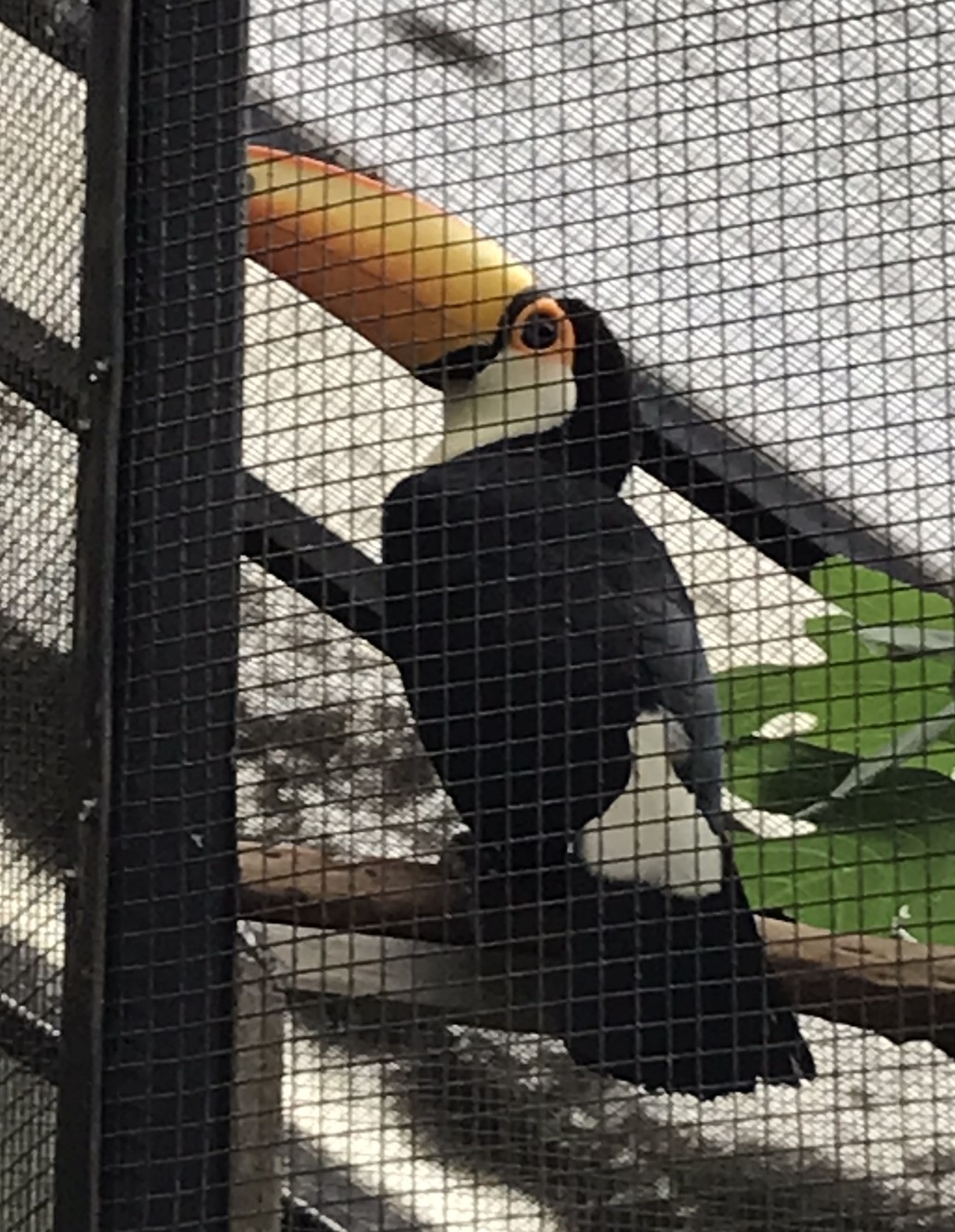
The center is an avicultural training site for biologists with an interest in conservation. Professionals from zoos from across the United States go there to learn advanced avian husbandry techniques.

Quoting from the website, “Sylvan Heights is home to breeding populations of some of the world’s rarest waterfowl. In some cases, fewer than 250 individuals of these species remain in the wild, and the collaborative captive breeding programs taking place here may be their last barrier against extinction.”

Sylvan Heights Bird Park opened in 2006. The park “seeks to advance conservation of waterfowl and wetlands, to act as a local educational resource for avian biology and wetlands ecology, and to serve as an international center for avicultural training and research.”
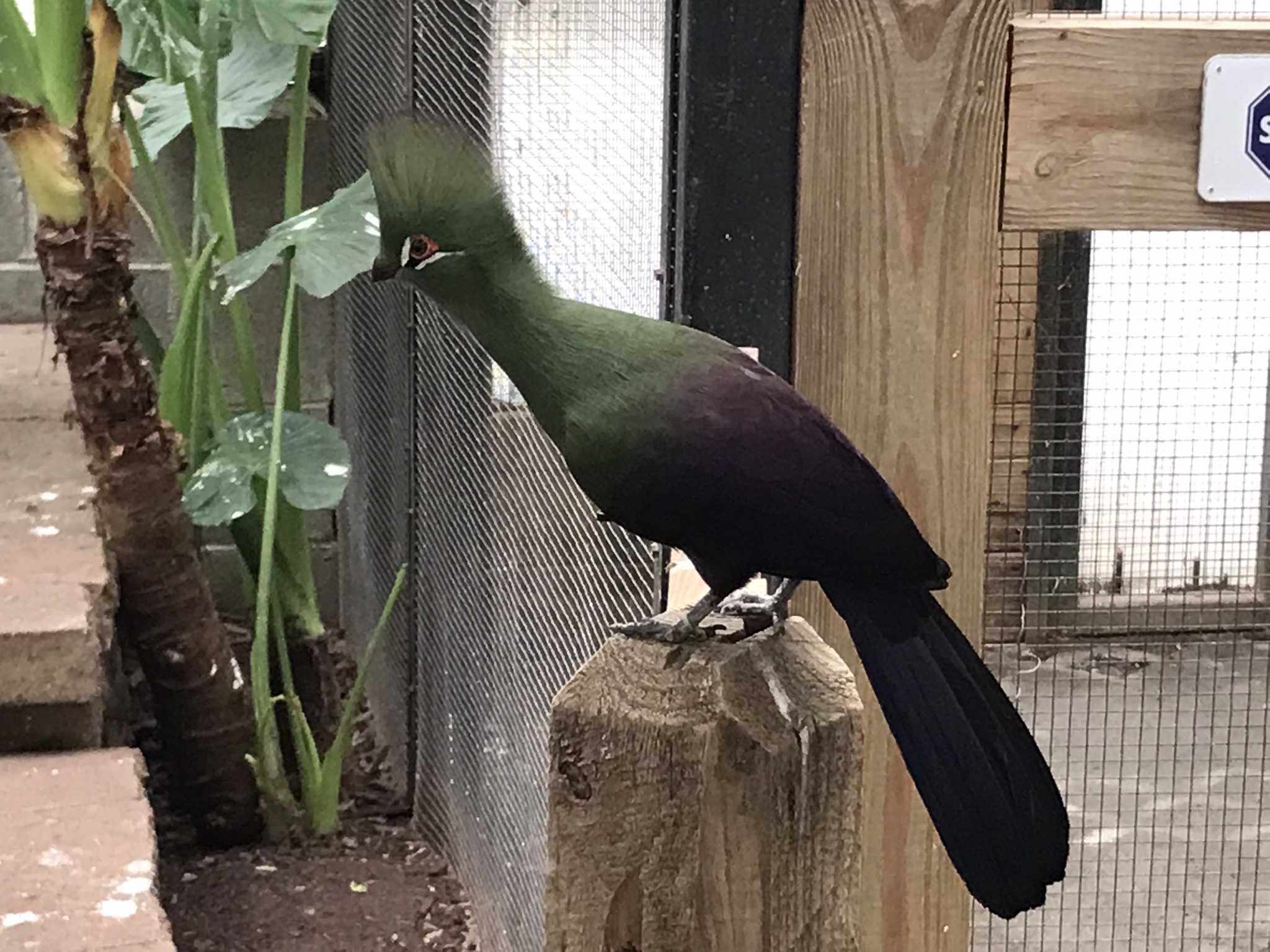
Sylvan Heights has the largest collection of exotic and rare waterfowl in the world. It houses more than 3,000 birds representing 140 species. Together, the park and the breeding center form the world’s largest waterfowl collection and the second largest collection of birds in the country.

The Sylvan Heights Avian Breeding Center is not open to the public, due to the nature of its work, but the park is open year-round.

Whew! This trip had been on my “bucket list” since before the Covid-19 pandemic. I needed a change of scenery, and this trip delivered! Each day held the promise of walking, enjoying the beauty of nature, peace and quiet, relaxation, and learning something new. What more could someone desire?
Are northeastern North Carolina and the Outer Banks now on YOUR bucket list?
Until my next blog post
In case you missed my two blog posts about that trip, here are the links: https://janetswritingblog.com/2024/05/27/this-writer-needed-a-change-of-scenery-part-i/ and https://janetswritingblog.com/2024/06/03/this-writer-needed-a-change-of-scenery-part-ii/.
Unfortunately, my publisher did not let me compile books of vintage postcards from either the piedmont or coastal plain of North Carolina because the company was not set up to market regional books, but don’t let that stop you from purchasing my vintage postcard book, The Blue Ridge Mountains of North Carolina. Please look for it on Amazon!

I hope you have a good book to read.
Remember the people of Ukraine.
Janet

 Janet's Writing Blog
Good morning and thank you for sharing. Have a great day.
LikeLiked by 1 person
So glad to see historic sites paying more attention to the Black experience.
LikeLiked by 2 people
Me, too.
LikeLike
Good morning, Tangie. Glad you enjoyed it. I got to enjoy the trip all over again as I wrote about it! I hope you have a great day, too.
LikeLike
As much as I enjoyed reading about the historical places you visited, the birds stole this blog post for me!
LikeLiked by 1 person
Plantations; we must remember, it was not long ago people were enslaved in our country. If those. bricks could speak in the kitchen hearth. How do I segway from this very serious subject? The birds you saw later on were amazing. To change subjects completely: Were there rodents of unusual size in the Dismal Swamp?
LikeLiked by 1 person
Please never stop sharing your knowledge.❤️
LikeLiked by 1 person
You are so kind, Laleh. Thank you!
LikeLiked by 1 person
It was, indeed, sobering to visit Somerset Place again. On our earlier visit 25 of so years ago, only the plantation house was open for visitors. While that was interesting to see, I was much more interested to see the buildings and ruins used by the slaves. One photo I did not include because it didn’t turn out well was outdoor shackles just outside the overseer’s house. Bolted to the ground. One of the slave women was punished for trying to escape. She was put in those shackles overnight where she suffered from frostbite and had to have both feet amputated! Horrible stories like that just turn my stomach! Yes, if those bricks could talk…. I did not see any rodents in the Dismal Swamp. Truly, we were just on the edge of the swamp. It would have been interesting to venture deeper into it and see alligators and black bears, but we weren’t equipped to get in a canoe. LOL! Our stop at Merchant’s Millpond State Park gave us a much better feel for what a huge swamp looks and feels like. The bird park was amazing! I only learned about the park about a year ago. That part of the state being nearly 300 miles away, it doesn’t get much notice by the newspapers or TV stations in Charlotte. Our area is developing at warp speed, so it was refreshing to see that there is still a lot of undeveloped land in NC. I learned about the bird park on the PBS station. (Don’t know what I’d do without PBS. Hopefully, we won’t find out after the election!) It was difficult to get good photos because most of the birds were behind fencing and my iPhone kept focusing on the fence instead of the birds. I got some terrific photos of fencing! LOL! I’ve lived in NC all my life, but had never visited that far northeastern part of the state above the Albemarle Sound. I’m so glad I finally got there! Thanks for your questions, Rebecca. I’m glad you enjoyed your virtual trip to northeastern NC! I got to enjoy it all over again while I wrote the blog and chose the pictures.
LikeLiked by 1 person
I’m so glad you enjoyed seeing the birds, Liz! They were fabulous! The park is a well-kept secret. If not for PBS, I probably would never have heard of it. They’re doing great work there. My sister and I thoroughly enjoyed it.
LikeLiked by 1 person
Makes me want to leave the confines of my study, for a change!
LikeLiked by 1 person
I’m sure it does. The best part of the trip was not hearing the phone ring for 10 days!
LikeLiked by 1 person
It just gets better!
LikeLiked by 1 person
😍😍😍
LikeLiked by 1 person
Sounds like Somerset Place retained some of the sadder parts, that reflect violence against the enslaved. A tragic story about her frostbitten feet!
LikeLiked by 1 person
Dorothy Spruill Redford, descendant of Somerset Place slaves did incredible research into her family and the history of the plantation. She was Executive Director of the state historic site for many years and was the driving force behind shining a light on the slaves who made the plantation what it was. If not for her, it wouldn’t be the treasure it is today and possibly would not include excavated building foundations and documented facts about some of the individuals who were enslaved there. Her research also resulted in a “homecoming” of 2,000 descendants of Somerset slave in 1986. Her book, Somerset Homecoming: Recovering a Lost Heritage is wonderful.
LikeLiked by 1 person
Thank you, so glad to know of the historian who brought it to life, Ms. Spruill Redford.
LikeLike
Good reading and great pics
LikeLiked by 1 person
What a perfect vacation for you Janet! I loved all the history and pictures especially the birds, amazing colors!
LikeLiked by 1 person
Thank you, Diane! It was perfect! And this week my sister and I went to Cherokee, NC and the Great Smoky Mountains National Park. It was another perfect trip… great weather, though even upper 80’s there. We got home an hour ago and I’m trying to transition back into real life. Thinking of you and your kitchen remodel. I hope some progress is being made while you wait on the new cabinets.
LikeLike
Thank you, Barb. It was 1,200 miles roundtrip. I don’t expect to ever get to take another trip like that.
LikeLike