
This my 700th blog post! I started blogging in 2010 but didn’t begin to make much traction and attract views until 2017. Over the years I’ve played around with content and scheduling. Posting once-a-week works best for me.
The best part of blogging is the friends I’ve made from all around the world. It has also enabled me to connect with other writers, which has truly been a blessing.
Thank you for following my blog and encouraging me along my journey as a writer!
Since I did not finish reading any novels or nonfiction books of general interest in November, today I’m sharing some highlights from my April 25, 2022 blog post about the black architect who never got the credit he was due for designing the iconic buildings on the West Campus of Duke University.
Everyone reading my blog has probably heard of Duke University. It’s a world-renowned university located in Durham, North Carolina. You might not know of its meager beginnings, and you might not know that the architect responsible for its magnificent West Campus was a black man, Julian Francis Abele.
First, here’s a very brief early history of the university.
In 1838, a subscription-supported school called Brown’s Schoolhouse was established in the Randolph County community of Trinity. The school’s name changed a couple of times over the years but was settled as Trinity College in 1859.
In 1892, Trinity College moved to Durham, North Carolina. With heavy financial support from Washington Duke and Julian S. Carr – both Methodists – the name was changed to Duke on December 11, 1942. That was when James B. Duke, son of Washington Duke, established The Duke Endowment. It was a $40 million trust fund set up for its interest to be divided between various hospitals, orphanages, the Methodist Church, three colleges, and the university to be built around Trinity College. In today’s dollars, the $40 million endowment would be equivalent to more than $813 million. (That’s up from $630 million when I wrote the original blog post in the spring of 2022!)
But what did Julian Francis Abele have to do with this?
Julian Francis Abele was born April 30, 1881 in Philadelphia, Pennsylvania. In 1902, Abele was the first black graduate of the University of Pennsylvania School of Design. All four years of undergraduate school there, Abele worked in the mornings as a designer at the Louis Hickman Architectural Firm and took afternoon and evening classes at the university.
Horace Trumbauer, a nationally-recognized Philadelphia architect, hired Abele. He sent Abele to study abroad for three years. Upon returning from Europe in 1906, Abele joined Trumbauer’s firm and by 1909 had become the company’s chief designer. When Trumbauer died in 1938, Abele became head of the company.
The company designed numerous buildings in Philadelphia, a number of mansions in Newport and New York, and the Widener Memorial Library at Harvard University.
But my interest in writing about Julian Francis Abele today is his contributions to the gorgeous English Gothic and Georgian buildings at Duke University. Over the 30-year period of 1924 to 1954, he was the primary designer of the university’s West Campus.
If you’ve not had the pleasure of visiting Duke University…
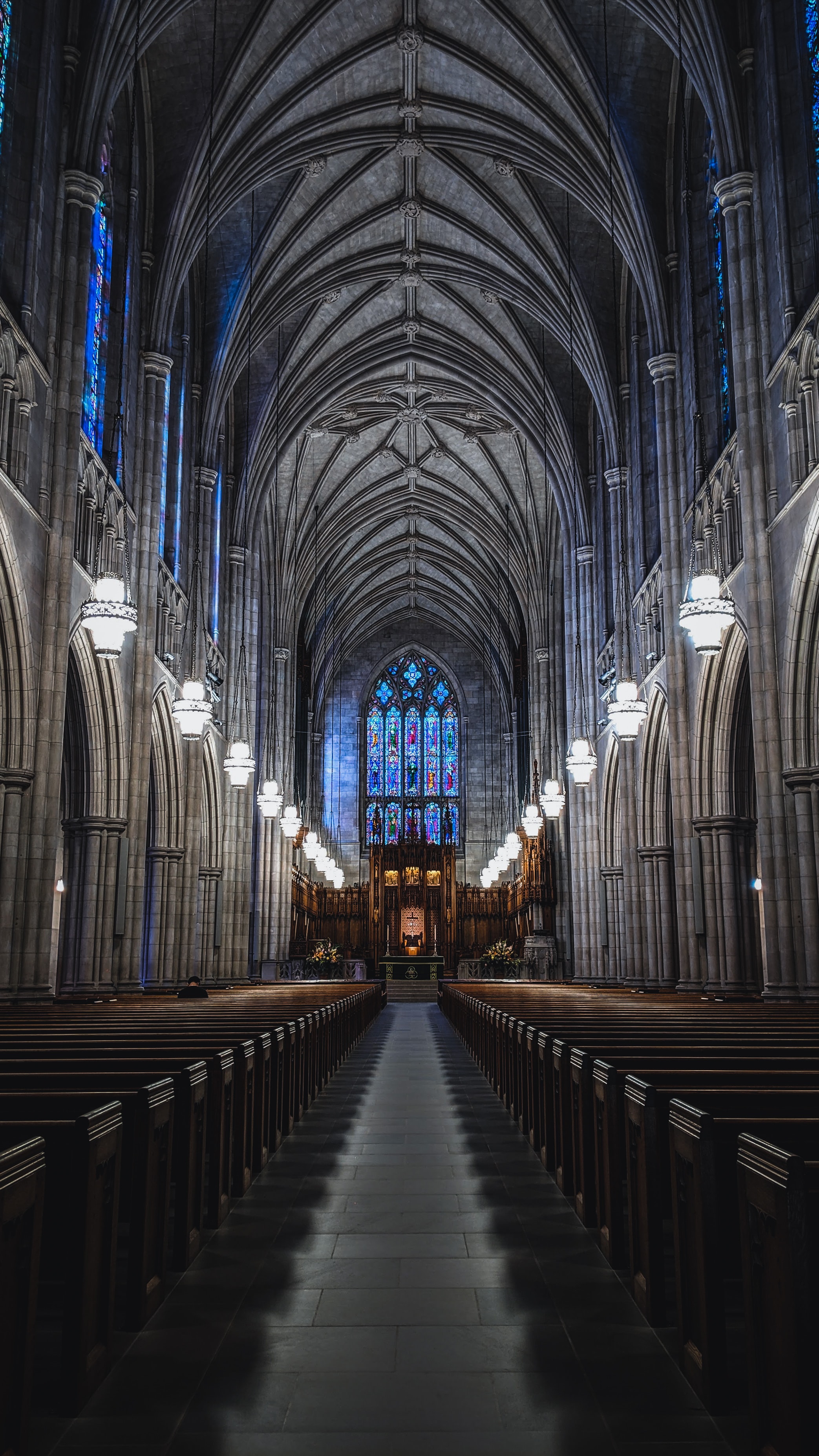
Photographs of the buildings on the Duke University campus don’t do justice to the beauty of the architecture. The centerpiece of the campus and grandest example of Julian Francis Abele’s work is Duke Chapel.
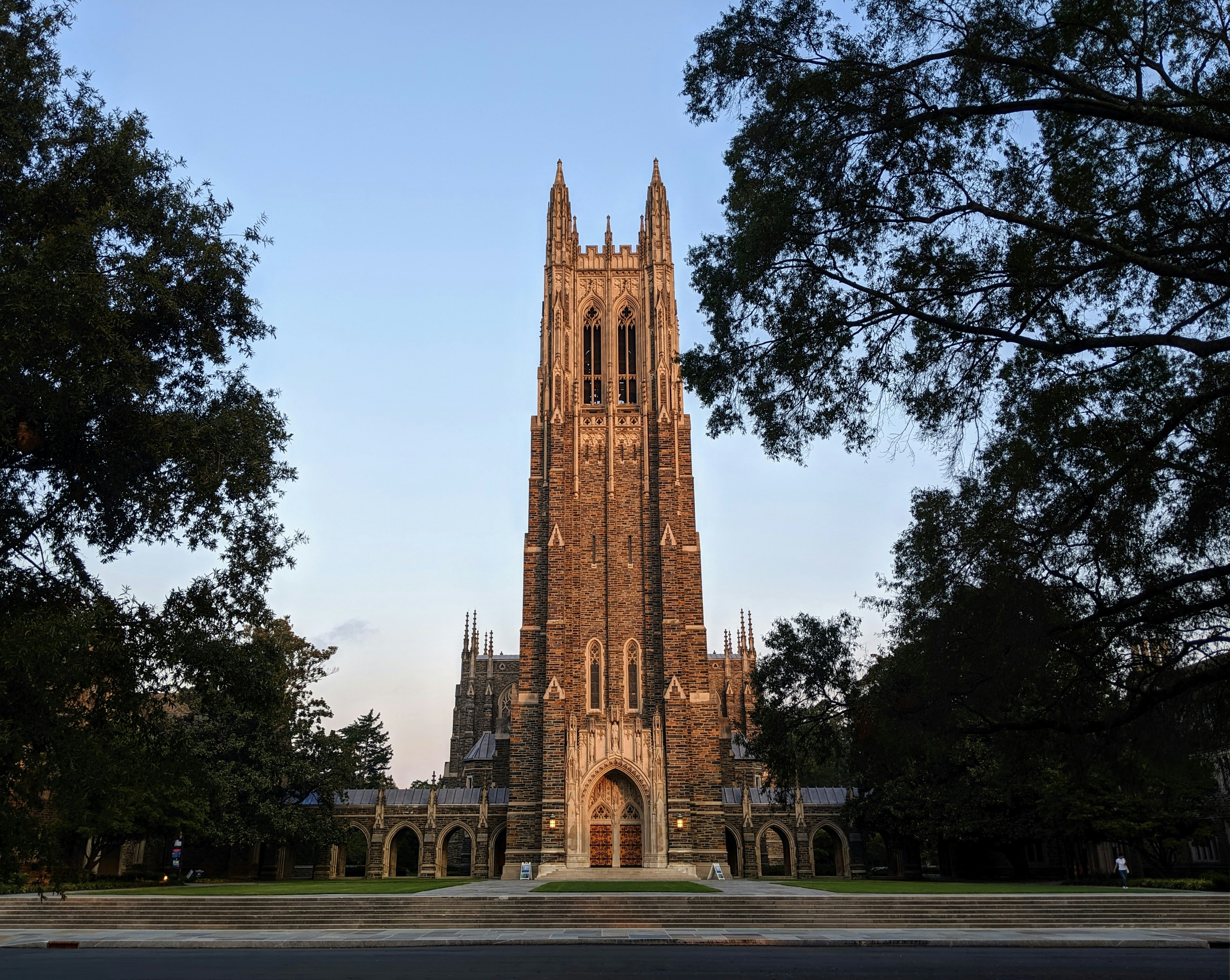
“Chapel” in this case is an understatement, for the chapel is more of a cathedral than a chapel in the common sense of the word. The chapel interior is 63 feet wide, 291 feet long, and the nave proper is 73 feet tall.
Standing on the highest point on the planned campus in 1925, James B. Duke said that it was on that place that the chapel should be built. It would be the highest point and the center of the campus. The cornerstone was laid in 1930, and it is said that students enjoyed watching the stone cutters and the progression of construction of the chapel over the next two years. Little did those white students know that the chief designer of the edifice was a black man.
In fact, it wasn’t until Julian Francis Abele’s granddaughter, Susan Cook, brought to public light in 1986 that a person of color had designed the magnificent focal point of the Duke campus. While students protested apartheid in South Africa, Susan Cook wrote a letter to the student newspaper to make it known that her grandfather had designed their beloved West Campus.
Portraits of Abele now hang in the main administration building on campus and in the Gothic Reading Room in Rubenstein Library alongside those of former Duke presidents and board chairs. In 2016, and the main quadrangle on campus, which stretches from the Clocktower Quad to the Davison Quad – and to the Chapel Quad – was named the Abele Quad.
As quoted from https://today.duke.edu/2016/03/abele, upon the naming of the Abele Quad in 2016, Duke University President Richard H. Brodhead said, “Julian Abele brought the idea of Duke University to life. It is an astonishing face that, in the deepest days of racial segregation, a black architect designed the beauty of this campus. Now, everyone who lives, works, studies and visits the heart of Duke’s campus will be reminded of Abele’s role in its creation.”
Shocking to our 21st century minds, is the fact that the racial prejudices of the early- and mid-20th century deterred Mr. Abele from visiting the Duke University campus to see his designs come to fruition and caused him not to be admitted to the American Institute of Architects until 1942.
Mr. Abele died in Philadelphia on April 23, 1950.
Visit Duke University in person or virtually
If you’re ever zipping along on Interstates 40 or 85 in Durham, take several hours to leave the hustle and bustle behind and visit the Duke University campus. Duke Chapel is open every day from 10:00 a.m. until 6:00 p.m. Stroll around the campus and be sure to visit the Sarah P. Duke Gardens. (Visit https://gardens.duke.edu/ for information about parking and what’s in bloom.)
If you wish to read my original blog post about Julian Francis Abele, here’s the link: You should know who Julian Francis Abele was.
December 2, 2024 Hurricane Helene Update on Western North Carolina
Just to give you an idea about the recovery situation 67 days after the storm hit western NC…
Housing: With more than 125,000 homes damaged or destroyed by the storm, recovery for those individuals and families will take years.
Roads: Interstate 40 is still closed near the TN line. Hopes are high that two lanes (one lane in each direction for non-commercial traffic) will be opened around the first of January through the Pigeon River Gorge. As of Friday, of the 1,329 roads that were closed in September due to Hurricane Helene, 266 remain closed.
Blue Ridge Parkway: There is still no estimated date for all the parkway in NC to be reopened. Some 140 miles of the parkway in NC remain closed due to damage sustained from Hurricane Helene. As usual during the winter months, additional sections of the road were closed this weekend and will continue to be closed from time to time due to snow and ice.
A fresh fir Christmas Wreath from Avery County, NC: Do you remember in my November 18, 2024 blog post (Some Things Aren’t Funny, & Hurricane Helene Update) in which I wrote about how one Christmas tree farm in western NC that lost 60,000 trees in the storm was making wreaths out of the tops of their trees whose lower branches were destroyed by Hurricane Helene?
The wreath my sister and I ordered was delivered on Saturday, and it is beautiful! I wish my blog had a way for me to convey the wonderful scent to you! Here’s their website, in case you want to place an order for a wreath or a virtual tree: https://www.averychristmastrees.com/
Here’s our wreath…

Until my next blog post
I hope you have a good book to read and enough quiet time to read it.
Treasure your time with friends and family.
Remember the people of Ukraine; western NC; and Valencia, Spain.
Janet

 Janet's Writing Blog
Well it is a beautiful chapel! Inside and outside, a cathedral in all its splendour! I am glad to read that the recovery efforts are still in effect and helping so many people affected by H. Helene. Over here in our province the recovery efforts are still ongoing but they are not as good as was expected by the victims of the 29 October storm. It is incredible how politics plays such a part and how politicians are willing to make people suffer for their own personal/political gains! I cannot delve into details because I do not know them, but I do see that since our province is governed by the opposition party we are not getting much attention from our federal government. The situation reminds me a lot of H. Katrina in New Orleans… In any event, hope you find a good book to read, I am reading voraciously every night a phenomenal set of books that guide us through the history of the war with Napoleon but in a quasi-fictional setting as a novel. Take good care and all the best Janet.
LikeLiked by 2 people
Wow! I’d love to visit the campus in real life!
Congrats 🎉 on 700 posts! I’m so glad we’ve connected! 🤝
LikeLiked by 2 people
Thank you for this wonderful post on Mr. Abele, Architect. So happy to hear of his distinguished history of design at Duke. My dad’s family has a connection to Duke. I haven’t researched the details yet.
LikeLiked by 2 people
It certainly does look more like a cathedral than a chapel! What an interesting story – thanks for sharing it. It’s good that he’s finally been recognised for his work – better late than never!
LikeLiked by 2 people
Thank you. I don’t know why they called it a chapel! LOL!
LikeLiked by 2 people
Me, too, Carol! “Meeting” nice folks like you is the greatest blessing of blogging! I can’t believe I’ve written 700 blog posts, especially since I only posted three or so the first year. Talk about not knowing what I was doing! I wish you could visit the Duke campus. I live about three hours from there. When I was 12 years old, our family took a rare vacation. On the way to Washington, DC, we got off the interstate at Durham just so my sister and I could see Duke Chapel. One of my great-nieces is a junior at Duke. I think she was quite surprised at the size and grandeur of “the chapel” the first time she saw it. The word “chapel” doesn’t do it justice.
LikeLiked by 2 people
Duke Chapel is indeed beautiful! I saw it for the first time when I was 12 years old and it made quite an impression on me. I guess it was the first cathedral-type church I’d ever seen. I hate to hear that recovery in your province is progressing so slowly. I don’t understand how politicians can be so cruel, but it seems to be the rule instead of the exception. I suppose it has always been so, but it seems it is getting worse around the world and in unexpected places like the US. And, yes, what happened in New Orleans in the wake of Hurricane Katrina was appalling! I’m currently reading John Grisham’s new nonfiction book called Framed. It’s about how corrupt police officers and corrupt judges send so many innocent people to prison. I told Marie last night that by the time I finish reading this book I won’t trust anybody! It is very cold here this week, with a chance of snow flurries tonight. Our last measurable snow (a whopping .2-inch LOL!) fell on January 29, 2022 — almost three years ago! I do believe the climate is changing. When I was a child and young adult it was unusual if we didn’t have at least one snow every winter. It snowed every Wednesday in March 1960 when I was in the first grade. We missed so much school we had to make up some of the days by going on Saturdays. Bummer! Happy reading, and stay warm over there!
LikeLiked by 2 people
Cool! Please let me know when you have that figured out! One of my mother’s brothers when to college there when it was Trinity College, my mother went to summer school there one year while she was in college in Greensboro, NC, and one of my great-nieces is a junior there now. I wasn’t smart enough to even think about going there… not to mention how expensive it already was in the early 1970s. But, truly, I didn’t have the IQ to even be considered, even if it had been free!
LikeLiked by 2 people
I was glad to read that Abele’s granddaughter was able to get him his proper recognition for the Duke buildings he designed. Even in a photo, the chapel is very impressive–and beautiful. Thank you for the Hurricane Helene update. Are the people who lost their homes living in FEMA trailers?
LikeLiked by 2 people
Thanks, I forwarded your article to my parents and they enjoyed it very much. I think you are far too modest about your IQ. But, in any case I place more stock in hard work. That you’ve got covered.
LikeLiked by 2 people
Well, the Grisham book sounds interesting. I will look for it. In my career as a police officer I saw many bent coppers fall and some of them are still serving time as they should. Punishment for bent cops should be double the penalty imposed upon civilians! It is cold here but it does not snow here, at least not since the 1960’s. Have a great week Janet and remember trust everyone but expect the unexpected. All the best.
LikeLiked by 2 people
I’ll try to take your advice on that. We had a dusting of snow overnight, so I didn’t get to see the snow falling. Have a good week.
LikeLiked by 2 people
Oh, thank you for sharing it with your parents. And thank you for the compliments, although I doubt there are warranted. Well… maybe the hard work part. I seem to have to do everything at least twice. Thank you.
LikeLiked by 2 people
Hm, seems like you may not give yourself enough credit for what you’ve accomplished. I am very pleased to know about the architect of the western Duke campus. I hope a film is made about him one day.
LikeLiked by 2 people
I, too, am so glad Abele’s granddaughter was able to do that. What a shame it took one of his descendants and so many decades before his work was recognized. And how sad that he was not allowed to visit the campus to soak in the beauty he’d created! Although I grew up in the days of racial segregation from the mid-1950s and well into the 1960s, the fact that Abele could not visit the campus is unfathomable! I can’t get my head around such narrow-mindedness. To your question… it’s my understanding that FEMA trailers have been delivered and set up, but I haven’t heard/read the statistics. Individuals and companies have been donating campers and RVs because the need is so overwhelming. I saw one report that the Amish have come down and are building small shelters — sort of like basic tiny homes — as fast as they can. The Cajun Navy from Louisiana transitioned from rescue and recovery operations to setting up the temporary housing being brought in and/or built. I’ve seen photos on Facebook of what looks like a little village of tiny houses that has been built in Asheville. The terrain itself — especially where roads and bridges are gone — prevents the delivery of trailers. I think that’s the difference between this disaster and the usual damage hurricanes do at the coast. After coastal hurricane damage, the infrastructure of roads is usually not obliterated by landslides, and thousands of trees aren’t down — so affected people and areas can be physically reached and helped. Sorry… I didn’t mean to write a book in response to your comment! I got carried away.
LikeLiked by 2 people
That’s a great idea — his story would surely make a great film!
LikeLiked by 2 people
I’m glad to know about Abele–what a story!
LikeLiked by 2 people
Thank you Janet. Enjoyed your newsletter today! All the best.
LikeLiked by 2 people
Glad you enjoyed my newsletter! All the best to you.
LikeLiked by 2 people
It is quite a story and one I knew nothing about until a couple of years ago. The things we were never told…! I’m glad you found it interesting, Vicki.
LikeLiked by 1 person
Thank you for the additional information, Janet. When I read the figure for the number of people whose homes were destroyed, I was wondering how they were being provided with temporary shelter.
LikeLiked by 2 people
Thank you Janet,
LikeLiked by 2 people
Thanks for sharing the history lesson on Duke University. It is a lovely chapel. Thanks for the update on NC and recovery process. Blessings
LikeLiked by 2 people
You’re welcome, Beverley.
LikeLiked by 2 people
Wonderful ♥️
LikeLiked by 1 person