#OnThisDay: British Invasion of Washington, DC

My blog post on June 22, 2020 (#OnThisDay: The Chesapeake – Leopard Affair off Virginia, 1807) was about a naval incident that was a cog in the wheel of events that resulted in the War of 1812. One of the most famous events of that three-year war between the United States and Great Britain was the British invasion of Washington, DC and the burning of the White House on August 24, 1814.

Left behind in Washington City

United States First Lady Dolley Madison showed what she was made of on that day. Her husband, President James Madison left Washington City to join General Winder. Before leaving, he asked Dolley if she would be all right there until his return. She assured him that all was well and she wasn’t afraid. He instructed her to take care of the public and private Cabinet papers, the Cabinet being the Secretary of State and other federal department heads.

That’s not how things played out, though, and Dolley became a bit of a hero on that August day 206 years ago. It turned out that the British troops were much closer to the capital city than the president had thought. When President Madison realized the imminent danger posed by the British troops, he wrote to Dolley twice in pencil that she should get out of Washington as soon as possible.

Dolley filled trunk after trunk with government papers, sacrificing the Madison family possessions in order to save important documents. People all around her were fleeing for their lives. As she wrote in a letter to her sister, Anna, “even Colonel C with his hundred, who were stationed as a guard in this enclosure” fled.
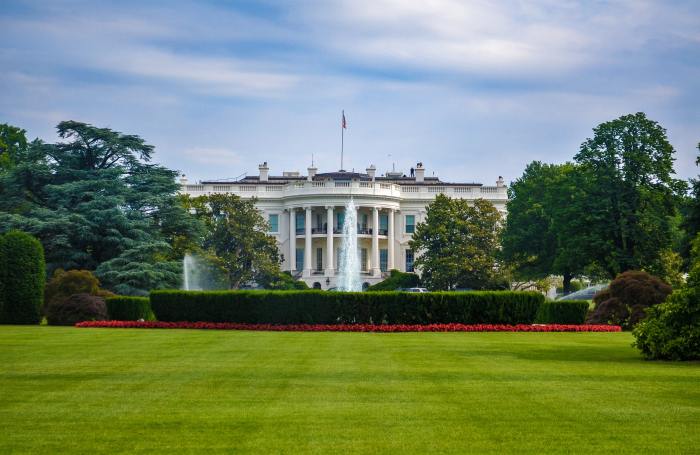
Photo by David Everett Strickler on unsplash.com

A faithful servant, French John, offered to “spike the cannon at the gate, and lay a train of powder, which would blow up the British should they enter the house.” Dolley declined to take him up on his offer of defending the White House.

The Battle of Bladensburg

At sunrise the next morning, Dolley looked through her spyglass in all directions, watching for her husband to appear. He didn’t come. In the early afternoon she could hear the cannons firing as the British defeated the Americans at the Battle of Bladensburg. By mid-afternoon she had procured another wagon and “filled it with plate and the most valuable portable articles belonging to the house.” That wagon was dispatched to the Bank of Maryland for safe keeping.

Gilbert Stuart’s Portrait of George Washington

Dolley was urged to get in a carriage and leave immediately, but she still refused to leave the White House without Gilbert Stuart’s portrait of George Washington. It turned out that the frame was bolted to the wall, so it was not just a matter of taking it down. To save time, the canvas was cut out of the frame, rolled up, and saved by Dolley Madison. She went down in history for her heroics of August 24, 1814.

The Burning of Washington City

As the British troops entered the capital city, they torched one government office after another until finally reaching the White House. Some sources say the soldiers feasted on a meal prepared for 40 guests at the grand dining table before setting fire to the house; but that seems a little far-fetched since there was no one remaining there to prepare food and Dolley Madison had fled with the china.

It was surely a day and night of terror for any Washington residents who dared to stay behind. When the sun rose the next morning, the Capitol Building, the White House, and every other building of importance lay in smoking ruins.

Dolley Madison’s Background and Legacy

Growing up in North Carolina, I wasn’t taught much about the War of 1812 when I was in school. The battles all took place north of our state. It just wasn’t emphasized when I came along. If one of my social studies teachers had related the above story with energy and enthusiasm, it would have made the War of 1812 much more memorable and relatable than a recitation of battles and dates.

Dolley Madison is also remembered for making a conscious effort to invite guests from both political parties to social functions at the White House. The term “bipartisanism” had not yet been coined when she worked to do all she could to encourage cooperation between the political parties.

Dolley Payne Madison was born to Quaker parents in Guilford County, North Carolina in 1768. Her family moved to Philadelphia when she was 15 years old. She married John Todd, a Quaker lawyer, and they had two children; however, Mr. Todd and the younger of their sons died during a yellow fever outbreak in 1793.

At that time, Philadelphia was the nation’s capital. Dolley was an attractive young widow. Senator Aaron Burr introduced her to then Congressman James Madison. She married Madison after a brief courtship.

James Madison was an Episcopalian. Dolley converted to his faith and abandoned her Quaker upbringing and manner of dress. The Madisons lived at Montpelier, the family plantation in Virginia before moving to Washington, DC in order for James to be President Thomas Jefferson’s Secretary of State. It seems that Dolley happily fell right into the Washington social scene.

Since President Jefferson was not married, Dolley Madison served as the unofficial First Lady. It was she who got to make many decisions about the furnishings of the newly-constructed White House. James Madison was elected US President in 1808. Although much-revered as the “Father of the US Constitution,” he was 17 years Dolley’s senior and his terseness was in great contrast to the vivacious Dolley.

At the end of President Madison’s second term, he and Dolley returned to Montpelier. They lived there until his death in 1836. Dolley then moved back to the social life in Washington, DC, where she died in 1849.

Since my last blog post

Life has thrown a few curves at me since last Monday. It seems in the coming days I’ll learn how to care for a diabetic dog. My work on my scenic or step plot outline got hijacked, but I’ll get back to it.

Until my next blog post

I hope you have a good book to read. My mind has been pulled in more than a few directions, making it difficult for me to concentrate on reading. I still have a couple of books I want to finish, though, by the end of the month.

If you’re a writer or other artist, I hope you have quality creative time.

Be safe. Be well. Wear a mask. It’s not a sacrifice in the big scheme of things.

Janet

#FixYourNovel #6: Theme and Plot

My “writing blog” has turned into more of a “reading blog.” It’s my intention to strike a pleasant balance between the two. The purpose of my blog from the beginning has been to give you a way to follow my journey as a writer. A writer needs to read books by other people, and I hope you enjoy learning about the books I read.

I’ve made a conscious effort this month to spend more time writing and less time reading. As I mentioned in last week’s blog post, I’m working my way through C.S. Lakin’s The 12 Key Pillars of Novel Construction Workbook: Your Blueprint for Building a Solid Story. It has been a tremendous help to me in evaluating various aspects of my 85,000-word novel manuscript. I’m not getting paid to sing the praises of this workbook. When I find a book or workbook about the craft of writing fiction that is helpful to me, I’m happy to share that information with my blog readers.

The things I concentrated on since last week’s blog post are theme, plot, and subplot. Hence, the title of today’s post. I have been sporadic in posting my #FixYourNovel blog series. I had planned for the sixth one to be about point-of-view. I don’t feel comfortable writing authoritatively in any way, shape, or form about that subject yet.

Photo by Kaitlyn Baker on Unsplash

The dreaded question: What’s your book about?

The most dreaded question authors receive is “What’s your book about?” You’ve spent months or years creating a complex story of 85,000 to 120,000 words, and you’re expected to state off the top of your head a one sentence answer to that question. Yikes! I’m still working on my answer to that question, but Ms. Lakin’s workbook questions have helped me sharpen a concise description of my book.

The section of the workbook that addresses theme helped me determine that my book’s main theme is forgiveness. To do that, I had to figure out what the book is about.

My initial answer to that question tends to be something like this:  It’s about a pregnant widow accused of her husband’s murder setting out to prove her innocence. But that’s not what the book is “about.” That’s the main plot, and the plot is a vehicle to convey theme.

Theme gets at the heart of what the main characters wants. My protagonist wants a happy family life. That’s a fairly universal desire. In order to achieve that, she will have to ask someone for forgiveness and she will have to forgive many others for their wrongs committed against her. It’s a southern historical novel set in the Carolina backcountry in 1769-1770.

The workbook has helped me brainstorm some parts of the plot that were lackluster, and I’ve worked to strengthen those weak links. When I get some key edits completed, I’ll adjust my scenic plot or step outline to reflect those changes. The next step then will be to get that outline critiqued by a writing professional.

That’s where things stand now with my manuscript with the working title of either The Doubloon or The Spanish Coin.

Since my last blog post

I’ve walked more, as I continue to get my fractured leg back to normal. I’ve done some “spring cleaning” that I wasn’t physically able to do in the spring. Better late than never. I’ve done some reading. I’ve spent many hours working on my manuscript, and that includes a considerable amount of time spent thinking.

Like you, I continue to deal with the Covid-19 pandemic on a daily basis. Here in North Carolina, our “Safer at Home” Phase 2 Order was extended five more weeks. This is the second time Phase 2 has been extended. In the absence of a national plan, each US state and territory is making its own rules. No wonder the virus is not under control in the US.

The M5.1 earthquake 100 miles from me on August 9 has me wondering if I need to add earthquake coverage to my homeowner’s insurance. It’s not something North Carolinians have had to seriously consider until now.

After giving Friends and Fiction on Facebook a plug last Monday, the program on Wednesday night was subpar. It was the first time the guest author used profanity or made vulgar hand gestures. I was embarrassed that I had recommended the program. Here’s hoping the one this Wednesday at 7pm EDT will be better.

Until my next blog post

I hope you have a good book to read. As usual, I have several books vying for my attention.

If you’re a writer or other artist, I hope you have productive creative time.

Be safe. Be well. Wear a mask. It’s not a sacrifice in the big scheme of things.

Janet

Two Other Books I Read in July 2020

Today’s blog is about two very different novels I read last month. In case you missed last week’s blog post about the other three books I read in July, here’s the link to that post: Three of the Five Books I Read in July 2020.

I like historical fiction because it lets me escape to another place and time. One of today’s books transported me to Washington, DC and the Midwest in the second half of the 19th century, while the other novel took me to Naples, Italy in the 1950s.


Mrs. Lincoln’s Sisters, by Jennifer Chiaverini

Mrs. Lincoln’s Sisters, by Jennifer Chiaverini

I knew that Mary Todd (Mrs. Abraham) Lincoln had some mental illness problems, but this novel shines a light on her illness and how it affected her only surviving son and her four sisters. It demonstrates how family members can become estranged when there is mental illness in their midst and how siblings and children (even adult children) can be shut out and left feeling helpless to get the sick relative the help they need. It was true in the 19th century. Sadly, it is still true.

The Todd sisters had always been close and relied upon one another even as adults. The American Civil War caused rifts in their relationships, as one or more of their husbands were part of the Lincoln Administration while the husband of another sister was in the Confederacy.

Mrs. Lincoln attempted suicide in 1875. Her sisters try to let bygones be bygones, even though she has slighted each of them on occasion. After spending time in an asylum, Mrs. Lincoln is determined to never return. She was a very resourceful woman. She would walk out of one facility she was in, hail a taxi, and go to pharmacies to try to get drugs.

She had a volatile relationship with her son, and her mental illness was demonstrated in the way she gave and withheld things from him.

It is the second novel I’ve read by Jennifer Chiaverini, the first being Mrs. Lincoln’s Dressmaker.


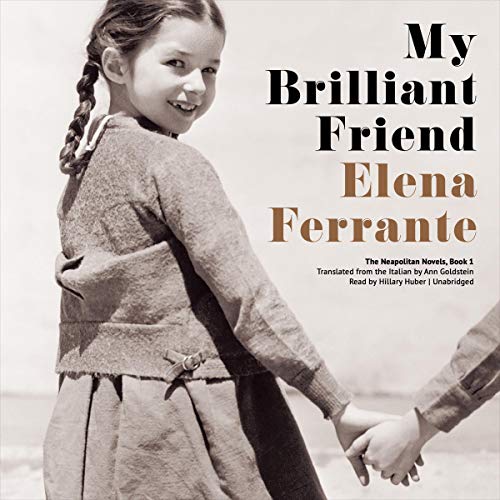
My Brilliant Friend, by Elena Ferrante

My Brilliant Friend, by Elena Ferrante

I heard that The Story of a New Name, by Elena Ferrante, was good, so I got on the waitlist for it at the library. Then, I discovered it was the second book in her Neapolitan Series, so I got on the waitlist for the first book, My Brilliant Friend. It took a bit of juggling and pausing my hold on The Story of a New Name so I could read My Brilliant Friend first.

My Brilliant Friend is beautifully translated from Italian into English by Ann Goldstein. The prose is lovely.

My Brilliant Friend has been made into a TV series on HBO, but I have not seen it. The book follows two young girlfriends (Lila and the narrator, Elena) from their meeting at the age of 10 through their adolescent years. Elena sees Lila as more intelligent than herself. This prompts Elena to try to do everything Lila does to the extent of “copying” how she does everything. It is a complex story of women’s friendships and power. Lila and Elena’s lives reflect life in Naples, Italy in the 1950s.

There are four books in Ms. Ferrante’s Neapolitan Series of novels.


Since my last blog post

Yesterday morning at 8:07 a.m. EDT, a magnitude 5.1 earthquake occurred near Sparta, North Carolina and was felt here. I live about 100 miles from Sparta. I was sound asleep at the time and the shaking of my bed woke me up.  We don’t have a lot of earthquakes of that magnitude in North Carolina. In fact, this was the strongest one in the state since a 5.2 near Asheville in 1916.

A good thing that has resulted from the changes we’ve all had to make in our lifestyles due to the pandemic is the new opportunities people like me have to watch and listen to authors on Facebook Live and Zoom. A special weekly thing I’ve become addicted to at 7pm Eastern Time on Wednesdays is a conversation among five novelists. Look online (friendsandfiction.com) for “Friends and Fiction.”

Authors Mary Alice Monroe, Mary Kay Andrews, Kristin Harmel, Kristy Woodson Harvey, and Patti Callahan Henry meet virtually every Wednesday evening to discuss reading and writing. Most weeks they have a guest author join them. From the website you can click on “Podcasts” and watch several of their earlier programs. It’s a great way to forget about the pandemic for an hour.

I’m still working my way through C.S. Lakin’s book and accompanying workbook that share the title, The 12 Key Pillars of Novel Construction as I continue to polish my historical fiction manuscript tentatively titled The Doubloon or The Spanish Coin.


Until my next blog post

I hope you have a good book to read. If you’ve never tried listening to an audio book, I suggest you give that a try. I’ve surprised myself this year and found downloadable audio books to be my format of choice. You don’t have to worry about getting Covid-19 germs from another library patron.

If you are a writer or other type of artist, I hope you get to immerse yourself in your craft this week.

Be safe. Be well. Wear a mask out of respect for other people. We’re all in this together.

Janet

Three of the Five Books I Read in July 2020

July was a trying month for many of us, as the COVID-19 pandemic continued to infect and kill more and more people in the United States. Some of you reading this can breathe a sigh of relief because the worst of the first wave of the pandemic is over where you are.

With all the distractions in July, I found it difficult to concentrate enough to read much. Although I finished reading five novels, I started reading several other books and just couldn’t get into them. At least that got them off my To Be Read List. In today’s blog post, I’ll talk about three of the five books I read last month.

One of the books featured today was written by a prolific author, John Grisham. I’ve read 21 of his books. The other two are debut novels by Amy Jo Burns and Lauren Wilkinson.

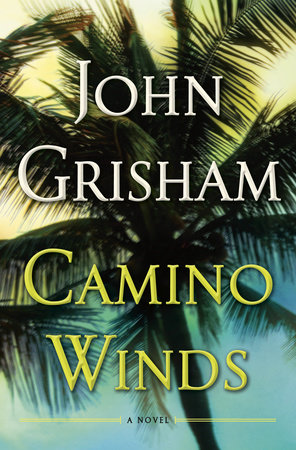
Camino Winds, by John Grisham

Sequeal to Camino Island
Camino Winds, by John Grisham

I started July by reading John Grisham’s much-anticipated sequel to Camino Island (See You Must Read (Some of) These Books!.) Camino Winds did not disappoint. It continues with the same characters as Camino Island. We’re on an island in Florida with Bruce Cable, the man who owns and operates the little independent bookstore in the village. Mr. Cable has an interesting group of friends. Many of the people in this resort community are mystery writers.

There is a hurricane and a murder, and it takes the bookstore owner and all his friends to try to figure out who killed their friend. The guy who gets murdered is a lawyer, so there are any number of suspects.

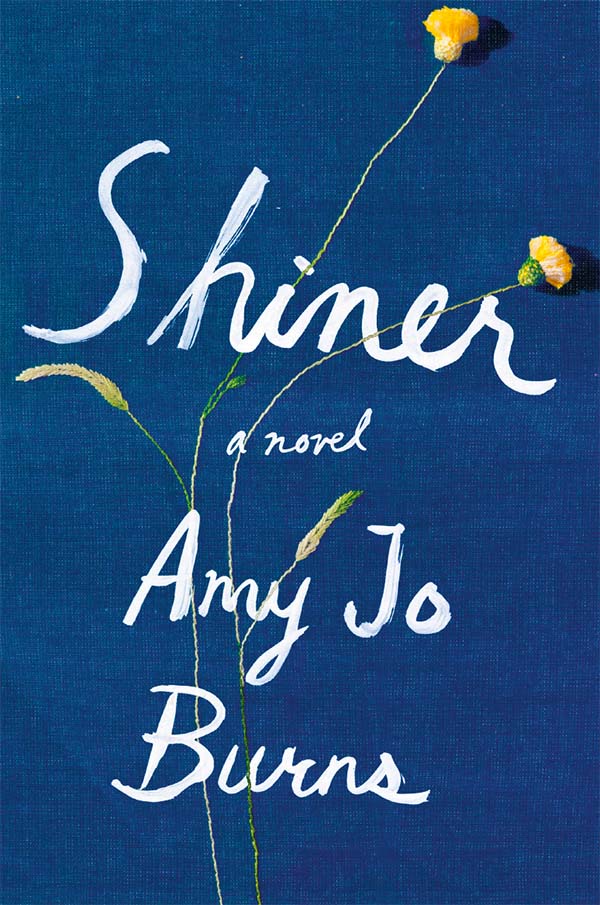
Shiner, by Amy Jo Burns

Debut novel by Amy Jo Burns
Shiner, by Amy Jo Burns

To say fifteen-year-old Wren Bird lives in isolation would be a gross understatement. Her father is a self-proclaimed preacher who keeps boxes of poisonous snakes in the shed for the purpose of handling them in church. Wren’s mother does the best she can, but she lives under her husband’s thumb. They live miles from anyone else in West Virginia. They have no mailbox because Wren’s father doesn’t want them exposed to anything from the outside world.

This debut novel by Amy Jo Burns was recommended by one of the authors on Friends and Fiction on Facebook Live. Otherwise, I might not have heard of it. If I’d known in advance there would be so many references to snakes, I probably wouldn’t have given it a chance. It took me a while to get past the snakes, but the book was so compelling I kept reading.

There are a few other characters besides the Bird family. Wren is a determined young woman and she is not going to let that mountain, it’s snake handlers, or moonshiners (thus, the name, Shiner) keep her down. You will love Wren and want to read the entire book to see what unfolds.

I highly recommend this one!

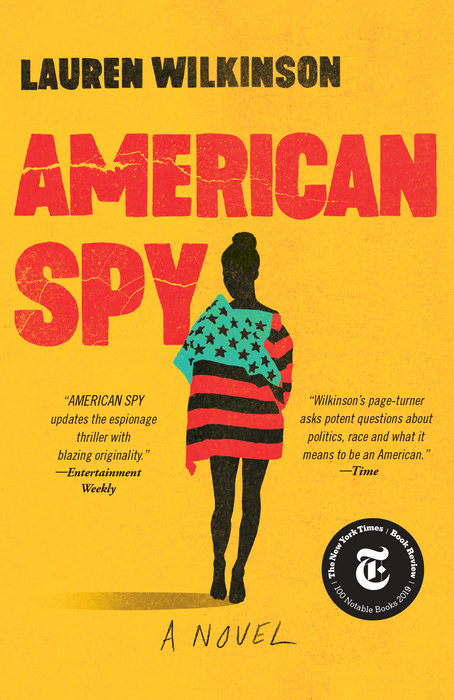
American Spy, by Lauren Wilkinson

American Spy, by Lauren Wilkinson

American Spy is Lauren Wilkinson’s debut novel. (No wonder my TBR list keeps growing!) I listened to this book. It is written in the form of a letter an American spy, who just happens to be a black woman, writes to her children to explain how and why the major events in her life and theirs came about.

I was intrigued by the novel being written in the form of one long letter. Especially since I was listening to the book, it felt like the author had written the letter to me – or was telling me her story. Somewhere along the way, I started forgetting that it was a letter, but I would remember for a short while before going back to feeling like someone was telling me a story.

American Spy was published early in 2019 and has received excellent ratings and rave reviews. It’s different from any other spy novel I’ve read.

Since my last blog post

I’m embarrassed to say that I did not work on my novel for 15 months. I’ve read books about writing and blogs about writing, but it’s been 15 months since I make changes in the manuscript. I was shocked when I figured this out! By concentrating on reading and studying books about the art and craft of writing fiction, I have neglected by fiction writing. Three weeks ago, I finally got back into the book and I’ve had a wonderful time getting reacquainted with all my characters.

I love to read, and I have a huge list of books I want to read; however, it is time for me to stop hiding behind my reading list and get back to doing the nitty-gritty work of polishing scenes and making my characters more memorable. If I miss posting on my blog one week, it will be because I’m either writing fiction or I’m sick. Assume it’s because I’m writing and didn’t get a blog post written.

Until my next blog post

I hope you have one or more good books to read. I’m listening to The Butterfly’s Daughter, by Mary Alice Monroe on Playaway while I take my daily walks. I’m reading We Wear the Mask: 15 True Stories of Passing in America, edited by Brando Skyhorse and Lisa Frazier Page, but it’s fine print and is going slowly although extremely interesting and eye-opening. I’m reading The Secrets We Kept, by Lara Prescott on my Kindle.

If you’re a writer or other artist, I hope you make time to hone and practice your craft.

Please wear a mask to protect those around you from the virus. Stay safe. Stay well. We’re all in this together.

Janet

Three Other Books Read in June 2020

In last Monday’s blog post, I wrote about three of the books I read in June. Today, I write about three other books I read last month.

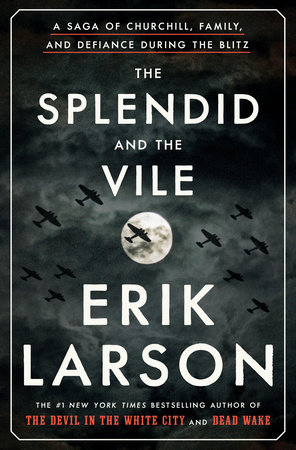
The Splendid and the Vile, by Erik Larson

Having read and liked Erik Larson’s The Devil in the White City: Murder, Magic and Madness and the Fair that Changed America in February, I was eager to read his new book, The Splendid and the Vile. I listened to The Splendid and the Vile and thoroughly enjoyed it.

#TheSplendidandtheVile #ErikLarson
The Splendid and the Vile, by Erik Larson

This nonfiction book reads like fiction, and I mean that as a compliment. It doesn’t read like a history book. Erik Larson has a way of doing that. If you aren’t a fan or student of history – specifically World War II era – you might not enjoy The Splendid and the Vile as much as I did.

It follows Winston Churchill and his family and friends. His teenage daughter, Mary, plays an important role as she gives us a glimpse of how a teenage girl would perhaps react to the London Blitz. She very much just wanted to be a teenager.

Mr. Larson weaves a fascinating story of Mr. Churchill and his associates. Being Prime Minister of Great Britain, he was in a position to make friendships and acquaintances with people of power. There were some connections he had with Americans that I hadn’t been aware of. Churchill’s son was a constant source of concern, along with the son’s wife, to put it mildly.

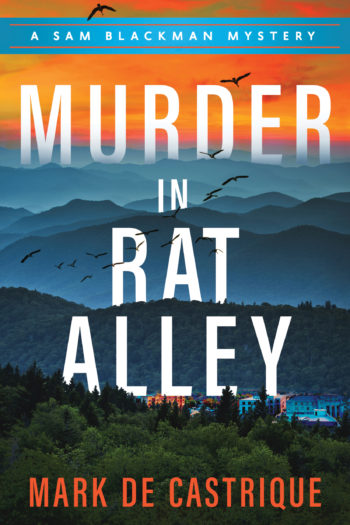
Murder in Rat Alley, by Mark de Castrique

If you’re a mystery fan, you might want to check out Murder in Rat Alley, by Mark de Castrique. This is the seventh book in his Sam Blackman series, but you don’t need to have read any of the earlier books in the series to enjoy this one. If Mark de Castrique is a new author for you, this is a good novel to start with.

#MurderInRatAlley
Murder in Rat Alley, by Mark de Castrique

Set in Asheville, North Carolina and the Pisgah Forest area, Iraq War veteran and amputee Sam Blackman is a private investigator. His side kick and love interest is Nakayla Robertson. When a body is discovered on the grounds of the Pisgah Astronomical Research Institute, Blackman is called in to unravel a decades old mystery.

When they get too close to solving the murder, their lives are in more danger than they even imagine.

This novel gives interesting background information about the former space program monitoring facility that now collects weather data. It also brings in the flavor of the Asheville music scene. It is sprinkled with the humor that keep Sam and Nakayla together and which balances their private lives with the serious work they do.

If you like a good mystery and want to mentally escape to the North Carolina mountains, give Murder in Rat Alley a try.

The Engineer’s Wife, by Tracey Enerson Wood

The Chief Engineer for the design and construction of the Brooklyn Bridge, William Roebling becomes quite ill during the years it took to build the bridge. His wife, Emily, had taken a deep interest in his work and started studying his engineering books.

The day comes when William is no longer physically able to go to the worksite. Emily starts going in his place and takes on more and more responsibility for the construction of the bridge.

This is a work of historical fiction based on a bit of truth, but the majority of the novel is indeed fiction. I thoroughly enjoyed the book, but I was somewhat disappointed to read in the author notes at the end of the book that so much of it was fiction.

I still recommend it as a good read, but you might want to read the author’s notes before reading the book instead of afterwards like I did. For instance, P.T. Barnum plays a major role in the novel, but it turns out he was probably no more than an acquaintance of the Roeblings.

My apologies to the author, Tracey Enerson Wood, for not being able to insert an image of her book in my blog post today. This is her debut novel. I can’t wait to see what she writes next!

Until my next blog post

I hope you have a good book to read.

If you’re a writer or other artist, I hope you have good creative time this week.

Stay safe. Stay well. Wear a mask out of respect for other people until the Covid-19 pandemic is under control.

Janet

Three Books Read in June 2020

A variety of events threw my blog off schedule this month. If you are a regular reader of my blog, you know that on the first or sometimes first and second Mondays of the month I write about the books I read the previous month. In July, I had to split my “Books Read in June 2020” blog posts into two installments. The first installment is posted today. The second installment will follow next Monday, if my computer cooperates.

June came with a host of good books to read. After being closed for nearly three months due to the Covid-19 pandemic, the public libraries in our area reopened for patrons to pick up books they had on reserve. I got on the waitlists specifically for MP3 books I could download to my tablet and for newly-released books “on order,” so I could be assured of checking out new books that had not yet been in circulation.

Of course, when the library system reopened for pick-up service only, I had six books to pick up immediately. Some months are overloaded with good reads, and June was definitely in that category. It was a wonderful “problem” to have!

I hope my remarks about these books will pique your interest. Perhaps you’ll discover an author you’ve never read before – or a new book by an author you like. I don’t consider myself a book reviewer. I think true book reviewers have some rules to follow. I just enjoy sharing what I think and what I learn from some of the books I read.


The Book of Lost Friends, by Lisa Wingate

#LisaWingate #TheBookOfLostFriends
The Book of Lost Friends, by Lisa Wingate

Lisa Wingate showed us in Before We Were Yours that she has a talent for taking a little-known fact from history, thoroughly researching it, and writing a novel that educates and entertains. The Book of Lost Friends is another such book.

In the years following the American Civil War, former slaves tried to reconnect with their relatives and friends. The slavery culture often tore families apart by parents and their children and brothers and sisters often being sold to different masters. Ms. Wingate discovered that the Methodist denomination offered a place in one of its newspaper-like publications where people could post information about a relative or friend they wanted to reconnect with. Those published notices adopted the name, “Lost Friends.”

The Book of Lost Friends follows two plot lines. One is in Louisiana in 1875 and introduces us to Hannie, a former slave; Juneau Jane, her illegitimate Creole half-sister, and Lavinia, the heir to a plantation now in shambles. The three women head for Texas. Along the way, Hannie becomes hopeful that she will find her long lost mother and eight siblings.

The other plot line is in Louisiana in 1987 and introduces us to a teacher, Benedetta Silva, who is trying to make history and literature come alive for her high school students. Seen as “an outsider,” “Benny” works to make her way in a small town on the Mississippi River. She is appalled at the poverty many of her students live in. Warned to stay away from a certain abandoned plantation house, curiosity gets the best of Benny. What she finds hidden in that house could change her life and the lives of her students forever.

One of the things I liked in the book was the “Negativity Rule” “Benny” enforced in her classroom. Under that rule, if a student spoke negatively about another student, the student in the wrong had to say three positive things about the other student. The author’s use of this rule to illustrate that it takes three times the work to undo the damage done by a negative is a lesson we could all learn.


The Man from Spirit Creek, by Barbara Kyle

#BarbaraKyle #TheManFromSpiritCreek
The Man from Spirit Creek, by Barbara Kyle

I never win anything, so I was shocked when I received an email from book coach and author Barbara Kyle telling me I had won a copy of her new novel, The Man from Spirit Creek on Audible! I had just picked up six library books that afternoon that had been held for me – some since a couple of days before the libraries had to close on March 15 due to the Covid-19 pandemic. I had just started listening to The Book of Lost Friends, by Lisa Wingate, but I was tempted to go ahead and start listening to Barbara Kyle’s book.

I took an online writing course taught by Barbara Kyle a couple of years ago, and I’d meant ever since then to read one of her novels. She lives in Canada and The Man from Spirit Springs is set in Alberta.

Ms. Kyle’s novel puts the reader smack-dab in this western Canadian province. She weaves the geography and geology (oil) of this prairie land into the story so well that you can taste the dust in your mouth and smell the rotten eggs smell of “sour” gas. This present-day story gets into the nitty-gritty of the clash between ranchers and big oil. It’s full of suspense, betrayal, revenge, family ties, the love between two sisters, and the romantic loves of both of them.

Liv Gardner is the attorney for Falcon Oil, the oil and gas company she and her fiancé, Mickey Havelock, own in Houston, Texas. Someone is sabotaging their rigs in Alberta. Liv goes to Spirit Creek, Alberta under the guise of having a temporary job with a lawyer there as she tries to figure out how to get the saboteur to give up his tactics and sell out to them.

The saboteur is sheep farmer Tom Wainwright. His beef with Falcon Oil? He blames Falcon’s “sour” gas, which is released 24/7, for his wife’s miscarriages and eventual death and for the miscarriages and deaths of many of his sheep.

Even as Liv and Mickey plan their wedding, Liv gets personally involved with Wainwright in spite of the fact that she went to Alberta to stop his efforts to ruin Falcon Oil. She discovers his human-side and lets her heart overtake her good sense. There’s a murder. Wainwright is arrested. But is he the killer? And will Liv and Mickey get back together?

You’ll love all the twists and turns in this contemporary Canadian western novel of suspense. It transported me all the way to Alberta for several days. What better way to “get away” during this pandemic than to curl up with a very engaging book?


How to Be An Antiracist, by Ibram X. Kendi

#Antiracist #HowToBeAnAntiracist #IramXKendi
How to Be an Antiracist, by Ibram X. Kendi

There are many eye-opening things to take from Ibram X. Kendi’s book, How to Be An Antiracist, but the most important lesson I learned from reading it is the difference being “not racist” and “antiracist.” I’ve been guilty of saying, “I’m not a racist.” It’s possible I’ve even said, although I hope I haven’t, “I’m not a racist, but….” “But” says, “Oh yes you are!”

In the words of Mr. Kendi in his book, “What’s the problem with being ‘not racist?’ It is a claim that signifies neutrality…. The opposite of racist isn’t not racist it is antiracist.”

Mr. Kendi anticipates the reader asking, “What’s the difference?” That’s what I wanted to know. In the introductory pages of his book, he eloquently answers that question. In fact, if you don’t want to or don’t have time to read the entire book, I recommend you read the introduction. You might not agree with it. It might not change your mind but, if you’ll read it with an open and curious mind, it will definitely give you something to think about.

What’s the difference between “not racist” and “anti-racist?” Mr. Kendi explains it as follows:  “One endorses either the idea of a racial hierarchy as a racist or racial equality as an antiracist. One either believes problems are rooted in groups of people as a racist or locates the roots of problems in power and policies as in antiracist. One either allows racial inequalities to persevere as a racist or confronts racial inequities as an antiracist. There is no in-between safe space of not racist. The claim of not racist neutrality is a mask for racism.”

He goes on to say that “color-blindness” and “not a racist” means you fail to see race and you fail to see racism. Something I got from the book was to claim you don’t see race is disrespectful of people of another race. We need to recognize race and not pretend it doesn’t exist or that we don’t notice it. We need to celebrate it for what it is.

Mr. Kendi addresses his own racism in the book and how people of any race can be racist. As he states in the book’s introduction: “This book is ultimately about the basic struggle we’re all in: The Struggle to be fully human and to see that others are fully human.” He describes antiracism as “an unlit dirt road.” It’s not easy to find one’s way on an unlit dirt road. He calls on all of us to look at power and policy. He says, “We know how to be racist. We know how to pretend to be not racist. Now let’s know how to be anti-racist.”

The big picture that made a lasting impression on me was that to be anti-racist is to stand up and speak out when you see injustice. To sit idly by, is to be complicit. As long as you see yourself as “not a racist,” you give yourself permission to sit idly by and ignore evil because you think it doesn’t affect you.

People of various religion and no religion read my blog around the world. I’m a Christian.  I think Jesus Christ is calling on Christians to call out injustice when we see it. I’m pointing to myself. I’ve been guilty of sitting idly by, turning the other way, keeping my mouth shut because I didn’t want to cause an argument or hurt someone’s feelings. I am, by nature, a quiet person. My voice often gets drowned out by louder voices and more assertive people. It is my challenge now to stop being “not racist” and start being “anti-racist” as I feel I’m being called to be.

(Since I listened to the audio edition of the book, I hope I got all the quotes right. My apologies to Mr. Kendi if I made any errors.)


Until my next blog post

I hope you have at least one good book to read.

I hope you have quality creative time, if you’re a writer or other artist.

I hope you stay safe and well. I hope you wear a mask to protect others.

Janet

Poetry Book Arrives at Perfect Time

If you haven’t told your best friend how much you love them recently, call or write them a note and tell them now. Tomorrow might be too late.

Perhaps you noticed my weekly Monday blog post never showed up last week. My nearly life-long friend, Kay Jewett Nalbone, died on Sunday. Although not unexpected, it was difficult to accept.

When you’ve been friends for 57 years and shared each other’s joys and struggles, you have a bond. What it boils down to is that I no longer have a friend with the same memories I have.

Another long-time friend from my graduate school days, Ray Griffin, didn’t know Kay and was not aware of her declining condition. It was serendipitous that Ray’s new book of poetry arrived in the mail on Monday. If ever I needed a collection of poems to sit down with and relax, it was Monday and Tuesday.

The name of Ray’s book is Winsome Morning Breeze: A Collection of Sonnets and Tanka. It is available online or you can request it at your favorite independent bookstore. It is beautifully illustrated with watercolors by Marti Dodge.

Many selections in Ray’s book resonated with me for different reasons. Having lost two good friends since February, the last two lines of “I Was a Fool” on page 21 has special meaning for me:

“To live one’s life most fully and with zest,

One must not ever let the moment rest.”

“On Dragon’s Tail” on page 19, on the other hand, brought a smile to my face as Ray eloquently wrote about his experience of driving the portion of US-129/TN-115/NC-115 in the Appalachian Mountains known as The Dragon’s Tail due to its 318 curves in 11 miles. It is a favorite of motorcycle and sports car enthusiasts and a fun drive for those of us who love to drive in the mountains. What fun!

Photo by Jordan Whitt on Unsplash

And here’s a lovely turn of phrase from Ray’s sonnet, “Fallen Leaves” on page 109: “I feel as though I am within a large kaleidoscope.”

“Daughter” on page 107 brought tears to my eyes as Ray recalls the birth of his and Ida’s daughter 31 years prior. I remember sitting on the floor and playing with their precious daughter when she was just four or five years old.

Ray and I studied political science and public administration. He had a successful 26-year career as a city manager. He is now an adjunct professor of politics in Virginia. His poems, “Barbara Jordan” on pages 85-87 and “I’m But an Old Man” on pages 73-79 are as heartfelt as any pieces in the book. I could hear Barbara Jordan’s distinctive voice from the Watergate hearings as I read the poem he named after her.

I hope I’ve shared just enough from Winsome Morning Breeze: A Collection of Sonnets and Tanka, by Ray Griffin to whet your appetite. It will be a book I will reach for often. I will read it over and over, and I believe you will, too.

Until my next blog post

I hope you have a good book to read. I’m reading Shiner, by Amy Jo Burns and We Wear the Mask: 15 True Stories of Passing in America, edited by Brando Skyhorse and Lisa Frazier Page.

If you’re a writer or other artist, I hope you have productive creative time during the Covid-19 pandemic.

Be safe. Be well. Wear a mask in respect for other people.

Don’t be shy. Share my blog!

Janet

Remembering a friend, Beth Hough Koestal

Yesterday I did something that was very difficult. Due to the COVID-19 pandemic, I decided not to attend a memorial service for an old friend. She died in Waterloo, Belgium on February 26. Due to the pandemic, her memorial service at her home church, Bethel United Methodist in Midland, North Carolina, had to be postponed until yesterday.

Teresa Beth Hough Koestal, Artist and Friend

I got to know Beth in the ninth grade. She stood out in the crowd even at that age in our class of around 200 students. She was artistic and funny. She was unassuming and gracious. She was beautiful inside and out.

Her leadership qualities were rewarded our senior year when she was elected class president. A group of us girlfriends rode together to a concert at Memorial Stadium in Charlotte one night. The main attraction for us was teen heartthrob Bobby Sherman. I’m not certain, but I believe Beth was our driver. That was about as wild and crazy as we got back in the day.

Beth’s artistic ability blossomed and, by our senior year, we knew we were in the presence of a true artist. After college, Beth eventually moved to New York City, where she met her husband, Jaap Koestal. Jaap was from The Netherlands. They moved to Amsterdam and Beth starting making a name for herself in the European art world.  

They later moved to Belgium, where she continued to hone her craft. She was commissioned to paint many paintings and portraits. A highlight in her career was when she was commissioned to paint more than eighty plein air paintings commemorating the bicentenary anniversary of the Battle of Waterloo in 2015.

She even created a series of coloring books about the Battle of Waterloo to entice children to learn about history and appreciate art. She sent me several sketches from her coloring books while they were in the planning stages for me and my sister to give her feedback. Like I was qualified to do that!

In recent years, Beth and I communicated occasionally via Facebook and Facebook private messages. She knew that now in our sixties, I was an aspiring novelist. She sent words of encouragement along my journey. My novel isn’t published yet. I had looked forward to the day I could send her a copy with my thanks and admiration.

She was one of those people who found the most interesting and varied things to share on Facebook – whether it be art, archeology, architecture, nature, or science. She loved to learn new things and was interested in everything.

To learn more about Beth’s work, visit https://teresabethhough.com/.

During this pandemic, it wasn’t an easy decision not to attend Beth’s memorial service. I have not attended several funerals in the last several months, including one for one of my first cousins. A part of me just can’t believe Beth is gone. I thought going to her memorial service would make her death more real for me, but I was afraid to go and risk catching the coronavirus.

This is life during the Covid-19 pandemic in 2020.

Until my next blog post

Stay safe. Stay well. Wear a mask out of respect for others.

Janet

#OnThisDay: The Chesapeake-Leopard Affair off Virginia leads to War of 1812

Although the War of 1812 didn’t officially start until the United States declared war on Great Britain on June 18, 1812, a number of incidents over a nine-year period led up to America’s second war against her Mother Country.  Those incidents centered around Great Britain’s maritime violations against United States ships and their crews.

Today is the 213th anniversary of a skirmish between the USS Chesapeake and the HMS Leopard off the coast of Norfolk, Virginia on June 22, 1807. (Sorry, if you were hoping for another kind of affair.)

The War of 1812 wasn’t emphasized much when I was taking history in school. Or perhaps I just didn’t retain the details. I couldn’t have told you what led to the United States going to war with Great Britain again so soon after the American Revolutionary War.

In case you’re like me in that respect, in today’s blog I’ll give you some insight. I promise, today’s blog post won’t be as long as my previous two #OnThisDay posts. No one needs or wants to know that much about the War of 1812.


How all this started

There was trouble on the high seas between the American and British navies as early as 1803. Things escalated and resulted in The Chesapeake-Leopard Affair in 1807.

Jenkin Ratford and four other crewmen on a British vessel patrolling off the coast of Virginia decided to steal a boat and desert their ship. They came ashore at Norfolk and bragged about what they’d done. Ratford joined the crew of the USS Chesapeake, a frigate of the US Navy. Great Britain was embarrassed.

The Chesapeake sailed out of Norfolk in June of 1807, heading for the Mediterranean Sea. The HMS Leopard intercepted it and was set to take revenge for what Ratford had done. When the commander of the Leopard requested to go aboard the Chesapeake to search for deserters, James Barron, the American commodore refused to muster his crew.

The response from the Leopard was swift and decisive. Three Americans were killed and 18 were wounded as the frigate attacked the Chesapeake with a barrage from its artillery. The crew of the Leopard seized the opportunity, boarded the crippled vessel, and captured Jenkin Ratford and other British Navy deserters.

Americans were humiliated by the incident and called for war. This was something that people agreed on, in spite of their political differences. US President Thomas Jefferson’s navy had already largely been dispatched to the Mediterranean in an effort to quell the activity of the Barbary pirates. Furthermore, budget cuts had reduced the fighting power of the US Army. He could ill afford to call for a war with Great Britain.

Jefferson decided to take revenge against Great Britain economically. The Embargo Act was passed by Congress a few months later and signed into law in December of 1807.


The Embargo Act of 1807

The Embargo Act of 1807 forbade all international trade in or out of all US ports. The objective was to get Great Britain and France (who were at war at the time) to stop harassing US ships and to recognize the autonomy of the United States as a nation.

One can imagine how unhappy the US port cities were. They depended upon the international trade for their survival. The embargo failed due to loopholes in the law. For instance, Great Britain continued to export goods to the US via Canada. Goods were smuggled in from Canada and whaling ships. Enforcement was a problem.

In the end, Americans suffered far more than the British or the French. Sailors lost their jobs, farmers couldn’t sell their crops, and merchants went bankrupt.


The end results

Tensions continued. The US declared war against the United Kingdom and Ireland and all its territories on June 18, 1812. By then, James Madison was the US president. The war continued until it officially ended with the Treaty of Ghent on February 17, 1815.


What happened to James Barron and Jenkin Ratford?

James Barron was court-martialed and found guilty of “neglecting on the probability of an engagement, to clear his ship for action.” He was suspended, without pay, from the US Navy for five years.

Jenkin Ratford was court-martialed for mutiny and desertion. His punishment came on August 31, 1807, when he was hanged from the fore yardarm of the HMS Halifax, a ship on which he had previously served.


Until my next blog post

I apologize for not including any photographs in today’s blog post. I usually get my blog photos from unsplash.com; however, I was unable to download any images from that website to use today. One of the cardinal rules of blogging is to always include images, so I’m embarrassed to send today’s post out into the blogosphere without illustration.

I hope you have a good book to read. I’m blessed with more library books than I can possibly read before they’re due. I’m giving them my best effort, though. Too many books! What a wonderful dilemma to have!

If you’re a writer or other artist, I hope you have lots of creative time during this pandemic.

Be safe. Be well. Wear a mask in respect for other people.

Don’t be shy. Share my blog!

Janet

#OnThisDay: “Blog about the 12th Amendment,” they said. “It’ll be fun!” they said.

If not for the 12th Amendment to the US Constitution, Donald Trump could now be president and Hillary Clinton could now be vice president. Talk about an unworkable state of affairs!

The ratification of an amendment to the US Constitution deserves a blog post on its anniversary. Unfortunately, the 12th Amendment gets into the Electoral College – something that has always baffled me. I’m probably the last person who should be trying to explain the 12th Amendment to you, but I’m going to plow my way through it.

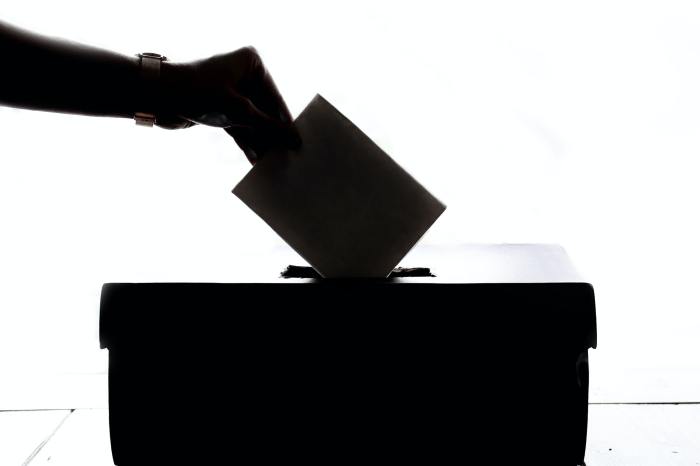
#Vote #PresdentialElection #12thAmendment
Photo by Element5 Digital on Unsplash

As soon as I started doing the necessary research so I could write today’s blog post, I ran into conflicting dates. I’m going with June 15, 1804 as the date the 12th Amendment to the United States Constitution was ratified. I’ll address the conflicting date later in this post


What is the 12th Amendment about?

The 12th Amendment to the US Constitution determined how every US President and Vice President have been elected since 1804. It mandates that electors in the Electoral College vote for president on one ballot and for vice president on a separate ballot.


Presidential Elections Prior to the 12th Amendment

Under Article II, Section 1 of the US Constitution, each state was entitled to appoint a slate of electors equal to the number of US Senators and US House Representatives the state had. Each state had (and still has) two Senators. The number of Representatives a state has is based on population.

Every four years those electors, now known as the Electoral College, chose the president and vice president. Each of them could vote for two people; however, they couldn’t vote for someone from their state of residency.

The highest vote getter became president and the one with the second highest number of votes became vice president, as long as their total votes exceeded one-half the number of appointed electors. Therefore, the president and the vice president weren’t necessarily from the same political party.

If not for #12thAmendment, Trump could be president and #HillaryClinton could be VP! http://www.JanetsWritingBlog.com

If no one got a majority of votes, or if two candidates received the same number of votes, the House of Representatives chose the president and the person with the second highest number of votes became vice president.

#ElectoralCollge #USConstitution #12thAmendment
Photo by Luke Michael on Unsplash

Political Parties

In the 1790s, differences of opinion on domestic and foreign policies became pronounced enough that two political parties formed. The founders of the United States had not anticipated the formation of strong political organizations/parties. The two parties were known as the Federalists and the Democratic-Republicans.

Yes, it’s very confusing to us in 2020 when there are two major political parties in the US:  Democrat and Republican.

The Federalists wanted a strong central government that was friendly to Great Britain. The Democratic-Republicans wanted strong local governments and were more in line with the French Revolution.


The Early US Presidents

Without opposition, George Washington was elected the first US president in 1788 and again in 1792. He announced he would not seek a third term. He became increasingly aligned with the Federalists, although he saw the dangers inherent in factionalism. John Adams was Washington’s vice president. He identified himself with the Federalists. Thomas Jefferson was Washington’s Secretary of State until 1793. Jefferson became the leader of the Democratic-Republicans.

The 1796 election was the first time candidates for president ran from two political parties. John Adams and Charles C. Pinckney were the foremost Federalists running against Thomas Jefferson. John Adams won a majority of votes, but Thomas Jefferson was elected vice president. Remember, they were from opposing political parties and ideologies. Such a situation is difficult for modern Americans to imagine.

Moving on the 1800 election, John Adams ran for reelection and Thomas Jefferson ran for president again. The political parties had gotten stronger and electors divided their votes between “only” five candidates. John Adams received 65 votes. In order to avoid a tie vote between Adams and Pinckney, one of the electors from Rhode Island voted for John Jay so Adams would have a one vote advantage over Pinckney.

But Democratic-Republicans Thomas Jefferson and Aaron Burr each received 73 votes. The Federalists thought they had an edge in the House of Representatives that would result in the election of the more conservative Aaron Burr, so they weren’t worried. They thought they could work better with a President Aaron Burr than a President Thomas Jefferson.

In order to be elected president, a candidate had to receive nine votes from the 16 states. Eight states favored Jefferson, six aligned with Burr, and two states were divided in how to cast their votes. Voting on the floor of the House of Representatives continued for six days and 35 ballots!

#ElectoralCollege #12thAmendment #USConstitution
Photo by visuals on Unsplash

Although he personally favored Burr, Delaware elector James A. Bayard let it be known that he would vote for Jefferson after Senator Samuel Smith assured him that Jefferson would not undo the accomplishments of the Washington and Adams administrations. In the end, 10 states voted for Jefferson, electing him the third US president.

The 1800 election proved to the Federalists and the Democratic-Republicans that the electoral system was deeply flawed.

On December 9, 1803 Congress proposed a 12th Amendment to the Constitution.


What the 12th Amendment did

The 12th Amendment didn’t change the structure of the Electoral College but, in order to understand the purpose of the amendment, one needs to have some knowledge of the Electoral College.

Whereas the Constitution had required each elector to vote for two people for president (yes, you heard me right!), the 12th Amendment required each elector to cast one vote for president and one vote for vice president.

If no one receives a majority of votes for president, the House of Representatives will choose the president under the rules of the original procedure as set forth in the Constitution, except they will choose between no more than three candidates instead of five, as was stipulated in Article II, Section 1 of the Constitution.

In case no candidate receives a majority of votes for vice president in the Electoral College, the US Senate chooses the winner from the top two vote getters. However, if there is a tie between multiple candidates, the Senate will choose from all those in the tie.

Additionally, the 12th Amendment requires a two-thirds quorum for balloting procedures. It also provided for a remedy should a president not be chosen by March 4. That remedy was that the newly-elected vice president would act as president until the election of the president could be settled. (March 4 was the first day of a presidential term until the ratification of the 20th Amendment in 1933 which established January 20 as the first day of a presidential term.)

Under the 12th Amendment, if no president or vice president have been elected by January 20, Congress will appoint a president. We almost got into that situation in the 2000 election, but that’s a whole other story, #HangingChads.


The Pros and Cons of the Electoral College

I’ve read various reasons and speculations about why the framers of the US Constitution provided the Electoral College as a way to elect the president. I’ve read that it was to ensure that people who had wisdom (in other words, that knew about politics, had some education, and understood this new form of government) would have enough sense to elect a president.

I’ve read that they didn’t want people living in the population centers of the nation to have an advantage over the citizens in the backcountry because the people in the cities would be more likely to know the candidates. (They obviously didn’t foresee the advent of the radio or television.)

There is much confusion over the Electoral College. As a political science college student, I was more interested in the administration of government than its political aspect. I made a conscious decision not to take the senior-level Political Science course called “The Electoral Process.” Looking back, perhaps I should have taken that class.

#college #class
Photo by Sincerely Media on Unsplash

With practically every presidential election, pro-Electoral College and anti-Electoral College opinions rise to the surface. There are people who would prefer the candidate receiving the majority of the popular vote (the votes of all citizens) to be president, while people who like the idea of the popular vote in each state being sifted through the Electoral College electors of their state want us to keep the Electoral College.

I’m going to go out on a limb today and say that I would like to see the Electoral College ended. I think each American’s vote should count equally to every other American’s vote. The people in favor of the Electoral College typically fear a populous state such as California or New York could influence an election by the sheer number of voters who live there.

Americans stand in line to cast their votes for president on the first Tuesday in November every four years, and then the electors who make up the Electoral College meet in their states on the first Monday after the second Wednesday in December and cast their votes.

Since we elect the president and vice president via the Electoral College, in 2016, Donald Trump became president even though Hillary Clinton had some three million more popular votes than Trump. There are other elections in which the top popular vote getter lost the election, but I think that one example suffices.

I think it’s time to rethink the electoral process, but I’m not impassioned enough about it to lead the campaign to amend the 12th Amendment.


Ratification of the 12th Amendment

#USConstitution #Preamble #ElectoralCollege
Photo by Anthony Garand on Unsplash

On June 15, 1804, 189 days after the 12th Amendment had been proposed by Congress, it was ratified by 14 or the 16 states. North Carolina was the first state to ratify it, doing so on December 21, 1803. By the end of February 1804, it had been ratified by nine states.

By mid-May 1804, Delaware, Massachusetts, and Connecticut had rejected the amendment. New Hampshire ratified the 12th Amendment on June 15, 1804, meeting the requirement that in order to be adopted, a US Constitutional amendment must be ratified by three-fourths of the states.


What about the conflicting dates I found?

Technically, when three-fourths of the states have ratified a US Constitutional amendment, it is officially ratified and becomes law. That’s what happened on June 15, 1804 with the 12th Amendment. That’s why I went with today being the anniversary of the amendment’s ratification.

Secretary of State James Madison sent a letter to the state governors on September 25, 1804, declaring the 12th Amendment as ratified. Some history books use September 25, 1804 as the date of ratification.


Since my last blog post

I opened my blog with some trepidation last Monday. I didn’t know how my blog post that morning would be received. I was very pleased with the response the post got. As of last night at 10:00 pm, last Monday’s post, “I can’t breathe!”, has had 147 visitors from 15 countries. That’s a record for my blog. It has received more comments than any of my other blog posts. My thanks to each reader!


Until my next blog post

If you still have questions about the 12th Amendment and the Electoral College, please research them. I’ve said all I know about the subject, and I’m still a bit confused. Perhaps I should have gone with the September 25 date. That date doesn’t fall on a Monday (the day I blog) until 2023. After more than a little frustration, I wish I’d postponed today’s post until then!

I hope you have a good book to read. I’m reading The Book of Lost Friends, by Lisa Wingate.

If you’re a writer or other artist, I hope you have lots of creative time.

Be safe. Be well. Wear a mask in respect for other people.

Don’t be shy. Share my blog!

#12thAmendmentRatification 216th anniversary. #ElectoralCollege http://www.JanetsWritingBlog.com

Janet