I write southern historical fiction, local history, and I've written a devotional book. The two novels I'm writing are set in Virginia and the Carolinas in the 1760s. My weekly blog started out to follow my journey as a writer and a reader, but in 2025 it has been greatly expanded to include current events and politics in the United States as I see our democracy under attack from within. The political science major in me cannot sit idly by and remain silent.
Author: janetsm
In November 2025, I published Traveling Through History: A Collection of Historical Short Stories. In the fall of 2025, I published a devotional book: I Need The Light! 26 Weekly Devotionals to Help You Through Winter AND I Need The Light! Companion Journal and Diary. I write North Carolina local history and Southern American colonial historical fiction. I enjoy doing extensive research as well as the writing that research supports. My stories and novels-in-progress are about the common people. I'm the author of Harrisburg, Did You Know? Cabarrus History, Books 1 and 2 and a vintage postcard book titled The Blue Ridge Mountains of North Carolina.
I keep a notebook in which I write down sentences I like in the books I read. There’s method to my madness. I’m trying to learn how to write good prose.
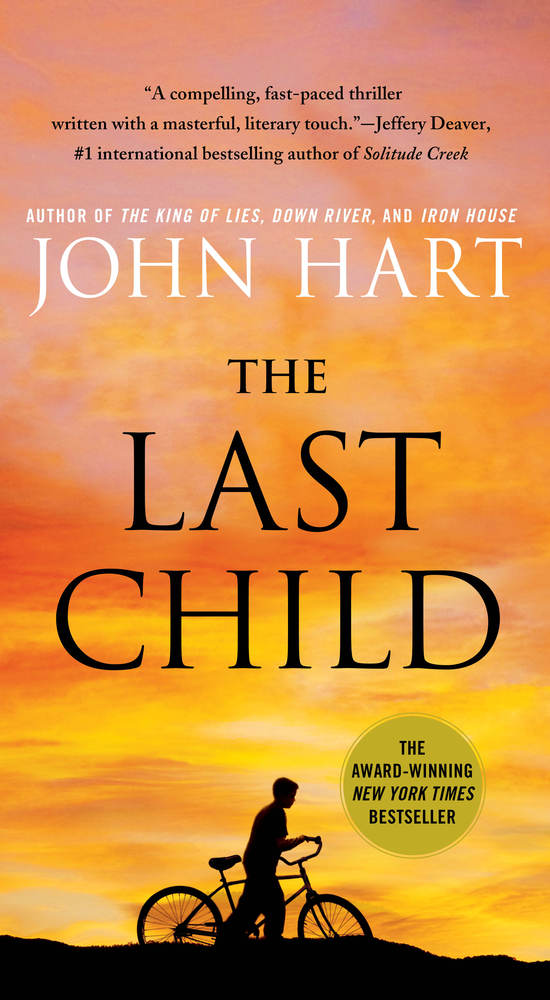
“He reached inside and caught the bat where it leaned against the doorjam. It had dents and scars from a time he beat the television to death over a fumble in a playoff game.” ~ from The Last Child, by John Hart
What a great way to say Burton “Jar”
Jarvis is crazy without saying, “Jar is crazy.”
Since my last blog post
I have worked on my novel outline and rewritten the first scene. I think I have some plot problems figured out. If you’ve read my blog recently, you know this is a breakthrough for me. For instance, in my December 17, 2018 blog post, https://janetswritingblog.com/2018/12/17/to-write-or-not-to-write/, I revealed that I was having doubts about finishing my novel. I hadn’t seriously worked on it since June.
Being the early days of a new year,
I was also inspired to weed three cookbooks out of my collection. You have no
idea how surprising and necessary this accomplishment is. It’s a start.
Determined to get back to my
genealogy hobby, I scanned more than 100 family photos into my genealogy
software program.
Until my next blog post
I hope you have a good book to read.
I’m reading In the Woods, by Tana
French.
If you’re a writer, I hope you have
productive writing time.
Thank you for reading my blog. You could have spent the last few minutes
doing something else, but you chose to read my blog. I appreciate it! I welcome
your comments.
Let’s continue the conversation.
What are your hobbies?
What are you reading?
What are you writing?
Like “Jar,” have you ever beaten a
TV to death over something that came on the screen that you didn’t like? If you
have, you probably need to be in therapy instead of reading my blog.
Correction: You probably need to be in therapy in addition to reading my blog.
Please don’t stop reading my blog!
Diane Chamberlain broke away from her usual form of writing novels and did a great job with time travel in The Dream Daughterr. The book begins in 1970 with a pregnant woman, Caroline Sears, finding out that her unborn baby has a heart defect.
The Dream Daughter, by Diane Chamberlain
It turns out that Caroline’s
brother-in-law has come to 1970 from the future. He knows that if Caroline can
find her way to the future, her unborn daughter can have fetal surgery – the
unthinkable in 1970.
I won’t give away any details of
Caroline’s journey. I’ll just say things don’t go smoothly. This trip across
decades will keep you turning pages.
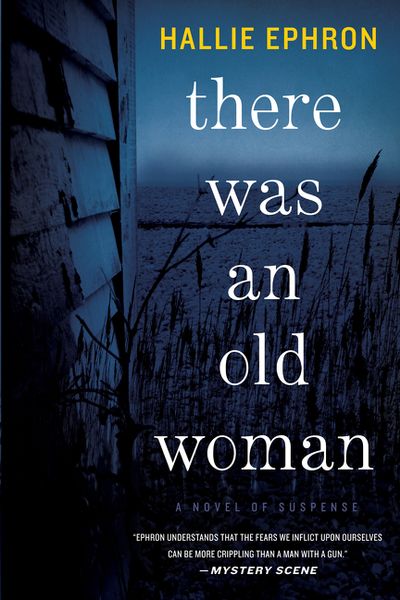
There Was an Old Woman, by Hallie
Ephron
The title of this book caught by
attention and immediately took me back 60 years to nursery rhymes about the old
woman who lived in a shoe and the old woman who swallowed a fly. I’d never read
anything by Hallie Ephron, so I decided to give There Was an Old Woman a try.
The story involves multiple
generations, with an emphasis on several independent-living octogenarians.
Things in the neighborhood keep disappearing. What’s happening? Who is doing
this? Is it the strange man across the street?
There Was an Old Woman, by Hallie Ephron
Thrown into the mix is a subplot
about the B-25 Mitchell bomber that crashed into the Empire State Building on
July 28, 1945. Ms. Ephron sheds a light on that much-forgotten event by making
one of the main characters in the book be a survivor of that plane crash. I
must admit, I did not know about that tragedy in which 14 people were killed.
There Was an Old Woman
is categorized as a thriller, but it did not come across to me as such. It’s
more like a neighborhood mystery in which the daughter of one of the
80+-year-olds is forced to come home and deal with her mother’s illness and
neglected house. The book has received an interesting mix of 1-star and 5-star
reviews, with most reviews falling into the 3- or 4-star categories.
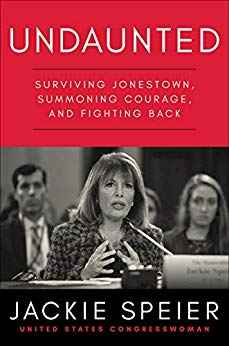
Undaunted: Surviving Jonestown,
Summoning Courage, and Fighting Back, by Jackie Speier
I thoroughly enjoyed reading this
memoir by United States Representative Jackie Speier of California’s 14th
congressional district. I was not aware that Ms. Speier survived the Jonestown
Massacre, so that fact alone drew me to this memoir.
Undaunted, by Jackie Speier
What a life Ms. Speier has had! When
she was 28 years old, she worked for California Congressman Leo Ryan. She and
others accompanied Ryan to Jim Jones’ Peoples Temple in Jonestown, Guyana on
November 14, 1978 to rescue individuals being held there against their will.
Those who are old enough to remember that fateful event know that things rapidly soured upon the delegation’s arrival. Congressman Ryan was murdered and Jackie Speier was shot five times and nearly died.
For someone like me who is a history
and political “junkie,” this memoir was compelling and inspiring. Ms. Speier
writes about her widowhood, motherhood, her lifelong work in politics, and her
40-year determination to overcome the scars she has from her Jonestown
experience.
Since my last blog post
I continue to receive encouraging comments in response to my December 17, 2018 blog post, https://janetswritingblog.com/2018/12/17/to-write-or-not-to-write/. I appreciate each and every one of them and each and every one of my blog readers. I have a more positive attitude about my novel in progress since being bolstered up by so many of you over the last three weeks.
The holidays turned out not to be
conducive to my getting back to putting words on paper (or the computer screen,
as the case may be.) I’ve mulled the story over and over in my mind, though,
and I intend to get back to writing that book this week. I need my blog readers
to hold me accountable!
I’ve read many helpful blog posts
and articles this week about the various facets of writing. One in particular
hit a chord with me, but I’ve misplaced the link to it. The piece recommends
that an aspiring novelist publish one or more short story collections in order
to build readership. I’m kicking around that idea. It makes sense. The theory
is that more people will want to buy my novel if they have read and liked my
short stories. I needed one more project!
Call me a klutz if you want to,
because I think I qualify. In the last four or five days I’ve broken a toe on
both feet, but not at the same time. Don’t laugh; broken toes are painful.
Until
my next blog post
I hope you have a good book to read. I’m reading The Reckoning, by John Grisham.
If
you’re a writer, I hope you have quality writing
time. I hope I do, too!
Thank you for reading my blog. You could have
spent the last few minutes doing something else, but you chose to read my blog.
I appreciate it! I welcome your comments.
Let’s
continue the conversation.
Have you read any books recently that you’d recommend
to me and my blog readers?
Have any of you writers had experience – good or bad –
in publishing short stories to build readership prior to publishing your first
novel?
Books can entertain, educate, or even change one’s thinking.
When I looked back over the list of the 56 books I read in 2018, I was amazed at the variety and the things I learned. I learned some history while I was entertained, and I hope I learned something about writing. Several of the books changed my thinking. You can’t ask a book to give you more than that.
The
books that entertained, educated, or changed me or my thinking in 2018 are
listed here in alphabetical order by author.
Fascism: A Warning, by Madeleine
Korbel Albright
The
Taster, by V.S. Alexander
The
Atomic City Girls, by Janet Beard
White
Chrysanthemum,
by Mary Lynn Bracht
Climbing
Over Grit, by Laleh Chini and Abnoos Mosleh-Shirazi
Another
Ocean to Cross, by Ann Griffin
Sea
Prayer, by Khaled Hosseini
The
Tattooist of Auschwitz, by Heather Morris
A
Bigger Table: Building Messy, Authentic,
and Hopeful Spiritual Community, by John Pavlovitz
Fighting
to Win: Samurai Techniques For Your Work
and Life, by David J. Rogers
The
Broken Girls, by Simone St. James
Undaunted: Surviving Jonestown, Summoning Courage, and
Fighting Back, by Jackie Speier
I have heard from a number of you since then. You have
offered encouragement and helped prop me up. Knowing I have blog readers in
quite a few countries from around the world in addition to those in the US who
cared enough to take time to leave comments has boosted my morale and helped me
to determine that I must continue to work on that historical novel I’ve worked
on off and on for a decade.
Even if there are days I can only write for 15
minutes, then that’s what I’ll do in 2019. Slowly but surely, I will finish
writing that book!
At Home on the Kazakh Steppe: A Peace Corps Memoir, by Janet Givens
I hope you have a good book to read. I’m reading At Home on the Kazakh Steppe: A Peace Corps Memoir, by Janet Givens.
I’m thoroughly enjoying it. You can check out her website at
https://janetgivens.com/.
If
you’re a writer, I hope you have productive writing
time.
Thank you for reading my blog. You could have spent the last few minutes doing something else, but you chose to read my blog. I appreciate it and I welcome your comments.
Let’s
continue the conversation.
What are some of the books that educated you or
changed your life or your thinking?
I used to think that miracles all
happened 2,000 years ago when Jesus Christ physically walked the earth as a
man. Since December 25, 1978, I’ve known better.
My brother’s family (him, his wife, 12-year-old son, and 10-year-old daughter) drove from Georgia to North Carolina for Christmas. Beth – the daughter – had been sick and they’d given her aspirin and put her to bed at the home of my sister-in-law’s parents. It was the afternoon before Christmas.
A couple of hours later, they tried
to wake Beth up, but she was unconscious. They rushed her to the nearest
hospital. The doctors and nurses were baffled as to what could be wrong with
Beth. At random times, she would scream out and it would take several adults to
hold her in the hospital bed.
Suddenly, on that evening –
Christmas Eve – the pediatrician on the case suddenly remembered having seen a
similar case while in medical school. He ordered specific lab tests and rushed
the vials to the lab himself.
When he came back to Beth’s room, he
told her parents and brother that there was an ambulance waiting to take Beth
and her mother to Duke Hospital in Durham, North Carolina. He told them that
Beth had Reyes Syndrome. He told them that some children survive it and some
don’t. There was no cure for it, and he couldn’t guarantee that Beth would
survive the trip to Duke.
My brother and nephew drove the 125
miles to Durham after being told not to even think about trying to keep up with
the ambulance.
Arriving safely at Duke, Beth was
placed in the intensive care unit for children. The family was told there was
nothing to do but pray and wait. Pray, we all did.
The next morning was, of course,
Christmas Day. After a sleepless night, my mother, sister, and I rose early and
drove to Durham. This was before cell phones and texting, so during that
two-hour trip we had no idea what was happening with Beth. We didn’t know if
she would still be alive when we got there.
When we arrived at Duke Hospital’s
pediatric ICU, we were greeted with smiles. While the nurse was in the room
checking on another patient that morning, Beth woke up and asked, “Has Santa
Claus come yet?”
Little was known then about Reyes
Syndrome. The connection between it and children taking aspirin had not been
established. None of us had even heard of the illness.
The doctors at Duke kept Beth for
more than a week to continue to test and observe her. They followed her grades
in school for a year. They were looking for any sign of brain damage. There was
none. They told Beth’s parents that they had never seen a child come out of a
Reyes Syndrome coma so suddenly or completely. They said there was no medical
explanation for it.
Beth returned to Georgia and
continued to have a perfect record in school. She went on to university and
earned a degree in math before having a rewarding career in Information
Technology with a major airline. She married and is the mother of two high
school and college age daughters.
I cannot imagine how our lives would
have changed if Beth had died in 1978. She is a joy in the life of everyone she
knows. I can’t imagine life without her husband and their two daughters.
And I can’t let a single Christmas
pass without remembering Christmas of 1978 when I learned that miracles do
still happen.
With just two weeks remaining in 2018, I’m taking stock of my life. I’m at a crossroads of sorts. I feel like I’ve floundered much of this year. I’ve lost sight of my purpose. I haven’t worked on my historical novel manuscript since June.
I’ve been a bit of a caregiver for my sister for the last six weeks since she had surgery. As she daily regains energy and feels more like herself, it becomes acutely clear to me the difference between a typical illness or surgery and a chronic illness.
I heard someone 20 years my senior recently lament her lack of energy after having surgery. Such comments as, “I just want my energy back” stuck in me like a dagger. A chronic illness robbed me of my energy in 1987. It never came back. Chances are it never will.
I’m taking stock this month. Do I have what it takes to write a novel? The desire is there, but it takes hundreds of hours of mental work to write a novel. I have worked on it off and on for more than a decade.
The pressure I’m putting on myself about writing that novel is just that – pressure that I’m putting on myself. I want something to show for my life. I want to see that book on the shelf, my name on the spine. But that’s not enough. That’s not the reason one should try to write a novel.
In order to write a novel, a person has to have a fire in his or her soul, a passion for the story, the realization that they can’t not write the book. Pardon the double negative, but I’ve heard it expressed in those terms so many times. “I have to write because I can’t not write.”
There is a story in me that’s been trying to see the light of day for more than 10 years. Only time will tell if I have what it takes to put the words on paper and push it out the door.
Until my next blog post
I hope you have a good book to read.I just finished reading The Dream Daughter, by Diane Chamberlain. Unlike any of Ms. Chamberlain’s earlier novels, this one has to do with time travel. That came as a surprise to me. I like the idea of time travel, and Ms. Chamberlain did a great job with this story.
I was eager to start reading Jodi Picoult’s latest novel, A Spark of Light. The premise held promise and I thought if any writer could write a soul-searching novel about abortion, it would be Ms. Picoult. I was disappointed in the book. I think I would have liked it if it had been written in chronological order; however, it covers 11 hours, begins with hour number 10, and works its way backwards to hour number one, which is followed by hour number 11. The way the material was presented did not appeal to me. I was tempted to read the chapters in reverse order, but I wasn’t in the mood to do that after having started with the first chapter.
If you’re a writer, I hope you have quality writing time and the physical energy to reach your goals.
Thank you for reading my blog. You could have spent the last few minutes doing something else, but you chose to read my blog. I appreciate it! I welcome your comments.
I’ll try to write a more upbeat blog next week. When I started blogging more than seven years ago, the purpose of my blog was to share my journey as a writer. The journey has stalled recently, but maybe I’ll get my second wind in 2019.
Let’s continue the conversation.
Have you read A Spark of Light, by Jodi Picoult? What did you think of it? Did you find its being written “backwards” appealing or confusing? I have enjoyed every other Jodi Picoult book I’ve read, so I was surprised when I had no desire to read beyond the second chapter of this one. The book has gotten mixed reviews online.
If you’re a writer, what pulls you out of the pit of self-doubt when discouragement tries to overwhelm you?
I took an unexpected respite from my blog last week, but I’m back today to tell you about the three books I read in November. I look forward to my first blog post each month because it gives me a chance to review my reading during the previous month. I hope you enjoy those blog posts, too.
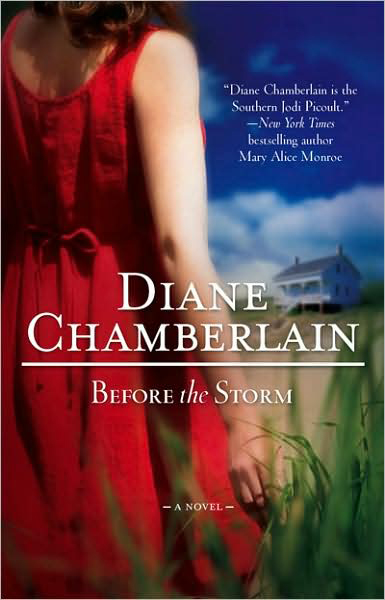
Before the Storm, by Diane Chamberlain
Before the Storm, by Diane Chamberlain
As a rule, I prefer stories told in chronological order. Once in a while there was a chapter in Before the Storm set in 1991 to give backstory. Otherwise, I liked the book. The main character, Andy, is a teenage boy with special needs. He attends a youth activity at his church one night when an arsonist sets fire to the sanctuary. Three people died in the fire, but Andy led many others to safety.
Andy is proclaimed a hero, but the police and community are eager to find the perpetrator. One thing leads to another and Andy is charged with the crime. Did Andy set the fire? Did Andy have anything to do with the fire? How will Andy prove he is innocent when all evidence points straight to him?
When I got to the last 100 or so pages, I couldn’t put it down. I did not see the surprise ending coming!
Last August I read Killers of the Flower Moon: The Osage Murders and the Birth of the FBI, by David Grann. You can read what I had to say about it in my September 4, 2018 blogpost, https://janetswritingblog.com/2017/09/04/holocaust-survivors-and-osage-murders/. Recently, when I saw an ad for the new movie, “The Old Man and the Gun,” I was curious about its backstory. I discovered that the movie is based on a book by the same name that was written by David Grann. It wasn’t available at the library, so I checked to see what else he has written. The White Darkness was on that list, so I checked it out.
The White Darknessis the remarkable story of Henry Worsley’s obsession with the Antarctic. He idolized Ernest Shackleton, who was a pioneer in polar exploration in the1800s. Shackleton aspired to be the first person to reach the South Pole. He also wanted to be the first person to walk across Antarctica. He was unsuccessful in those attempts, but his journeys inspired Henry Worsley to try to do the same.
This nonfiction book is the story of Henry Worsley’s two treks to Antarctica – one in 2008 and the second in 2015.In 2008 he went with two descendants of Shackleton’s crew members, but in 2015he went alone.
This 150-page book is filled with photographs of Antarctica. I’ve never studied the geography of the Antarctic,so in reading Henry Worsley’s story I also learned about the continent’s plateaus, ice shelves, and towering mountain ranges.
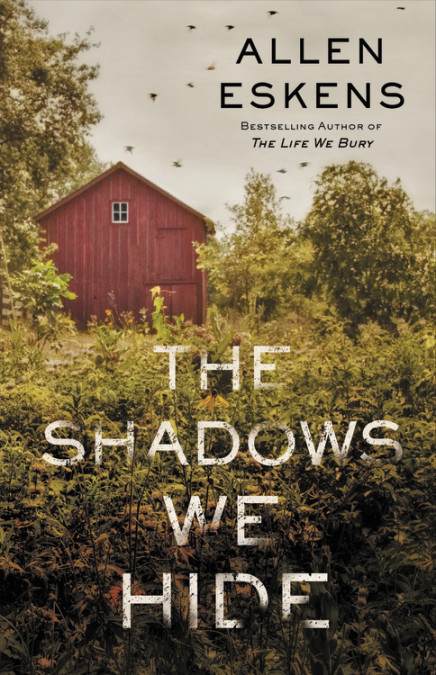
The Shadows We Hide, by Allen Eskens
The Shadows We Hide, by Allen Eskens
I am a huge fan of Allen Eskens’ novels, and this one did not disappoint. As I waited to rise to the top of the waitlist for it at the public library, I kept thinking, What if this book isn’t as good as his first four books?
Mr. Eskens’ first novel, The Life We Bury, featured a young man with autism. His older brother, Joe, rescues him from a physically-abusive situation involving their mother and her live-in boyfriend. The Shadows We Hide is a sequel to that2014 book. Joe and his girlfriend are still caring for the autistic brother when Joe’s father, whom he’s never met, dies under suspicious circumstances.
In The Shadows We Hide, Joe t. ravels several hours to the town in Minnesota where his father died. Although he’d never met the man, he needs to find out what he can about him. Joe soon finds himself the subject of a murder investigation. One thing leads to another until Joe is the target of a killer.
Woven throughout the book is a continuation of the estrangement between Joe and his mother which happened in The Life We Bury. Always in Joe’s heart is what is best for his autistic brother. It is not necessary for you to read The Life We Bury before reading The Shadows We Hide, but you might have a richer reading experience if you do.
Finishing an Allen Eskens novel is bittersweet for me. I can’t wait to see how the story ends, but then I know I’ll probably have to wait a year until his next book is published. I’ve read each of his novels as soon as they were published. Needless to say, I’m a fan of his writing.
Since my last blog post
November was extremely busy. Well, busy for someone with Chronic Fatigue Syndrome. December promises to be even more hectic. I might explain what I mean by that later this month.
Until my next blog
I look forward to reading more good books and starting some Christmas baking. I hope you have a good book to read.I’m reading Look Alive Twenty-Five, by Janet Evanovich. I needed something light to read before I start reading Diane Chamberlain’s latest release, Dream Daughter. As usual, I can’t keep up with all the books I want to read.
If you are a writer, I hope you make time for your craft this week. I need to look in the mirror and say that to myself!
Thank you for reading my blog. You could have spent the last few minutes doing something else, but you chose to read my blog. I appreciate it! I welcome your comments.
Let’s continue the conversation.
Have you read any good books lately? If you’ve read any of the books I mentioned today, I’d like to know what you thought of them.
Do you know someone who often ends a sentence with the phrase, “so it is” or “so he did” or “so they are?” You get the picture.
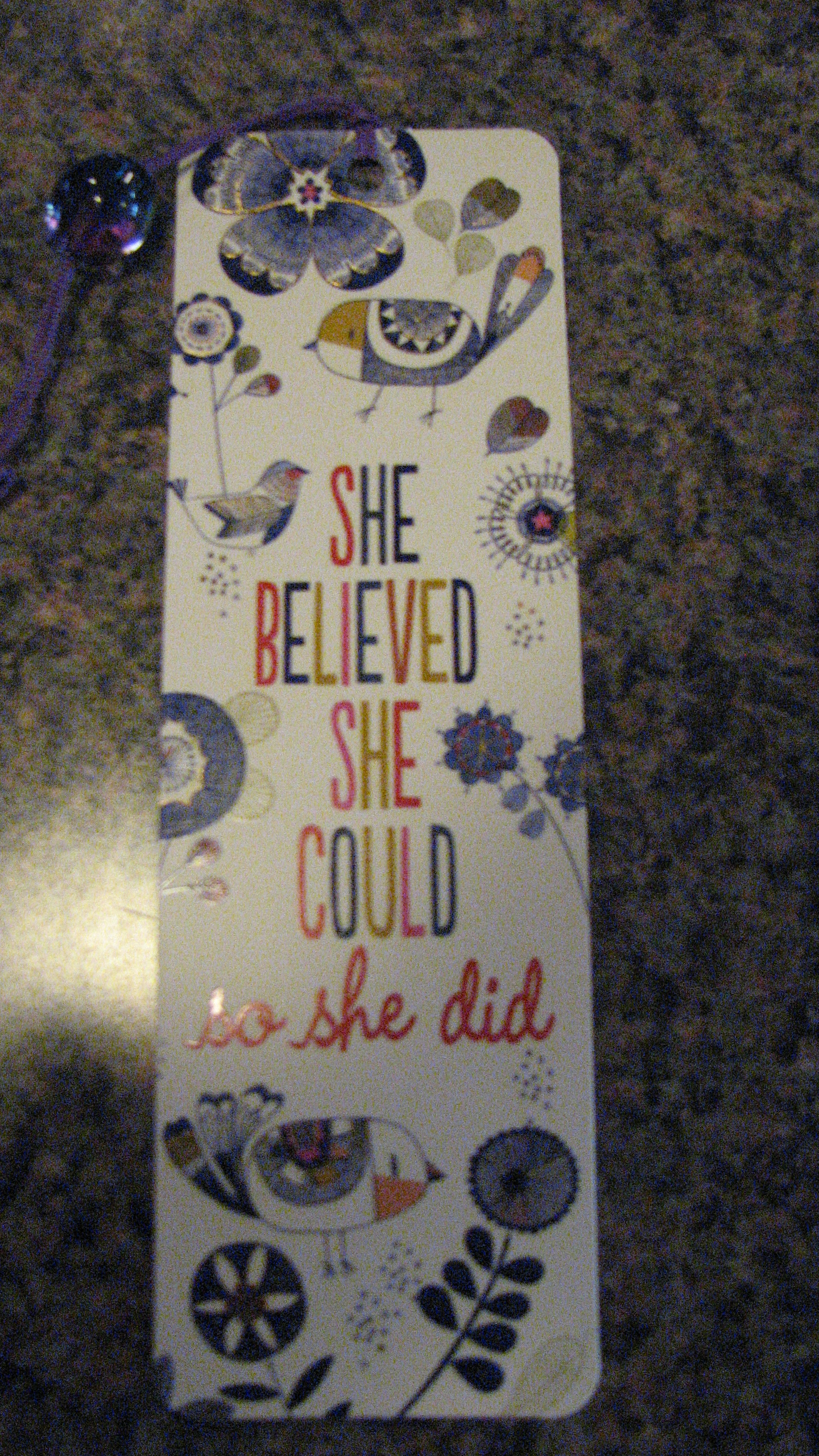
In my blog post on October 21, 2018 (Independent Bookstores are the Best!) I mentioned a bookmark that I purchased at Foggy Pine Books in Boone, North Carolina (see photo below) and I promised that I would explain why I just had to buy that particular bookmark in today’s blog post.
Bookmark by Peter Pauper Press, Inc. (www.peterpauper.com)
There are a scattered few individuals among my father’s siblings and their descendants who pepper their speech with such sayings. One of my father’s sisters used these idioms. The interesting thing about this within our family is that none of her children or grandchildren picked up the practice as far as I know; however, one of her nieces uses the idiom a lot. I doubt if she’s even aware she’s saying it, so I don’t want to bring it to her attention. If made conscious of it, it might influence her speech pattern. She has young grandchildren, so it will be interesting to see if they pick up the idiom.
Is it from Kintyre?
A few years ago, I learned that in days of old this very idiom was common in the speech patterns of the people of the Kintyre Peninsula in Scotland. That just happens to be where my Morrison ancestors lived before coming to America in the 1760s. I was delighted to learn that the idiom had perhaps been brought to America with my great-great-great-great-grandparents.
Or is it from Ireland?
Now a monkey wrench has been thrown into the mix. My sister enjoys reading novels written by Maeve Binchy. They take place in Ireland. The idiom “so he did” showed up recently in Ms. Binchy’s 2012 novel titled, A Week in Winter. I haven’t read any of Ms. Binchy’s cozies, but I checked this one out just so I could enjoy her use of “so it is” (or a variation thereof.)
A few weeks ago I read the novel, Lying in Wait, by Liz Nugent. It takes place in Ireland. I’d gotten a little more than halfway through the book, to page 180, when I came to the following sentence: “ʻA real gentleman, that’s what you are, now, a real gentleman so you are.’” And then, on page 262, “Very good to me so he was, before he even met Karen.” I thought perhaps the author had given this idiom to one particular character to distinguish him or her from the others but, when I looked back to the first example, I discovered “so you are” and “so he was” were said by two different people.
Does this quaint idiom come from Scotland or from Ireland? After ten generations in America, is there any way to tell? There probably is, but I don’t have the resources or energy to get to the bottom of this. For the time being I’m happy just to enjoy hearing and reading “so it is” occasionally.
Since my last blog post
I’ve been taking care of my sister. I’m “chief cook and bottle washer” for a while. I haven’t had much time to read or write.
Until my next blog post
I hope you have a good book or two to read. I’m still reading The White Darkness, by David Grann. It is a very short book, but I’ve managed to make a two-week read out of it due to hospital stays, two trips back to the emergency room, and keeping track of pill and physical therapy schedules. I picked up two new releases at the public library and look forward to starting them this week.
If you’re a writer, I hope you have quality writing time.
Thank you for reading my blog. You could have spent the last few minutes doing something else, but you chose to read my blog. I appreciate it! I welcome your comments.
Let’s continue the conversation.
Is there an idiom such as “so it is” within your family or circle of friends? Tell us how and when it originated, if you know.
We had a very warm and long summer in North Carolina this year. In fact, summer stretched all the way through September and into October. With highs in the lower 90s and heat indices close to 100 degrees Fahrenheit several times in October, many folks who moved here from colder climates began to worry that autumn would never arrive.
As often happens in North Carolina, summer ended and winter ones began. We seemed to have a relatively short time of fall temperatures. Just a couple of weeks ago it was in the high 70s Fahrenheit. Yesterday morning it was well below freezing here, and the snow machines were busy making snow at one or more ski resorts in the Blue Ridge Mountains of North Carolina.
An early autumn photo I took in the Great Smoky Mountains several years ago
No more kidding myself that I could avoid winter. If you’ve followed my blog for a year or more, you know that I suffer from Seasonal Affective Disorder. I don’t mention this to get your sympathy but in the hope that others who have this seasonal form of depression might read my blog and know that they aren’t alone.
For most of my adult life, I have dreaded winter. That annual longing for warmer temperatures and longer hours of daylight eventually morphed into a dread of autumn.
Don’t get me wrong. I enjoy the bright reds, yellows, and oranges of the various hardwood trees when fall arrives, but we have a big yard and many huge old trees. By late fall/early winter, we are buried in dead leaves. I’m reminded of some of the words from “Camelot” that describe a world where it only rains at night and all the mess disappears by morning. (I paraphrase.) In my version of Camelot, all the dead leaves would disappear overnight once they’ve turned brown.
It’s hard for me to enjoy the beauty of autumn because I know winter isn’t far behind. I am on medication now that helps me cope with my discomfort with fall and winter, but I don’t think there’s a magic pill to help me cope with the mountains of dead leaves.
It’s time for me to hunker down for winter. I hope to work on genealogy, sewing, and my writing in the coming months while I try not to count the days until spring.
Until my next blog post
I hope you have a good book to read. I’m reading The White Darkness, by David Grann. It’s a nonfiction book about walking across Antarctica. It seemed like an appropriate book to read now that winter is here.
If you’re a writer, I hope you have quality writing time.
Thank you for reading my blog. You could have spent the last few minutes doing something else, but you chose to read my blog. I appreciate it! I welcome your comments.
Let’s continue the conversation.
Do you dread autumn and/or winter? Maybe you love these seasons. If you do, share some of the things you like about the colder time of the year. Maybe you’ll make me aware of some of the things I should look forward to when the daylight hours grow short and you have to bundle up to go outside.
To my readers from “down under,” do you see any advantages in having your seasons the opposite of those of us in the northern hemisphere? It would seem odd to me to celebrate Christmas, New Year’s Day, and my birthday in the summer; however, I suppose it would seem strange to you to celebrate those special days in the dead of winter.
Some months I get lucky with the books I get to read. October was one of those. I was overwhelmed with library books for which I reached the top of the waitlist. Several books had to go back to the library unread, so those remain on my to be read list.
Climbing Over Grit, by Marzeeh Laleh Chini and Abnoos Mosleh-Shirazi
Climbing Over Grit, by Marzeeh Laleh Chini and Abnoos Mosleh-Shirazi
I have been following Laleh Chini’s blog, “A Voice from Iran” for quite a while, but I had somehow missed knowing that she was writing a book. When she announced that her book, Climbing Over Grit, was available on preorder, I immediately ordered it. Laleh has a gift for storytelling, so I knew her book would be good.
Little did I know that Laleh’s book was based on some experiences within her own family! The book is written in first-person point-of-view, but I still didn’t catch on that it was written in her mother’s voice until I came to a page well into the book that said something like, “The second daughter was named Laleh.” I gasped out loud! It was then that I couldn’t put the book down. I finished reading it at 4:30 in the morning.
I still cringe to think about some of Laleh’s family members being subjected to arranged child marriage and the abuse that often goes along with that practice.
Fortunately for her readers, Laleh got out of Iran at the age of 16 and came to the United States. She now resides in Canada. He photographs and Iranian folktales she shares in her blog have helped me get a picture of an Iran I didn’t know existed.
Climbing Over Grit is not a pleasant read, but I highly recommend it to anyone wanting to know more about the child bride culture of Iran. Her blog can be found at https://avoicefromiran.wordpress.com/.
The Tattooist of Auschwitz, by Heather Morris
The Tattooist of Auschwitz, by Heather Morris
The main character in The Tattooist of Auschwitz, by Heather Morris, will haunt me for a long time. Ludwig “Lale” Sokolov was a Slovakian Jew taken to the concentration camp at Auschwitz-Birkenau by the Nazis. He was not a trained tattooist, but he found he could do the work. Anything to stay alive. He had to tattoo the identification numbers on the forearms of the prisoners at Auschwitz and Birkenau for the last two to three years of World War II.
One particular female prisoner named Gita caught his eye, and they began a love story. The promise of being together forever with each other helped keep both of them alive throughout their awful ordeals.
This is a story of courage, love, and man’s inhumanity to man. It is an international bestseller and is based on a true story. His position of some level of trust affords Lale the opportunity to come in possession of some money and jewels that were taken from other Jews upon their arrival at the concentration camps. He used those items in exchange for food for his fellow prisoners.
The author interviewed Lale and his descendants in order to weave Lale and Gita’s story into this work of fiction. Their story of suffering, courage, and love will stay with me for a long time. Even those of you who don’t normally read historical fiction might find this novel appealing.
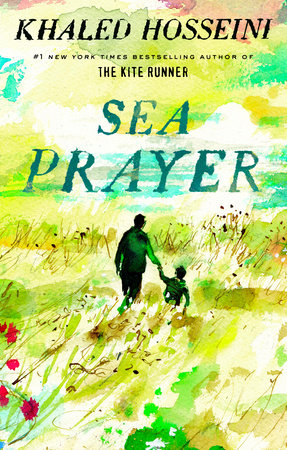
Sea Prayer, by Khaled Hosseini
Sea Prayer, by Khaled Hosseini; illustrated by Dan Williams
My October 8, 2018 blog post, Words of Khaled Hosseini was about his new children’s book, Sea Prayer. I invite you to read that post in case you missed it earlier.
I will not go into the details of Sea Prayer today, since I explored the book’s theme in that earlier blog post. Although it is a book for juveniles, I highly recommend it to people of all ages – to anyone old enough to have an understanding of what a refugee is.
The Devil and Webster, by Jean Hanff Korelitz
I mention this book because the premise sounded promising. I tried two or three times to read it, but I just couldn’t get into it. I decided to list it today because it just might appeal to some of you. It is literary satire, so maybe I just don’t get the satire or didn’t read enough of it to catch on. The book has many five-star reviews. People seem to really like it or not like it at all. I read the first 25 percent of the book.
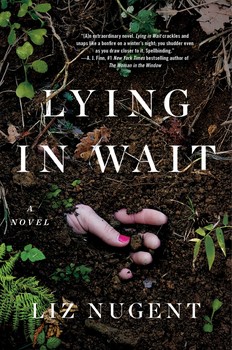
Lying in Wait, by Liz Nugent
Lying in Wait, by Liz Nugent
After reading A.J. Finn’s recommendation for Liz Nugent’s Lying in Wait, I checked it out of the library. I had enjoyed Mr. Finn’s novel, The Woman in the Window, so his recommendation carried a lot of weight. I was not disappointed in this psychological thriller.
The first chapter of Lying in Wait is from the point-of-view of Lydia and opens with the following sentence: “My husband did not mean to kill Annie Doyle, but the lying tramp deserved it.” That got my attention, so I kept reading.
Part I of the novel takes place in 1980. Each chapter was from the point-of-view of one of the characters, and the emphasis was on how Annie Doyle’s parents and sister responded to her unexpected disappearance. It is near the end of Part I when the reader finds out why Lydia’s husband killed Annie.
Part II follows each character as they continue to deal with the situation in 1985. You have Annie’s sister still demanding answers from the police over her missing sister, while Lydia and her son deal with the secret of Annie’s murder. To get into the details, I would have to reveal too much of the storyline, so I’ll leave it at that. Suffice it to say, there are some interesting interactions between some of the characters.
Part III jumps to 2016 to pull together all the loose ends, and the ending might surprise you.
As a rule, I don’t like novels in which chapters alternate between various characters’ points-of-view, but this format worked for Lying in Wait. I want to read more of Liz Nugent’s books. She has won many awards for her writing in her native Ireland and, apparently, has a cult-like following.
My Dear Hamilton: A Novel of Eliza Schuyler Hamilton, by Stephanie Dray and Laura Kamoie
My Dear Hamilton: A Novel of Eliza Schuyler Hamilton, by Stephanie Dray and Laura Kamoie
This historical novel told from the point-of-view of Eliza Schuyler, wife of Alexander Hamilton is a long but enjoyable read. At 642 pages, it’s the longest book I’ve read in quite a while. I must say I learned some things about Alexander Hamilton, and I learned a great many things about his wife. I really knew nothing about her before reading the book.
That said, it is a work of historical fiction, so most of Eliza’s feelings and emotions throughout the book fall into the fiction category. I appreciated the authors’ extensive notes at the end of the book where they told what was true, what was fiction, and what was adjusted chronologically to make the book work. I also appreciated the fact that they included in the book that Eliza grew up on a plantation that had slaves in the state of New York. Many people are not aware that some people outside The South owned slaves in the 18th and early 19th centuries.
It’s about time the women who helped found our nation got a little credit.
Since my last blog post
I attended the memorial service for a true American hero, Seville Schofield Funk, Sr. He served in the United States Army’s 10th Mountain Division in Italy during World War II. In the line of service he sustained a broken ankle and went back into battle after a brief recovery. Later, he was shot in the left shoulder and returned to battle. Later, he was shot in the right shoulder and yet again returned to the front lines. I was honored to have known this unassuming man. When I go to my polling place to vote tomorrow, it will be because Mr. Funk and others like him have preserved my freedom to vote by their unselfish military service.
Until my next blog post
I hope you have a good book to read.
If you’re a writer, I hope you have productive writing time.
Thank you for reading my blog. You could have spent the last few minutes doing something else, but you chose to read my blog. I appreciate it! I welcome your comments.
Let’s continue the conversation.
Have you read any good books lately? Have you read any of the books I read last month? If so, what did you think of them?
The idea of forming “a more perfect Union” dates back to the formative years of the United States of America. The words can be found in the preamble to the US Constitution:
“We the People of the United States, in Order to form a more perfect Union, establish Justice, insure domestic Tranquility, provide for the common defence, promote the general Welfare, and secure the Blessings of Liberty to ourselves and our Posterity, do ordain and establish this Constitution for the United States of America.”
This introduction to the US Constitution sets the bar high. Sometimes we get it right. More often than not, we fall short.
The tragic events of last week tempt us to throw up our hands and give up on working toward “a more perfect Union,” but that’s not who we are. I believe most Americans will continue to strive for a more perfect nation.
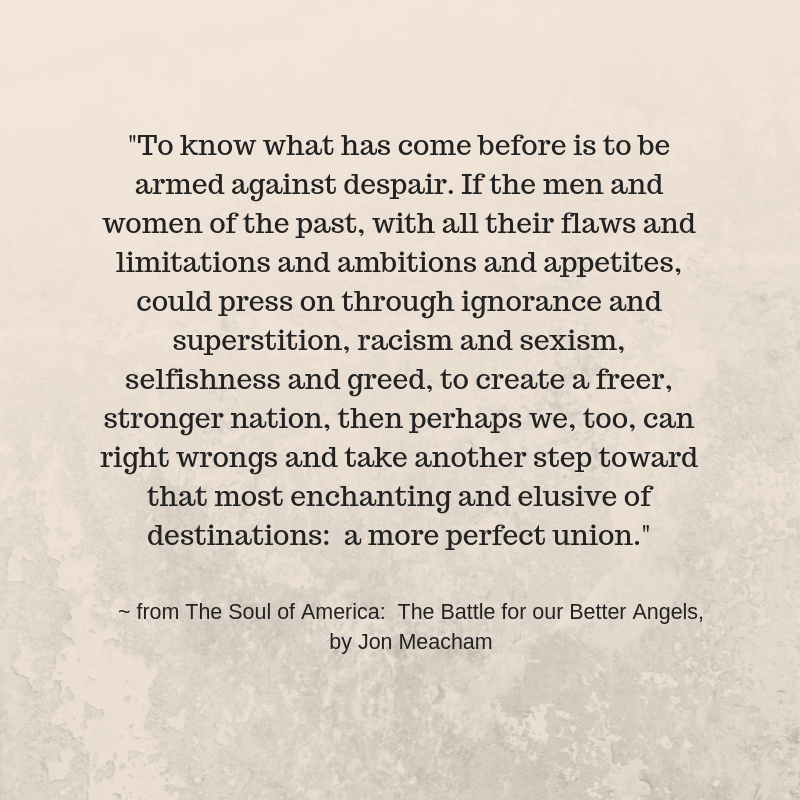
In light of the hate crimes and acts of terrorism and political violence last week in the United States of America, I offer the following quote from The Soul of America: The Battle for our Better Angels, by Jon Meacham:
Quote from The Soul of America: The Battle for our Better Angels, by Jon Meacham
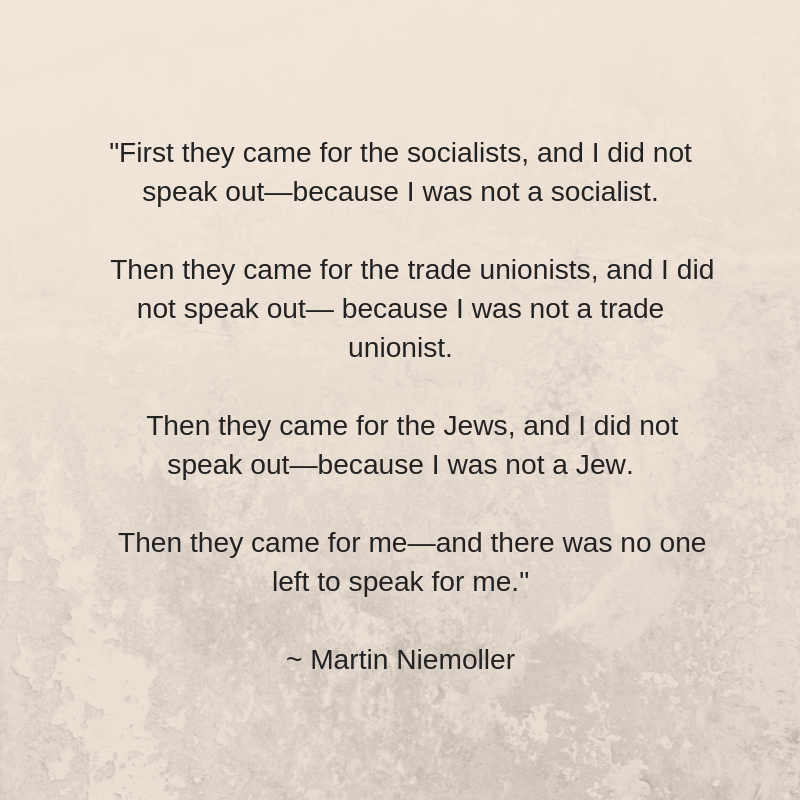
I also share the following famous words of Martin Niemoller:
Quote from Martin Niemoller
Until my next blog post
I hope you have a good book to read. I’m reading A Spark of Light, by Jodi Picoult.
If you’re a writer, I hope you have quality writing time.
Thank you for reading my blog. You could have spent the last few minutes doing something else, but you chose to read my blog. I appreciate it! I welcome your comments.
Let’s continue the conversation.
What is it going to take to stop the hate crimes and political violence in the United States of America? What can we do as individuals wherever we live to make the world a kinder place?
Perhaps we could start by living the 39th verse of the 22nd chapter of The Gospel of Matthew as it is translated in the Contemporary English Version of the Bible:
The second most important commandment is like this one. And it is, “Love others as much as you love yourself.”
Many of the people who read my blog are not Christians — and that is one of the unexpected joys this blog has given me — but I hope we can all strive to adopt the above words of Jesus in our everyday lives and work for peace in our families, neighborhoods, cities, and nations.
And we can’t wait until they come for us, because by then there will be no one left to speak up.














 Janet's Writing Blog