C is for Characterization

This is the third day of the 2017 A to Z Blog Challenge, so today’s post must have something to do with the letter “C.” Thinking in the realm of writing fiction, I settled on the word CHARACTERIZATION.

Characterization can be shown through narrative, dialogue, action, and reaction. All four should be used by a writer.

There are many things for a fiction writer to keep in mind in creating and fleshing out characters. My writing mentor from Queens University of Charlotte, Judy Simpson, said, “Don’t begin writing your story until you know all of the major characters.” I can’t remember if I followed that advice when I started writing The Spanish Coin manuscript 10 or more years ago. (There! I’ve said it! This has been a labor of love that I have worked on in spurts and fits, sometimes not touching it for more than a year at a time.) But I digress.

The famous mantra of writing instructors comes into play in characterization:  Show, don’t tell. Don’t tell the reader about a character. Reveal character details through what they say, how they say it, and what they do or don’t do.

Even though the writer might have in her notes a driver’s license description of each character (e.g., black male, brown eyes, black hair, six feet tall, 180 pounds) that is usually not the best way to introduce a character to your reader. Let those details (or just the ones that are pertinent) come out gradually and in subtle ways.

Every character has strengths and weaknesses. A “goody-two-shoes” character is boring and, let’s face it, offensive and irritating. Likewise, even the most heinous villain probably has some redeeming value.

Characters unnecessary to the story should be omitted. Related to that, a writer should not include minor characters early on in a novel because the reader might be misled and lose interest.

There is also the matter of choosing names for all the characters. Writing instructors caution beginning writers not to give two characters in the same short story or novel names that are similar. For instance, you might not want a Phil and a Phyllis in the same book.

I have struggled over the name of a free woman of color in The Spanish Coin. She was Rachel for a long time because I think Rachel is a beautiful name and it conjures up an image of a strong and elegant woman in my mind. I changed her name to Clarissa in honor of a woman of color who made a great impression on me while I was writing local history articles for a newspaper a decade ago. It will be interesting to see what the character’s name turns out to be in the final product.

Another consideration that must be taken into account, especially when writing historical fiction, is that the writer must make sure to give characters names appropriate to the time and place. For instance, you won’t find a Tammy or a Kevin in The Spanish Coin because those names were not used in 1771 in the Carolina backcountry.

Each character should have at least one distinguishing characteristic in order to help set an image in the reader’s mind. A character could have a foreign accent, a disfiguring physical feature, a hearing problem, a lisp, a limp, an annoying laugh, a mental illness, or a word or phrase that no one else says.

Who knew there were so many things to think about when giving a fictitious character a name?

Until my next blog post tomorrow

I hope you have a good book to read. (I seem to always have too many on my bedside table! One night they’re going to topple over and give me a concussion.) If you’re a writer, I hope you have quality writing time.

Janet

2017 A to Z Challenge Badge
Blogging from A to Z Challenge Badge 2017

B is for Background

On this second day of the 2017 A to Z Blog Challenge, my blog post is supposed to have something to do with the letter, “B.” I was tempted to write about blogging, but I’ve had that as my topic several times lately. I decided to write about BACKGROUND and what it means in fiction.

Foundations in Fiction

My first thought was to see what my fiction writing instructor in the Continuing Education Department at Queens University of Charlotte, Judith H. Simpson, had to say about background in her book, Foundations in Fiction.

Judy Simpson's book cover 002

Although background and setting are often used interchangeably, Judy chose to address them separately. Whereas setting is physical location, background is the story’s environment. Of background, Judy wrote in her book, “It is not the physical place but something more than that. It can be the hero’s job.”

Examples of background

Many popular authors use a background for their novels that becomes part of their brand. Janet Evanovich’s Stephanie Plum novels are set in New Jersey, but the background is bounty hunting — albeit of the bumbling variety. Tony Hillerman used Indian reservations for background in his Leaphorn and Chee series. Margaret Truman used iconic locations in Washington, DC in her murder mysteries, and Amy Clipston uses the Amish culture as the background in her fiction.

I enjoy reading and writing historical fiction. The historical fiction writer must create physical setting, create story background, and recreate a past culture, according to Judy Simpson. That last aspect — recreation of a past culture — is what gives historical fiction authenticity.

The writer of historical fiction must do extensive research in order to write believable characters. The novel manuscript I’m writing is set in the Carolina backcountry in 1771. People dressed and lived differently in 1771 than how we dress and live in that same geographical location in 2017. The culture, values, and accepted societal mores were different in 1771 than they are in 2017.

The writer of good historical fiction “must know the history of the period you are using; you must understand the social structure of this society; you must know how they lived, what they wore, what they ate, their monetary system, their transportation system, their social events, their daily lives,” according to Judy’s book. If you make an error, one or more readers will delight in bringing that mistake to your attention.

In writing my The Spanish Coin manuscript, I have done extensive research. The fear of making a mistake has paralyzed me sometimes. If I wait until my research is complete and my writing is perfect, though, my novel will never be published. At some point in the next 12 months, I need to conclude that it is as good as I can make it, push to get it published, and get back to writing the sequel.

The Flavor of Historical Fiction

Judy Simpson wrote the following in Foundations in Fiction and I try to keep her words in mind as I work on my book:

“Remember that what makes a historical novel different is the flavor, the sense of time and place of a long ago era. When the reader finishes the book, they should feel as if they were there, as if they really know what it would be like to live then. You have to capture the essence of that time and each period has its own flavor. Only you, the writer, can open the gate to that era for the reader.”

Until my next blog post tomorrow

I hope you have a good book to read. (As I was writing this last night, I was still reading The Heavens May Fall, by Allen Eskens.) If you’re a writer, I hope you have quality writing time.

Janet

Speedbumps!

My last blog post of each month is usually a progress report on the novel I’m writing. The Spanish Coin is its working title. A month or so ago a writing coach evaluated the first 2,000 words of my manuscript. I set about to take her recommendations and edit the remaining 94,000 words.

Speedbump

img091

Due to one thing and another, I’ve made very little progress on that project. Life got in the way. I’ve come to call such things speedbumps.

Another speedbump?

Then, I read an online article by a literary agent. Her comments were directed toward writers and their blogs.

The article was quite helpful until

I got to the part where she said a writer needs to have 50,000 engaged blog followers in order to get a book published. Whoa! I guess that’s what I get for getting all puffed up about having 1,000 blog followers just a week ago. This literary agent really knows how to burst someone’s bubble!

I would like to think that all 1,008 of my current followers are engaged (meaning they are truly interested in my writing and didn’t just hit the “follow” button out of curiosity or a sense of obligation) and that every one of them would purchase a novel I wrote. I know that’s not necessarily the case, though.

Looking forward to better (and healthier) days ahead,

I hope to report to you sometime in April that I’ve completed that work and have turned at least half of the manuscript over to the writing coach. I look forward to taking that next step toward publication and making my novel better and better. I realize that you might be growing weary of my progress reports that don’t reflect any progress.

A reminder

I plan to embark upon the 2017 A to Z Blog Challenge on April 1. The first day is “A.” I will write about the authors and books I read in March. I think you’ll enjoy that post. I read some very good books this month! (I hope my April 1 blog post will make up for this one because this is definitely not my best work.)

2017 A to Z Challenge Badge
Blogging from A to Z Challenge Badge 2017

Until my next blog post

I hope you have a good book to read. (I’m reading The Heavens May Fall, by Allen Eskens.) If you’re a writer, I hope you have productive writing time.

Janet

Save

Quote from Journalist Jonathan Stinson

Jonathan Stinson is the publisher of The Sand Mountain Reporter newspaper in Albertville, Alabama. I recently discovered him on Twitter and was immediately impressed with his level of professionalism.

I have no personal experience with the University of Alabama, but I’m beginning to think it must have a top-notch journalism school. Back in the 1980s and 1990s, one of the most-respected TV journalists in Charlotte was Bob Inman of WBTV. A native of Elba, Alabama, Robert Inman is a successful novelist today. He is a product of the University of Alabama.

Lee Perryman, one of my far-flung Morrison cousins is another graduate of the University of Alabama. Lee recently retired after a celebrated career with the Associated Press in Washington, DC. In retirement, Lee continues to champion the field of journalism in his hometown of Sylacauga, Alabama.

Many years later to happen upon another Alabama native and alumnus of that university’s Department of Journalism — Jonathan Stinson —  cannot be merely coincidental. I did not major in journalism in college but, if I were looking for a good journalism school to invest my time and money in as a student, I would certainly give the University of Alabama my serious consideration.

Here’s the quote from Jonathan Stinson that first grabbed my attention:

“Everything you write is about the reader. The sooner you accept this truth as a writer, the better off you’ll be because you’ll have a clear understanding of what it is you’re trying to do.” – quote from Jonathan Stinson’s blog, at http://JstinsonINK.com.

I typed the quote and keep it by my computer monitor so I can read it every day.

Jonathan Stinson can be followed on Twitter as @JstinsonINK and on his blog as referenced above.

In this day in America when reporters and journalists are being recklessly maligned almost daily by the US President and his staff and surrogates, it is reassuring to know that there are countless journalists in this country who are dedicated to reporting the facts. Not “alternative facts,” but facts.

Lest we forget

The First Amendment to the Constitution of the United States of America reads as follows:

“Congress shall make no law respecting an establishment of religion, or prohibiting the free exercise thereof; or abridging the freedom of speech, or of the press; or the right of the people peaceably to assemble, and to petition the Government for a redress of grievances.”

Until my next blog post

I hope you have a good book to read. (I’m reading The Second Mrs. Hockaday, by Susan Rivers.) If you’re a writer, I hope you have quality writing time.

Janet

What is a logline, and why do I need one?

I’m still learning the terminology used in the publishing business. The publishing business is changing every day, so I’ll always be playing catch up.

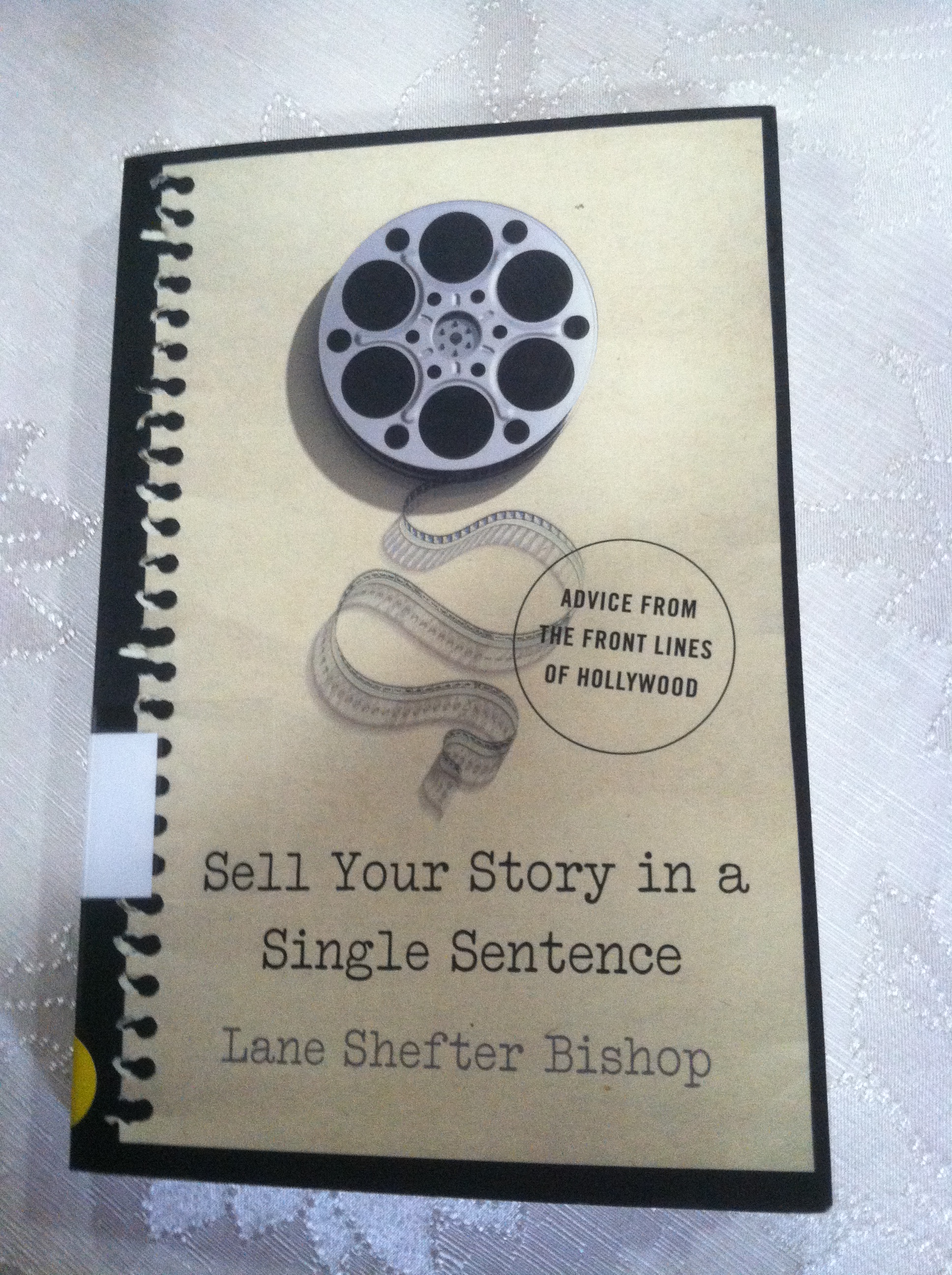
Sell Your Story in a Single Sentence

A library book caught my attention last week, so I checked it out. Sell Your Story in a Single Sentence, by Lane Shefter Bishop turned out to be one of the most helpful writing books I’ve read. Perhaps I feel that way because it was timely. It would have been even more beneficial if I could have read it a decade ago before I started writing my southern historical novel manuscript with the working title, The Spanish Coin. (Since Ms. Bishop published the book in 2016, that would have been impossible — but you get my point.)

Sell Your Story in a Single Sentence, by Lane Shefter Bishop
Sell Your Story in a Single  Sentence, by Lane Shefter   Bishop                                                                                                                         

Speaking of getting to the point . . .

Sell Your Story in a Single Sentence is an excellent “how to” book about the process of writing a logline. A logline is a single sentence that identifies a story’s protagonist, what the protagonist wants, and what’s at stake. Sounds easy?  Actually, it’s quite a process that involves many revisions and lots of rewriting.

When to write your logline

If I had known to create a logline before writing my novel’s manuscript, it would have helped me focus. Writing the logline after the fact, though, will help me evaluate my 97,000-word manuscript. I’ll have to make the best of having the cart before the horse. Next time I write a book, I’ll know to start with the logline.

Why do I need a logline?

I need a logline so I can precisely answer the question, “What’s your book about?” I will also need it to open my query letters to prospective literary agents or publishers. In that respect, the logline is like the “hook” or first line of a novel. If well written, it grabs the agent’s attention and makes him want to hear more. Ultimately, it makes a literary agent want to read my manuscript — or not read it.

My logline for The Spanish Coin

The following sentence is my logline in progress for The Spanish Coin:

When a widow is accused of her husband’s murder in the Carolina backcountry in 1771, she will stop at nothing to save herself and her unborn child.

Until my next blog post . . .

I hope you have a good book to read. If you’re a writer, I hope you have quality writing time.

Janet

P.S. Does my logline make you want to read The Spanish Coin? I would love to have your comments!

Save

How important is a novel’s ending?

How important is a novel’s ending? Just as important as the “hook” at the beginning.

Once a month I write about the first line in a different novel. I must admit that I have worked harder on, done more “how to” reading about, and lost more sleep over the opening scene in my manuscript for The Spanish Coin than I have for the ending.

A good beginning “hooks” the reader’s attention and draws him into the story. A good ending leaves the reader satisfied and, hopefully, exhausted. A good ending makes the reader contact the author and ask, “You are writing a sequel, aren’t you?” The ending of a novel should either tie up all the loose ends for your main characters or cause the reader to wonder what happened to those characters later. Did they find justice, acceptance, love, or whatever they were seeking? The reader should still think about those characters weeks after reading the book. How many of us thought about Scout in To Kill a Mockingbird years later and wondered how her life turned out? Like it or not, we got our answer in 2015 when the long lost Go Set a Watchman manuscript by Harper Lee was discovered and published.

As with the writing of the other parts of a piece of fiction, there are rules to guide an author in crafting the ending.

  • Don’t introduce new characters
  • Do increase the suspense
  • Do surprise the reader, but do it in a way in which he can think back to foreshadowing earlier in the book
  • Know the ending before you write the beginning

The rule I listed last is one I need to keep in mind when I write my next book. I did not know about that rule when I started writing The Spanish Coin. I didn’t have a clue how that story was going to end. In fact, it made me exceedingly sad to see how the story unfolded. I had become quite fond of the character who turned out to be the villain.

Until my next blog post, I hope you have a good book to read and, if you’re a writer, I hope you have productive writing time.

Janet
 

My “Sound Bite” and My Author Brand Story

Those of you follow my blog are probably growing weary of reading about author brand. I feel your pain! After today’s post, I look forward to blogging about other topics. Thank you for bearing with me as I went through this necessary journey and soul searching in preparation for what I hope will be the publication of my first novel in the next couple of years.

A Reductive Phrase or Sound Bites

On her company’s website, http://www.bluemooncommunications.com, Theresa Meyers defines a sound bite as “a reductive phrase that encapsulates more than the words contained in the phrase.”

She says an author must “boil down” his or her message points to “a one liner that will be used in every interview, every speech, every talk you give.”

I needed to ask myself why I write southern historical fiction. It’s what I’m naturally drawn to. It’s like all my life experiences have pointed me in this direction. But Ms. Meyers nudged me to go three more steps. I had to verbalize why people read southern historical fiction, what makes it sell, and why people seem to be gravitating toward it. As if that weren’t enough, the task was to come up with one phrase or sentence that would answer all of those questions.

My thought process as I pondered those three questions:  I think people read southern historical fiction, buy southern historical fiction, and gravitate toward it because The South is a state of mind. It is a place and feeling that its children cannot easily define or explain. It is unique due to its history. It is at once looked down upon and held in a place of fascination by the rest of the country. It is a place that one cannot begin to understand without having lived there, or perhaps without having been born there. It is probably the most misunderstood place on earth.

My conclusion, in one sentence or phrase:  Southern Historical Fiction touches the heart.

My Author Brand Story

If the following five paragraphs might sound like I’m bragging, that’s not my intention. It is my understanding that an author brand story is a writer’s statement of what qualifies him or her to write what they write. The next five paragraphs are my author brand story.

My 40 years of tracing my various family lines back to the colonial days in North Carolina, South Carolina, and Virginia as well as collateral family lines back to the pioneer days in Tennessee, Alabama, and Mississippi has served to reinforce and strengthen my knowledge of and history of The South (i.e., the southeastern states in the United States of America.)

I have done extensive local history and church history research and writing. Sometimes I think I was born in the wrong era. I identify with people who lived through the American Revolution, though I doubt if I would have had the physical fortitude to survive that period in our nation’s history. My studies have given me a profound appreciation for the hardships endured and sacrifices made by that generation of Americans that laid the foundation for the country and freedoms we enjoy today. Their blood runs through my veins and the red clay soil of the North Carolina piedmont is in my soul.

I am detail-oriented. Living my entire life in North Carolina and most of my life on land that has been in my family since the mid-18th century gives me a strong sense of place.

Having lost my first and second careers due to my health, I need to prove to myself and others that I can still contribute to society. I have been a writer all my life – just an unpublished one until recently.

My background, education, and desire to write historical fiction make me uniquely qualified to pen southern historical novels.

If you like my blog, please tell others about it. You may use the social media icons below.

Until my next blog post, I hope you have a good book to read and, if you’re a writer, I hope you have productive writing time. Thank you for coming along on my journey as an aspiring novelist.

Janet

My Author Brand Progress Report – Part 2

My post last Friday covered questions 5-9 on Kimberley Grabas’s “Brand Story Worksheet” found through https://thebookdesigner.com and on http://YourWriterPlatform.com. (In fact, I mistakenly gave Theresa Meyers credit for that worksheet. I sincerely apologize to Ms. Grabas, Ms. Meyers, and to my blog readers for my error. I republished the corrected blog post on November 28, 2016 at 10:22 pm Eastern Standard Time.) Using this worksheet was a beneficial exercise. It wasn’t easy or quick, but it was something I needed to do in order to figure out my author brand.

Since Friday, I have designed my business card and ordered them. The new one has the same photo of me that appears on my Pinterest https://www.pinterest.com/janet5049, Twitter (https://twitter.com/janetmorrisonbk), and Janet Morrison, Writer (https://www.facebook.com/Janet-Morrison-Writer) accounts. It will take a little longer to change the picture on my website (www.janetmorrisonbooks.com) – which needs a lot of updating.

“Brand Story Worksheet – Question 10

Question 10 on the worksheet prompted me to start making a list of the actions I will take “to create loyal and meaningful relationships with my readers.” The types of things on my list include setting up a way for people to join an e-mail mailing list on my website, writing a newsletter, researching how other authors have done this, and make myself available for personal appearances and even Skype with book clubs. The personal appearances and Skype will have to wait until I actually have a novel to publicize.

Brand Story Worksheet – Question 11

Question 11 addresses an author’s need to associate with other writers. The Queens Writers Group, of which I was a member after completing Judy Simpson’s fiction writing course at Queens University of Charlotte in 2001, disbanded upon Judy’s death. I have not joined another writers group. I probably should look for another group to join, as well as joining the Charlotte Writers Club and the North Carolina Writers Network. To date, money has stood in my way.

Brand Story Worksheet – Question 12

The 12th question on the worksheet asks, “How does your brand story position you for future growth as a writer?” I think my story positions me to write southern historical novels in addition to the manuscript of The Spanish Coin – whether they be stand stand-alone books or sequels to The Spanish Coin.

Writing a Brand Story & Strategy

After answering the 12th question, the instructions are to write one’s brand story, concentrating more on how you say it than what you say. You’re supposed to think about how you’ll incorporate your story into your marketing plan – every aspect of that plan. This was a daunting task but, once I settled into it, my story and strategy came together fairly easily. I reviewed my responses to the 12 questions on Ms. Meyers’s worksheet, and my story quickly jelled. I will share my story and strategy on my blog on December 2, 2016.

My Author Brand Map

Although I had trouble translating my love for geographic maps to an author brand map, here’s my first attempt. It looks more like a chart than a map. The important thing is for my map to make sense to me, even if it does not look like anyone else’s author brand map. I didn’t have an example to follow, so here it is. I hope you can read it.

My attempt at an Author Brand Map.


Author Message Points

Theresa Meyers wrote in her “Message Points” article on http://www.bluemooncommunications.com/white_papers/message_points.htm) that in order to attract media attention today, authors must find their message points. She wrote, “Three strategies will interest the media the most:

  1. Identify a problem. . .;
  2. Point to an opportunity. . .; or
  3. Explode a myth. . .

“Of these, Meyers continues, “exploding a myth gets the best response. . . . When pitching a producer or editor, in thirty seconds or less you need to hold up the myth and then shoot it down.

“Research has shown an audience will remember no more than three key message points. Everything you say, everything you speak about, needs to connect back to those points.”

Ms. Meyers then asks 13 questions for the aspiring author to answer in order to “come up with three statements that you want to repeat over and over again as part of your brand.”

My Three Message Points

  1. ?
  2. ?
  3. ?

As you can see, this part needs some work!

A Place to End This Blog Post

This seems like a good place to end today’s blog post, since I’ve run out of answers.

If you feel led to Tweet about my blog, Pin one of my posts on Pinterest, or comment about it on other forms of social media, I thank you for helping me get the word out about my writing. You’ll find social media icons below.

Check out my blog on December 1, 2016 for the possible “reveal” of my three message points, my “sound bite”/reductive phrase or sentence, and my author brand story, and my strategy going forward.

Until that next blog post, I hope you have a good book to read and, if you’re a writer, I hope you have productive writing time. Thank you for coming along on my journey as an aspiring novelist.

Janet

My Author Brand Progress Report – Part 1 (with CORRECTION)

This blog post contains a correction in the first paragraph. Otherwise, it is a reblog of my last blog post on November 25, 2016. I apologize to Kimberly Grabas, Theresa Meyers, and my readers for my error.

In my last blog post, “More Thoughts about Author’s Brand,” on November 22, 2016, I ended the post with comments about the first four questions on the 12-question “Brand Story Worksheet” written by Kimberley Grabas (not by Theresa Meyers as I mistakenly stated) and found through https://thebookdesigner.com and on http://YourWriterPlatform.com and the promise to “work my way through the remaining eight questions on the worksheet, I’ll start drawing my author brand ‘map,’ and I’ll do some research on ‘message points.'”

Question 5

The fifth question on the worksheet prompted me to consider how what I have to offer in my writing is different from what anyone else can offer, and how I will make an emotional connection with readers. That’s what I was supposed to do but after evaluating my lifelong love for the history of the geographical area in which my historical mystery manuscript (The Spanish Coin) is set (the northern piedmont of South Carolina and the southern piedmont of North Carolina) I forgot to address the emotional connection with my readers. Nevertheless, this exercise has helped me know that this is where my writing needs to be geographically. I guess it boils down to the old saying, “Write what you know.”

Question 6

Perception as a writer is addressed in the sixth question. To answer it, I had to imagine how my ideal reader would perceive my writing and how she or he would describe my work. I have concluded that I want my ideal reader to describe my work as “spot-on” historically and beautifully-written. I want my ideal reader to say my work my books are “real page turners” with memorable characters that they remember years after reading my books. I want to be perceived as an honest writer.

Question 7

The seventh question asked what people are saying about my writing. I was encouraged when I remembered how people raved about the local history column I wrote for six years for the weekly Harrisburg Horizons newspaper. Also, I received compliments on my short story, “Slip-Sliding Away!”

Question 8

Emboldened by my reflections on question #7, I jumped into the next question; however, it was not so easy to answer. It was about signals my brand sends. This is going to require more thought, since I’m still trying to determine what my brand is and how to project it.

Question 9

The ninth question also addressed things that I don’t have yet since I am still figuring out my brand. I have a website, business cards, and a head shot, but I didn’t know until last week that my website and business cards should match or at least blend. The head shot I had made to appear on the back cover of my vintage postcard book, The Blue Ridge Mountains of North Carolina, is not on my website. The purpose of the ninth question is to prompt me to make sure everything I do is a positive reflection of my brand.

What’s left to do

That leaves three more questions to be addressed, as well as the writing of my brand story and strategy, my brand story map, and my message points. I’ll see how much progress I can make on those items before my next blog post in a few days.

If you feel led to Tweet about my blog, Pin one of my posts on Pinterest (yes, I know, most of them don’t have a photo to Pin), or comment about it on other forms of social media, I thank you for helping me get the word out about my writing. You’ll find social media icons below.

Until that next blog post, I hope you have a good book to read and, if you’re a writer, I hope you have productive writing time. Thank you for coming along on my journey as an aspiring novelist.

Janet

My Author Brand Progress Report – Part 1

In my last blog post, “More Thoughts about Author’s Brand,” on November 22, 2016, I ended the post with comments about the first four questions on the 12-question “Brand Story Worksheet” written by Theresa Meyers and found on http://YourWriterPlatform.com and the promise to “work my way through the remaining eight questions on the worksheet, I’ll start drawing my author brand ‘map,’ and I’ll do some research on ‘message points.'”

Question 5

The fifth question on the worksheet prompted me to consider how what I have to offer in my writing is different from what anyone else can offer, and how I will make an emotional connection with readers. That’s what I was supposed to do but after evaluating my lifelong love for the history of the geographical area in which my historical mystery manuscript (The Spanish Coin) is set (the northern piedmont of South Carolina and the southern piedmont of North Carolina) I forgot to address the emotional connection with my readers. Nevertheless, this exercise has helped me know that this is where my writing needs to be geographically. I guess it boils down to the old saying, “Write what you know.”

Question 6

Perception as a writer is addressed in the sixth question. To answer it, I had to imagine how my ideal reader would perceive my writing and how she or he would describe my work. I have concluded that I want my ideal reader to describe my work as “spot-on” historically and beautifully-written. I want my ideal reader to say my work my books are “real page turners” with memorable characters that they remember years after reading my books. I want to be perceived as an honest writer.

Question 7

The seventh question asked what people are saying about my writing. I was encouraged when I remembered how people raved about the local history column I wrote for six years for the weekly Harrisburg Horizons newspaper. Also, I received compliments on my short story, “Slip-Sliding Away!”

Question 8

Emboldened by my reflections on question #7, I jumped into the next question; however, it was not so easy to answer. It was about signals my brand sends. This is going to require more thought, since I’m still trying to determine what my brand is and how to project it.

Question 9

The ninth question also addressed things that I don’t have yet since I am still figuring out my brand. I have a website, business cards, and a head shot, but I didn’t know until last week that my website and business cards should match or at least blend. The head shot I had made to appear on the back cover of my vintage postcard book, The Blue Ridge Mountains of North Carolina, is not on my website. The purpose of the ninth question is to prompt me to make sure everything I do is a positive reflection of my brand.

What’s left to do

That leaves three more questions to be addressed, as well as the writing of my brand story and strategy, my brand story map, and my message points. I’ll see how much progress I can make on those items before my next blog post in a few days.

If you feel led to Tweet about my blog, Pin one of my posts on Pinterest (yes, I know, most of them don’t have a photo to Pin), or comment about it on other forms of social media, I thank you for helping me get the word out about my writing. You’ll find social media icons below.

Until that next blog post, I hope you have a good book to read and, if you’re a writer, I hope you have productive writing time. Thank you for coming along on my journey as an aspiring novelist.

Janet