#Idiom: Reading the Riot Act

Just so you’ll know, I wrote this blog post, except for the “Since my last blog post” and “Until my next blog post” a month or more ago when I had no idea there would be an attempted coup at the US Capitol in Washington, DC on January 6, 2021. There had been rumors of political demonstrations in support of the man who lived in the White House until he moved to Florida on January 20, but I had no idea it would be a day of insurrection against the United States of America.

#Insurrection #FailedCoup
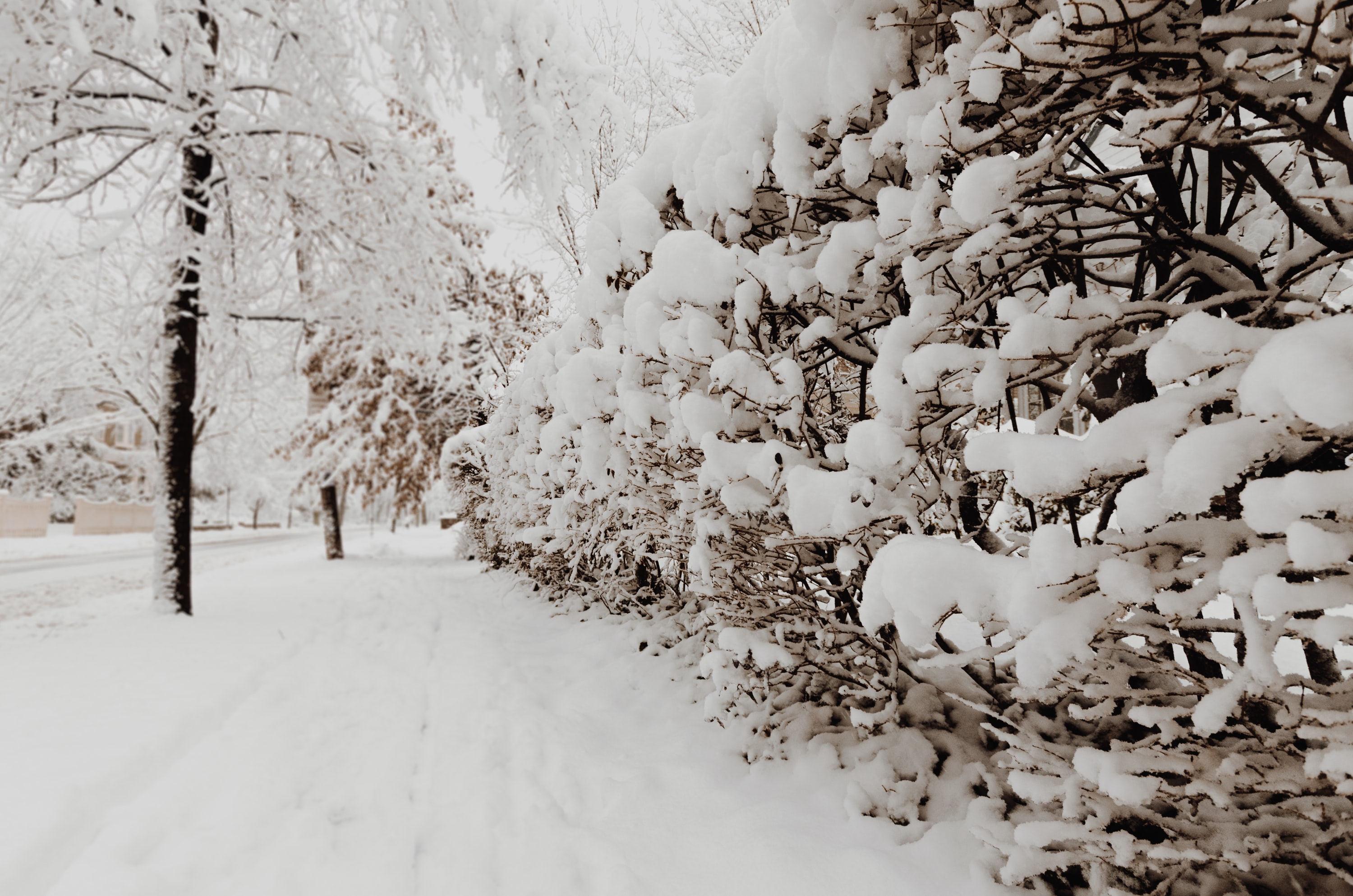
Photo Credit: Little Plant on Unsplash.com

The word “riot” does not adequately describe what happened on January 6, 2021. The word “riot” is far too tame to use in talking about that event. What happened that day outside and inside the US Capitol was not a riot; it was an act of domestic terrorism, an insurrection, and attempted coup incited by the man poorly-holding the office of president of the United States at the time.

Nevertheless, the following gives some of the background for the “Reading the Riot Act” idiom.

Reading the Riot Act

Have you ever wondered where the idiomatic expression, “reading the riot act” and its variations originated? I’ve heard the expression all my life, but I couldn’t have given a definitive answer if asked about its origins. As I’ve said before, the evolution of the English language fascinates me, so this will probably be the first of many blog posts I’ll write about idioms.

Another reason for my interest in idioms is, as a writer of historical fiction, I must be careful not to use a word or phrase in a story set at a time before that particular word or phrase came into usage. For many years, I’ve relied on English Through the Ages, by William Brohaugh, to guide me in the use of individual words and their meanings through time. Published by Writers Digest Books in 1997, this is an invaluable resource for writers of historical fiction.

However, I’ve recently come to know the book, The American Heritage Dictionary of Idioms: The Most Comprehensive Collection of Idiomatic Expressions and Phrases, by Christine Ammer. That collection of idioms and idiomatic expressions has opened my eyes to a whole new aspect of my need to be mindful of the use of words and phrases as I write fiction mostly set in America in the 18th and 19th centuries.

I’ve been surprised over and over again by the advent of some familiar idioms. And it’s made me feel old to find so many have only just come into general use during my lifetime. English is an ever-changing and evolving language.

What’s an Idiom or Idiomatic Expression?

An idiom or idiomatic expression is a group of words in usage whose meaning is not self-evident by considering the individual words.

If you’re familiar with the expression, “reading the riot act,” you probably know its meaning. According to The American Heritage Dictionary of Idioms: The Most Comprehensive Collection of Idiomatic Expressions and Phrases, by Christine Ammer, to read the riot act means to “warn or reprimand forcefully or severely.

It is thought that the first use of the figurative phrase “read the riot act” in print was in William Bradford’s Letters in 1819. This idiom has been in common use since the early 1800s, but exactly what was the riot act that inspired the expression?

The Riot Act of 1714

There was much unrest in Britain early in the eighteenth century. There were riots in 1710, 1714, and 1715, and the existing laws were inadequate to control the situation. The Riot Act of 1714 gave local officials a proclamation that was part of an Act of Parliament to read to a group of 12 or more people who were illegally assembled.

Here’s the wording of the proclamation that had to be read:

“Our Sovereign Lord the King chargeth and commandeth all persons, being assembled, immediately to disperse themselves, and peaceably to depart to their habitations, or to their lawful business, upon the pains contained in the act made in the first year of King George, for preventing tumults and riotous assemblies. God Save the King!”

You may recall the reading of Miranda Rights I blogged about on December 21, 2020 — Who said the world would end today? — . In like manner of police officers reading the Miranda Rights to a crime suspect in the United States today, a magistrate, mayor, bailiff, sheriff, or justice of the peace in Britain had to read the Riot Act in an effort to break up an unruly crowd. But that’s where the similarity ends.

The Riot Act of 1714 mandated that the people had an hour to disperse or otherwise be charged with a felony. The punishment for noncompliance was the death penalty! That was also the punishment for anyone interfering with the reading of the proclamation.

In actuality, if an assembled group’s rabble rousing escalated, the authorities didn’t have to wait an hour before making arrests.

What precipitated the Riot Act of 1714 ?

Parliament passed the Riot Act in 1714 – the same year George I became King of Britain – and it took effect in August 1715. The Crown feared that Jacobites (Scottish Roman Catholics – mostly Highlanders — who wanted to return James II of England and VII of Scotland and his descendants to the throne in London) would overthrow the government. In fact, the Jacobites invaded England in 1715 and again in 1745. They were eventually defeated at the Battle of Culloden. If the Jacobites had been successful, Roman Catholicism would have become the official religion throughout Britain. But I digress.

Was the Riot Act of 1714 always effective?

Of course not. I found the following two examples:

(1)        There’s conflicting information regarding the act’s effectiveness in 1839 at the Newport Rising. Some reports say the mayor was able to read the entire proclamation, while other reports say he was shot was attempting to read it from a hotel window; and

(2)        It is thought that the last time a sheriff tried to read the Riot Act was at the Battle of George Square in Glasgow, Scotland. People were protesting for shorter work hours on January 31, 1919. There was a confrontation with police. While the sheriff attempted to read the Riot Act, the piece of paper was grabbed out of his hands by protestors. That was apparently the proverbial last straw for the Riot Act of 1714.

According to the UK Parliament website, The Riot Act of 1714 was repealed in 1973, but it hadn’t been enforced in more than a half century. A version is still on the books in Canada.

Since my last blog post

I checked several weeks ago to see just how many blog posts I’d written. Much to my surprise, today’s post is my 500th. Yes, five hundredth! Thank you to those of you who have stuck with me through thick and thin since my first blog in 2010.

Joseph R. Biden has been sworn in as President of the United States, and Kamala Harris has been sworn in as the first female and the first person of African and Asian descent to the office of Vice President of the United States. I think the world took a collective sigh of relief at 11:49 a.m. Eastern Standard Time on January 20, 2021. I know I did!

I had a bit of a health scare last week, which prompted me to get an appointment on Saturday for a Covid-19 test at a local pharmacy. I’m feeling much better now, so I’m fairly confident that the results will come back “negative.” Better safe than sorry, though. I was pleased with how easy it was to schedule the test. Too bad it’s not as easy and timely to schedule an appointment to receive the vaccine. I believe that’s improving, though, here in the United States.

Until my next blog post

I hope you have a good book to read or a good book to write.

Find your passion and make time to pursue it in a creative way.

Wear a mask and get the Covid-19 vaccine as soon as you can.

Thank you for dropping by my blog today.

Janet

Fictional Characters Can Take on Lives of Their Own

In the aftermath of January 6, 2021, today’s topic seems frivolous; however, life goes on and I’m trying to stay true to the purpose of my blog. I want to write about the reading and the writing of books. I don’t want to dwell on politics in my blog postings even though it dominates my thinking.

Happy Birthday, A.A. Milne!

Today is Alan Alexander Milne’s birthday, or to put it more accurately, this is the 139th anniversary of the birth of British author A.A. Milne. He was, of course, the creator of Winnie the Pooh. A stuffed bear Milne named Winnie the Pooh has entertained children and adults since the book by that name was published October 14, 1926.

Photo Credit: Annie Spratt on Unsplash.com

Did you know that Milne originally called Christopher Robin’s stuffed bear Edward? There’s an interesting World War I story there, if you want to look it up. There’s a connection with a black bear from Canada named “Winnie” for Winnipeg.

In addition to Winnie the Pooh, there are numerous other fictional characters that have taken on lives of their own. Here’s a short list: Superman, Huck Finn, Tom Sawyer, Mother Goose, Little Orphan Annie, Friar Tuck, Robin Hood, Atticus Finch, Nancy Drew, Harry Potter, Darth Vader, Hawkeye Pierce, Mary Poppins, Gandalf, The Joker, Forrest Gump, Frankenstein, Sherlock Holmes, Spider-Man, Bugs Bunny, James Bond, Cinderella, Mickey Mouse, Goofy, Snow White, The Hulk, The Grinch, Indiana Jones, Paul Bunyan, Spock, Archie Bunker, King Kong, Popeye, Charlie Brown, Big Bird, Yoda, Kermit the Frog, Shrek, Porky Pig, Lassie, and even the GEICO Geiko.

The list could go on and on. I’m sure I’ve overlooked some of the characters from the last decade or two that someone from a younger generation would readily name.

My point is that it takes great care and imagination to create a fictional character that will strike such a chord with the general audience that their name and/or image becomes an icon. As a writer, I can’t imagine creating such a character.

Did Harper Lee know in her gut that Atticus Finch would go down in history as the iconic wise father and lawyer that he was? I doubt it.

I’ve read that Mickey Mouse went through several revisions before Walt Disney settled on the iconic figure we think of today. Charles Schulz adjusted Charlie Brown’s features before developing the Charlie Brown we all know and love. No doubt, the same is true for many of the other characters listed above.

And which came first? The image or the character in words? I imagine there’s a combination of both in the above list.

Since my last blog post

On January 13, I started participating via Zoom in a discussion of Janet Given’s book, LEAPFROG: How to have a civil conversation during an uncivil era. Janet is a blogger friend of mine, and she invited me to join this group sponsored by the Lorain Historical Society in Ohio. The timing couldn’t be better. Too bad the entire American citizenry aren’t participating. In conjunction with this discussion on Zoom, I’m re-reading Ms. Givens’ book, one chapter per month. I invite you to read it, too. Until the group’s next Zoom meeting, I’m practicing listening.

Now that anyone 65 years old or older in the US is eligible to receive the Covid-19 vaccine, I’ve been checking my county’s online scheduling tool numerous times every day. I haven’t been able to grab an appointment yet, but I’ll persevere. In the meantime, yesterday I was able to schedule my two doses in March through one of our local hospital systems.

Until my next blog post

I hope you have a good book to read or write. I’m listening to The Fix, by David Baldacci.

Make time to care for yourself during these stressful times.

Wear a mask out of respect for others.

Let’s all practice listening to each other. Really listening.

Janet

Other Books Read in December 2020

I saved two books I read in December for today’s blog post, not wanting to make last week’s post too long. One is a new novel and the other was from my to-be-read (TBR) list. I continue to add more books to my TBR than I check off. That’s just the way it is. My TBR hovers around 300, give or take 10-20 books. I need to ignore the number. Stressing over it isn’t beneficial.

The following two books transported me to England and Mississippi in December without leaving the Covid-19-free safety of my home.

Then She Was Gone, by Lisa Jewell

The first book I read by British author Lisa Jewell was The Family Upstairs in November 2019. I didn’t particularly enjoy listening to that book because one of the characters had a limited vocabulary. By that, I’m referring to the fact that the character used “the f-word” to such excess that I found it distracting. (Here’s the link to my blog post about the books I read in November 2019: Four Other Books I Read in November 2019.) Nevertheless, I decided to give Lisa Jewell another chance, so I listened to her new novel, And Then She Was Gone. I’m glad I did.

Then She Was Gone, by Lisa Jewell

Then She Was Gone is a cleverly-developed psychological thriller. A little girl disappears shortly after her tutor is let go. The little girl’s mother never gives up hope of finding her daughter. Many years later she is introduced to a young girl. She is the spitting image of her missing daughter. I was hooked by this story early on, and I wanted to see it through to the end. The longer I listened to this book, the more I was eager to see what would happen next.

Having a female predator made this novel different from the norm. We just don’t expect a woman to fill that role in real life or in fiction. Did the tutor have something to do with the little girl’s disappearance? If so, why did she do it? There are some surprises in the end that made me wish I had time to reread the book from the beginning to look for bits of foreshadowing I possibly missed the first time.

The Appeal, by John Grisham

This novel by John Grisham has been on my TBR for years. I finally got around to reading it. Actually, I listened to it. Michael Beck does such a good job recording John Grisham’s books, I’ve come to prefer to listen to his novels instead of reading the printed word.

The Appeal deals with a number of trials and appeals. The main one is an appeal filed after a jury in Mississippi finds a chemical company guilty of causing a cluster of cancer cases. The owner of the company decides to “purchase” a seat on the Mississippi State Supreme Court.

This book shines a bright light on the problems that can be created by making judgeships elected positions. When a judge is put in the position of needing to raise money for his or her campaign, it opens the door for all kinds of corruption. Mr. Grisham usually has a point he wants to get across, and I believe that was the one that stood out in The Appeal.

There is also a moral dilemma revealed near the end of the book.

Since my last blog post

Since my last blog post, insurrectionists and domestic terrorists stormed the US Capitol on January 6, 2021. I’m so angry and stunned that I’m still searching for words to attempt to describe how I feel. I’ve tried very hard the last four years not to make comments about politics in my blog posts; however, what happened last Wednesday, January 6, 2021, in Washington, DC was done at the direction and encouragement of Donald J. Trump, Sr., the sitting president of the United States of America.

It was a failed coup. There is no punishment for Trump and his enablers that is equal to their crimes.

The United States Capitol Photo credit: Ajay Parthasarathy on unsplash.com

I can almost forgive the people who voted for Trump in 2016. With time, maybe I’ll be able to completely forgive them. For the people who voted for him again in November 2020, you knew exactly what you were voting for and you got it on January 6. Unfortunately, we all got it on January 6—and we didn’t deserve it. As a Christian, I’m supposed to forgive you. Let’s just say I’m a work in progress. May God have mercy on my soul. May God have mercy on you.

Until my next blog post

I hope you have a good book to read or a good one to write – or both.

Make time to do something you’re really passionate about. For me, that’s writing.

Wear a mask, and get the Covid-19 vaccination as soon as you’re eligible. That’s still a few weeks or months away for me.

Thank you for taking the time to read my blog post today.

Janet

Did I Find Contentment and Peace in 2020?

I’m glad we don’t know what the future holds. If we did, most of us would have approached the year 2020 with uncommon dread. I entered the year with what I thought was reasonable positivity. My last blog post in 2019 was one in which I stated a goal of finding contentment and peace in 2020. Here’s the link to that post: Contentment and Peace in 2020.

After writing that post for December 30, 2019, I typed the title for today’s post in my editorial calendar to remind myself to evaluate the progress I made in 2020 in finding contentment and peace.

Could it be I picked the wrong year to seek contentment and peace?

Photo Credit: Kelly Sikkema on unsplash.com

Did I Find Contentment in 2020?

Am I content? That’s a loaded question. Am I content with my life? If so, does that mean I’ve settled for whatever my life looks like? That’s not how I choose to look at it. Writing to the Philippians, the Apostle Paul wrote (Phil. 4:12-13), he encouraged the Christians there to rejoice in the Lord no matter their circumstances.

It has been a stressful year in many respects – the broken leg in January, the pulmonary embolism in February, the death of a high school classmate and friend in Belgium that same day, 13 weeks of not being able to put any weight on my right leg followed by months of rehabilitation and recovery, the death of a dear lifelong friend in July, my dog’s diabetes diagnosis in August, a planned beach trip in September had to be cancelled due to the pandemic, the tendon problem in my wrist (ongoing), my fibromyalgia flared big time in October when summer transitioned into fall, a dear cousin’s cancer diagnosis in November, a US presidential election in November that seems to never end, and tooth sensitivity that led to a root canal in November.

Oh, and there was a pandemic. There was and is the Covid-19 pandemic. When history books are written, 2020 will stand out as a troubling year in the entire world.

I have a good life, though. In 2020, I never wondered where my next meal was coming from. I had a roof over my head every day. I had access to the medical attention I needed. I have friends. I have the world’s best sister and wonderful family a couple of hundred miles away. How could I be anything but content?

Looking back over my December 30, 2019, blog post, did I get my To-Be-Read List under control? No. In fact, that list on my Goodreads.com account has grown from 302 to 318.

Did I cut back on my weekly blog? No. I considered decreasing the number of blog posts, but I couldn’t get excited about doing that. For now, it’s still every Monday.

Did I “get my novel on the road to publication” in 2020? No. I’m afraid it has been neglected in 2020 as I pursued other writing opportunities. Neglected, but not forgotten.

Did I make time for all my hobbies? No. I made a little time to work on genealogy but my other hobbies fell by the wayside. I thought on December 30, 2019, that making time for my hobbies would lead to peace and contentment in 2020.

Motivation was harder to come by in 2020 than I anticipated.

Did I Find Peace in 2020?

For purposes of this goal and its evaluation I’m referring to inner peace.

I broke my leg, but it has almost completely healed. Thanks to modern medicine and an on-the-ball hospital emergency room doctor, my pulmonary embolism dissolved. Even though I could only get around with the use of a walker for 13 weeks, I did have access to a walker and my left leg was good and strong. I’m retired, so I could stay at home. I share a home with my sister, and she and our dog took great care of me.

I will forever miss the two friends I lost, but I know they’re both in a better place and I’ll see them again.

Our dog has access to some of the best animal veterinary care on the planet. He is doing splendidly again!

I took advantage of my fibromyalgia flare in October to get back into one of my favorite hobbies – genealogy.

On Christmas Eve, my cousin received the best report possible following her cancer surgery. She is a very strong and determined person. She will beat cancer.

Another cousin’s first baby was due last week in California but, apparently, it’s heard about this year and doesn’t want to have anything to do with 2020. I can’t blame it. I am excited beyond words over this much-anticipated event!

The last four years have been a contentious time in our country. November 3 finally came and it was Election Day! There were several nail-biter days. Really. I chewed off three fingernails. We are more polarized politically than any other time in my life. It has been an ugly time that I hope never to experience again. The election continues to be a source of ugliness from the man who lost the presidential election. How embarrassing for the US! Better days and years lie ahead of us, though, starting on January 20, 2021 – Inauguration Day in Washington, DC.

December came with the Covid-19 pandemic still growing daily in the US and other countries around the world, so I continued to stay at home as much as possible. However, scientists worked around-the-clock in 2020 and developed more than one Covid-19 vaccine in record time! In the coming year, it is hoped that these vaccines will get the pandemic under control. I will patiently await my turn.

Photo Credit: Daniel Schludi on unsplash.com

My fractured leg in January caused me to miss a haircut appointment. Ditto for the blood clot in my lung in February. In March, the pandemic closed the beauty shops. I decided to take this opportunity to let my hair grow longer to see how I liked it. My experiment lasted until the day before yesterday, when I finally raised the white flag and got my hair cut. It’s very short again – and I love it! I won’t have to do that experiment again.

My sister and I went to the church one day and the pastor videoed our lighting the third Advent candle. The video was incorporated into the Facebook Live broadcast of the December 13 worship service. It was a joy to be in the sanctuary again and to see it decorated with greenery and poinsettias for the Advent Season. Due to my broken leg, I hadn’t been in the sanctuary since January 26. It was wonderful to be included in the worship service, even if on video.

I’ve enjoyed listening to the music of the Christmas Season, and the lights and ornaments on our Christmas tree have lifted my spirits. We might just leave it up until next Christmas. And I will continue to listen to Christmas music for a while.

This year of hibernation allowed me to plunge into the world of self-publishing. I learned how to format an e-book and I anticipate publishing the 174 local history columns from 2006 through 2012 in the coming months. I started writing historical short stories with another self-published book in mind.

I have a renewed purpose in life through my writing, and that has truly brought me joy during an otherwise dark and daunting year. I found that I’m happiest when I’m writing.

Okay. What’s the verdict? Did I find peace and contentment in 2020?

Photo Credit: Mar Cerdeira on unsplash.com

In many ways, I did. I’m fairly content with my life, but I’m not settling for the way it is. I’m not giving up on my dreams. I want to publish my Harrisburg, Did You Know? book of history columns. I want to publish a collection of my historical short stories. I want to see my historical novel in print. I want to quilt. I want to get all our genealogy notes together in a form that my niece’s and nephew’s descendants can make sense of their family history. I want to play the dulcimer. I want to read more books. If only I had the energy to pursue all my interests!

I think I learned some patience in 2020. I have a new appreciation for peace and quiet. I’m fortunate to have a slower pace of life now. Except for feeding the dog and administering his shots every 12 hours, I’m not on much of a schedule. Most days I get to do what I want to do, and most people in the world don’t have that luxury. Of course, it helps that I prefer to spend time at home, and retirement makes that possible.

In spite of all the mishaps in my life and the sadness that accompanies the pandemic, 2020 wasn’t such a bad year after all. My sister and I have not had Covid-19 or any other life-threatening medical diagnoses, except for my blood clot. We still have the love of family and friends. I have truly been blessed this year and throughout my life.

I know, more than ever before in my life that, as the Apostle Paul wrote to the Christians in Rome in Romans 8:38-39, “For I am convinced that neither death nor life, neither angels nor demons, neither the present nor the future, nor any powers, neither height nor depth, nor anything else in all creation, will be able to separate us from the love of God that is in Christ Jesus our Lord.”

What do I want in 2021?

I want to be a better person in 2021. I want to remember the words of Romans 8:38-39 every day. I want to take Micah 6:8 to heart and “act justly and to love mercy and to walk humbly with [my] God.”

I want the same things I wanted in 2020: peace and contentment. And that’s my wish for you in the coming year, too.

Janet

Who said the world would end today?

Once in a while, someone proclaims that the world is going to come to an end on a certain date. It turns out that today is one of those days.

School attendance and the Miranda Rights

I was on a jury in the early 1970s for a public school truancy case. The case ended up being thrown out of court because it came to light that the county school system’s truant officer (probably called something like “attendance facilitator” today) failed to read the children’s mother her Miranda rights. (Bear with me. This story directly relates to today’s blog topic.)

For those of you in countries other than the United States, in 1966 the US Supreme Court ruled in Miranda v Arizona that a police officer must tell a suspect they’re about to question that they have the right to remain silent, anything they say can and will be held against them in a court of law, they have the right to a lawyer and for that lawyer to be present while they’re being questioned, and the government will provide a lawyer for them if they can’t afford one.

Photo credit: Scott Umstattd on unsplash.com

The mother had kept her children out of school for several months, but now the county had to start over in its effort to get those children back into the classroom. The reason the mother was not letting her children go to school was because she belonged to a religious group that believed the world was going to come to an end on a specific date in the near future and, therefore, her children didn’t need an education.

And then, there was 12:00:01 a.m. on January 1, 2000

Photo credit: Claudio Schwarz on unsplash.com

Those of us of a certain age remember all the hoopla over January 1, 2000. Computers were predicted to crash. Life as we knew it would end because the computers invented in the 1900s weren’t capable of anticipating the year 2000. There would be no electricity. Our phones wouldn’t work. Our clocks would stop. Well, January 1, 2000 arrived with the usual New Year’s fireworks, etc. and life continued.

Photo credit: Sid Ramirez on unsplash.com

Predictions based on Natural Disasters and Wars

The current Covid-19 pandemic has prompted some people to predict the imminent end of the world. They might be right and the joke might be on me, but I’m reminded that there have been pandemics, earthquakes, floods, wars, and hurricanes all throughout world history. Why would anyone think the Covid-19 pandemic is the event that will knock Earth off its axis?

Photo credit: Michael Marais on unsplash.com

In the spirit of full transparency, I’ll start by saying I don’t believe a human being can know the date that the world will come to an end. I believe that only God knows. It’s not something I have to worry about. I don’t want to know the day or the hour. It would make me live my life differently and, probably, not for the good. But I digress.

That brings us to December 21, 2020

It came to my attention early this month that on December 21, 2020, Saturn and Jupiter would be the closest to each other that they’ve been in some 800 years. Cool! I wish I had a telescope to view this with. I’ve been watching those two planets with the naked eye for a couple of weeks, and it’s been interesting to see two such bright objects near each other in the sky.

Planet Jupiter.
Photo credit: Michael Sambycwkpo on unsplash.com

It wasn’t until December 10 that I became aware that some people were predicting that this interesting and rare astronomical event was a sure sign that the world would end today. I chuckled about it. If you’re reading this, I was apparently right to chuckle. If I was wrong, …. Poof! It’s been nice knowing you. Thank you for reading my blog all these years. It’s been fun. I wasted my time planning future blog post topics. On the bright side, I’m glad I made that dental appointment for December 23 instead of early December. I saved myself a bunch of money.

If you and I are still here

If you and I are still here, whew! We’re safe until the lunatic fringe chooses the next date for the world’s demise.

I hope you have a good book to read or write.

I hope you have rewarding creative time this week.

Keep wearing your mask.

The Nativity

Merry Christmas to my fellow Christians on December 25th.

Janet

Favorite Books Read in 2020

A friend recently called and asked me to recommend a good book to her. This is akin to asking someone to name their favorite child. There’s never one definitive answer. My first inclination was to tell her about the last book I read, And the Crows Took Their Eyes, by Vicki Lane; however, I didn’t know her tastes in reading well enough to recommend a book with such a vivid and harsh title.

I looked back over the 50+ books I’ve read this year, and soon came up with quite a list of books to recommend to Kathy. I hoped by adding brief descriptions, she’d be able to choose one or more books she’d enjoy. I half-jokingly told her my list might make it into my blog in a couple of weeks. Here it is, in no particular order, in case you need a recommendation for a good book to read or give a friend.


And the Crows Took Their Eyes, by Vicki Lane – Historical fiction at its best! Based on true Civil War story of neighbor against neighbor in Madison County, NC. Some gory parts, but the story is gripping and the writing is excellent. For a little more about this book, please read my December 7, 2020 blog. Here’s the link: Books Read in November 2020­­­­­.

And the Crows Took Their Eyes, by Vicki Lane

A Time for Mercy, by John Grisham – Grisham’s new legal suspense novel. A teen kills his mother’s abusive boyfriend. Will the teen get the death penalty?

The Book of Lost Names, by Kristin Harmel – First book I’ve read by her, and I was very impressed. Story of children being smuggled into Switzerland to escape the Nazis. A woman develops a way to code their names so they won’t be lost to history.

A coded list of names of Jewish children smuggled out of France.
The Book of Lost Names, by Kristin Harmel

Code Talker, by Chester Nez – Memoir by one of the World War II Navajo Code Talkers. Fascinating story!

Code Talker, by Chester Nez with Judith Schiess Avila

The Butterfly Daughter, by Alice Monroe – This novel weaves the annual journey of the monarch butterflies from Mexico to the US with a young woman who wants to make the trip to the place in Mexico where her grandmother (or was it her mother?) grew up near the place where the butterflies overwinter. Many twists and turns in this story.

The Secrets We Kept, by Lara Prescott – Story of how the CIA tried to fight the Cold War with Russia by using the novel Dr. Zhivago. Trying to win the cold war with literature. Who knew? Dr. Zhivago couldn’t be published in Russia, so the US was determined to smuggle it out.

The CIA and Dr. Zhavago
The Secrets We Kept, by Lara Prescott

We Wear the Mask: 15 True Stories of Passing in America, edited by Brando Skyhorse and Lisa Page – These stories opened my eyes to the many ways people put up a false front they present to the public in order to pass as something they aren’t. Some of these I’d never thought about before.

Mrs. Lincoln’s Sisters, by Jennifer Chiaverini – As the title indicates, it’s about Mary Todd Lincoln’s sisters and their relationships with each other and with her. It goes into more detail than I’d read before about Mary Todd Lincoln’s mental illness and drug abuse.

Shiner, by Amy Jo Burns – Except for the fact that I’m terrified of snakes and the main character’s father is a snake-handling self-proclaimed preacher, I really enjoyed this book. It’s Amy Jo Burns’ first novel, and I can’t wait to see what she gives us next! Very well written and suspenseful.

Debut novel by Amy Jo Burns
Shiner, by Amy Jo Burns

The Splendid and the Vile, by Erik Larson – This is a nonfiction book about Winston Churchill that reads like a novel. I found it interesting to learn about the personal connections he had with some of the wealthy people in America. Last week, Bill Gates named it as one of the five books he recommends from 2020.

#TheSplendidandtheVile #ErikLarson
The Splendid and the Vile, by Erik Larson

The Man from Spirit Creek, by Barbara Kyle – This is a contemporary Canadian western suspense. Takes place in Alberta. Has to do with oil rigs and sabotage. More light-hearted reading, though, than some of the other books I’ve listed.

The Book of Lost Friends, by Lisa Wingate – This is a fascinating novel based on something I knew nothing about from the history of the South after the Civil War. It’s about black families trying to reconnect with relatives and friends they were separated from due to slavery. Notices of “Lost Friends” were put in some newspapers. This book sheds light on a post-slavery topic I’m embarrassed to say I’d never really given much thought to. Shame on me!

#LisaWingate #TheBookOfLostFriends
The Book of Lost Friends, by Lisa Wingate

Big Lies in a Small Town, by Diane Chamberlain – Diane Chamberlain is becoming one of my favorite authors. She lives in NC. This novel takes place in Edenton, NC in 1940 and 2018 and is about race relations and outsiders and jealousy. An intriguing story.

Big Lies in a Small Town, by Diane Chamberlain

Call the Nurse: True Stories of a Country Nurse on a Scottish Isle, by Mary J. MacLeod – Delightful true stories of a nurse whose family moves to a remote island in Scotland and, due to her experience as a nurse, she pretty much becomes the doctor on the island.

The Last Train to London, by Meg Waite Clayton – This novel takes you to Germany in 1938. Through several real people, Ms. Clayton weaves a suspenseful story of the Kindertransport effort through which 10,000 Jewish children were saved from certain death in Nazi Germany. Those 10,000 children were taken by train from Germany to The Netherlands and from there to England. It’s based on the real Vienna Kindertransport effort led by Geertruida Wijsmuller-Meijer of Amsterdam, who had begun rescuing smaller groups of children as early as 1933.

The rescue of Jewish children from Nazi Germany
The Last Train to London, by Meg Waite Clayton

LEAPFROG: How to Hold a Civil Conversation in an Uncivil Era, by Janet Givens – The letters stand for Listen, Empathize, Assess, Paraphrase, Facts, Respect, Observation, and Gratitude. It would be good if every American read this book during these polarized times. Or perhaps that difficult conversation you need to have with a relative or friend isn’t about politics. Maybe it’s about race. No matter what that important conversation is about, this book will give you stable, non-threatening ground to stand on as you approach the other person. Or maybe you tend to come across too forceful in your daily dealings with co-workers and need a little help navigating your workday. Good advice in this book. Easier said than done, though.

LEAPFROG: How to hold a civil conversation in an uncivil era, by Janet Givens, M.A.

Since my last blog post

Thank you, Kathy, for prompting me to make the above list!

I’ve dabbled in genealogy research a little. It’s always vying for my attention. I’ve worked on a couple of historical short stories. It’s fun when I can combine my family history research with my fiction writing!

Until my next blog post

I hope you have a good book to read. I’m reading……

I hope you have rewarding creative time.

I hope you wear a mask in public or otherwise when around people with whom you don’t live. Just think how much better our lives will be this time next year, if we all just do the commonsense things to slow the spread of the Covid-19 virus.

Look back over the books you read in 2020. What were your favorites? I’d like to hear from you.

Janet

A Different Kind of Thanksgiving Day this Year

Thursday will be a different kind of Thanksgiving Day for most of us in the United States. It is traditionally a holiday filled with tradition, overeating, and relatives. Due to the Covid-19 pandemic, this year we’ve been advised not to get together with people who don’t live in our household.

The passage of time has changed my Thanksgivings. I have no particular memories of Thanksgiving celebrations when I was young. When I was in elementary school, I learned about the pilgrims and how the American Indians shared their food with the European settlers. They gave thanks for surviving through the year.

I didn’t have living grandparents, so I have no memories of going “over the river and through the woods to grandmother’s house we go,” but I sang the song with my classmates anyway. That song comes to mind every Thanksgiving.

Photo Credit: Alison Marras on unsplash.com

My mother didn’t like cooking a turkey, so we usually had chicken. The school I attended had an annual turkey dinner as the major fundraiser of the year on the day before Thanksgiving, so that was when we got to eat turkey and dressing.

When I was a teenager, my older brother and his wife lived out-of-state. They came home for Thanksgiving, and my sister and I gradually persuaded our mother to cook a turkey. My brother dictated that Thanksgiving Day was the perfect day for us to rake leaves. It didn’t matter how cold it was, it was on his list and he was here, so that’s what we did. It sort of turned Thanksgiving into a day to be dreaded instead of one to be looked forward to with great anticipation.

Then, there was the Thanksgiving my father was in the hospital for tests and that Saturday received his multiple myeloma diagnosis. The next day I had to head back to college. I didn’t know if he’d still be alive when I came home for Christmas. It was a bleak winter.

After my parents’ deaths, Thanksgiving took on a whole new look. Instead of our brother and his family coming here from out-of-state, my sister and I traveled to Georgia for the weekend. After one trip in grid-locked traffic on Interstate 85 that doubled our normal driving time, we decided to just stay in North Carolina for future Thanksgivings. It took us several years to find our new Thanksgiving tradition.

Several friends and relatives invited us to join them for their traditional 40-50 person Thanksgiving get togethers. I’m afraid we insulted some of them when we declined their invitations. We appreciated their efforts to include us, but we prefer a quiet day.

We discovered the all-you-can-eat Thanksgiving meal at a buffet restaurant. This was much easier and less stressful than cooking a turkey and all the go-with-its for two people. We’d found our new Thanksgiving tradition! It lasted two years.

This year, due to the Covid-19 pandemic, there are no all-you-can-it buffets. We are left to our own devices. Do we remember how to cook a turkey? Do we remember how to make cornbread dressing? And what about the giblet gravy? That was tricky even during the best of times.

Photo Credit: Priscilla Du Preez on unsplash.com

Thursday my sister and I will sit down to a meal together and give thanks to God for all the many blessings He has bestowed on us all our lives. Like the early settlers in Massachusetts, we are thankful we’ve survived the year. We are more fortunate in material things such as food and shelter than most people in the world. We are blessed to live where we live and have all that we have. We are fortunate to have family living near and far away. We have friends. We live in peace and quiet. What else could anyone want?

Until my next blog post

I hope you have a good book to read, or a good book to write.

I hope you have enjoyable creative time.

I hope you have a nice day on Thursday, even if you live in another country and don’t celebrate Thanksgiving Day.

We can all be thankful that a Covid-19 vaccine will eventually be available and this pandemic will come to an end someday.

Janet

Autumn in North Carolina

My blog last Monday started out in the fairly safe area of my take on three books I read (or attempted to read) in October, but then it migrated into the dangerous territory of the 2020 Presidential election in the United States. I probably lost a few readers over my comments, but maybe I gained some new ones. I said what was on my heart.

Today’s topic takes a lighter and less divisive turn. I had trouble settling on a subject for today’s blog post, so I turned to my friend Google for ideas. Among them were politics, religion, recipes, book reviews, inspiration, bacon, pets, self-help, and marital advice.

Since I wrote about politics and touched on religion last week, I immediately marked those items off the list. Even though I like to cook and love to eat, I’m trying to steer away from turning this into a recipe blog. I’m not a book reviewer; I just write my thoughts about the books I read. (Yes, there’s a difference. Book reviews should follow some rules; my comments never follow any rules.) I’m holding “inspiration” in reserve for a few more minutes. Next on the list is bacon. Now there’s a topic I could sink my teeth into. <groan!> Pets are near and dear to my heart, but I’m not sure you want to know that much about my dog. I’m not qualified to write a self-help article, and I’m certainly not qualified to offer marital advice.

That leaves inspiration.

<Crickets…..>

Oh, I know! It’s autumn here in North Carolina. I hope you enjoy some photographs I took last week before several days of rain and flash flooding (thanks to Tropical Storm and formerly Hurricane Eta.)

The maple, hickory, sweet gum, and dogwood trees, and the sassafras sprouts in my yard have been gorgeous this fall! Maple trees are my favorite, but I also love the unique color that sassafras leaves turn this time of year.

Sassafras

This has been a year of way more than average rainfall here, and most of us have lost count of the tropical storms. So far, it’s been one of the warmest Novembers on record but, if the abundance of acorns on and under the oak trees are any indication, we’re in for a cold winter. Among the surprises this November have been four blooms on one of our Buttered Popcorn Daylilies and one of our camellias is blooming. The daylilies usually stop blooming by August and the camellias usually bloom in February or March. Here are photos I took on November 13!

Since my last blog post

The pain in my left wrist has been diagnosed. It will be in a brace for six weeks in an effort to avoid surgery. It’s 2020, so I couldn’t have expected anything less. On the bright side, it’s not my dominant hand.

I’ve worked for hours on a genealogy project. It mainly consisted of writing creatively about some relatives I knew and some I didn’t know. All writing is good practice for me, even if it’s not fiction. The brace slows down my writing and greatly increases my typing errors.

With the drama of the US Presidential election sort of behind us (well, not really, but enough is enough!), my sister and I got back to proofreading my Harrisburg, Did You Know? book manuscript. Proofreading 350 pages is tedious work. (Spell-check will catch only a fraction of your mistakes and can actually lead you astray.)

I spent several happy hours reading some old newspapers online and looking for tidbits about local history.

I enjoyed reading when I could catch time here and there, and I spent more time than I should have doing jigsaw puzzles on my tablet. I tell myself it’s good for my brain and hand-eye coordination. That’s my story and I’m sticking to it.

I listened to some uplifting music by Pentatonix, Peter Holmes, the Avett Brothers (from here in Cabarrus County!), Natalie Grant, and Whitney Houston.

Until my next blog post

Keep calm and carry on.

I hope you have a good book to read.

I hope you have creative time that brings you and others joy.

Thank you for wearing a mask to protect others during this Covid-19 pandemic.

Janet

Other Books Read in October and an Election

I blogged last week about two books I read in October. Today’s blog post is about other books I read last month. Overall, it was a strange collection of books. I enjoy a wide range of books, but I’m especially drawn to historical fiction.

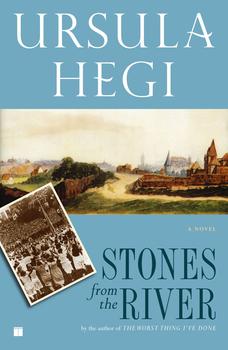
I started reading but didn’t finish And the Crows Took Their Eyes, by Vicki Lane and Stones from the River, by Ursula Hegi. I didn’t finish reading Vicki Lane’s book in October because it arrived at the end of the month. I didn’t finish the Ursula Hegi book because I had too many books to read, other distractions, and it had to go back to the library. You’ll have to wait for future blogs to learn what I thought of those and the other books I read in November, but I’ll go ahead and recommend And the Crows Took Their Eyes to anyone who enjoys historical fiction or American Civil War stories.

The Lions of Fifth Avenue, by Fiona Davis

After hearing Fiona Davis interviewed, I was eager to get on the public library’s waitlist for The Lions of Fifth Avenue. It took me a little while to “get into” this book but, once I did, I wanted to read on to see what happened next.

#libraries #NYCPublicLibrary
The Lions of Fifth Avenue, by Fiona Davis

As seems to be the trend in historical fiction today, the plot alternates between one era and another. I don’t like that format. I prefer to read a story in chronological order. I’m not sure what that says about me. The Lions of Fifth Avenue falls into that category. It switches back and forth between 1913-1914 and 1993.

The 1913-1914 story line interested me more than the other one so, after reading the first four chapters, I skipped all the 1993 chapters and read the remaining 1913-1914 chapters until I got to the end of the book; then, I went back to the fifth chapter and read bits and pieces of the 1993 parts of the book. I’m sure this isn’t the way in which the author expected me to read her book, but it worked for me.

In the “Author Note” at the end of the book, I learned that it was completely a fictional story with fictional characters. Ms. Davis explained that the New York City Public Library actually did have a seven-room apartment where the library superintendent’s family lived for several decades. Besides that, the book is fiction. It is a compelling story and I really wanted to get to the end to see who was stealing rare books from the library. Fortunately, that was revealed in the 1913-1914 thread of the book.

Cher Ami and Major Whittlesey, by Kathleen Rooney

I read about this book in an e-mail from Goodreads.com. The e-mail said, “If you loved A Gentleman in Moscow, you’ll loved Cher Ami and Major Whittlesey. Equal parts moving and charming, heartbreaking and funny, it will make you feel closer to humanity. Simply put, it’s a book that stays with you.” With that comparison and endorsement, I couldn’t wait to read the book.

#pigeons #CherAmi #WWI
Cher Ami and Major Whittlesey, by Kathleen Rooney

The story it was based on was new to me. It sounded interesting, so I checked out the e-book from the public library.

The story itself is impressive. Cher Ami was a homing pigeon that was much-celebrated in the 1920s and 1930s for its heroics during World War I. In fact, the bird was taxidermized after death and put on display in the Smithsonian Institution. Cher Ami was shot in the eye and lost a leg on her last mission. Even so, she completed that mission and lived for a couple of weeks afterward.

By finishing her last mission, Cher Ami saved the lives of almost 200 Americans.

Charles Whittlesey was from New York. Not attracted to guns, he nevertheless found himself shipping off for Europe when the United States entered World War I. Being the era that it was, he had to keep his homosexuality a secret. Whittlesey came home a war hero, but he struggled to adjust to life back in New York City. He purchased a one-way ticket on a ship and planned his own “burial at sea.”

The story itself is interesting, and I learned more about homing pigeons from the early chapters of this historical novel than I had before.

The book itself was quite disappointing. Some chapters are written from the pigeon’s point-of-view, while the other chapters are written from Charles Whittlesey’s viewpoint. I read one-third of the book before I started skipping over Cher Ami’s chapters.

Perhaps my mind isn’t creative enough to suspend belief and accept talking pigeons. To me, Cher Ami’s chapters read like a children’s book. I even stopped reading midway through the first chapter to see if I had checked out a Juvenile book by mistake. I hadn’t, so I tried to plow on. I soon concluded that I’d be better served by doing a little research about the story instead of continuing to read the conversations of talking pigeons.

One fact that the author conveyed via Cher Ami was probably more poignantly expressed by the taxidermized pigeon than could have been told by an objective narrator was the way in which the taxidermist chose to display the detail of the pigeon’s missing eye. Oddly enough, the taxidermist selected a glass eye of the wrong color for the bird’s missing eye. The taxidermized Cher Ami cleverly voices her disgust over the sloppy disrespect for detail and points out that it would have made a more accurate and impressive museum display to have presented the pigeon with its empty eye socket. After all, it was preserved with only the one leg that survived the war.

Cher Ami was one of more than 600 homing pigeons used by the US Army Signal Corps in France during World War I. An American battalion was surrounded in the Battle of Argonne Forest. They were under Allied fire and had no way but pigeons to get word out about their situation. On October 4, 1918, after other pigeons had been shot down in the effort, Cher Ami successfully delivered a message that saved almost 200 American lives. As noted above, she was shot twice in the process, but she kept flying to deliver her urgent message.

In that respect, Cher Ami and Major Whittlesey did what I expect historical novels to do: educate me. I appreciate that. I just didn’t enjoy the manner in which that education was delivered. The story enticed me to look for more information, which is something else I expect historical fiction to do.

Anxious People, by Fredrik Backman

Anxious People, by Fredrik Backman

I can’t honestly say I read this novel. I tried listening to it. The beginning held promise of an interesting tale about a bank robbery and a hostage situation. Perhaps it would have been more palatable in printed form. The irritatingly shrill voice of the female hostage real estate salesperson got on my last nerve early on. I tried to persevere but had to raise the white flag on this one. Sorry, Mr. Backman. I loved A Man Called Ove, but I just haven’t been able to stick with any of your other novels I’ve tried.

Since my last blog post

Photo credit: Element5 Digital on Unsplash.com

We’ve had a much-anticipated national, state, and local election since my last blog post. As I write this late on Saturday morning, it has just been announced that Joe Biden and Kamala Harris have been elected US President-elect and US Vice President-elect. What a relief! We have elected a person of empathy as President, and we have finally elected our first woman and first person of color to be Vice President. The proverbial glass ceiling has been broken.

My country is divided. The division demonstrated by the 2016 election continues, but I pray the pendulum has begun to swing toward decency and respect. For more than 200 years, gracious concession speeches have been expected from the candidates not elected in the United States. True to his form and lack of character, our current President vows not to take the results of this election quietly or gracefully. He will, no doubt, continue to sow seeds of discord in our country and world. He has vowed to fight the outcome of this election in the courts. He continues to claim it was a rigged election. He threatened to proclaim that falsehood well in advance of Election Day.

I look forward to having a new US President on January 20, 2021 – a President and a Vice President who will try to heal our nation and lead us back into a position of respect and reliability on the world stage. We can once again be a beacon of hope. It won’t happen overnight, and it won’t be easy. It will take a while for the world to trust us again.

My faith in the American people has been somewhat renewed by the outcome of this election; however, it wasn’t won by a landslide. Nearly half the population voted to continue down the road we were on. It won’t be easy to convince them that those of us who voted for Mr. Biden and Ms. Harris are not the evil people our current President proclaims us to be. They have believed many lies about us and we are exhausted from the rhetoric of hate that has been directed at us from the White House for the last four years.

We are exhausted from four years of vitriol, but we are energized today by the hope of a new era in which we once again have a President who truly believes in God and doesn’t just give faith lip service; who believes in freedom of the press and doesn’t see journalists as enemies of the people; who believes in science and medicine; who is antiracist; who will not put immigrant children who cross the border from Central America in cages and deport their parents; who will strive to enact policies that will preserve our physical environment for ourselves and future generations; who will work for social justice in our country and the world; and who will work to repair our relationships with our long-term friends and allies around the world.

For the hurt and disappointment being felt today by some of my friends and relatives who disagree with me on everything I’ve written in this blog post, now you know how I felt after the 2016 election. You’re still my friends, and you’re still my relatives. I still love you. Please give President-elect Biden a chance to prove he’s not an agent of evil. He’s not going to defund the police. He’s not going to take away your guns. He’s not a socialist. He will be the President of all Americans. He does not see you as his enemy or an enemy of the people. He will not call you ugly names. He will not get on Twitter and go on hate-filled rants. He will not make fun of physically-disabled people. He will not freely make misogynistic statements about women.

It feels good to be able to breathe again.

Until my next blog post

I hope you have a good book to read. I’m reading Vicki Lane’s new historical novel, And the Crows Took Their Eyes. I’m listening to John Grisham’s latest novel, A Time for Mercy.

I hope you have productive creative time.

Please continue to wear a mask out of respect for others until this Covid-19 pandemic is over.

Janet

Books about The 1665-66 Plague and The 1918 Flu Pandemic

It was coincidental that I read a book about the Bubonic Plague of 1665-66 and the 1918 Influenza Pandemic during the same month. Since the two books are about similar topics, I decided to blog just about them today.

The Great Influenza: The Story of the Deadliest Pandemic in History, by John M. Barry

The title of this book is a misnomer. I tried listening to the MP3 version, which was almost 20 hours long. There was a brief introduction about the Influenza Pandemic of 1918, but the book soon started giving the history of medicine. I kept thinking we’d get back to the flu pandemic, but I gave up four and one-half hours into the book.

If you’re interested in the history of medicine, it’s an interesting book. I learned a lot about the state of the medical profession in the United States in the 1800s. It made me glad I was born midway through the 20th century.

Perhaps if I could have stuck with it, I would have learned more about the Influenza Pandemic of 1918. I stumbled upon an interview Jake Tapper of CNN did with the author, John M. Barry, a few months ago. Mr. Tapper raved over the book. The interview is quite interesting and makes me want to check out the book again and read on from where I left off. Here a link to the interview: https://www.cnn.com/2020/03/27/politics/interview-john-barry-great-influenza/index.html.

Year of Wonders, by Geraldine Brooks

#BubonicPlague #1665Plague #1666Plague
Year of Wonders, by Geraldine Brooks

Year of Wonders is a novel set during the Plague of 1666. Geraldine Brooks was inspired to write it after a visit to England in 1991. She saw a sign about Eyam (pronounced “eem”) in Derbyshire, northwest of London. The sign indicated that Eyam was “the Plague Village.” Intrigued, this historical novelist delved deeper and began her research into the Plague.

I listened to the downloadable audio book, which was read by the author. The main character is a maiden named Anna who does her best to survive the pandemic and help others in the community. In reality, two-thirds of the people in Eyam died of the Plague. That’s a percentage that’s impossible for me to get my head around. The Covid-19 pandemic has been frightening enough.

The book gets into some of the superstitions of the era. Some people thought the Plague was punishment from God. They resorted to self-flagellation and burning all their clothes and possessions as a sacrifice.

Death via the Bubonic Plague is an excruciating way to die: Fever as high as 106 degrees F.; lymph nodes turned into dying, hemorrhaging tissue; and thrombosis. The World Health Organization reports 1,000 to 3,000 cases per year. Although rare, it still occurs even in the United States. It can be treated today with antibiotics, but there is no cure for Bubonic Plague.

After listening to the book, I borrowed the e-book from the public library so I could more easily reread portions of the book. In particular, I wanted to read the Afterword. I was happy to also find a Readers Guide after the Afterword in the Kindle edition. In fact, I’m temped to read such features as “Author Notes, “Afterwords,” and “Readers Guides” before reading historical novels in the future.

In Year of Wonders, the Penquin Readers Guide at the back of the book on Kindle is titled, “An Introduction to Year of Wonders.” It might have been more useful at the beginning of the book.

The “Introduction” tells how the Age of Enlightenment in Europe started in the 1600s. The human circulatory system was charted, bacteria were identified, and the compound microscope was invented. It was the dawn of modern medicine in many ways.

In the novel, a minister in Eyam in 1665, Michael Mompellion, decided that God had sent the Bubonic Plague to punish the village. He called for the residents to voluntarily quarantine themselves in their valley and suffer the consequences of their sins.

The most puritanical among them took to self-flagellation. As the situation worsened, the people turned on each other.

The heroine of the novel, Anna Frith, raises the existential questions circling around the origins of the plague. Anna surmised that if the villagers spent less time wondering why God was punishing them and more time trying to figure out how the Plague was spread, there might be a better outcome.

Anna said, “We could simply work upon it as a farmer might toil to rid this field of unwanted tare, knowing that when we found the tools and the method, and the resolve, we would free ourselves, no matter if we were a village of sinners or a host of saints.”

The word “resolve” jumped out at me. If we just resolve to do what we need to do to minimize the spread of Covid-19 until a vaccine or cure can be found, maybe we’d have a better outcome. Maybe we would stop turning on each other and stop making mask wearing a political statement.

In the “Introduction,” author Geraldine Brooks is asked about her research for the book. She answered, “The written record of what happened in Eyam during the plague year is scant. Apart from three letters by the rector, no narrative account from the year itself actually exists. The “histories” that purport to record the facts were actually written many years later, and historians have found inconsistencies that cast doubt on their accuracy. Therefore, there was no way to write a satisfying nonfiction narrative.”

The minister/rector in the novel, Michael Mompellion is based on William Mompresson, the minister in Eyam at the time of the plague. Ms. Brooks said, “There is nothing in the factual record to suggest that he behaved other than honorably throughout the village’s terrible ordeal.”

William Mompresson had a maid who survived the Plague, so Ms. Brooks chose her to be the narrator of Year of Wonders. Her inspiration for Anna Frith’s transformation from a probably quiet maid to becoming a leading force against the Plague were the Kurdish and Eritrean women she had reported on while a journalist.

In answering another question about her research for the novel, Ms. Brooks responded, “The unique thing about Eyam’s quarantine was that it was voluntary. I was able to find no other examples of such communal self-sacrifice. In London… the houses of plague victims were sealed and guarded, locking in the well with the ill, with no one to bring food, water, or comfort of any kind.”

The ending of the novel wasn’t believable to me. I decided to read some reviews of the book to see if others agreed with me. I discovered that the book has received many five-star reviews, but more than a handful of two-star reviews due to its implausible ending. Some reviews even suggest that you stop reading while you still think its an excellent book. Just skip the ending which transports Anna Frith from England into another country. The ending seemed contrived.

Since my last blog post

The transition from summer to fall temperatures, along with a day of tropical warmth and humidity thrown in thanks to the remains of Hurricane Zeta, has wreaked havoc with my fibromyalgia. (And people wonder why I have Seasonal Affective Disorder in the fall and winter!)

The limb that fell out of the oak tree in the front yard was so large and loud that a neighbor called to check on us. She said it sounded like a gun shot. We thought maybe it was another earthquake until the light from my flashlight revealed the source of the noise. That was the night before what was left of Hurricane Zeta ripped the top off one of our maple trees. It landed on top of the oak limb. That happened while we had gone to our basement out of an abundance of caution and waited out part of the five-hour power outage. Covid-19 pandemic or not, there’s never a dull moment.

As health, electricity, and motivation allows, my sister and I continue to proofread my Harrisburg, Did You Know? book manuscript. Recent computer corruption has caused us to proofread some 80 pages a second time. I haven’t figured out yet how five days of backing up to the external hard drive saved everything except the corrections made on those 80 pages. Two steps forward, and three steps back seems to be the way of things in 2020.

Until my next blog post

I will anxiously await the outcome of the elections here in the United States. Uncertain days lie ahead as baseless threats of voter fraud have been hurled from 1600 Pennsylvania Avenue long before tomorrow’s election day. It remains to be seen how ugly things will get post-election. I’ve never had uneasiness like this on the day before a presidential election in America. We’ve never had a sitting president stir up unfounded doubts about our electoral process leading up to an election before in our nation’s history.  

I hope you have one or more good books to read and peace and quiet that’s conducive to reading.

I hope your creativity will find a voice or other outlet this week. Find your passion.

Wear a mask! It’s a small thing we’re being asked to do for the overall public good.

Have you read either of the books I wrote about today? If so, what were your impressions of them? I’d like to know.

Janet