I write southern historical fiction, local history, and I've written a devotional book. The two novels I'm writing are set in Virginia and the Carolinas in the 1760s. My weekly blog started out to follow my journey as a writer and a reader, but in 2025 it has been greatly expanded to include current events and politics in the United States as I see our democracy under attack from within. The political science major in me cannot sit idly by and remain silent.
I really fell off the reading wagon in April! I
finished reading just one book because I was more or less obsessed with
rewriting my novel manuscript. Therefore, I don’t apologize for reading only
one book. I read parts of others that I hope to finish in May… or sometime.
A
River in Darkness: One Man’s Escape from
North Korea,
by Masaji Ishikawa
A River in Darkness: One Man’s Escape from North Korea, by Masaji Ishikawa
This is the book I listened to in April.
Masaji Ishikawa’s mother was Japanese. His father was
Korean. He didn’t fit in anywhere.
After World War II, there was an organized push to
convince such mixed families to move to North Korea. On the promise of a better
life – a paradise. Masaji Ishikawa moved there with his parents. It soon became
obvious that North Korea was no paradise. Life there would be fraught with hard
work, propaganda, and mass starvation.
When Masaji Ishikawa could take it no more, he made a
snap decision to attempt to escape. If he could make it back to Japan, he could
work and make enough money to somehow get his wife and children out of North
Korea.
A
River in Darkness is the true story of Masaji Ishikawa’s
life in Japan, the shattered dreams he and his parents endured in North Korea,
the many ways he tried to make a living as a young adult, and the desperation
for survival that forced him to escape North Korea against all odds.
Oh how I wish leaders in Washington, DC who praise Kim
Jong-un would read this book! There is so much they don’t know – or don’t care
to know.
Since
my last blog post
I hit a milestone in my writing since last Monday’s
blog post. On Wednesday, May 1, 2019 I completed the first rough draft of my
historical novel with the working title The
Doubloon. The word count was 85,275. It felt so good to come to “The End.”
I’ve left the manuscript on the back burner since
Wednesday night, so I can come at it with fresh eyes this week. The hard work
lies ahead.
Until
my next blog post
I hope you have a good book to read. I finally found a copy of The Waxhaws, by Louise Pettus, assisted by Nancy Crockett, that I could borrow from a library. The book is out-of-print, and the only used copy I’ve found online is available for more than $150.00; hence, my relief when I found one library copy that I could borrow.
If you’re a writer, I hope you have productive writing
time and will soon get to type, “The End.”
Thank you for
reading my blog. You could have spent the last few minutes doing something
else, but you chose to read my blog.
Let’s
continue the conversation
If you’re a writer, what is your favorite or least
favorite part of the process?
We’re told from birth that we can’t judge a book by its
cover. If we’re honest, though, we are drawn to interesting book covers. Bright
colors and images catch our eye, whether we pick up the book or not. Everything
I read about self-publishing says not to skimp on the cover. Fair or not, the
cover can make a big difference in how that book sells.
Today’s writing
prompt
Today’s writing prompt for the #TwoForTuesday blog challenge issued by Rae of Rae’s Reads and Reviews (https://educatednegra.blog/) is Two Books with Colorful Covers.
One book with a
colorful cover
The Favorite Sister, by Jessica Knoll
The Favorite Sister, by Jessica Knoll is a recent release by Simon & Schuster. In fact, I learned about this thriller in an email from the publisher.
I have not read this book, and I don’t know if I’d choose to read it just based on the cover. My parents never played favorites with my brother, sister, and me, as far as I could tell. Of course, that might be because I was the youngest. I wonder if my brother and sister would say I was the favorite sister. I don’t think I’ll ask them.
What triggered last Monday’s rant was an article I read on Janice Wald’s Mostly Blogging blog, https://www.mostlyblogging.com/seo-plan/. The name of the guest blog post by Kas Szatylowicz is “SEO Plan: How to Boost Traffic to Your Website In 2019, 7 Unique Ways.” It sounds like information I need, but it turned out to be light years beyond my grasp. That’s not a criticism of the article. I’m the one who fell off (or missed) the Social Media train.
Here are a few examples from the article that whizzed right
over my head.
“Can chatbots really
improve your SEO efforts?” According to the article, the answer is yes.
It went on to explain chatbots, so I did learn something. “A
chatbot – or digital assistant – is an artificial intelligence powered piece of
software that answers user queries in an instant. It also personalizes the user
experience and nudges the prospect closer to a sale simple by providing
answers.”
I laugh every time I read or hear that artificial
intelligence personalizes the user experience. It seems like an oxymoron to me.
Artificial personalization? I don’t think I want that on my website. You might
not get an instant response to a comment you leave on my blog, but at least
when you get one you’ll know I wrote it myself.
“Guest blogging. . . drives more traffic in the SERPs simply
because the link juice you gain will improve your rankings.” “Huh?”
“Topic clustering is the new black.” What?
“Lastly, don’t ruin everything by engaging in black hat SEO
practises.” (The writer’s spelling, not mine.) If I asked “What?” on topic
clustering being the new black, then I’ll upgrade that to “WHAT?” for black hat
SEO practices. I. Don’t. Have. A. Clue.
Maybe I’m better off not knowing. I have fewer things to
worry about.
Since
my last blog post
I’ve had a net gain of 13,700
words to my rewrite of The Doubloon manuscript, bringing my current
word count to 69,100. I get to start on Chapter 17 today!
Until my
next blog post
I hope you have a good book to
read. I’m reading The First
Conspiracy: The Secret Plot to Kill
George Washington, by Brad Meltzer and Josh Mensch. Fascinating!
If you’re a writer, I hope you
have quality writing time.
Look for my #TwoForTuesday blog post tomorrow: “Two Books with Colorful Covers.” Thank you for providing the writing prompt, Rae, in “Rae’s Reads and Reviews” blog. Here’s a link to her blog, https://educatednegra.blog/.
Thank you for reading my blog.
You could have spent the last few minutes doing something else, but you chose
to read my blog.
I’ve blogged before about my love/hate relationship with social media. Most of the forms of social media take me out of my comfort zone. Actually, that is an understatement.
Blogging
I enjoy blogging and interacting with people who read
my posts. I follow a lot of blogs and have benefited from them. I learn from
them, I’m inspired by them, and I’m entertained by them.
Facebook
Facebook comes in a distant second place. I really
don’t need to see a picture of what you ate for breakfast. The most redeeming
qualities of Facebook are that it gives me an easy way to stay in touch with
friends in Europe and family around the United States, and it gives me a way to
know the political leanings of some of my Facebook friends so I’ll know what I
can or cannot say to them in order to keep them as friends.
The down side is that I’ve learned things I wish I
hadn’t about some of my friends. Suffice it to say, if the topic of politics is
going to come up at my next high school reunion or family gathering, I don’t
want to be there.
Pinterest
I like Pinterest, but I haven’t put enough time into
it to make it a productive platform for my writing. I spend more time on
Pinterest than I should, but not necessarily to promote my writing. I pin many
articles to my “The Writing Life” board, but I use it more for the hobbies I
enjoy.
Twitter
I’m sure this sounds blasphemous to the young adults
who might read this post, but I’m not much of a cell phone person. I could
really do without it. I refuse to be ruled by a phone. I don’t want to be tied
to a phone. I don’t want a phone to monopolize my time, energy, or attention. I
want a phone available for emergencies – and I mean the old-timey understanding
of what an emergency is.
Instagram
I set up an account a couple of years ago and never
took the next step. Again, it’s related to my cell phone and its built-in
camera. I’m sure it’s convenient for many people. I just don’t get it.
All
the Social Media I’ve not heard of
I guess that’s self-explanatory.
Since my last blog post
I’ve had a net gain of 4,550 words to my The Doubloon manuscript,
bringing my current word count to 55,400. I get to start on Chapter 14 today. I
can’t wait!
Until my next blog post
I hope you have a good book to read. Nothing grabbed my attention last week.
I had to return The Irishman’s Daughter, by V.S. Alexander to the
public library without finishing it. I’m on the waitlist for it again so I can
finish reading it on my Kindle. Part of the problem is how tired my eyes get
reading regular size print. On my Kindle I can adjust the font size. This
historical novel is set in Ireland during the potato famine.
If you’re a writer, I hope you have productive writing time.
Look for my #TwoForTuesday blog post tomorrow: “Two Books that Encourage Change.” Thank you for providing the writing prompt, Rae, in “Rae’s Reads and Reviews” blog. Here’s a link to her April 1, 2019 blog post in which she listed all the #TwoForTuesday prompts for the month of April: https://educatednegra.blog/2019/04/. Thank you for reading my blog. You could have spent the last few minutes doing something else, but you chose to read my blog.
In my blog on Monday, April 29, 2019 I’ll explain what triggered today’s rant.
Let’s continue the conversation
What’s your favorite of all the social media? What’s your least favorite?
Share your thoughts in the comments section below.
For today’s blog post, I’m going back 20 years to remember a delightful children’s book my sister and I enjoyed reading to one of our great-nieces when she was a little girl. That book is still being published, and I’m thrilled because it is a hilarious children’s book.
The reader and the child being read to get to make all sorts of pirate sounds. The book is How I Became a Pirate, by Melinda Long. In addition to a very entertaining narrative, the book has wonderful illustrations by Caldecott Honor illustrator David Shannon.
I was in Park Road Books in Charlotte, North Carolina
last week and was thrilled to see this book on the shelf. It immediately
brought a smile to my face and then the memories flooded in.
Shiver me timbers! Aargh! The illustrations will entertain a child (and an adult!) for hours. I have been unable to import a photo of the cover of How I Became a Pirate into today’s blog post. Technical difficulties. That’s too bad because seeing the cover would give you an idea of the illustrations within the book.
The
Complete Humorous Sketches and Tales of Mark Twain, edited by Charles Neider
The Complete Humorous Sketches and Tales of Mark Twain, edited by Charles Neider
Another book that makes me smile is The Complete Humorous Sketches and Tales of
Mark Twain, edited by Charles Neider. The copyright date on it is 1961, and
that’s probably about when I received it as a gift. I just realized that was 58
years ago! I was eight years old and had apparently just discovered the humor
of Mark Twain. I became a lifelong fan. From my lopsided signature on the
flylead, I can tell I received it as I was learning to write cursive. Second
grade.
Flipping through this collection of Mark Twain
writings makes me smile because I was no innocent in 1961 and got to read the
book for sheer enjoyment. I read this a mere 90 years or so after Mr. Twain
wrote the pieces. That seemed like a million years to an eight-year-old, but
not so long to me now.
Something else about the book made me smile today as I
looked through it. We had a rule in our house:
you don’t write in a book and you don’t underline in a book. Books were
sacred and to be damaged under no circumstances. (The same went for Daddy’s National Geographic magazines. No matter
what the school assignment was, I knew not to cut pictures out of National Geographic. I doubt I could
take a scissors to a National Geographic
to this day. Some things are just beyond the pale.)
So what made me smile today as I went through the
book? On page 43, beside the story title, “A Touching Story of George
Washington’s Boyhood,” I had printed in very light lead pencil, “Satire?” I
found the same marginal note on page 49 next to “Answers to Correspondents.”
There it was again, minus the question mark, (I must have been gaining confidence
in identifying satire) on pager 59 next to “A Page from a California Almanac.”
I guess I lost interest in satire on page 59 because I
can find no more marginal notes in the book. Thank goodness I didn’t use it to
practice diagramming sentences! Do student still have to do that?
The following entry in “Answers to Correspondents”
made me laugh today because it brought back memories of those dreaded “word
problems” we had to do in arithmetic. I believe that’s known as math today.
Here’s the entry: “’Arithmeticus.’ Virginia, Nevada. – If it would take a
cannon-ball 3 1/3 seconds to travel four miles, and 3 3/8 seconds to travel the
next four, and 3 5/8 to travel the next four, and if its rate of progress
continued to diminish in the same ratio, how long would it take it to go
fifteen hundred million miles?” Twain’s answer:
“I don’t know.”
I can identify with that answer.
This is a 716-page book, plus appendix and index. I’m
sure it was the first thick book I owned. I’m glad I still have this treasure
from my childhood.
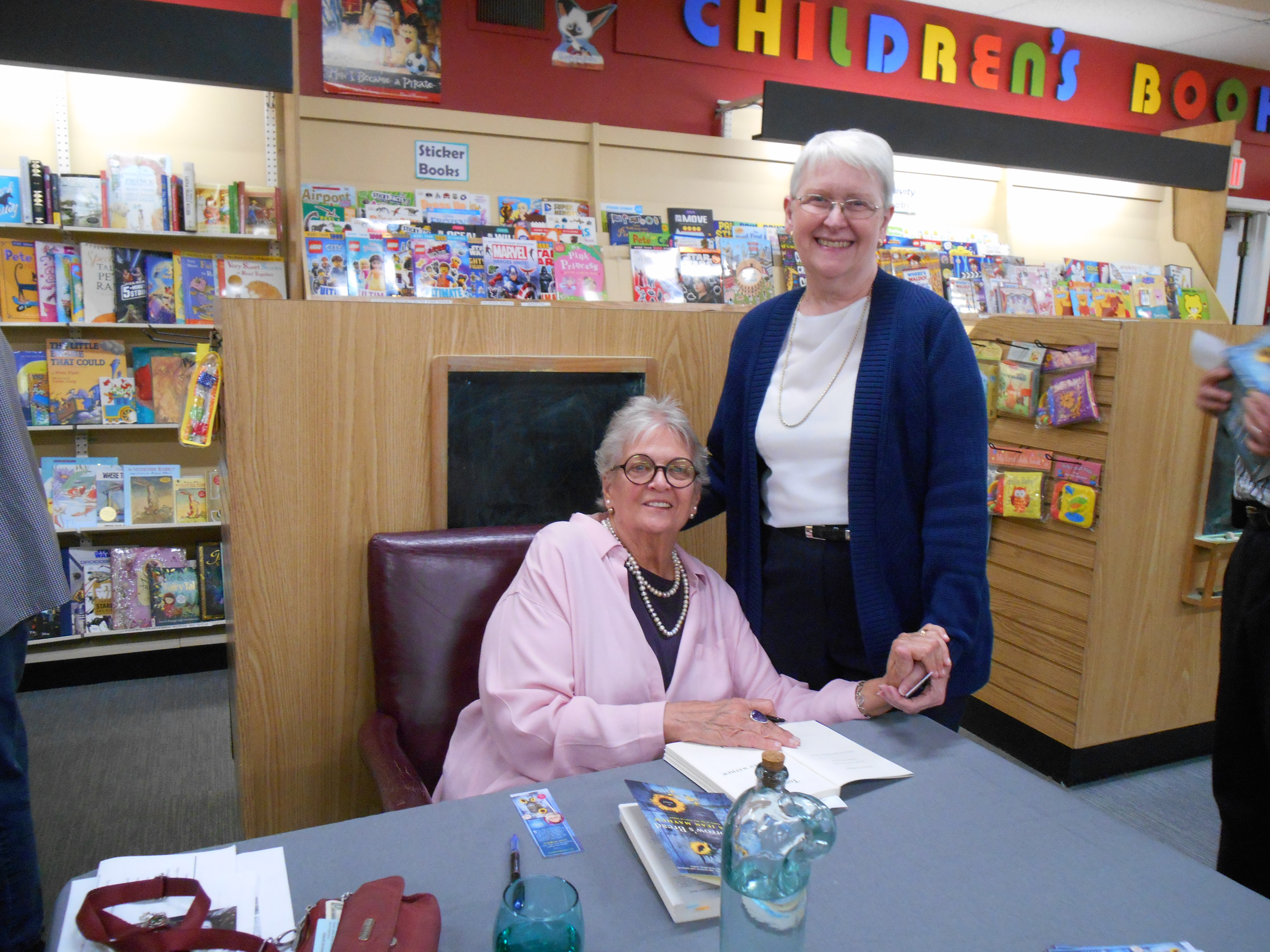
Anna Jean Mayhew, author of The Dry Grass of August and Tomorrow’s Bread
If you’ve been following my blog for a few years, you
know I love nothing better than attending an author’s book reading and signing.
After not getting to one in a long time, on April 4, 2019 I had the pleasure of
attending Anna Jean Mayhew’s at Park Road Books in Charlotte, North Carolina.
I thoroughly enjoyed her reading at Park Road Books.
She read selected excerpts from the book and talked about the three narrators.
She also played a song written specifically in conjunction with Tomorrow’s Bread and had copies of the
words for all in attendance.
If you’d like to listen to the song and see the accompanying artwork, go to http://shari-smith.com/trio-2019/ and scroll down to Tomorrow’s Bread. The song and artwork came together with Ms. Mayhew’s book through the work of Shari Smith and an entity called Trio.
Trio pairs books with songwriters and visual artists to create a total package based on a novel. I hadn’t heard of Trio or Shari Smith before, so I was thrilled to learn about this concept at Ms. Mayhew’s book reading in Charlotte.
Many of her high school classmates and other friends
from when she lived in Charlotte were there, as well as Catherine Frey, who had
assisted Ms. Mayhew with her research.
Janet Morrison with Anna Jean Mayhew at Park Road Books in Charlotte, NC
I was delighted to renew my acquaintance with Ms.
Mayhew. When I got the chance to talk to her at the end of the event, she again
offered me encouragement on the writing of my historical novel. She has been an
inspiration to me on my journey as a writer.
Since
my last blog post
I have enjoyed rewriting several more chapters of The Doubloon (former working title, The Spanish Coin) and forgive me if I toot by own horn here. Since last Monday’s blog I’ve had a net gain of 20,525 words. The current word count is 50,850. I’m more than halfway to the completion of this rough, rough, rough draft of my novel.
Until
my next blog post
I hope you have a good book to read.
If you’re a writer, I hope you have productive writing time and your
projects are moving right along.
Look for my #TwoForTuesday blog post tomorrow: “Two
Books that Make Me Smile.” Thank you for providing the writing prompt,
Rae, in “Rae’s Reads and Reviews” blog. Here’s a link to her April 1, 2019 blog
post in which she listed all the #TwoForTuesday prompts for the month of April:
https://educatednegra.blog/2019/04/01/april-two-for-tuesday-prompts/.
Thank you for reading my blog. You could have spent the last few minutes
doing something else, but you chose to read my blog.
Let’s continue the conversation
Have you read Tomorrow’s Bread, by
Anna Jean Mayhew? If so, please share your thoughts in the comments section
below or on Facebook.
Have you attended any author book readings or book signings? What do you
like best about such events?
This is not an April Fool’s Day joke. I read six books
in March. Six. I set the bar high for myself by reading ten books in February,
but I could only manage to read six in March. Today’s blog post is about three of
those books. All three are newly-released historical novels.
Tomorrow’s
Bread,
by Anna Jean Mayhew
I eagerly awaited this second novel by Anna Jean
Mayhew, and it was well worth the wait! Tomorrow’s
Bread was released on Tuesday.
Tomorrow’s Bread, by Anna Jean Mayhew
I love the main characters! Ms. Mayhew weaves the
stories of several families together in Tomorrow’s
Bread. She puts names and faces on the destructive aspect of Urban Renewal,
which was a program funded by the U.S. Government in the 1960s to remove “blight”
from inner cities
Although I was only eight years old in 1961 when the removal
of the Brooklyn neighborhood in Charlotte, North Carolina began, I remember the
segregated era on the cusp of the Civil Rights Movement.
I know the main streets referenced in Tomorrow’s Bread. I have traveled them
all my life and, as a young adult, was employed in several offices that were
built as a result of Urban Renewal. I remember separate water fountains for “white”
and “colored” in department stores and the so-called “separate but equal”
segregated schools.
I remember riding on racially-segregated Charlotte
city buses. I clearly remember the time my mother and I got on a bus for me to
go to the doctor. All the seats for whites were taken and I didn’t understand
why we couldn’t sit in the back of the bus where there were vacant seats. The
reverse must have been equally confusing for little black children.
In 1961 I was too young to understand segregation or Urban
Renewal and, being white, I didn’t have to understand it.
Tomorrow’s
Bread, by Anna Jean Mayhew, is a must read for anyone living
in the Charlotte area – especially the young people and those new to the area.
To understand some events of today, it’s beneficial to know the history of the
city.
Although only someone who lived in the Brooklyn
section of Charlotte’s inner city could state this with authority, but as an
outsider, I think Ms. Mayhew captured the essence of a place and time not so
long ago in our history – yet a place that is gone forever.
Tomorrow’s
Bread made me stop and think – like I never had before –
about the people who were displaced by Urban Renewal as real flesh and blood
individuals. They went from living in a sustainable neighborhood with grocery
stores, a doctor, a library, and a church all in walking distance to having to
look for affordable housing in neighborhoods that offered none of those things.
Loraylee, Hawk, Rev. Eben Polk, Bibi, Uncle Ray, and Jonny No Age will stay
with me for a long time.
Thank you, Anna Jean, for writing this novel and for
prompting me to give serious thought to a time and federal program in the 1960s
that – in the name of giving people a better life – demolished their homes,
businesses, and churches and split up families that had been neighbors and
friends for generations. It’s not a pleasant read, but it’s a story built
around fictional characters you will love and pull for.
Now, I want to know what happened to Loraylee, Hawk,
and Archie. Is there a third book in the works, Anna Jean?
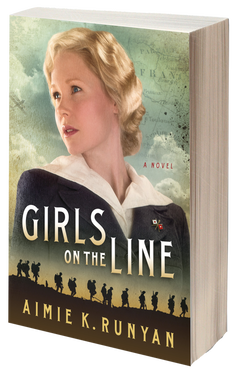
Girls
on the Line,
by Aimie K. Runyan
This is a historical novel about “the hello girls” –
the women who served as military switchboard operators in France and Germany
during World War I. The service these women provided was an integral part of
the Allies’ ability to defeat Germany in the War. It was something I was not
aware of, although I’ve studied history and minored in history in college. It
just goes to show how women’s contributions have often been ignored or
minimized.
Girls on the Line, by Aimie K. Runyan
I listened to this audio book and found myself
listening to “just one more chapter” (and then a couple more) before going to
bed at night. I hated to see the book end. It followed Ruby, an experienced
telephone switchboard operator, and the six women she supervised in France.
Ruby’s brother had been killed in the War and joining the US Army Signal Corps
was her way of honoring his memory.
The book tells how the military switchboard operators
had to go through rigorous training and had to memorize new codes daily in order
to do their jobs. They worked long hours and were always under stress as it was
their duty to make sure they correctly and efficiently connected phone calls
between generals and other officers.
These women were denied military benefits by the US
Army until 1979 – 60 years after their service. Sadly, only 28 of the 228 US
Army female switchboard operators lived to see that day.
The story line of the book includes Ruby’s being torn
between her less-than-exciting fiancé and the Army medic she met and fell in
love with in France. Some of the dialogue between Ruby and Andrew, her new
love, is a little sappy but other than that I thoroughly enjoyed the book.
The
Glovemaker,
by Ann Weisgarber
I had the pleasure of hearing Ann Weisgarber speak
several years ago at Main Street Books in Davidson, North Carolina. Her novel, The Promise, had just been released. I
purchased a copy, but time got away and too many library books kept coming into
my house. Long story, short: I haven’t
read The Promise yet. In fact, The Glovemaker is the first of Ms. Weisgarber’s
novels that I’ve read. I want to read all of them.
The Glovemaker, by Ann Weisgarber
Having visited Capitol
Reef National Park in Utah, I could really picture in my mind the setting for “The Glovemaker.”, Fruita, (formerly,
Junction) Utah is a stark place As I recall from my visit there in 2002,
there’s nothing there today but an orchard, an old schoolhouse, and a picnic
table – along with sheer rock cliffs, interesting rock formations, dry creek
beds, and no trees to speak of aside from the orchard.
I learned some things
about Mormons that I hadn’t known before — that there was an underground
railroad-type network that assisted Latter Day Saints to a place of safety when
they were being tracked down for prosecution for polygamy. I love it when I
learn something about history when reading a novel!
The book paints a
picture of the hard life the early settlers in that part of Utah had in the
1880s. My heart broke for Deborah Tyler and her brother-in-law, Nels. Deborah
watches each day for her husband’s return from his traveling wheelwright work
in southern Utah, but the weeks turn into months. Nels loves Deborah but cannot
have her because she is married.
There is suspense when
a stranger appears at Deborah’s door seeking directions to the safe place and
when the US Marshal comes looking for that stranger. Deborah and Nels are
forced to lie and keep secrets due to the conflict between Mormons and
non-Mormons and the law.
There is also tension
among the eight households in Junction due to the secrets being kept and due to
differences of opinion about polygamy and other The Church of Jesus Christ of
Latter-Day Saints doctrines and practices. Add to that the bitterly cold
weather and snow and you have a recipe for good historical fiction.
Since
my last blog post
The word count for my The Doubloon manuscript stands just shy of 22,000. That’s a net
gain of nearly 8,000 words since last Monday. I had a good writing week last week.
Until
my next blog post
I hope you have a good book to read.
If you’re a writer, I have you have
quality writing time and your projects are moving right along.
Thank you for reading my blog. You
could have spent the last few minutes doing something else, but you chose to
read my blog.
Let’s
continue the conversation
Have you read any of the books I talked about today?
If so, please share your thoughts with me. Have I piqued your interest in
reading any of these books?
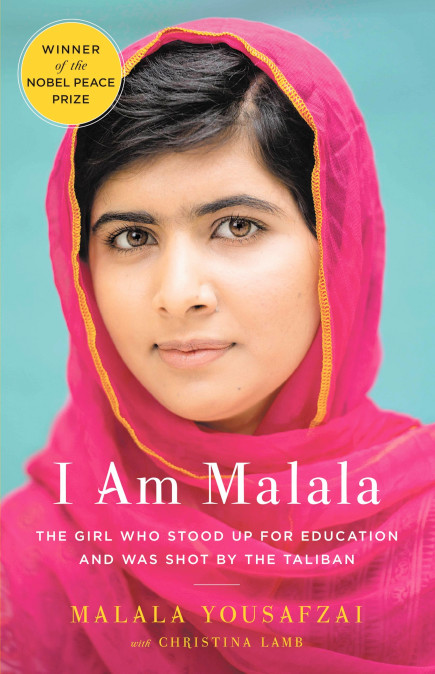
In preparation for today’s #TwoForTuesday challenge I read quotes by many inspirational women. It was a difficult choice, but I selected quotes by Malala Yousafzai and Mary Frances Berry.
Malala Yousafzai
Malala Yousafzai is one of the most inspirational women I know – and has been since she was still a child. I love this quote by her:
“Let us remember: One book, one pen, one child, and one teacher can change the world.”
Malala is proof of that!
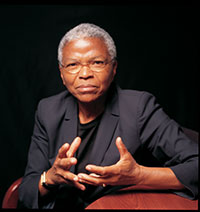
Mary Frances Berry
Mary Frances Berry is an icon of the American Civil Rights Movement and a historian. Here’s the quote of hers I chose for today’s blog post:
“The time when you need to do something is when no one else is willing to do it, when people are saying it can’t be done.”
Wow! Where do I start? Although it was the shortest month of the year, February was jam-packed with good books. I read a variety of fiction, nonfiction, memoir, and “how-to” books.
Truth be known, I started reading several of the books in January and finished them in February. Each one probably warranted its own blog post, but I’ve condensed my thoughts into two blog posts – today’s and the one on March 11.
Here’s what I thought of each book, in no particular
order:
Before
and Again, by Barbara Delinsky
Before and Again, by Barbara Delinsky
I enjoyed this novel by Barbara Delinsky about a woman,
Mackenzie Cooper, who runs a red light and causes an accident in which her
five-year-old daughter is killed. The event results in a divorce and an
estrangement between Mackenzie and her mother.
In an effort to leave her sad past behind and start a
new life, Mackenzie moves from Massachusetts to Devon, Vermont and adopts a new
name. Things go well for her until her ex-husband shows up in the small town
where Mackenzie lives. It turns out that Mackenzie isn’t the only resident of
Devon living with a secret.
I gave this story of forgiveness four stars on
Goodreads.com. I was surprised to see many two-star ratings for it on that
site. With an average rating of 3.5 stars out of 5, from the reviews, it
appears people either really like it or don’t.
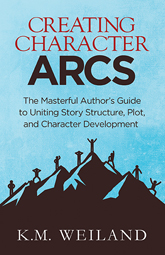
Creating
Character Arc: The Masterful Author’s
Guide to Uniting Story Structure, Plot, and Character Development, by K.M Weiland
Creating Character Arcs, by K.M. Weiland
This book is an invaluable resource for anyone writing
fiction. It helped me focus on the protagonist in the novel I’m writing and
organize her journey step-by-step throughout her story. The questions Ms.
Weiland included in her book helped me to know my main character better, which
enables me to write with more confidence than I had before.
If you’re learning to write fiction, I highly
recommend Creating Character Arc: The Masterful Author’s Guide to Uniting Story
Structure, Plot, and Character Development, by K.M Weiland. Or perhaps you
are a fan of fiction and you’re curious about the structure of a good novel.
Then, I think you’ll find this “how-to” book interesting.
A
Week in Winter,
by Maeve Binchy
A Week in Winter, by Maeve Binchy
This book was a bit of a surprise for me. A Week in Winter, by Maeve Binchy was
the January selection for the Rocky River Readers Book Club. Since it’s not
historical fiction, suspense, or a mystery, I didn’t expect to like it as much
as I did. That’s one of the good things about being in a book club. Sometimes
members are exposed to a book genre they wouldn’t usually select for
themselves.
Although I rarely listen to an audio book, an episode
of vertigo prompted me to borrow the book on CD from the public library. The
accent of professional reader, Rosalyn Landor, was delightful and helped to
keep the setting in Ireland clearly in mind. The fact that I enjoyed listening to a novel was a bonus.
The author, Maeve Binchy, was a master of
characterization. Each character has such a unique backstory or quirk, you’ll
have no trouble keeping them straight in your head. In A Week in Winter, each of the ten chapters tells the backstory of a
different guest or pair of guests at The Stone House on the west coast of
Ireland. Ms. Binchy weaves their stories together perfectly as she brings them
all together as guests at the inn the first week the old house was open for
business.
The
Midwife’s Confession,
by Diane Chamberlain
The Midwife’s Confession, by Diane Chamberlain
After enjoying listening to the Maeve Binchy book, I
decided to give the audio version of The
Midwife’s Confession, by Diane Chamberlain a try. Ms.Chamberlain weaves
quite a complicated story and cast of characters together in this novel set in
Wilmington, Chapel Hill, and Robeson County, North Carolina.
One of three close friends commits suicide, leaving
the other two women trying to find clues as to why Nicole felt that taking her
own life was the only option she had. Layer by layer they peel back the parts
of Nicole’s past they knew nothing about.
There was a horrible accident with a baby Nicole
delivered as a midwife. What choice did Nicole make after the accident that
changed the course of not on her life but also the lives of other families?
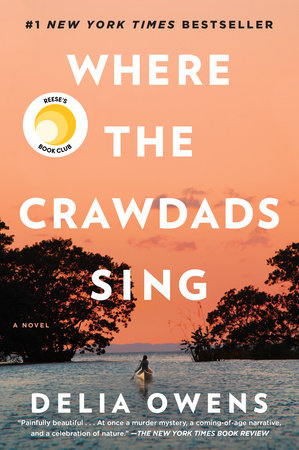
Where
the Crawdads Sing,
by Delia Owens
Where the Crawdads Sing, by Delia Owens
The prose in this book is beautiful. Delia Owens
writes about the fauna of the marshlands of the North Carolina coast from a
place of scientific expertise. This is her debut novel, but she has co-authored
three nonfiction books about nature in Africa. She worked in Africa as a
wildlife scientist but now lives in Idaho.
As an aspiring novelist, I’ve been cautioned about
using dialect in my writing. A little bit of it can help put the reader in the
location and time of the story; however, using it too much makes the reading more
difficult and slow and also pulls the reader out of the story. Where the Crawdads Sing is a perfect
example of this mistake.
I loved the descriptions of the wildlife native to the
marshes of coastal North Carolina. Ms. Owens painted such a pictures with words
that I could have visualized the marshes even if I’d never seen coastal
Carolina marshlands.
I loved the story in Where the Crawdads Sing. I was interested in the main character,
Kya, from the beginning. It was a real “page turner” due to the life Kya lived
and the strong character she was. I devoured the book in 48 hours; however, the
dialect was over the top. There was just too much Southern and African-American
dialect. The dialect repeatedly slowed me down and pulled me out of the story.
If not for the excessive dialect and the Confederate
battle flag being in the county courtroom in 1970, I would have given it six
stars out of a possible five.
Until
my next blog post
I hope you have a good book to read. I’m reading/listening
to The Glovemaker, by Ann Weisgarber;
Jacksonland, by Steve Instep; and Girls on the Line, by Aimie K. Runyan.
If you’re a writer, I have you have productive writing
time and your projects are moving right along.
Thank you for reading my blog. You could have spent the last few minutes
doing something else, but you chose to read my blog.
Let’s
continue the conversation
Have you read any of the five books I talked about
today? If so, please share your thoughts with me. Have I piqued your interest
in reading any of these books?
I’ve enjoyed participating in the #TwoForTuesday blog
prompts in February and can’t wait to see what Rae of Rae’s Reads and Reviews
has in store for us in March. Today’s prompt was “Two books that Help you sleep
at night.”
If you’ve followed by blog for a few months, you know that I suffer with insomnia. My sleep is way out of whack. I have trouble staying awake during the day and trouble going to sleep at night. My doctor has referred me to a sleep coach. Yes, it’s gotten that bad.
When challenged to write about two books that help me sleep
at night, I was hard-pressed to come up with a response. The “two” I settled on
are The Bible and just about any audio book. I know – that’s more than two
actual books and not very specific, but they’re what I came up with.
1. The Bible
The Message, by Eugene H. Peterson
This isn’t just the correct “Sunday School” or children’s sermon answer. This is my real answer. My nighttime insomnia aside, the book that allows me to give my troubles and worries to God so I’m not tossing and turning and wringing my hands is The Bible. I still do more than my share of tossing and turning, but it’s not because I despair.
I find The Message: The Bible in Contemporary Language the easiest to understand and, therefore, the most comforting. The Message is a paraphrase of The Bible and was written by Presbyterian minister Eugene H. Peterson.
2. Just about any audio book
Until recently, I swore off
listening to any books. I found it stressful. I felt like someone was talking
“at” me and wouldn’t shut up. Got on my last nerve kind of stress.
Then, I got vertigo. In fact, I had two kinds of vertigo. One has cleared up, but the other still has me in physical therapy. Using the computer and reading tend to trigger an episode. Therefore, I’ve listened to two audio books so far this month plus part of a third. Even the ones I enjoy, eventually put me to sleep.