A Wake-Up Call for this Blogger

When I started Janet’s Writing Blog more than a decade ago, I didn’t know what I was doing. I had not read many blogs, but I thought I was ready to jump in and write my own after being prompted by my niece’s husband. Craig is much more tech savvy than I. He designed my website as it served me well for 20 years. His interests, time, and business responsibilities changed over the years, so in January 2023 my website was redesigned by Carolina Custom Designs.

My blog floundered for several years in the beginning as I tried to find my niche. I played around with how often to blog and how long a blog post should be. Things have gone more smoothly since I settled on posting every Monday.

Photo by Kaitlyn Baker on Unsplash

I have slowly realized the potential my blog. In fact, I know I haven’t yet fully understood its potential.

It astounds me that people all over the world read my blog! In January 2024, for example, people in 36 countries read my blog.

I’m fortunate to live in the United States of America where I have freedom of speech and freedom to read anything I want.

I don’t want to run out of subject matter. I usually plan my blog post topics as much as a year in advance, but this year my editorial calendar just isn’t coming together like it has in the past.

Should I make some changes in my blog?

Last year was a busy year of getting my website redesigned; starting a newsletter in March; offering a free downloadable copy of my short story, “Slip Sliding Away” to everyone who subscribes to my newsletter; publishing a local history book, Harrisburg, Did You Know? Cabarrus History, Book 2; publishing my first ghost story, “Ghost of the Battle of Guilford Courthouse: An American Revolutionary War Ghost Story”; and, with my sister, Marie, published a cookbook, The Aunts in the Kitchen: Southern Family Recipes.

With all I had going on, I failed to keep expanding my editorial calendar. Having Covid in December, a health scare of a different nature at the same time which lapped over into January, and intermittent internet and telephone service for two weeks after a January 9 storm, I was in a mental fog until the first week in March. I do have the next four weekly blog posts planned and partially written; however, some weeks in the rest of 2024 need to be fleshed out.

More than 1,100 “follow” my blog, but most of them probably don’t read it every week. I try to keep in mind that although I have some loyal readers every week, there is always the chance (and hope!) that this will be the week when someone reads my blog for the first time. What can I write this week that will please my regular readers but also grab the attention of a first-time reader so much that they become a subscriber?

I don’t want to bore my loyal readers with references to my books, short stories, and website; however, I want that new reader to be aware of what I’ve written. It is a delicate balancing act.

What Ryan Lanz says a blogger should do

A list I keep in front of me as I plan my blog topics is Ryan Lanz’s “22 Ways to Impress a First-Time Blog Reader With Any Post.” Lanz sets the bar high! I don’t have Mr. Lanz’s permission to quote his list, but I’ll throw out several items on the list to give you an idea of what a blogger is challenged to do with every post:

  • “Tell them something they don’t know.”
  • “Tell them something they DO know.”
  • “Help them solve a problem.”

It only gets more challenging as you read the other 19 items on his list! The one that always trips me up is number 3. I have a feeling in my more than 13 years of blogging, I have probably never solved anyone’s problem! I just don’t see that as my responsibility.

My plan

The first months in a calendar year tend to prompt us into new beginnings and reflection. That’s what I will continue to do over the coming weeks, and I hope I’ll find enough topics of interest to keep blogging every Monday for the foreseeable future.

Stay tuned.  Next week I will blog about the books I read in April.

Until my next blog post

I hope you have a good book to read.

If you are a blogger, you can probably identify with today’s post.

Don’t forget the people of Ukraine.

Remember to subscribe to my e-newsletter before the May issue if you want to learn about an on-going archaeological dig in North Carolina! Just visit https://www.janetmorrisonbooks.com and click on “Subscribe.” My thank-you gift to you is a downloadable copy of my historical short story, “Slip Sliding Away.”

Janet

What Are You Passionate About?

I am working my way through How to Write The Short Story, by Jack M. Bickham. As the title indicates, it is a book I expect to enhance my short story writing skills. However, the first 14 pages surprised me by offering self-inventory guidelines that I think anyone – not just writers – can benefit from practicing.

Mr. Bickham was the author of 75 novels and a host of books about the craft of writing.

It would not be fair to the current owner of Mr. Bickham’s copyright to the book for me to list all 10 steps in his guidelines for self-evaluation, but I’ll try to hit enough high spots to pique your interest even if you aren’t a writer.

Since I thought I could read this 200-page book in several days, imagine my surprise when I spent that amount of time working my way through the first 14 pages!

The root premise of How to Write The Short Story is that writers cannot write to their best form without knowing what they are passionate about deep down inside. The book systematically walks the reader through Mr. Bickham’s theory of how to do a thorough self-evaluation.

The secondary premise of the book is that once writers seriously go through this exercise and the remaining recommended steps in the book, they will be able to draw on their responses to write any story.

Mr. Bickham recommends jotting down on index cards (the book was published in 1994 when personal computers were still in their infancy) the reader’s responses to the series of questions he provides. He wants this information to be written in a form that can be accessed occasionally to remind yourself what makes you tick. Your responses might be added to or deleted as you live your life.

Mr. Bickham also strongly recommends that you not move on to the next step until you have completed the prior step. Even so, I don’t think I should take the liberty of listing all 10 steps. From the five steps I’m listing, you will get the jest of the exercise and perhaps be interested enough to look for the book.

Photo by Simone Secci on Unsplash

Step 1

The first step in this self-evaluation is to write down 10 “things or ideas or places or actions that you feel very deeply about.” You might want to stop reading this blog post and do this step. You need to take your time and really think about what you feel deeply about. You might easily think of three to five things, but then it can take some thought to come up with the other five to seven ideas or places or actions. If taken seriously, this should prompt you to identify your core values.

Step 3

What are five ideas or concept in which you deeply believe? This is different from Step 1, but there will probably be some overlap.

Step 8

Write a paragraph about an event that brought you great sadness.

Step 9

Describe “a time and place that made you very angry.”

Step 10

Write about “a time and place that frightened you.”

I found this exercise helpful, did you?

If you are like me, it has been a long time – if ever – that you took the time to honestly address the above questions and requests.

Did you discover any surprises?


Since my last blog post

I have added several thousand words to the manuscript for The Heirloom after finding some historical information that was helpful and specific to the story. It was rewarding to put words on the page.

I visited Hart Square Village in Vale, North Carolina once again. I took a lot of pictures, learned about the composition of daubing used by the early settlers in the Catawba Valley, and learned about the best practices there today for the preservation of 200-year-old log structures. Again… useful for me to know as a writer of southern colonial American history.


Until my next blog post

Get back to that book you started reading but put aside.

Remember the people of Ukraine.

Janet

The Other Three Books I Read in March 2024

As promised in my April 1, 2024 blog post, Three of the Six Books I Read in March 2024, today I’m blogging about the other books I read last month. I received some comments of interest two weeks ago, and I hope you will also find some books you want to read today.


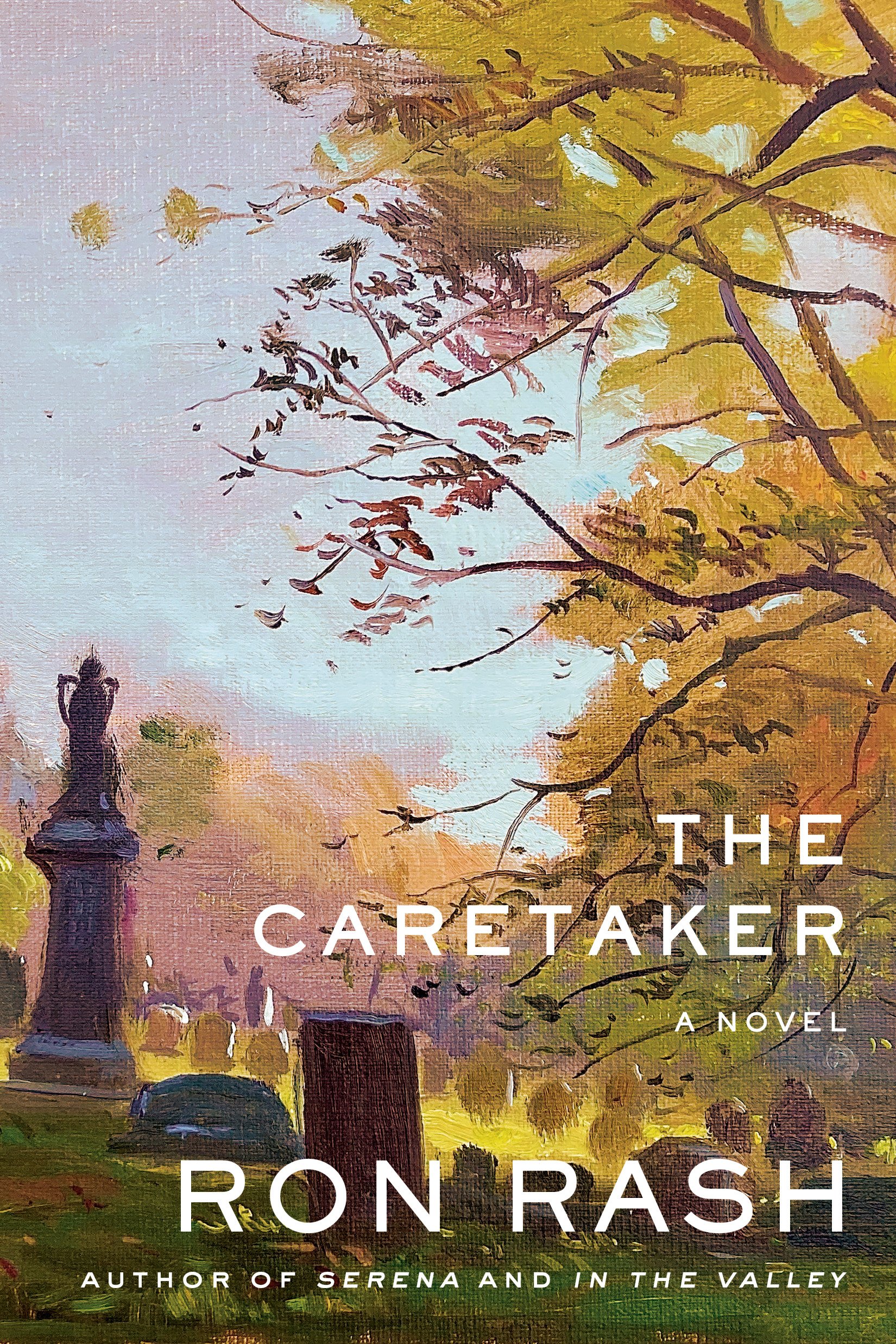
The Caretaker, by Ron Rash

The Caretaker, by Ron Rash

I have read most of Ron Rash’s novels. Some I liked more than others. This one is my favorite.

The Caretaker fell off my radar somehow after its 2023 release. It wasn’t until I read a review of it on the Fiction Fan Blog (https://fictionfanblog.wordpress.com/2024/03/04/the-caretaker-by-ron-rash/) in mid-March that I realized I’d failed to read it.

The Caretaker is shorter than his other novels at 252 pages. It takes place during the Korean War and is an examination of family and friendship in the small Blue Ridge Mountain town of Blowing Rock, North Carolina.

Having attended college at Appalachian State University just eight miles up the mountain from Blowing Rock, I was familiar with the place names and surnames Rash used in the book. For example, references to the Brown Mountain Lights brought back a fond memory I have of the time I got to see that natural phenomenon for myself many years ago.

In The Caretaker, Rash weaves a gripping story of the things people are capable of doing in the name of love for family. Jacob is drafted and sent to Korea where he almost gets killed. His desire to get home to his wife and their unborn child gives him the fortitude to try to beat the odds and not die from the injuries he sustained.

Jacob leaves his good friend, Blackburn, the caretaker of the church and cemetery, to look out for his wife while he is deployed.

The story Rash weaves about what Jacob’s conniving parents do in the name of loving him while he is in Korea will make you gasp! You will keep turning the pages to see just how this bizarre turn of events will end.

I really enjoyed this book, and I hope you will check it out.


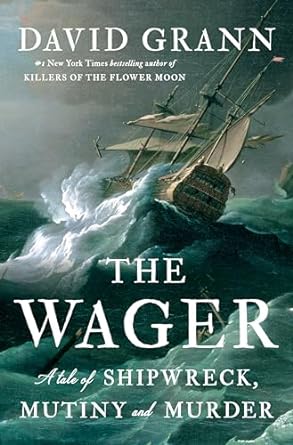
The Wager: A Tale of Shipwreck, Mutiny and Murder, by David Grann

The Wager: A Tale of Shipwreck, Mutiny and Murder, by David Grann

This book was voted by readers on Goodreads.com as being the “Best History & Biography” in 2023. Many of you have probably read Killers of the Flower Moon, also by David Grann, or perhaps you saw the movie adaptation. David Grann is a master at writing creative nonfiction – nonfiction that reads much like fiction.

I listened to The Wager: A Tale of Shipwreck, Mutiny and Murder on CD. The story kept me reaching for the next disc as soon as I finished listening to another one. The audio reading was done by Dion Graham. Mr. Graham did a spectacular job of reading this book for the recording. The written words and the verbal inflections of the voice made for a memorable listening.

The Wager was the name of a British ship. In 1740 it left England as part of a squadron on a secret mission to chase a Spanish ship laden with treasure around Cape Horn and hunt down Spanish interests in the Pacific.

Rounding the cape was thrillingly and shockingly illustrated by tales of the vengeance of the meeting of the Atlantic and Pacific oceans at the tip of South America; however, the stories the captain and crew had heard paled in comparison to the baptizing they received at the hands of the ocean’s fury. When The Wager wrecks ff the coast of Patagonia, the reader thinks all is lost, but that is just the beginning of the story.

As the subtitle indicates, there is also mutiny and murder as the survivors of the shipwreck become desperate. There are twists and turns to the story resembling a modern-day thriller. Each survivor had his own description of what had transpired in the end. And did I mention there was a court-martial.?

Martin Scorsese and Leonardo DiCaprio have bought the movie rights to the book.


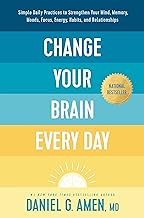
Change Your Brain Every Day, by Daniel G. Amen, MD

Change Your Brain Every Day, by Daniel G. Amen, MD

After catching a few minutes of Dr. Daniel G. Amen’s program on PBS, I checked the public library for his book. I want to give my brain a chance at being healthy. I would like to say I’m giving it “every chance” to be healthy, but I do indulge in an occasional salty or sugary snack.

After reading Dr. Amen’s book, though, I do feel more inspired to work on this. The essence of the book is that we can make little changes or small practices in our daily lives that are good for our brains. Of course, most of us slip up even when we have good intentions.

I won’t steal Dr. Amen’s thunder by telling you his specific recommendations. The book is made up of 366 daily steps to better brain health you can take, theoretically, over a year’s time. Being a book I borrowed from the public library, I could not take a year to read it. I’m not sure I have the discipline to do that. I took notes on the things that struck a chord with me… and there were many!

Over the coming weeks and months, I will try to take some of Dr. Amen’s recommendations to heart and take better care of my brain. The book is an interesting read. Dr. Amen does not just throw out suggestions; he explains from a medical viewpoint exactly what he bases those recommendations on. In concise, understandable terms, he tells you how the different systems in the body work and how your brain health effects and is affected by those various connections.

In this era, when we are bombarded by written and verbal media telling us things we ought to know and things we really shouldn’t be concerned about, Dr. Amen tells us how to calm the noise as much as possible and be assertive and kind in how we treat ourselves, others, and specifically how we treat our brains.

If you desire to have a healthy brain, I recommend this book. If nothing else, it will make you more aware as you make decisions regarding what you eat, drink, listen to, and breathe. Every little bit of effort helps.

Reading the book prompted me to start playing my dulcimer every day after not touching it for maybe a year. I’m knitting again, too. It is surprising some of the things we can do that make new connections in the brain.

Until my next blog post

I hope you are reading a book that is so good you can hardly put it down.

It looks like I won’t have as many novels as usual to blog about in May. I have neglected some of the books I needed to read for research, so I changed my focus this month to support the fiction I am writing. April is already half over, and I don’t have a very long reading list to show for it. We’ll all find out together on May 6 how many books I read in April.

Speaking of reading… be sure to let me know what you’re reading so I can mention it (and you!) in my May e-newsletter. We all learn from each other.

Don’t forget the people of Ukraine.

Janet

10 Random Facts about Myself in 2016, Revisited

In today’s blog post, I am revisiting my blog post from April 8, 2016. I had been asked to share 10 random facts about myself. It is interesting exactly eight years later to reread that post and see that little has changed.

Here are the 10 random facts about myself as I offered them eight years ago today, with new insights and details added within brackets:

1. I have what is called Chronic Fatigue Syndrome (CFS) in the United States but is known as Myalgic Encephalomyelitis (ME) in the rest of the world. My energy and stamina are limited, and my memory problems and mental fog make my research and writing tedious and time consuming. I often feel as if I live in a vat of molasses. Nothing comes easily.

2. I started working on the manuscript of my proposed historical novel, The Doubloon/The Spanish Coin, in 2005. I am still tweaking it. [I was startled to be reminded that I started writing The Doubloon/The Spanish Coin 19 years ago! After editing that manuscript down from 120,000 to 96,600 words, I am now concentrating on turning the main character’s backstory into a novel to publish before I publish The Doubloon/The Spanish Coin. The tentative title of that novel is The Heirloom.]

3. As a young adult, I was a “fiction snob.” I thought there was nothing to learn or gain by reading fiction. You can imagine how shocked my sister was when, at the age of 48 in 2001, I told her that I had registered for a fiction writing class! That’s when I started learning to write [and truly appreciate and enjoy reading] fiction.

4. Although my appearance, manner, and personality give the impression that I am conservative, I am a liberal when it comes to politics.

5. After wanting to play the Appalachian lap dulcimer since first being introduced to the instrument as a college freshman, I finally purchased one and attended a four-day dulcimer workshop in 2010. Due to random fact #1, I still don’t play well and probably never will; however, I do play for my own enjoyment. I often listen to dulcimer music while I write. (I’m listening to some as I write this blog post.) [I still don’t play the dulcimer very well, but I am once again trying to practice almost every day. This is for my own enjoyment. A huge “plus” is that learning to play a musical instrument is supposed to be good for one’s brain.]

6. I live on land that has been in my family since the 1760s.

7. I sleep in a bed that my father made using timber from our land in the 1940s.

8. I wish I could sing.

9. I could drive a tractor before I was old enough to drive a car.

10. Taking the fiction writing course and attending the dulcimer workshop were life-changing experiences for me, and I will forever be grateful that I got out of my comfort zone and took advantage of both opportunities.

No matter your age, stretch yourself and follow your dreams.

What do you have to lose?


Since my last blog post

Photo by Janet Morrison at Joara

I participated in my first archaeological dig! I checked it off my “bucket list,” but I hope it won’t be my last one. If you want to read all about it, please subscribe to my every-other-month e-newsletter by going to https://www.janetmorrisonbooks.com and clicking on the “Subscribe” button. You will also receive my free downloadable historical short story, “Slip Sliding Away.” I will write about the archaeological dig in my May 2024 e-newsletter.


I submitted a 3,575-word contemporary short story to an international short story competition recently. It was the first time I entered a piece of fiction written in first-person to a competition, so I was pleased when I learned that my story was judged to be in the top 10% of submittals. In spite of that “top 10%” label, I opened the critique with some trepidation.

Photo by Christin Hume on Unsplash

In a nutshell, the critique only had two negative comments: (1) The title (“Someone is Trying to Kill Me”) gave too much away and (2) I wrapped up the protagonist’s dilemma too quickly. The positive comments included, “It’s rare that I tell an author that the story we turned down needs to be significantly longer, because many of our entries drag a very thin, uninteresting idea out for many more pages than it is worth. But I think “Kill” needs to be a lot longer…. Detailed, interesting, step-by-step… this story has ‘detective novel’ written all over it… I’d read that story. It would be far too long for our magazine, but so what? Get it published somewhere else, or publish it yourself on Amazon or he web or something. Finish the story and put it out there.”

What a morale booster!


Until my next blog post

If there is a novel in you that is begging to be written… WRITE IT!

Read a good book or two this week.

Support your local public library and independent bookstore.

Remember the people of Ukraine.

Janet
Three of the 10 Books I Read in January 2024

Being a cold month and more than a little wet in North Carolina, January turned out to be a great 31 days of reading opportunities for me. Today I’m blogging about three of the 10 books I read last month. I’ll blog about the other books February 11 and 19.

As I often have in the past, I begin this post about the books I’ve read by stating that I am not a book reviewer. True book reviewers have some rules they go by. I have no such rules; I just write my reactions to the books I read. Sometimes my political leanings come through. I majored in political science in college. I can’t help myself!

I enjoy a variety of genres. Much of my reading is more or less dictated by when my name reaches the top of the waitlist at the public library. If not for the public library, my reading selections would be severely limited. Never miss a chance to support your local public library!

That said, here are my thoughts about three of the books I read in January.

So Late in the Day: Stories of Women and Men, by Claire Keegan

Bright red cover of So Late in the Day: Stories of Women and Men, by Claire Keegan
So Lat in the Day: Stories of Women and Men, by Claire Keegan

This book is made up of three short stories, each taking a look at the relationships between women and men – each from a different perspective. The publisher calls this book a “triptych of stories about love, lust, betrayal, and the ever-intriguing interchanges between women and men.”

The first story shares the title of the book. In it, Ms. Keegan, an Irish author, explores what Irishmen think of women in general. What she portrays is a man who never in any way thinks of a woman as his equal. It is demonstrated through a love story that goes sour when the bride-to-be sees the groom-to-be for what he is. Underlying the story is the premise that this man is the way he is because that’s what his father was like.

“The Long and Painful Death” is the second story in this book. It’s about a writer who goes to live in the basement of a house on an island to be the writer-in-residence for two months. She has a strange encounter with a scary German man.

“Antartica” is the third story. It’s a dark tale about a married woman who goes to London under the guise of doing Christmas shopping for her husband and children, but in reality she goes to find out what it would be like to sleep with a different man. This tale begins nicely and (spoiler alert!) ends badly.

Vitiligo Made Me Beautiful, by Laleh Chini

Book cover of a brown-skin little girl in front of her school. Book title: Vitiligo Made Me Beautiful, by Lalah Chini
Vitiligo Made Me Beautiful, by Laleh Chini

This is the latest book published by my dear blogger friend, Laleh Chini. Although the book is meant for children ages 7-12 years of age, it can serve as a reminder to adults, too, that we need to always be kind to one another.

The main character in the book is a little girl who wakes up one day with white patches on her skin. A few days later she is diagnosed with Vitiligo. It is a condition in which patches of a person’s skin lose their color. This, of course, is especially difficult for a person with dark skin.

In the book, the little girl’s classmates rally around her as they focus on what they like about her and her qualities and talents. Don’t we adults need to do that more often, too?

If you want to read a compelling book by Laleh Chini, I recommend Climbing Over Grit. It is the story of her mother’s growing up years in Iran and the child bride culture there. Fortunately, Laleh’s family escaped life under that regime when she was 16 years old, and they made their way to the United States. Here’s the link to Climbing Over Grit: https://www.amazon.com/dp/9176375536/. It won the Canada Book Award

Book cover for Climbing Over Grit, by Marzeeh Laleh Chini & Abnoos Mosleh-Shirazi
Climbing Over Grit, by Marzeeh Laleh Chini & Abnoos Mosleh-Shirazi

If you’d like to read what I said about Climbing Over Grit on my blog right after I read it, please follow this link to my November 5, 2018 post: Many Good Books Read in October!

Standing My Ground: A Capitol Police Officer’s Fight for Accountability and Good Trouble After January 6th, by Harry Dunn

Standing My Ground: A Capitol Police Officer's Fight for Accaountability and Good Trouble After January 6th, by Harry Dunn
Standing My Ground: A Capitol Police Officer’s Fight for Accountability and Good Trouble After January 6th, by Harry Dunn

Harry Dunn was on duty at the US Capitol on January 6, 2021 – that infamous day of the insurrection and attempted coup. I’ll never be able to erase the images of that day as I watched TV in horror.

In his book, Mr. Dunn talks about the honor it is to serve as a US Capitol police officer. He talks about our country’s history and how proud he has always been to serve in that complex government building, to protect the US Constitution and the people inside that building. He talks about how he enjoys interacting with people who visit that building.

And he talks about the unexpected vicious attack on our democracy on January 6, 2021 and how it has changed him forever. He talks about the violence and the racial slurs, the bear spray, the WD-40 spray, the pepper spray, the beatings, and the hatred the mob showed toward police officers and our country that day.

He talks about the fact that some in the mob were already convicted felons with a history of violence. He talks about some in the mob being swept up in the moment after being hoodwinked by Trump’s big lie.

He talks about the fragility of democracy.

This is a gutsy, no-holds-barred, raw book. I highly recommend it, especially if you have any doubts about what happened on January 6, 2021.

Since my last blog post

I learn from comments from readers of my blog. One of the comments I got in response to last week’s post prompted me to add a postscript to that blog post. I’m afraid my reference to the side effects of my second Shingrix injection might deter others from getting the Shingles vaccination. That was not my intent. I had Shingles in my right eye a few years ago. It felt like a knife in my eye for weeks; therefore, I was eager to get the Shingrix vaccine as soon as it was available free of charge for Medicare patients. The discomfort of the side effects of the shot pale in comparison to the pain of having Shingles, so please talk to your doctor about the Shingrix two-injection vaccine, and take it if you are a good candidate for it.

My research about the route of The Great Wagon Road/The Carolina Road in Virginia continues as I work on my historical novel tentatively titled The Heirloom.

Until my next blog post

You have no idea how much I appreciate the moral support my blog readers give me – even when I fail to read all their blog posts!

I hope you have at least one good book to read.

I hope you will pay attention to reputable news sources and keep up with the events in the world. If you are a citizen of the USA, I pray you will do so to be an informed voter this year more than ever before.

Remember the people of Ukraine as they are the only ones standing between Vladimir Putin and his invasion of NATO countries. When a dictator or a dictator-wannabe announces his plans, believe him.

Janet

I’ve Made it Around the Sun 71 Times

Photograph of a large seventy-one in numerals
Photo credit: Metin Ozer on unsplash.com

There’s a popular saying now: “Being in my 20s in the 70s was more fun than being in my 70s in the 20s.” There is a lot of truth in that, but I’m glad I’m in my 70s now and not in my 20s.

My parents always made my siblings and me feel special on our birthdays.

Mama always made a buttermilk pound cake and decorated it elaborately for our birthdays. She made a “doll cake” for my birthdays for many years. They were things of art I didn’t fully appreciate at the time.

There were no cake molds then for making such a cake. Mama had to make the cake in several layers of different sizes and then do some trim work to make a perfect full evening gown-shaped cake.

Everything was made from scratch. She took no shortcuts with a cake mix or store-bought icing. (I don’t think that was even a thing back then.) I wish I had a photograph of one of those doll cakes that I could share on my blog.  

Mama’s hand and fingers must have been sore for days after painstakingly decorating the doll’s evening gowns with ruffles and flowers of stiff homemade icing. I had no idea how difficult it was to use her metal cake decorator gizmo until I was old enough to try to use it myself. The operative word is “try.”

Daddy only made home movies on the following special occasions: Christmas morning, our birthdays, and sometimes on Easter morning. Film and its developing were expensive, so he usually managed to get our birthdays and those two holidays on one roll of 8mm movie film.

It was always a great day when a roll of film was developed. Daddy would set up his movie screen and movie projector in the living room, thread the projector, and alert whoever was appointed to then turn off the lights. It was fun reliving the events as many of the occasions projected onto the grainy white screen had happened more than a year earlier.

It was even more fun years later to look at those home movies. At least, it was fun until sometimes when the film would get stuck and the heat from the projector light would immediately burn a hole in the film. But I digress.

It was a special time to be a child in the 1950s and 1960s. It was a good time to be a child. At least, I can say that because I was a white middle-class child in the United States. It wasn’t as good of a time if you were a black child in the United States.

Until all the public schools were racially-integrated and black citizens secured the right to vote and receive equal service in restaurants, hotels, and in public transportation and employment opportunities, it was not a great time for them. I’m aware of that now. I wasn’t back then.

We weren’t bothered by social media and the only drugs we knew about were the ones prescribed by Dr. Nicholas Lubchenko, the family doctor who made house calls when we were sick. If you had stayed home from school because you were sick, you’d better be in bed and not on the couch watching “I Love Lucy” on the black-and-white TV when he came to check on you!

The years I spent in school dragged by slow as molasses, but the rest of my life has passed in a split second. That’s an impossible concept for people under 30 years old to understand. They cannot imagine how fast their next 40 years are going to fly.

So Happy 71st Birthday to me! I can’t believe I’m this old, but many of my friends and relatives were not so fortunate. Therefore, I try to value every day God gives me. I have been blessed beyond anything I deserved.

Since my last blog post

Finally feeling like I had recovered from having Covid in December, I thought last Thursday would be a good day on which to get my second dose of the shingles vaccine. I guess it was as good as any. I don’t want to cause anyone not to get the Shingrix shot, but that second injection laid me low for the entire weekend. I’m just one of those people who often has ill effects from vaccines, so the aches and fever were not a surprise. That they lasted for more than three days was. (Postscript added January 31, 2024: I should have also said that I had Shingles in my right eye a few years ago and it felt like there was a knife in my eye for weeks; therefore, I was eager to get the Shingrix vaccine as soon as it was available free of charge to Medicare patients. The discomfort of the side effects of the shot pale in comparison to the pain of having Shingles!)

I took advantage of my down time by reading a very good historical novel.

I admit that I had a “senior moment” when I typed the title of this blog post. Just before pressing the “publish” button, I realized I had typed the title as “I’ve Made it Around the Moon 71 Times.” Thank goodness I caught that mistake! I never would have heard the last of it! After a rough few days, it was good to have something to laugh about.

Until my next blog post

I hope you are reading a book that’s so good you didn’t want to put it down long enough to read my blog. (I read a book like that over the weekend – The Woman in the White Kimono, by Ana Johns.)

Remember the people of Ukraine.

Janet

A Bit Discombobulated

With all the activities around the Christmas Season, you probably didn’t notice that I failed to write a blog post on December 25. Monday being my usual day to blog, I had good intentions. Here it is – Monday again.

I also intended to send out my January newsletter this week. (That still might happen!)

But we all know where good intentions will get us.

Long story short, I got Covid for Christmas.

Photo of what the Covid-19 virus looks like under a microscope.
Photo by CDC on Unsplash

I’m grateful for the advances in science and medicine that kept me from getting it until now. If not for the vaccines, I would have had it a long time ago and maybe wouldn’t be here today. If not for being fully-vaccinated, I probably would have ended up in the hospital for Christmas.

I’m slowly recovering. I hope to get back to my regular Monday blogging activities soon.

In the meantime, I hope you have at least one good book to read.

And don’t forget the people of Ukraine.

Janet

P.S. It’s not too late to subscribe to my every-other-month newsletter. Just visit https://www.janetmorrisonbooks.com to subscribe. Thank you!

Three Books I Read in November 2023

I am trying to broaden my reading horizons by reading a variety of genres. I made progress toward that goal in November, as you will see from three of the books I read.

Unexpected Passion, by Barbara Strickland

Reading Unexpected Passion, by Barbara Strickland was a reading stretch for me. I’m not usually drawn to romance novels.

Unexpected Passion: Love and age a perfect match, by Barbara Strickland

Unexpected Passion is Book 2 in Barbara Strickland’s Unexpected Love Series, I love the book’s premise. Ricardo, part owner in a tour company, comes across as a real lady’s man, but his trust issues make it difficult for him to have a meaningful, honest relationship. Lexi is not a “spring chicken” either. Her friends are determined to pull her out of her comfort zone. She finally gives in and agrees to go on one of Ricardo’s tours of Greece and Italy.

The novel follows the hot and cold relationship between Ricardo and Lexi as the tour takes them to fascinating locations in the two countries. Ms. Strickland weaves in references to the places we have always read about, seen pictures of, and would love to visit while following the flirtations and misunderstandings/wrong assumptions made by Ricardo and Lexi about each other along with their interactions with others on the trip.

I felt like I was on the tour myself, which is a sign of a good book!

Radar Girls, by Sara Ackerman

Radar Girls, by Sara Ackerman is a novel about the women who did top-secret work in Hawaii during the early days of radar use by the US military in World War II. The women could, of course, tell no one what they were doing. And, being women, they had to claim to be doing clerical work when pressed about their occupations.

Radar Girls: A Novel, by Sara Ackerman

The novel follows the private lives and individual stresses of each of the women.

They had personal stress and collective stress and worry over the troops they were directly responsible for supporting. They were responsible for guiding US bomber pilots for safe landings upon the planes’ return to the base after bombing runs. The books includes their individual worries for husbands and other loved one serving in the war zone.

Carol of the Reading Ladies Blog did a great job of reviewing the novel. I think you would enjoy reading Carol’s review: http://Radar Girls [Book Review] #HistoricalFiction @HarlequinBooks #NetGalley #WW2 #BookTwitter #BookBlogger – Reading Ladies. Carol’s 5-star rating of the historical novel prompted me to get on the waitlist for it at the public library.

Character & Structure: The Easy to Follow Novel Planner – Quadrilogy Edition, by Chris Andrews

As I will explain below, I am attempting to write a novel series. Originally, I thought in terms of writing a trilogy, but then the story said it needed at least four books. I was thrilled to find this book by Chris Andrews. It is a wonderfully-organized workbook for outlining a four-book series. I’d never seen or heard the word “Quadrilogy” before, so I immediately felt this was just the workbook I needed.

Character & Structure: The Easy to Follow Novel Planner – Quadrilogy Edition, by Chris Andrews

This workbook is a companion to Andrews’ book, Character & Structure: An Unholy Alliance, which I read a couple of years ago. In the workbook’s 64 pages, Andrews walks the writer – whether a novice or a seasoned published author – through a systematic way to make sure the novel they envision or are already writing is constructed on a structure that will support it from beginning to end.

The workbook prompts the writer to give appropriate attention to subplots and how each one fits into the larger picture. It helps the writer to plan each chapter and to map out how the characters and plot flow.

Novel outlines are not set in concrete. Characters sometimes balk at the writer’s plans. In some cases, the characters have better ideas for the plot twists and turns than the writer, but having the big picture of a novel quadrilogy down in black and white will certainly help the author stay on track with structure. The workbook also has pages for you to jot down dialogue ideas. (You know you will forget those jewels if you don’t write them down!)

In case you’re writing a trilogy, Chris Andrews also have a Trilogy Edition of this workbook. Look for his writing books and his fantasy novels on Amazon.

Since my last blog post

Did last week fly by, or was it just me? It’s already December. How is that possible?

I got down to brass tacks outlining my novel series. Yes, I said series. As you probably already know, the main character in the first novel I drafted had so much backstory that I concluded her life as a younger person needed a separate book. I also finally worked out a plot problem in the second book in the series – the one for which I’ve already written 90,000+ words. It was a part of the plot dealing with the freedom of a slave. After stewing over this particular plot point for literally years, I took a walk last week to talk through it with myself (for the hundredth time) and concluded that George, the slave has to instigate his own path to freedom – or his attempt at freedom. Hmmm… do you think George will be successful? Geoge is a strong character. He and I have wrestled over his actions for years.

I had already toyed with continuing the main character’s story in two or three books in addition to the first two. I have outlined a total of five novels for the series. Now I have to figure out a way to write a lot faster or I can’t possibly live long enough to write all five! Time will tell if I have enough writing skill and imagination to write that many novels.

Until my next blog post

I hope you have at least one good book to read this week. Support your local public library and your local independent bookstore.

Don’t forget the people of Ukraine.

Janet

How do you decide what to read next?

My question for you today is, “How do you decide what to read next?”

Is it FOMO (fear of missing out)? Do you scan the NY Times Bestseller List every week and take your reading cues from it? Do you just read books in a certain genre and never dip your toes in something different to shake things up? For instance, instead of just reading western romance novels, do you ever check out a science fiction book from the library?

Photo by Susan Q Yin on Unsplash.

Do you gravitate to the “New Releases” section in your public library? Do you pick up a free copy of Book Page at the public library each month to learn about new books? Do you ask a librarian for recommendations? Do you and your friends tell each other about books you or they have enjoyed?

How I decide what to read

I got the idea for today’s topic from a blog post I read back in May: https://readingladies.com/2023/05/23/10-things-that-make-me-instantly-want-to-read-a-certain-book-toptentuesday/. It got me to thinking about how I decide what to read next. I honestly didn’t connect it with book banning at the time.

I recently divided my to-be-read (TBR) list into four categories: books about the craft of writing; books I need to read for historical research to enhance my historical fiction writing, novels and short story collections; fiction; and nonfiction books of general interest.

I listed the books in each category in the order in which I want or need to read them.

This was no easy task. There are more than 300 books on my TBR. Chances are, I won’t get to read all of them. You see, I add titles to my TBR faster than I can read the books already on the list. I console myself by thinking it’s a nice “problem” to have.

Everyone has preferences

I must admit, I don’t care for sappy romance, science fiction, horror, or fantasy, but I’ll march in the street to defend your right to read those genres. My “go to” genre is historical fiction – especially set in colonial and revolutionary America, but I also enjoy World War II historical fiction, some thrillers, and an occasional memoir.

I enjoy following a number of book review bloggers. I often learn of new authors or books that have slipped in under my radar.

More and more, I’m becoming a fan of certain authors. I try to stay on top of when their next novels will be published. Armed with that information, I get on the waitlist at the public library for those books as soon as they show up in the system’s online catalog.

The authors I tend to look for (in no particular order) include Sally Hepworth, Vicki Lane, Lelah Chini, Isabel Allende, Anna Jean Mayhew, Pam Jenoff, Diane Chamberlain, John Grisham, Kathleen Grissom, Kelly Rimmer, Mark de Castrique, Annette Saunooke Clapsaddle, Susan Meissner, Erik Larson, Barbara Kyle, Lisa Wingate, Anne Weisgarber, Aimie K. Runyan, John Hart, Jennifer Ryan, Kristin Hannah, Andrew Gross, Ann Patchett, Heather Morris, Mark Sullivan, Wiley Cash, Kathy Reichs, Jennifer Chiaverini, V.S. Alexander, Jodi Picoult, Kate Quinn, Ron Rash, Jamie Ford, Leah Weiss, and Kelly Mustian.

Whew! That’s 35, or about 25 more than I would have guessed! I’m sure I’ve left others off my list. Some authors come and go from my list.

Are any of those 35 names on your list of favorites?

Who are your favorite authors?

What’s your favorite genre?

Back to my original question

How do you decide what to read next? Is it based on the cover, an author you’ve read and liked before, the blurb on the back of the book, a positive review you read, the genre, or something else?

I’d like to hear your thoughts on this.

Since my last blog post

I’ve had a productive week. I haven’t put many words on paper, but I have done some on-site historical research for the historical novel I’m writing. Be sure to subscribe to my e-Newsletter if you want to read about where I went and why.

Until my next blog post

If you are going to be in the Charlotte area between 2:00 and 4:00 next Saturday afternoon, November 4, please drop by Second Look Books at 4519 School House Commons in Harrisburg for our Meet & Greet highlighting The Aunts in the Kitchen: Southern Family Recipes.

I hope you have access to so many good books that you don’t have time to read all of them.

My November e-Newsletter will be sent via email in a couple of days. If you have not subscribed to it, please do so by visiting https://www.janetmorrisonbooks.com and clicking on the “Subscribe” button. Just for subscribing, you’ll receive a downloadable e-copy of my American historical short story, “Slip Sliding Away.”

Make time for friends and relatives, even if you don’t agree with them about politics.

Remember the brave people of Ukraine as a cold winter is racing toward them and the innocent people in the Middle East. People in both these areas are the victims of dictators and terrorists.

And, of course, remember the people of Maine in light of last week’s mass shooting. When will the elected officials in the US learn that most Americans want tighter gun regulations? When is enough, enough?

Janet

As a reader, what do you think of flash fiction?

The novels I’ve drafted or at least outlined are not going to be short. They aren’t going to be 1,000-page tomes (300,000 words!) like the Outlander series by Diana Gabaldon either. A sweet spot for historical novels falls somewhere between 90,000 and 120,000 words. I’m aiming for the low 90,000s.
At the other extreme is the genre called flash fiction or minimalist fiction. By definition, flash fiction falls somewhere between six words and usually 1,000 words. There are some 1,500-word exceptions.

For me, it’s easier to write a story of thousands of words than one of a thousand words. It’s a challenge to develop characters and a plot in 1,000 words.

But I mentioned a starting point of six words. The example of such a concise story is attributed to Ernest Hemingway, although, the efficacy of that attribution is not proven. Nevertheless, here is that six-word piece of flash fiction:

“For sale: baby shoes, never worn.”

Wow! You would be hard pressed to find six words that pack more of a punch! The author could have gone on to explain why the baby shoes had never been worn, but isn’t it more effective to let the reader’s mind fill in the blanks?

Photo by Drew Hays on Unsplash

In fact, it would have been easier for the writer to elaborate. Boiling down an entire story into six words is nearly impossible. I can’t imagine that I’d ever be able to do it, but fiction writers today are encouraged to delete all unnecessary words – to make every word count.

That’s the lesson flash fiction teaches a writer, so I think it’s a good exercise for aspiring novelists to practice.

I submitted a 28-word story to an “On the Premises” mini-contest in May. The guidelines were to write in any genre a story of 25 to 50 words in which two opposing points of view were shown. It was an interesting exercise. My first two versions were exactly 50 words. I continued to pare down the unnecessary words. Satisfied with my eighth version of the story, I hit the “submit” button.

Here’s the story I submitted:

This house has stories to tell. Close your eyes. Just listen. You hear that? Children laughing and playing.

Yeah, then going off to war and not coming home.

Photo by Anne Nygård on Unsplash

The winner out of the 212 entries was announced on May 10. My story wasn’t the winner. Perhaps I edited out too many words. I’ll keep trying.

If you’ve never read any flash fiction but are curious about it, here’s the link to an April 23, 2023 blog post on Reedsy: https://reedsy.com/discovery/blog/best-flash-fiction. The 25 stories are clickable. One of them, “Where Are You?“ by Joyce Carol Oates, was published in The New Yorker in 2018. Here’s the link: https://www.newyorker.com/books/flash-fiction/where-are-you. Take a minute (or maybe two) to read it.

Or, you can go to your public library system’s online catalog and do a search for it – or ask a librarian for suggestions. If you prefer, you can do a search on Amazon or a general search in your favorite search engine.

Since my last blog post

I finished writing the first draft of a devotional book designed especially for people who have Seasonal Affective Disorder in the colder months of the year.

With the family cookbook my sister and I have compiled finally formatted, we started the tedious proofreading phase.

I started proofreading the historical short stories I’ve finished writing.

Until my next blog post

I hope you’re reading a book that is so engrossing you didn’t want to put it down to read my blog.

Don’t forget to subscribe to my newsletter by visiting https://www.janetmorrisonbooks.com. Thank you! I plan to send out my September newsletter the first week of the month. Remember, subscribers to my newsletter receive a free downloadable short story I wrote:  “Slip Sliding Away”, which takes place in the Appalachian Mountains in the 1870s.

Make time for friends and family. They won’t always be here.

Remember the people of Ukraine, Maui, and Jacksonville, Florida.

Janet