The Other Three Books I Read in January 2019

One thing all bloggers are told they must do, if they hope to attract readers, is to include images in every post. I’ve worked hard to do this for the last several years. I did it last week when I included images of the books I wrote about; however, as I put the finishing touches on this post last night, I repeatedly got messages from WordPress.com saying “Given your current role, you can only link an image, you cannot upload.” Therefore, in today’s post I’ve included links to images of the books I’m writing about. I’m unsure how this will appear until the post goes online. I have no idea why this has happened.

Since I read 6.25 books in January, I decided to split my comments about them between my blog post on February 4, 2019 and today. I hope you’ll find what I have to say about three of the books I read last month worthwhile. These are discussed in no particular order.

The Banker’s Wife, by Cristina Alger

The Banker’s Wife, by Cristina Alger

The Banker’s Wife was a change of pace for me halfway through January after reading The Library Book. The Banker’s Wife, by Cristina Alger, is a financial thriller. In this novel, Ms. Alger takes us to Paris, Geneva, New York, the Dominican Republic, and the Cayman Islands. Primarily through the eyes of two strong female characters, we get a glimpse of the vicious and deadly world most of us never experience – Swiss bank accounts, the people who have them, the people who assist them, and those who are unfortunate to love someone in either of the other two categories.

If I had done more research about Cristina Alger’s books before reading this 2018 novel, I would have known that it is a sequel to her 2012 debut novel, The Darlings. Now, I want to read that book, although being a North Carolinian, “the Darlings” conjures up visuals in my mind’s eye of that ne’er-do-well Darlin’ family on The Andy Griffith Show of the 1960s. It’s difficult to associate wealth with that name. I’m sorry, it just is. I offer my apologies to all the people with the Darling surname.

The Banker’s Wife is Ms. Alger’s third novel. The book captured my attention early on and the fast-paced writing kept me turning pages to see what was going to happen next – and to find out which characters were dead and which one’s deaths were staged to cover up the real story.

If I Understood You, Would I Have This Look on My Face? by Alan Alda

If I Understood You, Would I Have This Look on My Face? by Alan Alda

This book held some nice surprises for me. I’ve been an Alan Alda fan since the days of the M*A*S*H television series. I became even more endeared to him when in answer to my request that he donate an autographed copy of a book he’d written for an autographed book fundraiser held a few years ago for the Friends of the Harrisburg Library in Harrisburg, North Carolina.

Mr. Alda graciously donated an autographed copy of the script for an episode of M*A*S*H that he wrote. It turned out to be the hit of the fundraiser and resulted in a bidding war between two individuals.

That said, I was drawn to the book by the title and the author’s name. I thought it might be helpful to me as a writer since the book is about communication. It was, but not in the ways I anticipated.

Here are a few of the impressions I took from the book:

                1.  Improvisation not only helps actors, it can help anyone get over their fear of talking in front of a large audience.

                2.  No matter what you’re trying to sell – whether it be a tangible product or an idea – the key is to focus on what the customer is thinking and what he or she needs. As a writer, I need to put myself in the mind of my reader. What does my reader need? What is my reader hoping to gain by reading my words?

                3.  Mr. Alda has concluded that the key to the great success of M*A*S*H was the fact that instead of disappearing into their separate trailers on the studio lot, they gathered their chairs in a circle and talked and laughed together as a group between “takes.” He said the connections    they made off camera carried over when they were in front of the camera. It made them all better actors and their genuine comradery came through to the audience.

                4.  Much of Mr. Alda’s book is about empathy and the importance of empathy in communications. The book offers several things a person can do to increase their empathy for others. Mr. Alda says that true communication cannot take place between two people unless each one       makes an effort to understand the other person and why they think the way they do. I couldn’t help but think of how polarized Americans are politically today. There really is a lack of understanding – or empathy – between The Right and The Left, between Republicans and Democrats. This doesn’t bode well for the 2020 election.

                5.  As a writer, start with what your reader knows. Don’t insult the reader by including basic information.

Now You See Me, by Sharon J. Bolton

Now You See Me, by Sharon J. Bolton

Published in 2011, Now You See Me was the first in Sharon J. Bolton’s Lacey Flint series. Flint is a detective in London. The story opens with her seeing a woman dying while leaning on Flint’s car. This thriller grabbed my attention from the beginning and kept me turning pages well into the night. It’s rare that I read a quarter of a novel in one sitting, but that’s what I did with Now You See Me.

Detective Flint is forced almost immediately to try to discern who she can trust within the Metropolitan Police Department. Is she seen as a crime scene witness, or is she viewed as a murder suspect? She’s very convincing as a witness.

As the story unfolds, it becomes clear that the killer is patterning his actions after Jack the Ripper. (Spoiler alert:  this gets more gruesome than I’m used to reading, but I had to know what happened next.)

What about Flint’s fellow police officer, Joesbury. There’s definitely something weird about him. Is he the killer?

No. Someone else is caught… sort of.

I thought the book came to a good stopping point just shy of halfway through. In fact, I thought I might not keep reading. This seems like the end of the story. I could move on to another book.

But I read a few more pages.  Wow! What a turn of events! I’m glad I kept reading!

Since my last blog post

I continue to do a lot of reading about writing and about blogging in an effort to get better at writing fiction and blogging. I made good progress writing a short story I’m calling “From Scotland to America, 1762,” writing 1,400 words Saturday afternoon.

Until my next blog post

I hope you have a good book to read. I’m reading Before and Again, by Barbara Delinsky; Button Man, by Andrew Gross; and A Week in Winter, by Maeve Binchy.

I rarely listen to a book because I find it irritating to listen to someone talk on and on and on; however, since I’m having a bout with vertigo, I decided to give the Maeve Binchy audio book a try and I’m really enjoying it. It probably has something to do with the lovely accent of the reader, Rosalyn Landor. It’s nice to just shut my eyes and listen.

If you’re a writer, I hope you have quality writing time and plenty of time to read.

Thank you for reading my blog. You could have spent the last few minutes doing something else, but you chose to read my blog. I appreciate it! I welcome your comments.

Let’s continue the conversation

If you’ve read any of the books I mentioned today, let me know what you thought about them.

Janet

3.25 of the 6.25 Books I Read in January 2019

My reading in January brought an interesting mix of fiction and nonfiction. In fact, when I wrote the first draft of this blog post about the 6.25 books I read last month, it was too long for one post. You’re all busy people and you only have so much time to give to reading my blog. Therefore, I’ll write about 3.25 of the 6.25 books today and the other three books next Monday.

At Home on the Kazakh Steppe:  A Peace Corps Memoir, by Janet Givens

At Home on the Kazakh Steppe: A Peace Corps Memoir, by Janet Givens

I thoroughly enjoyed this book from start to finish! Janet Givens gives an informative and entertaining glimpse into the experiences she and her husband had while serving in the Peace Corps in Kazakhstan for two years. I learned a lot about Kazakhstan and the mores of its citizens. Ms. Givens had to learn most of the idiosyncrasies of the Kazahk people the hard way – by trial and error, but she took all her faux pas in stride.

Ms. Givens approached her stint with the Peace Corps with a sense of wonder and adventure. There were many trying days and awkward relationships but by the end of her second year in Kazahkstan, Ms. Givens hated to leave.

I highly recommend this memoir to anyone curious about the work of the Peace Corps or the countries in the former Soviet Bloc.

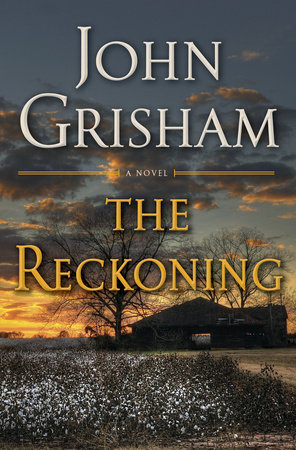
The Reckoning, by John Grisham

The Reckoning, by John Grisham

The Reckoning is not your typical John Grisham legal thriller. It includes the law and a man who choose to break it and it’s a thriller, but it is very different from Mr. Grisham’s usual offerings. The story opens with  Pete, a World War II hero back home in Mississippi in 1946.

Pete wakes up one morning and decides that is the day. Just that: today is the day. Mr. Grisham pulled me into Pete’s life. Fairly early in the book, we see what Pete does that day that will change his and many other lives forever, but we don’t know why. We have a hunch, though.

The second part of the novel goes back to when Pete met his future life. We learn about the life they made together, but we primarily learn what Pete endured in the Pacific Theatre during the War. It’s not pretty, but it’s authentic. That part of the book at times reads almost like a history book, but Mr. Grisham writes in a way that makes it personal and real.

The third and final section of the book goes back to 1946 for Pete’s college-age son and daughter to pick up the pieces of their lives and try to make sense of what their father did. And that hunch we had in Part One proves not to be correct when the truth comes out in Part Three!

The Reckoning is different from Mr. Grisham’s usual legal thrillers, but I liked it.

The Boat People, by Sharon Bala

The Boat People, by Sharon Bala

Call me old-fashioned, but I’m put off by novels that don’t use quotation marks. It’s irritating, and I shudder to think that might be the wave of the future of publishing. Let’s save some ink and omit the quotation marks! I’d read good things about The Boat People, though, so I persevered.

The book held much promise in the opening chapters as we were introduced to several of the 503 Sri Lankan asylum seekers in a boat as it nears Canada. A father, Mr. Mahindan, and his six-year-old son are the focus of the book. Upon landing in Canada in 2009 they are separated from each other because all women and children are detained in a separate facility from the men. It was immaterial that Mr. Mahindan and his little boy only had each other.

The separation was gut-wrenching and traumatic for both of them. It hit me right in the gut and immediately brought to mind the even more severe and inhumane separation of women from men and children from adults on the US-Mexico border this winter. Just as Canadians couldn’t believe what was happening in their country in 2009, we Americans can’t believe what is happening now along our southern border. Don’t get me started!

I usually don’t mention on my blog the books that I don’t finish reading, but this one held such promise and I just couldn’t stay with it. If you read it, I’d like to hear your thoughts.

I read the first one-fourth of the book (hence, the title of today’s blog post) and just lost interest in the 2002 backstory for this 2009 event. The back-and-forth between the two years didn’t appeal to me. That, combined with the lack of quotation marks delineating dialogue, made me close the book and move on to ….

The Library Book, by Susan Orlean

The Library Book, by Susan Orlean

I read in advance reviews of The Library Book that the event that prompted Susan Orlean to write the book was the April 29, 1986 fire at the Central Los Angeles Public Library that destroyed 400,000 books. An additional 700,000 books were badly damaged. It was (and still is) the largest library fire in the history of the United States. I’m an avid reader and big supporter of public libraries, so I wondered how I could have missed hearing about this tragedy at the time it happened.

It turns out that most people never heard about it because it coincided with the nuclear accident at Chernobyl in Russia. For days and days after the April 25-26 disaster, the nuclear scare predominated the news.

The Library Book not only tells about the fire and the employees and volunteers cleaning up the mess left behind; it also delves into the cause of the fire, and the history of the Los Angeles County Public Library System. Many interesting tidbits about libraries in general are included in the book, and one can tell by the tone of the book and the words used that Ms. Orleans loves and reveres libraries.

The fire, the search for an arsonist, and some of the little known facts and quotes about libraries was interesting and worth the read; however, I got bogged down in the history of the library system in Los Angeles County and found myself skipping paragraphs and, eventually, skipping pages.

I picked back up somewhere along the way and enjoyed the rest of the book. The book reinforced the warm and fuzzy feelings I have about libraries.

Since my last blog post

I’ve done a lot of reading and worked on a short story and my novel’s outline.

I’ve also worked on an extra blog post for tomorrow after reading about Rae’s idea of starting a “Two for Tuesday” tag in her January 8, 2019 blog post, 2019 (https://educatednegra.blog/2019/01/08/two-for-tuesday-prompts/comment-page-1/#comment-1646. Please check in tomorrow to learn about two books that taught me something. #TwoForTuesday

Until my next blog post

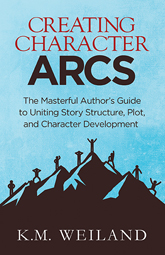
I hope you have a good book to read. I’m reading Creating Character Arc:  The Masterful Author’s Guide to Uniting Story Structure, Plot, and Character Development, by K.M Weiland; and Red Notice:  A True Story of High Finance, Murder, and One Man’s Fight for Justice, by Bill Browder.

If you’re a writer, I hope you have productive writing time and lots of time to read.

Thank you for reading my blog. You could have spent the last few minutes doing something else, but you chose to read my blog. I appreciate it! I welcome your comments.

Let’s continue the conversation

If you’ve read any of the books I mentioned today, let me know what you thought about them. Did I “miss the boat” by not finishing The Boat People, by Sharon Bala?

See you tomorrow for a bonus #TwoForTuesday blog post!

Janet

Books I Enjoyed in December 2018

The Dream Daughter, by Diane Chamberlain

Diane Chamberlain broke away from her usual form of writing novels and did a great job with time travel in The Dream Daughterr. The book begins in 1970 with a pregnant woman, Caroline Sears, finding out that her unborn baby has a heart defect.

The Dream Daughter, by Diane Chamberlain

It turns out that Caroline’s brother-in-law has come to 1970 from the future. He knows that if Caroline can find her way to the future, her unborn daughter can have fetal surgery – the unthinkable in 1970.

I won’t give away any details of Caroline’s journey. I’ll just say things don’t go smoothly. This trip across decades will keep you turning pages.

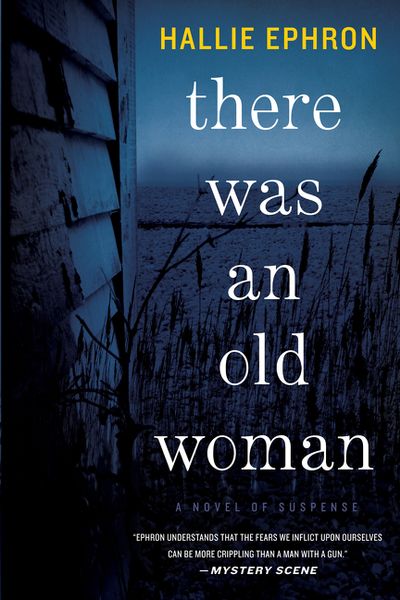
There Was an Old Woman, by Hallie Ephron

The title of this book caught by attention and immediately took me back 60 years to nursery rhymes about the old woman who lived in a shoe and the old woman who swallowed a fly. I’d never read anything by Hallie Ephron, so I decided to give There Was an Old Woman a try.

The story involves multiple generations, with an emphasis on several independent-living octogenarians. Things in the neighborhood keep disappearing. What’s happening? Who is doing this? Is it the strange man across the street?

There Was an Old Woman, by Hallie Ephron

Thrown into the mix is a subplot about the B-25 Mitchell bomber that crashed into the Empire State Building on July 28, 1945. Ms. Ephron sheds a light on that much-forgotten event by making one of the main characters in the book be a survivor of that plane crash. I must admit, I did not know about that tragedy in which 14 people were killed.

There Was an Old Woman is categorized as a thriller, but it did not come across to me as such. It’s more like a neighborhood mystery in which the daughter of one of the 80+-year-olds is forced to come home and deal with her mother’s illness and neglected house. The book has received an interesting mix of 1-star and 5-star reviews, with most reviews falling into the 3- or 4-star categories.

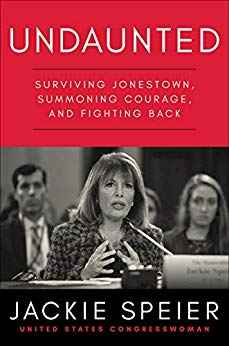
Undaunted: Surviving Jonestown, Summoning Courage, and Fighting Back, by Jackie Speier

I thoroughly enjoyed reading this memoir by United States Representative Jackie Speier of California’s 14th congressional district. I was not aware that Ms. Speier survived the Jonestown Massacre, so that fact alone drew me to this memoir.

Undaunted, by Jackie Speier

What a life Ms. Speier has had! When she was 28 years old, she worked for California Congressman Leo Ryan. She and others accompanied Ryan to Jim Jones’ Peoples Temple in Jonestown, Guyana on November 14, 1978 to rescue individuals being held there against their will.

Those who are old enough to remember that fateful event know that things rapidly soured upon the delegation’s arrival. Congressman Ryan was murdered and Jackie Speier was shot five times and nearly died.

For someone like me who is a history and political “junkie,” this memoir was compelling and inspiring. Ms. Speier writes about her widowhood, motherhood, her lifelong work in politics, and her 40-year determination to overcome the scars she has from her Jonestown experience.

Since my last blog post

I continue to receive encouraging comments in response to my December 17, 2018 blog post, https://janetswritingblog.com/2018/12/17/to-write-or-not-to-write/. I appreciate each and every one of them and each and every one of my blog readers. I have a more positive attitude about my novel in progress since being bolstered up by so many of you over the last three weeks.

The holidays turned out not to be conducive to my getting back to putting words on paper (or the computer screen, as the case may be.) I’ve mulled the story over and over in my mind, though, and I intend to get back to writing that book this week. I need my blog readers to hold me accountable!

I’ve read many helpful blog posts and articles this week about the various facets of writing. One in particular hit a chord with me, but I’ve misplaced the link to it. The piece recommends that an aspiring novelist publish one or more short story collections in order to build readership. I’m kicking around that idea. It makes sense. The theory is that more people will want to buy my novel if they have read and liked my short stories. I needed one more project!

Call me a klutz if you want to, because I think I qualify. In the last four or five days I’ve broken a toe on both feet, but not at the same time. Don’t laugh; broken toes are painful.

Until my next blog post

I hope you have a good book to read. I’m reading The Reckoning, by John Grisham.

If you’re a writer, I hope you have quality writing time. I hope I do, too!

Thank you for reading my blog. You could have spent the last few minutes doing something else, but you chose to read my blog. I appreciate it! I welcome your comments.

Let’s continue the conversation.

Have you read any books recently that you’d recommend to me and my blog readers?

Have any of you writers had experience – good or bad – in publishing short stories to build readership prior to publishing your first novel?

Janet

15 Books that Entertained, Educated, or Changed Me in 2018

Books can entertain, educate, or even change one’s thinking.

When I looked back over the list of the 56 books I read in 2018, I was amazed at the variety and the things I learned. I learned some history while I was entertained, and I hope I learned something about writing. Several of the books changed my thinking. You can’t ask a book to give you more than that.

The books that entertained, educated, or changed me or my thinking in 2018 are listed here in alphabetical order by author.

Fascism:  A Warning, by Madeleine Korbel Albright

The Taster, by V.S. Alexander

The Atomic City Girls, by Janet Beard

White Chrysanthemum, by Mary Lynn Bracht

Climbing Over Grit, by Laleh Chini and Abnoos Mosleh-Shirazi

Another Ocean to Cross, by Ann Griffin

Sea Prayer, by Khaled Hosseini

The Tattooist of Auschwitz, by Heather Morris

A Bigger Table:  Building Messy, Authentic, and Hopeful Spiritual Community, by John Pavlovitz

Fighting to Win:  Samurai Techniques For Your Work and Life, by David J. Rogers

The Broken Girls, by Simone St. James

Undaunted:  Surviving Jonestown, Summoning Courage, and Fighting Back, by Jackie Speier

The Death of Mrs. Westaway, by Ruth Ware

Educated:  A Memoir, by Tara Westover

Before We Were Yours, by Lisa Wingate

Since my December 17, 2018 blog post

My December 17, 2018 blog post was more than a bit pessimistic. The title described my current dilemma:  https://janetswritingblog.com/2018/12/17/to-write-or-not-to-write/.

I have heard from a number of you since then. You have offered encouragement and helped prop me up. Knowing I have blog readers in quite a few countries from around the world in addition to those in the US who cared enough to take time to leave comments has boosted my morale and helped me to determine that I must continue to work on that historical novel I’ve worked on off and on for a decade.

Even if there are days I can only write for 15 minutes, then that’s what I’ll do in 2019. Slowly but surely, I will finish writing that book!

For those of you who read my blog from last Monday, https://janetswritingblog.com/2018/12/24/do-you-believe-in-miracles/, I hope you were moved by this real life story from 40 years ago.

Until my next blog post

At Home on the Kazakh Steppe: A Peace Corps Memoir, by Janet Givens

I hope you have a good book to read. I’m reading At Home on the Kazakh Steppe:  A Peace Corps Memoir, by Janet Givens. I’m thoroughly enjoying it. You can check out her website at https://janetgivens.com/.

If you’re a writer, I hope you have productive writing time.

Thank you for reading my blog. You could have spent the last few minutes doing something else, but you chose to read my blog. I appreciate it and I welcome your comments.

Let’s continue the conversation.

What are some of the books that educated you or changed your life or your thinking?

Happy New Year!

Janet

Many Good Books Read in October!

Some months I get lucky with the books I get to read. October was one of those. I was overwhelmed with library books for which I reached the top of the waitlist. Several books had to go back to the library unread, so those remain on my to be read list.

Climbing Over Grit, by Marzeeh Laleh Chini and Abnoos Mosleh-Shirazi

Climbing Over Grit
Climbing Over Grit, by Marzeeh Laleh Chini and Abnoos Mosleh-Shirazi

I have been following Laleh Chini’s blog, “A Voice from Iran” for quite a while, but I had somehow missed knowing that she was writing a book. When she announced that her book, Climbing Over Grit, was available on preorder, I immediately ordered it. Laleh has a gift for storytelling, so I knew her book would be good.

Little did I know that Laleh’s book was based on some experiences within her own family! The book is written in first-person point-of-view, but I still didn’t catch on that it was written in her mother’s voice until I came to a page well into the book that said something like, “The second daughter was named Laleh.” I gasped out loud! It was then that I couldn’t put the book down. I finished reading it at 4:30 in the morning.

I still cringe to think about some of Laleh’s family members being subjected to arranged child marriage and the abuse that often goes along with that practice.

Fortunately for her readers, Laleh got out of Iran at the age of 16 and came to the United States. She now resides in Canada. He photographs and Iranian folktales she shares in her blog have helped me get a picture of an Iran I didn’t know existed.

Climbing Over Grit is not a pleasant read, but I highly recommend it to anyone wanting to know more about the child bride culture of Iran. Her blog can be found at https://avoicefromiran.wordpress.com/.

The Tattooist of Auschwitz, by Heather Morris

The Tattooist of Auschwitz
The Tattooist of Auschwitz, by Heather Morris

The main character in The Tattooist of Auschwitz, by Heather Morris, will haunt me for a long time. Ludwig “Lale” Sokolov was a Slovakian Jew taken to the concentration camp at Auschwitz-Birkenau by the Nazis. He was not a trained tattooist, but he found he could do the work. Anything to stay alive. He had to tattoo the identification numbers on the forearms of the prisoners at Auschwitz and Birkenau for the last two to three years of World War II.

One particular female prisoner named Gita caught his eye, and they began a love story. The promise of being together forever with each other helped keep both of them alive throughout their awful ordeals.

This is a story of courage, love, and man’s inhumanity to man. It is an international bestseller and is based on a true story. His position of some level of trust affords Lale the opportunity to come in possession of some money and jewels that were taken from other Jews upon their arrival at the concentration camps. He used those items in exchange for food for his fellow prisoners.

The author interviewed Lale and his descendants in order to weave Lale and Gita’s story into this work of fiction. Their story of suffering, courage, and love will stay with me for a long time. Even those of you who don’t normally read historical fiction might find this novel appealing.

Sea Prayer, by Khaled Hosseini

Sea Prayer by Khaled Hosseini
Sea Prayer, by Khaled Hosseini; illustrated by Dan Williams

My October 8, 2018 blog post, Words of Khaled Hosseini  was about his new children’s book, Sea Prayer. I invite you to read that post in case you missed it earlier.

I will not go into the details of Sea Prayer today, since I explored the book’s theme in that earlier blog post. Although it is a book for juveniles, I highly recommend it to people of all ages – to anyone old enough to have an understanding of what a refugee is.

The Devil and Webster, by Jean Hanff Korelitz

I mention this book because the premise sounded promising. I tried two or three times to read it, but I just couldn’t get into it. I decided to list it today because it just might appeal to some of you. It is literary satire, so maybe I just don’t get the satire or didn’t read enough of it to catch on. The book has many five-star reviews. People seem to really like it or not like it at all. I read the first 25 percent of the book.

Lying in Wait, by Liz Nugent

Lying in Wait, by Liz Nugent

After reading A.J. Finn’s recommendation for Liz Nugent’s Lying in Wait, I checked it out of the library. I had enjoyed Mr. Finn’s novel, The Woman in the Window, so his recommendation carried a lot of weight. I was not disappointed in this psychological thriller.

The first chapter of Lying in Wait is from the point-of-view of Lydia and opens with the following sentence:  “My husband did not mean to kill Annie Doyle, but the lying tramp deserved it.” That got my attention, so I kept reading.

Part I of the novel takes place in 1980. Each chapter was from the point-of-view of one of the characters, and the emphasis was on how Annie Doyle’s parents and sister responded to her unexpected disappearance. It is near the end of Part I when the reader finds out why Lydia’s husband killed Annie.

Part II follows each character as they continue to deal with the situation in 1985. You have Annie’s sister still demanding answers from the police over her missing sister, while Lydia and her son deal with the secret of Annie’s murder. To get into the details, I would have to reveal too much of the storyline, so I’ll leave it at that. Suffice it to say, there are some interesting interactions between some of the characters.

Part III jumps to 2016 to pull together all the loose ends, and the ending might surprise you.

As a rule, I don’t like novels in which chapters alternate between various characters’ points-of-view, but this format worked for Lying in Wait. I want to read more of Liz Nugent’s books. She has won many awards for her writing in her native Ireland and, apparently, has a cult-like following.

My Dear Hamilton:  A Novel of Eliza Schuyler Hamilton, by Stephanie Dray and Laura Kamoie

My Dear Hamilton
My Dear Hamilton: A Novel of Eliza Schuyler Hamilton, by Stephanie Dray and Laura Kamoie

This historical novel told from the point-of-view of Eliza Schuyler, wife of Alexander Hamilton is a long but enjoyable read. At 642 pages, it’s the longest book I’ve read in quite a while. I must say I learned some things about Alexander Hamilton, and I learned a great many things about his wife. I really knew nothing about her before reading the book.

That said, it is a work of historical fiction, so most of Eliza’s feelings and emotions throughout the book fall into the fiction category. I appreciated the authors’ extensive notes at the end of the book where they told what was true, what was fiction, and what was adjusted chronologically to make the book work. I also appreciated the fact that they included in the book that Eliza grew up on a plantation that had slaves in the state of New York. Many people are not aware that some people outside The South owned slaves in the 18th and early 19th centuries.

It’s about time the women who helped found our nation got a little credit.

Since my last blog post

I attended the memorial service for a true American hero, Seville Schofield Funk, Sr. He served in the United States Army’s 10th Mountain Division in Italy during World War II. In the line of service he sustained a broken ankle and went back into battle after a brief recovery. Later, he was shot in the left shoulder and returned to battle. Later, he was shot in the right shoulder and yet again returned to the front lines. I was honored to have known this unassuming man. When I go to my polling place to vote tomorrow, it will be because Mr. Funk and others like him have preserved my freedom to vote by their unselfish military service.

Until my next blog post

I hope you have a good book to read.

If you’re a writer, I hope you have productive writing time.

Thank you for reading my blog. You could have spent the last few minutes doing something else, but you chose to read my blog. I appreciate it! I welcome your comments.

Let’s continue the conversation.

Have you read any good books lately? Have you read any of the books I read last month? If so, what did you think of them?

Janet

Words of Khaled Hosseini

I read that Khaled Hosseini had a new book coming out titled Sea Prayer, so I got on the waitlist at the public library as soon as it was ordered.

Sea Prayer by Khaled Hosseini
Sea Prayer, by Khaled Hosseini; illustrated by Dan Williams

I failed to notice that it was a juvenile book.

Thank goodness I didn’t know it was a children’s book. If I’d known, I probably wouldn’t have checked it out.

I recommend this book to everyone, no matter your age, as long as the reader or listener is old enough to understand something of the plight of refugees.

Mr. Hosseini was born in Kabul, Afghanistan and now lives in California. He is beloved author around the world for his novels The Kite Runner, And the Mountains Echoed, and A Thousand Splendid Suns.

Sea Prayer is a wonderfully illustrated in watercolors by artist Dan Williams.

The book was inspired by the story we all heard about Alan Kurdi, the three-year-old Syrian refugee who drowned in the Mediterranean Sea in 2015 trying to reach a safe land.

The following words were for me the most powerful in Sea Prayer. Due to copyright restrictions, I cannot quote quite as much as I’d like. Therefore, to set the stage, the writer is talking about how unwelcome they are as refugees. Then, he writes the following lines:

“But I hear your mother’s voice,

over the tide,

and she whispers in my ear,

‘Oh, but if they saw, my darling.

Even half of what you have.

If only they saw.

They would say kinder things, surely.’”

Indeed. If we had only seen half of what that three-year-old boy had seen, perhaps we would say kinder things to and about refugees.

Since my last blog post

I’ve read several good books, and I look forward to blogging about them on November 5.

I’ve also reread some tips about blogging. No doubt, you’ll be glad to know that I was reminded that it’s not about me.

Until my next blog post

I hope you have a good book or two to read. I’m reading My Dear Hamilton:  A Novel of Eliza Schuyler Hamilton, by Stephanie Dray and Laura Kamoie. .

If you’re a writer, I hope you have uninterrupted writing time.

Thank you for reading my blog. You could have spent the last few minutes doing something else, but you chose to read my blog. I appreciate it! I welcome your comments.

Let’s continue the conversation. Would you consider reading a children’s book and be open to the possibility that it might make you look at a world problem from a different perspective? Have you read Sea Prayer, by Khaled Hosseini? What did you like or dislike about it?

Janet

Fiction & Nonfiction Read in September 2018

I read an interesting mix of books in September. I thought about just blogging about the novels I read but decided to include the nonfiction books, too.

The Death of Mrs. Westaway, by Ruth Ware

the-death-of-mrs-westaway-9781501156212_lg
The Death of Mrs. Westaway, by Ruth Ware

This book really kept me guessing! Harriet “Hal” receives a letter requesting her attendance at the funeral and reading of the will of her grandmother. Or is Mrs. Westaway her grandmother? Hal’s mother is dead, so she can’t ask her. Or was the woman who raised Hal really her mother?

Hal has never heard of Mrs. Westaway, but she could really use some inheritance money. Off she goes to meet this family she’s never known to try to be their long-lost relative long enough to grab her inheritance and run. That’s just the beginning. Sound like a novel you’d enjoy?

Ruth Ware is also the author of The Woman in Cabin 10, which I read last year and blogged about on October 4, 2016:  What I read in September.


The President is Missing, by Bill Clinton and James Patterson

The President is Missing
The President is Missing, by Bill Clinton and James Patterson

Right off the bat, I’ll say I thoroughly enjoyed this book. I’d never read a book by James Patterson, so I thought this one would be a good first selection. It did not disappoint.

The premise of the book turned out not to be what I was expecting. The book kept me on the edge of my seat – which isn’t easy for a 500+ page book. Since I am technologically challenged, the story grabbed me by the throat and wouldn’t let me go. I’m not going to ask anyone how plausible the story line is because I’d just as soon not know the answer. If it’s possible, there’s nothing I can do to stop it.

If you enjoy a thriller with non-stop action, you’ll like The President is Missing. If you aren’t a fan of former US President Bill Clinton, do yourself a favor. Forget he was the co-author and enjoy the book.


Women, Food and God:  An Unexpected Path to Almost Everything, by Geneen Roth

Women, Food and God
Women, Food and God, by Geneen Roth

I went into this book not knowing what to expect. Now that I’ve read it — well, more than half of it, — I don’t know what to say.

Don’t quote me on this, but I think the takeaway I was supposed to get is that it’s not about the food. If you over eat it’s because you’re trying to fill a void in your life. The deeper the book got into meditation and analyzing yourself, the more my mind drifted to other things. Things like, “What’s for supper?”

One thing I found in the book more than once was the recommendation to only eat when you’re hungry and to eat what you want to eat. I have tried to be more cognizant of eating when I’m hungry and not just because the clock tells me it’s time to eat.

If you’ve read the book, I’m interested in knowing what you thought of it. Maybe I missed something critical and life changing.


The Harvard Medical School Guide to A Good Night’s Sleep, by Lawrence Epstein, M.D. with Steven Mardon

Harvard Medical School Guide to a Good Night's Sleep
The Harvard Medical School Guide to A Good Night’s Sleep, by Lawrence Epstein, M.D. with Steven Mardon

I see you rolling your eyes. You’re saying, “You’ve got to be kidding!” I’m not kidding. I read the book. It includes many recommendations, depending on what your sleep problem is. There were five categories. The problem was that I checked off three.

That led to some confusion over which path I should follow to help with my sleep. For instance, for one of my problems it recommends that I stay on a daily schedule, including eating meals at the same time every day. So much for Ms. Roth’s recommendation to only eat when I’m hungry!

I have instituted some of the general sleep hygiene guidelines. One recommendation is to cover all the lights from electronic equipment in the bedroom. I now have a box over the light on my TV converter box, a dark blue washcloth over my clock radio, and business cards propped up over the green light on the side of my hearing aid Dry & Store.

I’m doing better about going to bed at a regular time. I no longer watch TV in bed. (The box over the converter box helped take care of that!) I listen to soft instrumental music when I go to bed. I try not to look at a computer screen for two hours before I go to bed. I try not to eat anything for two hours before bed.

After following these basic guidelines for a few weeks, I will probably have to see a sleep coach for additional instructions. With chronic fatigue syndrome, my circadian rhythm is off by four to six hours. After dealing with this for 31 years, I’m tired fighting it, and I don’t know what a sleep specialist can do about it. Time and a few appointments with a sleep coach will tell.


Snap, by Belinda Bauer

I read the first four or five chapters of this thriller before I had to return it to the public library. The first three chapters really had my attention. Then, it took a turn and I wondered if I’d missed something.

I’m interested enough in the characters to try to read it again. Have you read it? What did you think about it?

Since my last blog post

I’ve been following the United States Senate Judiciary Committee hearings about the confirmation of Brett Kavanaugh for appointment to the United States Supreme Court. The political science student in me just can’t help herself. The hearings became quite explosive on Thursday and Friday. This promises to be another interesting week. I’m seriously considering not looking at Facebook again until the current crisis ends.

I’m trying to follow the news of the recovery after Hurricane Florence in eastern North Carolina and South Carolina, but the news is getting more difficult to access as politics and other topics are taking the spotlight.

Sample Carolina Hurricane Quilt Blocks
Sample Carolina Hurricane Quilt Blocks FromMyCarolinaHome.com

If you sew or quilt, a blogger I follow has launched a project to make quilts for the people affected by Hurricane Florence. If you’re interested or know someone who might be, you can learn about the project at https://frommycarolinahome.com/2018/09/26/carolina-hurricane-quilts/. Links to instructions and all the information you need can be found on Carole’s blog. I plan to try to make a few blocks to contribute to the project.

The news reports and photographs of the tsunami in Indonesia over the weekend are heart wrenching.

Until my next blog post

I hope you have a good book to read. I’m reading The Tattooist of Auschwitz, by Heather Morris. It’s based on a true story.

If you’re a writer, I hope you have productive writing time.

Thank you for reading my blog. You could have spent the last few minutes doing something else, but you chose to read my blog. I appreciate it! I welcome your comments.

Let’s continue the conversation. Have you read any of the books I mentioned in today’s blog post?

Janet
Two Thought-Provoking Books in August

August was a month for me to finish several books I had checked out earlier but not had time to finish reading before their library due dates. I finished reading two of them. Not a huge number in the scheme of things, but I really enjoyed both of them and was glad to check off a couple of books that have been on my Want to Read list for a long time.

Fascism:  A Warning, by Madeleine Albright

FascismAWarning
Fascism: A Warning, by Madeleine Albright

I sort of put myself in a jam by telling my blog readers in May that I was reading Fascism:  A Warning, by Madeleine Albright. Then, I mentioned again in July that I was reading it. Alas, I didn’t finish reading it in July. It’s not a fast read because it delves into such a serious and timely subject. In July, I described the book as being “chilling.” That’s still the best word I can think of to sum up how the book made me feel.

I wish Madeleine Albright had written my history textbooks. Her command of history coupled with a very readable writing style combine to make this an unsettling read.

If your political leanings are to the far right, you probably won’t want to read this book. I hope that won’t deter you, though. Read it with an open mind and your eyes might be opened to see some indicators in today’s America that will give you pause.

Ms. Albright seamlessly gives the history of Fascists and would-be Fascists throughout the world in the 20th century and up to the present day. The facts just flow through her words. That said, though, it was a slow read for me. The book is packed with history. Many of the details she includes were unknown to me. I read and reread chapters. She addresses the economic and political factors that create an incubator for Fascist movements.

I’ll share four quotes from the book here.

“Consider that, of the people celebrating their sixteenth birthday this year, almost nine in ten will do so in a country with a below-average standard of living.” ~ from Fascism:  A Warning, by Madeleine Albright

“In a true democracy, leaders respect the will of the majority but also the rights of the minority – one without the other is not enough.” ~ from Fascism:  A Warning, by Madeleine Albright

 “Good guys don’t always win, especially when they are divided and less determined than their adversaries. The desire for liberty may be ingrained in every human breast, but so is the potential for complacency, confusion, and cowardice.” ~ from Fascism:  A Warning, by Madeleine Albright

“This generosity of spirit – this caring about others and about the proposition that we are all created equal – is the single most effective antidote to the self-centered moral numbness that allows Fascism to thrive.” ~ from Fascism:  A Warning, by Madeleine Albright

A Gentleman in Moscow, by Amor Towles

AGentlemanInMoscow
A Gentleman in Moscow, by Amor Towles

I started reading A Gentleman in Moscow, by Amor Towles last October! It’s a wonderful book, so I’m at a loss to explain why I didn’t finish reading it until last month. I think I indicated in an earlier blog that I just couldn’t “get into it.” That comment brought at least one reply of surprise. It boiled down to, “How can anyone not like this book?”

I agree with that sentiment now. It is a wonderful novel, charmingly-, humorously-, and delightfully-written while giving the flavor of Russia in the years after the Bolshevik Revolution. It is about a Russian Count who is put under house arrest at the Metropol Hotel in Moscow and how he makes the best of his situation. He befriends a young girl who shows him all the nooks and crannies in the hotel. He eventually got a job in the hotel’s restaurant after it came to light that he knew wines and could be of use in the restaurant.

The book follows Count Rostov’s life into the 1950s. When he first moved into the attic of the grand Metropol Hotel right after the Bolshevik Revolution, he determined to make the best of his situation. He could not imagine the life he would have or the people who would come into his life there over the next decades.

My description doesn’t begin to do justice to A Gentleman in Moscow, so I recommend that you read it. I hope you will enjoy it as much as I did.

Since my last blog post

I’ve received many comments on last Monday’s blog post. Thank you for the conversation! Sadly, I did not get back to work on my historical novel. Too many interests are pulling me in too many directions!

Until my next blog post

I need to increase my time on social media, since I’ve essentially ignored my social media plan for Twitter and Pinterest for several weeks. I also plan to make time to work on genealogy.

I hope you have a good book to read. I’m almost through reading The Death of Mrs. Westover, by Ruth Ware, and I’m reading The President is Missing, by Bill Clinton and James Patterson.

If you’re a writer, I hope you have productive writing time.

Thank you for reading my blog. You could have spent the last few minutes doing something else, but you chose to read my blog. I appreciate it! I welcome your comments

I invite your comments below. Have you read Fascism: A Warning or A Gentleman in Moscow? Share your thoughts. Have you read any good books lately?

Let’s continue the conversation.

Janet

Some Good Summer Reading

The first Monday of August has suddenly arrived, so it’s time for me to tell you about the books I read in July. I read a variety of books, including fiction and nonfiction.

Under the Skin, by Vicki Lane

Under The Skin
Under the Skin, by Vicki Lane

I purchased this book a couple of years ago after reading Vicki Lane’s first four books in her Elizabeth Goodweather Appalachian Mysteries. If you follow my blog, you know I get my books almost exclusively from the public library. Library books keep piling up and causing me to postpone reading the books I own. I bought the paperback edition of Under the Skin at a wonderful independent bookstore in Asheville, NC. I dare you to go into Malaprop’s Bookstore & Cafe and leave without buying at least one book. It’s a great bookstore, but I digress.

When July came, I decided I was going to read Under the Skin, even if it meant returning a library book unread. In this book, Elizabeth Goodweather is visited by her sister who convinces her to attend séances at a nearby spa. The sister is hoping to make contact with her deceased husband. All sorts of problems pop up as it becomes clear that the sister is being stalked.

Chapters more or less alternate between this present-day tale and a story about two sisters at the same historic spa in the mountains of North Carolina in the 1880s. The present-day story held my interest more than the 19th century tale, but that’s just my personal observation.

You can read all about Vicki Lane’s books on her website, http://www.vickilanemysteries.com/ and you can follow her on https://www.goodreads.com/.

 My Beautiful Broken Shell, by Carol Hamblet Adams

My Beautiful Broken Shell
My Beautiful Broken Shell: Words of Hope to Refresh the Soul, by Carol Hamblet Adams

My Beautiful Broken Shell was recommended to me by my librarian sister. It is a small book about how most seashells get tossed about and broken, but so do we humans. The author encourages us to embrace our brokenness.

I’m broken in many ways and sometimes I’m more than a little rough around the edges.

Educated:  A Memoir, by Tara Westover

Educated
Educated: A Memoir, by Tara Westover

This is an entertaining memoir of a woman who was raised by strict Mormon parents in the middle of nowhere in Idaho. Her father is bipolar, and Ms. Westover does an excellent job of getting across to the reader just how unnerving being the child of a person with that malady can be. Tara’s mother reluctantly becomes a midwife at her husband’s insistence. The occupation gradually “grows on her” and she seems to like it.

I don’t want to give away too much of this true story. Suffice it to say that Tara goes from being “no-schooled” at home to attain amazing things in education.

Words We Carry:  Essays of Obsession and Self-Esteem, by D.G. Kaye

Words We Carry
Words We Carry: Essays of Obsession and Self-Esteem, by D.G. Kaye

I referred to this little book in my July 16, 2018 blog post, Words We Carry and White Privilege. That post probably left you with an overall good impression of the book. Although I liked the premise of the book, the latter part of the book came across to me as bordering on being Pollyanna while also being conflicting. The author writes about the importance of being your authentic self while recommending that you just put on some make up and act like everything is just fine.

Her parting message struck me as being akin put a smile on your face and a have positive outlook. That takes an enormous amount of energy for people with a chronic physical illness or depression.

Mysterious Tales of Coastal North Carolina, by Sherman Carmichael

Mysterious Tales of Coastal North Carolina
Mysterious Tales of Coastal North Carolina, by Sherman Carmichael

This is a newly-published book from The History Press. I found it in the New Books Section at the public library.

The 170-page book is a collection of ghost stories from the 200-mile coast of the state along with a number of true accounts of ships being torpedoed and sunk by German U-boats during World War II.

I was familiar with a few of the ghost stories but most were new to me. The author did a good job of including just enough historical background about most of the places and stories. Each of the stories is one to three pages, making this a book that’s easy to pick up when you only have a few minutes to read.

I think I’ll purchase a copy to take along with me on my next trip to the coast.

A Bigger Table:  Building Messy, Authentic, and Hopeful Spiritual Community, by John Pavlovitz

A Bigger Table
A Bigger Table: Building Messy, Authentic, and Hopeful Spiritual Community, by John Pavlovitz

Whether or not you agree with John Pavlovitz’s politics or his ideas for how to make church more responsive and Christ-like, I think you’ll find that his writing makes you think outside the box.

That said, Mr. Pavlovitz says a lot of things in his book, A Bigger Table:  Building Messy, Authentic, and Hopeful Spiritual Community, that I needed to hear and ponder. Much of what Mr. Pavlovitz said in this book brought to mind the recent capital campaign at Rocky River Presbyterian Church. That campaign was called “Growing God’s Table.”

We already had a sanctuary. We already had a building housing Sunday School rooms, offices, and an inadequate fellowship hall. What we needed was an expansion of our building that would incorporate more classrooms, an elevator to serve the old building as well as the expansion, and most of all — a much larger fellowship hall.

The new fellowship hall has made it possible for us to have monthly community free meals and other activities to which the public is invited. We’re growing God’s table at Rocky River Presbyterian Church, but we still have a long way to go. We are a work in progress. Mr. Pavlovitz’s book opened my eyes to even more possibilities.

Mr. Pavlovitz calls out Christians who are so busy “doing church” activities that they sometimes forget that forming relationships with people is the most important thing we should be doing. Sometimes we treat one another badly and sometimes we fail to treat strangers with the love and compassion demonstrated by Jesus Christ. We all need to make the table bigger. God’s table is big enough for everyone.

I purchased this ebook several months ago after following the author’s blog for quite some time. His blog, Stuff That Needs To Be Said (https://johnpavlovitz.com/,) is always thought-provoking.

Since my last blog post

I spent some time with long-time friends who were celebrating their 50th wedding anniversary in Raleigh, NC. It was good to get away for several days, make some new friends, and reconnect with some people I hadn’t seen in a long time.

Until my next blog post

I hope you have a good book to read. I’m trying to finish reading several books I started in July. You’ll find out in my September 3 blog post how that went.

If you’re a writer, I hope you have productive writing time.

Thank you for reading my blog. You could have spent the last few minutes doing something else, but you chose to read my blog. I appreciate it! I welcome your comments

Have you read any good books lately?

Janet
Words We Carry and White Privilege

I happened upon a book of essays by D.G. Kaye. I wasn’t familiar with her body of work, but I found her honesty and writing style to be appealing.

Words We Carry
Words We Carry: Essays of Obsession and Self-Esteem, by D.G. Kaye

The full title of the book is Words We Carry: Essays of Obsession and Self-Esteem. The subtitle alone wouldn’t have prompted me to give the book a chance, but the main title intrigued me.

I was reminded of the Tim O’Brien book, The Things They Carried about the things the US soldiers carried with them in the Vietnam War. Although vastly different in setting, Mr. O’Brien’s collection of short stories and Ms. Kaye’s collection of essays lead you into an examination of the experiences you carry throughout your life.

Reading this book triggered some long-buried memories and brought me to some unexpected realizations.

In the “Vanity:  Where Does it Begin?” section of Words We Carry, Ms. Kaye’s following words resonated with me and made me stop and contemplate how some events and physical conditions in my formative years affected my very personality.

“Name calling, teasing, feelings of inadequacy compared to others, or growing up in an environment filled with discord can all mark the beginnings of our insecurities. Whatever our reasons, they tend to follow us through life, sometimes unknowingly, and these feelings grow into negative character traits.” ~ D.G. Kaye in Words We Carry: Essays of Obsession and Self-Esteem

Let that sink in for a minute.

I did not grow up in “an environment of discord,” and for that I am grateful. I grew up in a happy, loving home. I was completely secure within my family.

Another quote

“Our minds are delicate gateways to our egos. Just as a certain song or a waft of a familiar scent may trigger a happy memory, our minds also retain painful memories of ridicule or embarrassment. Those unhappy remembered memories are sometimes difficult to let go.” ~ D.G. Kaye in Words We Carry: Essays of Obsession and Self-Esteem

A speech impediment & crooked teeth

When I was a toddler, my temporary teeth emerged in all the wrong places in my mouth. Hence, I could not speak to be understood by anyone other than my parents and siblings.

I recall the frustration of not being understood. I knew what I was saying and to my ears my pronunciation and enunciation sounded perfect. Being asked to repeat myself over and over again was confusing and maddening when I was too young to know that I had a speech impediment, and it was embarrassing after I started to school and came to know that I was different from the other children.

I was rescued, though, by two advantages that the time, place, social class, loving parents, and white privilege afforded me.

Something that surprises me now is that even in 1959 the local school system employed a speech therapist. Mrs. Mitchell was wonderful! She visited the various schools in the system on what I suppose was a weekly basis.

There were several of us who were allowed to leave our regular classrooms for 30 minutes or so to work with Mrs. Mitchell. She sent instructions home with us so our parents could help us practice changing the way we used our tongues to form certain sounds.

Speech therapy & white privilege

As I wrote the previous paragraphs, I was struck by the realization that I probably had access to free in-school speech therapy because of my race. Today it’s called white privilege. Until I was in the seventh grade, white students and black students in our county had to attend different schools.

This fell under the US Supreme Court ruling in 1896 in the case, Plessy v. Ferguson. It mandated “equal but separate” schools for the two races, although the “equal” part was never enforced. The landmark US Supreme Court case in 1954, Brown v. Board of Education of Topeka declared separate schools for the races to be unconstitutional; however, it was 1965 before the schools in our county started the desegregation process.

The ways in which I was rescued from my speech impediment and the frustration, embarrassment, and teasing it produced were both a by-product of white privilege.

Orthodontia

The other tangible thing that rescued me from what would otherwise have been a life doomed to not being able to speak to be understood was orthodontia.

Considering that orthodontics was established as a dental specialty in 1899, the fact that I was fitted with braces on my teeth in 1957 amazes me.

Dr. P.C. Hull, Jr. was my orthodontist, and I adored him. His waiting room in The Doctors Building on Kings Drive in Charlotte was a bit small but nevertheless included an aquarium — or a fish tank — in the vernacular of the times. I’d never seen tropical fish before, and I was fascinated. But I digress.

Dr. Hull proposed to experiment on me. He theorized that if he could straighten my temporary teeth, my permanent teeth would maybe absorb the roots of my temporary teeth and follow them into proper alignment. It was worth a try, so I wore braces from the age of four until it was time for me to start losing my baby teeth.

Unfortunately, I wasn’t losing my baby teeth. They weren’t even getting loose. Although nicely aligned by the age of six or seven, most of my temporary teeth had to be pulled by the dentist because they retained their long roots, and my permanent teeth came in all over the place.

Cutting to the chase

To make a ten-year-story of orthodontics short, I wore braces off and on until my teenage years, my only breaks coming when my temporary teeth had to be pulled.

I’m sure my parents sacrificed financially in order for me to wear braces, but that sacrifice made all the difference in my life. Being able to have straight teeth along with speech therapy ultimately made it possible for me to attend college and graduate school and pursue a career.

In conclusion

White privilege — which I was blissfully unaware of until middle age — made it possible for me to have free in-school speech therapy and, doubtless, made it possible for me to have access to orthodontic care in North Carolina in the 1950s-1960s.

Perhaps there were speech therapists in the racially-segregated “equal but separate” public schools for people of color at that time, but I doubt it. Perhaps there were black orthodontists or white orthodontists in Charlotte who would take black children as patients, but I doubt it.

I realize now just how fortunate I was to grow up in America’s middle class which meant although it was a financial struggle for my parents to pay for my braces, not being poor made it possible for them to even consider making that sacrifice.

The braces and speech therapy made it possible for me to escape the teasing, frustration, and embarrassment of those childhood years of not being able to speak clearly, but Ms. Kaye’s book, Words We Carry made me realize how the name calling and teasing, etc. probably resulted in some negative character traits in me.

Perhaps I would have been shy even if I’d had perfect teeth and impeccable pronunciation, but Words We Carry prompted me to reflect on the ramifications of some early childhood experiences. I still carry feelings of inadequacy even as a 65-year-old. I suppose we all do.

Let’s all be mindful of the things we say and do that are hurtful to others — especially to children. Even if they rise above and appear to cope well with the teasing and name calling, they will carry those words with them for the rest of their lives.

Until my next blog post

I hope you have a good book to read. I’m reading A Bigger Table:  Building Messy, Authentic, and Hopeful Spiritual Community, by John Pavlovitz.

If you’re a writer, I hope you have quality writing time. I didn’t work on my novel last week, but I enjoyed writing today’s blog post.

Thank you for reading my blog. You could have spent the last few minutes doing something else, but you chose to read my blog. I appreciate it!

I look forward to your comments about today’s post and some of the words you carry.

Janet