Two for Tuesday: Two Books that Remind Me of Someone

Have you ever read a book and thought one of the characters was a dead ringer for someone you knew?

Today’s #TwoForTuesday writing prompt “two books that remind you of someone,” turned out to be more difficult for me than I had anticipated, but I chose A Man Called Ove, by Fredrik Backman and The Importance of Pot Liquor, by Jackie Seals Torrence. One is a well-known book and the other one not so much.

A Man Called Ove, by Fredrik Backman

A Man Called Ove, by Fredrik Backman

The main character in this book, Ove, reminds me of a relative of mine who I will not identify for obvious reasons.

Ove is a 59-year-old man at odds with the world. From the opening scene of computer-illiterate Ove attempting to buy a computer from a much younger computer geek store assistant to the scenes in which Ove pays his respects to foreign cars, much of his personality and outlook on life resonated with me and brought to mind my relative. That’s what made much of A Man Called Ove so funny to me.

The Importance of Pot Liquor, by Jackie Seals Torrence

The Importance of Pot Liquor, by Jackie Torrence

Chances are, you’ve never heard of this book. Chances are, you have no idea what pot liquor is unless you’re of a certain age and a native of North Carolina or another state in the American South. I’ll start by giving an explanation of “pot liquor.” It has nothing to do with the alcoholic kind of liquor. It is sometimes spelled “pot likker.”

What in the world is pot liquor?

Pot liquor is the liquid left in the pot after beans or other vegetables have been cooked and removed from the pot. I learned the term from my mother who was born more than 100 years ago on a farm and was one of 10 children. In other words, she grew up in a household where no food was wasted.

Therefore, I also grew up in a household where no food was wasted. We would never (and still wouldn’t dream of) pouring pot liquor down the drain. (Well, actually, I don’t drink or save broccoli pot liquor. I have to draw the line somewhere.)

When a pot of beans or other vegetables had been eaten and only the juice remained, my mother would usually offer the “pot liquor” to me. I rarely turned it down. What my mother knew that I didn’t know is that pot liquor is nutritious. It contains the vitamins and minerals that the cooking water leached out of the vegetables. I just thought it tasted good. My favorite has always been black eyed peas.

To this day, I like pot liquor, but now I usually freeze it. I keep a quart container in the freezer in which I add pot liquor from the cooking of various vegetables. This combination of various pot liquors is eventually used when I make homemade vegetable soup or have a recipe that calls for vegetable broth.

A note about the author

The author of The Importance of Pot Liquor, Jackie Torrence, lived in Salisbury, North Carolina, not far from where her slave ancestors lived on Second Creek. Though born with a speech impediment, Ms. Torrence became a master storyteller and traveled the United States performing her stories and teaching others the craft of storytelling. She died in 2004, confined to a wheelchair due to arthritis.

Back to the book title…

With my explanation of pot liquor (which probably made some of you gag) out of the way, let’s get back to the book that reminds me of someone. I read the book in 2011, so I don’t remember the details of the book. That’s all right, because it is the title itself of Jackie Seals Torrence’s 1994 book, The Importance of Pot Liquor, which reminds me of my mother and also of an elderly family friend and distant relative, Miss Eugenia Lore.

Miss Eugenia and “The Wah”

Miss Eugenia was quite a character and very much a product of her generation and family history. She was born in 1888 in Concord, North Carolina. Her father served in the Army of the Confederate States of America during the Civil War. She showed us the canteen he carried in the War which, in her Southern accent, she always referred to it as “The Wah.”

The portrait of Robert E. Lee that hung on her parlor wall had been purchased by her father as part of a fundraiser to secure the money needed to erect a statue of Lee in Richmond, Virginia. If anyone in her presence dared to call it the “Civil War,” she was quick to correct them with the words, “There was nothin’ civil about it!”

Unlike my mother, Miss Eugenia was raised in town. Her mother had “help” as in The Help, by Kathryn Stockett. One time Miss Eugenia made a disparaging remark about pot liquor because no one of her social status would have drunk it, and my mother responded with something like, “Oh, I love pot liquor. You don’t know what you’re missing.” Miss Eugenia was visibly appalled. In her mind, only an African-American household servant would “have” to drink pot liquor.

I agree with my mother. Miss Eugenia didn’t know what she was missing!

Until my next blog post

Thank you, Rae, of “Rae’s Reads and Reviews Blog” for this month’s #TwoForTuesday blog post prompts. I learned about it in her January 8, 2019 blog post:  https://educatednegra.blog/2019/01/08/two-for-tuesday-prompts/comment-page-1/#comment-1646.

Let’s continue the conversation

Thank you for taking the time to read my blog today.

Is there an “Ove” in your family?

Had you ever heard of pot liquor before reading my blog post? Do you like pot liquor or do you find it disgusting?

What is a book that reminds you of someone?

Janet

This blog’s for you!

Sometimes I get carried away and forget my blog is for you. It’s not for me. You have a limited amount of time to read, so I’m flattered that you read my blog posts.

Photo by Fabrizio Verrecchia on Unsplash

If my blog doesn’t fill a need of yours, then reading it is a waste of your time. The pressure is on me every week to inspired you, make you laugh, give you something to think about, or at least put a smile on your face.

Although I’ve been blogging for almost nine years, I’m still learning. If there is something on my blog page that isn’t of benefit to my readers, I need to delete it.

Deleted national flags widget

In an effort to declutter my blog on February 4, I deleted the widget that showed the flags of all the countries in which my blog readers reside. I realized that showing those 93 flags was for my own edification, not yours. That widget was providing information that you probably didn’t care about. I’m a geography nerd, so I found it very interesting.

Actually, I found it shocking and a bit frightening to know that people in that many countries had looked at my blog at least once. The biggest surprise was when the flag of the People’s Republic of China first appeared.

My most popular posts

In place of the national flags widget, I added a widget that lists my 10 most popular blog posts. This should help my new reader find some of my best posts, and it will help me see at a glance the topics that garner the most interest.

An unexpected source

I knew my blog was for my readers, but it wasn’t until I started reading Building a StoryBrand:  Clarify Your Message So Customers Will Listen, by Donald Miller that I was prompted to try to view my website and my blog through the eyes of a first-time visitor.

Everywhere Building a StoryBrand says, “customer,” I mentally substitute “reader.” Sometimes it works better than others. Although Mr. Miller’s book targets business owners, it made me ask myself how my website and blog portray me as a writer. I’ll continue to make changes that help first-time visitors become loyal readers.

Mr. Miller says a person should be able to look at my blog or my website and know within five seconds what I’m about.

I’m reminded of Alan Alda’s book

If you read my February 11, 2019 blog post, https://janetswritingblog.com/2019/02/11/the-other-three-books-i-read-in-january-2019/ you know I read Alan Alda’s book, If I Understood You, Would I Have This Look on My Face?

That book prompted me to ask myself, “What does my reader need?” and “What is my reader hoping to gain by reading my words?” Mr. Miller’s book dovetails into Mr. Alda’s book and reinforces what Mr. Alda said about communication.

The purpose of my website and blog

Mr. Miller’s book prompted me to state the purpose of my website and blog in one sentence. When I got to the heart of what I’m trying to accomplish, this is what I concluded: 

The purpose of my website and blog is to show you that I write with authority and skill and, therefore, you can trust that my writing is worthy of your time.

If it sounds like I’m boasting, that’s not my intent. I’m setting the bar high for myself, and will read that purpose every day when I sit down at the keyboard.

Until my next blog post

I hope you have a good book to read. I just finished listening to The Midwife’s Confession, by Diane Chamberlain. (Audio books come in handy when a reader has vertigo.)

If you’re a writer, I hope you have productive writing time.

Thank you for reading my blog. You could have spent the last few minutes doing something else, but you chose to read my blog.

Don’t forget to look for my #TwoForTuesday blog post tomorrow when I’ll reveal two books that remind me of someone. (Writing prompt provided by “Rae’s Reads and Reviews” blog post on January 8, 2019 (https://educatednegra.blog/2019/01/08/two-for-tuesday-prompts/comment-page-1/#comment-1646)

Let’s start a conversation

What are you hoping to find in my blog? A smile? Humor? Something to ponder? Inspiration? My take on a book I’ve read? Samples of my fiction writing? A variety of these?

Janet

Two for Tuesday: Two Books that Helped Me Fall in Love with Reading

Today’s blog post is my second time to participate in “Rae’s Reads and Reviews Blog” #TwoForTuesday blog post prompts. I learned about it in her January 8, 2019 blog post:  https://educatednegra.blog/2019/01/08/two-for-tuesday-prompts/comment-page-1/#comment-1646.

My third grade teacher, Miss Ruth Jarrell, was a soft-spoken woman with beautiful handwriting. When a student asked Miss Jarrell how long she’d been teaching, she said that was her 13th year. We thought she was ancient if she’d been a teacher that long. It was only when I was in my mid-30s that I realized I was as old as Miss Jarrell had been when she taught me. Thirty-five no longer seemed old.

Another thing I remember Miss Jarrell for was her reading to us. If we behaved in the school cafeteria, she would read to us when we returned to our classroom after lunch.

White Squaw:  The True Story of Jennie Wiley, by Arville Wheeler

White Squaw: The True Story of Jennie Wiley, by Arville Wheeler

The book Miss Jarrell read to us that is still vivid in my memory was White Squaw:  The True Story of Jennie Wiley, by Arville Wheeler. Jennie was abducted by Native Americans in 1789 in Bland County, Virginia and taken to Kentucky. After almost a year in captivity, Jennie escaped and was helped back to her husband in Virginia.

The word “squaw” is offensive to us today, but since the word is part of the book’s title, I decided to write about it anyway. Any book that one has fond memories of more than 50 years after hearing it read deserves recognition.

Teachers never know which seeds they plant in their students’ minds will take root and flourish. It was only when I was thinking about today’s topic that I realized White Squaw was my introduction to historical fiction. Miss Jarrell didn’t live to see me pursue a career as a writer of history and historical fiction.

Follow the River: A Novel Based on the True Ordeal of Mary Ingles, by James Alexander Thom

Follow the River: A Novel Based on the True Ordeal of Mary Ingles, by James Alexander Thom

Twenty or more years ago, Janie Snell, a friend of mine who lives in Ohio, recommended that I read Follow the River, by James Alexander Thom. It is a novel based on the experiences of Mary Ingles – not to be confused with Mary Ingles Wilder of Little House on the Prairie fame.

This Mary Ingles lived in the Blue Ridge Mountains of Virginia. She was kidnapped by Shawnee Native Americans in 1755. After being held captive for months, she escaped her captors and by herself followed the Ohio, Kanawha, and New Rivers back to her home.

It is merely coincidental that White Squaw and Follow the River are about white women who were abducted by Native Americans in the 1700s. They are the two books that instilled in me a love of books – a love of reading.

If allowed to name four books

If today’s blog topic prompt had been “Four Books That Helped Me Fall in Love with Reading,” the other two I would have written about would have been Roots, by Alex Haley and Centennial, by James A. Michener.

Three of the four books I’ve mentioned today were read when I was an adult. It was as an adult that I started reading fiction. As a young adult, I was a snob – a nonfiction snob. I thought reading fiction was a waste of time. When I had time to read for pleasure, I wanted to read something true, something real.

I have to laugh at my old self. I still enjoy an occasional history or political science book, but now I prefer fiction. My sister thinks it’s hilarious that I’m now trying to write fiction after all those years of turning my nose up at fiction and the people who read it.

Since my last blog post

I’m relieved that the glitch I was dealing with when I prepared yesterday’s blog post has been resolved, so I was able to include images in today’s post.

Let’s continue the conversation

Which two books helped you fall in love with reading?

Janet

The Other Three Books I Read in January 2019

One thing all bloggers are told they must do, if they hope to attract readers, is to include images in every post. I’ve worked hard to do this for the last several years. I did it last week when I included images of the books I wrote about; however, as I put the finishing touches on this post last night, I repeatedly got messages from WordPress.com saying “Given your current role, you can only link an image, you cannot upload.” Therefore, in today’s post I’ve included links to images of the books I’m writing about. I’m unsure how this will appear until the post goes online. I have no idea why this has happened.

Since I read 6.25 books in January, I decided to split my comments about them between my blog post on February 4, 2019 and today. I hope you’ll find what I have to say about three of the books I read last month worthwhile. These are discussed in no particular order.

The Banker’s Wife, by Cristina Alger

The Banker’s Wife, by Cristina Alger

The Banker’s Wife was a change of pace for me halfway through January after reading The Library Book. The Banker’s Wife, by Cristina Alger, is a financial thriller. In this novel, Ms. Alger takes us to Paris, Geneva, New York, the Dominican Republic, and the Cayman Islands. Primarily through the eyes of two strong female characters, we get a glimpse of the vicious and deadly world most of us never experience – Swiss bank accounts, the people who have them, the people who assist them, and those who are unfortunate to love someone in either of the other two categories.

If I had done more research about Cristina Alger’s books before reading this 2018 novel, I would have known that it is a sequel to her 2012 debut novel, The Darlings. Now, I want to read that book, although being a North Carolinian, “the Darlings” conjures up visuals in my mind’s eye of that ne’er-do-well Darlin’ family on The Andy Griffith Show of the 1960s. It’s difficult to associate wealth with that name. I’m sorry, it just is. I offer my apologies to all the people with the Darling surname.

The Banker’s Wife is Ms. Alger’s third novel. The book captured my attention early on and the fast-paced writing kept me turning pages to see what was going to happen next – and to find out which characters were dead and which one’s deaths were staged to cover up the real story.

If I Understood You, Would I Have This Look on My Face? by Alan Alda

If I Understood You, Would I Have This Look on My Face? by Alan Alda

This book held some nice surprises for me. I’ve been an Alan Alda fan since the days of the M*A*S*H television series. I became even more endeared to him when in answer to my request that he donate an autographed copy of a book he’d written for an autographed book fundraiser held a few years ago for the Friends of the Harrisburg Library in Harrisburg, North Carolina.

Mr. Alda graciously donated an autographed copy of the script for an episode of M*A*S*H that he wrote. It turned out to be the hit of the fundraiser and resulted in a bidding war between two individuals.

That said, I was drawn to the book by the title and the author’s name. I thought it might be helpful to me as a writer since the book is about communication. It was, but not in the ways I anticipated.

Here are a few of the impressions I took from the book:

                1.  Improvisation not only helps actors, it can help anyone get over their fear of talking in front of a large audience.

                2.  No matter what you’re trying to sell – whether it be a tangible product or an idea – the key is to focus on what the customer is thinking and what he or she needs. As a writer, I need to put myself in the mind of my reader. What does my reader need? What is my reader hoping to gain by reading my words?

                3.  Mr. Alda has concluded that the key to the great success of M*A*S*H was the fact that instead of disappearing into their separate trailers on the studio lot, they gathered their chairs in a circle and talked and laughed together as a group between “takes.” He said the connections    they made off camera carried over when they were in front of the camera. It made them all better actors and their genuine comradery came through to the audience.

                4.  Much of Mr. Alda’s book is about empathy and the importance of empathy in communications. The book offers several things a person can do to increase their empathy for others. Mr. Alda says that true communication cannot take place between two people unless each one       makes an effort to understand the other person and why they think the way they do. I couldn’t help but think of how polarized Americans are politically today. There really is a lack of understanding – or empathy – between The Right and The Left, between Republicans and Democrats. This doesn’t bode well for the 2020 election.

                5.  As a writer, start with what your reader knows. Don’t insult the reader by including basic information.

Now You See Me, by Sharon J. Bolton

Now You See Me, by Sharon J. Bolton

Published in 2011, Now You See Me was the first in Sharon J. Bolton’s Lacey Flint series. Flint is a detective in London. The story opens with her seeing a woman dying while leaning on Flint’s car. This thriller grabbed my attention from the beginning and kept me turning pages well into the night. It’s rare that I read a quarter of a novel in one sitting, but that’s what I did with Now You See Me.

Detective Flint is forced almost immediately to try to discern who she can trust within the Metropolitan Police Department. Is she seen as a crime scene witness, or is she viewed as a murder suspect? She’s very convincing as a witness.

As the story unfolds, it becomes clear that the killer is patterning his actions after Jack the Ripper. (Spoiler alert:  this gets more gruesome than I’m used to reading, but I had to know what happened next.)

What about Flint’s fellow police officer, Joesbury. There’s definitely something weird about him. Is he the killer?

No. Someone else is caught… sort of.

I thought the book came to a good stopping point just shy of halfway through. In fact, I thought I might not keep reading. This seems like the end of the story. I could move on to another book.

But I read a few more pages.  Wow! What a turn of events! I’m glad I kept reading!

Since my last blog post

I continue to do a lot of reading about writing and about blogging in an effort to get better at writing fiction and blogging. I made good progress writing a short story I’m calling “From Scotland to America, 1762,” writing 1,400 words Saturday afternoon.

Until my next blog post

I hope you have a good book to read. I’m reading Before and Again, by Barbara Delinsky; Button Man, by Andrew Gross; and A Week in Winter, by Maeve Binchy.

I rarely listen to a book because I find it irritating to listen to someone talk on and on and on; however, since I’m having a bout with vertigo, I decided to give the Maeve Binchy audio book a try and I’m really enjoying it. It probably has something to do with the lovely accent of the reader, Rosalyn Landor. It’s nice to just shut my eyes and listen.

If you’re a writer, I hope you have quality writing time and plenty of time to read.

Thank you for reading my blog. You could have spent the last few minutes doing something else, but you chose to read my blog. I appreciate it! I welcome your comments.

Let’s continue the conversation

If you’ve read any of the books I mentioned today, let me know what you thought about them.

Janet

Two for Tuesday — Two Books that Taught Me Something

In “Rae’s Reads and Reviews blog post on January 8, 2019 (https://educatednegra.blog/2019/01/08/two-for-tuesday-prompts/comment-page-1/#comment-1646), Rae mentioned her idea of starting a “Two for Tuesday” tag.

I thought she was launching the idea, but I found a link (https://educatednegra.blog/2018/07/19/what-is-two-for-tuesday/) to her July 17, 2018 blog post in which she talked about it. She invited other bloggers to participate, and I took the bait. She supplies the writing prompts. All I have to do is share my thoughts. How hard can that be, right?

Today is the first day of this #TwoForTuesday adventure for me. The prompt is:  Two Books that Taught Me Something.” That sounded easy until I tried to narrow it down to two books.

The first 11 books that came to mind

I made a list of books that taught me something. I thought of the following 11 books right off the bat (in no particular order):

Whose Gospel?  A Concise Guide to Progressive Protestantism, by James A. Forbes, Jr.

Still Alice, by Lisa Genova

Killers of the Flower Moon:  The Osage Murders and the Birth of the F.B.I., by David Grann

Lessons from a Sheep Dog, by Phillip Keller

Unthinkable Choice, by Sampson and Lee Ann Parker

Picking Cotton, by Jennifer Thompson-Cannino and Ron Cotton

Left to Tell:  Discovering God Amidst the Rwandan Holocaust, by Immaculee Ilibagiza

The Third Reconstruction, by The Rev. Dr. William J. Barber

The Story of the Covenant:  Fifty Years of Fighting Faith, by T. Ratcliff Barnett

The Gift of Fear, by Gavin de Becker

Tears We Cannot Stop:  A Sermon to White America, by Michael Eric Dyson

Then, I narrowed it down to two books

Both books are nonfiction. Both books taught me that, with God’s help, people can withstand much more than seems possible and then come out stronger than they thought they could ever be.

Unthinkable Choice, by Sampson and Lee Ann Parker

Left to Tell:  Discovering God Amidst the Rwandan Holocaust, by Immaculee Ilibagiza

Unthinkable Choice, by Sampson and Lee Ann Parker

I personally know the authors of Unthinkable Choice. If you want to read a book by a couple who overcome the impossible and the unthinkable, this is the book for you. Sampson and Lee Ann take turns by chapter telling their story.

Sampson made an unthinkable choice and had Lee Ann’s support throughout his battle to survive the consequences of that choice. Sampson’s story begins with a horrendous farm accident. Lee Ann’s story begins the moment she is notified of Sampson’s accident. After reading this book, I think you’ll agree that Sampson has the right name.

Please read this book of true courage.

Left to Tell:  Discovering God Amidst the Rwandan Holocaust, by Immaculee Ilibagiza with Steve Erwin

I’ve seen Immaculee Ilibagiza interviewed on television. Hers is another jaw-dropping true story of courage and beating the odds. She survived the 1994 Rwandan Holocaust by hiding with seven others in the tiny bathroom of a Hutu pastor’s house for an astounding 91 days. She lost most of her relatives during the three-month slaughter of nearly 1 million Tutsis.

If you haven’t read Left to Tell:  Discovering God Amidst the Rwandan Holocaust, I highly recommend that you do so.

Until my next blog post

I hope you have at least one good book to read. Please consider Unthinkable Choice and Left to Tell. They are both true stories that will stay with you forever and, hopefully, inspire you to get through the hardest times in your life.

If you’re new to my blog, thank you for finding it. I blog on Mondays and, at least through the month of February, also on Tuesdays. Thanks for stopping by for #TwoForTuesday!

Let’s continue the conversation

What are two books that taught you something?

Janet

3.25 of the 6.25 Books I Read in January 2019

My reading in January brought an interesting mix of fiction and nonfiction. In fact, when I wrote the first draft of this blog post about the 6.25 books I read last month, it was too long for one post. You’re all busy people and you only have so much time to give to reading my blog. Therefore, I’ll write about 3.25 of the 6.25 books today and the other three books next Monday.

At Home on the Kazakh Steppe:  A Peace Corps Memoir, by Janet Givens

At Home on the Kazakh Steppe: A Peace Corps Memoir, by Janet Givens

I thoroughly enjoyed this book from start to finish! Janet Givens gives an informative and entertaining glimpse into the experiences she and her husband had while serving in the Peace Corps in Kazakhstan for two years. I learned a lot about Kazakhstan and the mores of its citizens. Ms. Givens had to learn most of the idiosyncrasies of the Kazahk people the hard way – by trial and error, but she took all her faux pas in stride.

Ms. Givens approached her stint with the Peace Corps with a sense of wonder and adventure. There were many trying days and awkward relationships but by the end of her second year in Kazahkstan, Ms. Givens hated to leave.

I highly recommend this memoir to anyone curious about the work of the Peace Corps or the countries in the former Soviet Bloc.

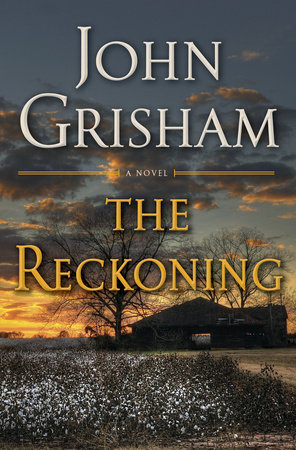
The Reckoning, by John Grisham

The Reckoning, by John Grisham

The Reckoning is not your typical John Grisham legal thriller. It includes the law and a man who choose to break it and it’s a thriller, but it is very different from Mr. Grisham’s usual offerings. The story opens with  Pete, a World War II hero back home in Mississippi in 1946.

Pete wakes up one morning and decides that is the day. Just that: today is the day. Mr. Grisham pulled me into Pete’s life. Fairly early in the book, we see what Pete does that day that will change his and many other lives forever, but we don’t know why. We have a hunch, though.

The second part of the novel goes back to when Pete met his future life. We learn about the life they made together, but we primarily learn what Pete endured in the Pacific Theatre during the War. It’s not pretty, but it’s authentic. That part of the book at times reads almost like a history book, but Mr. Grisham writes in a way that makes it personal and real.

The third and final section of the book goes back to 1946 for Pete’s college-age son and daughter to pick up the pieces of their lives and try to make sense of what their father did. And that hunch we had in Part One proves not to be correct when the truth comes out in Part Three!

The Reckoning is different from Mr. Grisham’s usual legal thrillers, but I liked it.

The Boat People, by Sharon Bala

The Boat People, by Sharon Bala

Call me old-fashioned, but I’m put off by novels that don’t use quotation marks. It’s irritating, and I shudder to think that might be the wave of the future of publishing. Let’s save some ink and omit the quotation marks! I’d read good things about The Boat People, though, so I persevered.

The book held much promise in the opening chapters as we were introduced to several of the 503 Sri Lankan asylum seekers in a boat as it nears Canada. A father, Mr. Mahindan, and his six-year-old son are the focus of the book. Upon landing in Canada in 2009 they are separated from each other because all women and children are detained in a separate facility from the men. It was immaterial that Mr. Mahindan and his little boy only had each other.

The separation was gut-wrenching and traumatic for both of them. It hit me right in the gut and immediately brought to mind the even more severe and inhumane separation of women from men and children from adults on the US-Mexico border this winter. Just as Canadians couldn’t believe what was happening in their country in 2009, we Americans can’t believe what is happening now along our southern border. Don’t get me started!

I usually don’t mention on my blog the books that I don’t finish reading, but this one held such promise and I just couldn’t stay with it. If you read it, I’d like to hear your thoughts.

I read the first one-fourth of the book (hence, the title of today’s blog post) and just lost interest in the 2002 backstory for this 2009 event. The back-and-forth between the two years didn’t appeal to me. That, combined with the lack of quotation marks delineating dialogue, made me close the book and move on to ….

The Library Book, by Susan Orlean

The Library Book, by Susan Orlean

I read in advance reviews of The Library Book that the event that prompted Susan Orlean to write the book was the April 29, 1986 fire at the Central Los Angeles Public Library that destroyed 400,000 books. An additional 700,000 books were badly damaged. It was (and still is) the largest library fire in the history of the United States. I’m an avid reader and big supporter of public libraries, so I wondered how I could have missed hearing about this tragedy at the time it happened.

It turns out that most people never heard about it because it coincided with the nuclear accident at Chernobyl in Russia. For days and days after the April 25-26 disaster, the nuclear scare predominated the news.

The Library Book not only tells about the fire and the employees and volunteers cleaning up the mess left behind; it also delves into the cause of the fire, and the history of the Los Angeles County Public Library System. Many interesting tidbits about libraries in general are included in the book, and one can tell by the tone of the book and the words used that Ms. Orleans loves and reveres libraries.

The fire, the search for an arsonist, and some of the little known facts and quotes about libraries was interesting and worth the read; however, I got bogged down in the history of the library system in Los Angeles County and found myself skipping paragraphs and, eventually, skipping pages.

I picked back up somewhere along the way and enjoyed the rest of the book. The book reinforced the warm and fuzzy feelings I have about libraries.

Since my last blog post

I’ve done a lot of reading and worked on a short story and my novel’s outline.

I’ve also worked on an extra blog post for tomorrow after reading about Rae’s idea of starting a “Two for Tuesday” tag in her January 8, 2019 blog post, 2019 (https://educatednegra.blog/2019/01/08/two-for-tuesday-prompts/comment-page-1/#comment-1646. Please check in tomorrow to learn about two books that taught me something. #TwoForTuesday

Until my next blog post

I hope you have a good book to read. I’m reading Creating Character Arc:  The Masterful Author’s Guide to Uniting Story Structure, Plot, and Character Development, by K.M Weiland; and Red Notice:  A True Story of High Finance, Murder, and One Man’s Fight for Justice, by Bill Browder.

If you’re a writer, I hope you have productive writing time and lots of time to read.

Thank you for reading my blog. You could have spent the last few minutes doing something else, but you chose to read my blog. I appreciate it! I welcome your comments.

Let’s continue the conversation

If you’ve read any of the books I mentioned today, let me know what you thought about them. Did I “miss the boat” by not finishing The Boat People, by Sharon Bala?

See you tomorrow for a bonus #TwoForTuesday blog post!

Janet

I took Mliae’s January challenge

I have discarded, recycled, or set aside to donate more items this month than I can count. All as a result of Mliae’s blog post on December 31, 2018:  https://lifexperimentblog.com/2018/12/31/happy-new-year-2019/.

Mliae challenged her blog readers to get rid of one item every day in January. I missed many days, but made up for it on others. It feels good to get rid of some clutter. Thank you, Mliae!

I finally got around to shredding my income tax records and bank statements from the year 1999 through 2010. That’s not a typo. 1999.

Think back to 1999, if you can. In those days, the bank sent you a statement every month along with all your cancelled checks. The bank and I have come a long way since 1999:  from cancelled checks to online bill pay.

In some ways, I’m organized. I keep each year’s income tax instructions and paperwork together with a rubber band. In theory, this would make it easy to discard (shred) the oldest year’s paperwork when adding the newest year’s records; however, I never put my plan into practice.

Hence, I hadn’t gotten rid of any of those records in 20 years even though we’re required to only keep our income tax records for seven years. It was time to tackle that box of income tax records! I started that project on Friday afternoon and finished it Saturday night. I thought our poor wee paper shredder was going to blow up!

I am reminded of a line I like from At Home on the Kazakh Steppe:  A Peace Corps Memoir, by Janet Givens:

“… if nothing else, a useful reminder early on that the more I can let go of the old, the more room there is for the new.”

In writing that, Ms. Givens was not referring to getting rid of physical items in order to make room for new things. She was writing about a revelation she had in the early days as a Peace Corps volunteer in Kazakhstan.

Ms. Givens realized that she needed to let go of preconceived ideas and the way she had done things back home in the United States so she could learn the culture of the Kazakh people.

The above quote from Ms. Givens’ memoir struck a chord with me. As I let go of some physical items this month, I made a conscious effort to let go of preconceived ideas.

I want to learn something each day. I want to be open to new ways and new ideas. As my 66th birthday approaches, I don’t want to be “a stick in the mud” or “stuck in a rut.”

Since my last blog post

My vertigo is improving. The things the physical therapist has me doing are definitely making a difference.

Until my next blog post

I look forward to seeing if Mliae will issue a February challenge. Nevertheless, I plan to continue to tackle the clutter that has accumulated.

I hope you have a good book to read. I just finished reading Now You See Me, by Sharon Bolton.

If you’re a writer, I hope writing brings you joy. I hope you have quality writing time this week.

Thank you for reading my blog. You could have spent the last few minutes doing something else, but you chose to read my blog. I appreciate it! I welcome your comments.

Let’s continue the conversation.

Are you a keeper of things? I think I got it honestly from both parents. They were in college when The Great Depression hit in 1929. Their young adult years were lean and full of struggle. “Waste not, want not,” must have been what they lived by. I never heard either of them say those words, but they raised their children not to waste anything.

By my parents’ example, I learned at an early age not to throw away anything that I could possibly need or find a use for later. Hence, the stack of printer paper that has only been used on one side. The other side can be used for all kinds of things – like writing the plot outline for a novel.

Hence, the used letter envelopes on which grocery lists can be written on the back while the inside conveniently holds discount coupons. And those twist-ties that come on the bag in which sliced bread is purchased? Yes, I’m guilty. There is a place set aside for them in one of the kitchen drawers.

What about you? Are you a keeper or a minimalist?

Janet

How to Recapture the Joy of Writing

If you read my December 17, 2018 blog post, https://janetswritingblog.com/2018/12/17/to-write-or-not-to-write/, you know that I was considering giving up my ambition of writing and publishing a novel.

After much prayer, soul searching, reading some blogs and articles about writing – as well as reading many encouraging comments from my blog readers – I have decided to recommit to writing my southern historical novel.

Working title: The Spanish Coin OR The Doubloon

The working title of my book is The Spanish Coin, which refers to a gold Spanish coin – a doubloon – that shows up in a Carolina backcountry community in the 1760s. There is a murder, after which the coin is missing. Is there anyone in the small community who is not a viable suspect?

That’s the story I’ve been working on off and on for more than 10 years. I’m not getting any younger, so I’d really like to finish writing it. I would also love to get it published. That’s why I wanted to recapture my joy of writing.

Extrinsic vs. Intrinsic Rewards

Several hours after posting my blog on December 17, 2018, I read an article that was just what I needed. The link to “How to Restore Your Love of Writing” is https://writersinthestormblog.com/2018/12/how-to-restore-your-love-of-writing/. The article was written by Colleen M. Story, and it addressed much of the problem I wrote about on December 17, 2018.

In her blog post, Ms. Story explains that there are two kind of rewards writers seek: extrinsic and intrinsic. Extrinsic refers to the rewards the world gives us, while intrinsic refers to the rewards we get from within ourselves.

First, I needed to discern which type of rewards I wanted. Ms. Story offered several questions that I asked myself. Those questions led me to conclude that money would be great, but that’s not what is driving me. It is a sense of accomplishment that I seek.

What led me to start writing in the first place? It wasn’t money. Those who think, “I’ll be a writer and get rich” are setting themselves up for crushing disappointment. Some writers make the big bucks, but they are the exception.

What led me to start writing was an innate desire to put my thoughts on paper. I kept journals as a teenager and sporadically as an adult. I took a creative writing class in high school, but I never considered writing as a possible career.

Another blog post I found helpful

Several days later, I read the December 19, 2018 Writers in the Storm blog post:  https://writersinthestormblog.com/2018/12/top-10-writing-success-tips-from-ray-bradbury/. In it, Jenny Hansen lists her 10 favorite writing success tips from author Ray Bradbury. The five that resonated with me were the following:

            Do the work.

            Do what you love.

            Embrace your emotions.

            Read.

            Get out of your own way.

And, of course, my blog readers inspired me

I received a number of comments about my December 17, 2018 blog post, and I took encouragement from each one of you.

Since my last blog post

I have started writing a short story set in colonial America. I’d like to publish a book of short stories set in colonial America – my favorite place and time in history.

Until my next blog post

I’ll try to take Ray Bradbury’s advice and get out of my own way.

I hope you have a good book to read. I’m reading If I Understood You, Would I Have This Look on My Face? My Adventures in the Art and Science of Relating and Communicating, by Alan Alda.

If I Understood You, Would I Have This Look on My Face?, by Alan Alda

If you’re a writer, I hope you know why you’re writing. I hope writing gives you joy.

Thank you for reading my blog. You could have spent the last few minutes doing something else, but you chose to read my blog. I appreciate it! I welcome your comments.

Let’s continue the conversation.

Have you ever lost the joy you once had for an artistic endeavor, a favorite hobby or pastime, or your once much-enjoyed career? How were you able to recapture that joy?

Janet

How to State the Obvious

I keep a notebook in which I write down sentences I like in the books I read. There’s method to my madness. I’m trying to learn how to write good prose.

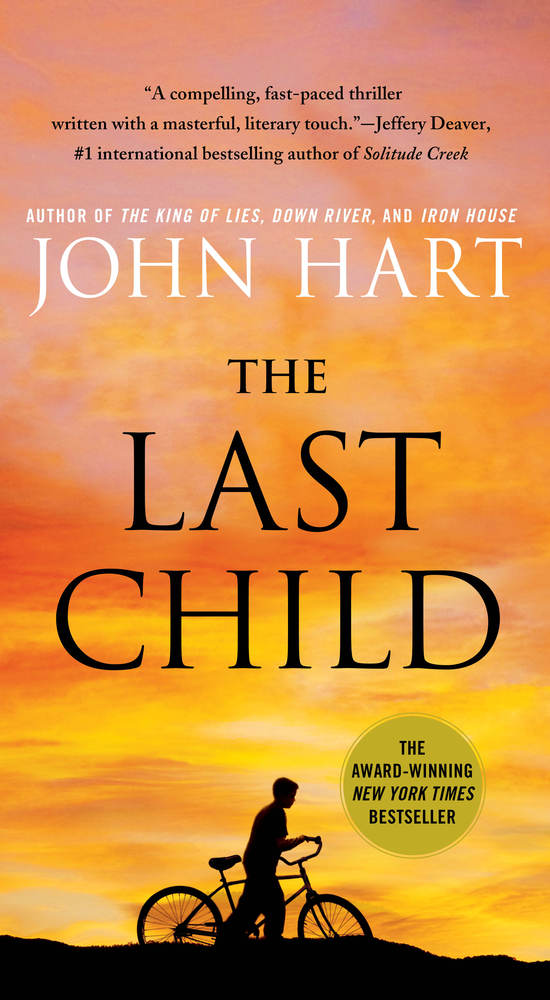
In my May 7, 2018 blog post, https://janetswritingblog.com/2018/05/07/reading-in-april-2018/, I wrote about reading The Last Child, by John Hart. In that novel a sentence jumped out at me as a clever way to state the obvious.

The Last Child, by John Hart

“He reached inside and caught the bat where it leaned against the doorjam. It had dents and scars from a time he beat the television to death over a fumble in a playoff game.” ~ from The Last Child, by John Hart

What a great way to say Burton “Jar” Jarvis is crazy without saying, “Jar is crazy.”

Since my last blog post

I have worked on my novel outline and rewritten the first scene. I think I have some plot problems figured out. If you’ve read my blog recently, you know this is a breakthrough for me. For instance, in my December 17, 2018 blog post, https://janetswritingblog.com/2018/12/17/to-write-or-not-to-write/, I revealed that I was having doubts about finishing my novel. I hadn’t seriously worked on it since June.

Being the early days of a new year, I was also inspired to weed three cookbooks out of my collection. You have no idea how surprising and necessary this accomplishment is. It’s a start.

Determined to get back to my genealogy hobby, I scanned more than 100 family photos into my genealogy software program.

Until my next blog post

I hope you have a good book to read. I’m reading In the Woods, by Tana French.

If you’re a writer, I hope you have productive writing time.

Thank you for reading my blog. You could have spent the last few minutes doing something else, but you chose to read my blog. I appreciate it! I welcome your comments.

Let’s continue the conversation.

What are your hobbies?

What are you reading?

What are you writing?

Like “Jar,” have you ever beaten a TV to death over something that came on the screen that you didn’t like? If you have, you probably need to be in therapy instead of reading my blog. Correction: You probably need to be in therapy in addition to reading my blog. Please don’t stop reading my blog!

Janet

Books I Enjoyed in December 2018

The Dream Daughter, by Diane Chamberlain

Diane Chamberlain broke away from her usual form of writing novels and did a great job with time travel in The Dream Daughterr. The book begins in 1970 with a pregnant woman, Caroline Sears, finding out that her unborn baby has a heart defect.

The Dream Daughter, by Diane Chamberlain

It turns out that Caroline’s brother-in-law has come to 1970 from the future. He knows that if Caroline can find her way to the future, her unborn daughter can have fetal surgery – the unthinkable in 1970.

I won’t give away any details of Caroline’s journey. I’ll just say things don’t go smoothly. This trip across decades will keep you turning pages.

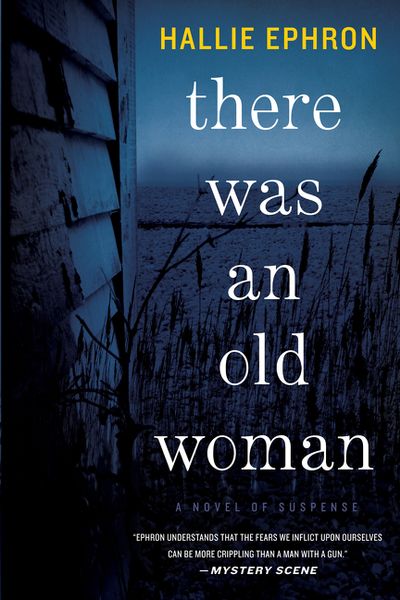
There Was an Old Woman, by Hallie Ephron

The title of this book caught by attention and immediately took me back 60 years to nursery rhymes about the old woman who lived in a shoe and the old woman who swallowed a fly. I’d never read anything by Hallie Ephron, so I decided to give There Was an Old Woman a try.

The story involves multiple generations, with an emphasis on several independent-living octogenarians. Things in the neighborhood keep disappearing. What’s happening? Who is doing this? Is it the strange man across the street?

There Was an Old Woman, by Hallie Ephron

Thrown into the mix is a subplot about the B-25 Mitchell bomber that crashed into the Empire State Building on July 28, 1945. Ms. Ephron sheds a light on that much-forgotten event by making one of the main characters in the book be a survivor of that plane crash. I must admit, I did not know about that tragedy in which 14 people were killed.

There Was an Old Woman is categorized as a thriller, but it did not come across to me as such. It’s more like a neighborhood mystery in which the daughter of one of the 80+-year-olds is forced to come home and deal with her mother’s illness and neglected house. The book has received an interesting mix of 1-star and 5-star reviews, with most reviews falling into the 3- or 4-star categories.

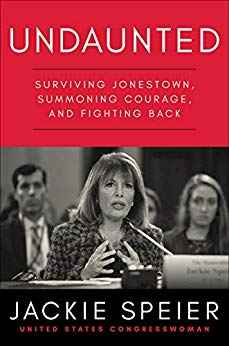
Undaunted: Surviving Jonestown, Summoning Courage, and Fighting Back, by Jackie Speier

I thoroughly enjoyed reading this memoir by United States Representative Jackie Speier of California’s 14th congressional district. I was not aware that Ms. Speier survived the Jonestown Massacre, so that fact alone drew me to this memoir.

Undaunted, by Jackie Speier

What a life Ms. Speier has had! When she was 28 years old, she worked for California Congressman Leo Ryan. She and others accompanied Ryan to Jim Jones’ Peoples Temple in Jonestown, Guyana on November 14, 1978 to rescue individuals being held there against their will.

Those who are old enough to remember that fateful event know that things rapidly soured upon the delegation’s arrival. Congressman Ryan was murdered and Jackie Speier was shot five times and nearly died.

For someone like me who is a history and political “junkie,” this memoir was compelling and inspiring. Ms. Speier writes about her widowhood, motherhood, her lifelong work in politics, and her 40-year determination to overcome the scars she has from her Jonestown experience.

Since my last blog post

I continue to receive encouraging comments in response to my December 17, 2018 blog post, https://janetswritingblog.com/2018/12/17/to-write-or-not-to-write/. I appreciate each and every one of them and each and every one of my blog readers. I have a more positive attitude about my novel in progress since being bolstered up by so many of you over the last three weeks.

The holidays turned out not to be conducive to my getting back to putting words on paper (or the computer screen, as the case may be.) I’ve mulled the story over and over in my mind, though, and I intend to get back to writing that book this week. I need my blog readers to hold me accountable!

I’ve read many helpful blog posts and articles this week about the various facets of writing. One in particular hit a chord with me, but I’ve misplaced the link to it. The piece recommends that an aspiring novelist publish one or more short story collections in order to build readership. I’m kicking around that idea. It makes sense. The theory is that more people will want to buy my novel if they have read and liked my short stories. I needed one more project!

Call me a klutz if you want to, because I think I qualify. In the last four or five days I’ve broken a toe on both feet, but not at the same time. Don’t laugh; broken toes are painful.

Until my next blog post

I hope you have a good book to read. I’m reading The Reckoning, by John Grisham.

If you’re a writer, I hope you have quality writing time. I hope I do, too!

Thank you for reading my blog. You could have spent the last few minutes doing something else, but you chose to read my blog. I appreciate it! I welcome your comments.

Let’s continue the conversation.

Have you read any books recently that you’d recommend to me and my blog readers?

Have any of you writers had experience – good or bad – in publishing short stories to build readership prior to publishing your first novel?

Janet