“Had a family once.” (Revisited)

In my blog post on June 18, 2018 “Had a family once.”, I wrote about the opening line of the prologue to Right Behind You, by Lisa Gardner:  “Had a family once.”

Central American Refugees – “Had a family once.”

I can’t get that line out of my head. “Had a family once,” must be how the refugees at the US-Mexico border feel. Children have been separated from parents and there was, obviously, no plan in place for the uniting of those families. What a logistical nightmare now, and all the result of an ill-conceived change in US Government policy. “Had a family once.”

Young soccer team and coach in Thailand

As I write this, the world is watching and holding its collective breath as valiant attempts are being made to rescue a dozen young soccer players and their coach from a flooded cave in Thailand. Those boys, their parents, and their coach must have spent many hours in the past two weeks thinking, “Had a family once,” and praying they’ll still have their families intact when this ordeal and rescue is over.

African Slaves in America – “Had a family once.”

My interest in genealogy and local history recently led me on a fascinating trek into the lives of some people of African descent who were slaves in Cabarrus County, North Carolina in the 1800s. That sounds like a long time ago, but it really isn’t when you think in terms of a person’s lifespan and generations within families.

“Had a family once.”

Caroline had a family once.

In the records of Rocky River Presbyterian Church, Caroline, infant daughter of slaves Nat and Marie owned by R. Biggers, was baptized on August 16, 1835. Caroline, a slave of George Leroy Morrison, joined the church April 29, 1859. Was this the same Caroline?

Yes, she was! There is a bill of sale dated October 30, 1856 in which a 22-year-old woman named Caroline and her two children (Robert, aged about four years and an unnamed infant about three months old were sold by Rebecca Biggers to George Leroy Morrison.

The idea of slavery is repulsive, but seeing an actual bill of sale makes me physically ill. Having this information, I owed Caroline a few hours of my time to try to determine if she survived to be free after the American Civil War. What I was able to piece together was surprising and thrilling.

1863 Cabarrus Tax Assessment

In 2004, I compiled a list of the records of the more than 900 slaves who were baptized at and/or joined Rocky River Presbyterian Church between around 1820 and the end of the Civil War in 1865. The 1863 Cabarrus County Tax Assessment List gave details about some of those slaves such as age, physical condition, and monetary value.

George Leroy Morrison died May 6, 1860. The 1863 Cabarrus County Tax Assessment states that his brother, Q.C. Morrison was guardian of four slaves:  Abram, aged 45 and valued at $1,100; Caroline, aged 26 and valued at $1,400; Robert, aged 9 and valued at $900; and Matt [name was probably Nat] aged 1 and valued at $100. Q.C. Morrison died in the Civil War on August 7, 1863.

According to the 1863 Cabarrus County Tax Assessment, Rebecca Biggers had a 55-year-old slave named Nathaniel. He was valued at $100 with the notation, “cripple.) Rebecca did not have a slave named Marie at that time, but we know from church records that Nat and Marie were Caroline’s parents.

Armed with that information, I wanted to know more. I wanted Caroline to survive the War, gain her freedom, and have a life. She’d “had a family once.” Did she have that same family after the War?

Yes, she did!

The 1870 US Census of Cabarrus County, Township One finds Caroline, wife of Albert Morrison, along with children Robert, Nathaniel, Edward, and Albert.

According to the agriculture schedule of the 1870 Census, Albert and Caroline Morrison owned 40 acres of improved land valued at $200 along with farm machinery valued at $15. They owned livestock valued at $100 and reported how many bushels of wheat, Indian corn, and corn they had raised in 1869.

And, by the way, Albert Morrison was one of the five elders elected at the founding and organizational meeting of the African-American church that was formed by former slaves who had been members of Rocky River Presbyterian Church. Originally called Rocky River Colored Presbyterian Church, it soon became Bellefonte Presbyterian Church and is still going strong in Harrisburg, NC.

The next record of Caroline

The next time we find a record of Caroline Morrison is in the Cabarrus County, NC Wills and Estate Papers. “The widow Caroline Morrison & family” of seven children received a one year’s dower on March 30, 1876.

1880 US Census

Caroline Morrison is the head of a household in Township One in Cabarrus County, NC when the 1880 federal census is taken. Sons Edward, Albert, Eugene Mc., and John are in the household along with Caroline’s granddaughter, Harriet.

Summary of my research

I won’t go into all the details of the rest of my research into the life of Caroline Morrison. Suffice it to say that I found marriage licenses for her sons, Nathaniel A. and Albert. Albert (Jr.) and his wife and children are in the 1900 US Census. I even found a 1925 death certificate for Albert (Sr.) and Caroline’s son, Robert. He was employed at the Southern Railway Railroad Shop in Forsyth County, NC.

Did Caroline have a family? Yes, she most certainly did!

Until my next blog post

There’s no telling what interesting history tidbits I’ll uncover. I love this stuff!

I hope you have a good book to read. I’m reading Educated:  A Memoir, by Tara Westover and several other small nonfiction books.

If you’re a writer, I hope you have productive writing time. I didn’t work on my novel last week, but I had a rewarding time researching Caroline Morrison and writing about my findings.

Thank you for reading my blog. You could have spent the last few minutes doing something else, but you chose to read my blog. I appreciate it!

Janet

Books I Read in June 2018

A couple of weeks ago, it looked as if I would have no books to write about from my reading in June. As I blogged last week in Reading is not a contest!, reading is not a contest, but it was a competition of sorts I’d inflicted upon myself.

Every year I wanted to read more books than the one before. I was signing up for more annual reading challenges than I could easily complete. The good thing about reading challenges is that they prompt me to read books I wouldn’t otherwise read; however, the flip side is I don’t have time to read all the books I want to read.

The second half of June I got my reading juices going again, so today I will blog about the five books I read. (Don’t be too impressed; one of them was a small book of very easy reading.)

The Hellfire Club, by Jake Tapper

97803164723191
The Hellfire Club, by Jake Tapper

Jake Tapper is a well-known journalist and anchor for CNN. The Hellfire Club is his debut novel. Although I thought the first half of the book got too bogged down in the details of Washington, DC politics in 1954, the second half of the novel exploded and kept me turning the pages to see what would happen next.

Mr. Tapper did a marvelous job of giving 11 pages of his sources at the end of the book. A sign of a good historical novel is proof of research. In this list of sources Mr. Tapper is quick to remind the reader that the book is a work of fiction.

I couldn’t help but draw parallels in my mind between the ugly underbelly of politics in Washington, DC in 1954 and the mess we find ourselves in today. I don’t know if there is currently a hellfire club in the nation’s capital, but there is an alarming reticence on the part of members of Congress to speak up against the current barrage of lies coming from a house on Pennsylvania Avenue.

All-in-all, the subject matter of The Hellfire Club was a good read for me considering my background in political science and history.

Note to Self:  Inspiring Words from Inspiring People, collected and introduced by Gayle King

note-to-self-9781982102081_lg
Note to Self: Inspiring Words from Inspiring People, collected & introduced by Gayle King

This is a delightful collection of letters from the “CBS This Morning” TV show’s “Note to Self” project. Twenty-six of those letters are included in the book. Most of the contributors are famous people, but some were unknown to me.

It’s a great book choice for those times when you just have a few minutes to read, or when you don’t have the energy to remember the threads of an ongoing story. You can read each of the 26 letters in just several minutes.

The idea behind the project and this book is to have the adult you write a letter to your younger self. Anyone can do this. Why don’t you give it a try?

Summer Hours at the Robbers Library, by Sue Halpern

SummerAtTheRobbersLibrary
Summer Hours at the Robbers Library, by Sue Halpern

Sue Halpern is a journalist and novelist. This was the first of her books that I’ve read.

The title piqued my interest, since I’m an avid supporter of libraries. It is a story about a collection of unrelated people in a small town in New Hampshire who form bonds tighter than some people do with their parents and siblings.

The friends they all have in common are Kit (the librarian) and Sunny, who has been ordered to do community service at the library over the summer. Sunny is the “no-schooled” daughter of two free spirits, and this plays heavily in the book. Others in the book are primarily a group of retired men who pass their time at the library before going the cafeteria at the hospital for lunch. As the story develops, most of the characters are surprised by how close they’ve become.

This is not a gripping story, but if you’re looking for something light to read, you might consider checking it out at your local public library. Curious about the reviews it has received, I found that it averages three stars because readers have either given it five stars or one or two stars. Few people actually give it a solid three-star rating.

That made me realize that sometimes I’ll pick a book that has a three-star rating without looking more closely to see how that rating was determined.

Flat Broke with Two Goats:  A Memoir of Appalachia, by Jennifer McGaha

FlatBrokeWithTwoGoats
Flat Broke with Two Goats: A Memoir of Appalachia, by Jennifer McGaha

At first I wasn’t sure I wanted to check out this book, but curiosity got the better of me. Once I started reading it, I wasn’t sure I would finish it. I like reading about strong, independent women – real or fictional. The author did not strike me as strong or independent early in this memoir, but I kept reading to see if she would become either.

I read the first five chapters. Jennifer and David lose their house to foreclosure and thousands of dollars in back taxes. Jennifer has no clue because David “handled” their finances. That’s when I started not liking the book.

Then Jennifer and David buy a 100-year-old mountain cabin. While Jennifer is back at the house packing some last minute things, a sheriff’s deputy arrives with a subpoena for David to appear in court. It turns out that David, unbeknownst to Jennifer (again), has borrowed thousands of dollars and failed to report the loan. That’s when I lost interest in the book. I also don’t particularly like books that portray Appalachia as a place on the back side of beyond.

I just got around to reading its reviews on https://www.goodreads.com and discovered that the book has received many one- and two-star ratings, so I’m in good company.

Look for Me, by Lisa Gardner

LookForMe
Look For Me, by Lisa Gardner

I started reading this book a couple of months ago but had to return it to the library before I had time to get very far into it. It is the second book I’ve read by Lisa Gardner. Look for Me is the latest book in her Detective D.D. Warren Series.

Look for Me is about a family that’s killed except for the 15-year-old daughter. She is missing. Did she escape? Was she kidnapped by the killer? Or is she the murderer?

The book delves into the foster child system in Massachusetts, as the Det. Warren works to try to find the missing teen and determine who murdered the girl’s family. When alcohol temporarily got the best of the mother a few years ago, Roxy and her younger siblings were placed in foster homes. The treatment they received in those homes and the gang activity they were exposed to at school enter into the investigation.

There are many twists and turns in this story, and you might be surprised when the murderer is revealed near the end of the book.

Look for Me did not hold my attention as much as the other novel I read by Lisa Gardner, Right Behind You from her FBI Profiler Series.


Since my last blog post

I’ve tried to lighten up on the demands I was making on myself. I returned a book to the library after only reading the first five chapters. That’s a big deal for someone who until recently thought she had to finish any book she started reading.

I’ve barely spent any time on Pinterest, and I’ve enjoyed the break.

I continue to declutter my life, letting go of lots of knitting, crocheting, and sundry handcraft instructions for projects that I no longer desire to make. Let’s face it. If the fashions from the 1960s-1980s come back in style, I really have no desire to learn how to make macrame plant hangers and belts or broomstick lace shawls.

Just for fun, I just searched for “macrame” on Google and the first image that came up was an $895 macrame dress that can be purchased at Saks Fifth Avenue. Perhaps I was too hasty in putting those instructions in the recycle bin! The odds of my making a macrame dress are less than slim to none, so I can only hope those instructions will get new lives as recycled paper.

I’ve done some additional research on several of the slaves who were members of Rocky River Presbyterian Church in Cabarrus County, North Carolina prior to and during the Civil War. More on that in a future blog post.

I also, in a roundabout way, got into the records of some local people who had to request a pardon from US President Andrew Johnson after the Civil War ended in 1865 and had to pledge their allegiance to the United States Government. More on that later, too. Interesting stuff with some surprising details.

The other day I revisited the 10-cents-per-item used book sale at the Harrisburg Branch of the Cabarrus County Public Library. I purchased several books I probably won’t ever read as well as a music CD that was apparently produced by First Union National Bank, which was my beloved bank until it was bought by Wachovia which was subsequently purchased by Wells Fargo. (Don’t get me started!) Anyway… This 10-cent CD is a fantastic collection of familiar works by Beethoven, Bach, Handel, Dubussy, Haydn, and Mozart.

Until my next blog post

I hope you have a good book to read and some interesting research to do. Stay tuned. I can’t wait to see what I get to read and learn in July!

If you’re a writer, I hope you have quality writing time.

Visit your local public library this week. You never know what you can walk out of there with just by showing your free library card or what music CD you might get to buy for just 10 cents!

Thank you for reading my blog. You could have spent the last few minutes doing something else, but you chose to read my blog. I appreciate it!

Janet
Reading is not a contest!

I was in a bit of a reading slump the first half of June. There were many books on my “want to read” (WTR) list, but books I thought I wanted to read kept making their way to the top of the waitlist at the public library and I had to check them out within seven days or go back to the bottom of the waitlist.

Last week I tried to come to grips with the lunacy of this habit of mine. Library waitlists were dictating what I was reading, while many books languished on my WTR list.

Since I can’t afford to buy very many of the books I want to read, I rely on two public library systems to make those books available to me.

59da32f012ac3e0001b9443f_Harrisburg Library
Harrisburg Branch of Cabarrus County Public Library System

Don’t get me wrong. I am a card-carrying supporter of public libraries. I have nothing but respect and love for public libraries; however, I can’t indefinitely ignore books on my WTR list while reading the newest shiny book that rises to the top of the library waitlist. It’s not the fault of the library or the system. It is my fault. I have put the cart ahead of the horse.

Sometimes by the time I get to the top of the waitlist, I can’t remember why I wanted to read the book in the first place. Did I read a glowing review of it? Did another writer recommend it as a good example of character development?

There’s also the matter of my inability to stay awake to read as long as I’d like. Chronic Fatigue Syndrome has completely wrecked my circadian clock and my memory. I hope seeing a sleep specialist later this summer will result in some improvement in my sleep.

In an effort to find a piece of new advice to help me get on track with my WTR list, I read “Hot Reading Challenge Tips from Pros Who Read More Than 100 Books a Year.” The article was posted on June 21, 2018 on the www.Goodreads.com blog (https://www.goodreads.com/blog/show/1294?rto=x_gr_e_nl_general&utm_medium=email&utm_source=newsletter&utm_campaign=june212018&utm_content=Voracious.Readers&ref_=pe_3097180_285823010.) Great timing!

Apparently, a mid-year reading slump is not unusual. I took encouragement from that. It’s not just me.

Goodreads.com asked four of their avid readers (persons who read more than 100 books-a-year) to give advice to the rest of us. My takeaways from reading this blog post boil down to this:

  • You don’t have to finish reading a book you aren’t enjoying
  • Read what really appeals to you, not what you think you “should” read
  • Reread your favorite book. It might get your reading juices going again.

I already knew I don’t have to finish reading a book I’m not enjoying; however, old habits are slow to die. I am a work in progress. If I’m going to blog about a book I’ve read, it helps if I’ve read the whole book.

In my January 8, 2018 blog post, 2018 Reading, Writing, & Living Plans, I stated that I would take a new approach this year. With nearly 500 books on my WTR list, I said I would concentrate on reading the books on that list.

As of yesterday, my WTR list had grown to 578 in spite of the fact that I’d read 32 books in the first 25 weeks of 2018. I read 63 books in 2017, so I’m on track to equal or surpass that number in 2018. WHOA! I can’t believe I just typed that. I can’t believe I even had that thought.

Reading is not a contest!

Note to self:  Reading isn’t a contest. The person who reads the most books doesn’t “win.”

Reading whatever I want to read is a gift I received by being born in and living in a democracy. Having the ability to read at all is a gift from God and my ancestors who valued books and education.

The numbers I’ve been keeping track of are an artificial measuring stick I inflicted on myself.

My first blog post each month is about the books I read in the previous month. That was my decision, but that in itself puts pressure on me to read, read, read. When June 15 arrived and I had not finished reading one single book during the month, I started feeling the pressure of finishing several books before June 30 so I’d have something to blog about on July 2. Why am I doing this to myself?

Indeed, why?

I’ll continue to read books on my WTR list. As I check those off the list, I’m sure I’ll keep adding books to the list. That’s just the way it is when you’re an avid reader. I’ll try to stop obsessing about the numbers, though!

Incidentally, my next blog post will be about the books I read in June. Those monthly blog posts are among my most popular. I plan to continue that schedule. I just hope I will not feel guilty if I only read one or two books in any given month instead of the four or five I’ve striven for over the past several years.

Thus far in June, I’ve read three books and approximately half of three others. Saturday night, June 30 will, no doubt, find me trying to finish reading the last of those three books so I can blog about the six books I read in June.

I’m a book-a-holic in need of an intervention.

Until my next blog post

I hope you have a good book to read.

If you’re a writer, I hope you have productive writing time. I’ve done some thinking about my novel, The Spanish Coin (working title), but I haven’t actually added to the word count lately.

I think I need to spend more time writing and less time reading!

Thank you for reading my blog. You could have spent the last few minutes doing something else, but you chose to read my blog. I appreciate it!

Janet
“Had a family once.”

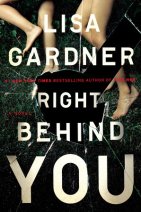
The prologue to Right Behind You, an FBI profiler thriller novel by Lisa Gardner, is in the head of an older Tally. The following first line in the prologue is very telling and sets the stage for the book:

            “Had a family once.” ~ from Right Behind You, by Lisa Gardner

That first line packs a punch and insinuates that Tally no longer has a family. You have to keep reading to know the rest of Tally’s fictional story.  He grew up in foster homes after his father was murdered. There are wonderful foster homes and there are not-so-good foster homes. Tally’s experience fell into the latter of those scenarios.

9780525954583

You may recall that I read Right Behind You, by Lisa Gardner last year and wrote about it in my April 1, 2017 blog post, The Authors I Read in March.

Since my last blog post

I continue to declutter my house and, hopefully, my life.

I made more infographics for my various boards on Pinterest, such as The Blue Ridge Mountains, Great Smoky Mountains, Historical Fiction, and Harrisburg (#TheBurgNC.) You can look at my Pinterest boards at https://www.pinterest.com/janet5049.

Until my next blog post

I hope you have a good book to read. I’m reading Note to Self: Inspiring Words from Inspiring People, collected and introduced by Gayle King.

If you’re a writer, I hope you have productive writing time.

Thank you for reading my blog. You could have spent the last few minutes doing something else, but you chose to read my blog. I appreciate it!

Janet

Good Teeth

I used to bite my fingernails, much to my mother’s regret. She went through this with all three of her children so, by the time I came along, she knew none of the famous recommendations for helping a child stop this habit worked.

My brother was the eldest child. When she tried painting his fingernails with hot polish that was invented to burn a nail biter’s tongue, she said her would stop biting his nails just long enough to say, “Hot!” before going right back at it.

Fortunately, I stopped biting my nails. I don’t recall when or why, but I’m glad I stopped. That is why a line from Prayers the Devil Answers, by Sharyn McCrumb caught my eye. To say Ms. McCrumb has a way with words would be a gross understatement.

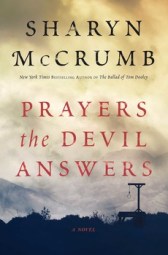
In Prayers the Devil Answers, Lonnie Varden is in jail in Knoxville, Tennessee. He pushed his wife, Celia, off Hawk’s Wing – a rock that jutted out of a mountain. His cell mate, Ulysses, gives the following observation about the young Lonnie Varden:

“His nails were bitten down to the quick, which told the old man that this kid had two things he didn’t: more trouble than he was accustomed to and good teeth.” ~ from Prayers the Devil Answers, by Sharyn McCrumb

prayers-the-devil-answers-9781476772813_lg
Prayers the Devil Answers, A novel by Sharyn McCrumb

As I read the book, I jotted down a number of sentences and paragraphs I liked. I have used two of them in my April 19, 2017 blog post,  P is for a Paragraph I Liked and my June 13, 2017 blog post, “Not a rope . . . if drowning”.

I want to be a writer who comes up with expressions and turns of a phrase like Sharyn McCrumb. It will take practice. Practice. Practice.

Since my last blog post

I had something to happen in the health category that led me to do some soul searching. It had a good outcome, and served as a bit of a wake-up call. I’ve reevaluated some things and how I spend my time. Life is short.

I’ve been reading and decluttering. I tend to keep things. My parents were young adults during The Great Depression, so it was ingrained in me from birth that you didn’t throw something away that you thought you might be able to use later. (Examples include rubber bands, scraps of paper, paper bags, scraps of yarn, string, bits of thread, and anything that looks like something that might eventually be useful.)

Hence, things that come into my house tend to never leave. Last week I recycled old magazines, cardboard boxes and loose papers. I shredded papers bearing personal information. (After all, someone stole our garbage once. You just never know!)

I sorted fabric I’ll never sew and clothes I’ll never be small enough to wear again and took them to Goodwill. I can see the improvement, but someone who’s never been in my house before would probably think I still have a problem. They’d be right. I am a work in progress. More decluttering is on my agenda for this week.

My new approach to “things” is to ask myself, “Do I want my nieces and nephew to have to deal with this someday, or should I go ahead and get rid of it?”

Until my next blog post

I hope you have a good book to read. I’m reading The Hellfire Club, by Jake Tapper.

If you’re a writer, I hope you have quality writing time.

Thank you for reading my blog. You could have spent the last few minutes doing something else, but you chose to read my blog. I appreciate it! Tell your friends.

Janet

Reading in May 2018

This is the first Monday in June, so it’s time for me to tell you about the books I read in May. Perhaps one or more of them will catch your attention. If you’ve read any of them, I’d love to hear your comments. In fact, I’d love to hear your comments even if you haven’t read any of them.

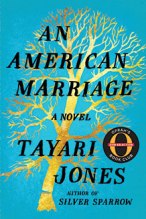
An American Marriage, by Tayari Jones

An American Marriage
An American Marriage, by Tayari Jones

The first novel I read in May was An American Marriage, by Tayari Jones. Each chapter is written in the point-of-view of one character. The main characters are Roy, Celestial, and Andre. Roy ends up in prison in Louisiana after being convicted of a crime he did not commit. During his absence, his wife Celestial relies heavily on her lifelong friend, Andre. You can probably see where that leads, but I don’t want to give the plot away. This book is a study in commitment, love, friendship, betrayal, and how the things that happen to us in childhood leave profound marks on our feelings of self-worth. I kept turning the pages because I felt invested in each character and I wanted to know what the outcome of the various twists in the plot would be.

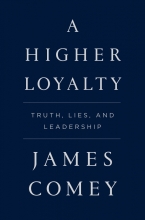
A Higher Loyalty:  Truth, Lies, and Leadership, by B. James Comey, Jr.

A Higher Loyalty
A Higher Loyalty: Truth, Lies, and Leadership, by James Comey

After all the hype about A Higher Loyalty:  Truth, Lies, and Leadership, by former FBI Director B. James Comey, Jr., I thought perhaps I’d already heard all about the book. Of course, the part of the book that has gotten all the publicity is the last three chapters in which Mr. Comey tells about his encounters with Donald Trump after his election and after his inauguration as US President. There were few surprises in those chapters, thanks to the numerous quotes and discussions of that information in the media.

As a political science major with a history minor, I really enjoyed the whole book. Mr. Comey gives background of the FBI and explains how the Director of the FBI and the US President aren’t supposed to have much contact. That’s the way it has to be in order for the FBI to maintain its reputation as a non-partisan institution. He writes about the honor it is to serve in the agency, and he writes about some of the difficult decisions he had to make while in the directorship and during his earlier days as a prosecutor.

Less, by Andrew Sean Greer

Less by Greer
Less, by Andrew Sean Greer

The day after I read the literary winners of the 2018 Pulitzer Prize, I got on the waitlist at the public library for this year’s Fiction winner, Less, by Andrew Sean Greer. This novel is a tale about a gay American man as he approaches and then passes his 50th birthday. Arthur Less is a novelist. He travels around the world, bumbling his way through country after country. The book is entertaining, as it combines humor with the serious topic of love and how human beings seek it, find it, lose it, and perhaps find it again.

I made note of more than a few lines I liked in the book. I’ll share them in future blog posts.

She Rides Shotgun, by Jordan Harper

She Rides Shotgun
She Rides Shotgun, by Jordan Harper

I wanted to read this book because it won the 2018 Edgar Award for Best First Novel. After reading the opening description of a white supremacist gang in a prison in Chapter 0 (yes, Chapter 0), I wasn’t sure I could hang in there to keep reading. I continued to read, and I was soon invested in 11-year-old Polly.

Polly’s is kidnapped at school by the father she barely knows and is suddenly thrown into a life of crime. The book takes the reader along for a rollercoaster ride as Polly quickly becomes streetwise in order to survive.

Still I Rise:  The Persistence of Phenomenal Women, by Marlene Wagman-Geller

Still I Rise
Still I Rise: The Persistence of Phenomenal Women, by Marlene Wagman-Geller

I happened upon this book while perusing the shelves of new books at the public library. It’s a delightful and inspiring book about 25 phenomenal women who overcame all manner of adversity and made their mark on the world.

Among the 25 were such notables as Hattie McDonald who won an Academy Award in 1940 for her role in Gone With the Wind. She was the first person of color to win an Academy Award. If you don’t know her backstory, it’s well worth getting this book just to learn about her struggles.

Others included in the book include Irena Sendler, Susan B. Anthony, Fannie Hamer, Maya Angelou, Dr. Ruth Westheimer, Claudette Colvin, Patty Duke, Sonia Sotomayor, Jeannette Walls, Joanne Rowling, Laura Hillenbrand, Tammy Duckworth, and Lizzie Velazquez.

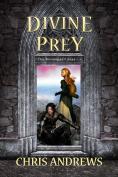
Divine Prey, by Chris Andrews

divine-prey-thumbnail
Divine Prey, by Chris Andrews

I stepped way out of my comfort zone to read this debut novel by Chris Andrews. Fantasy novels just aren’t my go-to reading preference; however, I found myself getting interested in this epic tale about a princess who is being hunted down by the faspane. The story takes a definite turn for the worse when Princes Caroline is attacked by a werewolf. Healing stones come into play, but can she be saved?

Although not my favorite genre, Divine Prey is well-written and well-paced. The descriptions are vivid and Mr. Andrews shows how adept he is in weaving body language into the plot. Even if you aren’t a fan of the fantasy genre, you might want to give this book a chance. If you are a connoisseur of fantasy books, I think you’ll definitely want to read this one. It is Book One in Mr. Andrews’ Noramgaell Saga, so you’ll want to get in on the beginning of this intriguing story.

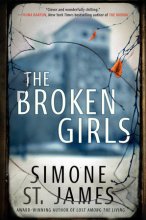
The Broken Girls, by Simone St. James

The Broken Girls
The Broken Girls, by Simone St. James

The chapters in this novel alternate between 1950 and 2014 in Barrons, Vermont. In 1950 one of the girls at the Idlewild Hall boarding school for troubled teenage girls disappeared. Her disappearance remains unsolved decades after the school was closed and the property abandoned.

In 2014, journalist Fiona Sheridan can’t forget that in 1994 the body of her murdered sister was found near the school. When it’s announced that Idlewild Hall is going to be restored, a body is discovered in the bottom of a well on the property. Could it be the remains of the 15-year-old missing girl from 1950?

This book will keep you turning the pages as there are multiple mysteries being unraveled, including the murder of Fiona’s sister. It is the June book selection for the online Apostrophe S Book Club, which prompted me to read it. I’m glad I did.

Here’s a little aside about Simone St. James, the author of The Broken Girls. Kudos to Ms. St. James!  I have more than 200 books on my “want to read” list on Goodreads.com. As soon as I added The Broken Girls to my list, I received a thank you note from her! Of all those “want to read” books, Ms. St. James was the first author to acknowledge that I had added one of her books to my list. As busy as authors are, it really impressed me that she took the time to write me.

Since my last blog post

Drumroll! As of May 30, I had 1,500 blog followers! Thank you, each and every one of you!

Since my last blog post two weeks ago, I have enjoyed reading, doing jigsaw puzzles, getting out to walk when it wasn’t raining here in North Carolina, and brushing up on my new skill of making infographics (I’m so new at this, I’m not even sure that’s the correct term!) to post on Pinterest and a few to post on Twitter and Facebook. I’m concentrating on sharing quotes from my vintage postcard book, The Blue Ridge Mountains of North Carolina, as it will mark the fourth anniversary of its publication in August and I wanted to give sales a boost as the spring/summer/fall tourist season commenced.

Until my next blog post

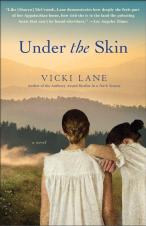
I hope you have a good book to read. I’m finally reading Under the Skin, by Vicki Lane. It’s the fifth of her Elizabeth Goodweather Appalachian Mysteries.

Under The Skin
Under the Skin, by Vicki Lane

If you’re a writer, I hope you have quality writing time.

What are you reading?

Janet

A 1775 Declaration of Independence

My watching the wedding of Prince Harry and Meghan Markle on TV on Saturday probably caused my Scottish ancestors to spin in their graves. They left Scotland in the 1760s to get away from restrictive land tenancy laws and a political climate unfavorable to their Presbyterian beliefs.

The Royal Wedding, which I thoroughly enjoyed watching, happened the day before the 243rd anniversary of the Mecklenburg Declaration of Independence.

My immigrant ancestors were among the Scottish Presbyterian pioneers who settled old Mecklenburg County, North Carolina. Years of discontent in the American colonies were piled on top of the anti-British Crown feelings they brought with them across the Atlantic.

Weary of unfair taxes imposed by the Crown and the discrimination they were subjected to as Presbyterians slowly brought the settlers to the boiling point. An example of the persecution these Presbyterians felt were the Vestry and Marriage Acts of 1769. Those acts fined Presbyterian ministers who dared to conduct marriage ceremonies. Only Anglican marriages were recognized by the government.

In May of 1771 a group of young men from the Rocky River Presbyterian Church congregation in the part of Mecklenburg County that later became Cabarrus County, disguised themselves by blackening their faces and under the cover of darkness ambushed a shipment of Royal munitions traveling north on the Great Wagon Road. The supplies were destined for Rowan County to put down the Regulator Movement.

Blowing up three wagons loaded with gunpowder and other supplies, the teens and young men who perpetrated the deed were declared outlaws by the Royal Governor and had to go into hiding until May 20, 1775 when all the citizens of Mecklenburg County were declared to be rebels against the British Crown.

On May 20, 1775, the citizens of Mecklenburg County, North Carolina declared themselves to be free and independent of the rule of Great Britain. It was a sober and sobering declaration not entered into lightly. Those American patriots meant business, and they knew the risks they were taking.

Archibald McCurdy, an Elder in Rocky River Presbyterian Church, heard the document read from the steps of the log courthouse in Charlotte. When he got home, he and his wife, Maggie, listed everyone they knew of who could be trusted in the coming fight for American independence.

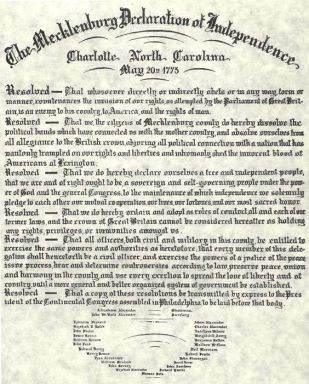
No original copies of the Mecklenburg Declaration of Independence survive today. The local copy was lost in a house fire at the home of one of the signers. The copy taken to the Continental Congress in Philadelphia by Captain James Jack on horseback was also lost. Later, signers of the document recreated it from memory.

Mecklenburg Declaration of Independence
A recreation of the Mecklenburg Declaration of Independence.

Nevertheless, those of us who were raised on stories of the Mecklenburg Declaration of Independence and the brave souls who risked their lives to sign it know that the document was real. The blood of the American patriots still flows in our veins and their spirit of freedom still beats in our hearts.

Don’t mess with our freedom of the press, freedom of speech, freedom of religion, or our freedom of assembly!

Until my next blog post

Remember to watch the first of a new eight-part series on PBS on Tuesday night, May 22, 2018:  “The Great American Read.” I wrote about it in last Monday’s blog post, The Lampasas County Asylum. The official website of the series is http://www.pbs.org/the-great-american-read.

I hope you have a good book to read. I’m reading Fascism: A Warning, by former US Secretary of State Madeleine Albright.

If you’re a writer, I hope you have quality writing time.

Janet

The Lampasas County Asylum

6.png
News of the World, by Paulette Jiles

JanetsWritingBlog.com, May 14, 2018         The Lampasas County Asylum

In honor of Mother’s Day, which was celebrated yesterday in the United States, today’s blog post highlights a line I liked in News of the World, by Paulette Jiles:

“Whatever woman had raised these five boys must now be in the county asylum, if Lampasas County had one, and if they did not, they had best build one soon.” – from News of the World, by Paulette Jiles.

This sentence was written in the voice of Captain Kidd as he first saw the Horrell brothers and quickly sized them up. I think it speaks for itself.

You may recall that I read News of the World last October and commented about it in my November 6, 2017 blog post, Some Good New Books.

The Great American Read

Have you heard about The Great American Read? It’s a new eight-series that will be aired on PBS in the United States beginning on May 22, 2018. Here’s the official website:  http://www.pbs.org/the-great-american-read.

You can go to that site and get the list of the 100 most-loved novels in America. A survey was taken by 7,200 people where they were asked to name the novel they loved the most. A panel of 13 literary industry professionals reviewed the list compiled in the survey and narrowed that list down to 100 books. Viewers will be able to vote for their favorites online throughout the summer and also via phone toll-free in the fall leading up to the series finale in October.

Sounds interesting!

Until my next blog post

I hope you have a good book to read. I’m reading Still I Rise:  The Persistence of Phenomenal Women, by Marlene Wagman-Geller.

If you’re a writer, I hope you have productive writing time.

Feel free to share my blog posts on Twitter, Pinterest, Facebook, or with your friends via email.

Thank you for reading my blog! Please share a line you liked from a novel you’ve read

Janet


Reading in April 2018

My first blog post of the month is usually about the books I read the previous month and sometimes a little about my writing. In recent months I’ve read so many books on occasion I’ve had to split the post in half. This is not the case today.

The Last Child, by John Hart

Knowing that John Hart’s sequel to The Last Child was being released, I got on the waitlist for the sequel at the public library and then hurriedly read The Last Child. It was awarded the Edgar Award in 2010 for Best Novel.

The Last Child was a good read. Mr. Hart made me really like the troubled 13-year-old boy, Johnny Merrimon, and the police detective, Clyde Hunt, who took a personal interest in Johnny and tried to guide him and keep him on the straight and narrow.

Johnny’s twin sister disappears and he takes it upon himself to find her. Everyone else thinks she’s dead, but Johnny is on a mission to find her when a second local girl disappears. Mr. Hart’s gift for descriptive writing puts the reader smack dab in the rural North Carolina setting of this book.

The Hush, by John Hart

I liked The Last Child. I liked the characters and I appreciated and enjoyed Mr. Hart’s writing style and talent. I couldn’t wait to get The Hush to see what happened to Johnny, Jack (Johnny’s friend), Detective Hunt, and Johnny’s mother ten years after The Last Child. I actually read 1bout 60 pages the first night I had it, but I struggled through the rest of the book.

It is my policy not to comment on books I read that I don’t like. I’m not a book reviewer. I just like to share books that I have enjoyed reading. The Hush, by John Hart just didn’t appeal to me. Since I’d enjoyed The Last Child and subsequently read its sequel, The Hush, I felt compelled to comment on it as well.

The writing was great, but mystical, paranormal stories just aren’t my cup of tea. I kept thinking the plot would move beyond the swamp which had bizarre effects on everyone who ventured into it, but it just got deeper into the weirdness. I read until the very end, but it was more work than pleasure. Again, I’m just not a fan of that type of book. Don’t judge it by me. You might like it.

The Family Next Door, by Sally Hepworth

The Family Next Door is the third of Sally Hepworth’s novels I’ve read. In case you missed them, here are the links to the blog posts in which I commented on The Mother’s Promise and The Things We Keep:  What I Read in April (posted May 2, 2017) and You Must Read (Some of) These Books! (posted July 3, 2017).

The Family Next Door by Sally Hepworth
The Family Next Door, by Sally Hepworth

Ms. Hepworth is from Australia and all her novels are set there. The Family Next Door is set in a neighborhood in Melbourne in which it is assumed every house will be bought and lived in by a young couple with children. When Isabelle, a single woman, moves in next door to Essie, she and all her neighbors speculate that Isabelle is a lesbian.

Since I am a single woman, this struck a nerve with me. Married people often assume that all single people are homosexuals. Another false assumption that many married women make – and which was demonstrated in this novel – is that all single women who are not lesbians are a threat to them because we want their husbands. This is also a myth.

Perhaps you can see why I was drawn into this book and had to keep reading to see how Isabelle’s life unfolded and what was going to happen to Essie and each of her neighbors. It turned out that each couple in the neighborhood harbored secrets. There wasn’t a perfect marriage in the bunch. I won’t spoil the book for you by telling you Isabelle’s story. I’ll just say there are some unexpected twists in the story.

Sally Hepworth’s 2019 novel is titled The Mother-in-Law. I’ve never had one of those, but you can be sure I’ll be on the waitlist for it at the public library as soon as it’s on order.


Until my next blog post

I hope you have a good book to read. I’m reading Divine Prey Noramgaell Saga Book 1), by Chris Andrews. Chris writes fantasy, which is another genre out of my comfort zone; however, Chris has been so generous with his writing advice that I really want to read his book. It’s his debut novel. If you’re a fan of fantasy, please look for it. Like Sally Hepworth, Chris lives in Australia. His book and several collections of his short stories are available from Amazon.

If you’re a writer, I hope you have quality writing time.

Feel free to share my blog posts on Twitter, Pinterest, Facebook, or with your friends via email.

Thank you for reading my blog! What book are you reading? Do you ever read something out of your comfort zone? If so, how did it make you feel? Perhaps you discovered a new favorite genre you didn’t expect. Or perhaps it turned you off to all reading for a while. Share you experience below in the comments section.

Janet

“On a third-floor ledge, threatening”

“On a third-floor ledge, threatening”

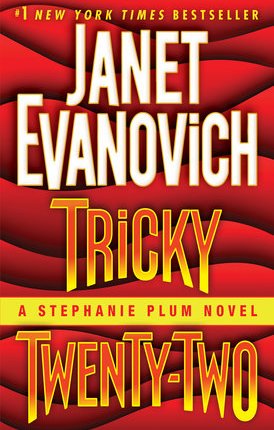
Do I have your attention? Good! That’s the purpose of a hook in a novel. I made a note of this one when I read Tricky Twenty-Two, by Janet Evanovich in 2015:

“Ginny Scoot was standing on a third-floor ledge, threatening to jump, and it was more or less my fault.” – Tricky Twenty-Two, by Janet Evanovich

TrickyTwentyTwo
Tricky Twenty-Two, by Janet Evanovich

After reading that opening sentence, you have to keep reading. The next sentence clarifies things a tad for any reader who has not read any of Ms. Evanovich’s previous 21 Stephanie Plum novels:  “My name is Stephanie Plum and I work as a bounty hunter for my bail bondsman cousin Vinnie.”

I read Janet Evanovich when I want something light and amusing to read. She did a good day’s (years’?) work when she came up with the characters in her Stephanie Plum series. Great character development!

Fans of the Stephanie Plum series know there is a story to follow that hook, no doubt filled with numerous missteps by Stephanie and probably at least one blown-up car. The opening sentence introduces Ginny Scoot to you and tells you she is in dire straits. You wonder what has happened to push her to the edge. What in the world did Stephanie Plum do to cause this crisis?

A good hook grabs you. It gives you just enough information that your curiosity is piqued and you are compelled to keep reading. The first sentence doesn’t have to carry the whole load; however, if the reader isn’t hooked by the bottom of the first page, chances are he or she won’t read the second page. That’s a lot of pressure for a writer!

Since my last blog post

I was fortunate to find one copy of The Carolina Backcountry On The Eve Of The Revolution:  The Journal and Other Writings of Charles Woodmason, Anglican Itinerant, edited by Richard J. Hooker in circulation in the Charlotte-Mecklenburg Library System. It has been useful in my research for the historical novel I’m writing.

More letters have been sent to independent bookstore owners to encourage them to place orders for my vintage postcard book, The Blue Ridge Mountains of North Carolina, as spring is finally approaching in western North Carolina.

I’ve continued to hone my new skill of creating graphics for Pinterest using www.Canva.com. In fact, someone at www.Canva.com saw my last blog post and contacted me. She was complimentary of my blog but requested that I give the whole URL (www.Canva.com) instead of “Canva.com” as I had in my blog. I corrected that in last week’s blog post.

Last week’s blog post, How Can a Writer Use Pinterest?, has only been liked by four other WordPress.com (or WordPress.org) bloggers, so Pinterest doesn’t appear to be a popular blog topic for me. I have gained several new followers via email, though, so perhaps it was of interest of a few people. I’ll be watching my Pinterest analytics to see if my original graphics get any attention.

I read on www.Goodreads.com that Jennifer Ryan is considering writing a sequel to The Chilbury Ladies’ Choir. I commented on how much I liked it in my April 1, 2017 blog post, The Authors I Read in March. I look forward to reading the sequel, if it comes to fruition.

Going off topic

The highlights of my week were seeing several birds that make rare appearances in my yard. First came a male scarlet tanager to get a drink of water on Sunday. Two days later, two male indigo buntings, and a rose-breasted grosbeak came to eat. The grosbeak usually stops by our bird feeder every spring, but he’s just passing through. The indigo buntings graze on the ground under the feeder.

Sometimes the rose-breasted grosbeak stays for two or three days, but this year I only saw him once. He feasted for a good 15 minutes before flying away. Other birds came and went, but he was not deterred. This is much different behavior than is displayed by the northern cardinal. The northern cardinal is the most skittish bird I’ve seen. We have them in abundance.

I’ve only seen indigo buntings a few times in my life, but this was only the second time I’d seen a scarlet tanager. I didn’t get any photographs this time, but I found it interesting when I looked back in my photo files that the indigo bunting and rose-breasted grosbeak showed up on the same day in 2007. I photographed them on May 9 that year. It was the first time I’d ever seen either species.

This year they showed up on April 24. Concluding that the two species apparently migrate together, I did a little research. I learned on https://www.allaboutbirds.org/guide/indigo_bunting (The Cornell Lab of Ornithology) that indigo buntings “migrate at night, using the stars for guidance.” Perhaps it is coincidental that they and the rose-breasted grosbeak both show up in my yard on the same day.

IMG_5092
Male Indigo Bunting, photographed March 9, 2007.
IMG_4992
Male Rose-Breasted Grosbeak, photographed March 9, 2007.

When I chose the topic for today’s post, I had no idea I would include a segment about birds. I selected the above photo of the grosbeak because it was the best picture I took of him. It just occurred to me that he sort of illustrates the title of this blog post. Okay, use a little imagination. Work with me here!

Until my next blog post

I hope you have a good place to watch a variety of birds.

I also hope you have a good book to read. I’m reading the 2018 Pulitzer Prize in Fiction, Less, by Andrew Sean Greer. I’m usually years behind in reading award winners, so I decided to jump right on this one.

If you’re a writer, I hope you have productive writing time.

Feel free to share my blog posts on Twitter, Pinterest, Facebook, or via email.

Thank you for reading my blog! What birds have you seen recently, and what are you reading?

Janet