
January brought me lots of books and time to read them. Last week’s blog post talked about three books I read last month. Today’s blog is about three other books I read. Next week, I’ll blog about the other four books I read in January.
The Woman in the White Kimono, by Ana Johns
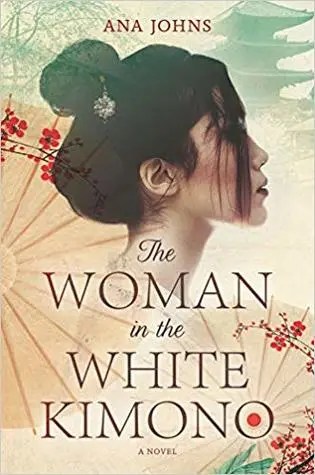
It is not often I get to read a book that I hate to put down – one I just have to read “one more chapter” before stopping to do something else. The Woman in the White Kimono was one of those novels.
I learned about this historical novel by being a member of the Historical Fictionistas group on Goodreads.com.
This is one of the best historical novels I’ve read in a long time. Well-researched, it takes the stories of mixed-race babies born to Japanese women and American military personnel before, during, and after the post-World War II Allied Occupation of Japan. There were 10,000 such babies, and the ones that survived were ostracized.
This novel grew out of the author’s own father’s story. Hearing bits and pieces of his story spurred her on to do extensive research in Japan and weave a compelling piece of fiction.
This is a can’t-put-downable novel of racial prejudice and the power of love. I don’t usually like novels with alternating timelines, but this one worked – and maybe wouldn’t have worked well chronologically.
In additional being based on good research, I was captivated by the beautifully-written prose.
Sisters Under the Rising Sun, by Heather Morris
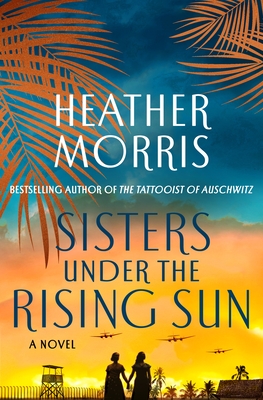
If you have followed my blog for several years, you may recall that I have blogged about three earlier historical novels and one nonfiction book by Heather Morris. (The Tattooist of Auschwitz in Many Good Books Read in October! on November 5, 2018; Cilka’s Journey in I stretched my reading horizons in November on December 2, 2019; Three Sisters in Books Read in December 2021 on January 3, 2022; and Listening Well: Bringing Stories of Hope to Life in Spy Thriller, WWI Novel, Nonfiction, and Historical Mystery Read Last Month on October 10, 2022.)
I praised each of those books, and I recommend Sisters Under the Rising Sun to you, too.
Heather Morris, a New Zealand author, has a way of taking a great amount of information from historical research and in-depth interviews with the survivors of an event – or their descendants – and turning their experiences into unforgettable historical fiction.
Sisters Under the Rising Sun is the story of 65 nurses in the Australian military and some British, American, and Dutch civilians who were captured by the Japanese and held prisoner for three years and seven months on Sumatra, Indonesia during World War II. Although only 24 of the 65 nurses and an undisclosed number of civilians survived the war, this is the remarkable story of their heroism, tenacity, and dedication to each other. It is a story of sisterhood and self-sacrifice. It is based on real people and their experiences under horrendous conditions.
More than 65 individuals are mentioned by name in the narrative portion of this book, so I recommend that you keep a running list of characters as they are introduced because, unless you read the Author’s Notes at the end of the novel first, you won’t know which characters you need to remember.
There are a couple of biological sisters whose stories are woven throughout the book as well as the stories of the Australian nurses. It is the practice in Australia to refer to a nurse as “Sister,” so the title of the book has a double meaning.
There has been a spate of World War II novels published over the last few years, so you might be growing weary of them. I recommend you read one more: Sister Under the Rising Sun, by Heather Morris.
We Must Not Think of Ourselves, by Lauren Grodstein
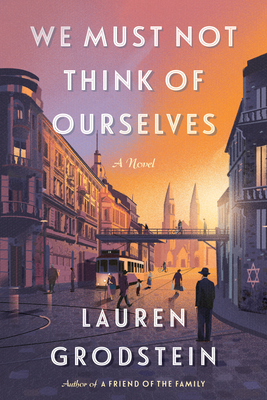
Although a novel, the author bases this book on real life accounts she has researched. The premise is that certain Jews in Warsaw, Poland were selected to write notes about their treatment and what they observed starting in 1940 so, if they were survived by their notes, the world would eventually learn what persecutions the Jews endured under Nazi Germany. The project was called Oneg Shabbat.
The story follows a Jewish widower, Adam Paskow, who had been an English teacher and was fluent in five languages. The gradual persecution of the Jews is chronicled as one right after another is taken from them until their homes and businesses were confiscated and they were forced behind locked gates into crowded and deplorable circumstances in what came to be called the Warsaw Ghetto.
The author artfully takes written accounts from many people and turns them into Adam’s story and reflections. The narrative chapters are interspersed with interview-type chapters.
I liked how the author, through dialog at the Oneg Shabbat meetings, included bits of news about the war. For instance, by the spring of 1941 the Oneg Shabbat participants knew about the gas chambers at Auschwitz. That information filtered down from Polish resistance spies, POW escapees, and Russian soldiers captured by the British.
One thing that comes through in the book is how the people of Poland were wondering why the United States wasn’t yet willing in 1941 to send troops to help them. They reasoned that if they knew it in the Warsaw Ghetto, surely the United States knew it. They wondered why the US was willing to help convey ships across the Atlantic Ocean while unwilling to commit troops to the war.
Interwoven throughout the novel is the love story of Adam and his wife, Kasia. She dies before he is forced into the ghetto to live in a cramped apartment with strangers. Over time, he and Sala fall in love; however, Sala’s husband lives there, too, which creates an awkward situation. Adam and Sala’s story reflects the desperation and hopelessness the Jews lived with. It was a hopelessness that grew by the day.
The people in the ghetto survived by selling or bartering with their meager possessions. Adam carefully sold every item of his wife’s that he’d been able to take into the ghetto. Will he have anything of value left in the end to secure papers that will give him a chance to escape from Poland before he’d shipped to Auschwitz?
Until my next blog post
I hope you have a good book to read. I’m reading a novel and a nonfiction book.
Remember the people of Ukraine.
Janet


 Janet's Writing Blog