What I Read Last Month & a Hurricane Helene Update

I did more reading in September than this blog post will reflect, but there was only one book I read from cover-to-cover: White Robes and Broken Badges, by Joe Moore.

White Robes and Broken Badges, by Joe Moore

Photo of book cover for White Robes and Broken Badges by Joe Moore
White Robes and Broken Badges, by Joe Moore

This nonfiction book will stay in my mind forever. The author infiltrated the Ku Klux Klan (KKK) for the Federal Bureau of Investigation (FBI) not once but twice. He infiltrated it both times to a level never done before, gaining access to the top echelon in the organization.

I’ve never known many details about the workings of the KKK. Never needed to. Never wanted to. However, considering where society in America stands today, it seemed like a good time to get better educated about the threat the KKK holds.

This book sheds light on just how insidious the work of the KKK is and how many its members are employed as law enforcement officers in our country. It is widespread and probably even more of a problem than the FBI knows.

It was through the undercover work of “Joe Moore” that the FBI was alerted that the problem is greater than had been realized. Joe was not an FBI agent. He was recruited by them because of his skill set.

After infiltrating the organization the first time, Joe never imagined he would be called on to do it a second time. But he was so good at it, the FBI needed him. Joe and his wife and children sacrificed a lot for what he did. Ultimately, they lost their home, most of their earthly possessions, their family connections, and friends in a matter of several hours.

The book is chilling. I know of no better word to describe the effect it had on me. Chilling. The details should make every law-abiding citizen in the country – no matter your color, race, ethnicity, or nationality – shiver.

After reading this book, I now have a better understanding of why black people in the United States do not trust law enforcement officers. How can they, when they don’t know in a traffic stop whether they are being pulled over by an honest police officer or sheriff’s deputy or if they’re being pulled over by a member of the KKK who just doesn’t happen to be hiding under a white hood?

It has always seemed a great sign of cowardice that when members of the KKK do their dirty work, they hide in their white robes. If you’re doing something you shouldn’t be doing, though, I suppose you don’t want to reveal your identity.

These are misguided people, and as a Christian I am offended that they use the cross as their symbol. Jesus Christ died on a cross for me (and for them!), so how dare they desecrate that symbol of Christ’s great sacrifice!

I highly recommend this book. It is not a pleasant read, but how do we improve as a society if we bury our heads in the sand and don’t open ourselves up to what is going on not only in the shadows but also in broad daylight?

I learned about this book while listening to National Public Radio (NPR) in August (https://www.npr.org/2024/08/12/g-s1-16223/white-robes-and-broken-badges-exposes-the-inner-workings-of-the-ku-klux-klan)

Update on Hurricane Helene in Western North Carolina

I wish I could include photographs, but I don’t want to run the risk of sharing an image that is undocumented or not in the public domain. You can use some of the links below if you wish to see pictures.

Another reason I am not including photos is that I know from my own experience after Hurricane Hugo in 1989 that pictures don’t do a disaster justice. Unless you are in the middle of a natural disaster and destruction is all you can see, hear, smell, or touch in any direction, you can’t grasp the enormity of the situation.

I know that Hurricane Helene left a wide path of destruction in Florida, Georgia, South Carolina, Tennessee, and Virginia; however, I have lived in North Carolina all my life – four of my 71 years in the mountains. The mountains are near and dear to my heart. I will blog about North Carolina and leave it to people in those other states to blog about the conditions in their states.

A couple of my blog readers said they hoped I would continue to shine a light on the destruction caused by Hurricane Helene in the mountains of North Carolina on September 26.

I do not live in the disaster zone. I’m about 100 miles east of the mountains. We just had a lot of rain, some wind, and a lot of tree branches to pick up and deal with. That is ongoing, but that and our 13-hour power outage pale in comparison to what happened in our beautiful Appalachian Mountains.

Ten days after the storm, many areas of the mountains are still inaccessible. Damage assessments are still being made. Recovery will be measured in years, not months. Some locations were wiped off the map and will not be restored because the landscape has been changed completely and forever.

The United States Geological Survey has identified 244 landslides caused in the Southeast by Hurricane Helene. Most of those are in North Carolina. More landslides will, no doubt, occur in the coming weeks with additional rainfall and freezing conditions.

As of the data I found last night, the death toll in North Carolina so far was 115, with 72 of those being in Buncombe County. There are still people unaccounted for. Many communities still have no water or sewer service. Cell phone service was spotty before the storm and restoration has been slow.

Hundreds and hundreds of power poles and thousands of miles of overhead power lines are down. Thousands of people are homeless. You might grow weary of hearing about it, but many of the people of western North Carolina are in dire straits.

As always, though, the worst of nature brings out the best in most people. The outpouring of support has been amazing. Electrical workers have come from all over the country and from Canada. Four hundred nurses have arrived in Asheville from as far away as Alaska to pitch in and help local medical personnel who have worked around the clock since September 26 even though most of them have catastrophic damage at their own homes.

Pack mules are being utilized to haul water, non-perishable food, and other necessities into the steep and rugged terrain where vehicles cannot gain access.

Two interstate highways are closed. I-40 near the Tennessee state line will probably be closed for a year. Repairs to I-26 might allow it to reopen next March. Roads and bridges washed away, houses, cars, and businesses floated away, and overnight all the necessities most of us take for granted every day vanished.

The area of devastation in western North Carolina alone covers more than 600 square miles, and it is not flat land! Every mile of those 600 square miles is not devastated. The severity of destruction various from place to place as rain totals were, of course, higher in some places than in others. Also, some areas of the mountains received more rain than others in the days leading up to the arrival of Hurricane Helene. Elevations range from around 1,500 feet to more than 6,000 feet. The destruction is unprecedented. Since 1916, all floods in western and piedmont North Carolina have been measured against The Flood of 1916. Future floods will be measured against The Flood of 2024 because by all statistics it surpassed the one in 1916.

Classes at my alma mater, Appalachian State University in Boone, have been cancelled until at least October 16. (That’s three weeks of fall semester lost.) Students at Lees-McRea College in nearby Banner Elk were evacuated by air to Hickory. Classes have been cancelled at Western Carolina University in Cullowhee the University of North Carolina at Asheville, Montreat College, Warren-Wilson College, Mars Hill University, and numerous community colleges. Blue Ridge Community College in Flat Rock, NC is closed indefinitely. Some county school systems are unable to announce when they will reopen.

The beautiful Blue Ridge Parkway that I’ve waxed poetic about so many times is closed indefinitely. US-441/Newfound Gap Road through Great Smoky Mountains National Park has reopened; however, it was not designed to handle commercial traffic, so it is not an alternate to I-40 or I-26 for large trucks. Sadly, a few people decided that did not apply to them, so they attempted to drive on Newfound Gap Road. Two serious accidents resulted – one caused by a car hauler. The highway will be closed to all traffic from 10pm until 7:30 a.m. until further notice. (https://www.nps.gov/grsm/learn/news/update-on-us441-newfound-gap-road-overnight-closure.htm)

The images coming out of the mountains are gut-wrenching. The needs are great and will continue to be for a long, long time. I hesitate to start naming charities because there are hundreds of reputable ones that are on-site and providing remarkable goods and services. World Central Kitchen (https://wck.org/), the Cajun Navy from Louisiana, Mountain Mule Packer Ranch (https://www.mountainmulepackers.com/), the Red Cross, and Samaritan’s Purse are just a few.

The Manna Food Bank (https://www.mannafoodbank.org/) which serves the Asheville and surrounding areas lost their facility and its contents. Brother Wolf Animal Rescue (https://www.bwar.org/) was flooded out but the 150 animals they were housing on September 26 were rescued by volunteers. Organizations like food banks and animal rescues need to be rebuilt and aren’t necessarily eligible for government assistance. (I saw on the Brother Wolf Animal Rescue website last night that donations to that organization are currently being matched!)

The Appalachian State University Disaster Fund (https://www.appstate.edu/disaster-relief/) is another organization for you to consider. It has stepped up to assist students, staff, and faculty members who have lost their homes. The fund also provides much-needed counselling for those traumatized by the storm.

Atrium Medical Center in Charlotte has set up its mobile hospital in Tryon in Polk County. Many towns and counties across the state have sent teams of medical personnel and swift water rescue teams to assist with the aftermath of the storm. The National Guard and 1,000 active-duty personnel from Fort Liberty (formerly, Fort Bragg) were deployed and have been on the ground since weather allowed access. Numerous restaurants are giving out free meals as they are able to prepare food.

Having just visited Boone and West Jefferson on September 12-13 and having visited Hendersonville, Asheville, Bryson City, and Cherokee this summer, it is difficult to grasp the scope of the damage. I drove on the Blue Ridge Parkway from Asheville to its southern end at Great Smoky Mountains National Park in June. I drove from Hickory through Old Fort, Black Mountain, Asheville, and Canton and into Tennessee on I-40 the last week in August.

I always breathe a sigh of relief when I make it through that treacherous stretch of I-40 approaching Tennessee because rock slides are not unusual. To know that part of that interstate literally washed away 10 days ago is hard to get my head around, though.

Know that any support you can give to the people of western North Carolina is appreciated.

Since my last blog post

I was told (again) in a webinar last week that the purpose of a blog is to solve someone else’s problem. Until I figure out how to do that, I’ll just keep blogging like I have for the last 10+ years. As of last week, I have 1,200 subscribers to my blog, so maybe I’m doing all right. If you came to my blog today seeking a solution to a problem, you are probably disappointed.

On the other hand, if you were looking for a way to lend a little aid to people trying to rebuild their lives after Hurricane Helene, I hope one of the organizations I mentioned today struck a nerve with you.

Until my next blog post

I hope you have a good book to read, a roof over your head, enough food to eat, and clean water to drink.

If all you are hearing is that FEMA and all levels of government are failing to respond to those affected by Hurricane Helene, then you are listening to the wrong sources. More than a week of lies about this from the immediate-past-twice-impeached-34-times-indicted-president is wearing thin here in North Carolina. Please fact check your sources and get your news from a variety of reputable news media.

Hold your friends and family close, for we never know what tomorrow will bring.

Don’t forget the people of Ukraine or the people of western North Carolina.

Janet

Poetry Book Arrives at Perfect Time

If you haven’t told your best friend how much you love them recently, call or write them a note and tell them now. Tomorrow might be too late.

Perhaps you noticed my weekly Monday blog post never showed up last week. My nearly life-long friend, Kay Jewett Nalbone, died on Sunday. Although not unexpected, it was difficult to accept.

When you’ve been friends for 57 years and shared each other’s joys and struggles, you have a bond. What it boils down to is that I no longer have a friend with the same memories I have.

Another long-time friend from my graduate school days, Ray Griffin, didn’t know Kay and was not aware of her declining condition. It was serendipitous that Ray’s new book of poetry arrived in the mail on Monday. If ever I needed a collection of poems to sit down with and relax, it was Monday and Tuesday.

The name of Ray’s book is Winsome Morning Breeze: A Collection of Sonnets and Tanka. It is available online or you can request it at your favorite independent bookstore. It is beautifully illustrated with watercolors by Marti Dodge.

Many selections in Ray’s book resonated with me for different reasons. Having lost two good friends since February, the last two lines of “I Was a Fool” on page 21 has special meaning for me:

“To live one’s life most fully and with zest,

One must not ever let the moment rest.”

“On Dragon’s Tail” on page 19, on the other hand, brought a smile to my face as Ray eloquently wrote about his experience of driving the portion of US-129/TN-115/NC-115 in the Appalachian Mountains known as The Dragon’s Tail due to its 318 curves in 11 miles. It is a favorite of motorcycle and sports car enthusiasts and a fun drive for those of us who love to drive in the mountains. What fun!

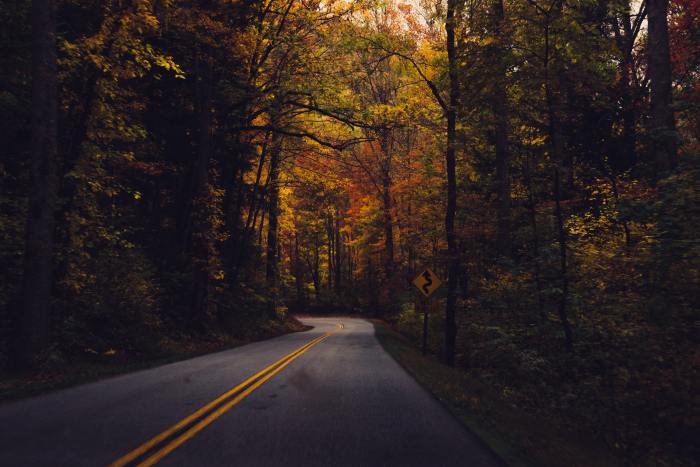
Photo by Jordan Whitt on Unsplash

And here’s a lovely turn of phrase from Ray’s sonnet, “Fallen Leaves” on page 109: “I feel as though I am within a large kaleidoscope.”

“Daughter” on page 107 brought tears to my eyes as Ray recalls the birth of his and Ida’s daughter 31 years prior. I remember sitting on the floor and playing with their precious daughter when she was just four or five years old.

Ray and I studied political science and public administration. He had a successful 26-year career as a city manager. He is now an adjunct professor of politics in Virginia. His poems, “Barbara Jordan” on pages 85-87 and “I’m But an Old Man” on pages 73-79 are as heartfelt as any pieces in the book. I could hear Barbara Jordan’s distinctive voice from the Watergate hearings as I read the poem he named after her.

I hope I’ve shared just enough from Winsome Morning Breeze: A Collection of Sonnets and Tanka, by Ray Griffin to whet your appetite. It will be a book I will reach for often. I will read it over and over, and I believe you will, too.

Until my next blog post

I hope you have a good book to read. I’m reading Shiner, by Amy Jo Burns and We Wear the Mask: 15 True Stories of Passing in America, edited by Brando Skyhorse and Lisa Frazier Page.

If you’re a writer or other artist, I hope you have productive creative time during the Covid-19 pandemic.

Be safe. Be well. Wear a mask in respect for other people.

Don’t be shy. Share my blog!

Janet

Great Smoky Mountains, Revisited! (Part 2 of 2)

Today’s blog post is a continuation of my blog post last Monday, https://janetswritingblog.com/2019/10/21/great-smoky-mountains-revisited-part-1-of-2/. It is about my recent trip to Great Smoky Mountains National Park and is illustrated with pictures of several of the postcards included in my vintage postcard book, The Blue Ridge Mountains of North Carolina, and photographs I took on my trip in September.


Black Bears!

Here’s a picture of one of the many black bear postcards in my vintage postcard book, The Blue Ridge Mountains of North Carolina.

PHOTO OF LINEN-FINISH POSTCARD OF A BLACK BEAR IN GREAT SMOKY MOUNTAINS NATIONAL PARK

And here are pictures of the bears I saw on this trip to the Great Smoky Mountains. The first picture is of a black bear, probably about two years old, after it crossed the road in front of our car. It completely ignored us, which was fine with us! (All these bear photos were taken from inside our car and using the zoom feature on my cell phone camera. As I stated in last Monday’s blog post, it’s against the law to willingly get within 150 feet of an elk or black bear in Great Smoky Mountains National Park.)

#BlackBears in #GSMNP
BLACK BEAR, PERHAPS TWO YEARS OLD, PHOTOGRAPHED IN GREAT SMOKY MOUNTAINS, 2019
#blackbears in #GSMNP
WELL-CAMOUFLAGED FEMALE BLACK BEAR IN GREAT SMOKY MOUNTAINS NATIONAL PARK. HER TWO CUBS WERE IN THE BUSHES UP THE MOUNTAINSIDE.

If the car in front of us hadn’t stopped, we might have driven right by this mother bear and her two cubs. The mother was down in a ditch. After a couple of minutes, her two cubs came running down the hill. It was difficult to get good pictures due to the trees and undergrowth.


November 2016 Fire Damage

One of the iconic places in the park is Chimney Tops. I was sad to see that the late November 2016 wildfires had engulfed this double-peaked mountain in Swain County, North Carolina. The “up side” is that today the granite folds and rough edges of Chimney Tops are visible because the trees on the mountain were destroyed in the fires.

Here, I compare the photographs I took in September 2019 with a 1936 real photograph postcard I used in my vintage postcard book:

Chimney Tops in Great Smoky Mountains National Park
Picture of a 1936 real photograph postcard of “Newfound Gap Highway” and “Chimney Tops.”
#ChimneyTops #Wildfire damage from 2016 as photographed in 2019
Chimney Tops in Great Smoky Mountains National Park in September 2019, still recovering from 2016 wildfires.
Mountainside vegetation burned off this mountain in 2016 #wildfires.
This mountainside, scarred by the 2016 wildfires, now shows off the rough, rocky folds that trees hid before the fires.
Evidence of more 2016 fire damage in Great Smoky Mountains National Park.

Clouds in a Valley

Valley #cloud in #GSMNP
Cloud in a valley in Great Smoky Mountains National Park on September 15, 2019.

We were in the right place at the right time for this photo of white clouds down in a valley in the park.


Why are they called the Great Smoky Mountains?

As I stated in my book, “The Great Smoky Mountains are called “smoky” due to the fog that rises from the valleys and mountainsides.”

These mountains were suffering under drought conditions when I visited the park in September 2019. August, September, and early October were very dry. My sister and I couldn’t help but notice there was very little of the typical wisps of fog when we were there a month ago. In fact, we only saw a little of it on our last day in the park. Here’s a photograph I took, but it isn’t a good representation of the multitude of wisps of fog that gave this sub-range of the Appalachian Mountains their name.

How the Great Smoky Mountains got their name.
A fair, but not great, example of how the Great Smoky Mountains got their name. Photo taken in September 2019.

Summary

I hope you can hear the babbling brooks and smell the wildflowers of Great Smoky Mountains National Park sometime. It is truly a national treasure. In fact, it is a global treasure. I’m fortunate to live just a few hours from this national park.

Great Smoky Mountains National Park was designated a World Heritage Site in 1983.
We owe a debt of gratitude to the men who served in the Civilian Conservation Corps and helped build Great Smoky Mountains National Park.

Unlike many national parks in the United States, no admission fees are charged for entrance into the Great Smoky Mountains National Park. Many families were displaced when the park land was purchased. Before agreeing to sell their land to the U.S. Government, those families (most of whom were poor farmers) made the government agree that no admission to the park would ever be charged.


Since my last blog post

Since my last blog post, my sister and I spent several days on the coast of South Carolina. We enjoyed fresh seafood in Calabash, North Carolina.


Until my next blog post

I hope you have a good book to read. I’m reading The Beekeeper of Aleppo, by Christy Lefteri.

If you’re a writer, I hope you have quality writing time.

Thank you for reading my blog. You could have spent the last few minutes doing something else, but you chose to read my blog.


Let’s continue the conversation

Have you visited the Great Smoky Mountains? If so, what were your impressions of it? What was the highlight of your trip?


The Blue Ridge Mountains of North Carolina on the shelf at Lake Junaluska Bookstore.

As I stated in my blog post last Monday, https://janetswritingblog.com/2019/10/21/great-smoky-mountains-revisited-part-1-of-2/, I hate to “blow my own horn,” but I’d be remiss if I didn’t take this opportunity to tell you how you can have your own copy of my vintage postcard book, The Blue Ridge Mountains of North Carolina, published by Arcadia Publishing in 2014.

Don’t let the name fool you, it covers all the mountainous counties in western North Carolina and the three counties in eastern Tennessee that are partially in Great Smoky Mountains National Park.  Electronic and paperback copies are available from Amazon.com. Paperback copies are available from the publisher at https://www.arcadiapublishing.com/, at quality bookstores, or from me personally.

Janet

Some Good Summer Reading

The first Monday of August has suddenly arrived, so it’s time for me to tell you about the books I read in July. I read a variety of books, including fiction and nonfiction.

Under the Skin, by Vicki Lane

Under The Skin
Under the Skin, by Vicki Lane

I purchased this book a couple of years ago after reading Vicki Lane’s first four books in her Elizabeth Goodweather Appalachian Mysteries. If you follow my blog, you know I get my books almost exclusively from the public library. Library books keep piling up and causing me to postpone reading the books I own. I bought the paperback edition of Under the Skin at a wonderful independent bookstore in Asheville, NC. I dare you to go into Malaprop’s Bookstore & Cafe and leave without buying at least one book. It’s a great bookstore, but I digress.

When July came, I decided I was going to read Under the Skin, even if it meant returning a library book unread. In this book, Elizabeth Goodweather is visited by her sister who convinces her to attend séances at a nearby spa. The sister is hoping to make contact with her deceased husband. All sorts of problems pop up as it becomes clear that the sister is being stalked.

Chapters more or less alternate between this present-day tale and a story about two sisters at the same historic spa in the mountains of North Carolina in the 1880s. The present-day story held my interest more than the 19th century tale, but that’s just my personal observation.

You can read all about Vicki Lane’s books on her website, http://www.vickilanemysteries.com/ and you can follow her on https://www.goodreads.com/.

 My Beautiful Broken Shell, by Carol Hamblet Adams

My Beautiful Broken Shell
My Beautiful Broken Shell: Words of Hope to Refresh the Soul, by Carol Hamblet Adams

My Beautiful Broken Shell was recommended to me by my librarian sister. It is a small book about how most seashells get tossed about and broken, but so do we humans. The author encourages us to embrace our brokenness.

I’m broken in many ways and sometimes I’m more than a little rough around the edges.

Educated:  A Memoir, by Tara Westover

Educated
Educated: A Memoir, by Tara Westover

This is an entertaining memoir of a woman who was raised by strict Mormon parents in the middle of nowhere in Idaho. Her father is bipolar, and Ms. Westover does an excellent job of getting across to the reader just how unnerving being the child of a person with that malady can be. Tara’s mother reluctantly becomes a midwife at her husband’s insistence. The occupation gradually “grows on her” and she seems to like it.

I don’t want to give away too much of this true story. Suffice it to say that Tara goes from being “no-schooled” at home to attain amazing things in education.

Words We Carry:  Essays of Obsession and Self-Esteem, by D.G. Kaye

Words We Carry
Words We Carry: Essays of Obsession and Self-Esteem, by D.G. Kaye

I referred to this little book in my July 16, 2018 blog post, Words We Carry and White Privilege. That post probably left you with an overall good impression of the book. Although I liked the premise of the book, the latter part of the book came across to me as bordering on being Pollyanna while also being conflicting. The author writes about the importance of being your authentic self while recommending that you just put on some make up and act like everything is just fine.

Her parting message struck me as being akin put a smile on your face and a have positive outlook. That takes an enormous amount of energy for people with a chronic physical illness or depression.

Mysterious Tales of Coastal North Carolina, by Sherman Carmichael

Mysterious Tales of Coastal North Carolina
Mysterious Tales of Coastal North Carolina, by Sherman Carmichael

This is a newly-published book from The History Press. I found it in the New Books Section at the public library.

The 170-page book is a collection of ghost stories from the 200-mile coast of the state along with a number of true accounts of ships being torpedoed and sunk by German U-boats during World War II.

I was familiar with a few of the ghost stories but most were new to me. The author did a good job of including just enough historical background about most of the places and stories. Each of the stories is one to three pages, making this a book that’s easy to pick up when you only have a few minutes to read.

I think I’ll purchase a copy to take along with me on my next trip to the coast.

A Bigger Table:  Building Messy, Authentic, and Hopeful Spiritual Community, by John Pavlovitz

A Bigger Table
A Bigger Table: Building Messy, Authentic, and Hopeful Spiritual Community, by John Pavlovitz

Whether or not you agree with John Pavlovitz’s politics or his ideas for how to make church more responsive and Christ-like, I think you’ll find that his writing makes you think outside the box.

That said, Mr. Pavlovitz says a lot of things in his book, A Bigger Table:  Building Messy, Authentic, and Hopeful Spiritual Community, that I needed to hear and ponder. Much of what Mr. Pavlovitz said in this book brought to mind the recent capital campaign at Rocky River Presbyterian Church. That campaign was called “Growing God’s Table.”

We already had a sanctuary. We already had a building housing Sunday School rooms, offices, and an inadequate fellowship hall. What we needed was an expansion of our building that would incorporate more classrooms, an elevator to serve the old building as well as the expansion, and most of all — a much larger fellowship hall.

The new fellowship hall has made it possible for us to have monthly community free meals and other activities to which the public is invited. We’re growing God’s table at Rocky River Presbyterian Church, but we still have a long way to go. We are a work in progress. Mr. Pavlovitz’s book opened my eyes to even more possibilities.

Mr. Pavlovitz calls out Christians who are so busy “doing church” activities that they sometimes forget that forming relationships with people is the most important thing we should be doing. Sometimes we treat one another badly and sometimes we fail to treat strangers with the love and compassion demonstrated by Jesus Christ. We all need to make the table bigger. God’s table is big enough for everyone.

I purchased this ebook several months ago after following the author’s blog for quite some time. His blog, Stuff That Needs To Be Said (https://johnpavlovitz.com/,) is always thought-provoking.

Since my last blog post

I spent some time with long-time friends who were celebrating their 50th wedding anniversary in Raleigh, NC. It was good to get away for several days, make some new friends, and reconnect with some people I hadn’t seen in a long time.

Until my next blog post

I hope you have a good book to read. I’m trying to finish reading several books I started in July. You’ll find out in my September 3 blog post how that went.

If you’re a writer, I hope you have productive writing time.

Thank you for reading my blog. You could have spent the last few minutes doing something else, but you chose to read my blog. I appreciate it! I welcome your comments

Have you read any good books lately?

Janet

If the Creek Don’t Rise, by Leah Weiss

As an aspiring novelist, I keep a writing notebook. In one section I write down the “hooks” from the novels I read. In the other section, I write down my favorite lines (and sometimes paragraphs) from the books I read.

As I learned from reading Reading Like a Writer: A Guide for People Who Love Books and for Those Who Want to Write Them, by Francine Prose, it’s okay for me to do this. In case you missed it, my April 9, 2018 blog post (“Reading Like a Writer”) is about that book.

If the Creek Don’t Rise, by Leah Weiss

Today’s blog post highlights a couple of my favorite lines from If the Creek Don’t Rise, by Leah Weiss.

9781492647454_custom-d6c5521a37596d30f3f6530e34f92269c4e46367-s400-c85
If the Creek Don’t Rise, by Leah Weiss

The context of the following quote is that many volunteers went to the Appalachian Mountains in the 1960s and 1970s on the heels of the federal government’s emphasis on poverty in Appalachia. In this quote Kate Shaw, the new teacher, is paying Birdie Rocas a huge compliment while reading from one of Birdie’s “Books of Truths” in which the uneducated, eccentric Birdie writes her thoughts and observations.

Here are a couple of lines I really like:

“Do you know the saying, ‘Don’t throw the baby out with the bathwater?’” [Kate Shaw speaking.]

“The teacher in her don’t give me [Birdie Rocas] time to say so when she adds, ‘Well, you write about the baby while everyone else is writing about the bathwater.’” — from If the Creek Don’t Rise, by Leah Weiss

Since my last blog post

I’m excited to report that I’ve written more than 8,000 words in the rewrite of my historical fiction manuscript for The Spanish Coin! After getting bogged down in outlining and writing profiles for each of the novel’s characters, it was refreshing to get back to work on the rough draft.

After learning that the location of my fill-in format sign-up form for my sometime-in-the-future newsletter mailing list was causing confusion for readers wanting to leave comments on my blog posts, I tried to figure out how to move the mailing list form to a sidebar. The operative word there is “tried.” You know I’m not very computer savvy, so bear with me on this. I’m not a quitter.

To avoid confusion, I will not include the mailing list sign-up form in today’s blog post.

Until my next blog post

I hope you have a good book to read. I’m reading The Hush, by John Hart. It’s a sequel to his 2009 Edgar Award winning novel, The Last Child.

I’m also reading Look for Me, by Lisa Gardner.

If you’re a writer, I hope you have quality writing time, and I hope you and I will strive to write about the baby more than we write about the bathwater.

What are you reading?

Janet

Some Great September Reads

Just about the time I think I will cut back on my reading time so I can increase my writing time, a bunch of books become available to me and I’m compelled to keep reading. September was one of those months. I read seven novels and two nonfiction books.

Once again, I find to write about all nine books makes a blog post that is longer than anyone wants to read. Therefore, I’ll write about five of the books today and the other four books next Monday. I tried to insert photos of each of the five books I wrote about today, but I had technical problems with all except one of them.

State of Wonder, by Ann Patchett

I was drawn to State of Wonder, by Ann Patchett because it is set in Brazil. One of my goals in 2017 was to read a book set on each of the seven continents.

The premise of the book is that a pharmaceutical firm in Minnesota has sent an employee, Anders Eckman, to Brazil to report back on a drug they are developing in the jungle there. Anders fails to report back and word is sent that he died of a fever.

The pharmaceutical company then sends a female employee, Marina Singh, to Brazil to learn what happened to Anders and to determine the status of the drug being developed.

Marina embarks on quite an adventure along the Amazon River and its surrounding jungle. There are numerous twists and turns in the story and I believe some of them will surprise you. I highly recommend the book. The description of the jungle and the river put the reader right there!

If the Creek Don’t Rise, by Leah Weiss

If the Creek Don’t Rise is Leah Weiss’s debut novel, and I hope it won’t be her only one. Set in the Appalachian Mountains in western North Carolina in the 1970s, it is the story of Sadie Blue, who gets pregnant as a teenager and marries the baby’s father, Roy Tupkin. Roy is a ne’er do well, if there ever was one, but his worst character flaw is that he is a wife beater.

Sadie’s story is told from the viewpoints of herself, and nine other people including the local preacher, the new one-room school teacher, and Sadie’s good-for-nothing husband.

I was in college at Appalachian State University in the early 1970s, so I found the time in which If the Creek Don’t Rise was set to be hard to believe. It felt more like the 1930s to me. As a college student in Boone I just wasn’t exposed to people living the way the book’s characters live.

However, Ms. Weiss did a wonderful job developing her characters! I can only hope to come close to her when I write my characters. It was truly a pleasure to read about these fictitious people and be able to picture them and hear them so vividly in my mind.

The plot kept me turning pages to see what would happen next to Sadie Blue and to see if Roy Tupkin would get his comeuppance.

The Silent Sister, by Diane Chamberlain

The Silent Sister is the second of Diane Chamberlain’s novels that I’ve read. I got to hear her speak and meet her last September at the One the Same Page book festival in West Jefferson, North Carolina.

The Silent Sister is about a family that held many secrets. Riley MacPherson grew up thinking that her older sister Lisa had committed suicide when Riley was just a toddler. Riley returns to New Bern, North Carolina to clean out her deceased father’s house. She finds evidence that Lisa might still be alive and sets out on a mission to find Lisa. Her search takes her all the way to California.

There are many twists, turns, and surprises in this 2014 novel, so I will say no more about the plot in case you haven’t read it yet. It will keep you guessing!

What We Lose, by Zinzi Clemmons

This debut novel by Zinzi Clemmons reads like a memoir. Written in the form of short vignettes, the book takes us on a journey of losses.

Though not morbid, at the root of the book is the death of Thandi’s South African mother. Her American father distances himself from Thandi after her mother’s death. He is able to move on to future happiness much more easily than Thandi.

The novel takes us through Thandi’s growing up years and her young adult years with her various friendship, marriage, and motherhood. All the while, she is haunted by memories of her mother. Thandi never fits in.

Same Kind of Different as Me, by Ron Hall and Denver Moore with Lynn Vincent

0849900417.jpg.1458336228
Same Kind of Different as Me, by Ron Hall and Denver Moore, with Lynn Vincent

Ron Hall and Denver Moore with Lynn Vincent couldn’t have been less alike. Ron was a wealthy white art dealer. Denver was a homeless black man. At Ron’s wife’s insistence, he accompanied Debbie to serve a meal at the homeless shelter. Debbie kept trying to “break the ice” with Denver, to no avail. He wondered why this white woman was harassing him. Debbie told Ron that he had to make friends with Denver. It was a slow process, but Ron and Debbie finally broke through and Denver became a close friend.

This book will teach you some things you probably don’t know about being homeless unless you’ve been in that situation. Based on a true story, it will break your heart and make you cheer. It was the September book choice for Rocky River Readers Book Club.

Until my next blog post

I hope you have a good book to read. I’ve started off October with Love and Other Consolation Prizes, by Jamie Ford. If you’re a writer, I hope you have productive writing time.

Janet

A Thriller, Hatteras in WWI, and Appalachian Memories

I had more to say about the six books I read in August than reasonably fit into last week’s blog post, so today’s post is about the three I didn’t get to last week. I’m a bit put off by long blog posts, and I doubt I’m alone in that. Without further ado, I offer my thoughts about the other books I read in August.

Here and Gone, by Haylen Beck

9780451499578
Here and Gone, by Haylen Beck

If books have a demeanor, Running on Red Dog Road and Other Perils of an Appalachian Childhood, by Drema Hall Berkheimer is at one end of that spectrum, in many ways Here and Gone, by Haylen Beck is at the other end of that spectrum. While Ms. Berkheimer’s book was a relaxing read, Mr. Beck’s thriller grabbed me by the throat immediately and never let me relax.

I thought I’d done well to read Ms. Berkheimer’s memoir in three days, but I read Here and Gone in 48 hours.

Wow! What a book! I made the mistake of starting to read the book late one night. I read until my vision blurred to the point that I could literally read no more without getting some sleep.

Audra Kinney fled New York with her young son and daughter to avoid her children being taken away by Children’s Services. Her husband had tried to prove she was an unfit mother.

The book begins in Arizona where Audra thought things couldn’t get any worse when the Elder County Sheriff pulled her over and discovered a bag of marijuana in the trunk of her car. Audra and the reader could not imagine all that would transpire over the next four days. What a thriller!

By the way, I thought I had picked up a debut novel by Haylen Beck, but it turns out that is the pen name of Stuart Neville! You may recall that I wrote about one of Mr. Neville’s Northern Ireland thrillers, The Ghosts of Belfast in my January 3, 2017 blog post (What I read in December.)

According to the author bio on the back inside flap of the book jacket, Haylen Beck’s books are set in the United States whereas Stuart Neville’s books are set in Northern Ireland. That tells me there will be more Haylen Beck books in the future. I can’t wait!

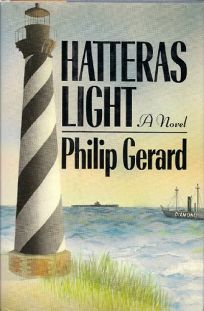
Hatteras Light by Philip Gerard

w204
Hatteras Light: A Novel, by Philip Gerard

Hatteras Light, by Philip Gerard, took me to the beautiful Hatteras Lighthouse on the Outer Banks of North Carolina during the tense days of World War I when German U-boats and submarines trolled the Atlantic coast of the United States. This book was the August selection for the Rocky River Readers Book Club.

Hatteras Light follows the lives of the few residents of Hatteras Island in the early 1910s, particularly the people associated with the maintenance of the Hatteras Lighthouse and their efforts to rescue people in peril on the sea.

This was hard and lonely work. It took a special kind of person to acclimate to the demands of the job. The waters off Cape Hatteras are known worldwide as “the graveyard of the Atlantic” because the treacherous clashing of the cold waters of the Atlantic Ocean and the warm Gulf Stream (from the Gulf of Mexico) cause constantly changing conditions that have resulted in the sinking of hundreds of ships.

The Germans had already torpedoed an oil tanker, the resulting blaze literally getting the attention of everyone on Hatteras Island. The US Navy was too busy protecting the more densely populated Mid-Atlantic coast to come to the aid of the keepers of the Hatteras Lighthouse who did double duty of going out to sea to try to rescue anyone in peril.

Tensions were coming to a head at a community meeting when Ham Fetterman said the following:

“ ‘ I have lived longer than ever I hoped or wanted,’ Fetterman said. ‘I have seen Yankees and pirates and bootleggers and a good deal worse. And now I’ve seen this, too. And I tell you:  this is different. This murderous lurking Teutonic bastard is hunting by the Light – our Light! He navigates by it, he ambushes by it, he kills by it…. With that Light, he is damn near invincible.’ ”

Fetterman was a true Hatterasman, meaning he was born and had lived on Hatteras Island all his life. He was someone others listened to because of his age and his experience as a Hatteras Islander.

Someone else in the meeting spoke up and suggested they rig up a false light like had been done at Nags Head years before. Then, Fetterman said their only choice was to turn off the Hatteras Lighthouse Light.

Did they? I suggest you read Hatteras Light, by Philip Gerard, to find out.

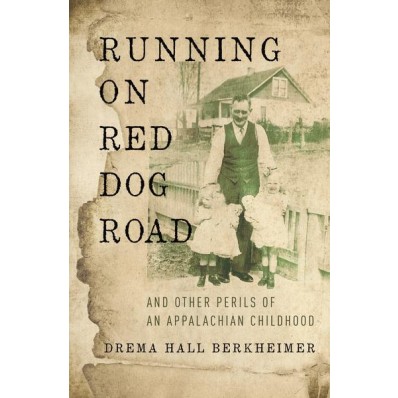
Running on Red Dog Road and Other Perils of an Appalachian Childhood, by Drema Hall Berkheimer

9780310344964.jpg.1442560708
Running on Red Dog Road, by Drema Hall Berkheimer

I need to start jotting down where or how I hear about a book I want to read. I can’t recall how I learned about this one, but I’m glad I did. I found it at the public library and devoured it in three days. It is just 200 pages, but I’m a slow reader. Any time I read a book in three days, take it as a compliment.

The author grew up in West Virginia and writes humorously but lovingly and respectfully about her childhood there in the 1940s. Although I grew up in the piedmont (not the mountains) of North Carolina in the 1950s, I could identify with many of the things she wrote.

I never had a grandmother, though, and Ms. Berkheimer writes a lot about the grandmother who pretty much raised her while her mother was off in New York helping to build airplanes for the World War II effort.

Ms. Berkheimer and I grew up in a simpler time than the one we’re living in now. Home-canned produce from the garden, lightning bugs, playing Red Rover, church being the center of one’s social life, and many old sayings used in the book – all these rang true with me and brought to mind fond memories of my childhood.

I loved her memory of church fans:

“Paper fans always stood ready in the wooden rack on the back of each pew, along with the hymnals. Each fan was the size of a small paper plate and had a flat stick attached as a handle. Sometimes you got a fan with a picture of Jesus on one side and Scripture verses on the other, while another time your fan might advertise a bank or a furniture store.” ~ Drema Hall Berkheimer

The church where I grew up always had those same fans, but the back side advertised one of the two funeral homes in the county. Hence, they were always referred to as “funeral home fans” at Rocky River Presbyterian.

If you’re looking for a book that harkens back to rural and small town American life a few decades ago, this is the book for you.

Until my next blog post

I hope you have a good book to read. If you’re a writer, I hope you have quality writing time.

Janet

“Not a rope . . . if drowning”

prayers-the-devil-answers-9781476772813_lg
Prayers the Devil Answers, A novel by Sharyn McCrumb

My blog post today takes a look at a line I like from a novel, Prayers the Devil Answers, by Sharyn McCrumb. Ms. McCrumb has mastered the art of capturing the independent spirit of the people of the southern Appalachian Mountains in the following sentence:

“Not a one of the folks from up there would ask for anything – not food if they were hungry, not a rope if they were drowning.”  From Prayers the Devil Answers, by Sharyn McCrumb.

How succinctly Ms. McCrumb gets to the core character of the people who live in those mountains and whose ancestors have lived there for up to 250 years! As a writer, I think anyone would be hard-pressed to state it any better.

What do you think?

Have a go at it. Try to write one sentence that sums up that southern Appalachian independent spirit.

Until my next blog post

I hope you have a good book to read. I just finished reading The Things We Keep, by Sally Hepworth and Fredrik Backman’s novella, And Every Morning the Way Home Gets Longer and Longer.

If you’re a writer, I hope you have productive writing time.

Janet

An Excellent Historical Novel

I just finished reading an excellent historical novel. Cataloochee was Wayne Caldwell’s debut novel, and what an entertaining story it is! I read now as an aspiring novelist. Historical fiction is my first love, so I constantly try to identify and learn from what published authors do well. Reading Cataloochee on the heels of the 2014 publication of my vintage postcard book, The Blue Ridge Mountains of North Carolina, made the story all the more vivid for me.

I like the way Mr. Caldwell follows families through several generations. In fact, that is what I am working toward in my own writing. Mr. Caldwell’s descriptive writing put me in the setting. I can see the plants he refers to and I can smell the flowers and other scents he mentions. His careful use of colloquialisms is a model I hope to emulate in my debut novel that has the working title, The Spanish Coin.

Cataloochee is historical fiction at its best, and I look forward to reading Mr. Caldwell’s second novel, Requiem by Fire. It carries forward some of the Cataloochee families as Great Smoky Mountains National Park becomes a reality and changes their lives forever.

Being from North Carolina, I am familiar with many of the places mentioned in Cataloochee. One of my late uncles lived on Hemphill Road in the Jonathan Creek community, and another late uncle was a Methodist preacher at Cataloochee in 1928. Oh how I wish I had asked Uncle Grady and Aunt Clara questions about their time there! Aunt Clara wrote a book, Lingering Echoes of the Blue Ridge: A Charge to Keep about some of her and Uncle Grady’s experiences in his various pastorates in western North Carolina.

Reading Cataloochee prompted me to reread Aunt Clara’s book. She and Wayne Caldwell are good storytellers and their books paint a picture of life in the Appalachian Mountains. On my next trip to the Great Smoky Mountains, I hope to visit Cataloochee. According to Aunt Clara’s book, the church where Uncle Grady preached was still there a few years ago. Since it is on national park land, I trust it is still being cared for and protected.

It was not until I was two-thirds of the way through Cataloochee that I thought about Aunt Clara’s book. Making this family connection with the places in Cataloochee was serendipitous. I can’t stop smiling!