
Here I go again, blogging about book banning. It’s too important to sweep under the rug.
Today’s blog post is longer than most of mine, but this is a topic that is near and dear to my heart. It is a topic that is indicative of the trouble our world is in today.
A small but vocal segment of our society believes it is wrong to teach young people about slavery, the Holocaust, or any part of history that makes them uneasy. They start by asking that books be removed from public school libraries and classrooms. They complain if certain books and plays written by Shakespeare are read in the classroom or assigned as required reading. Then they move on to public libraries. Then they start attacking authors and book publishers.
They believe that their freedom of speech trumps my freedom to read. They believe they have the right to deny you and me the right to read anything we want. Some of them don’t mind using violence to get their point across.
As I stated in an earlier blog post, they have the right to regulate what their own children read, but they don’t have the right to deny my great-nieces the right to read what they want and need to read.
Where does it end? Just look at 1930s Germany, if you want to know. Just look at countries where groups like the Taliban have gained political control.
It’s time for reasonable people to pay attention
I hear too many people say, “I never use the public library. I buy the books I want to read.” As a writer, I want people to purchase my books. I also want public libraries to purchase my books. But that’s not the point.
The point is that public libraries are integral to the very foundation of our country and our society. I read an article last week that quoted the American Library Association (ALA) as reporting that book challenging at public libraries in 2022 amounted to 16% of all book challenges in the United States, but in 2023 public libraries are receiving approximately 50% of the book challenges in the US.
Let that sink in. Also, let it sink in that the Proud Boys have disrupted reading hours at public libraries and librarians have received death threats. Is that what you want at your local public library?
Well-meaning, misguided people are taking away your right to read. Many of them are even doing it in the name of God. It makes them feel good to say that. It makes them feel good to say they’re doing it “to protect the children.”
I understand the need for age-appropriate books; however, today’s right-wing activists are hiding behind that political campaign sound bite and are using it to nitpick and challenge every book that comes down the pike. Their “holier than thou” attitude is wearing thin with me.
They’re on a mission to dumb us down, to dictate what we can and cannot have access to, to limit our intellectual potential. They are on a mission to erase the ugly and uncomfortable parts of our nation’s history.
Many historical novels have been challenged and banned in various places over the years, and it seems like all fiction is fair game for the book banners today. In my blog post today I highlight three historical novels that have been challenged and banned in various locations.
These three immediately came to mind

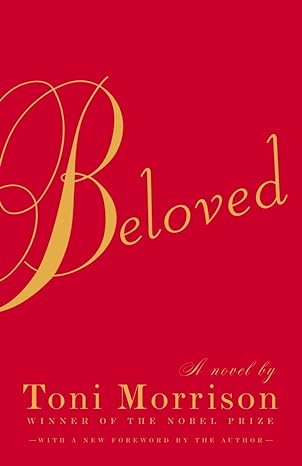

I have read each of those novels and not one of them warped my mind. Were you damaged by reading any of these novels? I doubt it. Were you moved to understand and see the world differently by reading these novels? Probably.
To Kill a Mockingbird teaches us about racial discrimination and injustice while also teaching us that Atticus Finch had integrity and maybe we should, too.
Beloved teaches us about the horrors of slavery and that the horrors did not end with the Civil War. It teaches us the lengths desperate people will go to prevent their children from being enslaved and living in horrible circumstances. That’s being demonstrated daily at the US-Mexican border.
The Grapes of Wrath teaches us what can happen after a decade of affluence and decadence and a time of drought as it illustrates a side of life during The Great Depression.
It’s one thing to read that thousands of people lost their farms and everything they had during the “Dust Bowl,” but it’s altogether different to read The Grapes of Wrath and live with the novel’s characters.
The Snow Forest, by Elizabeth Gilbert
In July of this year, an historical novel scheduled to be released in February 2024 was attacked on the author’s Goodreads account to the point that she chose to cancel its publication.
Elizabeth Gilbert, who wrote Eat, Pray, Love had written a novel set in Russia in the 1930s. With all the current interest in the war in Ukraine today, it would seem an opportune time to release a book set in 1930s Russia.
But author Elizabeth Gilbert learned that was not the case. She got so much blowback from her fans, that she pulled The Snow Forest even after some of her readers had pre-ordered the book. Her fans in Ukraine (or at least enough of them) said it was not the right time to release a book set in Russia. In response, the author suspended the publication of the book.
Author Alina Adams’s Thought on this
I read a blog post by author Alina Adams who was born in Odessa, Ukraine. Ms. Adams’ post maintains that historical fiction can make an important statement about the world and not just be a source of entertainment.
Ms. Adams wrote, “And as someone who loves to read historical fiction taking place all over the world in all sorts of different time periods, I am wary of a mindset which might lead to authors and publishers censoring themselves, shying away from setting stories in regions where there is ongoing political strife.”
In addition to specific examples of historical novels that have been challenged and banned, Ms. Adams’ blog post contained several succinct statements about the potential historical fiction holds, including the following: “Sometimes, historical fiction can tell a truth non-fiction isn’t equipped to deliver.” Also, “It doesn’t just make you think, it makes you feel. And it makes you empathize.”
My thoughts on this
Reading an historical novel might not change your political stance or religious beliefs but, if you give it a chance, it just might help you see the other side of an issue.
It might at least help you realize that people with views that oppose yours are not necessarily your enemies. They just might be human beings with a different perspective and life experience.
Please take a couple of minutes to read Alina Adams’ complete blog post from July 27, 2023 on M.K. Tod’s blog, A Writer of History: Why Historical Fiction Must Keep Tackling Controversial Topics | A Writer of History.
A quote from author Barbara Kyle
I printed this quote from Barbara Kyle and have it taped to my computer:
“The move to self-censorship for fear of ‘cultural appropriation’ is a sad state of affairs. Author Morgan Jones eloquently champions the opposite position: ‘Fiction remains the best means we have of finding connection where there seems to be none; and the novel, of all forms, encourages a search that’s deep and sustained. By reading (or writing) one, you’ve travelled somewhere else. You’ve moved, if only slightly, toward others. In a world that finds and increasingly exploits division and difference, this is an invaluable, precious exercise.”
Since my last blog post
Marie and I finished proofreading and creating the cover for our upcoming cookbook, The Aunts in the Kitchen: Southern Family Recipes. We submitted it to Amazon on Friday and requested a proof copy. It should arrive this week and, if we are pleased with it, we’ll give Amazon the go ahead to publish it. Look for an update and perhaps a cover reveal in next Monday’s blog post.
Until my next blog post
Be aware of what is going on in your community and state related to book challenges and book bannings. Speak up for books. Speak up for the freedom to read. Speak up for public libraries and librarians.
Have you ordered my American Revolution e-ghost story? “Ghost of the Battle of Guilford Courthouse: An American Revolutionary War Ghost Story” is available from Amazon, along with my other books: https://www.amazon.com/dp/B0CH7JCP11/. It’s only available as an e-Booklet.

If you don’t have a good book to read, visit your local public library. Or, from the comfort of your home, go to its website and search for books you would like to read or subjects you want to learn more about. You will be amazed at what is available at your fingertips!
Take time for friends and family.
Thank you for taking time to read this long blog post.
Remember the people of Ukraine, Maui, Libya,….
Janet



 Janet's Writing Blog