Books read in June 2024

The first Monday of July is here, so my blog today is about some of the books I read in June. It’s hard to realize 2024 is half over.


Being Henry: The Fonz… and Beyond, by Henry Winkler

Being Henry: The Fonz…and Beyond, by Henry Winkler

I began June by listening to Being Henry: The Fonz… and Beyond. It was enlightening and enjoyable, partly because it was read by the author, Henry Winkler. I hadn’t known anything about Henry Winkler’s childhood or how much out of his comfort zone his portrayal of Fonzie was on the TV sitcom “Happy Days.”

In the book you learn how Henry Winkler went to great lengths to try to keep his character from overshadowing Ron Howard. The show had been created to feature Ron Howard, but the public became enamored with “The Fonz.”

The book takes you on Henry Winkler’s journey as an actor and shines a light on how he met his wife of nearly 50 years. He tells of his struggles to break into acting and how he landed the part of Fonzie on “Happy Days.” He is painfully honest about the support he did not receive from his parents.

Henry Winkler describes himself as a shy and private person, which tells us what a good actor he was in his portrayal of Fonzie!


A Calamity of Souls, by David Baldacci

A Calamity of Souls,
by David Baldacci

I will start out by saying that I highly recommend this book. Stop reading right now and get on the waitlist for it at your local public library.

This is a book that Baldacci worked on for a decade. It was a story he was compelled to write. It is a novel about race relations in the United States in 1968. It is not set in the Deep South. That would have been too easy. Instead, Baldacci did the difficult thing. He set this novel in his home state of Virginia.

A well-known formerly affluent white couple are murdered in their home. When a black man who works for them is found by sheriff deputies in the house with their bodies, it appears to be an open and shut case.

Not so fast! There are twists and turns and family secrets in this story. The tension builds and builds until the killer’s identity is revealed.

This is a novel you won’t want to put down once you start reading it. If I didn’t have several hundred books on my To-Be-Read List, I would probably read it again just to study the clues and red herrings.


The Berlin Airlift: The Cold War Mission to Save a City, by John Tusa and Ann Tusa

The Berlin Airlift: The Cold War Mission to Save a City,
by John Tusa and Ann Tusa

This was one of the books I skimmed through as I did research about the Berlin Airlift so I could blog about its 76th anniversary last Monday. The book goes into detail about the airlift, in case you want to know more than I was able to condense into 1,000 words for my purposes. In case you missed last Monday’s blog, here’s the link:#OnThisDay: Berlin Airlift, 1948.


Stop Buying Bins & Other Blunt but Practical Advice from a Home Organizer, by Bonnie Borromeo Tomlinson

Stop Buying Bins & other blunt but practical advice from a home organizer,
by Bonnie Borromeo Tomlinson

As I age and am very much in fear of leaving a bunch of clutter for my heirs to have to deal with some day, I discovered this book. It struck a nerve with me and prompted me to pull out every article of clothing I own. Some garments went in the trash – where they should have gone long ago. I’m talking about 30-year-old tee shirts that had holes in them. Not a good look for me even when doing yardwork!  Nearly half the garments were donated to a thrift shop. I have lost about 16 pounds in the last year, so many of the things did not fit and I don’t want to grow back into them!

A major point in the book is that you must know why you are decluttering or downsizing, and you must have the right mindset. For several reasons, the time was right for me to do some major downsizing.

The book drives home the point that you don’t have to keep everything just because you kept it in the first place. It says you don’t have to keep things passed down to you just because they remind you of that person. Keep the memory, but don’t necessarily keep the item unless it brings you joy.

The book says if you don’t value something enough to display it, then get rid of it. Someone else might enjoy having it.

A local library had a craft swap last week. It was time for me to get rid of most of my cross-stitch supplies and books. I can’t see well enough now to do much small needlework.

Now that I have my clothes and craft items under better control than they have been in years, I’m ready to tackle my “stuff” in general, one room at a time.

There is a chapter about helping an aging parent downsize. There’s a chapter about parting with those adorable pictures your children colored. There’s a chapter about how to go about clearing out a house after a death, even if you live a long way from the house you’re having to clean out.

The book was well worth the $3.99 I spent for the Kindle version.


Until my next blog post

I wish my fellow-Americans a safe and happy Independence Day on Thursday!

I hope you are reading a good book.

Don’t forget the people of Ukraine.

Janet

#OnThisDay: Berlin Airlift, 1948

When I read that today was the 76th anniversary of the Berlin Airlift, I must admit my mind was a little short on details. One of the perks of writing this blog is that I get to study events in history and then share what I have learned.

Three of my last four blog posts have been light-hearted as I regaled you with details of my recent trip to the Outer Banks of North Carolina. It was a fun trip and I enjoyed sharing my memories and photographs with you; however, it is time for me to return to real life with my blog and other aspects of my life.

I learned a lot about the Berlin Airlift so I could blog about it today. If you, like me, were born after 1948, you maybe never studied mid-20th century history when you were in school.

Background

At the Potsdam Conference at the end of World War II, it was agreed that Germany would be divided into four parts for the country’s transition into a post-war economy and government. The United States, Great Britain, France, and the Soviet Union were designated to occupy the four sectors. The city of Berlin, which sits in the center of Germany, was also divided into four sectors with the same plan for occupation.

The Russian sector covered the eastern half of Berlin and the other three countries split up the western half.

Under the plan, it was the responsibility of the Allied countries to support the German people in their designated sectors with food, medical supplies, and fuel until Germany could recover from its defeat in the war.

Berlin was in the middle of the Soviet-controlled sector of the country. In hindsight it is easy for me to see that this situation had trouble written all over it, but I must be reminded that the Soviet Union, France, Great Britain, and the United States were allies in World War II. That is difficult to get my mind around, since I grew up during the so-called “Cold War” of the 1950s and 1960s.

The straw that broke the camel’s back

The United States, Great Britain, and France introduced a new currency – the Deutschmark – in an effort to revive the German economy. The Soviet Union balked at the proposal because it wanted to continue to bring Germany to its knees.

In response to the monetary proposal made by the Western Allies, the Soviet Union imposed a blockade of Berlin on June 24, 1948 after giving the Western Allies just 24 hours’ notice.

It was on that day, 76 years ago today, that the roads and waterways into Berlin were closed to American, British, and French access.

The Soviets wanted to starve West Berliners and through the very threat of starvation wanted to force West Berliners into coming across to the Soviet side.

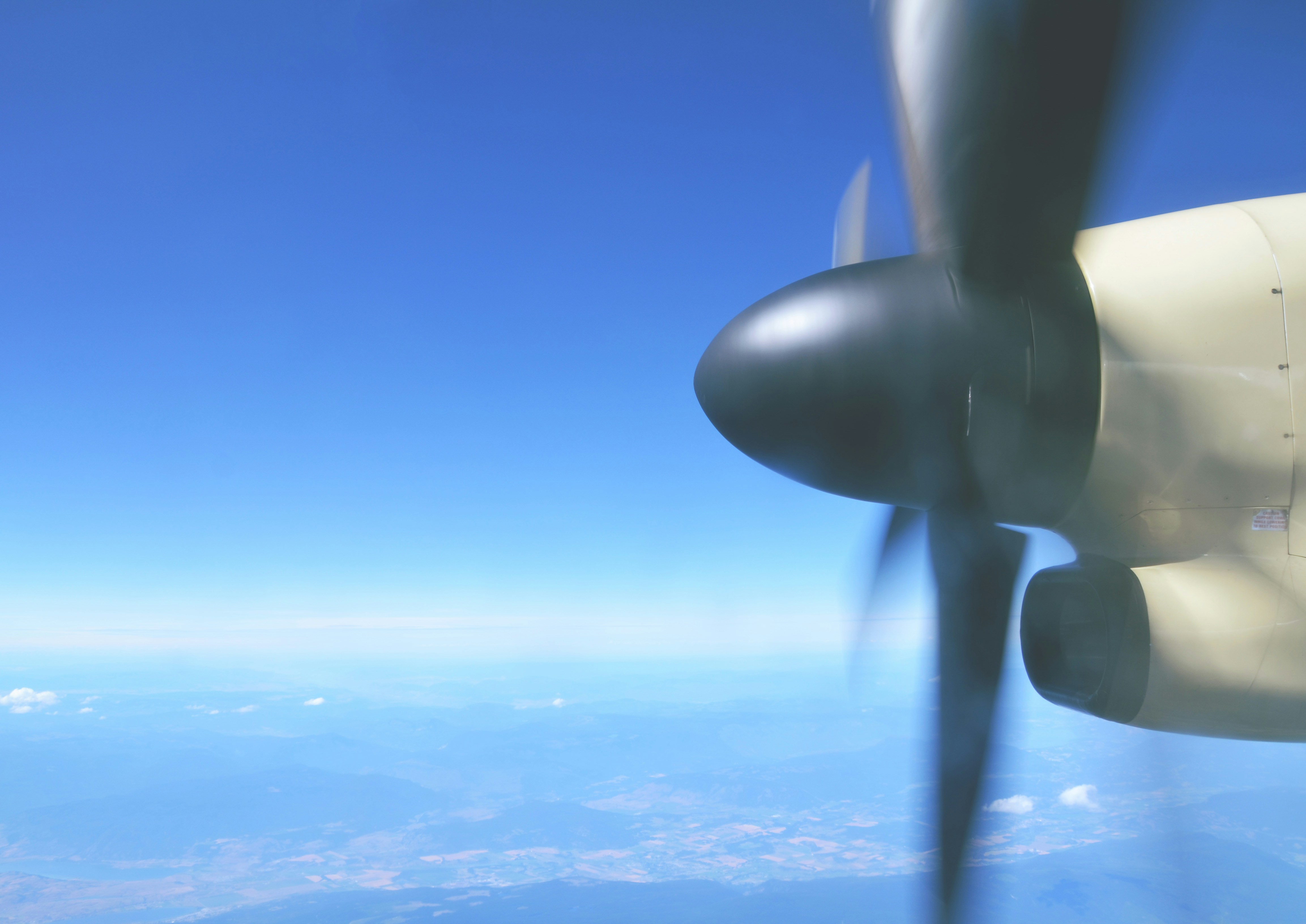
Photo by Marisol Benitez on Unsplash.

The blockade meant that the Western Allies could no longer bring supplies in via roads or the rivers. For a while, East and West Berliners could freely move from one sector to another. Many of them needed to travel into the opposing sector for jobs.

But in October 1948 new regulations prohibited free movement. Seventy-one roadblocks were set up and everyone wishing to cross into or out of the Soviet-occupied sector was searched.

The solution

The solution to the Soviet-imposed blockade was the Berlin Airlift. The Germans called it Luftbrücke which translates into English as “airbridge.”

I have found conflicting statistics about the Berlin Airlift, which lasted until the blockade was lifted on May 12, 1949. Allied planes were constantly landing around-the-clock at airfields in Berlin. One source said it was every three minutes, and another source said at its busiest a plane was landing every 45 seconds.

Photo by Christina Sicoli on Unsplash

It was described as a constant noise, but it was a noise that reminded Berliners that they had not been abandoned by the United States, Great Britain, or France when the Soviet Union left them out to dry. They were not at the mercy of the Soviet Union.

It is said that the airlift brought more than food, medical supplies, and fuel into Berlin. Perhaps most importantly, it brought Berliners hope. The Berliners did not just sit idly by waiting for help. More than 10,000 of them worked at the airfields in various support positions to keep the airlift running as smoothly as possible.

The North Atlantic Treaty Organization (NATO) was created on April 4, 1949, which sent a strong message to the Soviet Union and, no doubt, prompted an end to the blockade five weeks later.

After the Berlin Airlift

West Germany was established as a democratic state two weeks after the end of the Berlin Airlift. Soon thereafter, East Germany was created.

For those of you too young to remember and who have not studied post-World War II world history, West Germany continued to exist as a free country and East Germany existed as a communist country until the reunification of Germany on October 3, 1990.

East Germany had to put a stop to East Germans fleeing to West Berlin. The Berlin Wall went up literally overnight on August 12, 1961 and encircled West Berlin until 1989. Overnight tens of thousands of West Berliners lost their jobs in East Berlin because the wall could not be crossed.

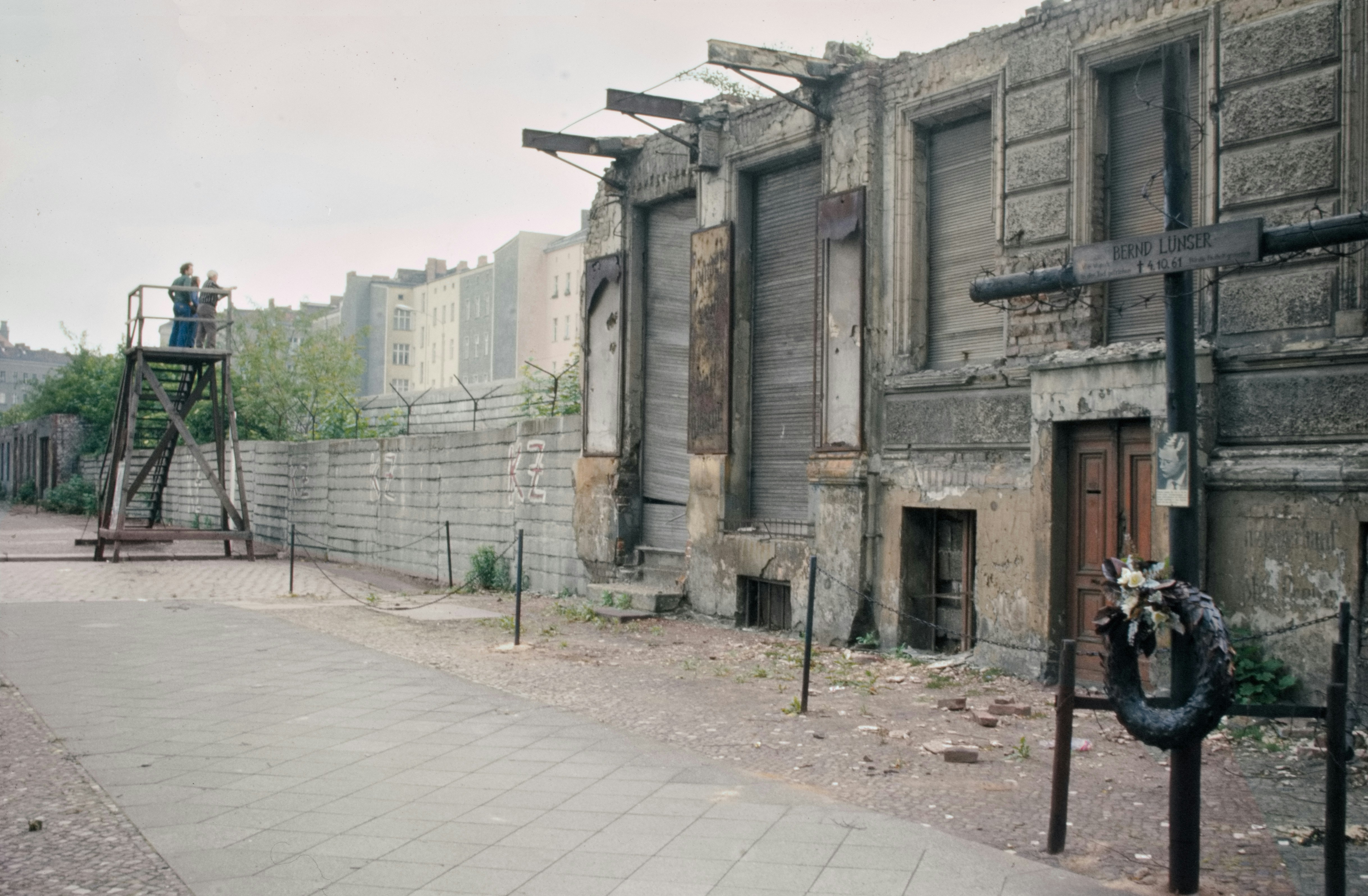
A small section of the Berlin Wall. Photo by Immo Wegmann on Unsplash.

The Berlin Wall was a series of concentric barriers – a concrete wall with guard towers, anti-vehicle trenches, beds of nails and barbed wire. It was rare for anyone to successfully cross the wall. At least 171 people were killed trying to escape East Berlin.

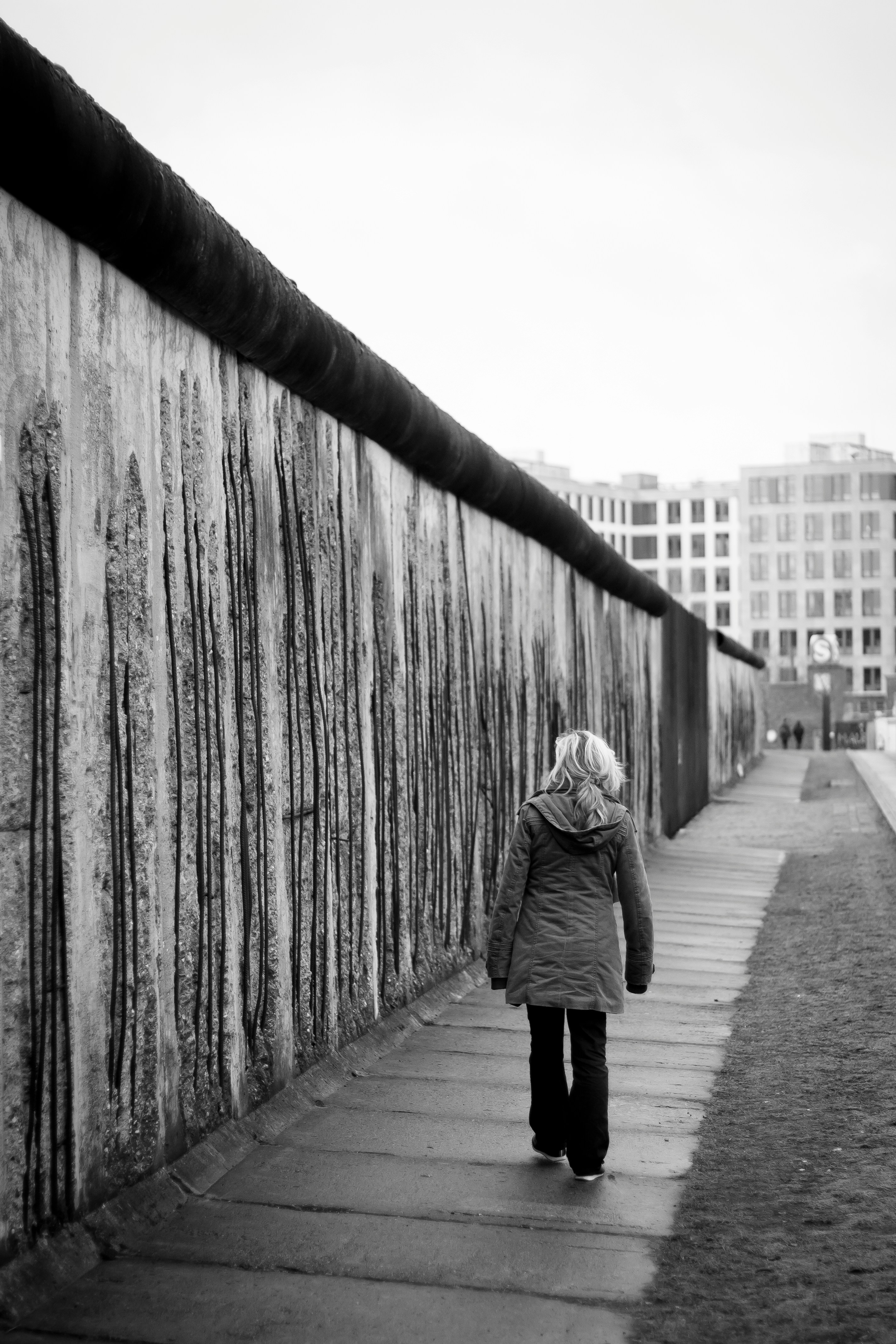
The Berlin Wall. Photo by Tomas Val on Unsplash.

The tearing down of the Berlin Wall

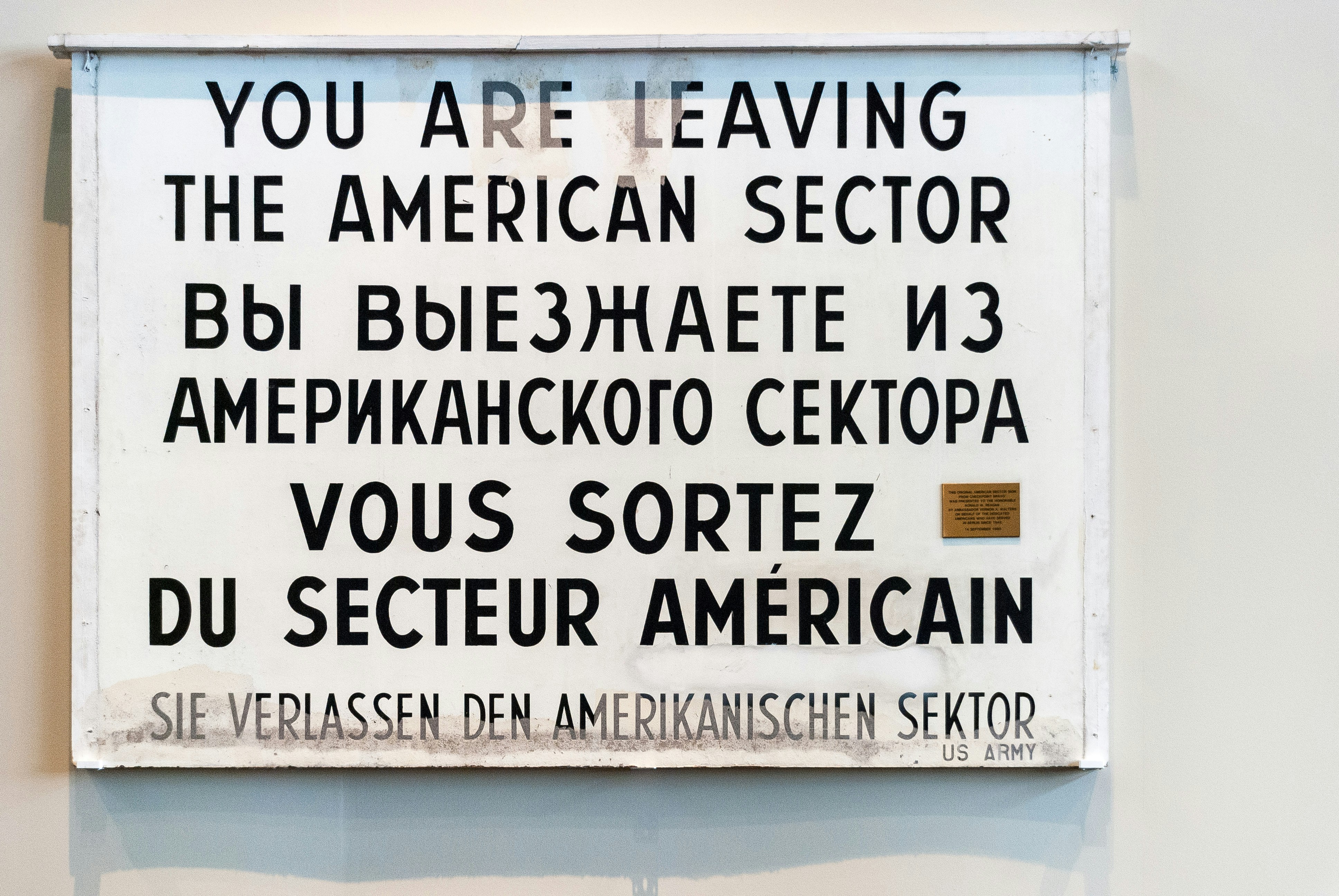
Sign at “Checkpoint Charlie” in Berlin. Photo by Etienne Girardet on Unsplash.

On November 9, 1989 the East German Community Party announced new policies regarding border crossings and the gates were opened.

People took picks and hammers and started tearing down the concrete wall. Bulldozers pushed down sections of the wall until it was gone.

After 44 years, Berlin once again became one city. And Germany was finally once again one sovereign country.

In conclusion

This is a condensed version of what happened and all sources do not agree on every date. If you wish to do your own research, there are many books that offer the details and idiosyncrasies of the airlift. Check the public library and the internet for a list of reputable sources.

Until my next blog post

Thank you for taking the time to read my blog today.

My next blog post will be on July 1. June just flew by!

I hope you have a good book to read – one that you don’t want to put down!

Value the time you have with friends and family.

Remember the people of Ukraine.

Janet