I write southern historical fiction, local history, and I've written a devotional book. The two novels I'm writing are set in Virginia and the Carolinas in the 1760s. My weekly blog started out to follow my journey as a writer and a reader, but in 2025 it has been greatly expanded to include current events and politics in the United States as I see our democracy under attack from within. The political science major in me cannot sit idly by and remain silent.
I am thrilled to announce that my book, I Need The Light! 26 Weekly Devotionals to Help You Through Winter is now available!
I Need The Light! 26 Weekly Devotionals to Help You Through Winter, by Janet Morrison
Even if you love the fall and winter, I think you will benefit from reading this book.
Why I Wrote I Need The Light!
I wrote it from a place of physical challenges in cold weather, so I think people who have such illnesses and conditions as Seasonal Affective Disorder, Fibromyalgia, and Chronic Fatigue Syndrome/Myalgic Encephalomyelitis will be able to identify.
I settled on writing 26 weekly devotionals because with the onset of fall, I start dreading winter. Seasonal Affective Disorder affects me half the year.
What Does the Title I Need The Light! Mean?
To help me combat the symptoms of Seasonal Affective Disorder and sleep problems, my former physician’s assistant told me that I needed to get out in the natural light early every morning. I needed natural sunlight.
I’m not a morning person, so I had to force myself out of bed and outdoors in the morning – even in cold weather. As I walked, I repeated in my head the words, “I need the light. I need the light. I need the light. I need the light.” On about the fifth repetition, I had an epiphany: I realized I also needed The Light – Jesus Christ – “The Light of the World.”
I’ve been a Christian all my life, so it wasn’t a new concept for me that I needed Jesus Christ in all aspects of my life, but the sudden connection between “the light” and “The Light” was startling! It was then and there that God planted the idea in my mind and heart to write a book about the light and The Light.
That day, I started looking for all the references to light and The Light in the Bible.
Format of I Need The Light!’
Each week’s devotional follows this basic pattern:
The week’s Scripture reference is stated.
“Setting the Stage” in which I give a little background for that Scripture.
The week’s Scripture is then presented from The Message, The Good News Bible, The Living Bible, The New Oxford Annotated Bible (New Revised Standard Version), and TouchPoint Bible. The second week has the bonus of including the Bible verse from my great-great-grandmother’s 1849 The Psalms of David in Metre.
Insight from a Bible commentary, such as the series by Rev. William Barclay.
“My Thoughts” – Then, I usually share my thoughts about the Scripture.
“Remember” – one sentence of encouragement to ponder.
“Thought Pattern Interrupter” – One sentence to help you put a positive spin on that week.
“Activity Suggestion” – An activity you might choose to do that week to get you out of your own head/situation.
“Comfort Recipe” – A recipe that I consider a fall or winter “comfort food” from my own experience.
How to Use I Need The Light!
Readers are encouraged to read the devotional book as they choose. You don’t have to read it over a 26-week period. And each week, you can read the entire chapter in one sitting, or you can string it out over the week. It’s totally up to you to read the book in the way that best helps you.
Where to Find I Need the Light!
If you think I Need The Light! 26 Weekly Devotionals to Help You Through Winter would help you, or if you know someone who might benefit from the book, it can be purchased at your favorite independent bookstore. If you don’t find it there, please ask them to order the book from IngramSpark.
The book is available in paperback and as an e-book.
Click on “Read more” under the photo of the book cover.
At the end of the book’s description there, click on the BookShop.org buy button, which takes you to BookShop.org (a site that supports independent bookstores throughout the U.S.)
Put my book in your basket.
Select the independent bookstore you wish to support.
Place your order and have the satisfaction of knowing you are supporting an independent bookstore!
So far, Second Look Books in Harrisburg, NC; Blue Ridge Books in Waynesville, NC; and Highland Books in Brevard, NC have been very supportive of my book so I’ll give them a shout-out.
Available for your cell!
The book is also available on Amazon and from Barnes & Noble.
Here’s a Sneak Peek at I Need The Light!
From Week 12, here’s the “Setting the stage” introduction to that week’s devotional about the Parable of the Lost Coin:
“In Halley’s Bible Handbook, Henry H. Halley describes the fifteenth chapter of Luke as ‘the calm before the storm’ in Luke 14. In the fourteenth chapter of Luke, Jesus doesn’t beat around the bush as He talks about the price people will pay for following Him. He goes on to explain that He must be first in our lives. We must love Him more than we love anyone else. It’s enough to make a person question the wisdom of following Jesus!
“But then we come to Luke 15. It is a beautiful chapter about the tender, forgiving grace of Jesus. The chapter includes the Parable of the Lost Sheep, the Parable of the Prodigal Son, and the passage we’re looking at this week: The Parable of the Lost Coin.”
Does this sound like something you or a friend would like to read?
I wrote I Need The Light! 26 Weekly Devotionals to Help You Through Winter in a conversational tone as I imagined I was talking one-on-one with a good friend. If this approach to the Bible appeals to you, I hope you will look for my book.
I’m not an “in your face” kind of Christian. I’m a lifelong Presbyterian, so I’m not going to scare you into being a Christian. That’s not the Presbyterian way!
Even if fall and winter are your favorite seasons of the year, I believe you will find something of benefit in my 188-page devotional book.
I invite you to look for it!
If you read it and like it, your rating and/or brief review on such sites as Goodreads.com and Amazon will be greatly appreciated.
I considered saving today’s topic for my July 7 planned blog post about the books I am reading in June, but I decided it deserved its own post.
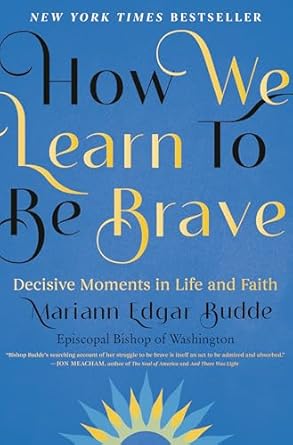
Last week, I read the fourth chapter in How We Learn to Be Brave: Decisive Moments in Life and Faith, by Mariann Edgar Budde.
How We Learn To Be Brave, by Mariann Edgar Budde
If the author’s name sounds familiar, it is because she is the Bishop of the Episcopal Diocese of Washington, D.C. and the Washington National Cathedral. She spoke boldly in the worship service on President Trump’s Inauguration Day in January 2025, and was sharply criticized by Trump for her courage.
My sister read this book and encouraged me to at least read the fourth chapter before she returned it to the public library. She said it reminded her of me and some of my life experiences. I took time to read that 34-page chapter titled, “Accepting What You Do Not Choose.”
My story (well, part of it)
At the age of 25 I accepted the fact that I had a medical problem that was incurable but could be treated with a series of surgeries. It meant that I would never have a chance to have children. Less than ten years later I accepted the fact that I had chronic fatigue syndrome and fibromyalgia, neither of which can be cured and treatment of the symptoms is poor at best.
What I was able to accept has astounded my sister. She knows better than anyone else how much physical pain I tolerate and the fatigue that makes it difficult for me to get up and face each day. She says she has asked God, “Why Janet?” but I just find that odd because I have never asked God, “Why me?”
I admit that when I get frustrated over the memory problems that accompany chronic fatigue syndrome that cause me to make mistakes and have to repeat various tasks, I do sometimes ask God why life has to be so hard.
But I’ve never asked God why I had endometriosis, a ten-pound ovarian cyst, fibroid tumors, chronic fatigue syndrome, fibromyalgia, chronic corneal erosion, and so forth. Why would I do that? Stuff happens. God never promised us that life would be a bed of roses. He promised He would always be with us. Diseases happen. Accidents happen. No one has a perfect life, so why would I expect my life to be perfect?
My father was my example
My example was my father. He was just 61 years old when he was diagnosed with multiple myeloma. I had just started my sophomore year in college. He lived for almost five more years. The chemotherapy acted like fertilizer on his cataracts and he went blind. Blindness was harder for him to accept than his cancer because there was nothing he could do to fight blindness.
He insisted on having cataract surgery against his doctors’ recommendations, but it was unsuccessful. But in those five years of sickness and eventual legal blindness, I never once heard my father ask, “Why me?” That just was not the way he approached his medical diagnoses. He continued to work every day until his eyesight made it impossible for him to drive.
What Bishop Budd’s 4th chapter had to say
I read the fourth chapter in Bishop Budde’s book, and it was comforting. She writes from a place of physical pain that I did not know she had. The book gave me some things to think about. It is always helpful to listen to another person’s perspective.
Budde writes several pages about the Rev. Dr. Martin Luther King and how he accepted the life he was dealt. She writes about acting from a place of love and putting the other person ahead of ourselves. Instead of being like the Levite and the priest in the story of the Good Samaritan, we should strive to be like the Good Samaritan.
The Levite and the priest in the story saw the man who needed help, but they were afraid of what could happen to them if they stopped to help the man. But if we try to adopt the mindset of the Good Samaritan, when we see someone who needs help or an injustice, we should ask ourselves, “What will happen to them if I don’t act?”
That is the question I have asked myself daily since January 20, 2025. What will happen to my country, to my great-nieces, to their future children, if I don’t act?
With Episcopal Bishop Michael Curry’s words in mind from Prince Harry and Meghan Markle’s wedding ceremony, Budde writes, “When we choose love in response to what we wish we could change but can’t; when we choose love as our response to the world as it is, not as what we wish it were; when we choose love over denial, or anger, or cynicism and withdrawal, we share in God’s redeeming of our world. It doesn’t make the work any easier, but it gives our efforts a sense of purpose that can carry us through. Through our imperfect efforts, God’s grace shines through us in ways we may never know or fully understand.”
Budde closes the fourth chapter with the following words:
“Our lives are full of unforeseen choices, struggles, and callings. Sometimes we can overcome these obstacles, and sometimes we must make peace with them…. Accepting what we did not choose involves a leap of faith that God is present and at work in ways that we cannot comprehend…. This kind of acceptance is not passive or fatalistic, but rather a courageous choice at a decisive moment to embrace the places we are broken as an integral part of a courageous life.”
I didn’t feel courageous at age 24 but maybe I am at 72
I don’t consider that I was courageous in accepting my physical limitations. It never occurred to me that I had a choice, so what would have been the point of fighting or lashing out at God about them?
Another participant in a Chronic Fatigue Syndrome support group in the 1980s who every month angrily said, “I refuse to be sick! I’m not going to put up with this. The rest of you can be sick if you want to, but I refuse.” I don’t know what became of her. I hope she was able to find a place of acceptance and contentment.
There was another participant in the support group who presented herself as a wealthy middle-age woman who enjoyed playing tennis every day. She could no longer play tennis and it crushed her spirit. She committed suicide.
I did not choose to have Chronic Fatigue Syndrome since April 26, 1987, but here I am.
On the other hand, I did not choose to have Donald Trump as my President, and it is taking a degree of courage for me to express my concerns in my blog. I don’t personally know but a few of the people who read my blog. WordPress tells me that people in 81 countries have read my blog just in 2025. People who may wish me harm for my opinions might read my blog. A few trolls have read it and left unpleasant comments.
I’m happy to engage in a “conversation” about the topics in my blog, but when a comment turns into a personal attack or accusations about my credibility or motives, I draw the line and I delete them. I do not owe my time and limited energy to someone who merely wants to pick a fight.
The bottom line
“The bottom line” is that we do not choose many of the things that happen to us, but we can always choose how we react to them. Our experiences make us who we are. If I had not had some medical problems, I would not be the person I am today.
We can look for constructive and creative things to do when we have physical or career setbacks. If I had not been forced to give up my chosen career due to my health at the age of 34, I might not have taken a writing course at the age of 48.
If I had not taken that writing course, I would not have had the confidence to write a local history column for the newspaper at the age of 53 to 59. If I had not taken that writing course, I would not have started a blog at the age of 60.
If I had not written 175 local history articles for the newspaper, I wouldn’t have been able to self-publish them in two books (Harrisburg, Did You Know? Cabarrus History, Books 1 and 2). If I hadn’t wanted to publish those articles in book form, I wouldn’t have learned how to format a book on the computer so I could self-publish on Kindle Direct Publishing.
If I had not taken that writing course or published those two history books, I would not have published two short stories on Amazon… or a cookbook with my sister in 2023.
If I had not taken that writing course, I would not be writing an historical novel now at the age of 72.
If I had not had Chronic Fatigue Syndrome, Fibromyalgia, and Seasonal Affective Disorder and learned how to write and self-publish, I would not have just finished writing a devotional book. I hope to publish I Need The Light in August, so stay tuned!
God did not wish for me to have any of my physical maladies, but he gave me the Holy Spirit. The Holy Spirit gives me the gumption to get up every day (although some days I don’t get up until the afternoon) and to seek God’s will in my life.
It is through The Trinity — God, Jesus Christ, and the Holy Spirit — that I have the energy and creative motivation many days to read, write, interact with the friends I’ve made around the world through my blog, sometimes dabble in genealogy, and occasionally keep learning to play the dulcimer – a musical instrument I took up in middle age.
It is through The Trinity that I was given an interest in history and political science. It is those lifelong interests that compel me to pay attention to current events. The current events in my country are sources of much stress and concern.
I see the democracy in which I have thrived all my life under attack now from within. My government is turning against its citizens and the things we value. I did not vote for any of this, but the situation is the one I’ve been dealt.
It is up to me how I react.
Some days I wish I could just turn off the news. Some days I wish I could listen to the news and then just go about my business and not be concerned. Lots of people seem to be able to do that. I am not one of them. (I am simultaneously envious of them and frustrated with them!)
The reelection of Donald Trump has upended my little weekly blog (and, therefore, my life) into an almost daily report (some say “rant”) about the dismantling of our democracy. Nothing about 2025 is what I had planned for myself, but life happens.
Now you see
So now, 1,900 words later, you see why I decided to give the fourth chapter of Bishop Mariann Edgar Budde’s book, How We Learn to Be Brave: Decisive Moments in Life and Faith, its own blog post.
Some of you might think my life is too much of an open book. I get it. Some people don’t want anyone to know they have medical problems. I don’t share that information about myself to get your sympathy. That’s not what this is about. But perhaps someone else with health problems at a young age (or at any age) can take some measure of encouragement from my blog today or from the devotional book I will blog more about later.
It’s all about faith and where we get out courage to keep putting one foot in front the other. It’s about how we react to whatever comes our way.
What are your priorities?
What creative and constructive ways have you found to express yourself and react to the life you have been given?
It’s never too late to find your voice.
It has been my experience that when life circumstances close a door, God always opens a window… or even a bigger door.
Until my next blog post
Keep reading and paying attention to what’s happening in your country and the world. Being a citizen is not a spectator sport!
Remember the brave people of Ukraine, and don’t forget the people in western North Carolina who are still recovering from last September’s hurricane and record-setting flooding and landslides… as well as a new flood and landslide two days ago just over in Tennessee which has closed I-40 to all traffic (again) for a couple of weeks.
If you read my blog last week (A Lost Art) or my July e-newsletter, you know I have been decluttering this summer. I have reached an age at which I have realized that I’m not going to live forever and I really don’t want to leave my heirs a massive mess to deal with when I’m gone or incapacitated. Hence… it is time to declutter and part with many of the things, assorted memorabilia, pieces of paper, nice magazines, photographs, and even some of the books I never should have kept in the first place.
It’s time to let someone else get joy from some of my things by taking them to the thrift shop or donating them for a yard sale an organization is holding. It’s time for the recycling center to turn some of them into recycled paper. It is time for the landfill (my least favorite choice) to accept the rest.
In my first blog post of the month, I almost always write about the books I read the previous month. That is not what today’s post is about.
I started reading three or four books in July, but none of them grabbed my interest enough for me to drop everything else and finish reading them. Do you ever have times like that? When nothing feels quite right? When even favorite authors’ newest releases just fall flat?
The entire month of July was like that for me and August has begun in the same way.
Decluttering is exhausting for everyone. Looking at every item and every piece of paper and deciding whether to keep it or let it go is tedious and time consuming. I once again live in the house my parents built when I was seven years old. It is easy for things to accumulate in 64 years!
But that’s not the whole story. In fact, it is just a by-product of the root of the problem.
Photo by Jr Korpa on Unsplash
Some of the challenges of Myalgic Encephalomyelitis
Due to Myalgic Encephalomyelitis, I always have trouble remembering the details of what I just read… and sometimes it is worse than others. I am in one of those worse times now. When it hits, it is unsettling at best and devastating at its worst.
Every time I have experienced this in the 37 years I’ve dealt with this illness, it feels like I will never feel any better than I do at the moment. Perhaps this is the time that I stay stuck forever in the brain fog and debilitating fatigue in which I struggle to put one foot in front of the other. That is the state in which I find myself as I put the finishing touches on this blog post.
As described by the Mayo Clinic, the symptoms of Myalgic Encephalomyelitis vary from one person to another and from one time to another for each individual. Physical and mental activity worsen the person’s fatigue, and rest does not lessen the symptoms.
After 37 years, I no long remember what refreshing sleep feels like. I have very active dreams and my body can’t seem to distinguish between dreamt activity and actual activity. Therefore, I always wake up more exhausted than when I went to sleep. I have to ease into my day and mornings are not good for me.
That makes no sense to someone who has not experienced it, but it is the best way I know to describe my life. As with any other person dealing with a chronic illness, I have to push through each day and do the best I can. This is my life, and I choose to make the best of it.
Part of my brain tells me that I will not stay in this slump forever, so I will hang onto that thought. I have to.
I chose to use the more accurate name for this little-understood syndrome in today’s post rather than my usual use of the American term for it, Chronic Fatigue Syndrome (CFS). That name is degrading to the people who deal with the illness as patients or as medical professionals. It belittles the illness and the patients. It brings on comments like, “I’m tired, too.” Comments like that only serve to make the patient feel less valued as a human being. The CFS moniker for such an all-consuming illness is tantamount to the early name of Multiple Sclerosis: Malingerers Disease.
What did I try to read in July?
One book that I just didn’t have the mental energy for was Reading the Constitution: Why I Chose Pragmatism, Not Textualism, by retired US Supreme Court Justice Stephen G. Breyer. It is a very detailed book about a deep subject. The political scientist in me wanted to read it, but I was too tired to give it the time and concentration it needed. Mr. Breyer is very good at explaining laws and concepts in understandable language.
A political thriller I enjoyed but didn’t have time to finish before it had to be returned to the public library was Phantom Orbit, by David Ignatius. I have enjoyed all of Ignatius’ novels. I’m on the waitlist to check it out again.
Until my next blog post
If you tuned in today eager to see what I read last month, I apologize. If I can snap out of this mental fog, I will blog about the books I read in August in my blog post the first Monday in September 2.
Until then, I hope you have a good book to read.
My planned topic for next week’s blog post is the anniversary of the United States’ annexation of Hawaii as a territory in 1898. Time will tell if I am able to do the necessary research on that subject over the next seven days. If not, I hope to return to the blogosphere in the near future.
In today’s blog post, I am revisiting my blog post from April 8, 2016. I had been asked to share 10 random facts about myself. It is interesting exactly eight years later to reread that post and see that little has changed.
Here are the 10 random facts about myself as I offered them eight years ago today, with new insights and details added within brackets:
1. I have what is called Chronic Fatigue Syndrome (CFS) in the United States but is known as Myalgic Encephalomyelitis (ME) in the rest of the world. My energy and stamina are limited, and my memory problems and mental fog make my research and writing tedious and time consuming. I often feel as if I live in a vat of molasses. Nothing comes easily.
2. I started working on the manuscript of my proposed historical novel, The Doubloon/The Spanish Coin, in 2005. I am still tweaking it. [I was startled to be reminded that I started writing The Doubloon/The Spanish Coin 19 years ago! After editing that manuscript down from 120,000 to 96,600 words, I am now concentrating on turning the main character’s backstory into a novel to publish before I publish The Doubloon/The Spanish Coin. The tentative title of that novel is The Heirloom.]
3. As a young adult, I was a “fiction snob.” I thought there was nothing to learn or gain by reading fiction. You can imagine how shocked my sister was when, at the age of 48 in 2001, I told her that I had registered for a fiction writing class! That’s when I started learning to write [and truly appreciate and enjoy reading] fiction.
4. Although my appearance, manner, and personality give the impression that I am conservative, I am a liberal when it comes to politics.
5. After wanting to play the Appalachian lap dulcimer since first being introduced to the instrument as a college freshman, I finally purchased one and attended a four-day dulcimer workshop in 2010. Due to random fact #1, I still don’t play well and probably never will; however, I do play for my own enjoyment. I often listen to dulcimer music while I write. (I’m listening to some as I write this blog post.) [I still don’t play the dulcimer very well, but I am once again trying to practice almost every day. This is for my own enjoyment. A huge “plus” is that learning to play a musical instrument is supposed to be good for one’s brain.]
6. I live on land that has been in my family since the 1760s.
7. I sleep in a bed that my father made using timber from our land in the 1940s.
8. I wish I could sing.
9. I could drive a tractor before I was old enough to drive a car.
10. Taking the fiction writing course and attending the dulcimer workshop were life-changing experiences for me, and I will forever be grateful that I got out of my comfort zone and took advantage of both opportunities.
No matter your age, stretch yourself and follow your dreams.
What do you have to lose?
Since my last blog post
Photo by Janet Morrison at Joara
I participated in my first archaeological dig! I checked it off my “bucket list,” but I hope it won’t be my last one. If you want to read all about it, please subscribe to my every-other-month e-newsletter by going to https://www.janetmorrisonbooks.com and clicking on the “Subscribe” button. You will also receive my free downloadable historical short story, “Slip Sliding Away.” I will write about the archaeological dig in my May 2024 e-newsletter.
I submitted a 3,575-word contemporary short story to an international short story competition recently. It was the first time I entered a piece of fiction written in first-person to a competition, so I was pleased when I learned that my story was judged to be in the top 10% of submittals. In spite of that “top 10%” label, I opened the critique with some trepidation.
Photo by Christin Hume on Unsplash
In a nutshell, the critique only had two negative comments: (1) The title (“Someone is Trying to Kill Me”) gave too much away and (2) I wrapped up the protagonist’s dilemma too quickly. The positive comments included, “It’s rare that I tell an author that the story we turned down needs to be significantly longer, because many of our entries drag a very thin, uninteresting idea out for many more pages than it is worth. But I think “Kill” needs to be a lot longer…. Detailed, interesting, step-by-step… this story has ‘detective novel’ written all over it… I’d read that story. It would be far too long for our magazine, but so what? Get it published somewhere else, or publish it yourself on Amazon or he web or something. Finish the story and put it out there.”
What a morale booster!
Until my next blog post
If there is a novel in you that is begging to be written… WRITE IT!
Read a good book or two this week.
Support your local public library and independent bookstore.
After reading three good historical novels in February, I was disappointed that I didn’t get to read as much in March. That’s just the way it goes. As I try to do every month when I blog about the books I read the previous month, I repeat that I am not a book reviewer. I merely like to share with you what I read. Perhaps your interest will be piqued and you’ll decide to read some of the books I’ve enjoyed.
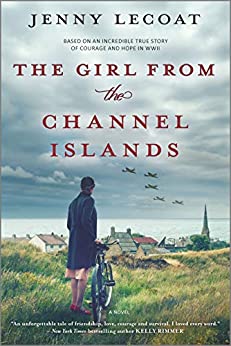
The Girl From the Channel Islands, by Jenny Lecoat
The Girl From the Channel Islands, by Jenny Lecoat
I listened to this historical novel on CD borrowed from the public library. I enjoy listening to a disc late at night, even though I have to deal with an occasional scratch on the disc which causes me to miss bits of the story.
Hedy Bercu, the protagonist in this novel, flees Austria in 1938 to escape the Nazis. She thinks she’ll be safe in Great Britain’s Channel Islands but, as World War II drags on and the islands are occupied by Germany, Hedy lives in constant fear that the wrong people will discover that she is Jewish.
The author, Jenny Lecoat, was born in the Channel Islands 16 years after some members of her family were deported by the Nazis and taken to concentration camps due to their resistance activities. This is Ms. Lecoat’s debut novel. I look forward to reading whatever she has in store for us next.
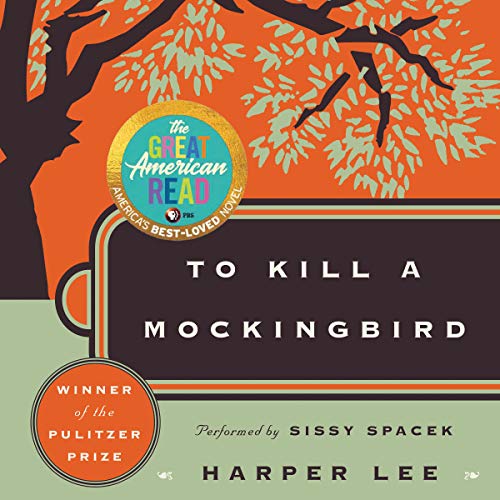
To Kill a Mockingbird, by Harper Lee
To Kill a Mockingbird, by Harper Lee
Although Banned Books Weeks is six months away, the increasing attacks on books in the United States prompted me to reread Harper Lee’s masterpiece. Instead of reading it in printed form this time, I decided to listen to Sissy Spacek’s performing of it on CD. I haven’t quite finished it, but I decided to include it in today’s post so The Girl From the Channel Islands wouldn’t have to stand alone.
It baffles me why people in 2023 want to ban To Kill a Mockingbird from school and public library shelves because it portrays the discrimination black people suffered in the 1920s or 1930s and, because at the same time, it portrays a white lawyer defending a black man who has been wrongfully arrested and charged.
I am against all book banning. One only needs to look at what happened in Germany in the 1930s to see what the results are.
If you don’t want your child to read a certain book, that’s your prerogative; however, you don’t have the right to dictate what anyone other than yourself and your children read.
Just because you are offended by a word in a book doesn’t make it a bad book. If you think you can erase the history of slavery, prejudice, and civil war in the United States by removing those references from books, you are mistaken.
If you think by removing sex education from school curriculum you will end all teen pregnancies, you’re only fooling yourself.
People who are afraid of knowledge and try to force their fears on the masses are the most dangerous people in the world.
Since my last blog post
I’ve tried to start overcoming the toll the challenges of the last eight months have taken on my limited energy. Getting my two local history books published and working toward the publication of a family cookbook have been fun, challenging, frustrating, draining, and rewarding — all at the same time. April 25 will mark the 36th anniversary of when I first became ill with Chronic Fatigue Syndrome. Please don’t laugh. It’s a real illness. I have pushed myself too much since last July to accomplish some long-term dreams to get my local history writings published, and now I’m paying the price.
I’ll continue to push myself because that’s what I do and I don’t know how to live otherwise; however, in the coming weeks I’ll try to be a little kinder to myself and take some time to smell the roses.
Until my next blog post
I’ll start preparing for my Author Meet & Greet scheduled for April 15 at Second Look Books in Harrisburg, North Carolina.
I’ll reevaluate the family cookbook my sister and I have compiled. I’ve encountered a problem in the formatting for a paperback edition, so it might just be an e-book. That would be disappointing.
I hope you have a good book to read. If you’ve purchased Harrisburg, Did You Know? Cabarrus History, Book 1 and Book 2, I hope you’re enjoying them.
If you’ve subscribed to my newsletter and, therefore, downloaded a free copy of my southern historical short story, “Slip Sliding Away,” I hope you’ve enjoyed that small sample of my fiction writing.
Remember the three children and three adults murdered in that private school in Nashville, Tennessee. Remember how your local, state, and national politicians vote on assault-style weapons designed for war when the next election rolls around.
As promised last week, today my blog is about the third book I read in March. It’s about the history of handwriting and the debate over whether children today should be taught cursive writing. I say, “Yes!” and I’ll explain why later.
Photo credit: Aaron Burden on unsplash.com
The History and Uncertain Future of Handwriting, by Anne Trubek
“Put your John Hancock here.” How many times have we of a certain age heard that? We, of course, immediately know that is a euphemism for our signature. But does a child of the 21st century know that? I understand that children today don’t have a clue what “clockwise” or “counterclockwise” mean. Yikes!
I discovered The History and Uncertain Future of Handwriting, by Anne Trubek while looking for a different book. I found this 154-page book fascinating and thought-provoking.
Trubek meticulously takes the reader on a journey through history. She shares facts about cuneiform and hieroglyphics. (Did you know that most cuneiform clay tablets can fit in your hand? In photographs, they look huge.) She explains how tedious and time-consuming it was for Sumerians to learn how to write and the hours people in ancient oral-based civilizations spent on memorization.
Egyptians invented writing on papyrus. When the Greeks adopted that practice, though, their papyrus was inferior and their scrolls were smaller. (Did you know that the size of ancient Greek scrolls has a bearing on literature today? For instance, the size of a scroll dictated the length of a play. Who knew?)
Socrates was anti-writing. He maintained that if people learned how to write, they’d lose their skill for remembering the spoken word. There’s probably some truth to that.
People in oral civilizations couldn’t look things up like we can today, so they developed elaborate mnemonics and also used additive structure (and… and… and) to help them remember important things. An example of this can be found in the Book of Genesis in The Bible: “In the beginning God created… and… and….”
It was the Romans who stopped using papyrus and started using parchment. Parchment made it easier to make books. Trubek says that bookstores had been established in Rome by the first century B.C.E. Take a moment to visualize that. It makes me smile.
Trubek talks about the development of the various scripts and the high-esteem held for scribes back in the day. She points out that the invention of the printing press put scribes out of business; however, the ones with good penmanship reinvented themselves and traveled around offering handwriting schools.
I’ve spent a lot of time reading handwritten documents from the 1700s and 1800s. I admire the elaborate and visually beautiful handwriting of the 1800s; however, it is sometimes difficult to decipher. One of the most interesting parts of Trubek’s book was about the evolution of handwriting in America in the 19th and early 20th centuries. Although I’ve admired the lovely handwriting of the 1800s, I’d never researched why and how it was replaced with our contemporary handwriting.
Briefly, Platt Rogers Spencer developed that flowing, fancy script we associate with the 1800s. (If you don’t know what I’m referring to, think about the Coca-Cola logo. That’s an example of Spencerian script.) Spencer proclaimed that having good penmanship was a sign that you were a Christian, educated, and a proper person. His students were advised to practice their penmanship six to twelve hours a day. (I’m sorry, Mr. Spencer, but life’s too short!)
Part of a page from my great-grandfather’s 1912 daybook
I’m reminded that in my great-grandfather’s daybooks from the 1890s and first decade of the 1900s, he occasionally mentioned that his children or grandchildren had gone to writing school that evening. That writing school was conducted at night in the Pine Hill one-room schoolhouse in Mecklenburg County, North Carolina. Notice the curly-ques Great-Grandpa made in his capital F and capital W. Also, he randomly capitalized words. I learned from Trubek’s book that such practice was part of the Spencerian script.
A.N. Palmer came along and made modifications to Spencerian script after he went to work for the Iowa Railroad and saw how time-consuming it was for the employees to record all the details required by industrialization. He removed all the curly-ques required by Spencerian script and made handwriting much easier after 1920.
Trubek’s book also covers such things as the collecting of autographs, which started in the mid-1800s, and graphology, which was started by a French priest in the 1800s.
The science of analyzing handwriting for evidentiary purposes in a court of law has had to evolve over the years. One used to be able to use the force one’s fingers used to press typewriter keys to prove who typed a document. The wear and tear on the parts of a typewriter could prove on which typewriter a document was created.
Photo credit: Csabi Elter
Consider that for a moment. I’m showing my age, but I learned to type on a manual typewriter. Now, the justice system is faced with determining the true identity of a person who electronically “signs” his or her name. How things have changed in the last 50 years!
When I think about handwriting and how people rarely hand write letters today, it makes me sad. Last year, my sister and I assisted a 97-year-old friend who wanted to preserve the letters he and his wife wrote to one another during the Korean War. What a treasure those letters are! We organized the letters in chronological order and placed them in archival binders. Hopefully, some of his descendants will see the value in those letters. When people go off to war now, they can telephone and text their loved ones. Few of those communications are saved for posterity.
In her book, Trubek points out that if a child isn’t taught cursive writing by the fourth grade, an important window of opportunity will close. She says that it is by that age that a typical child needs to master cursive in order for him or her to achieve cognitive automaticity.
Photo credit: Kelly Sikkema
Trubeck says if cursive isn’t mastered by then, the child will continue to struggle with handwriting. It will forever be a skill the person has trouble with because they didn’t learn it early enough for it to become something they can do without thinking about it. She says the “up” side of this is that this child might be able to type faster than someone who is better at handwriting.
To that, I would say it’s a big price to pay. This person might be able to get a higher-paying job later on, but what if he or she grows up and wants to do historical research for pay or for fun?
Photo credit: Alessio Fiorentino
Not being able to read handwritten primary sources will definitely be a drawback. There’s no substitute for primary sources in historical or genealogical research. In my own genealogical research I’ve found many instances where names in census and other records have been misread when they’ve been converted to typed records. When the typed copies are taken for fact, misinformation is perpetuated.
In the arena of the debate over teaching cursive or not, I still come down on the side of teaching it for the very reason I just gave.
Do you think children should be taught cursive?
I’d love to hear your thoughts on this and why you come down on one side or the other. Or, perhaps you don’t have an opinion.
For my readers in other English-speaking countries
Is there a debate about continuing to teach children cursive writing in other English-speaking countries aside from the United States?
Since my last blog post
I borrowed another book about handwriting from the public library. Power Penmanship: An Illustrated Guide to Enhancing Your Image Through the Art of Handwriting Style, by Janet Ernst, helped me address several (well, actually, six letters I’d gotten a bit sloppy in writing.)
I blame taking shorthand in high school for ruining my handwriting. Since that was 50 years ago, I decided it was time to stop making excuses and start making corrections. After spending just 10 minutes a day for six consecutive days, I was able to see some improvement. I think we never get too old to try to improve something about ourselves.
After much brainstorming about the opening scenes in the historical novel I’m writing, The Heirloom (working title), I have started working on a new plot angle. I’d hoped to switch gears from brainstorming to rewriting those opening scenes last week, but my Chronic Fatigue Syndrome (known as Myalgic Encephalomyelitis in the UK) relapse continued to drastically limit my work. When my energy level is this low, it’s tempting to stop trying to write; however, I was feeling a little better by the time the weekend rolled around. I’m back to work on The Heirloom as of Saturday. My journey as a writer surely is bumpy!
Until my next blog post
I hope you have the energy to do all the things you need or want to do.
I set out to blog about Thomas Paine’s pamphlet, “Common Sense,” which was published on this date in 1776. Common sense seems to be in short supply these days, so I thought the topic was appropriate; however, I opted for another topic.
Last week’s blog post was about the books I read in December. Today I’ll tell you about the books I attempted to read last month but, for various reasons, didn’t finish. The problem was me, so I wanted to share my thoughts about them. You might find a gem among them that you’ll enjoy reading.
Having Chronic Fatigue Syndrome, I find mental work just as tiring as physical activity. I quite honestly ran out of mental energy by the last week of December and had to face the facts of my circumstances.
I trudged to the public library and returned a tote bag full of books.
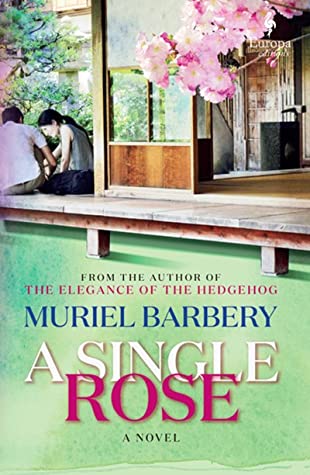
A Single Rose, by Muriel Barbery and translated from French by Alison Anderson
A Single Rose, by Muriel Barbery
I have fellow blogger Davida Chazan of Israel to thank for bringing this author and novella to my attention. She reviewed this book in her “The Chocolate Lady” blog post on September 14, 2021.
Ms. Barbery’s exquisite prose immediately immerses the reader in the beauty of Japan. It begins with a field of 1,000 peonies. Since the peony is one of my favorite flowers, I was hooked.
Rose is approaching her fortieth birthday when a lawyer summons her to Kyoto for the reading of her father’s will. She and her father have been estranged for many years, so Rose goes with many feelings of emptiness and foreboding.
However, her father has left an itinerary for his assistant to guide Rose through. The journey laid out by her father leads her to meet various people in his life and Rose comes to capture some of what she has missed out on due to the estrangement.
As Ms. Chazan wrote in her blog post (and I couldn’t have said it better,) the descriptive prose is written in a “sparse, yet extremely evocative style.”
I had to keep reminding myself that this was an English translation of a book originally written in French. I can’t read the original language, but it appears to me that the translator, Alison Anderson, did a meticulous job. The prose is extraordinary.
As with a few other books I wanted to read last month, I didn’t get to finish this one.
This historical novel is about the compilation of the first edition of the Oxford English Dictionary and how dictionaries have historically been compiled by men. I don’t mean to throw all men “under the bus,” but it is something to consider. Men determined which words should be included in dictionaries and men determined their meanings.
The Dictionary of Lost Words, by Pip Williams sheds light on how the Oxford English Dictionary was compiled around the turn of the 20th century by a handful of men who worked in a shed. Esme was a little girl who sat under their work table and gathered slips of paper the men let fall to the floor – sometimes on purpose and sometimes by accident. Esme started collecting those slips of paper – those words – in secret and hiding them in a box owned by her household’s bondsmaid.
The book follows Esme from early childhood through early adulthood as she decides to make her own dictionary – a dictionary of lost words.
Spending too much time reading other books meant I didn’t finish reading The Dictionary of Lost Words before it disappeared from my Kindle and went back to that great library in cyberspace.
Reviews I’ve read have pointed out that the first third of the book moves rather slowly. I agree with that, as we follow Esme day in and day out as she goes to the shed – called the Scriptorium – to sit under the table. She eventually is old enough to be trusted with running errands to a library and to the press. She wants to know how books are physically made but finds that this isn’t work girls are supposed to be interested in.
That notion connects directly to the overall message of the novel. It’s the belief by men 100 years ago that women just weren’t cut out to be interested in or have the mental ability to work in many occupations. What a waste over the thousands of years of history! It boggles the mind, and it infuriates me that there are people – both men and women – who still hold to those misguided beliefs.
Don’t get me started!
The Stranger in the Lifeboat, by Mitch Albom
The Stranger in the Lifeboat, by Mitch Albom
I’ve enjoyed several of Mitch Albom’s books, but this one just didn’t make sense to me. Perhaps I’m just dense. I just made it through the first couple of chapters.
Go Tell the Bees That I Am Gone, by Diana Gabaldon
Go Tell the Bees That I Am Gone, by Diana Gabaldon
Whether it’s due to my Chronic Fatigue Syndrome, my habit of trying to read too many books, the season of the year, or whatever… I just couldn’t read this 900-page novel. I love the Outlander series by Diana Gabaldon, but I had to throw in the towel after reading the first 200 pages of Go Tell the Bees That I Am Gone.
It was me, not the book. I tried listening to it on CD, but my hearing problems made it too difficult to follow the accents. I checked out the book from the public library and started over. I was really drawn in by the continuing story of Jamie and Claire, but my eyes started to rebel. Life is too short.
I guess I’ll have to wait until the TV series catches up with the book.
Call Us What We Carry, by Amanda Gorman
Call Us What We Carry, by Amanda Gorman
I admit I’m not a big poetry reader. I wanted to like this book of poetry by Amanda Gorman after being impressed with her at the Inauguration of President Joe Biden; however, I just couldn’t get into it on the written page.
Since my last blog post
I’ve attempted to organize myself week-by-week to get some projects completed in 2022. I’m a list maker, so doing such a thing gives me a sense of accomplishment. Now, if I can only stick to this plan….
A few months ago, I paid a few dollars for InfoStack 4.0. It includes many online writing classes and writing webinars. Over the weekend, I finally got around to listening to the 3.5-hour webinar about writing a book series. It was fantastic and now I’m brainstorming using my novel-in-progress as the second book in a series. I don’t know if I can pull this off, but I won’t know until I try.
Until my next blog post
I hope you have a good book to read. I’m giving When Ghosts Come Home, by Wiley Cash another chance. This time, it’s in large print. Also, I have Peter Frankopan’s The Silk Roads: A New History of the World from the library on my Kindle.
The risk of catching Covid-19 has me more or less hibernating again (or should I say still?) The pandemic seems to never end, but I believe better days lie ahead.
I love to make plans. Ask me to plan a trip, and I’ll get into the minutiae of where you’ll be and what you’ll be doing every minute of the day.
My sister is my traveling buddy, and sometimes my attention to detail drives her crazy! On the other hand, she doesn’t enjoy planning trips so she doesn’t complain too much.
In my Reading Like a Writer blog post (“Reading Like a Writer”) on April 9, 2018, I told you that I had developed a social media plan. Making the plan was easy. The hard part came when I entered the implementation phase. Today’s blog post is about the Pinterest aspect of my plan.
Pinterest Best Practices
In the process of developing the plan, I learned the following from Amy Lynn Andrews’ Userletter Issue No. 234 (https://madmimi.com/p/9af10c/):
“Kate Ahl recently noted an addition to Pinterest’s own best practices for success: ‘The first 5 Pins you save each day will be prioritized for distribution. Save to the most relevant board first…that Pin will get distribution priority.’”
That was a revelation for me. No more willy-nilly saving pins to my Recipes: Cheesecake Board! Since reading Amy Lynn Andrews’ Userletter, I’ve made myself save five pins to my writing-related Pinterest boards every day before pinning any recipes, quilts, or Maxine-isms.
Old habits are hard to break, so there is definitely a learning curve involved in this.
“When I started deleting my boards, Pinterest’s algorithms better learned the content of my niche, and my traffic grew.”
and
“I deleted my boards about food and entertainment, for example. Pinterest will be more likely to show your pins to people if the algorithms know what your site is about.”
and
“I read you’ll get better visibility at Pinterest if it’s clear to the site what your niche is. This makes sense. Search engines show your blog to people when they’re clear what you specialize in.”
That second quote from Janice Wald is a hard pill for me to swallow. I don’t want to give up my recipe and quilting boards. I could make them secret board that only I can see, but I had hoped that when someone looked at one of those boards they’d also notice I wrote a vintage postcard book (The Blue Ridge Mountains of North Carolina) and I’m writing a historical novel (The Spanish Coin) set in the Carolinas in the 1760s.
I’ll have to give that some thought. For the time being, I have 80 boards on Pinterest.
What I’ve Accomplished on Pinterest since Last Monday
I’ve learned how to create my own pins for Pinterest on Canva.com. Those of you who know me, know that I am technologically challenged, so this was no minor feat for me. I am not getting compensated for mentioning Canva; however, I’ve been able to create some pretty cool graphics for free using that website, http://www.canva.com.
How to move graphics from Canva.com to Pinterest
I soon discovered that I didn’t know how to move the graphics I created on Canva.com and saved to my hard drive. A search on Google quickly brought up the instructions. You simply go to the Pinterest toolbar, click on the red “+” sign, and then click on “Upload an image.” (This just might be the first time I’ve been able to give any technology advice to anyone!)
Want to see what I’ve done on Pinterest?
Please go to my Pinterest page (https://www.pinterest.com/janet5049) and look at the graphics I created this past week for the following boards: The Spanish Coin – My Novel in Progress; Blue Ridge Mountains; Great Smoky Mountains; Books & Authors; and Rocky River Presbyterian Church.
Here’s a graphic I created about my vintage postcard book, The Blue Ridge Mountains of North Carolina, for my Great Smoky Mountains board on Pinterest:
One of the first graphics I made on Canva.com.
My mistakes
There are lots of things to keep in mind when making a graphic for social media. Looking at the one shown above, I realize using a color background would have made it more eye-catchy, although I think it shows up better on Pinterest than on my blog.
Also, at the bottom of the graphic, I should have included my blog’s URL, my website’s URL, and my handle on Twitter. I have edited it in light of that, in case I decide to reuse it at a later date.
My social media plan for Pinterest
Mondays: Pin link to my weekly blog post to Janet’s Writing Blog board (set up to post automatically by WordPress.com) and a colonial history factoid or A Spanish Coin teaser to The Spanish Coin – My Novel in Progress;
Tuesdays: Pin a factoid from my vintage postcard book to my Great Smoky Mountains;
Wednesdays: Pin a Rocky River Presbyterian Church history factoid from one of my church history booklets to my Rocky River Presbyterian Church;
Thursdays: Pin a factoid from my vintage postcard book to my Blue Ridge Mountains;
Fridays: Pin a Rocky River Presbyterian Church women’s history factoid to my Rocky River Presbyterian Church & Cabarrus-Mecklenburg boards; OR Pin a Rocky River Presbyterian Church history factoid to my Rocky River Presbyterian Church & Cabarrus-Mecklenburg boards with a link to the church’s website where a copy of Dr. Thomas Hugh Spence, Jr.’s book, The Presbyterian Congregation on Rocky River, can be ordered.
Saturdays: Create factoids/infographics for the following week(s).
This is a grand plan for someone with Chronic Fatigue Syndrome, so I know I will not accomplish this every week. I fell short last week even though I was enthusiastic about starting this new plan. I might miss some weeks altogether. The schedule gives me something to aim for, though.
80/20 Rule of Social Media Marketing
I have read in various sources that 80% of your posts on social media should inform, educate, or entertain and only 20% should promote your business. That rule prompted me to strive to shine a light on a book about the history of Presbyterian Women at Rocky River Presbyterian Church or Dr. Spence’s church history book on Pinterest on Fridays.
I wrote neither of the books, and the proceeds from their sales benefit the ongoing work of the Presbyterian Women at Rocky River and the church’s cemetery fund. (The church dates back to 1751 and has several very old cemeteries that have to be maintained.)
My social media plan for Pinterest looks a little out of whack in light of the 80/20 Rule; however, I hope all the pins I create will fall into the “inform, educate, or entertain” categories.
Since my last blog post
In addition to learning how to create my own Pinterest pins and pinning my creations last week, I have continued to work on the rewrite of my historical novel, The Spanish Coin.
Until my next blog
I hope you have a good book to read.
If you’re an avid reader who has never considered the possibilities of using Pinterest, you might want to check it out. You just might find that your favorite authors have pages there and boards about their books. After looking for your favorite authors on Pinterest, please let me know if this was an enjoyable experience for you and specifically what you liked about it.
If you’re a writer, I hope you have productive writing time. Please let me know what your experience has been on Pinterest. If you haven’t thought about using it as part of your writer’s platform, perhaps you’ll consider it after reading this blog post.
Don’t be shy about spreading the word about my blog. Feel free to use the buttons below to put today’s post on Facebook, Tweet about it, reblog it on your blog, or Pin it on Pinterest. Thank you!
Based on the title alone, I doubt that I would have considered reading Fighting to Win: Samurai Techniques For Your Work and Life, by David J. Rogers. After all, what could I possibly learn from Samurai Techniques that I could apply to my life at my age?
Fighting to Win: Samurai Techniques For Your Work and Life, by David J. Rogers
I follow David J. Rogers’s blog and he follows mine. Visiting his website, https://davidjrogersftw.com, I discovered his books and decided to give this one a try.
It turned out that the timing was perfect. My writing had floundered for nearly a year since I came to the conclusion last April that I needed to make such massive changes in the manuscript of my historical novel work-in-progress, The Spanish Coin, that it amounted to a complete rewrite. This was devastating. I had written 120,000 words and edited it down to 96,000. I knew my characters better than I knew some of my close relatives. I was overwhelmed by the prospect of starting over, and I wrote almost nothing but my blog for the next 10 months.
I’ve always been a world-class procrastinator, so I put my novel on the back burner along with a number of other projects including some areas of housekeeping. Then, I read Fighting to Win: Samurai Techniques For Your Life and Work. I started putting into practice some of those techniques long before I finished reading the book. For one thing, I had to get my spirit in the right place. I had to move from, “I probably can’t do this” to “I can do this!”
Examples (and I’m simplifying and paraphrasing) of Samurai principles and techniques that I’ve come away with after reading David’s book include the following: keep one’s body, mind, emotions, and spirit under control; never let your fears get the best of you; don’t personalize problems or opponents (i.e., it’s a problem, not your problem); don’t whine; when you have a task to do, concentrate on it; do the most difficult or most feared task first and get it over with; always strive for self-improvement; and never hesitate or procrastinate.
The book prompted me to evaluate what is holding me back externally (such as having a chronic illness) and internally (such as fear of failure). A fiction writer does or doesn’t make her living, as the case may be, by asking, “What if?” in order to make her protagonist’s life as difficult as possible; however, she can be paralyzed in her personal life if she dwells too much on the “what-ifs” of life. (I need to make a sign that reminds me of that every day.)
After identifying my “inner dragons,” I was prompted to list the things in my life that I’ve been avoiding instead of doing. It turned out to be a longer list than I anticipated, but I’ve begun to put some Samurai techniques and principles into practice. By attacking the items on my list in an orderly fashion I’ve already made some incremental progress toward getting some things off the list. Ironically, this is pretty much the way my mother approached life and her tasks. She never knew she was using Samurai techniques! Her philosophy of life was, “You do what you have to do and you don’t complain about it.”
The most rewarding aspect of reading David’s book is that I got my focus back on my novel! Writing is hard work, but I have regained the joy of writing this month thanks in great part to reading this book. By focusing on my book idea again and determining a logical order in which to “attack” the work of writing a novel, I have made a good start and I no longer feel overwhelmed by the entirety of the task.
David’s book gives the history of the Samurai in bits and pieces, and I found that aspect very interesting. About all I knew about the Samurai was what I picked up in 1980 by watching the TV miniseries “Shōgun” starring Richard Chamberlain. Since I’m a history buff, I enjoyed the historical aspect of the book, too. It includes many intriguing examples.
If I can overcome my fear of failure, as well as my fear of success (yes, you heard me right!) and my fear of having to pitch my book to literary agents, I just might get my novel written and published, get some quilts finished, lose some weight, and get the clutter in my house under control.
David J. Rogers is going to be surprised when he reads this blog post. I hope I have described portions of his book accurately. In fewer than 1,000 words, I have merely touched on a few of the highlights and lessons in his book.
Since my last blog post
I have joyfully worked on my novel, done some reading, and attended five basketball games in a weekend tournament in Charlotte that one of my great-nieces played in, after which I crashed twice for hours due to Chronic Fatigue Syndrome. It’s been a great week! The crocuses and daffodils are blooming, promising that spring is on the way.
Until my next blog post
I hope you have a good book to read. I’m into several books to varying degrees. The one I’m most enjoying is In the Midst of Winter, by Isabel Allende.
If you’re a writer, I hope you have productive writing time.
If you’d like to be on my mailing list for future news about my writing, please fill out the form below. I thank those of you who have already done so.
I read some good books in June, so I will share my thoughts about them in today’s blog post. You might want to read one or more of them.
The Stars Are Fire, by Anita Shreve
I was drawn to this novel by the title. I got on the waitlist for it at the library as soon as it was on order. The book was inspired by the wildfires in Maine in October, 1947. I didn’t know about those fires, so I learned something.
The book is suspenseful as it follows Grace, a young mother whose husband has gone to fight the fire. Suddenly, the fire is upon the small coastal town where they live and Grace is forced to run for her life with a child in tow. I don’t want to spoil the book, in case you haven’t read it. If you prefer to read “happy books,” this is not the book for you. Much of the story is dark, yet the reader can’t help but cheer for Grace as she overcomes tragedy. It was a page-turner for me.
The Things We Keep, by Sally Hepworth
As with The Stars Are Fire, by Anita Shreve, The Things We Keep, by Sally Hepworth, is not what I would call a “happy book.” Ms. Hepworth follows a 38-year-old woman, Anna, who is diagnosed with Alzheimer’s Disease. The book chronicles Anna journey from diagnosis, through the months that she is very much aware of her diagnosis and the mental and physical deterioration that will be her future. Anna accepts her illness with humor as she adjusts to living in a residential facility where most of the other residents are decades older than she. The other young resident, Luke, befriends Anna, and the main plot of the book is their friendship, which grows into romantic love and how their relatives and the facility’s staff deal with that.
A subplot is about the widow of a businessman who loses everything and has to create a new life for herself and her young daughter. She takes a job at the facility where Anna and Luke live and gets more involved in their lives than the administrator wishes.
Although the subject matter of dementia is a frightening diagnosis, I found the book to be almost delightful due to Ms. Hepworth’s writing style. Each chapter was written from a different character’s point-of-view, which allows the reader to get into the head of Anna and to get a better understanding of what a person in the early stages of Alzheimer’s Disease thinks – their feelings and emotions.
As someone with Chronic Fatigue Syndrome/Myalgic Encephalomyelitis (CFS/ME), I could identify with some of the issues Anna faced. I have memory problems and, when put on the spot, I have trouble formulating a comment or an answer to an unexpected question. When Anna talked about not being able to think fast enough to join in a conversation, I immediately identified with that. Ms. Hepworth let Anna articulate so well how it feels when by the time you formulate a comment, the conversation has moved on to something else. That was a paragraph that made my mouth drop open because I felt like the book was describing me. It was eerie to realize that some of my CFS/ME symptoms overlap some early Alzheimer’s Disease symptoms.
The Things We Keep, by Sally Hepworth, was June’s selection for Rocky River Readers Book Club. We had a good discussion about the book on June 26.
The Sound of a Wild Snail Eating, by Elisabeth Tova Bailey
By the time I remembered to check this out from the public library, I’d forgotten how I’d heard about the book or why I wanted to read it. It had a catchy title, so I dived in. Lo and behold, the author, among other ailments, has Chronic Fatigue Syndrome.
This is a unique book. It probably wouldn’t appeal to everyone, but I enjoyed it. It is the true story of the author’s months of being bedridden. One of her friends comes to visit one day and brings wild violets and a snail. The snail started out living in a flowerpot with the violets. Much to Ms. Bailey’s surprise, she developed quite an attachment to the snail.
She realized one day that she could hear the snail eating. One thing led to another, and the author was soon reading everything she could get her hands on about snails. She studied the habits of the snail and by so doing, along with her readings, learned a great deal about the species. In the course of reading the book, so did I! I had no idea there was so much to learn about snails.
Being a “country girl” for most of my life since birth, I have encountered many snails, but until reading this book I did not know that they have row-upon-row of teeth, their eyes are on the tips of their tentacles, they cannot hear, they have an acute sense of smell, and their one foot is called a gastropod. That’s just the tip of the iceberg so, if you’d like to know more about snails – and what it’s like to be bedridden with Chronic Fatigue Syndrome, I recommend The Sound of a Wild Snail Eating, by Elisabeth Tova Bailey.
Although I’ve been ill for 30 years, Ms. Bailey was able to articulate some of my feelings better than I have ever been able to in writing or verbally.
Camino Island, by John Grisham
John Grisham’s latest novel, Camino Island, is a little different from most of his novels. There’s still suspense and there are still bad guys, but the hero isn’t a lawyer this time. The story is about the underworld of those who deal in buying, selling – and sometimes stealing – rare books. The book takes place in New Jersey, Pennsylvania, North Carolina, Florida, and France. The book held my interest, as all John Grisham books do. If John Grisham’s legal thrillers aren’t your “cup of tea,” you might want to give Camino Island a try. I think anyone interested in books will enjoy it.
And Every Morning the Way Home Gets Longer and Longer: A Novella, by Fredrik Backman
After liking A Man Called Ove, by Fredrik Backman in May, I was eager to read another of his books. In June I read And Every Morning the Way Home Gets Longer and Longer: A Novella, by him. It is about a man with dementia, his son, and his grandson and how the man’s dementia affects his relationships with his son and grandson.
Perhaps it was just me, but I had some confusion keeping up with when we were in real life and when we were in the thoughts inside the man’s brain. For that reason, I had trouble getting into the book. The longer I read, though, the more I got out of it.
Detective Cross (a BookShot), by James Patterson
I wrote about a BookShot by James Patterson, Detective Cross, in my June 16, 2017 blog post, “What’s the Verdict on BookShots?” (What’s the Verdict on BookShots?) I read it out of curiosity. I wanted to know what a BookShot was like, and I’m one of the last people in the world to read a book by James Patterson. His books are known for their fast pace, and this BookShot was no different.
Mr. Patterson’s BookShots are designed to be read in one sitting. It took me longer than that because, as I’ve mentioned before, I am a slow reader. I guess you could say that a BookShot is longer than a short story and shorter than a novella, but don’t quote me on that. I’m no expert.
As I pointed out in my June 16 blog post, Mr. Patterson has long been a champion of children’s literacy, and his BookShots are an attempt to put short books in the hands of adults who might not otherwise pick up a book to read. I hope they accomplish that!
Put the Cat in the Oven Before You Describe the Kitchen: A Concise No-Bull Guide to Writing Fiction, by Jake Vander Ark
I must admit that I was drawn to this book by its title. I would never put a cat in an oven, but I just had to see what the author had to say about writing fiction. It was a humorous book, and it held my attention. The jest of it was that you need to get your reader’s attention before you start giving a lot of description.
Among other points, the author said if a minor character doesn’t have an effect on the main character, take them out of the story. I’m trying to keep that in mind as I rewrite the manuscript for The Spanish Coin. Another thing he said was, “You need to scare your protagonist and shock your audience.”
He also said that a writer should let the “protagonist determine the placement of the #$%! Moment.” (This is usually called the “inciting incident.”) He suggests to hit the reader with the inciting incident the moment the reader grasps what “normal” is for the protagonist. I picked up a few other tips from the book, but I don’t want to bore non-writers with the details. If you’re a beginning writer, you might look for this e-book yourself.
Until my next blog post
I hope you have a good book to read. If you’re a writer, I hope you have productive writing time.













 Janet's Writing Blog