Just because I’m not blogging every day about politics…

Just because I’m not blogging every day about politics, don’t assume I’m no longer paying attention to current events and government actions in the United States. I suppose my post last Thursday night proved that, though. I can only hold it in for so long, folks!

After spending an inordinate amount of time taking notes, checking sources, and writing blog posts for the last six months, I have now made time for what I prefer to do with my time: getting my devotional book published and marketed, and getting my historical novel and historical short stories written so they can be published. Those works in progress are near and dear to my heart.

For what it’s worth, I continue to let my US Senators and US Representative know where I stand on the issues. Sometimes they respond. I almost wish they wouldn’t, because their responses just make me angrier.

I wrote about politics in my July 3 blog post, but I did not address specific Congressional votes, US Supreme Court rulings, or Presidential Executive Orders. Here are a few of the matters that have been on my radar lately. One or two of them might be news to you because, other than Alligator Alcatraz, they did not get a lot of press coverage.


Teaching reading: “radical left agenda”

This news came to light last Thursday: The White House wants to slash funding to states for literacy programs, English language instruction, and after-school programs because “they promote a radical left agenda”. If that is approved, it will cost North Carolina $168 million in lost funds.

Photo of a young boy reading a book in silouette with a beautiful sunset in the background
Photo by Aaron Burden on Unsplash

This “radical left agenda” broken record is wearing thin with me. If teaching someone to read or teaching an immigrant English is “radical left agenda,” then call me a radical leftist! I’ll wear that badge proudly! Since when is teaching someone to read a radical idea? If it is, I guess I was radicalized in Mrs. Caldwell’s first grade classroom in 1959.

When did reading become “radical left agenda?” One of my college friends in the early 1970s had a 30-year career as a reading teacher. I don’t know where she stands politically now, but in the 1970s she supported Jesse Helms. You couldn’t get any more “right” on the political spectrum than that!

I’m glad I learned to read when I did, before teaching reading was outlawed.


Trump v. Casa

I am terribly upset by the US Supreme Court 6-3 decision in Trump v. Casa on June 27, 2025. It gives President Trump the freedom to issue thousands more Executive Orders without having to worry that a US District Court judge will issue any injunctions. It is an alarming green light for Presidential power and abuse of power.


Job Corps

There are at least 21,000 students currently doing coursework and hands-on training through Job Corps. It was started as part of President Lyndon B. Johnson’s War on Poverty in the 1960s as a career training program for low-income and at-risk youth.

Everyone does not need a college degree to prepare for a chosen job. Job Corps is a program that helps fill in the gap so low-income youth can get the training they need to get a better job.

Even though Job Corps directly puts young people on track to qualify for manufacturing and other jobs, the Trump Administration has “paused” the program because somebody up there thinks the program’s results are poor and we need to do something about budget deficits. (After all, Congress just added $3 trillion to our national debt last week and cuts have to be made somewhere. We certainly can’t make billionaires pay their fair share in taxes!)

The Job Corps program was abruptly stopped, as is typical of the Trump Administration. They didn’t take time to assess the program and to look at changes that could enhance it. And all this was done while the same Trump Administration is crying for trained workers to work all the “beautiful” factories the Trump Administration says it is bringing back to America.

Common sense would tell me as a former public administrator that if a program isn’t showing positive results, you need to look at it and see what needs to be fixed. Make those changes and try to get the program back on a positive note. If all that fails, then scrap the program.

It feels like we’re returning to “the good old days” of the 1950s and 1960s when in the southern piedmont of North Carolina, 16-year-old couldn’t wait to quit high school and go to work for Cannon Mills for minimum wage. With Trump attacking every level of education, is this the deja vu we have to look forward to?


Natasha Bertrand of CNN

A few days ago White House Press Secretary launched a barrage of verbal attacks on CNN reporter Natasha Bertrand. Criticizing reporters for reporting the “facts” manufactured by the Trump Administration which she represents was not becoming or professional.

But the Trump Administration is like a dog with a bone. Once they latch onto a person or a group of people to attack, they just can’t help themselves. They continue to go for the jugular.

Trump went off the rails in his Cabinet meeting on Monday as he, unprompted, dragged Natasha Bertrand’s name through the mud.  As with Karoline Leavitt’s unprofessional and purely political attacks on the reporter last week, Trump followed suit in his Cabinet meeting and said Bertrand should be fired. It is beside the point that she reported an assessment made by the Trump Administration. He went on to attack the media in general and threatened that “I think changes are gonna be made to the media.” Since he oversees the Federal Communications Commission – which grants and renews (or does not renew) broadcast TV licenses, I think we can safely see that his words qualify as a threat to TV networks that do not report the news with the slant he wants.

Trump especially delights in criticizing intelligent and professional women. They intimidate him because he can’t do what they do. For one thing, they speak in complete sentences.


“Alligator Alcatraz”

The development of the so-called Alligator Alcatraz Detention Center in the Everglades would have been bad enough without President Trump and Secretary of Defense Hegseth joking about the detainees needing to learn how to run in a zipzag motion while being chased by alligators. Not to mention the pythons.

Photo of an alligator
Photo by Kyaw Tun on Unsplash

These are human beings, and I don’t see anything funny about the entire immigration situation.

Over the last two or three days there have been reports of inhumane conditions at the facility, but I will withhold details until they are substantiated.

(A piece of advice for Secretary of Homeland Security Kristi Noem: Women who refuse to dress in proper business attire will never be taken seriously by their male colleagues. Just sayin’.)


Jackie Kennedy’s White House Rose Garden is Gone

The iconic White House Rose Garden established in 1961 by First Lady Jacquelyn Kennedy is no more. Trump said the grass was always wet and wreaked havoc with high-heel shoes. (Don’t you just hate it when nature does that to you!)

Close-up photo of a red rose
Photo by Reanimated Man X on Unsplash

Trump had the entire rose garden and that stretch of lush, green lawn at the White House dug up and paved over.

For someone who calls random things like legislation “beautiful,” the man clearly doesn’t know beauty when he sees it. To him, only money, oil rigs, military tanks, detention centers, other man-made things, masked ICE agents, and an occasional nude model or porn star is beautiful.


Chickens in California
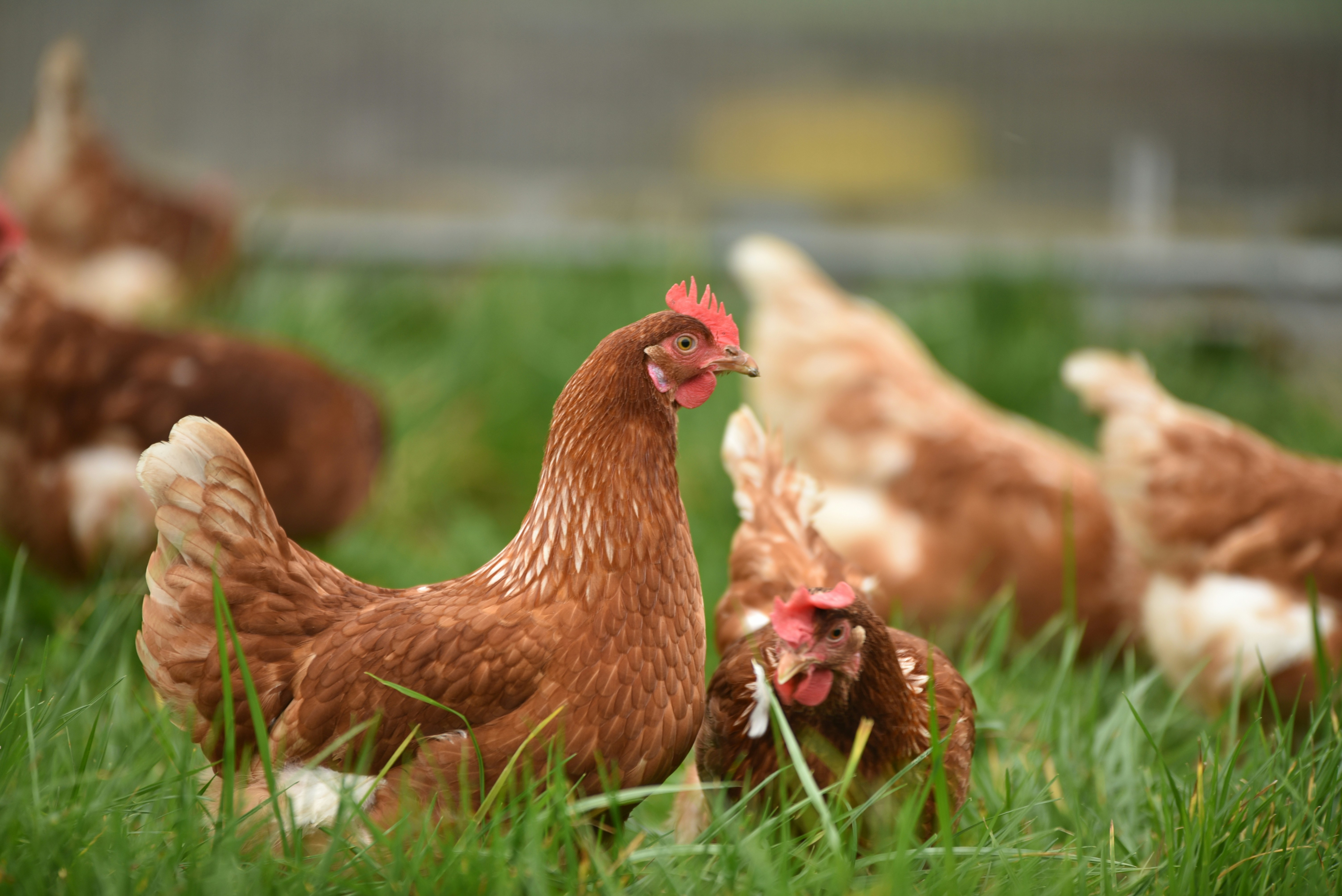
Photo of chickens in the grass
Photo by Thomas Iversen on Unsplash

Since Trump puts no value on life – human, animal, or plant – on Wednesday his administration sued California over its regulation of eggs and chicken farms. The reason? According to Reuters, because “the state’s anti-animal cruelty laws created ‘unnecessary red tape’ that had raised egg prices throughout the U.S.”


Let’s just blackmail another country

President Trump is clamping tariffs on Brazil, although Brazilians purchased $3 billion more in goods from the US in the first five months of 2025 than Americans bought from Brazil. There’s that, so we must look deeper into Trump’s “reasoning” for issuing this tariff. And, if you haven’t heard about it, you’re not going to believe it.

Instead of sending Brazil his usual tariff form letter, Trump sent a letter explaining that he is placing a 50% tariff on imported Brazilian goods because he thinks former president, Jair Bolsonaro, is being treated unfairly. Bolsonaro has been indicted for trying to overturn the 2022 election in Brazil.

I guess for Trump it just felt like “déjà vu all over again” and he feels compelled to come to his friend’s aid. In his tariff letter, Trump stated, “This Trial should not be taking place. It is a Witch Hunt that should end IMMEDIATELY!”

One headline I saw said that the letter looked like it was written by a fifth grader, but I think that’s unfair to fifth graders.


By the way, they speak English in Liberia

In one of a long line of embarrassing things Donald Trump has said, yesterday he put on his condescending voice and complimented President Joseph Boakai of Liberia for speaking such beautiful English. He asked President Boakai if he was educated. He asked him where he learned to speak such beautiful English. He told President Boakai that he spoke better English than some of the people around the table where they were sitting.

That last sentence was definitely true, for President Boakai speaks in complete sentences and President Trump does not.

By the way, President Trump, English is the official language of Liberia.

You can’t make this stuff up.


Ridiculous distractions in June

With the Sean “Diddy” Combs trial and the Jeff Bezos wedding over with, maybe journalists can get back to real life and reporting the news we need.


Until my next rant blog post

I’m glad I have more years behind me than I have in front of me.

I hope you have a good book to read.

Don’t take freedom for granted.

Remember the people of Ukraine and western North Carolina.

(I have not forgotten and I’m not ignoring the flood victims in Texas; however, I will leave it to bloggers in that state to blog about the recovery in the coming months. Since I live in North Carolina, I will continue to give updates on the recovery in my state.)

Janet

Books about The 1665-66 Plague and The 1918 Flu Pandemic

It was coincidental that I read a book about the Bubonic Plague of 1665-66 and the 1918 Influenza Pandemic during the same month. Since the two books are about similar topics, I decided to blog just about them today.

The Great Influenza: The Story of the Deadliest Pandemic in History, by John M. Barry

The title of this book is a misnomer. I tried listening to the MP3 version, which was almost 20 hours long. There was a brief introduction about the Influenza Pandemic of 1918, but the book soon started giving the history of medicine. I kept thinking we’d get back to the flu pandemic, but I gave up four and one-half hours into the book.

If you’re interested in the history of medicine, it’s an interesting book. I learned a lot about the state of the medical profession in the United States in the 1800s. It made me glad I was born midway through the 20th century.

Perhaps if I could have stuck with it, I would have learned more about the Influenza Pandemic of 1918. I stumbled upon an interview Jake Tapper of CNN did with the author, John M. Barry, a few months ago. Mr. Tapper raved over the book. The interview is quite interesting and makes me want to check out the book again and read on from where I left off. Here a link to the interview: https://www.cnn.com/2020/03/27/politics/interview-john-barry-great-influenza/index.html.

Year of Wonders, by Geraldine Brooks

#BubonicPlague #1665Plague #1666Plague
Year of Wonders, by Geraldine Brooks

Year of Wonders is a novel set during the Plague of 1666. Geraldine Brooks was inspired to write it after a visit to England in 1991. She saw a sign about Eyam (pronounced “eem”) in Derbyshire, northwest of London. The sign indicated that Eyam was “the Plague Village.” Intrigued, this historical novelist delved deeper and began her research into the Plague.

I listened to the downloadable audio book, which was read by the author. The main character is a maiden named Anna who does her best to survive the pandemic and help others in the community. In reality, two-thirds of the people in Eyam died of the Plague. That’s a percentage that’s impossible for me to get my head around. The Covid-19 pandemic has been frightening enough.

The book gets into some of the superstitions of the era. Some people thought the Plague was punishment from God. They resorted to self-flagellation and burning all their clothes and possessions as a sacrifice.

Death via the Bubonic Plague is an excruciating way to die: Fever as high as 106 degrees F.; lymph nodes turned into dying, hemorrhaging tissue; and thrombosis. The World Health Organization reports 1,000 to 3,000 cases per year. Although rare, it still occurs even in the United States. It can be treated today with antibiotics, but there is no cure for Bubonic Plague.

After listening to the book, I borrowed the e-book from the public library so I could more easily reread portions of the book. In particular, I wanted to read the Afterword. I was happy to also find a Readers Guide after the Afterword in the Kindle edition. In fact, I’m temped to read such features as “Author Notes, “Afterwords,” and “Readers Guides” before reading historical novels in the future.

In Year of Wonders, the Penquin Readers Guide at the back of the book on Kindle is titled, “An Introduction to Year of Wonders.” It might have been more useful at the beginning of the book.

The “Introduction” tells how the Age of Enlightenment in Europe started in the 1600s. The human circulatory system was charted, bacteria were identified, and the compound microscope was invented. It was the dawn of modern medicine in many ways.

In the novel, a minister in Eyam in 1665, Michael Mompellion, decided that God had sent the Bubonic Plague to punish the village. He called for the residents to voluntarily quarantine themselves in their valley and suffer the consequences of their sins.

The most puritanical among them took to self-flagellation. As the situation worsened, the people turned on each other.

The heroine of the novel, Anna Frith, raises the existential questions circling around the origins of the plague. Anna surmised that if the villagers spent less time wondering why God was punishing them and more time trying to figure out how the Plague was spread, there might be a better outcome.

Anna said, “We could simply work upon it as a farmer might toil to rid this field of unwanted tare, knowing that when we found the tools and the method, and the resolve, we would free ourselves, no matter if we were a village of sinners or a host of saints.”

The word “resolve” jumped out at me. If we just resolve to do what we need to do to minimize the spread of Covid-19 until a vaccine or cure can be found, maybe we’d have a better outcome. Maybe we would stop turning on each other and stop making mask wearing a political statement.

In the “Introduction,” author Geraldine Brooks is asked about her research for the book. She answered, “The written record of what happened in Eyam during the plague year is scant. Apart from three letters by the rector, no narrative account from the year itself actually exists. The “histories” that purport to record the facts were actually written many years later, and historians have found inconsistencies that cast doubt on their accuracy. Therefore, there was no way to write a satisfying nonfiction narrative.”

The minister/rector in the novel, Michael Mompellion is based on William Mompresson, the minister in Eyam at the time of the plague. Ms. Brooks said, “There is nothing in the factual record to suggest that he behaved other than honorably throughout the village’s terrible ordeal.”

William Mompresson had a maid who survived the Plague, so Ms. Brooks chose her to be the narrator of Year of Wonders. Her inspiration for Anna Frith’s transformation from a probably quiet maid to becoming a leading force against the Plague were the Kurdish and Eritrean women she had reported on while a journalist.

In answering another question about her research for the novel, Ms. Brooks responded, “The unique thing about Eyam’s quarantine was that it was voluntary. I was able to find no other examples of such communal self-sacrifice. In London… the houses of plague victims were sealed and guarded, locking in the well with the ill, with no one to bring food, water, or comfort of any kind.”

The ending of the novel wasn’t believable to me. I decided to read some reviews of the book to see if others agreed with me. I discovered that the book has received many five-star reviews, but more than a handful of two-star reviews due to its implausible ending. Some reviews even suggest that you stop reading while you still think its an excellent book. Just skip the ending which transports Anna Frith from England into another country. The ending seemed contrived.

Since my last blog post

The transition from summer to fall temperatures, along with a day of tropical warmth and humidity thrown in thanks to the remains of Hurricane Zeta, has wreaked havoc with my fibromyalgia. (And people wonder why I have Seasonal Affective Disorder in the fall and winter!)

The limb that fell out of the oak tree in the front yard was so large and loud that a neighbor called to check on us. She said it sounded like a gun shot. We thought maybe it was another earthquake until the light from my flashlight revealed the source of the noise. That was the night before what was left of Hurricane Zeta ripped the top off one of our maple trees. It landed on top of the oak limb. That happened while we had gone to our basement out of an abundance of caution and waited out part of the five-hour power outage. Covid-19 pandemic or not, there’s never a dull moment.

As health, electricity, and motivation allows, my sister and I continue to proofread my Harrisburg, Did You Know? book manuscript. Recent computer corruption has caused us to proofread some 80 pages a second time. I haven’t figured out yet how five days of backing up to the external hard drive saved everything except the corrections made on those 80 pages. Two steps forward, and three steps back seems to be the way of things in 2020.

Until my next blog post

I will anxiously await the outcome of the elections here in the United States. Uncertain days lie ahead as baseless threats of voter fraud have been hurled from 1600 Pennsylvania Avenue long before tomorrow’s election day. It remains to be seen how ugly things will get post-election. I’ve never had uneasiness like this on the day before a presidential election in America. We’ve never had a sitting president stir up unfounded doubts about our electoral process leading up to an election before in our nation’s history.  

I hope you have one or more good books to read and peace and quiet that’s conducive to reading.

I hope your creativity will find a voice or other outlet this week. Find your passion.

Wear a mask! It’s a small thing we’re being asked to do for the overall public good.

Have you read either of the books I wrote about today? If so, what were your impressions of them? I’d like to know.

Janet

#BringBackOurGirls

Do you remember back when we all used the hashtag #BringBackOurGirls on social media in 2014 after 276 school girls in Chibok, Nigeria were kidnapped by Boko Haram?

Do you know that 112 of those young women are still held by Boko Haram?

Today’s blog post is longer than usual, but please take a few minutes out of your busy day to sit quietly and read it.

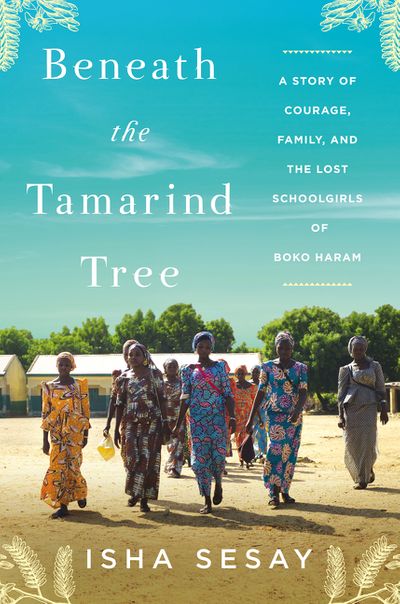
Beneath the Tamarind Tree:  A Story of Courage, Family, and the Lost Girls of Boko Haram, by Isha Sesay

The story of the 276 Nigerian school girls abducted by Boko Haram in 2014.
The Beneath the Tamarind Tree: A Story of Courage, Family, and The Lost Schoolgirls of Boko Haram, by Isha Sesay

Beneath the Tamarind Tree:  A Story of Courage, Family, and the Lost Girls of Boko Haram is not a pleasant or easy book to read, but I feel compelled to read books like that in order to better understand the world around me. You will, no doubt, recognize the name of the author, Isha Sesay, as a veteran journalist on CNN.

To refresh your memory, on April 14, 2014, 276 teenage school girls were kidnapped from their Government Girls Secondary School in Chibok, Nigeria by Boko Haram. Boko Haram is a militant Islamic group based in Nigeria. The group’s goal is to institute Sharia or Islamic law. Translated from the local Hausa dialect, Boko Haram means “Western education is forbidden.” Boko Haram adherents mainly live in the northern states in Nigeria.

In this book, Isha Sesay reconstructs the events surrounding that 2014 mass abduction, but also offers some brief historical backdrop which must be known in order to understand how and why such a thing happened.

Ms. Sesay explained the history as follows:  “Nigeria’s largely Muslim north and its predominantly Yoruba and Igbo Christian south” were combined to form the country of Nigeria by Great Britain in 1914. After numerous coups, it was decided after every two terms the presidency would alternate between the north and the south. However, political problems continued and Boko Haram was founded by Mohamed Yusuf in the early years of the 21st century. Unrest grew in 2014 when the two-term Christian president from the southern part of the country, Goodluck Jonathan, hinted that he was going to run for a third term.

With that political state of affairs in mind, let’s delve into the story of the abduction of 276 school girls on April 14, 2014. I don’t want to give too much away, in case you want to read Beneath the Tamarind Tree, so I’ll just hit some highlights from the book.

  • 57 of the 276 girls escaped early on and managed to get back home
  • When Ms. Sesay arrived in Nigeria three weeks after the kidnappings, she was shocked to learn that Nigerian President Goodluck Jonathan was spreading the word that the event was a hoax
  • When Jonathan’s successor, Muhammadu Buhari, was elected in 2015, Buhari said it was not a hoax. This gave everyone hope, but then when he was to meet with parents of the kidnapped girls and representatives from Bring Back Our Girls, he refused to meet with them. Eventually forced to meet with them, he took the opportunity to try to distract them with other issues and cast Bring Back Our Girls as the enemy of the government.
  • In October of 2016 – 2.5 years into the girls’ captivity – 21 of the girls were released to the Red Cross and lawyer Zannah Mustapha. Mustapha had taken it upon himself to broker a deal between the Nigerian government and Boko Haram. It is not known what concessions the government made that made the release of 20 girls (plus one as a “bonus) possible, but all along Boko Haram had demanded the release of some of their own who were imprisoned.
  • At the time of the release of the 21 girls, some 50 of the original 276 girls had succumbed to Boko Haram pressure and married Boko Haram men.
  • The 21 released girls were emaciated from more than 900 days of hunger and abuse. They had been uprooted numerous times by Boko Haram as the militants tried to hide them from anyone who was looking for them. One of the buildings they were housed in at one point was bombed by the Nigerian military.
  • On May 7, 2017, 82 more Chibok girls were released.
  • By January 4, 2018, 107 of the Chibok girls had escaped or been released
  • Boko Haram kidnapped 112 school girls and 1 boy from a school in Dapchi on February 19, 2018. All but one of those girls, a Christian who refused to convert to Islam, were released after a couple of week; however, that one girl was still being held by Boko Haram as of the writing of Beneath the Tamarind Tree, which was published July 9, 2019.
  • As of the writing of this book, more than 100 of the Chibok girls are still missing and assumed to still be held by Boko Haram.

I think the overriding thing I learned from reading this book – the thing I will most remember from this book – is the tremendous and abiding faith in God and Jesus Christ held by the vast majority of the Chibok school girls. It was their faith that sustained those who have escaped or been released.

In interviewing the 21 girls released in 2016, Ms. Sesay, a Muslim, was gobsmacked by the fact that the girls had forgiven their captors and even prayed for their captors. It was a reminder for me that Christianity, at its very core, is a religion of forgiveness. Forgiveness is, apparently, an idea that is foreign to other religions or at least some of them.

Update from Reuters new agency, since reading the book:  On June 12, 2019, 300 Boko Haram killed 24 people in an attack on an island in Lake Chad in Cameroon.

The Things We Cannot Say, by Kelly Rimmer

This is the first novel I’ve read by Kelly Rimmer, an Australian author. This book is a combination of today in the life of a woman whose son is on the autism spectrum and years ago when her grandmother was young and in love in Poland in the years just before World War II.

The grandmother is now confined to a nursing home and cannot verbalize her thoughts and desires. One of the interesting aspects of the story early on was how the grandmother was able to learn how to use the Augmentative and Alternative Communication (ACC) app on her great-grandson’s i-Pad to communicate her feelings, requests, and answers.

The grandmother’s early history is pretty much a mystery to her granddaughter, but there is something the grandmother persists in trying to communicate. It involves a man named Tomasz and what was so important about him. Will the granddaughter travel to Poland to look for this man in the country of her grandmother’s birth? I don’t want to give the rest of the story away, in case this sounds like a novel you’d like to read. Suffice it to say there are numerous twists, turns, and surprises in this novel.

Although it’s a book of fiction, the plot was inspired by the author’s grandmother’s story. She weaves a story of challenges, desperation, true friendship and devotion, and undying love. I highly recommend this book.

Since my last blog post

I’ve been reading!

Until my next blog post

I hope you have a good book to read. I’m reading ­­­­­­­­­­­­­­­­­­One Good Deed, by David Baldacci and listening to Before I Let You Go, by Kelly Rimmer.

If you’re a writer, I hope you have quality writing time and your projects are moving right along.

Thank you for reading my blog. You could have spent the last few minutes doing something else, but you chose to read my blog.

I might take a break from blogging next week. If you don’t see a blog post from me on September 16, rest assured I’ll be back online on September 23.

Let’s continue the conversation

Were you aware that more than 100 of the Chibok school girls are still being held by Boko Haram a numbing almost five and one-half years after the April 14, 2014 mass abduction? If my rough calculations are correct, today is Day 1,974 of their captivity.

On Saturday, September 7, 2019, a Nigerian film, “Daughters of Chibok” debuted at the Venice Film Festival and was named Best Virtual Reality Story. The intent of the film is to show how the Chibok community has been affected by the 2014 kidnappings and to remind the world that 112 of the 276 school girls are still held by Boko Haram.

Please share #DaughtersOfChibok, #BringBackOurGirls, #ChibokGirls, and other appropriate social media hashtags to remind the world that this story is ongoing and 112 of the girls are still held by Boko Haram.

For more on that film and the stories it tells, go to http://saharareporters.com/2019/09/08/nigerian-film-chibok-girls-wins-us-award and https://www.cnn.com/2019/09/08/africa/vr-daughters-of-chibok-intl/index.html.

Janet