#OnThisDay: Chief Joseph’s Death, 1904

When I was growing up in the 1950s and 1960s, I thought anything that happened in the 1800s was ancient history. It’s amazing how age has a way of putting things in perspective. As I was reading about Chief Joseph in preparation for writing today’s blog post, I was struck by the fact that the conflicts between the United States government and the Nez Perce Native Americans took place a mere 68-76 years before my birth.

Since I’m 67 years old, the number of years weren’t lost on me. It was only 49 years before my birth that Chief Joseph died on September 21, 1904. As I read various sources about Chief Joseph while researching today’s blog topic, in addition to putting the time frame in perspective, I was struck all over again with the fact that the United States government has always treated Native Americans horribly. Period.

Hin-mah-too-yah-lat-kekt was popularly known as Chief Joseph. His tribal name translates into “Thunder Rolling in the Mountain” in English. He succeeded his father as a leader of the Wal-lam-wat-kain band of Nez Perce Native Americans. The Wal-lam-wat-kain lived in the Wallowa Valley in present-day Oregon.

Chief Joseph sought peace and wanted all people to live in harmony. The United States government didn’t share his philosophy of life. He tried repeatedly to come to a peace agreement with the federal government.


Background history – Chief Joseph’s Father

White settlers began settling in the Wallowa Valley around 1850. Chief Joseph’s father was the tribal chief at the time. He was welcoming to the intruders at first, but as their numbers grew they encroached onto more and more of the valley. When Chief Joseph (the elder) told the settlers they could take no land, the settlers took it by force.

As tensions grew, Governor Isaac Stevens of the Washington Territory created a council to try to establish peace. Through that council, the Treaty of Walla Walla was signed in 1855 by Chief Joseph (the elder) and the chiefs of nearby tribes. The treaty created a 7-million acre reservation that included the Wallowa Valley.

The treaty worked fairly well until a gold rush drew more settlers into the reservation land in 1863. A second treaty was signed, but it heavily favored the white settlers. The original 7-million acre reservation was whittled down to only 700,000 acres. The icing on the cake was the removal of the Wallowa Valley from the new reservation boundaries and all the affected tribes were forced to move to Idaho.

Some of the Nez Perce tribes accepted the terms and moved; however, Chief Joseph (the elder) and some others refused to go. The second treaty was the proverbial straw that broke the camel’s back. Chief Joseph (the elder) denounced the United States, even throwing away his Bible and burning the American flag. (He had adopted the Christian faith after visits by missionaries and was baptized and given the Christian name “Joseph” in 1838.)

What the US government never understood was the value the Native Americans put on the graves of their ancestors.

“Inside this boundary, all our people were born. It circles the graves of our fathers, and we will never give up these graves to any man.” ~ Chief Joseph (the elder)

Before Chief Joseph (the elder) died in 1871, he said the following words to his son in preparation for his succeeding him as tribal chief: “Never sell the bones of your father and your mother.”


The younger Joseph becomes Chief

More settlers arrived and tensions grew. Chief Joseph (the younger) was threatened with physical violence, but he always responded verbally. He held onto the hope that his people could stand their ground and outlast the white settlers. He knew if he retaliated with violence, the US government would wipe out his people. He couldn’t risk getting violent.

A third treaty was drawn up in 1873. It gave the Wallowa Valley back to Chief Joseph’s people. The treaty was broken four years later and US Army General Oliver Otis Howard set out to forcibly remove the Nez Perce from their lands. Chief Joseph (the younger) offered Gen. Howard a compromise. The Nez Perce would give up part of their land and some of them would leave.

When the two men were unable to come to an agreement, Howard gave the Nez Perce thirty days to vacate their lands. To not comply would be considered an act of war against the United States.


The Nez Perce War

Chief Joseph quietly moved his followers across nearly 1,200 miles, while other Nez Perce tribes chose to stay behind and fight. Chief Joseph’s people were able to avoid armed conflict with the US Army for the most part, but violence ran against the chief’s core values to the point that he couldn’t bear to see his people suffer any more. Even though Chief Joseph tried to avoid fighting the army, the conflict became known as the Nez Perce War because other tribes within the Nez Perce chose to fight.

On October 5, 1877, Chief Joseph surrendered to Gen. Howard. The speech Chief Joseph made that day is remembered to this day and often quoted:

          “I am tired of fighting. Our chiefs are killed. Looking Glass is dead. Toohoolhoolzote is dead. The old men are all dead. It is the young men who say, “Yes” or “No.” He who led the young men [Olikut] is dead. It is cold, and we have no blankets. The little children are freezing to death. My people, some of them, have run away to the hills, and have no blankets, no food. No one knows where they are — perhaps freezing to death. I want to have time to look for my children, and see how many of them I can find. Maybe I shall find them among the dead. Hear me, my chiefs! I am tired. My heart is sick and sad. From where the sun now stands I will fight no more forever.” ~ Chief Joseph, October 5, 1877


The rest of the story

Chief Joseph and his followers were put on rail cars and taken to Oklahoma. Many died there from exposure to the elements and diseases they’d never been exposed to before. Getting nowhere talking to army generals, Chief Joseph went to Washington, DC and met with President Rutherford B. Hayes.

He pleaded his people’s case with the president, but there was not immediate resolution of the conflict. It was six years later that Chief Joseph and his followers were split up. Some were sent to a reservation near Kooskia, Idaho. Some were sent to northern Washington Territory. But Idaho and the reservation in northern Washington weren’t their homeland. Their homeland was the Wallowa Valley in northeastern Oregon.

In 1897, Chief Joseph returned to Washington, DC to try again to get permission for his people to move to the Wallowa Valley. He never quit trying peacefully to get permission for his people to return to their homeland.

Chief Joseph died 116 years ago today on September 21, 1904. His physician said Chief Joseph died of a broken heart.

No one can argue with that.

If the United States government authorities had just adopted Chief Joseph’s philosophy of life, our country’s history would be quite different. A lot of conflict, bloodshed, and misunderstandings could have been avoided.


Since my last blog post

I was saddened by the death on Friday by U.S. Supreme Court Justice Ruth Bader Ginsburg. She will go down in history as one of the most-gifted legal minds to ever sit on the U.S. Supreme Court.

I’m formatting for self-publishing the 174 local history columns I wrote from 2006 through 2012 for Harrisburg Horizons newspaper. I hope to get the book published this year in electronic form and paperback.


Until my next blog post

Thank you for reading my blog. Everyone is busy, so I appreciate the time you took to read my post today.

I hope you have a good book to read. I’m reading The Book of Lost Names, by Kristin Harmel.

If you’re a writer or other artist, I hope you have satisfying creative time this week.

As the Covid-19 pandemic continues, please wear a mask to protect the people around you. Even if you’re not displaying any symptoms of the virus, you could be carrying it and infecting others.

Janet

#OnThisDay: 1886 Charleston Earthquake

When I felt an earthquake on August 9, 2020, I’d already planned to blog about the Charleston, South Carolina earthquake today. That recent earthquake was a 5.1 magnitude quake. The epicenter was near Sparta, North Carolina, about 100 miles from where I live. The bed shaking woke me up.

We haven’t felt many damaging earthquakes in North Carolina. In fact, there are only 23 damaging earthquakes of record that were felt in the state in recorded history. Eight of those were centered in North Carolina. I’ve felt three of them.

Charleston Earthquake Experienced in Charlotte, NC Area

I’ve heard of the Charleston, South Carolina earthquake all my life. I grew up seeing visible evidence of the event when I visited a friend who lived in a house in my community that was built in the early 1870s. It’s a sturdy two-story brick house. It’s my understanding that after the Charleston Earthquake, which was felt here – some 200 miles from Charleston — two iron bars were added horizontally inside the back exterior wall of the house. The bars were connected in an overlapping hook configuration in front of a window in my friend’s bedroom.

Although it was later determined that these iron bars did not increase the stability of the wall, the bars were left there as a piece of history. In the 1960s, the bars were visible inside the room from wall-to-wall. When the house was renovated some years later, extra wall insulation was installed which necessitated the wall being extended several inches into the room. The iron bars were left in place, but are now only visible at the window.

US Geological Survey Report

The state of South Carolina has 10 to 15 earthquakes annually, but only three to five of them are felt by people. The magnitude 7.2 August 31, 1886 Charleston Earthquake remains the most powerful earthquake recorded in the eastern part of the United States.

Typical window box in Charleston, SC. Photo by Delaney Boyd on Unsplash.com

According to the United States Geological Survey (USGS), hardly a structure in Charleston was left undamaged. Property damage was estimated at $5-6 million, which translates roughly to $138-165 million today. Structural damage was reported hundreds of miles away in central Alabama, central, Ohio, eastern Kentucky, southern Virginia, and western West Virginia. People as far away as Boston, Massachusetts; Milwaukee, Wisconsin; Chicago, Illinois; Cuba; and Bermuda reported feeling the earthquake.

Railroad tracks were damaged for a 50-mile radius. Railroad tracks several miles northwest of Charleston were mangled by lateral and vertical displacement, forming S-shaped curves and longitudinal movement.

“The formation of sand craterlets and the ejection of sand were widespread in the epicentral area, but surface faulting was not observed,” according to the USGS. That report continued: “Many acres of ground were overflowed with sand, and craterlets as much as 6.4 meters across were formed. In a few locations, water from the craterlets spouted to heights of about 4.5 to 6 meters. Fissures 1 meter wide extended parallel to canal and stream banks. A series of wide cracks opened parallel to the Ashley River, and several large trees were uprooted when the bank slid into the river.” (Source: Abridged from Seismicity of the United States, 1568-1989 (Revised), by Carl W. Stover and Jerry L. Coffman, U.S. Geological Survey Professional Paper 1527, United States Government Printing Office, Washington: 1993.)

Interesting Details Noted in 2001 Encyclopedia

The following was printed in Encyclopedia of Earthquakes and Volcanoes, by David Ritchie and Alexander E. Gates, Ph.D. in 2001: “The earthquake apparently was most intense 12 miles west of Charleston, where large amounts of sand and water spewed from fissures in the ground.” It was preceded by lesser shocks earlier that summer. The August 31 major quake was “accompanied by a noise that later was compared to the sound of steam escaping from a boiler or of fast-moving street traffic at close range…. Reports indicate that some interesting events in distant parts of the country coincided with the earthquake, including a reduction in the yield of natural gas wells in Pennsylvania and the reactivation of a geyser in Wyoming’s Yellowstone valley after four years of inactivity.”

September 3, 1886 report in The Atlanta Constitution

This extensive newspaper article is a prime example of the flowery language that dominated newspapers of that era. It took some diligence to sift through the fluff and find the facts.

The full-page article describes the terror experienced by the residents of Augusta, Georgia, where people took to spending two nights in the streets or in the graveyard. (I’m guessing the graveyard was a place in town without trees that could fall on people if another earthquake occurred.) People were frustrated by not being able to get from Georgia to Charleston due to the disrupted rail lines and breaks in the roads. Travel by sea was also disrupted as ship captains avoided Charleston as long as aftershocks continued.

The 285-acre Langley Pond in Aiken County, SC (approximately 130 miles west of Charleston) was created in 1854 by the construction of a dam. The 400-foot long $50,000 dam broke during the earthquake and the release of the water in the pond (which deserved the designation “lake”) wiped out the forest downstream. A train track over a nearby pond was mangled. An approaching train engineer could not see far enough ahead to avoid crashing his train into the water. He was badly injured and his fireman drowned.

The newspaper correspondent eventually made his way across South Carolina to the village of Summerville, about 25 miles from Charleston. It appeared to the writer that Summerville had taken the brunt of the earthquake. There were numerous fissures in the ground through which sand and water smelling of sulfur continue to erupt after the correspondent arrived. It was reported that in Summerville, a roar like thunder was heard for a half hour after the big quake.

Upon reaching Charleston, the newspaper correspondent reported finding bricks and other construction debris everywhere in the streets and all open places and railway cars packed with people sleeping or just trying to survive. The writer feared Charleston had been struck a mortal blow. There, he found two-foot high stacks of blue mud that had erupted from fissures in the ground. He also found a citizenry not planning to go into a building until forced to by the chill of winter.

September 9, 1886 report in The (Concord, NC) Times

This weekly newspaper some 200 miles northwest of Charleston, SC gave the following details of how residents in that small town experienced the August 31, 1886 earthquake:

“The first shock was very violent, throwing down chimneys, turning over lamps, causing plastering to fall from walls, houses to crack and sway, and creating a commotion that frightened everybody as they had not been frightened before. This shock lasted about three minutes and a half. People rushed pell mell into the street, half dressed and badly frightened. In a few minutes almost the whole town was astir. Fifteen minutes after the first shock another came, but of much less violence than the first. At another interval of about the same length a third was felt, still less severe. Some say they felt as many as five shocks here.”

The article went on to report the following from the gold mining operation at Gold Hill in Rowan County, NC: “At Gold Hill the hands in the mines when the shock came were just shifting, that is the day hands were coming out and the night hands going in. Some of the mines caved in, and it was certainly a fortunate thing that no one was in them.”

Other Newspaper Reports

Another newspaper reported that a thick dust fell in Wilmington, NC on the night of the Charleston Earthquake. “That all the iron in the city lamp posts, store-fronts, and engines was highly magnetized. It is also said that several engines running on roads in this State were highly magnetized, though in no case does the earthquake shock appear to have been felt by people on the trains.”

“A report received to-day from one of the keepers who was on duty in the tower at Cape Lookout lighthouse says the shocks were terrible and the lighthouse rocked to and fro. The keepers were badly frightened.”

Charleston Post and Courier Newspaper Article

In a newspaper articles by Dave Munday, originally published June 11, 2007 and updated December 8, 2016, it was reported that 1886 Charleston Earthquake research was still taking place in the Colonial Dorchester Historical Site by Pradeep Talwani, Director of the South Carolina Seismic Network at the University of South Carolina-Columbia. In excavations done there, evidence of a sand and water geyser eruption was found; however, Talwani suspects this geyser was perhaps from an earthquake in the 1300s.

Photo of a Charleston, SC street scene by Cameron Stewart on Unsplash.com

Talwani’s research has found that a major earthquake hits the Charleston area approximately every 500 years. According to this newspaper article, it is estimated that the 1886 Charleston Earthquake measured perhaps 7.6 in magnitude.

In Conclusion

It is stunning to think about what shape Charleston, SC was in at the end of the Civil War in 1865 and then to consider the extensive damage done to the city and to much of South Carolina just 21 years later by an earthquake the likes of which the area had not seen before and has not seen since.

Since my last blog post

I’m adjusting to a life of caring for a wonderful little dog with diabetes and a host of other health problems. Life will be a bit of a rollercoaster for a while. I’ve decreased my book reading expectations.

Until my next blog post

I hope you have a good book to read.

If you’re a writer or other artist, I hope you have uninterrupted creative time.

As the Covid-19 pandemic continues, please wear a mask out of respect for others you may unknowingly infect. Be safe. We’re all in this together.

Janet

#FixYourNovel #6: Theme and Plot

My “writing blog” has turned into more of a “reading blog.” It’s my intention to strike a pleasant balance between the two. The purpose of my blog from the beginning has been to give you a way to follow my journey as a writer. A writer needs to read books by other people, and I hope you enjoy learning about the books I read.

I’ve made a conscious effort this month to spend more time writing and less time reading. As I mentioned in last week’s blog post, I’m working my way through C.S. Lakin’s The 12 Key Pillars of Novel Construction Workbook: Your Blueprint for Building a Solid Story. It has been a tremendous help to me in evaluating various aspects of my 85,000-word novel manuscript. I’m not getting paid to sing the praises of this workbook. When I find a book or workbook about the craft of writing fiction that is helpful to me, I’m happy to share that information with my blog readers.

The things I concentrated on since last week’s blog post are theme, plot, and subplot. Hence, the title of today’s post. I have been sporadic in posting my #FixYourNovel blog series. I had planned for the sixth one to be about point-of-view. I don’t feel comfortable writing authoritatively in any way, shape, or form about that subject yet.

Photo by Kaitlyn Baker on Unsplash

The dreaded question: What’s your book about?

The most dreaded question authors receive is “What’s your book about?” You’ve spent months or years creating a complex story of 85,000 to 120,000 words, and you’re expected to state off the top of your head a one sentence answer to that question. Yikes! I’m still working on my answer to that question, but Ms. Lakin’s workbook questions have helped me sharpen a concise description of my book.

The section of the workbook that addresses theme helped me determine that my book’s main theme is forgiveness. To do that, I had to figure out what the book is about.

My initial answer to that question tends to be something like this:  It’s about a pregnant widow accused of her husband’s murder setting out to prove her innocence. But that’s not what the book is “about.” That’s the main plot, and the plot is a vehicle to convey theme.

Theme gets at the heart of what the main characters wants. My protagonist wants a happy family life. That’s a fairly universal desire. In order to achieve that, she will have to ask someone for forgiveness and she will have to forgive many others for their wrongs committed against her. It’s a southern historical novel set in the Carolina backcountry in 1769-1770.

The workbook has helped me brainstorm some parts of the plot that were lackluster, and I’ve worked to strengthen those weak links. When I get some key edits completed, I’ll adjust my scenic plot or step outline to reflect those changes. The next step then will be to get that outline critiqued by a writing professional.

That’s where things stand now with my manuscript with the working title of either The Doubloon or The Spanish Coin.

Since my last blog post

I’ve walked more, as I continue to get my fractured leg back to normal. I’ve done some “spring cleaning” that I wasn’t physically able to do in the spring. Better late than never. I’ve done some reading. I’ve spent many hours working on my manuscript, and that includes a considerable amount of time spent thinking.

Like you, I continue to deal with the Covid-19 pandemic on a daily basis. Here in North Carolina, our “Safer at Home” Phase 2 Order was extended five more weeks. This is the second time Phase 2 has been extended. In the absence of a national plan, each US state and territory is making its own rules. No wonder the virus is not under control in the US.

The M5.1 earthquake 100 miles from me on August 9 has me wondering if I need to add earthquake coverage to my homeowner’s insurance. It’s not something North Carolinians have had to seriously consider until now.

After giving Friends and Fiction on Facebook a plug last Monday, the program on Wednesday night was subpar. It was the first time the guest author used profanity or made vulgar hand gestures. I was embarrassed that I had recommended the program. Here’s hoping the one this Wednesday at 7pm EDT will be better.

Until my next blog post

I hope you have a good book to read. As usual, I have several books vying for my attention.

If you’re a writer or other artist, I hope you have productive creative time.

Be safe. Be well. Wear a mask. It’s not a sacrifice in the big scheme of things.

Janet

Three of the Five Books I Read in July 2020

July was a trying month for many of us, as the COVID-19 pandemic continued to infect and kill more and more people in the United States. Some of you reading this can breathe a sigh of relief because the worst of the first wave of the pandemic is over where you are.

With all the distractions in July, I found it difficult to concentrate enough to read much. Although I finished reading five novels, I started reading several other books and just couldn’t get into them. At least that got them off my To Be Read List. In today’s blog post, I’ll talk about three of the five books I read last month.

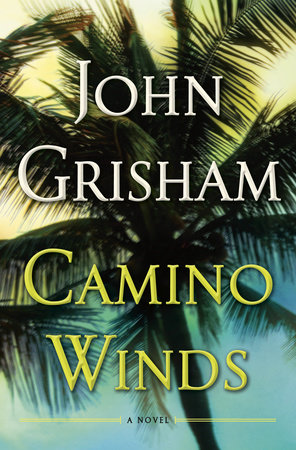
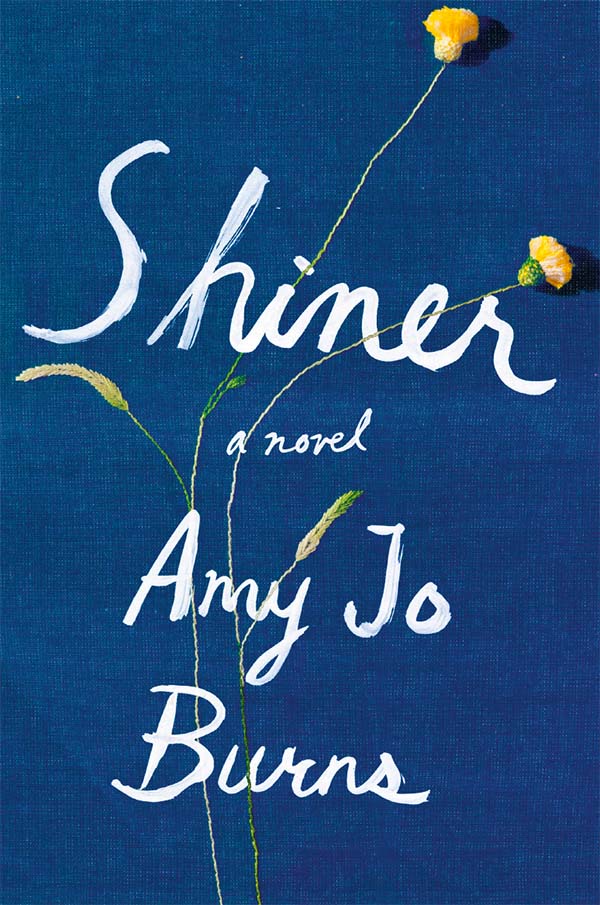
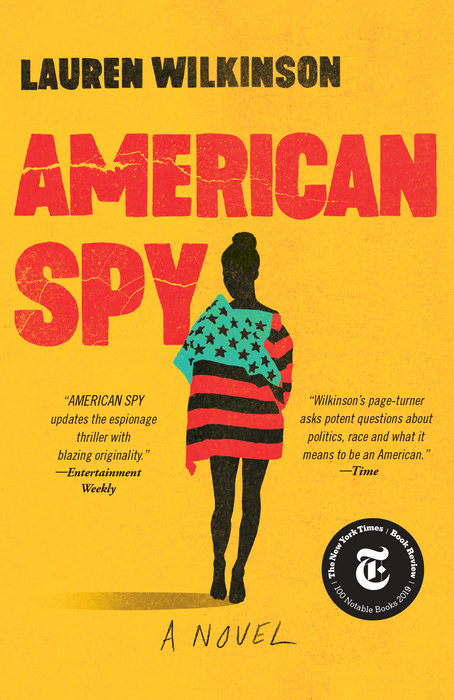
One of the books featured today was written by a prolific author, John Grisham. I’ve read 21 of his books. The other two are debut novels by Amy Jo Burns and Lauren Wilkinson.

Camino Winds, by John Grisham

Sequeal to Camino Island
Camino Winds, by John Grisham

I started July by reading John Grisham’s much-anticipated sequel to Camino Island (See You Must Read (Some of) These Books!.) Camino Winds did not disappoint. It continues with the same characters as Camino Island. We’re on an island in Florida with Bruce Cable, the man who owns and operates the little independent bookstore in the village. Mr. Cable has an interesting group of friends. Many of the people in this resort community are mystery writers.

There is a hurricane and a murder, and it takes the bookstore owner and all his friends to try to figure out who killed their friend. The guy who gets murdered is a lawyer, so there are any number of suspects.

Shiner, by Amy Jo Burns

Debut novel by Amy Jo Burns
Shiner, by Amy Jo Burns

To say fifteen-year-old Wren Bird lives in isolation would be a gross understatement. Her father is a self-proclaimed preacher who keeps boxes of poisonous snakes in the shed for the purpose of handling them in church. Wren’s mother does the best she can, but she lives under her husband’s thumb. They live miles from anyone else in West Virginia. They have no mailbox because Wren’s father doesn’t want them exposed to anything from the outside world.

This debut novel by Amy Jo Burns was recommended by one of the authors on Friends and Fiction on Facebook Live. Otherwise, I might not have heard of it. If I’d known in advance there would be so many references to snakes, I probably wouldn’t have given it a chance. It took me a while to get past the snakes, but the book was so compelling I kept reading.

There are a few other characters besides the Bird family. Wren is a determined young woman and she is not going to let that mountain, it’s snake handlers, or moonshiners (thus, the name, Shiner) keep her down. You will love Wren and want to read the entire book to see what unfolds.

I highly recommend this one!

American Spy, by Lauren Wilkinson

American Spy, by Lauren Wilkinson

American Spy is Lauren Wilkinson’s debut novel. (No wonder my TBR list keeps growing!) I listened to this book. It is written in the form of a letter an American spy, who just happens to be a black woman, writes to her children to explain how and why the major events in her life and theirs came about.

I was intrigued by the novel being written in the form of one long letter. Especially since I was listening to the book, it felt like the author had written the letter to me – or was telling me her story. Somewhere along the way, I started forgetting that it was a letter, but I would remember for a short while before going back to feeling like someone was telling me a story.

American Spy was published early in 2019 and has received excellent ratings and rave reviews. It’s different from any other spy novel I’ve read.

Since my last blog post

I’m embarrassed to say that I did not work on my novel for 15 months. I’ve read books about writing and blogs about writing, but it’s been 15 months since I make changes in the manuscript. I was shocked when I figured this out! By concentrating on reading and studying books about the art and craft of writing fiction, I have neglected by fiction writing. Three weeks ago, I finally got back into the book and I’ve had a wonderful time getting reacquainted with all my characters.

I love to read, and I have a huge list of books I want to read; however, it is time for me to stop hiding behind my reading list and get back to doing the nitty-gritty work of polishing scenes and making my characters more memorable. If I miss posting on my blog one week, it will be because I’m either writing fiction or I’m sick. Assume it’s because I’m writing and didn’t get a blog post written.

Until my next blog post

I hope you have one or more good books to read. I’m listening to The Butterfly’s Daughter, by Mary Alice Monroe on Playaway while I take my daily walks. I’m reading We Wear the Mask: 15 True Stories of Passing in America, edited by Brando Skyhorse and Lisa Frazier Page, but it’s fine print and is going slowly although extremely interesting and eye-opening. I’m reading The Secrets We Kept, by Lara Prescott on my Kindle.

If you’re a writer or other artist, I hope you make time to hone and practice your craft.

Please wear a mask to protect those around you from the virus. Stay safe. Stay well. We’re all in this together.

Janet

Three Books Read in June 2020

A variety of events threw my blog off schedule this month. If you are a regular reader of my blog, you know that on the first or sometimes first and second Mondays of the month I write about the books I read the previous month. In July, I had to split my “Books Read in June 2020” blog posts into two installments. The first installment is posted today. The second installment will follow next Monday, if my computer cooperates.

June came with a host of good books to read. After being closed for nearly three months due to the Covid-19 pandemic, the public libraries in our area reopened for patrons to pick up books they had on reserve. I got on the waitlists specifically for MP3 books I could download to my tablet and for newly-released books “on order,” so I could be assured of checking out new books that had not yet been in circulation.

Of course, when the library system reopened for pick-up service only, I had six books to pick up immediately. Some months are overloaded with good reads, and June was definitely in that category. It was a wonderful “problem” to have!

I hope my remarks about these books will pique your interest. Perhaps you’ll discover an author you’ve never read before – or a new book by an author you like. I don’t consider myself a book reviewer. I think true book reviewers have some rules to follow. I just enjoy sharing what I think and what I learn from some of the books I read.


The Book of Lost Friends, by Lisa Wingate

#LisaWingate #TheBookOfLostFriends
The Book of Lost Friends, by Lisa Wingate

Lisa Wingate showed us in Before We Were Yours that she has a talent for taking a little-known fact from history, thoroughly researching it, and writing a novel that educates and entertains. The Book of Lost Friends is another such book.

In the years following the American Civil War, former slaves tried to reconnect with their relatives and friends. The slavery culture often tore families apart by parents and their children and brothers and sisters often being sold to different masters. Ms. Wingate discovered that the Methodist denomination offered a place in one of its newspaper-like publications where people could post information about a relative or friend they wanted to reconnect with. Those published notices adopted the name, “Lost Friends.”

The Book of Lost Friends follows two plot lines. One is in Louisiana in 1875 and introduces us to Hannie, a former slave; Juneau Jane, her illegitimate Creole half-sister, and Lavinia, the heir to a plantation now in shambles. The three women head for Texas. Along the way, Hannie becomes hopeful that she will find her long lost mother and eight siblings.

The other plot line is in Louisiana in 1987 and introduces us to a teacher, Benedetta Silva, who is trying to make history and literature come alive for her high school students. Seen as “an outsider,” “Benny” works to make her way in a small town on the Mississippi River. She is appalled at the poverty many of her students live in. Warned to stay away from a certain abandoned plantation house, curiosity gets the best of Benny. What she finds hidden in that house could change her life and the lives of her students forever.

One of the things I liked in the book was the “Negativity Rule” “Benny” enforced in her classroom. Under that rule, if a student spoke negatively about another student, the student in the wrong had to say three positive things about the other student. The author’s use of this rule to illustrate that it takes three times the work to undo the damage done by a negative is a lesson we could all learn.


The Man from Spirit Creek, by Barbara Kyle

#BarbaraKyle #TheManFromSpiritCreek
The Man from Spirit Creek, by Barbara Kyle

I never win anything, so I was shocked when I received an email from book coach and author Barbara Kyle telling me I had won a copy of her new novel, The Man from Spirit Creek on Audible! I had just picked up six library books that afternoon that had been held for me – some since a couple of days before the libraries had to close on March 15 due to the Covid-19 pandemic. I had just started listening to The Book of Lost Friends, by Lisa Wingate, but I was tempted to go ahead and start listening to Barbara Kyle’s book.

I took an online writing course taught by Barbara Kyle a couple of years ago, and I’d meant ever since then to read one of her novels. She lives in Canada and The Man from Spirit Springs is set in Alberta.

Ms. Kyle’s novel puts the reader smack-dab in this western Canadian province. She weaves the geography and geology (oil) of this prairie land into the story so well that you can taste the dust in your mouth and smell the rotten eggs smell of “sour” gas. This present-day story gets into the nitty-gritty of the clash between ranchers and big oil. It’s full of suspense, betrayal, revenge, family ties, the love between two sisters, and the romantic loves of both of them.

Liv Gardner is the attorney for Falcon Oil, the oil and gas company she and her fiancé, Mickey Havelock, own in Houston, Texas. Someone is sabotaging their rigs in Alberta. Liv goes to Spirit Creek, Alberta under the guise of having a temporary job with a lawyer there as she tries to figure out how to get the saboteur to give up his tactics and sell out to them.

The saboteur is sheep farmer Tom Wainwright. His beef with Falcon Oil? He blames Falcon’s “sour” gas, which is released 24/7, for his wife’s miscarriages and eventual death and for the miscarriages and deaths of many of his sheep.

Even as Liv and Mickey plan their wedding, Liv gets personally involved with Wainwright in spite of the fact that she went to Alberta to stop his efforts to ruin Falcon Oil. She discovers his human-side and lets her heart overtake her good sense. There’s a murder. Wainwright is arrested. But is he the killer? And will Liv and Mickey get back together?

You’ll love all the twists and turns in this contemporary Canadian western novel of suspense. It transported me all the way to Alberta for several days. What better way to “get away” during this pandemic than to curl up with a very engaging book?


How to Be An Antiracist, by Ibram X. Kendi

#Antiracist #HowToBeAnAntiracist #IramXKendi
How to Be an Antiracist, by Ibram X. Kendi

There are many eye-opening things to take from Ibram X. Kendi’s book, How to Be An Antiracist, but the most important lesson I learned from reading it is the difference being “not racist” and “antiracist.” I’ve been guilty of saying, “I’m not a racist.” It’s possible I’ve even said, although I hope I haven’t, “I’m not a racist, but….” “But” says, “Oh yes you are!”

In the words of Mr. Kendi in his book, “What’s the problem with being ‘not racist?’ It is a claim that signifies neutrality…. The opposite of racist isn’t not racist it is antiracist.”

Mr. Kendi anticipates the reader asking, “What’s the difference?” That’s what I wanted to know. In the introductory pages of his book, he eloquently answers that question. In fact, if you don’t want to or don’t have time to read the entire book, I recommend you read the introduction. You might not agree with it. It might not change your mind but, if you’ll read it with an open and curious mind, it will definitely give you something to think about.

What’s the difference between “not racist” and “anti-racist?” Mr. Kendi explains it as follows:  “One endorses either the idea of a racial hierarchy as a racist or racial equality as an antiracist. One either believes problems are rooted in groups of people as a racist or locates the roots of problems in power and policies as in antiracist. One either allows racial inequalities to persevere as a racist or confronts racial inequities as an antiracist. There is no in-between safe space of not racist. The claim of not racist neutrality is a mask for racism.”

He goes on to say that “color-blindness” and “not a racist” means you fail to see race and you fail to see racism. Something I got from the book was to claim you don’t see race is disrespectful of people of another race. We need to recognize race and not pretend it doesn’t exist or that we don’t notice it. We need to celebrate it for what it is.

Mr. Kendi addresses his own racism in the book and how people of any race can be racist. As he states in the book’s introduction: “This book is ultimately about the basic struggle we’re all in: The Struggle to be fully human and to see that others are fully human.” He describes antiracism as “an unlit dirt road.” It’s not easy to find one’s way on an unlit dirt road. He calls on all of us to look at power and policy. He says, “We know how to be racist. We know how to pretend to be not racist. Now let’s know how to be anti-racist.”

The big picture that made a lasting impression on me was that to be anti-racist is to stand up and speak out when you see injustice. To sit idly by, is to be complicit. As long as you see yourself as “not a racist,” you give yourself permission to sit idly by and ignore evil because you think it doesn’t affect you.

People of various religion and no religion read my blog around the world. I’m a Christian.  I think Jesus Christ is calling on Christians to call out injustice when we see it. I’m pointing to myself. I’ve been guilty of sitting idly by, turning the other way, keeping my mouth shut because I didn’t want to cause an argument or hurt someone’s feelings. I am, by nature, a quiet person. My voice often gets drowned out by louder voices and more assertive people. It is my challenge now to stop being “not racist” and start being “anti-racist” as I feel I’m being called to be.

(Since I listened to the audio edition of the book, I hope I got all the quotes right. My apologies to Mr. Kendi if I made any errors.)


Until my next blog post

I hope you have at least one good book to read.

I hope you have quality creative time, if you’re a writer or other artist.

I hope you stay safe and well. I hope you wear a mask to protect others.

Janet

Poetry Book Arrives at Perfect Time

If you haven’t told your best friend how much you love them recently, call or write them a note and tell them now. Tomorrow might be too late.

Perhaps you noticed my weekly Monday blog post never showed up last week. My nearly life-long friend, Kay Jewett Nalbone, died on Sunday. Although not unexpected, it was difficult to accept.

When you’ve been friends for 57 years and shared each other’s joys and struggles, you have a bond. What it boils down to is that I no longer have a friend with the same memories I have.

Another long-time friend from my graduate school days, Ray Griffin, didn’t know Kay and was not aware of her declining condition. It was serendipitous that Ray’s new book of poetry arrived in the mail on Monday. If ever I needed a collection of poems to sit down with and relax, it was Monday and Tuesday.

The name of Ray’s book is Winsome Morning Breeze: A Collection of Sonnets and Tanka. It is available online or you can request it at your favorite independent bookstore. It is beautifully illustrated with watercolors by Marti Dodge.

Many selections in Ray’s book resonated with me for different reasons. Having lost two good friends since February, the last two lines of “I Was a Fool” on page 21 has special meaning for me:

“To live one’s life most fully and with zest,

One must not ever let the moment rest.”

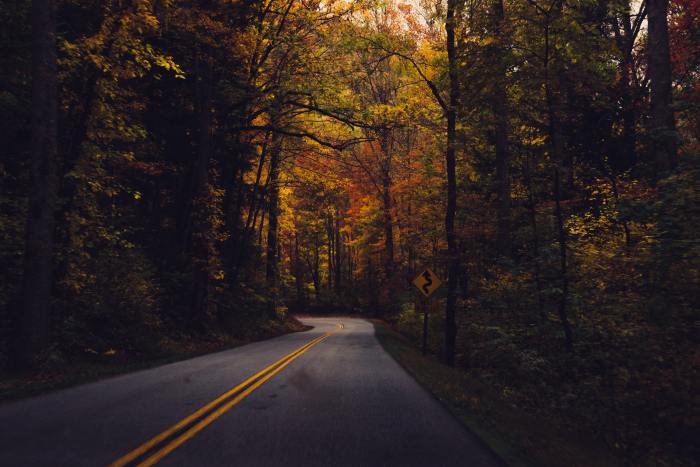
“On Dragon’s Tail” on page 19, on the other hand, brought a smile to my face as Ray eloquently wrote about his experience of driving the portion of US-129/TN-115/NC-115 in the Appalachian Mountains known as The Dragon’s Tail due to its 318 curves in 11 miles. It is a favorite of motorcycle and sports car enthusiasts and a fun drive for those of us who love to drive in the mountains. What fun!

Photo by Jordan Whitt on Unsplash

And here’s a lovely turn of phrase from Ray’s sonnet, “Fallen Leaves” on page 109: “I feel as though I am within a large kaleidoscope.”

“Daughter” on page 107 brought tears to my eyes as Ray recalls the birth of his and Ida’s daughter 31 years prior. I remember sitting on the floor and playing with their precious daughter when she was just four or five years old.

Ray and I studied political science and public administration. He had a successful 26-year career as a city manager. He is now an adjunct professor of politics in Virginia. His poems, “Barbara Jordan” on pages 85-87 and “I’m But an Old Man” on pages 73-79 are as heartfelt as any pieces in the book. I could hear Barbara Jordan’s distinctive voice from the Watergate hearings as I read the poem he named after her.

I hope I’ve shared just enough from Winsome Morning Breeze: A Collection of Sonnets and Tanka, by Ray Griffin to whet your appetite. It will be a book I will reach for often. I will read it over and over, and I believe you will, too.

Until my next blog post

I hope you have a good book to read. I’m reading Shiner, by Amy Jo Burns and We Wear the Mask: 15 True Stories of Passing in America, edited by Brando Skyhorse and Lisa Frazier Page.

If you’re a writer or other artist, I hope you have productive creative time during the Covid-19 pandemic.

Be safe. Be well. Wear a mask in respect for other people.

Don’t be shy. Share my blog!

Janet