AI, Copyright Infringement, Trump, and Mark Twain

I would love to rant about the 90,000-square-foot $200 million gold ballroom that is to replace the East Wing of the White House beginning in September, but I won’t chase that rabbit today. I had already planned to write about artificial intelligence (AI) and copyright infringement today.

Photo by Igor Omilaev on Unsplash

I hate to have to “beat a dead horse,” as the saying goes, but AI is on my mind. I’m just a novice author, but this hits home.

What could Mark Twain possibly have to do with AI? Trust me. I’ll get to that.

You may have read my July 16, 2025, blog post, My soul is worth more than $205.

I’m just small potatoes in the big scheme of things in the publishing industry, but even some of the most famous authors are being taken advantage of my AI.


David Baldacci

I will mention David Baldacci as an example. Many of you are, no doubt, fans of his novels.

Baldacci has testified before a Congressional committee because even he has been victimized by AI.

You can tout the wonders and benefits of AI all day long, but when it steals your intellectual property, you might change your tune.

Baldacci said to that Congressional committee, “I truly felt like someone had backed up a truck to my imagination and stolen everything I’d ever created.”


Along comes the U.S. Department of Homeland Security

The Trump Administration has a long track record of using intellectual property without the creator’s permission. They use music without permission and First Lady Melania Trump gave a speech that was almost verbatim a speech First Lady Michelle Obama had given.

The latest incident occurred on July 1, 2025, when the U.S. Department of Homeland Security posted a painting by the late Christian artist, Thomas Kinkade on X without his estate’s permission.

The Kinkade Family Foundation has asked Homeland Security to take the image down from X.

Furthermore, his estate says, “At The Kinkade Family Foundation, we strongly condemn the sentiment expressed in the post and the deplorable actions that DHS continues to carry out,” Kinkade’s family wrote, “Like many of you, we were deeply troubled to see this image used to promote division and xenophobia associated with the ideals of DHS, as this is antithetical to our mission.”

When will the Trump Administration learn that everything in the world does not belong to them?


Pending AI Court Cases

As of July 25, 2025, there were 29 “literary works” ongoing cases before the federal courts. Other AI cases before the federal courts were 11 “visual works” cases, five “musical works” cases, three “sound recording” cases, one “audiovisual” case, and one “computer program” case about copyright infringement.


Wise words on the subject from Mark Twain

You might be asking, “How could Mark Twain have said anything about AI?”

Artificial Intelligence was pure science fiction in Mark Twain’s day – if it was even fanaticized at all, but he said something about a machine writing a story. It precisely captures my feelings about AI and literature.

Photo of Samuel Clemmons (a.k.a. Mark Twain) from Library of Congress

I just happened to be reading “How to Tell a Story,” by Mark Twain Tuesday afternoon. (Disclaimer: Mark Twain has been one of my favorite authors since I was in elementary school.)

The point of Twain’s essay is the oral telling of a story and not the writing of one, but I think his main point applies perfectly to the conflict in 2025 between the creative writing by a human and the collection of words generated by AI.

Twain begins this essay with the words, “I do not claim that I can tell a story as it ought to be told. I only claim to know how a story ought to be told, for I have been almost daily in the company of the most expert story-tellers for many years.”

He goes on to say that there are various kinds of stories but the only one that is difficult to write or tell is the humorous one. He maintains that, “The humorous story is American, the comic story is English, the witty story is French. The humorous story depends for its effect upon the manner of the telling; the comic story and the witty story upon the matter.”

Twain explains that the humorous story meanders before getting to the point and, in fact, might have no point other than to entertain. On the other hand, he says the comic and witty stories “must be brief and end with a point.”

He says, “The humorous story is strictly a work of art – high and delicate art – and only an artist can tell it; but no art is necessary in telling the comic and the witty story; anybody can do it. The art of telling a humorous story – understand, I mean by word of mouth, not print – was created in America, and has remained at home.”

I won’t go into Twain’s detailed description of how a humorous story is told, for that would take you down a rabbit hole and distract you from the point of my blog post.

Suffice it to say that Twain claims that an American storyteller meanders and gives the impression that he or she is not even aware that the story is funny, while the teller of the comic or witty story across the pond not only tells the audience in the beginning that they are going to tell a comic or witty story but also starts to laugh at the punch line before they even reach it. Twain says, “It is a pathetic thing to see.”

In “How to Tell a Story,” Twain relates a story about a wounded soldier. First, he presents it in the straight forward way the story teller in England, France, Germany, or Italy would tell it.

Then, he tells it like someone in America would tell it in a simple and innocent yet sincere way by going off track and possibly adding details that were not in the original or are not necessary to the story.

Twain says, “This is art and fine and beautiful, and only a master can compass it; but a machine could tell the other story.”


Until my next blog post

I hope you have a good book to read.

Remember the people of Ukraine, the starving children in Gaza, and the people in western North Carolina who are still recovering from Hurricane Helene.

Janet

Books read in June 2024

The first Monday of July is here, so my blog today is about some of the books I read in June. It’s hard to realize 2024 is half over.


Being Henry: The Fonz… and Beyond, by Henry Winkler

Being Henry: The Fonz…and Beyond, by Henry Winkler

I began June by listening to Being Henry: The Fonz… and Beyond. It was enlightening and enjoyable, partly because it was read by the author, Henry Winkler. I hadn’t known anything about Henry Winkler’s childhood or how much out of his comfort zone his portrayal of Fonzie was on the TV sitcom “Happy Days.”

In the book you learn how Henry Winkler went to great lengths to try to keep his character from overshadowing Ron Howard. The show had been created to feature Ron Howard, but the public became enamored with “The Fonz.”

The book takes you on Henry Winkler’s journey as an actor and shines a light on how he met his wife of nearly 50 years. He tells of his struggles to break into acting and how he landed the part of Fonzie on “Happy Days.” He is painfully honest about the support he did not receive from his parents.

Henry Winkler describes himself as a shy and private person, which tells us what a good actor he was in his portrayal of Fonzie!


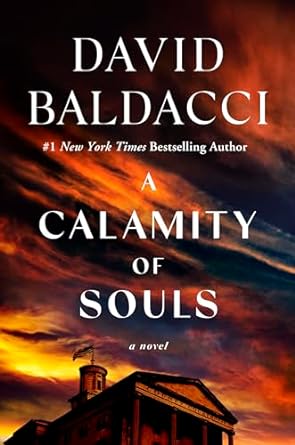
A Calamity of Souls, by David Baldacci

A Calamity of Souls,
by David Baldacci

I will start out by saying that I highly recommend this book. Stop reading right now and get on the waitlist for it at your local public library.

This is a book that Baldacci worked on for a decade. It was a story he was compelled to write. It is a novel about race relations in the United States in 1968. It is not set in the Deep South. That would have been too easy. Instead, Baldacci did the difficult thing. He set this novel in his home state of Virginia.

A well-known formerly affluent white couple are murdered in their home. When a black man who works for them is found by sheriff deputies in the house with their bodies, it appears to be an open and shut case.

Not so fast! There are twists and turns and family secrets in this story. The tension builds and builds until the killer’s identity is revealed.

This is a novel you won’t want to put down once you start reading it. If I didn’t have several hundred books on my To-Be-Read List, I would probably read it again just to study the clues and red herrings.


The Berlin Airlift: The Cold War Mission to Save a City, by John Tusa and Ann Tusa

The Berlin Airlift: The Cold War Mission to Save a City,
by John Tusa and Ann Tusa

This was one of the books I skimmed through as I did research about the Berlin Airlift so I could blog about its 76th anniversary last Monday. The book goes into detail about the airlift, in case you want to know more than I was able to condense into 1,000 words for my purposes. In case you missed last Monday’s blog, here’s the link:#OnThisDay: Berlin Airlift, 1948.


Stop Buying Bins & Other Blunt but Practical Advice from a Home Organizer, by Bonnie Borromeo Tomlinson

Stop Buying Bins & other blunt but practical advice from a home organizer,
by Bonnie Borromeo Tomlinson

As I age and am very much in fear of leaving a bunch of clutter for my heirs to have to deal with some day, I discovered this book. It struck a nerve with me and prompted me to pull out every article of clothing I own. Some garments went in the trash – where they should have gone long ago. I’m talking about 30-year-old tee shirts that had holes in them. Not a good look for me even when doing yardwork!  Nearly half the garments were donated to a thrift shop. I have lost about 16 pounds in the last year, so many of the things did not fit and I don’t want to grow back into them!

A major point in the book is that you must know why you are decluttering or downsizing, and you must have the right mindset. For several reasons, the time was right for me to do some major downsizing.

The book drives home the point that you don’t have to keep everything just because you kept it in the first place. It says you don’t have to keep things passed down to you just because they remind you of that person. Keep the memory, but don’t necessarily keep the item unless it brings you joy.

The book says if you don’t value something enough to display it, then get rid of it. Someone else might enjoy having it.

A local library had a craft swap last week. It was time for me to get rid of most of my cross-stitch supplies and books. I can’t see well enough now to do much small needlework.

Now that I have my clothes and craft items under better control than they have been in years, I’m ready to tackle my “stuff” in general, one room at a time.

There is a chapter about helping an aging parent downsize. There’s a chapter about parting with those adorable pictures your children colored. There’s a chapter about how to go about clearing out a house after a death, even if you live a long way from the house you’re having to clean out.

The book was well worth the $3.99 I spent for the Kindle version.


Until my next blog post

I wish my fellow-Americans a safe and happy Independence Day on Thursday!

I hope you are reading a good book.

Don’t forget the people of Ukraine.

Janet

Three Books I Read in January 2020

The first Monday of the month seems to come around faster and faster, and it’s time for me to blog about the books I read the previous month. As usually happens, I have to divide the books I read the month before into two blog posts. No one wants to read a 2,000-word blog post.

I read approximately 6.5 books in January. Today’s blog post is about three of them. I’ll write about the other 3.5 books next Monday.

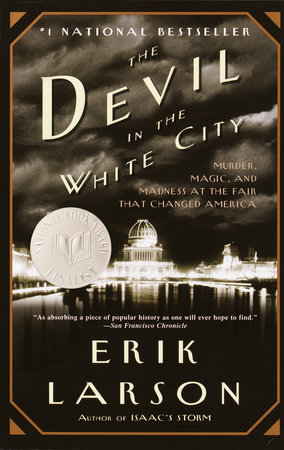
The Devil in the White City:  Murder, Magic and Madness and the Fair that Changed America, by Erik Larson

This book pleasantly surprised me. From the title, I wasn’t sure I’d like the book, but it’s an excellent piece of creative nonfiction.

The Devil in the White City: Murder, Magic, and Madness at the Fair that Changed America, by Erik Larson

I didn’t know the history of the World’s Fair:  Columbian Exposition except that it was held in Chicago to mark the 400th anniversary of the “discovery” of America by Christopher Columbus’s.

Chicago was a rough-and-tumble place at that time, known primarily for the slaughterhouses located there. The city was in competition with Washington, DC as the site of the fair.

When Chicago was selected, the depth of the bedrock immediately became a source of concern for the fair’s planners, architects, and construction engineers. The weight of the fair’s proposed buildings and the poor soil were difficult to overcome with the construction equipment of the day. I found that aspect of the book to be fascinating.

The fair was planned, built, and held with a backdrop of mysterious disappearances and murders in Chicago. As the title suggests, that comes into play. The murderer is a physician.

The mandate the Chicago fair had was to “out-Eiffel Eiffel.” The grand Eiffel Tower was built as part of the 1889 World’s Fair in Paris, so the Chicago fair authorities were under a lot of pressure to construct something more amazing at their fair. That turned out to be the Ferris wheel, although that first Ferris wheel was made up of “cars” that could hold 20 passengers. The construction details about the Ferris wheel were interesting to me. Being the daughter of a structural steel draftsman, I grew up being exposed to discussions and an appreciation of such things.

Mingled in with the details of the construction and operation of the fair itself are tidbits of the personal lives of the people involved such as landscape architect Frederick Law Olmstead, who was also working on the Biltmore Estate in Asheville, North Carolina at the same time.

Reference is also made to some of the new inventions that were introduced to the public at the Chicago fair, including zippers, Juicy Fruit chewing gum, Cracker Jacks snack, moving pictures, the vertical file, shredded wheat cereal, and Aunt Jemima’s pancake mix in a box.


A Minute to Midnight, by David Baldacci

A Minute to Midnight is David Baldacci’s latest novel and the second book in his Atlee Pine thriller series. I’ve only read five of Mr. Baldacci’s books, so I’ve missed a lot of his work. I missed the first book in this series, Long Road to Mercy. I’ll definitely read it before the third book in the series is published.

A Minute to Midnight, by David Baldacci

Atlee Pine is an FBI Special Agent. In A Minute to Midnight, she returns to her small hometown in Georgia to try to find answers to some nagging questions about her family. In the process of finding out some startling information about her parents, she is drawn into the investigation of several local murders. Who is the murderer? Are these murders – which are rare in this small town – somehow connected to Pine’s presence in the community?

Mr. Baldacci takes us on an eerie journey as he ties in the morbid history of the infamous Andersonville prisoner-of-war prison of American Civil War days. The prison’s cemetery plays a part in this novel, as that is where the murderer likes to leave his victims.


The Lies We Told, by Diane Chamberlain

In this novel, Diane Chamberlain takes us into a devastating hurricane on the North Carolina coast. There is massive flooding in the southeastern portion of the state, and we’re soon caught up in the lives of two sisters who just happen to be doctors. Each sister tries to do her part to help in the aftermath of the hurricane. Their duties take them to different directions and a breakdown of telephone communications results of their not being able to communicate for two long weeks.

The Lies We Told, by Diane Chamberlain

The sisters have a history of secrets that date back to the day their parents were murdered. One sister desperately wants children, while the other one is wrapped up in her career and doesn’t let herself have dreams of a family of her own.

There is a helicopter crash and one of the sisters cannot be located at the crash scene. She’s found by a local citizen and taken to his home for recovery. There are undertones of trouble within that home, though. Tensions rise because the small rural community is cut off from the mainland by the flooding, and the wife’s baby is due at any time.

I got a little weary of the part of the book that gave details of rescue efforts, but I’m glad a stuck with it. The ending was worth the wait.


Since my last blog post

Since my blog post last Monday, I had a freak accident and broke my right tibia. Therefore, you won’t see me as much on social media as usual.


Until my next blog post

I’ll be seeing an orthopedic surgeon to see what the plan of treatment will be for the next months. I hope I’ll get to blog about the other books I read in January next Monday.

I hope you have a good book to read. I’m listening to The Cold, Cold Ground, by Adrian McKinty, a novel set in Carrickfergus, Northern Ireland.

If you’re a writer or other artist, I hope you have productive creative time.

Thank you for reading my blog post. You have many things vying for your attention and time, so I appreciate the fact that you took time to read my blog today.

Janet

Thrillers and a Dark Novel I Read Last Month

In my first blog post each month I usually write about the books I read the previous month. This month is no different. I’ve read and enjoyed many historical novels this year. My second favorite genre is thrillers. In September I got to read two newly released historical thrillers. I hope you’ll find at least one book in the following list that you’d like to read.

One Good Deed, by David Baldacci

2019 #thriller by #Baldacci
One Good Deed, by David Baldacci

I decided to read David Baldacci’s latest thriller, One Good Deed, because it’s been quite a while since I read one of his books. This was a good one for me to choose, because Baldacci introduces a new protagonist in this novel. Aloysius Archer is a World War II veteran and has just been released from prison after serving a term for a crime he did not comment.

Archer is a good-hearted man who, for various reasons, continues to make bad decisions throughout the book. His heart is always in the right place, though, so the reader forgives him for those poor choices and pulls for him to come out on top and not end up in prison again. He befriends a detective, Irving Shaw, who immediately sees the traits in Archer that would make him a good detective.

There are a few murders and a couple of people disappear along the way, but Archer never gives up on finding the truth – even when it means he must accept the fact that he is easily suckered in by a pretty face. It’s a real page-turner that I read in one weekend. Those of you who know it sometimes takes me two months to read a book will appreciate what a high compliment that is for One Good Deed.

Before I Let You Go, by Kelly Rimmer

Two sisters. One baby. An impossible choice.
Before I Let You Go, by Kelly Rimmer

I listened to Before I Let You Go, by Kelly Rimmer on CD. It was a dark story about how one sister dealt with her sister’s drug addiction. It is a timely subject, and the book demonstrates how very difficult tough love is.

For me, the book repeatedly brought to mind a case of drug addiction in my family and how one lethal overdose can leave a family in a dark pit that is perhaps impossible to climb out of. The subject matter wasn’t pleasant to read, but the bonds of family were well demonstrated.

The storyline of this novel includes the birth of an innocent baby. The infant has to go through painful withdrawal before it can become healthy enough to thrive.

Someone Knows, by Lisa Scottoline

A secret kept by #teens.
Someone Knows, by Lisa Scottoline

I really wanted to like this novel, but it was just too much work for me. The story is told from 10 points-of-view. I couldn’t keep that many main characters straight in my mind.

The plot line might appeal more to a young adult audience because it revolves around some mistakes made by a group of teens and the secret they have to live with.

The Fifth Column, by Andrew Gross

A #thriller about #NaziSympathizers in the US in #1939.
The Fifth Column, by Andrew Gross

The Fifth Column is Andrew Gross’ latest thriller. The name of the novel comes from “the fifth column” meaning a group inside a larger group that supports an outside group or country. In this instance, the Fifth Column was the Nazi-sympathizers in the United States as World War II raged in Europe.

Mr. Gross takes you back to February of 1939 when more than 20,000 Nazis and Nazi sympathizers in khaki uniforms and waving Nazi flags gathered for a rally at Madison Square Garden in New York City. I hadn’t known about that, so I learned something right off the bat from the book’s introduction.

This novel tells the story of America’s hesitancy to get involved in World War II. Memories of “The Great War”/”The War to End All Wars”/World War I were still fresh from just a decade before. Some saw President Franklin D. Roosevelt’s “New Deal” programs as socialism. The much-celebrated American pilot Charles Lindbergh voiced pro-Nazi opinions. Germany was bombing London and stories of the abuse and murder of Jews in Europe were spreading across the Atlantic. Jews in New York City were being harassed. Families could go to Nazi-sponsored camps in New Jersey and on Long Island where children were taught the Nazi salute and Nazi doctrine. It was a time when people increasingly didn’t know whom they could trust.

The Fifth Column, by Andrew Gross rests on that background. It is a story brought to life by the author. The protagonist, Charlie Mossman, gets in over his head when he stands up for a Jewish bar owner when a group of Nazi thugs come into his establishment to make fun of him. Someone is killed and Charlie goes to prison.

When Charlie comes home from prison, his wife has created a new life for herself. Charlie soon becomes suspicious that his wife and young daughter’s neighbors in the apartment building are German spies. He goes to great lengths to find evidence to support his hunch.

The plot thickens after Charlie has a chance meeting with Noelle, a graduate student from France. Noelle says she knows people who can help Charlie. This seems too good to be true. Is it?

Although the plot unfolds in a predictable way, I enjoyed the book. The CD edition is read by Edoardo Ballerini. I continue to surprise myself by enjoying some audio books.

Since my last blog post

Yesterday afternoon I had the privilege of attending a birthday party for a man celebrating his 100th birthday. He is a mild-mannered man who fought in World War II and has been active in his church his entire life. He has inspired countless people to get involved in Habitat for Humanity by the example he has set for the last 40 years. It’s not often I am invited to a “Happy 100th Birthday” party! Happy 100th Birthday, Mr. William King McCachren, Sr.!

I continue to work my way through Chris Andrews’ writing “how-to” book, Character and Structure:  An Unholy Alliance. To read about that book, read my last blog post, https://janetswritingblog.com/2019/09/30/character-and-structure-by-chris-andrews/ and/or visit Mr. Andrews’ website, https://www.chrisandrews.me/.

Late in August, I purchased an online writing course by C.S. Lakin, “Emotional Mastery for Fiction Writers.” The link to that course sat on the back burner until several days ago. I think the course and Mr. Andrews’ book will dovetail nicely and help me to be a better fiction writer. I hope to finally start the C.S. Lakin course this week.

Until my next blog post

I hope you have a good book to read. I’m reading The Stationery Shop, by Marjan Kamali and Layover, by David Bell.

If you’re a writer, I hope you have productive writing time.

Thank you for reading my blog. You could have spent the last few minutes doing something else, but you chose to read my blog.

Let’s continue the conversation

What are you reading? What have you read recently that you’d recommend to others?

Janet