A Different Kind of “First-Blog-Post-of-the-Month” Blog Post

If you read my blog last week (A Lost Art) or my July e-newsletter, you know I have been decluttering this summer. I have reached an age at which I have realized that I’m not going to live forever and I really don’t want to leave my heirs a massive mess to deal with when I’m gone or incapacitated. Hence… it is time to declutter and part with many of the things, assorted memorabilia, pieces of paper, nice magazines, photographs, and even some of the books I never should have kept in the first place.

It’s time to let someone else get joy from some of my things by taking them to the thrift shop or donating them for a yard sale an organization is holding. It’s time for the recycling center to turn some of them into recycled paper. It is time for the landfill (my least favorite choice) to accept the rest.

In my first blog post of the month, I almost always write about the books I read the previous month. That is not what today’s post is about.

I started reading three or four books in July, but none of them grabbed my interest enough for me to drop everything else and finish reading them. Do you ever have times like that? When nothing feels quite right? When even favorite authors’ newest releases just fall flat?

The entire month of July was like that for me and August has begun in the same way.

Decluttering is exhausting for everyone. Looking at every item and every piece of paper and deciding whether to keep it or let it go is tedious and time consuming. I once again live in the house my parents built when I was seven years old. It is easy for things to accumulate in 64 years!

But that’s not the whole story. In fact, it is just a by-product of the root of the problem.

Photo by Jr Korpa on Unsplash

Some of the challenges of Myalgic Encephalomyelitis

Due to Myalgic Encephalomyelitis, I always have trouble remembering the details of what I just read… and sometimes it is worse than others. I am in one of those worse times now. When it hits, it is unsettling at best and devastating at its worst.

Every time I have experienced this in the 37 years I’ve dealt with this illness, it feels like I will never feel any better than I do at the moment. Perhaps this is the time that I stay stuck forever in the brain fog and debilitating fatigue in which I struggle to put one foot in front of the other. That is the state in which I find myself as I put the finishing touches on this blog post.

As described by the Mayo Clinic, the symptoms of Myalgic Encephalomyelitis vary from one person to another and from one time to another for each individual. Physical and mental activity worsen the person’s fatigue, and rest does not lessen the symptoms.

After 37 years, I no long remember what refreshing sleep feels like. I have very active dreams and my body can’t seem to distinguish between dreamt activity and actual activity. Therefore, I always wake up more exhausted than when I went to sleep. I have to ease into my day and mornings are not good for me.

That makes no sense to someone who has not experienced it, but it is the best way I know to describe my life. As with any other person dealing with a chronic illness, I have to push through each day and do the best I can. This is my life, and I choose to make the best of it.

Part of my brain tells me that I will not stay in this slump forever, so I will hang onto that thought. I have to.

I chose to use the more accurate name for this little-understood syndrome in today’s post rather than my usual use of the American term for it, Chronic Fatigue Syndrome (CFS). That name is degrading to the people who deal with the illness as patients or as medical professionals. It belittles the illness and the patients. It brings on comments like, “I’m tired, too.” Comments like that only serve to make the patient feel less valued as a human being. The CFS moniker for such an all-consuming illness is tantamount to the early name of Multiple Sclerosis: Malingerers Disease.

What did I try to read in July?

One book that I just didn’t have the mental energy for was Reading the Constitution: Why I Chose Pragmatism, Not Textualism, by retired US Supreme Court Justice Stephen G. Breyer. It is a very detailed book about a deep subject. The political scientist in me wanted to read it, but I was too tired to give it the time and concentration it needed. Mr. Breyer is very good at explaining laws and concepts in understandable language.

A political thriller I enjoyed but didn’t have time to finish before it had to be returned to the public library was Phantom Orbit, by David Ignatius. I have enjoyed all of Ignatius’ novels. I’m on the waitlist to check it out again.

Until my next blog post

If you tuned in today eager to see what I read last month, I apologize. If I can snap out of this mental fog, I will blog about the books I read in August in my blog post the first Monday in September 2.

Until then, I hope you have a good book to read.

My planned topic for next week’s blog post is the anniversary of the United States’ annexation of Hawaii as a territory in 1898. Time will tell if I am able to do the necessary research on that subject over the next seven days. If not, I hope to return to the blogosphere in the near future.

And please remember the people of Ukraine.

Janet

A Lost Art

How many of us take the time or even think about handwriting a letter today? It has been so long since I handwrote more than a brief thank-you note, I honestly cannot remember. It is easier to text, email, or type a letter on the computer and print it.

I mentioned in my July e-newsletter that I have been decluttering. I have attempted this chore many times in the past with limited success; however, I am on a tear this time.

I should have taken “before” and “after” pictures. I should have weighed how much stuff I donated to the thrift shop. I should have weighed the two recycle bins that were so heavy with paper and magazines that I could scarcely push them out to the road for pick up. I should have weighed the countless bags of trash. I shredded old documents until I thought our paper shredder would start to smoke.

My parents were in college when The Great Depression began. They had to make their way in this world on little money and no luxuries. Their background meant they instilled in me the value of a dollar and one should never throw away anything because “you might need it or be able to use it later.”

I am once again living in the house they built in 1960, so there are many boxes and closet shelves to go through now.

It is a freeing experience to unburden oneself from the accumulation of stuff. As I blogged about on July 1, 2024 ( Books read in June 2024), I was inspired by reading Stop Buying Bins & Other Blunt but Practical Advice from a Home Organizer, by Bonnie Borromeo Tomlinson.

I’m not saying this is the end-all be-all book about decluttering, downsizing, or rightsizing. All I know is that it was the right book for me at the right time.

One unexpected benefit or result of my current decluttering binge was the rediscovery of handwritten letters. If you have lost a parent and had a good relationship with that person, you have probably felt that tug on your heart when you come across something in their handwriting.

Photo by Aaron Burden on Unsplash

Perhaps you found a recipe your mother wrote on an index card or scrap of paper. Perhaps it was nothing more than your father’s signature on a document. My father was a structural steel draftsman, so he usually printed. I can readily recognize his precise printing, whether it be on a blueprint or genealogy notes he made, but it is special when I find his signature because it, of course, is in cursive.

In going through decades of stuff this summer, I have come across birthday cards signed by my parents, various aunts and uncles, and dear childhood friends who are no longer with us. Some have brought a lump to my throat and a sting to my eyes as tears begin to form. Those cards are set aside and not yet tossed in the trash or recycle bin. Someday that’s where they’ll land, but not today.

The lost art I referenced in today’s blog title is the handwritten letter. I have found many of the letters my mother wrote to me while I was away in college and in my early 20s when I found employment several hours from home. I was struck by the contrast between that time in the 1970s and early 1980s as compared to today.

Today parents text or call their children who are in college or have otherwise left home and struck out to make their way in the world. They think nothing of making that phone call or sending that text. When I was in college and during my young adult years it was expensive to call “long distance.” You had to have a very good reason for calling home when I was in college.

There was one telephone on the wall in the hallway in my freshman dorm. I knew if I received a call from my parents, it was probably to relay bad news or something that couldn’t wait two or three days for them to tell me in a letter. And there were no long conversations because every minute cost money.

I am so glad that’s the way it was because it means today I can reread all those letters my mother wrote. Today’s college students and young adults will not have such tangible memorabilia.

Several years ago, my sister and I helped a friend organize in archival binders and archival sleeves the letters he and his wife wrote to one another while he was in the military service as a fighter pilot in World War II and the Korean War. He will turn 100 years old in October. He calls occasionally to thank us again for what we did. He lives alone and the days and nights are lonely. He says he finds great comfort and joy in opening those binders and reading those letters.

We have photocopies of portions of letters one of our great-grandfathers wrote to his parents and sister while he was serving in the military during the American Civil War. How valuable those letters are to us!

While going through a box of papers last week, I came across a typewritten letter from my eldest first cousin from some 30 years ago. She was much older than I. In that letter, she shared some recollections of her mother’s. (Her mother was my father’s eldest sister and was 14 years older than he.) I had forgotten about the letter, so it was new and fresh as I read it last week.

From the letter I learned that my grandmother won prizes for her jams, jellies, canned fruits, eggs, and Rhode Island chickens. Since my grandmother died 23 years before I was born, I never knew her. However, that one sentence in my cousin’s letter gave me a beautiful glimpse into my grandmother’s life that I would not have known otherwise.

It is nice today that we can call a friend or relative and hear their voice, but in the process of making our communications so easy and instant we have lost the art of letter writing.

Do you still write letters to loved ones and friends who live faraway? Do you still have letters you have received?

For now, I’m holding on to those letters from my mother. The day might come when I’m ready to part with them, but today is not that day.

Until my next blog post

Is there someone who would appreciate a hand-written note or letter from you this week?

I will continue to go through boxes and closets and the basement. This decluttering/rightsizing thing isn’t a sprint; it’s a marathon. I have only just begun!

I hope to get back to work on my Seasonal Affective Disorder devotional book this week.

I hope you have a good book to read.

Don’t forgot the people of Ukraine.

Janet

Books read in June 2024

The first Monday of July is here, so my blog today is about some of the books I read in June. It’s hard to realize 2024 is half over.


Being Henry: The Fonz… and Beyond, by Henry Winkler

Being Henry: The Fonz…and Beyond, by Henry Winkler

I began June by listening to Being Henry: The Fonz… and Beyond. It was enlightening and enjoyable, partly because it was read by the author, Henry Winkler. I hadn’t known anything about Henry Winkler’s childhood or how much out of his comfort zone his portrayal of Fonzie was on the TV sitcom “Happy Days.”

In the book you learn how Henry Winkler went to great lengths to try to keep his character from overshadowing Ron Howard. The show had been created to feature Ron Howard, but the public became enamored with “The Fonz.”

The book takes you on Henry Winkler’s journey as an actor and shines a light on how he met his wife of nearly 50 years. He tells of his struggles to break into acting and how he landed the part of Fonzie on “Happy Days.” He is painfully honest about the support he did not receive from his parents.

Henry Winkler describes himself as a shy and private person, which tells us what a good actor he was in his portrayal of Fonzie!


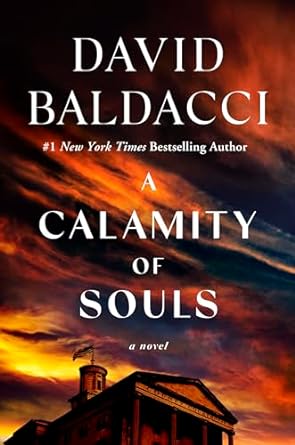
A Calamity of Souls, by David Baldacci

A Calamity of Souls,
by David Baldacci

I will start out by saying that I highly recommend this book. Stop reading right now and get on the waitlist for it at your local public library.

This is a book that Baldacci worked on for a decade. It was a story he was compelled to write. It is a novel about race relations in the United States in 1968. It is not set in the Deep South. That would have been too easy. Instead, Baldacci did the difficult thing. He set this novel in his home state of Virginia.

A well-known formerly affluent white couple are murdered in their home. When a black man who works for them is found by sheriff deputies in the house with their bodies, it appears to be an open and shut case.

Not so fast! There are twists and turns and family secrets in this story. The tension builds and builds until the killer’s identity is revealed.

This is a novel you won’t want to put down once you start reading it. If I didn’t have several hundred books on my To-Be-Read List, I would probably read it again just to study the clues and red herrings.


The Berlin Airlift: The Cold War Mission to Save a City, by John Tusa and Ann Tusa

The Berlin Airlift: The Cold War Mission to Save a City,
by John Tusa and Ann Tusa

This was one of the books I skimmed through as I did research about the Berlin Airlift so I could blog about its 76th anniversary last Monday. The book goes into detail about the airlift, in case you want to know more than I was able to condense into 1,000 words for my purposes. In case you missed last Monday’s blog, here’s the link:#OnThisDay: Berlin Airlift, 1948.


Stop Buying Bins & Other Blunt but Practical Advice from a Home Organizer, by Bonnie Borromeo Tomlinson

Stop Buying Bins & other blunt but practical advice from a home organizer,
by Bonnie Borromeo Tomlinson

As I age and am very much in fear of leaving a bunch of clutter for my heirs to have to deal with some day, I discovered this book. It struck a nerve with me and prompted me to pull out every article of clothing I own. Some garments went in the trash – where they should have gone long ago. I’m talking about 30-year-old tee shirts that had holes in them. Not a good look for me even when doing yardwork!  Nearly half the garments were donated to a thrift shop. I have lost about 16 pounds in the last year, so many of the things did not fit and I don’t want to grow back into them!

A major point in the book is that you must know why you are decluttering or downsizing, and you must have the right mindset. For several reasons, the time was right for me to do some major downsizing.

The book drives home the point that you don’t have to keep everything just because you kept it in the first place. It says you don’t have to keep things passed down to you just because they remind you of that person. Keep the memory, but don’t necessarily keep the item unless it brings you joy.

The book says if you don’t value something enough to display it, then get rid of it. Someone else might enjoy having it.

A local library had a craft swap last week. It was time for me to get rid of most of my cross-stitch supplies and books. I can’t see well enough now to do much small needlework.

Now that I have my clothes and craft items under better control than they have been in years, I’m ready to tackle my “stuff” in general, one room at a time.

There is a chapter about helping an aging parent downsize. There’s a chapter about parting with those adorable pictures your children colored. There’s a chapter about how to go about clearing out a house after a death, even if you live a long way from the house you’re having to clean out.

The book was well worth the $3.99 I spent for the Kindle version.


Until my next blog post

I wish my fellow-Americans a safe and happy Independence Day on Thursday!

I hope you are reading a good book.

Don’t forget the people of Ukraine.

Janet

Trying to Get Novel Structure Right

Several times in my blog posts in December I mentioned that I was working on novel structure. Thanks to the writings of K.M. Weiland online and in her books, the light bulb finally came on in my head. Everything fell into place and made sense. At least, I think everything fell into place.

As a reader of fiction, I just knew when I liked a story and when I didn’t. I never gave the structure of a novel any thought. I didn’t know a novel was supposed to hang on a framework. Call me slow, but I just didn’t.

Over the years, I’ve read about novel structure; however, I started writing a novel without giving structure any thought. I thought the words would just naturally flow in chronological order and, when I had written 100,000 or so of them, it would be a novel.

That’s an over-simplification, but it’s not too far off the point.

Photo credit: Alain Pham on unsplash.com

I read numerous articles that said a novel has to have a beginning, a middle, and an end. Well, duh! Of course. How hard can that be, right?

But there’s a lot more to novel structure than that – and I’m still learning.

I worked on the manuscript for the novel mentioned above for more years than I want to admit. (The working title is either The Spanish Coin or The Doubloon.) Then, I made some major changes in the story because what I thought was a fact turned out to be a legend. There was an ounce of truth in it, but I didn’t want to perpetuate a myth.

I didn’t write for about a year. I didn’t think I could face starting over, but that’s what I did early in 2019. New story, new characters, same old location, and same time period.

Yet again, I plunged into writing without any structure. I wrote a long and detailed outline and thought I had everything right. Some 90,000 words later, in December 2021 the concept of novel structure kept gnawing at me. It wouldn’t let me go until I put everything else aside and focused on it.

When I thought I had a fairly good grasp of novel structure, I set about to compare it to my manuscript. I was relieved to discover I had some things in the correct order and the correct place. There were some scenes, though that had to be moved. That was a scary proposition! Thank goodness for the “cut and paste” buttons on the computer. If this had happened to me in 1990, I probably would have just thrown the manuscript and my typewriter in the trash.

So, what are the basics of novel structure, as I understand them?

Photo credit: Ricardo Gomez Angel on unsplash.com

Remember – I’m still trying to grasp all the details and nuances. Don’t use me as your source. Please use K.M. Weiland’s books and online articles as your source if you plan to follow this structure to write a novel. Here’s the link to her website: https://www.kmweiland.com/book/structuring-your-novel/. Here’s the link to her series of online articles about novel structure: https://www.helpingwritersbecomeauthors.com/secrets-story-structure-complete-series/.

The following percentages are approximations, and the explanations are very brief and written to the best of my understanding.

Hook – Close enough to the beginning to “hook” the reader.

Inciting Event – Approximately 12% into the novel. Introduction to the main conflict.

Key Event – The protagonist’s response to the inciting event.

1St Plot Point – Approximately 25% into the novel. Ms. Weiland calls this the “Doorway of No Return.’ This is when the protagonist decides she’s all in. There’s no turning back.

1st Pinch Point – Approximately 37% into the novel. This is a small turning point. The protagonist is “pinched” by the force of the antagonist.

The Midpoint/2nd Plot Point – Approximately 50% into the novel. (No surprise there.) Internal and external conflict come together and the point of the story comes together. New information is revealed to the protagonist resulting in a paradigm shift. She has a clearer understanding of the threat against her.

2nd Pinch Point – Approximately 62% into the novel. The protagonist realizes like never before just what is at stake.

3rd Plot Point – Approximately 75% into the novel. Ms. Weiland says this includes the “dark night of the soul.” The protagonist must decide if she has it in her to keep fighting for her goal. She might make some progress toward reaching her goal, but then there will be a “low moment” where a lie she’s been telling herself all this time will die. She must face the facts.

Climax – Approximately 88% into the novel. This is where the protagonist confronts the antagonist and we find out if she achieves her goal.

Resolution – Loose ends from the story are tied up, unless the book ends with a cliffhanger to entice the reader to want to know more about this character.

It almost takes the fun out of writing a novel! Writing is hard work, but I’m happiest when I’m writing.

Where my novel stands now

As I mentioned in last week’s blog post, I’ve been inspired to write a novel series. After brainstorming the backstories of my protagonist in The Spanish Coin/The Doubloon, I realized her backstory would make a good novel.

Photo credit: Aaron Burden on unsplash.com

I don’t outline my writing projects in a rigid outline form like I was taught in school. I outline in paragraphs, throwing in bits and pieces of dialogue. The first draft of my outline for “Book One” now stands at nearly 4,000 words, and I’m eager to expand that into a scenic plot outline. (That outline is also in paragraph form, but gets into more detail than the first outline.) Next, comes the writing of Book One.

Book One takes my protagonist back to her childhood in Virginia, moving to Salisbury, North Carolina in 1766, and meeting her first husband. The Spanish Coin/The Doubloon will be the second book in the series. I have the bare bones of the third, fourth, and fifth books planned.

Call me overly optimistic, but that’s where things stand today. If my novel(s) never see the light of day, at least I’ve had the utter enjoyment of researching and writing them.

Since my last blog post, in addition to the above outlining

I’ve done a lot of decluttering since last Monday’s post. I’m getting to the age when I need to think about the fact that someday someone is going to have to dispose of my stuff. I need to make that task as easy for him/her/them as I can. I organized my stash of fabric and filled one large plastic storage bin with “unfinished sewing/quilting projects.”

I scanned some old photographs using the Photomyne app on my cell phone. I watched an hour-long webinar about organizing a large collection of photographs.

It seems like half the things I do these days are to decrease the amount of “stuff” my niece and nephew will have to deal with when I’m gone. I’m not trying to be morbid, but the closer I get to 70 the more I need to realize I’m not going to live forever. I’ve already lived longer than my father.

Until my next blog post

I hope you have a good book to read.

I hope to spend as much time writing as I do reading in the coming week. I hope you also have productive creative time.

Stay safe and well. Let me know what you’ve been doing.

Janet

The Hook in She Rides Shotgun, by Jordan Harper

Writing about a story’s hook, Karen Cogan stated in the closing paragraph of her post, “How to Set the Right Tone for Your Novel” on the Southern Writers: Suite T blog on December 19, 2018: 

“The point is that your reader should never be misled for the sake of an enticing beginning. Certainly, you want an interesting opening. All you must do is to think carefully about your genre for the hook that draws readers into your novel.” For instance, a romance novel should not begin with the gory details of a murder. (Here’s the link to that blog post:  https://southernwritersmagazine.blogspot.com/2018/12/how-to-set-right-tone-for-your-novel.html.)

If you’ve followed my blog for a few months, you know that I’m fascinated by the opening lines of novels. Although the “hook” can be more than just the opening line or paragraph, I can usually tell by the first sentence if I’m starting to read a book that I’ll finish.

Sometimes I’m fooled. Most of the time, I find that the opening sentence or paragraph is an invitation to a place or time I’ve never been – like a murder scene, the life of a person making a gut-wrenching decision, the colonial days in America, or perhaps the home front or battlefields of a great war.

As an aspiring novelist, I want to learn what makes a great hook and what doesn’t.

Today I’m highlighting the opening sentence in She Rides Shotgun, by Jordan Harper:

“His skin told his history in tattoos and knife scars.” ~ first sentence in She Rides Shotgun, by Jordan Harper

That hook describes Crazy Craig Hollington, president of the Aryan Steel prison gang. No surprise there. Chances are, this is not going to be a Sunday afternoon picnic kind of a story.

She Rides Shotgun, by Jordan Harper

This isn’t typical of my reading choices, but I was drawn to it when I read that it won the 2018 Edgar Award for Best First Novel. I wrote the following about the book in my June 4, 2018 blog post, “Reading in May 2018” (see https://janetswritingblog.com/2018/06/04/reading-in-may-2018.)

“After reading the opening description of a white supremacist gang in a prison in Chapter 0 (yes, Chapter 0), I wasn’t sure I could hang in there to keep reading. I continued to read, and I was soon invested in 11-year-old Polly.

“Polly is kidnapped at school by the father she barely knows and is suddenly thrown into a life of crime. The book takes the reader along for a rollercoaster ride as Polly quickly becomes streetwise in order to survive.”

I think, “His skin told his history in tattoos and knife scars” was a good indication for what was to come in She Rides Shotgun.

Since my last blog post

I’ve been racing against the clock to try to read or listen to umpteen books before they have to return to the library or disappear from my Kindle. Too many books, too little time. Look for my blog posts on March 4 and 11, 2019 to see what I read this month.

Update on Decluttering

In case anyone out there is interested, I’m continuing to do battle with clutter. I’ve been inspired this year by Mliae’s blog:  https://lifexperimentblog.com/2019/02/22/february-declutter-update/. She was kind enough to list my blog in her February 22, 2019 blog post, which prompted me to offer an update on my decluttering progress today.

Sometimes mail piles up. Opened, unopened, it doesn’t make a difference. I know the rule of thumb is to only touch a piece of paper once. Some days go well. I open the mail and immediately put it in the paper shredder, a file folder, or the recycle bin. Other days… not so much.

This month I’ve put 22 catalogs in the recycling bin. My goal is to get off as many catalog mailing lists as possible.

I’ve set aside 28 books to donate to the April 6 used book sale at my church. Granted, those 28 books are still piled on the hearth, but at least I know they’re getting new homes in April.

Until my next blog post

I hope you have a good book to read. I just finished listening to George Washington’s Secret Six:  The Spy Ring That Saved the American Revolution, by Brian Kilmeade and Don Yaeger. I’m trying to finish reading In the Woods, by Tana French before it disappears from my Kindle on Thursday.

If you’re a writer, I hope you have quality writing time and that you’re good at writing hooks.

Thank you for reading my blog. You could have spent the last few minutes doing something else, but you chose to read my blog.

Don’t forget to look for my #TwoForTuesday blog post tomorrow when I’ll reveal two books that help me sleep at night. That’s the assignment, anyway. I’m still working on it. (Writing prompt provided by “Rae’s Reads and Reviews” blog post on January 8, 2019 (https://educatednegra.blog/2019/01/08/two-for-tuesday-prompts/comment-page-1/#comment-1646)

Let’s start a conversation

How much time or how many pages do you give a book before you give up on it and move to another book?

Janet

I took Mliae’s January challenge

I have discarded, recycled, or set aside to donate more items this month than I can count. All as a result of Mliae’s blog post on December 31, 2018:  https://lifexperimentblog.com/2018/12/31/happy-new-year-2019/.

Mliae challenged her blog readers to get rid of one item every day in January. I missed many days, but made up for it on others. It feels good to get rid of some clutter. Thank you, Mliae!

I finally got around to shredding my income tax records and bank statements from the year 1999 through 2010. That’s not a typo. 1999.

Think back to 1999, if you can. In those days, the bank sent you a statement every month along with all your cancelled checks. The bank and I have come a long way since 1999:  from cancelled checks to online bill pay.

In some ways, I’m organized. I keep each year’s income tax instructions and paperwork together with a rubber band. In theory, this would make it easy to discard (shred) the oldest year’s paperwork when adding the newest year’s records; however, I never put my plan into practice.

Hence, I hadn’t gotten rid of any of those records in 20 years even though we’re required to only keep our income tax records for seven years. It was time to tackle that box of income tax records! I started that project on Friday afternoon and finished it Saturday night. I thought our poor wee paper shredder was going to blow up!

I am reminded of a line I like from At Home on the Kazakh Steppe:  A Peace Corps Memoir, by Janet Givens:

“… if nothing else, a useful reminder early on that the more I can let go of the old, the more room there is for the new.”

In writing that, Ms. Givens was not referring to getting rid of physical items in order to make room for new things. She was writing about a revelation she had in the early days as a Peace Corps volunteer in Kazakhstan.

Ms. Givens realized that she needed to let go of preconceived ideas and the way she had done things back home in the United States so she could learn the culture of the Kazakh people.

The above quote from Ms. Givens’ memoir struck a chord with me. As I let go of some physical items this month, I made a conscious effort to let go of preconceived ideas.

I want to learn something each day. I want to be open to new ways and new ideas. As my 66th birthday approaches, I don’t want to be “a stick in the mud” or “stuck in a rut.”

Since my last blog post

My vertigo is improving. The things the physical therapist has me doing are definitely making a difference.

Until my next blog post

I look forward to seeing if Mliae will issue a February challenge. Nevertheless, I plan to continue to tackle the clutter that has accumulated.

I hope you have a good book to read. I just finished reading Now You See Me, by Sharon Bolton.

If you’re a writer, I hope writing brings you joy. I hope you have quality writing time this week.

Thank you for reading my blog. You could have spent the last few minutes doing something else, but you chose to read my blog. I appreciate it! I welcome your comments.

Let’s continue the conversation.

Are you a keeper of things? I think I got it honestly from both parents. They were in college when The Great Depression hit in 1929. Their young adult years were lean and full of struggle. “Waste not, want not,” must have been what they lived by. I never heard either of them say those words, but they raised their children not to waste anything.

By my parents’ example, I learned at an early age not to throw away anything that I could possibly need or find a use for later. Hence, the stack of printer paper that has only been used on one side. The other side can be used for all kinds of things – like writing the plot outline for a novel.

Hence, the used letter envelopes on which grocery lists can be written on the back while the inside conveniently holds discount coupons. And those twist-ties that come on the bag in which sliced bread is purchased? Yes, I’m guilty. There is a place set aside for them in one of the kitchen drawers.

What about you? Are you a keeper or a minimalist?

Janet

Good Teeth

I used to bite my fingernails, much to my mother’s regret. She went through this with all three of her children so, by the time I came along, she knew none of the famous recommendations for helping a child stop this habit worked.

My brother was the eldest child. When she tried painting his fingernails with hot polish that was invented to burn a nail biter’s tongue, she said her would stop biting his nails just long enough to say, “Hot!” before going right back at it.

Fortunately, I stopped biting my nails. I don’t recall when or why, but I’m glad I stopped. That is why a line from Prayers the Devil Answers, by Sharyn McCrumb caught my eye. To say Ms. McCrumb has a way with words would be a gross understatement.

In Prayers the Devil Answers, Lonnie Varden is in jail in Knoxville, Tennessee. He pushed his wife, Celia, off Hawk’s Wing – a rock that jutted out of a mountain. His cell mate, Ulysses, gives the following observation about the young Lonnie Varden:

“His nails were bitten down to the quick, which told the old man that this kid had two things he didn’t: more trouble than he was accustomed to and good teeth.” ~ from Prayers the Devil Answers, by Sharyn McCrumb

prayers-the-devil-answers-9781476772813_lg
Prayers the Devil Answers, A novel by Sharyn McCrumb

As I read the book, I jotted down a number of sentences and paragraphs I liked. I have used two of them in my April 19, 2017 blog post,  P is for a Paragraph I Liked and my June 13, 2017 blog post, “Not a rope . . . if drowning”.

I want to be a writer who comes up with expressions and turns of a phrase like Sharyn McCrumb. It will take practice. Practice. Practice.

Since my last blog post

I had something to happen in the health category that led me to do some soul searching. It had a good outcome, and served as a bit of a wake-up call. I’ve reevaluated some things and how I spend my time. Life is short.

I’ve been reading and decluttering. I tend to keep things. My parents were young adults during The Great Depression, so it was ingrained in me from birth that you didn’t throw something away that you thought you might be able to use later. (Examples include rubber bands, scraps of paper, paper bags, scraps of yarn, string, bits of thread, and anything that looks like something that might eventually be useful.)

Hence, things that come into my house tend to never leave. Last week I recycled old magazines, cardboard boxes and loose papers. I shredded papers bearing personal information. (After all, someone stole our garbage once. You just never know!)

I sorted fabric I’ll never sew and clothes I’ll never be small enough to wear again and took them to Goodwill. I can see the improvement, but someone who’s never been in my house before would probably think I still have a problem. They’d be right. I am a work in progress. More decluttering is on my agenda for this week.

My new approach to “things” is to ask myself, “Do I want my nieces and nephew to have to deal with this someday, or should I go ahead and get rid of it?”

Until my next blog post

I hope you have a good book to read. I’m reading The Hellfire Club, by Jake Tapper.

If you’re a writer, I hope you have quality writing time.

Thank you for reading my blog. You could have spent the last few minutes doing something else, but you chose to read my blog. I appreciate it! Tell your friends.

Janet