#OnThisDay: Berlin Airlift, 1948

When I read that today was the 76th anniversary of the Berlin Airlift, I must admit my mind was a little short on details. One of the perks of writing this blog is that I get to study events in history and then share what I have learned.

Three of my last four blog posts have been light-hearted as I regaled you with details of my recent trip to the Outer Banks of North Carolina. It was a fun trip and I enjoyed sharing my memories and photographs with you; however, it is time for me to return to real life with my blog and other aspects of my life.

I learned a lot about the Berlin Airlift so I could blog about it today. If you, like me, were born after 1948, you maybe never studied mid-20th century history when you were in school.

Background

At the Potsdam Conference at the end of World War II, it was agreed that Germany would be divided into four parts for the country’s transition into a post-war economy and government. The United States, Great Britain, France, and the Soviet Union were designated to occupy the four sectors. The city of Berlin, which sits in the center of Germany, was also divided into four sectors with the same plan for occupation.

The Russian sector covered the eastern half of Berlin and the other three countries split up the western half.

Under the plan, it was the responsibility of the Allied countries to support the German people in their designated sectors with food, medical supplies, and fuel until Germany could recover from its defeat in the war.

Berlin was in the middle of the Soviet-controlled sector of the country. In hindsight it is easy for me to see that this situation had trouble written all over it, but I must be reminded that the Soviet Union, France, Great Britain, and the United States were allies in World War II. That is difficult to get my mind around, since I grew up during the so-called “Cold War” of the 1950s and 1960s.

The straw that broke the camel’s back

The United States, Great Britain, and France introduced a new currency – the Deutschmark – in an effort to revive the German economy. The Soviet Union balked at the proposal because it wanted to continue to bring Germany to its knees.

In response to the monetary proposal made by the Western Allies, the Soviet Union imposed a blockade of Berlin on June 24, 1948 after giving the Western Allies just 24 hours’ notice.

It was on that day, 76 years ago today, that the roads and waterways into Berlin were closed to American, British, and French access.

The Soviets wanted to starve West Berliners and through the very threat of starvation wanted to force West Berliners into coming across to the Soviet side.

Photo by Marisol Benitez on Unsplash.

The blockade meant that the Western Allies could no longer bring supplies in via roads or the rivers. For a while, East and West Berliners could freely move from one sector to another. Many of them needed to travel into the opposing sector for jobs.

But in October 1948 new regulations prohibited free movement. Seventy-one roadblocks were set up and everyone wishing to cross into or out of the Soviet-occupied sector was searched.

The solution

The solution to the Soviet-imposed blockade was the Berlin Airlift. The Germans called it Luftbrücke which translates into English as “airbridge.”

I have found conflicting statistics about the Berlin Airlift, which lasted until the blockade was lifted on May 12, 1949. Allied planes were constantly landing around-the-clock at airfields in Berlin. One source said it was every three minutes, and another source said at its busiest a plane was landing every 45 seconds.

Photo by Christina Sicoli on Unsplash

It was described as a constant noise, but it was a noise that reminded Berliners that they had not been abandoned by the United States, Great Britain, or France when the Soviet Union left them out to dry. They were not at the mercy of the Soviet Union.

It is said that the airlift brought more than food, medical supplies, and fuel into Berlin. Perhaps most importantly, it brought Berliners hope. The Berliners did not just sit idly by waiting for help. More than 10,000 of them worked at the airfields in various support positions to keep the airlift running as smoothly as possible.

The North Atlantic Treaty Organization (NATO) was created on April 4, 1949, which sent a strong message to the Soviet Union and, no doubt, prompted an end to the blockade five weeks later.

After the Berlin Airlift

West Germany was established as a democratic state two weeks after the end of the Berlin Airlift. Soon thereafter, East Germany was created.

For those of you too young to remember and who have not studied post-World War II world history, West Germany continued to exist as a free country and East Germany existed as a communist country until the reunification of Germany on October 3, 1990.

East Germany had to put a stop to East Germans fleeing to West Berlin. The Berlin Wall went up literally overnight on August 12, 1961 and encircled West Berlin until 1989. Overnight tens of thousands of West Berliners lost their jobs in East Berlin because the wall could not be crossed.
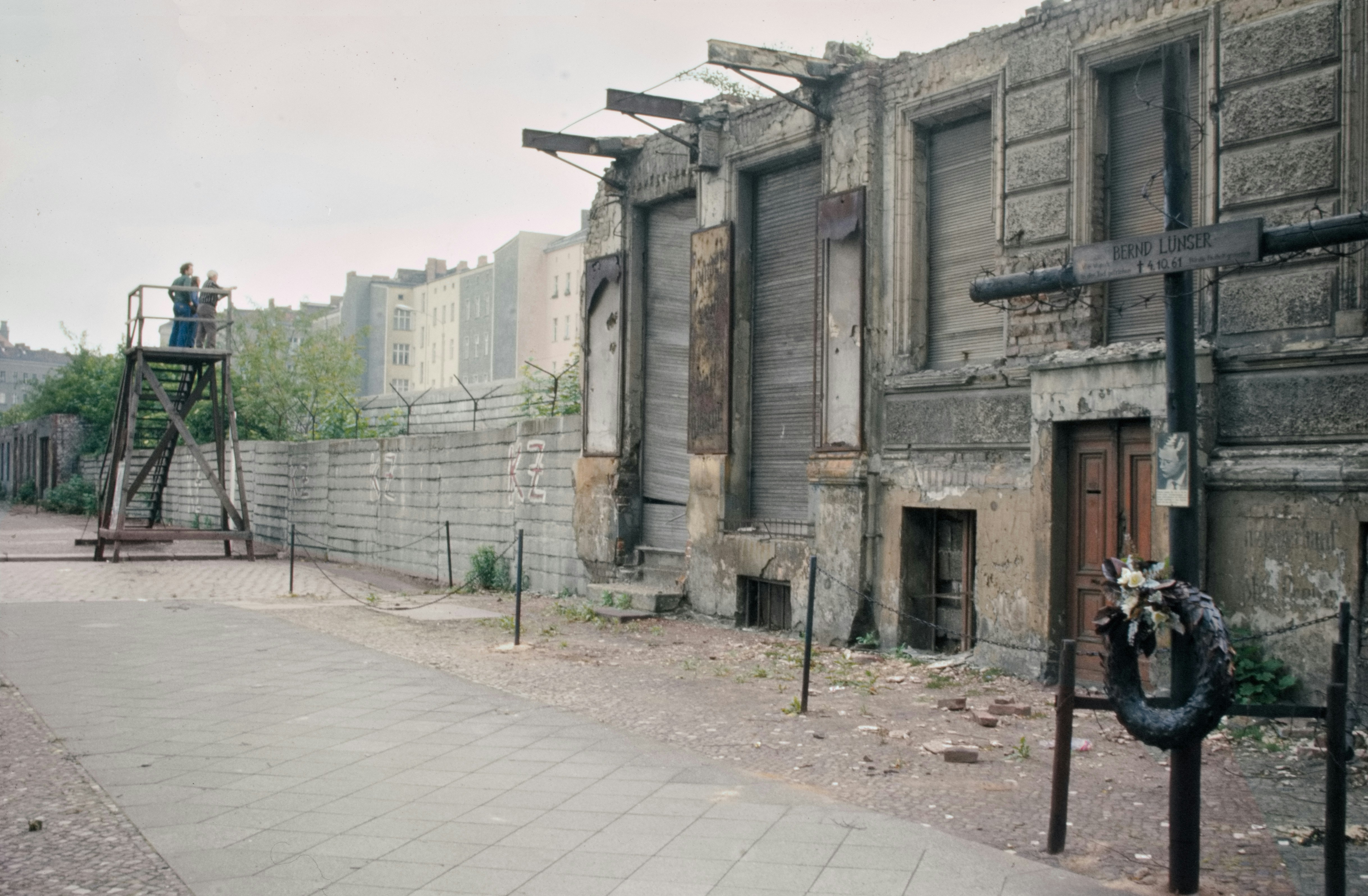
A small section of the Berlin Wall. Photo by Immo Wegmann on Unsplash.

The Berlin Wall was a series of concentric barriers – a concrete wall with guard towers, anti-vehicle trenches, beds of nails and barbed wire. It was rare for anyone to successfully cross the wall. At least 171 people were killed trying to escape East Berlin.

The Berlin Wall. Photo by Tomas Val on Unsplash.

The tearing down of the Berlin Wall

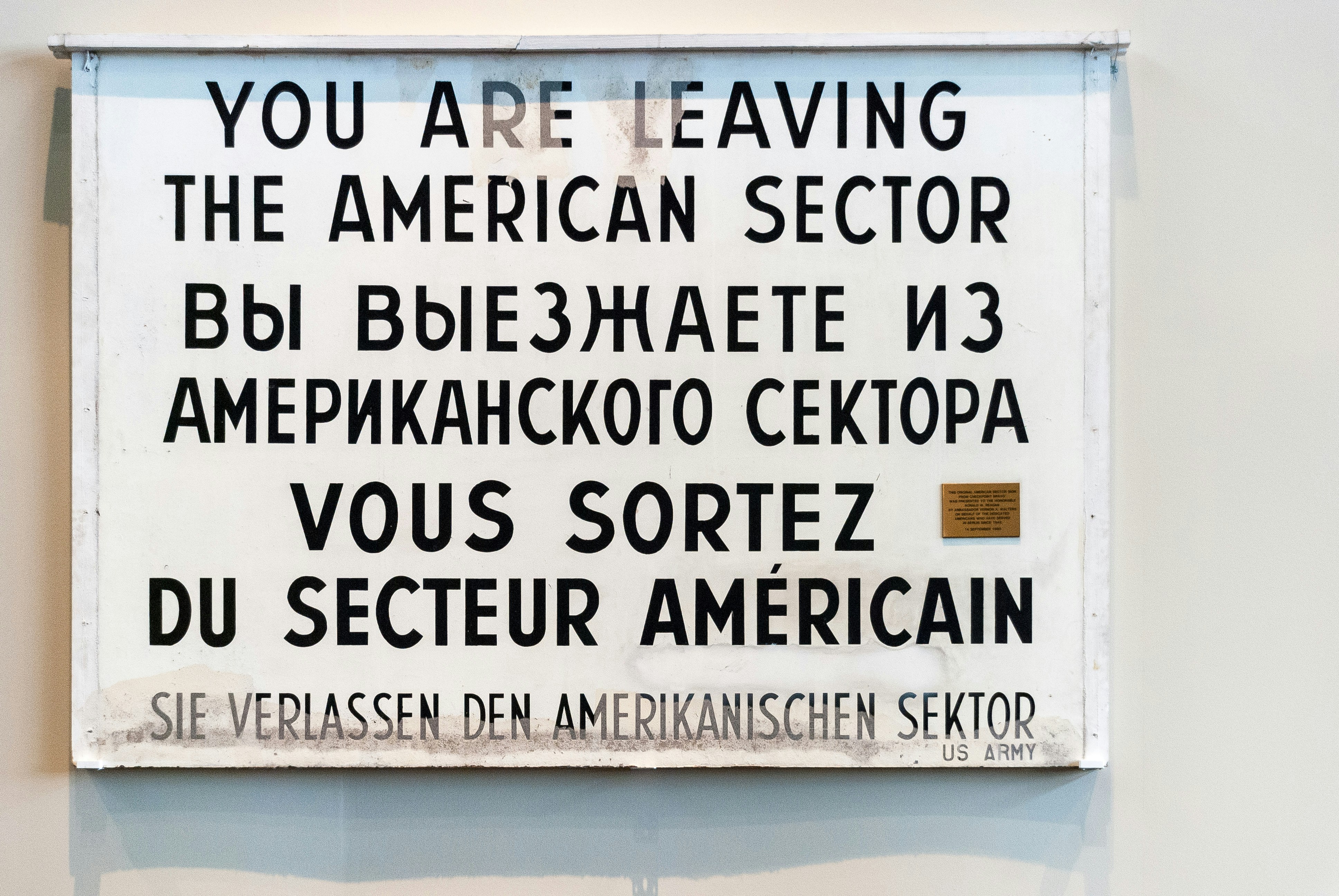
Sign at “Checkpoint Charlie” in Berlin. Photo by Etienne Girardet on Unsplash.

On November 9, 1989 the East German Community Party announced new policies regarding border crossings and the gates were opened.

People took picks and hammers and started tearing down the concrete wall. Bulldozers pushed down sections of the wall until it was gone.

After 44 years, Berlin once again became one city. And Germany was finally once again one sovereign country.

In conclusion

This is a condensed version of what happened and all sources do not agree on every date. If you wish to do your own research, there are many books that offer the details and idiosyncrasies of the airlift. Check the public library and the internet for a list of reputable sources.

Until my next blog post

Thank you for taking the time to read my blog today.

My next blog post will be on July 1. June just flew by!

I hope you have a good book to read – one that you don’t want to put down!

Value the time you have with friends and family.

Remember the people of Ukraine.

Janet

More March 2018 Reading

March brought a return of cooler weather than we had in February in North Carolina. It also brought a stack of good books. I blogged about some of them last Monday (Some March Reading), and today I’m blogging about the rest of those that I read last month.

Four Short Stories:  In Need of Assistance, Saving the Unicorn, Faerie Blues, and Trophy Hunting, by Chris Andrews

51dWqbCdhOL._AC_US218_
Four Short Stories: In Need of Assistance, Saving the Unicorn, Faerie Blues, and Trophy Hunting — by Chris Andrews

Science fiction and fantasy are not my reading genres of choice, but Chris Andrews and I connected with each other in the blogosphere as two struggling writers. (Actually, I’m struggling. I’m not so sure about Chris.) We live in different hemispheres but I have learned a great deal from him about writing. He recently published an e-book of four short stories and I was eager to read them.

“In Need of Assistance” leads off the short story collection. Well written and suspenseful, this person (me) who never reads sci-fi got pulled into the story and thought it ended too soon. In other words, I wanted to know what happened next.

The second story in this e-book is “Saving the Unicorn.” It is about a magician who travels 4,000 years back in time to free the last unicorn…. or is it?

“Faerie Blues” is the third story in Chris’ book. The identity of the faerie is a surprise.

The fourth and last story in the book is “Trophy Hunting.” This story is survival of the fittest with a twist.

Following the four short stories are the first seven chapters of Chris’ novel, Divine Prey, which is due for release in May 2018.

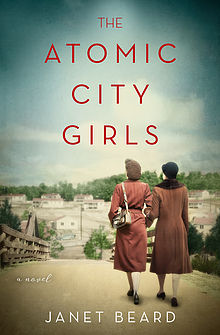
The Atomic City Girls, by Janet Beard

eab4a7_c9917d9d0c7541d78ad2e521dec6aa5d~mv2_d_1783_2700_s_2
The Atomic City Girls, by Janet Beard

This historical novel was inspired by the creation of Oak Ridge, Tennessee during World War II and the top-secret work carried on there in the development of the atomic bomb.

Ms. Beard invented characters from all walks of like and guides the reader to like most of them and identify with them as much as is possible for we who live in a different time. I liked that she included the black people as well as the white people who lived and worked at Oak Ridge because, as much as they had in common, their housing and treatment by the US Army was quite different. It was in the racially segregated South and the book stands as witness to the prejudice and unequal treatment that existed legally at that time.

The author included not only Christians but an atheist and a Jewish physicist. This book’s cast of characters runs the gamut from redneck bigot to the Jewish scientist whose family had surely died in Germany during the War. True to the history of the facility at Oak Ridge, some characters are poorly educated while others are highly educated, but the emphasis is on the everyday people who worked there and did not know what they were working on.

Ms. Beard follows each character and through them she allows the reader to experience World War II on the home front in the USA and through the stress and struggles of the people who worked in complete secrecy at Oak Ridge. She brings to life the inevitable inner conflicts experienced by some of the scientists who worked there and at Los Alamos, New Mexico as they were simultaneously excited by the physics of the atomic bomb and yet horrified by the realities of what the unleashing of such a weapon would mean and the suffering it would cause for thousands of innocent people.

I never had really thought about how conflicted some of those scientists must have felt. I’d also never given much thought to how many thousands of people worked at Oak Ridge and the majority not knowing they were working on developing an atomic bomb until the day the first one was dropped on Hiroshima.

Need to Know, by Karen Cleveland

9781524797027
Need to Know, by Karen Cleveland

This is a debut novel by Karen Cleveland. It has received rave reviews from highly-respected authors, so I was eager to read this espionage thriller. After having read it, all I can say is, “Wow!”

Written by a former CIA analyst, this novel has a female CIA analyst working in a division studying Russia and looking for Russian sleeper cells in the USA. I don’t want to spoil the story for you, so I’ll just say her marriage and work ethic are tested to the limit.

This novel will make you wonder who you can trust. It is the story of betrayal on many levels, and it will keep you turning pages and wishing you didn’t have to stop to eat, sleep, or work. If you like to read espionage thrillers, you will love this book.

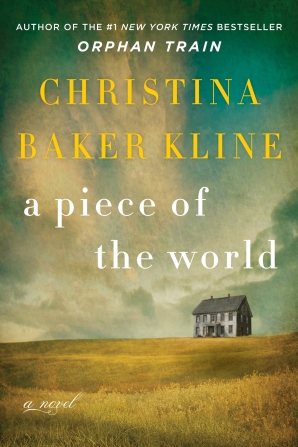
A Piece of the World, by Kristina Baker Kline

167463
A Piece of the World, by Christina Baker Kline

We’re all familiar with Andrew Wyeth’s most famous painting, “Kristina’s World.” This historical novel is based on the imaginary life of the woman lying in a semi-prone position in the grass on the hillside below the house in that painting.

The author, who also wrote The Orphan Train, did a beautiful job developing the characters in A Piece of the World. They were so believable, the reader will forget the book is fiction. The woman in the painting, Kristina, becomes increasingly disabled due to an unknown condition affecting her legs. She lives in the grey clapboard house on the hill as depicted in the painting. Unable and unwilling to empathize with their daughter, Kristina’s parents do little to try to get her help.

Drawn to the feel and essence of the old house, Andrew, the son of artist N.C. Wyeth comes and asks if he can paint. He sketches and paints Kristina’s brother, but the brother has little patience for posing so Kristina becomes his most consistent model. He continues his work for years.

Kristina falls in love, but is it with Andrew? I’ll leave that for you to discover if you choose to read the book.

Another Ocean to Cross, by Ann Griffin

Another Ocean to Cross by Ann Griffin
Another Ocean to Cross, by Ann Griffin

After reading Ann Griffin’s guest blog post on Writers in the Storm about how to or how not to use family history in your fiction (http://writersinthestormblog.com/2017/12/writing-fiction-using-family-history/), I pre-ordered her debut historical novel, Another Ocean to Cross. I followed her blog and she, subsequently, followed mine.

In Another Ocean to Cross, Ann Griffin weaves a compelling story about 18-year-old Renata Lowenthal, a Jewish woman desperate to escape Germany in 1938 as Hitler makes life ever-more tenuous for the Jewish population. Renata is an artist and her gentile boyfriend is in the military. He has to leave Munich, but he is smuggling Renata’s renderings of the Third Reich’s mistreatment of Jews to journalists in Switzerland.

No matter what the world throws at Renata, she meets the challenge.

The descriptions in this book are vivid and draw on all the senses. Being about the Jews who escaped to Egypt, this book enlightened me about an aspect of World War II that I hadn’t known much about.

Renata struggles to convince her parents that it is imperative that they get out of Germany and try to get to Palestine before it’s too late to escape. The tale Ms. Griffin spins will keep you turning the pages of this book and staying up at night to read just one more chapter. I will not give more details because you will want to read this novel and I don’t want to take away any suspense for you. It will take you and Renata to some surprising locations.

Reading Like a Writer:  A Guide for People Who Love Books and for Those Who Want to Write Them, by Francine Prose

In case your eyes have glazed over, I’ll save my comments about this book until next Monday’s blog post.

Since my last blog post

I have continued to read about writing and study areas I need help with. I have worked on my outline for The Spanish Coin, the working title for what I hope will be my first novel.

One of my readers reported difficulty in getting my comments section below to work. If you have trouble with it, too, please send me a message through the contact form/newsletter sign-up sheet below. I’m sorry for any inconvenience.

My blog steadily attracts more readers and followers, which is gratifying. One new reader and follower, Neil, also signed up for my sometime-in-the-future newsletters. Thank you, Neil.

Until my next blog post

I hope you have a good book to read. I’m reading The Last Child, by John Hart, so I’ll be ready to read The Hush in a few weeks.

If you’re a writer, I hope you have productive writing time

If you haven’t signed up for my sometime-in-the-future newsletters, please do so by completing the form below.

Janet

← Back

Thank you for your response. ✨

Late July Reading

Another month has whizzed by and left me getting ever more behind in reading all the books I want to read, but July was another rewarding month of reading for me. I hope you’ll enjoy reading “my take” on the three books I read the last couple of weeks of July. On July 17 (Reading South Africa and South Carolina Novels) I blogged about the two books I read earlier in the month.

The Orphan’s Tale, by Pam Jenoff

I kept reading about The Orphan’s Tale, by Pam Jenoff and decided I wanted to read it. It was the first book I’d read by Ms. Jenoff, who has a fascinating background in government work. I look forward to reading her other books.

OTLarge
         The Orphan’s Tale,           by Pam Jenoff

The Orphan’s Tale revolves around a toddler who is rescued from the Nazis by a young woman who is no longer welcome in her parents’ home. She ends up being taken in by a circus and assigned to the trapeze, although she knows nothing about being an aerialist.

The woman assigned to train her resents her. Throughout this book of numerous twists and turns, the two women resent each other, support each other, and risk their lives for each other. It is a tale of humanity, forgiveness, trust, friendship, love, and loss set in Germany and France during World War II.

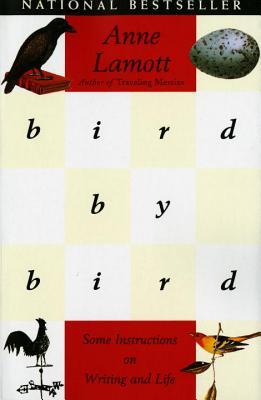
Bird-by-Bird:  Some Instructions on Writing and Life, by Anne Lamott

12543
Bird-by-Bird: Some Instructions on Writing and Life, by Anne Lamott

As someone learning the art and craft of writing, I enjoyed Bird-by-Bird, by Anne Lamott. In the book’s introduction she writes about learning to love books as a child. The following quote comes from the introduction:

“The act of writing turns out to be its own reward.” ~ Anne Lamott

I set out to write about the many things I liked about this book and the beautiful way Ms. Lamott writes about the many things a novelist needs to pay attention to in the writing process. It soon became obvious that today’s blog post would be longer than anyone wanted to read if I did that. Therefore, I will write about Bird-by-Bird in my August 14, 2017 blog post.

The Midnight Cool, by Lydia Peelle

I read this book because it was set in Tennessee during World War I. I haven’t read many novels set in that era and I wanted to learn more about it. I’m participating in the Read America Book Challenge from the Mint Hill Branch of the Public Library of Charlotte and Mecklenburg County. The object of that challenge is to read novels set in as many different US states as possible in 2017. Thirteen down and 37 to go. Seven months down and five to go. Hmmm. Not good.

static1.squarespace.com
      The Midnight Cool,         by Lydia Peelle

I was conflicted as I finished reading The Midnight Cool. Lydia Peelle has a way with words, but I found the book hard to follow since the dialogue was not enclosed within quotation marks. It was tedious to have to go back a couple of paragraphs at times in order to discern who was speaking.

I was interested in the subject matter, but the middle of the book did not hold my attention. I enjoyed the last 50 or so pages of the book, so I’m glad I didn’t give up on it. For all the hype of the book to be about mules for World War I and a killer horse, I found it to be more about the two men who traded in mules and the women they loved.

The book gave me some things to think about that I really hadn’t considered before, such as the massive number of mules the United States transported across the Atlantic in ships to pull artillery and do other hard labor in the Allies’ war effort in Europe.

I learned that horses have to be trained, but mules more readily reason things out. (Don’t hate me, horse lovers!) According to the book, the only thing the mules had to be trained in was being fitted with gas masks. Gas masks for mules was another thing that had never crossed my mind. This goes to show that you can learn things from reading well-researched historical novels.

The website, http://www.mountvernon.org/george-washington/farming/animals/father-of-the-american-mule/, confirms that George Washington was the “Father of the American Mule.” The site explains that there were advantages that mules had over horses in the Allies’ efforts in World War I in addition to their not needing much training. Mules eat one-third less than horses, they don’t need to drink as much water as horses, and mules are more surefooted than horses.

If Lydia Peelle writes another novel, I will check it out because she has a gift for turning a phrase and I believe she does her research.

Until my next blog post

I hope you have a good book to read. I’m reading Killers of the Flower Moon:  The Osage Murders and the Birth of the FBI by David Grann.

If you’re a writer, I hope you have productive writing time. I also recommend that you read Bird-by-Bird: Some Instructions on Writing and Life, by Anne Lamott.

Janet