How publishing a cookbook helped me as a writer

Since my main interests in writing are historical fiction and history, it would seem that publishing a cookbook has nothing to do with either one of those or my pursuit of a career as a writer. I beg to differ.

If one wants practice in proofreading, I recommend they proofread a cookbook. At least two typos got past my sister and me in the proofreading stages. Proofreading a cookbook is a humbling experience. It should serve me well in my next short stories and books.

The Aunts (A U N T S) in the Kitchen: Southern Family Recipes, by Janet and Marie Morrison
The Aunts in the Kitchen: Southern Family Recipes, by Janet Morrison and Marie Morrison

Proofreading a cookbook is part paying extreme detail to numbers and part writing directions in a concise yet thorough way. It means trying to put yourself in the shoes of someone making the recipe for the first time – or even a novice cook or baker.

Are the instructions not only correct in sequence of method but also clear enough to give the cook the best chance to follow the directions with ease instead of confusion and frustration? Are the recipes presented in a way to give the cook the best chance to be pleased with the final product?

Proofreading is tedious work and it is always a good idea to have a second set of eyes. In fact, if my sister and I had not worked together proofreading the 289 recipes in our cookbook, half the errors we found probably would have slipped past us.

A few words about the software I use

Is there a book in you that is begging to come out? Do you think self-publishing is not within your reach? That is where I was two years ago. I never expected to be able to format a book in a form acceptable for Amazon or any other self-publication platform.

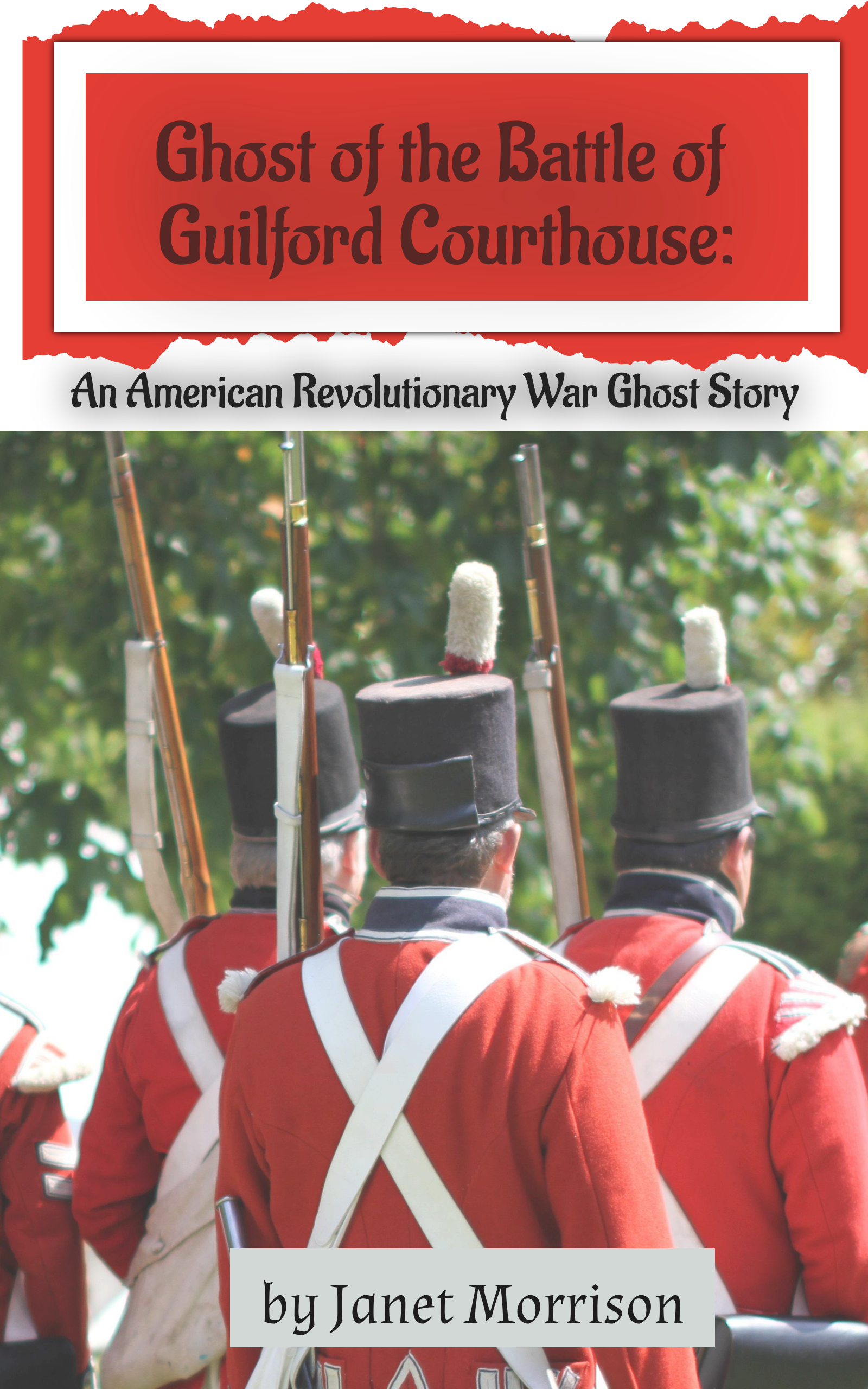
The Atticus.io app has enabled me to publish two local history books (Harrisburg, Did You Know? Cabarrus History, Books 1 and 2); two short stories (“Slip Sliding Away” and “Ghost of the Battle of Guilford Courthouse: An American Revolutionary War Ghost Story”); and a cookbook (The Aunts in the Kitchen: Southern Family Recipes) since last November!

BookBrush.com has made it possible for me to design the book covers for each of those books. I am not computer savvy, in the big scheme of things; however, I have been able to accomplish all this self-publishing in a little less than one year.

In addition, I have created memes for Facebook and bookmarks related to my books on BookBrush.com. That is just a fraction of what one can do through BookBrush.com tools.

Disclaimer: I am receiving no compensation in any form whatsoever for mentioning Atticus.io or BookBrush.com. I just want other writers who are considering going the self-publishing route to know about these tools I have used. What they have made possible for me has been life-changing.

The formatting and book design tools are not without challenges. There are learning curves with both but, if I can do it, anyone can do it.

The Atticus.io support team is extraordinary. Hands down, they are the best tech support group of people I have ever worked with. They have job security as long as I am self-publishing books!

Both BookBrush.com and Atticus.io have free workshops to help you understand how to use their various features.

Self-publishing is an education, and I have found it to be a beneficial introduction into the publishing world. It remains to be seen if any of my current projects (historical short stories, a devotional book, and historical novels) will be self- or traditionally-published.

Regardless of which path my current and future writing projects take, my self-publishing experience will serve me well. That definitely includes proofreading!

The rewards

So far, I have learned that by the time I paid for:

  • website redesign;
  • maintaining a website and blog;
  • the right to use Atticus.io and BookBrush.com;
  • printing bookmarks designed on BookBrush.com
  • printing and shipping costs for author copies;
  • books about the craft of writing;
  • online writing courses;
  • etc…

it can be difficult to break even financially.

I consider the two short stories I have self-published to be ways to get my name out there as an historical fiction writer. It all falls under the adage: “To make money, you have to spend money.” I offer one of my short stories as a gift to everyone who subscribes to my e-newsletter.

It is not easy to get established as a writer. It has been a winding road and at times a daunting endeavor; however, my reward already is to see my name as the author on the spine of several books.

If I accomplish nothing else, I am happy that someday my heirs will know that I had a dream to write and I persevered to realize that dream.

Since my last blog post

Some weeks I can’t remember what I’ve done since my last blog post. It isn’t until I look back over my to-do list and find items checked off as completed that I realize I am making steady progress in my writing.

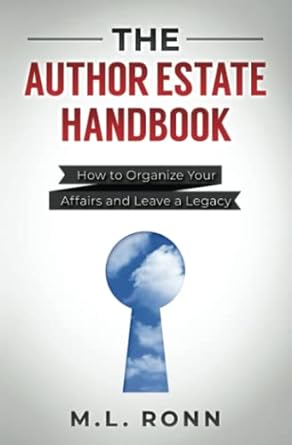
I did research for a short story I’m writing; typed notes from The Author Estate Handbook, by M.L. Ronn and added to the list of the things I need to take care of before I update my will; researched Fort Dobbs State Historic Site near Statesville, NC, Shallow Ford on the Yadkin River, and Bethabara State Historic Site for the novel I am writing; and planned a trip to visit several sites pertinent to that novel.

I watched a BookBrush.com free presentation on Zoom about book marketing on Pinterest. It was a real eye-opener. Good news/bad news: Now I have a thousand new tasks to add to my to-do list.

Until my next blog post

If you want to write a book, do it!

I hope you have at least one good book to read this week. I have more than I can find time to read!

Make time for your friends and family.

Don’t forget to visit https://www.janetmorrisonbooks.com and subscribe to my e-newsletter.

Remember the innocent people of Ukraine and the Middle East. It is the innocent citizens who are so often caught in the middle and pay the ultimate price for the actions of dictators and terrorists.

Janet

As a Reader of Historical Novels, Do You Read the Author’s Notes Before or After you Read the Book?

Do you like having Author’s Notes at the end of an historical novel so you’ll know what was true, what was fiction, and what actually happened but was adjusted time-wise or by location to fit the flow of the story?

The Author’s Notes are almost always found at the back of an historical novel. I used to wait and read the Author’s Notes after I had finished reading an historical novel, but now I always read those notes first. The notes not only give insight about the story, but also make clear which parts of the book are based on fact and which parts are fictional.

Do you read the Author’s Notes before or after you read an historical novel?

An example from my ghost story

I thought it only fitting to include Author’s Notes at the end of my short story: Ghost of the Battle of Guilford Courthouse: An American Revolutionary War Ghost Story. In case you haven’t purchased the short story yet, here is my Author’s Note from the ghost story:

“I’ve never believed in ghosts, but this story is based on the events my sister and her housemate experienced in their condominium in Greensboro, North Carolina in the 1980s. The upstairs commode would flush when no one was upstairs. Cans occasionally fell off the pantry shelf. A house guest was frightened by the sensation that someone had walked into her bedroom and stood at the foot of the bed. In fact, she thought this person had called her by name – Mary. She had no knowledge of the unexplained incidents the residents had experienced.

“Peter Francisco was an actual American soldier in the Battle of Guilford Courthouse. At six-feet-six-inches tall and 260 pounds, he was much larger than the average American man during that era. He was credited with being ruthless with his broadsword. There is a visitors’ center on the grounds of the Battle of Guilford Courthouse; however, the rest of the story is fiction.”

After reading my Author’s Note, are you more interested or less interested in reading my ghost story?

Since my last blog post

I’ve edited three of the historical short stories I drafted a few months ago. I took inventory of my historical short stories. I want to write five more from scratch before I publish the collection. Something to look forward to in 2024!

I’ve done more research about the colonial settlement of Bethabara, North Carolina and read more resources about Shallowford on the Yadkin River. This is needed research for my first historical novel. Something else to look forward to!

Until my next blog post

If you haven’t subscribed to my newsletter through my website, https://www.janetmorrisonbooks.com, please do so before you miss any more newsletters. The next one will go out around November 1. For subscribing, you’ll receive a free downloadable copy of “Slip Sliding Away: A Southern Historical Short Story,” so you can get a feel for my historical fiction writing. I have a “field trip” planned before October is over, but you’ll have to subscribe to my newsletter to hear about it.

Have you ordered my American Revolution e-ghost story?  “Ghost of the Battle of Guilford Courthouse: An American Revolutionary War Ghost Story” is available from Amazon, along with my other books: https://www.amazon.com/dp/B0CH7JCP11/. October is the perfect time to read a ghost story!

Anytime is the perfect time to purchase a cookbook! Have you ordered your copy of The Aunts I the Kitchen: Southern Family Recipes? Order one for yourself and one for each of your aunts at https://www.amazon.com/dp/B0CJLKFDPR/. (It’s not too early to start your Christmas shopping.)

Make time for your friends and family.

Remember the people of Ukraine and Israel. Terrorism has no place in our world.

Janet

The Wide Range of Books I Read in September 2023

Although September gave me 30 days in which to read, I had more books on my list to read than time allowed. Nevertheless, I enjoyed the three novels and the one nonfiction book I managed to squeeze into my schedule.

You Can Run, by Karen Cleveland

You Can Run, by Karen Cleveland

Karen Cleveland is a former CIA analyst. She writes spy thrillers now. You Can Run, like the other books of hers I have read, Need to Know (see my April 2, 2018 blog post: More March 2018 Reading) and The New Neighbor (see my October 10, 2022 blog post: Spy Thriller, WWI Novel, Nonfiction, and Historical Mystery Read Last Month are real page turners. When you read one of her books in bed at night, don’t plan on getting any sleep. You’ll have to read “just one more chapter.”

In You Can Run, the protagonist, Jill, works for the CIA. She is being blackmailed. To save the life of her young son, she does something illegal. She spends the rest of the novel looking over her shoulder. Saying she spends the rest of the novel “looking over her shoulder” hardly does the plot justice. One bad thing after another happens, as she and her family and others get pulled deeper into the spiral and they can’t get out. No matter what you do, do not under any circumstances read the “Epilogue” until you have finished reading the entire book, including the last chapter. The “Epilogue” will ruin the story for you. I didn’t see it coming!

The Wind Knows My Name, by Isabel Allende

The Wind Knows My Name, by Isabel Allende

I usually don’t enjoy novels that flip back and forth between protagonists, and when I got to page 67 in the large print edition of The Wind Knows My Name, I was so invested in Samuel Adler that I was quite jolted when a turned the page and found myself reading about a new protagonist.

But… Isabel Allende is a masterful writer, and I was soon just as invested in the little girl who illegally crossed the Rio Grande and into the United States on her father’s tired back. The story of that little girl took me directly to the Mexican-US border of today and the desperation the “illegal aliens” experience in their home countries. How desperate must they be to risk their lives to try to get themselves – or even only their children – into the United States?

And how desperate did Samuel Adler’s mother feel when she put her young son on a train to get him away from the clutches of the Nazis and to relative safety in England?

In The Wind Knows My Name, Isabel Allende weaves compelling stories about these individuals and then makes a connection between the characters. I recommend everything that Isabel Allende writes.

And on top of that, she is a very nice person. She donated an autographed copy of one of her novels to the Friends of the Harrisburg Library for our autographed book sale a decade or so ago.

Falling, by T.J. Newman

Falling, by T.J. Newman

Falling is T.J. Newman’s debut novel, and it’s a good one! My sister read it and recommended it to me and our book club.

I recently read that one of the keys to writing good fiction is to give the protagonist an impossible choice. Falling fits that perfectly. In a nutshell, a commercial airline pilot is forced to decide whether to crash the plane and save his wife and children, or not crash the plane and let his wife and children be murdered.

This novel takes you minute-by-minute through the scenario. There are red herrings and there is a surprise twist. The author is a former flight attendant, so she knows the inside of a commercial jet and protocols well.

What will the pilot decide to do?

According to her “About the Author” page on Goodreads.com, Universal Pictures is making a movie based on the novel.

The Author Estate Handbook: How to Organize Your Affairs and Leave a Legacy, by M.L. Ronn

The Author Estate Handbook: How to Organize Your Affairs and Leave a Legacy, by M.L. Ronn

I mention this book in case other writers out there are interested in its topic. By reading the book, I discovered that I have done some things right but I’ve overlooked other things I need to take care of before I die.

The author explains how an author’s estate is different from everyone else’s estate. As an author, you own “intellectual property.” You own copyrights that will live on for 70 years after your death. If those things are not properly addressed in your will, you are leaving a mess for your heirs.

I’m not just talking about published books here. If you blog, your blog posts are “intellectual property,” so you need to tell your heirs what you want done with your blog when you die.

Each chapter lists specific tasks you need to take care of, if you’re a writer. I highly recommend this book to writers.

Since my last blog post

Our first shipment of author copies of The Aunts in the Kitchen: Southern Family Recipes arrived and the book is now available at Second Look Books in Harrisburg, NC as well as on Amazon! Plans are being made to have a book event on November 4 at the bookstore! Stay tuned.

I got the new Covid vaccine and am happy to report I had no ill effects. Those people who insist on belittling Covid 19 have obviously not known someone who has died from the virus or been severely sickened by it. I’m growing weary of Covid jokes by the fortunate few who have escaped it or have not known someone who has or is suffering through it. I thought we had gotten beyond the jokes, but I learned differently last week.

Until my next blog post

Have you ordered my American Revolution e-ghost story?  “Ghost of the Battle of Guilford Courthouse: An American Revolutionary War Ghost Story” is available from Amazon, along with my other books: https://www.amazon.com/dp/B0CH7JCP11/. Don’t let October slip past you without reading my ghost story!

“Ghost of the Battle of Guilford Courthouse: An American Revolutionary War Ghost Story,” by Janet Morrison

Have you ordered The Aunts in the Kitchen: Southern Family Recipes? I think it would be a wonderful present for a friend’s birthday or other special occasion, but it’s impossible for me to be objective. If you’re in the Charlotte area, it’s available at Second Look Books, 4519 School House Commons in Harrisburg. If not, you can find it at https://www.amazon.com/dp/B0CJLKFDPR/.

The Aunts in the Kitchen: Southern Family Recipes, by Janet Morrison and Marie Morrison

Don’t forget to subscribe to my e-newsletter at https://www.janetmorrisonbooks.com and receive a free downloadable copy of my southern historical short story, “Slip Sliding Away.”

Make time for your friends and family.

Remember the people of Ukraine and Israel. Terrorism cannot be tolerated.

Janet

A Recent Attack on an Historical Novel

Here I go again, blogging about book banning. It’s too important to sweep under the rug.

Today’s blog post is longer than most of mine, but this is a topic that is near and dear to my heart. It is a topic that is indicative of the trouble our world is in today.

A small but vocal segment of our society believes it is wrong to teach young people about slavery, the Holocaust, or any part of history that makes them uneasy. They start by asking that books be removed from public school libraries and classrooms. They complain if certain books and plays written by Shakespeare are read in the classroom or assigned as required reading. Then they move on to public libraries. Then they start attacking authors and book publishers.

They believe that their freedom of speech trumps my freedom to read. They believe they have the right to deny you and me the right to read anything we want. Some of them don’t mind using violence to get their point across.

Photo by Kristina V on Unsplash

As I stated in an earlier blog post, they have the right to regulate what their own children read, but they don’t have the right to deny my great-nieces the right to read what they want and need to read.

Where does it end? Just look at 1930s Germany, if you want to know. Just look at countries where groups like the Taliban have gained political control.

It’s time for reasonable people to pay attention

I hear too many people say, “I never use the public library. I buy the books I want to read.” As a writer, I want people to purchase my books. I also want public libraries to purchase my books. But that’s not the point.

The point is that public libraries are integral to the very foundation of our country and our society. I read an article last week that quoted the American Library Association (ALA) as reporting that book challenging at public libraries in 2022 amounted to 16% of all book challenges in the United States, but in 2023 public libraries are receiving approximately 50% of the book challenges in the US.

Let that sink in. Also, let it sink in that the Proud Boys have disrupted reading hours at public libraries and librarians have received death threats. Is that what you want at your local public library?

Well-meaning, misguided people are taking away your right to read. Many of them are even doing it in the name of God. It makes them feel good to say that. It makes them feel good to say they’re doing it “to protect the children.”

I understand the need for age-appropriate books; however, today’s right-wing activists are hiding behind that political campaign sound bite and are using it to nitpick and challenge every book that comes down the pike. Their “holier than thou” attitude is wearing thin with me.

They’re on a mission to dumb us down, to dictate what we can and cannot have access to, to limit our intellectual potential. They are on a mission to erase the ugly and uncomfortable parts of our nation’s history.

Many historical novels have been challenged and banned in various places over the years, and it seems like all fiction is fair game for the book banners today. In my blog post today I highlight three historical novels that have been challenged and banned in various locations.

These three immediately came to mind

To Kill a Mockingbird, by Harper Lee
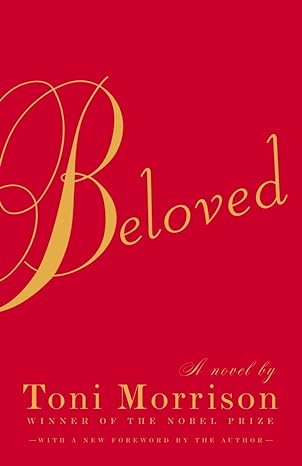
Beloved, by Toni Morrison
The Grapes of Wrath, by John Steinbeck

I have read each of those novels and not one of them warped my mind. Were you damaged by reading any of these novels? I doubt it. Were you moved to understand and see the world differently by reading these novels? Probably.

To Kill a Mockingbird teaches us about racial discrimination and injustice while also teaching us that Atticus Finch had integrity and maybe we should, too.

Beloved teaches us about the horrors of slavery and that the horrors did not end with the Civil War. It teaches us the lengths desperate people will go to prevent their children from being enslaved and living in horrible circumstances. That’s being demonstrated daily at the US-Mexican border.

The Grapes of Wrath teaches us what can happen after a decade of affluence and decadence and a time of drought as it illustrates a side of life during The Great Depression.

It’s one thing to read that thousands of people lost their farms and everything they had during the “Dust Bowl,” but it’s altogether different to read The Grapes of Wrath and live with the novel’s characters.

The Snow Forest, by Elizabeth Gilbert

In July of this year, an historical novel scheduled to be released in February 2024 was attacked on the author’s Goodreads account to the point that she chose to cancel its publication.

Elizabeth Gilbert, who wrote Eat, Pray, Love had written a novel set in Russia in the 1930s. With all the current interest in the war in Ukraine today, it would seem an opportune time to release a book set in 1930s Russia.

But author Elizabeth Gilbert learned that was not the case. She got so much blowback from her fans, that she pulled The Snow Forest even after some of her readers had pre-ordered the book. Her fans in Ukraine (or at least enough of them) said it was not the right time to release a book set in Russia. In response, the author suspended the publication of the book.

Author Alina Adams’s Thought on this

I read a blog post by author Alina Adams who was born in Odessa, Ukraine. Ms. Adams’ post maintains that historical fiction can make an important statement about the world and not just be a source of entertainment.

Ms. Adams wrote, “And as someone who loves to read historical fiction taking place all over the world in all sorts of different time periods, I am wary of a mindset which might lead to authors and publishers censoring themselves, shying away from setting stories in regions where there is ongoing political strife.”

In addition to specific examples of historical novels that have been challenged and banned, Ms. Adams’ blog post contained several succinct statements about the potential historical fiction holds, including the following: “Sometimes, historical fiction can tell a truth non-fiction isn’t equipped to deliver.” Also, “It doesn’t just make you think, it makes you feel. And it makes you empathize.”

My thoughts on this

Reading an historical novel might not change your political stance or religious beliefs but, if you give it a chance, it just might help you see the other side of an issue.

It might at least help you realize that people with views that oppose yours are not necessarily your enemies. They just might be human beings with a different perspective and life experience.

Please take a couple of minutes to read Alina Adams’ complete blog post from July 27, 2023 on M.K. Tod’s blog, A Writer of History: Why Historical Fiction Must Keep Tackling Controversial Topics | A Writer of History.

A quote from author Barbara Kyle

I printed this quote from Barbara Kyle and have it taped to my computer:

“The move to self-censorship for fear of ‘cultural appropriation’ is a sad state of affairs. Author Morgan Jones eloquently champions the opposite position: ‘Fiction remains the best means we have of finding connection where there seems to be none; and the novel, of all forms, encourages a search that’s deep and sustained. By reading (or writing) one, you’ve travelled somewhere else. You’ve moved, if only slightly, toward others. In a world that finds and increasingly exploits division and difference, this is an invaluable, precious exercise.”

Since my last blog post

Marie and I finished proofreading and creating the cover for our upcoming cookbook, The Aunts in the Kitchen: Southern Family Recipes. We submitted it to Amazon on Friday and requested a proof copy. It should arrive this week and, if we are pleased with it, we’ll give Amazon the go ahead to publish it. Look for an update and perhaps a cover reveal in next Monday’s blog post.

Until my next blog post

Be aware of what is going on in your community and state related to book challenges and book bannings. Speak up for books. Speak up for the freedom to read. Speak up for public libraries and librarians.

Have you ordered my American Revolution e-ghost story?  “Ghost of the Battle of Guilford Courthouse: An American Revolutionary War Ghost Story” is available from Amazon, along with my other books: https://www.amazon.com/dp/B0CH7JCP11/. It’s only available as an e-Booklet.

“Ghost of the Battle of Guilford Courthouse: An American Revolutionary War Ghost Story,” by Janet Morrison

If you don’t have a good book to read, visit your local public library. Or, from the comfort of your home, go to its website and search for books you would like to read or subjects you want to learn more about. You will be amazed at what is available at your fingertips!

Take time for friends and family.

Thank you for taking time to read this long blog post.

Remember the people of Ukraine, Maui, Libya,….

Janet

Four Books I Read in August 2023

Here it is, the first Monday in September. Where did the summer go? We still have some warm – probably even hot – days ahead, but school is back in session, today is Labor Day in the United States, and for all practical purposes, today marks the unofficial end of summer. I always hate to see it go, but that’s just me.

I read an assortment of books in August, and today I’ll tell you about them. I hope at least one of them will pique your interest. If you’ve read any of them, I’d like to know how you liked them.

The Paris Agent, by Kelly Rimmer

The Paris Agent, by Kelly Rimmer

I get excited when Kelly Rimmer writes a new book. She’s one of my go-to authors when it comes to historical fiction. The first novel of hers that I read was The Things We Cannot Say. I blogged about that novel September 9, 2019 (#BringBackOurGirls.) The next month I read Before I Let You Go (see my October 7, 2019 blog post: Thrillers and a Dark Novel I Read Last Month.)

I listened to Rimmer’s novel, Truths I Never Told You in March 2021, but I failed to blog about it after I finished it. I blogged about The Warsaw Orphan in my July 12, 2021 post, 4 Other Books I Read in June 2021. I read The German Wife by her last August and blogged about it on September 5, 2022 (Four of Eight Books Read in August 2022).

I didn’t realize I’d read six of Kelly Rimmer’s novels until I did a search of my blog posts. I guess you could say I like her writing.

I listened to The Paris Agent on CD from the public library. In her latest historical novel, Kelly Rimmer weaves a story involving two timelines. I usually don’t care for books that yank me back and forth between two different eras, but The Paris Agent was masterfully written and the format worked for me.

Noah Ainsworth was a British spy in France during World War II. In 1970, he is still struggling to make sense of his memories and the gaps in his memories caused by a head injury in the line of duty. His daughter, Charlotte, is determined to unravel the bits and pieces of his memory, official records, and memories of her father’s contemporaries.

The book takes the reader on a journey of questions, hope, love, misunderstandings, dead ends, and answers. As with Rimmer’s other novels, I recommend this one.

Darkness Visible: A Memoir of Madness, by William Styron

Darkness Visible: A Memoir of Madness, by William Styron

You might be familiar with the author William Styron. He wrote Sophie’s Choice, which was made into a movie. What you might not know is that he had a life-altering battle with severe depression.

Darkness Visible: A Memoir of Madness is the story of his depression. I have relatives who have and still are battling depression. It is a serious illness and deserves a more serious-sounding name. I have heard depression described by the people in the throes of their battles and I have read about it, but nothing has brought the wide scope of symptoms the disease can cast on a person’s mind and body like this book did.

Being a professional writer, Mr. Styron was able to express some of the things he endured with style and grace and carefully-chosen words. It is not a pleasant subject, but it is an illness that affects more people than we probably realize.

I encourage you to read this book, especially if someone you love is suffering with depression. Each case is unique, so the symptoms Mr. Styron had are not necessarily the symptoms your loved one has. But maybe reading this memoir will enlighten you and help you understand just a little of what your friend, co-worker, or relative faces every day as they try to put on a happy face and act like nothing is wrong.

Don’t ever belittle anyone who is depressed. Don’t ever say, “He is just depressed.” Don’t tell a depressed person to “just snap out of it.” Don’t ever minimize their suffering. Mr. Styron gives hope in the end. He got the professional help and medication he needed, and now he can look back on that horrible time and write about it.

Blowback: A Warning to Save Democracy From the Next Trump, by Miles Taylor

Blowback: A Warning to Save Democracy From the Next Trump, by Miles Taylor

I was reading this book on August 14, 2023 – the day the indictments came down from Fulton County, Georgia against Donald Trump and 18 others. The author, Miles Taylor, worked in the Department of Homeland Security in the Trump Administration. He hoped from the beginning that Donald Trump would “rise to the occasion” or that some adults would influence him. Neither happened.

Taylor thought by staying in the administration but publishing warnings under the pseudonym “Anonymous” he could bring enough exposure to the corruption in the Trump White House to prompt Congress and others in high positions of authority in the government to reign in the extremist radical ideas Trump espoused. It didn’t work out that way, and in October of 2020, Taylor went public and Trump was openly out for revenge.

Among other things, as “Anonymous,” Taylor had made it known that behind Trump’s back various Cabinet members were saying how incompetent he was.

Taylor explains in the prologue that “blowback” is the term used in national security circles “to describe unintended consequences, the failure to anticipate the repercussions when we make a choice.” Hence, the title of his book.

He says our generation of Americans will be known by future generations by the words, “They did not listen.”

He wrote the book to warn the American public about what is at stake if Trump is elected in 2024 or a more competent Trump-wannabe is ever elected. He addresses the various “guardrails” in place to safeguard our democracy and how they were weakened by the actions of Trump and his supporters.

I know what I write here won’t change any minds. Mr. Taylor probably knows his book won’t change any minds. The people who still support Trump apparently aren’t going to change their minds no matter what he says, does, or is convicted of. And they will go to the polls in 2024 and vote for him again even as they must hold their noses to shield themselves from the stench of his behavior – behavior they would not tolerate from their own family members or an employee.

If you want an inside look at what went on in the White House during the Trump Administration, you might be interested in this book. It is incumbent upon every American to pay attention to what has happened, what is happening, and what will continue to happen in the political arena. It is our responsibility. After all, ours is, to quote the Gettysburg Address, “…government of the people, by the people, and for the people….” We are the government.

Educate yourself before you vote. The depth of Trump’s incompetence illustrated by example after example in this book is mind blowing. From asking if hurricanes really spin to wanting to tell people in the path of a Category 4 hurricane to stay home and ride it out, to suggesting that fire trucks could be parked near the border with Mexico so cows could climb the ladders on the trucks to get over the border wall and graze along the Rio Grande…. You can’t make this stuff up.

Mastering Suspense, Structure & Plot: How to Write Gripping Stories That Keep Readers on the Edge of Their Seats, by Jane K. Cleland

Mastering Suspense Structure & Plot, by Jane K, Cleland

In this book about the craft of writing, Ms. Cleland starts out by remind writers to know their readers and give them what they want. She suggests that a writer look at six or more bestsellers in their genre and then analyze them based on such things as sexual content, violence, setting, and pace. She writes about the overarching thematic question posed at the beginning of a novel that must be answered by the end of the book. In terms of structure, she writes about linear and nonlinear structure, and she recommends that a writer select the best structure for the story they’re telling.

In the section of her book about creating suspense, she gives numerous examples of how that can be done. She says “The most common way to create suspense is to let your reader share a character’s anxiety.” It’s easier said than done, but she offers a lot of pointers.

In talking about settings, Ms. Cleland encourages writers to only include the things your point-of-view character sees, hears, touches, smells and only the kinds of places that character would go.

In the fifth chapter, Ms. Cleland writes about how to layer in two subplots. This was a helpful chapter for me, as I have a couple of subplots in one of the novels I’ve drafted. I hope I’ve woven them in appropriately.

She writes about isolating your characters. Each person reacts differently to be physically or socially isolated. She touches on red herrings and how to use them.

You get the picture. If you’re still learning the art and craft of writing fiction, I recommend Jane K. Cleland’s book.

Since my last blog post

I edited one of my short stories, created the cover for it on Bookbrush.com, finished formatting it on Atticus.io, and submitted it to Amazon for publication as an e-book only. It should be available today for $2.99. The name is “Ghost of the Battle of Guilford Courthouse: An American Revolutionary War Ghost Story.” I’m not a believer in ghosts, but please read the Author’s Note at the end of the story to find out what prompted me to write a ghost story.

Ghost of the Battle of Guilford Courthouse: An American Revolutionary War Ghost Story, by Janet Morrison

My sister and I finished proofreading the recipes in and wrote the introduction for The Aunts in the Kitchen: Southern Family Recipes. Getting the photography done for the front and back covers is next on our list. We hope to have the paperback and e-book available on Amazon by November.

I finished writing my September newsletter. I hope you’ve subscribed. It comes out every other month. When you visit my website, https://www.janetmorrisonbooks.com, you can click on the subscribe button and receive a free downloadable copy of my short story, “Slip Sliding Away.”

Until my next blog post

I hope you’re reading a book that is so engrossing you didn’t want to put it down to read my blog.

Don’t forget to order “Ghost of the Battle of Guilford Courthouse: An American Revolutionary War Ghost Story” on Amazon!

Make time for friends and family. They won’t always be here.

Remember the people of Ukraine, Maui, and Florida.

Janet