How publishing a cookbook helped me as a writer

Since my main interests in writing are historical fiction and history, it would seem that publishing a cookbook has nothing to do with either one of those or my pursuit of a career as a writer. I beg to differ.

If one wants practice in proofreading, I recommend they proofread a cookbook. At least two typos got past my sister and me in the proofreading stages. Proofreading a cookbook is a humbling experience. It should serve me well in my next short stories and books.

The Aunts (A U N T S) in the Kitchen: Southern Family Recipes, by Janet and Marie Morrison
The Aunts in the Kitchen: Southern Family Recipes, by Janet Morrison and Marie Morrison

Proofreading a cookbook is part paying extreme detail to numbers and part writing directions in a concise yet thorough way. It means trying to put yourself in the shoes of someone making the recipe for the first time – or even a novice cook or baker.

Are the instructions not only correct in sequence of method but also clear enough to give the cook the best chance to follow the directions with ease instead of confusion and frustration? Are the recipes presented in a way to give the cook the best chance to be pleased with the final product?

Proofreading is tedious work and it is always a good idea to have a second set of eyes. In fact, if my sister and I had not worked together proofreading the 289 recipes in our cookbook, half the errors we found probably would have slipped past us.

A few words about the software I use

Is there a book in you that is begging to come out? Do you think self-publishing is not within your reach? That is where I was two years ago. I never expected to be able to format a book in a form acceptable for Amazon or any other self-publication platform.

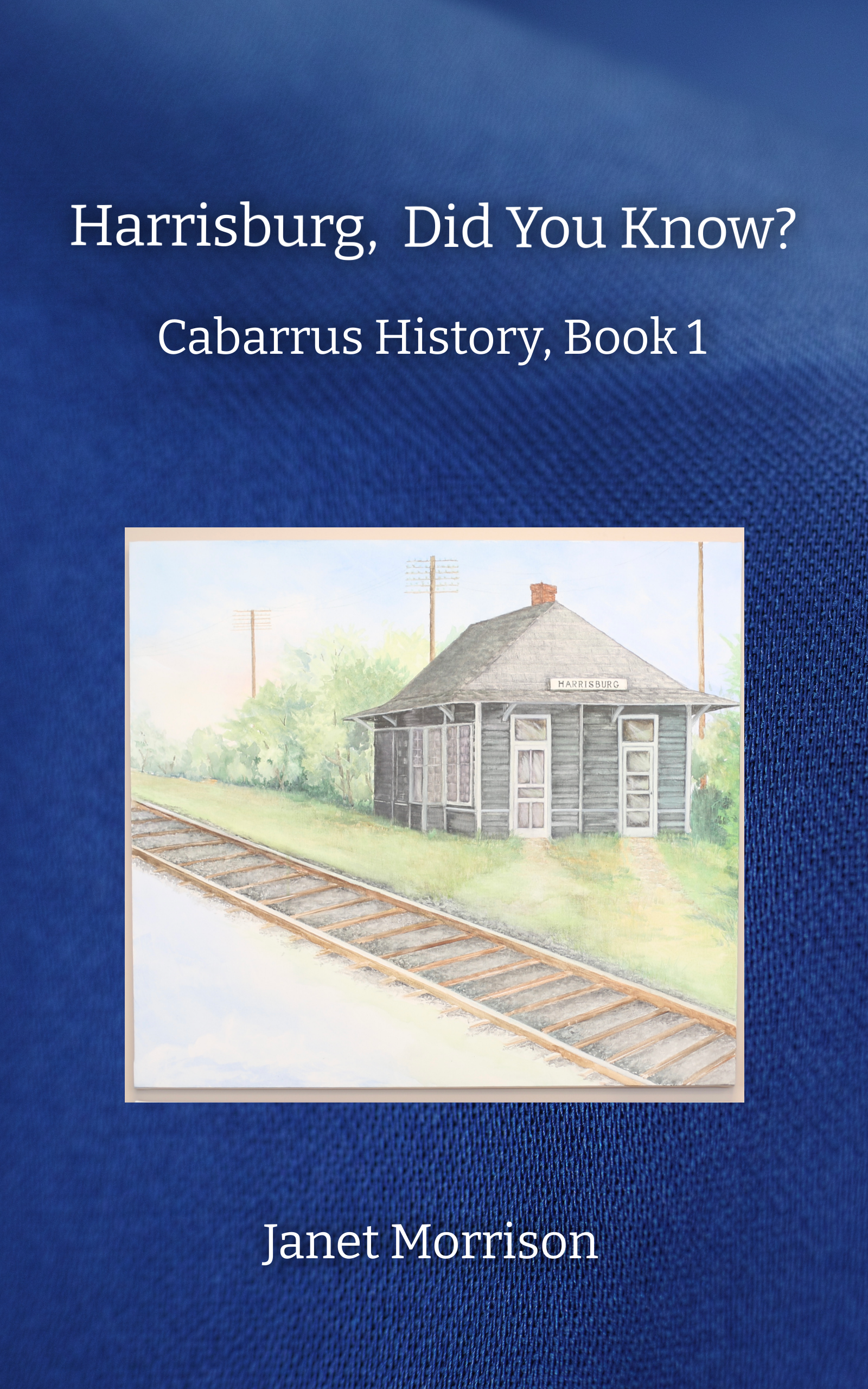
The Atticus.io app has enabled me to publish two local history books (Harrisburg, Did You Know? Cabarrus History, Books 1 and 2); two short stories (“Slip Sliding Away” and “Ghost of the Battle of Guilford Courthouse: An American Revolutionary War Ghost Story”); and a cookbook (The Aunts in the Kitchen: Southern Family Recipes) since last November!

BookBrush.com has made it possible for me to design the book covers for each of those books. I am not computer savvy, in the big scheme of things; however, I have been able to accomplish all this self-publishing in a little less than one year.

In addition, I have created memes for Facebook and bookmarks related to my books on BookBrush.com. That is just a fraction of what one can do through BookBrush.com tools.

Disclaimer: I am receiving no compensation in any form whatsoever for mentioning Atticus.io or BookBrush.com. I just want other writers who are considering going the self-publishing route to know about these tools I have used. What they have made possible for me has been life-changing.

The formatting and book design tools are not without challenges. There are learning curves with both but, if I can do it, anyone can do it.

The Atticus.io support team is extraordinary. Hands down, they are the best tech support group of people I have ever worked with. They have job security as long as I am self-publishing books!

Both BookBrush.com and Atticus.io have free workshops to help you understand how to use their various features.

Self-publishing is an education, and I have found it to be a beneficial introduction into the publishing world. It remains to be seen if any of my current projects (historical short stories, a devotional book, and historical novels) will be self- or traditionally-published.

Regardless of which path my current and future writing projects take, my self-publishing experience will serve me well. That definitely includes proofreading!

The rewards

So far, I have learned that by the time I paid for:

  • website redesign;
  • maintaining a website and blog;
  • the right to use Atticus.io and BookBrush.com;
  • printing bookmarks designed on BookBrush.com
  • printing and shipping costs for author copies;
  • books about the craft of writing;
  • online writing courses;
  • etc…

it can be difficult to break even financially.

I consider the two short stories I have self-published to be ways to get my name out there as an historical fiction writer. It all falls under the adage: “To make money, you have to spend money.” I offer one of my short stories as a gift to everyone who subscribes to my e-newsletter.

It is not easy to get established as a writer. It has been a winding road and at times a daunting endeavor; however, my reward already is to see my name as the author on the spine of several books.

If I accomplish nothing else, I am happy that someday my heirs will know that I had a dream to write and I persevered to realize that dream.

Since my last blog post

Some weeks I can’t remember what I’ve done since my last blog post. It isn’t until I look back over my to-do list and find items checked off as completed that I realize I am making steady progress in my writing.

I did research for a short story I’m writing; typed notes from The Author Estate Handbook, by M.L. Ronn and added to the list of the things I need to take care of before I update my will; researched Fort Dobbs State Historic Site near Statesville, NC, Shallow Ford on the Yadkin River, and Bethabara State Historic Site for the novel I am writing; and planned a trip to visit several sites pertinent to that novel.

I watched a BookBrush.com free presentation on Zoom about book marketing on Pinterest. It was a real eye-opener. Good news/bad news: Now I have a thousand new tasks to add to my to-do list.

Until my next blog post

If you want to write a book, do it!

I hope you have at least one good book to read this week. I have more than I can find time to read!

Make time for your friends and family.

Don’t forget to visit https://www.janetmorrisonbooks.com and subscribe to my e-newsletter.

Remember the innocent people of Ukraine and the Middle East. It is the innocent citizens who are so often caught in the middle and pay the ultimate price for the actions of dictators and terrorists.

Janet

How much Regional Accent and Dialect is Too Much in Historical Fiction?

When it comes to using dialect or regional accents in a novel, there are no definitive rules. It depends on the writer’s voice, the genre, and personal taste. Personal taste is where the rubber meets the road.

Too much of something like dialect in a novel sort of falls into the “I know it when I see it” category.

The rule of thumb

The rule of thumb is to avoid using it to the point of making the novel difficult to read. If the reader finds it exhausting to decipher the words, it means you have crossed that imaginary line. If the reader must wade through so much dialect that they are yanked out of the story, it means there is too much dialect.

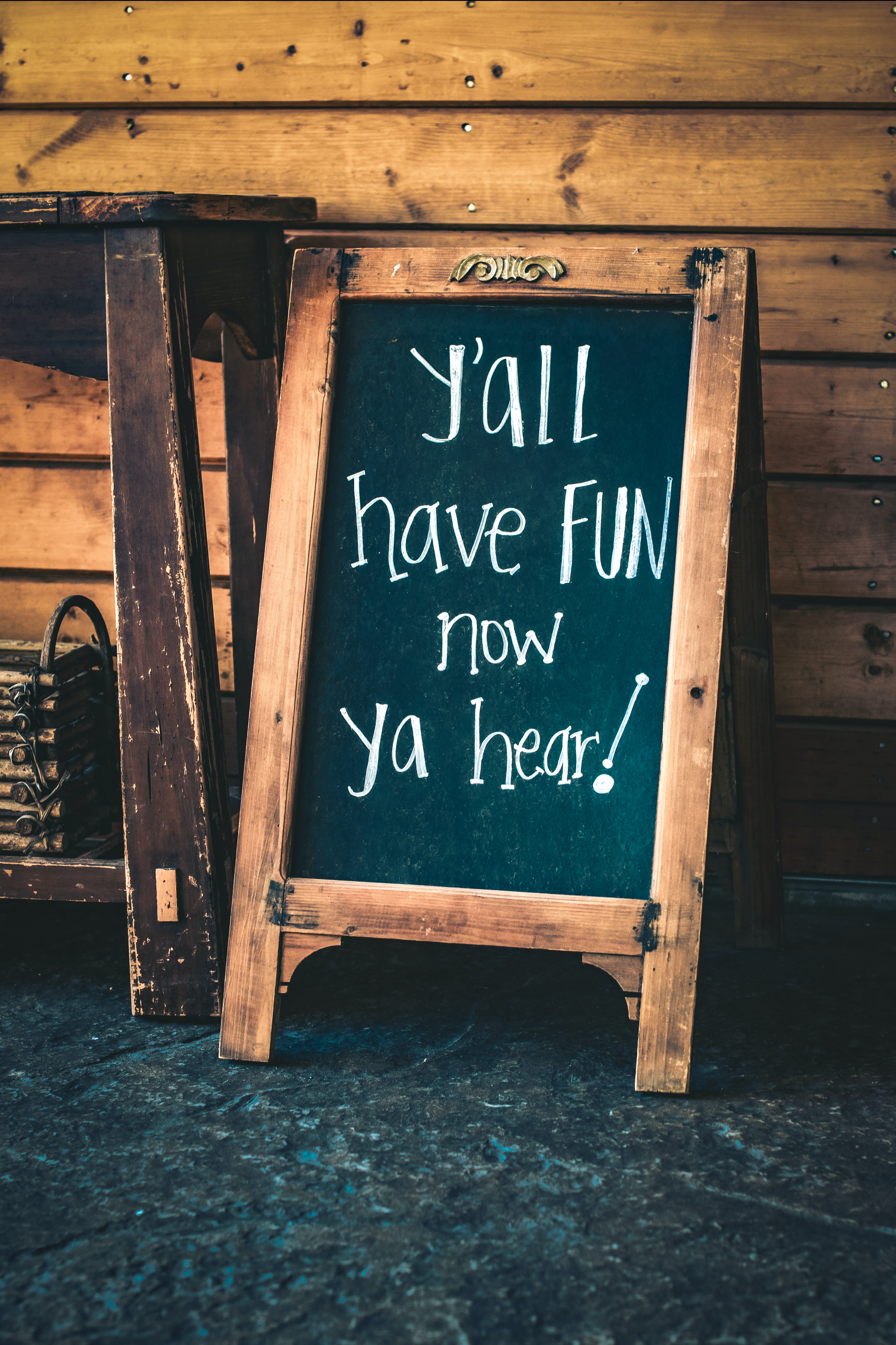
Photo by Tim Mossholder on Unsplash

My experience with “y’all” in “Slip Sliding Away”

In my early drafts of my historical short story, “Slip Sliding Away,” I set the plot in the late 1700s. Something kept nagging at me, though. I wanted to use “y’all” in the story.

If you have read the story and you are from the southern part of the United States, you know the funeral scene with the intoxicated pallbearers struggling to get up the hill to the cemetery just screams out for the use of “y’all.”

There was a problem, though. My trusty resource for determining when a word came into common usage, English Through the Ages, by William Brohaugh, failed me! I did not find ‘y’all” in the book.

My second resource for such dilemmas is Merriam-Webster’s Collegiate Dictionary, Tenth Edition, for it tells when words came into common use. I looked up “y’all” and to my great disappointment, the dictionary just said, “var [variation] of you-all.”

I cringed. Why would anyone say, “You all” when there is a perfectly good contraction that just rolls off the southern tongue?

While I’m airing my grievances about the use and misuse of “y’all,” let me just say that if one is going to write the contraction, please put the apostrophe in the correct place. Don’t make me cringe by writing, “ya’ll.” I see it on all kinds of southern merch and it’s just not right. But I digress.

I turned several pages beyond “y’all” in the dictionary and looked up “you all.” First, I discovered it is hyphenated. Who knew? Then I learned that “you-all” was in common use in 1824. That information was helpful. It told me that I had to move my late-1700s story to 1824 or later.

I never did find anything definitive telling me when southerners started taking the easy way out by addressing two or more people as “y’all.” I figure that surely by the 1870s the word was in use, so I set the final draft of “Slip Sliding Away” in that decade.

Did you have any idea about the minutiae writers of historical fiction have to deal with? (Yes, I know. I’m not supposed to end a sentence with a preposition; however, it just seems awkward to write – or read – “Did you have any idea about the minutiae with which writers of historical fiction have to deal?” My mother was an English teacher, and I think she would agree with me on this one.)

What about the dialect in Where the Crawdads Sing, by Delia Owens?

After reading Where the Crawdads Sing, I found myself alone in the world in saying that novel contained too much dialect. Everyone else who read it absolutely loved it. I liked it, too, but I was distracted by the amount of dialect used. Maybe I had read too many articles and books about the craft of writing and I was just hyper aware of the dialect.

With more than 617,000 reviews with an average of 4.7 out of 5 stars on Amazon and 18 million copies sold worldwide, Where the Crawdads Sing is obviously an amazing novel. Apparently, Delia Owens knew exactly how much dialect to include in it to please millions of readers. I wish I were talented enough to have written it!

Since my last blog post

It was a busy week and I got to check off one big task that has been on my to-do list for months. On Friday, my church friend who took the cover photograph for my two local history books, Harrisburg, Did You Know? Cabarrus History, Book 1 and Harrisburg, Did You Know? Cabarrus History, Book 2, took photographs for the cover of the family cookbook my sister and I have been compiling for a couple of years. With the formatting finally completed, I felt safe in getting the cover designed. Look for an announcement regarding the publication of The Aunts in the Kitchen: Southern Family Recipes in a future blog post and in my November newsletter.

My sister and I took a day trip that was a combination Revolutionary War/genealogy trip. It was a wonderful day. I’ll tell you about in my November newsletter.

Speaking of my newsletter, you can find out about the cookbook, my various other writing projects, and the historical “field trips” I take if you simply go to https://www.janetmorrisonbooks.com and click on the “Subscribe” button. You will immediately receive a free downloadable copy of “Slip Sliding Away” as well as my future every-other-month newsletters. Thank you to all 42 of you who have taken the time to subscribe.

Until my next blog post

What do you have to say about the amount of regional accent or dialect in a novel? I would like to hear your thoughts on the topic.

Have you ordered my American Revolution e-ghost story?  “Ghost of the Battle of Guilford Courthouse: An American Revolutionary War Ghost Story” is available from Amazon, along with my other books: https://www.amazon.com/dp/B0CH7JCP11/.

Take time for friends and family.

Thank you for taking time to read my blog post. Y’all come back now, ya hear?

Remember the people of Ukraine, Maui, Libya,….

Janet