How much Regional Accent and Dialect is Too Much in Historical Fiction?

When it comes to using dialect or regional accents in a novel, there are no definitive rules. It depends on the writer’s voice, the genre, and personal taste. Personal taste is where the rubber meets the road.

Too much of something like dialect in a novel sort of falls into the “I know it when I see it” category.

The rule of thumb

The rule of thumb is to avoid using it to the point of making the novel difficult to read. If the reader finds it exhausting to decipher the words, it means you have crossed that imaginary line. If the reader must wade through so much dialect that they are yanked out of the story, it means there is too much dialect.
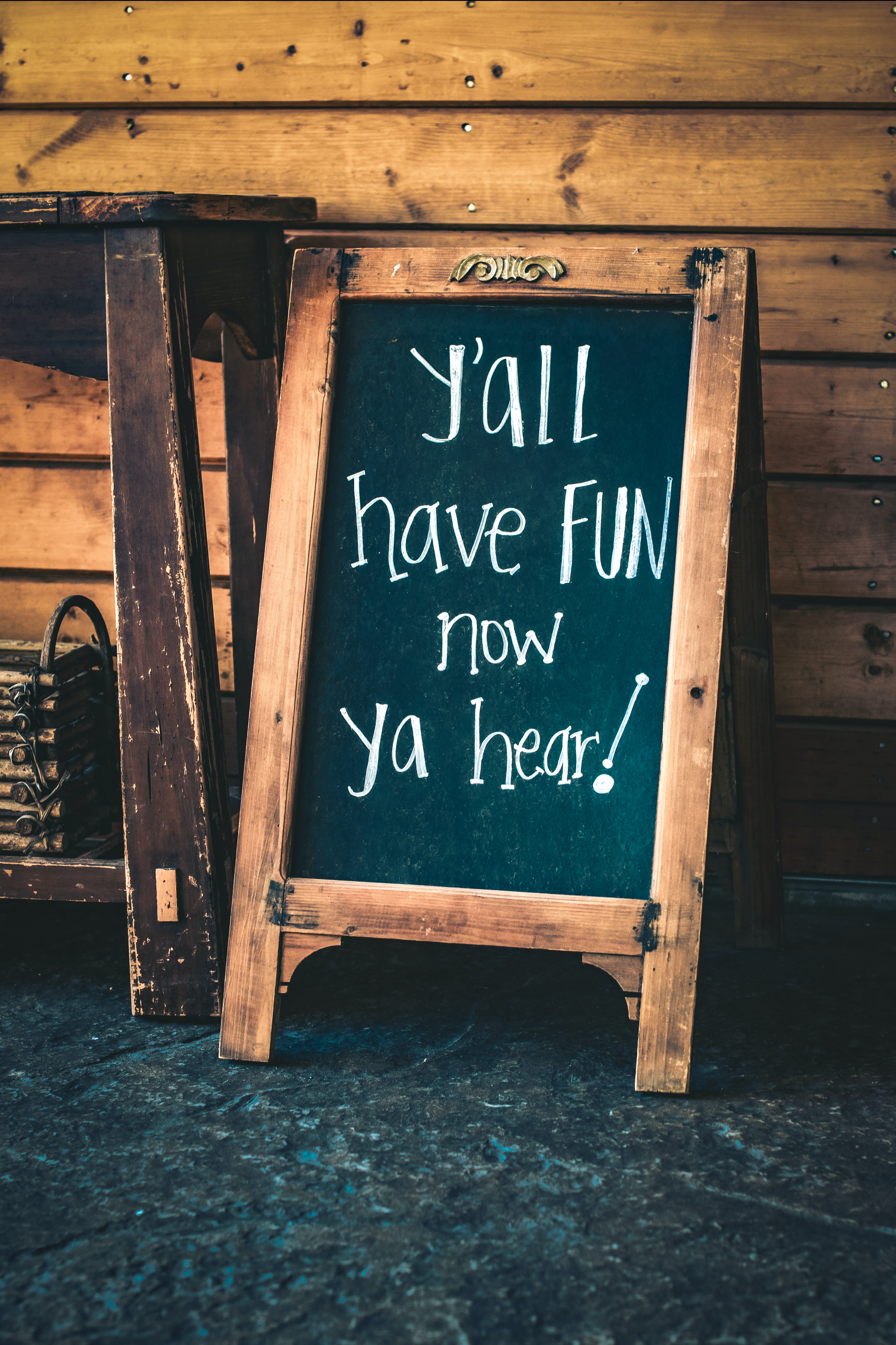
Photo by Tim Mossholder on Unsplash

My experience with “y’all” in “Slip Sliding Away”

In my early drafts of my historical short story, “Slip Sliding Away,” I set the plot in the late 1700s. Something kept nagging at me, though. I wanted to use “y’all” in the story.

If you have read the story and you are from the southern part of the United States, you know the funeral scene with the intoxicated pallbearers struggling to get up the hill to the cemetery just screams out for the use of “y’all.”

There was a problem, though. My trusty resource for determining when a word came into common usage, English Through the Ages, by William Brohaugh, failed me! I did not find ‘y’all” in the book.

My second resource for such dilemmas is Merriam-Webster’s Collegiate Dictionary, Tenth Edition, for it tells when words came into common use. I looked up “y’all” and to my great disappointment, the dictionary just said, “var [variation] of you-all.”

I cringed. Why would anyone say, “You all” when there is a perfectly good contraction that just rolls off the southern tongue?

While I’m airing my grievances about the use and misuse of “y’all,” let me just say that if one is going to write the contraction, please put the apostrophe in the correct place. Don’t make me cringe by writing, “ya’ll.” I see it on all kinds of southern merch and it’s just not right. But I digress.

I turned several pages beyond “y’all” in the dictionary and looked up “you all.” First, I discovered it is hyphenated. Who knew? Then I learned that “you-all” was in common use in 1824. That information was helpful. It told me that I had to move my late-1700s story to 1824 or later.

I never did find anything definitive telling me when southerners started taking the easy way out by addressing two or more people as “y’all.” I figure that surely by the 1870s the word was in use, so I set the final draft of “Slip Sliding Away” in that decade.

Did you have any idea about the minutiae writers of historical fiction have to deal with? (Yes, I know. I’m not supposed to end a sentence with a preposition; however, it just seems awkward to write – or read – “Did you have any idea about the minutiae with which writers of historical fiction have to deal?” My mother was an English teacher, and I think she would agree with me on this one.)

What about the dialect in Where the Crawdads Sing, by Delia Owens?

After reading Where the Crawdads Sing, I found myself alone in the world in saying that novel contained too much dialect. Everyone else who read it absolutely loved it. I liked it, too, but I was distracted by the amount of dialect used. Maybe I had read too many articles and books about the craft of writing and I was just hyper aware of the dialect.

With more than 617,000 reviews with an average of 4.7 out of 5 stars on Amazon and 18 million copies sold worldwide, Where the Crawdads Sing is obviously an amazing novel. Apparently, Delia Owens knew exactly how much dialect to include in it to please millions of readers. I wish I were talented enough to have written it!

Since my last blog post

It was a busy week and I got to check off one big task that has been on my to-do list for months. On Friday, my church friend who took the cover photograph for my two local history books, Harrisburg, Did You Know? Cabarrus History, Book 1 and Harrisburg, Did You Know? Cabarrus History, Book 2, took photographs for the cover of the family cookbook my sister and I have been compiling for a couple of years. With the formatting finally completed, I felt safe in getting the cover designed. Look for an announcement regarding the publication of The Aunts in the Kitchen: Southern Family Recipes in a future blog post and in my November newsletter.

My sister and I took a day trip that was a combination Revolutionary War/genealogy trip. It was a wonderful day. I’ll tell you about in my November newsletter.

Speaking of my newsletter, you can find out about the cookbook, my various other writing projects, and the historical “field trips” I take if you simply go to https://www.janetmorrisonbooks.com and click on the “Subscribe” button. You will immediately receive a free downloadable copy of “Slip Sliding Away” as well as my future every-other-month newsletters. Thank you to all 42 of you who have taken the time to subscribe.

Until my next blog post

What do you have to say about the amount of regional accent or dialect in a novel? I would like to hear your thoughts on the topic.

Have you ordered my American Revolution e-ghost story?  “Ghost of the Battle of Guilford Courthouse: An American Revolutionary War Ghost Story” is available from Amazon, along with my other books: https://www.amazon.com/dp/B0CH7JCP11/.

Take time for friends and family.

Thank you for taking time to read my blog post. Y’all come back now, ya hear?

Remember the people of Ukraine, Maui, Libya,….

Janet

Meet & Greet at Second Look Books, April 15th

What?        Author Meet & Greet

Where?      Second Look Books, 4519 School House Commons in Harrisburg

When?       Saturday, April 15, 2023

What Time?         2:00 – 4:00 p.m.

Second Look Books, 4519 School House Commons, Harrisburg, NC

Copies of Harrisburg, Did You Know? Cabarrus History, Book 1 and Book 2 have arrived and been autographed.

Photocopies of my 11×14-inch “Harrisburg in the 1900s” two-map sets have been made.

Business cards and bookmarks are printed.

Saturday, April 15 is the big day for my Meet & Greet at Second Look Books in Harrisburg, North Carolina! I’ll be there from 2:00 p.m. until 4:00 p.m.

Please drop by, even if you’ve already purchased both books.

The bookmarks and Harrisburg maps are free while supplies last.

What maps?

I drew the maps based on detailed memories that Mr. Ira Lee Taylor shared with me while I was writing the “Did You Know? local history column for Harrisburg Horizons newspaper (2006-2012.)

One map covers from along NC-49 to Back Creek. The other map covers from Back Creek to Reedy Creek and where McKee Creek flows into Reedy Creek.

Mr. Taylor told me where such things as the telephone switchboard, spoke factory, two cotton gins, railroad houses, corn fields, cotton fields, and livery stable were in the early 1900s.

He told me where the various stores and post offices were. Being the town’s only mail carrier for several decades, he knew where everybody lived, so I included much of that information The map show where the roads were (and were not) before the coming of the high-speed rail.

In case you arrived in Harrisburg after the two-story red brick old Harrisburg School was torn down, this set of maps will show you the layout of the school grounds. The school property is where School House Commons Shopping Center is now.

The maps also show the locations of the Oak Grove Rosenwald School and the Bellefonte Rosenwald School that you read about in Harrisburg, Did You Know? Cabarrus History, Book 1.

Some things you’ll learn about in my two books

There are stories of local heroism from 1771 and the detailed memories of a World War II US Army veteran who told me about his training for D-Day through to the end of the war.

There are stories about the original Hickory Ridge School, which was a one-room school on Hickory Ridge Road.

There are stories about the Rosenwald Schools that served the black students in the early 1900s.

There are stories about the man from Russia (actually, Ukraine) who settled in Harrisburg in the 1920s to practice medicine until his death in 1960. He was a country doctor who made house calls

There are stories about the construction of the Charlotte Motor Speedway and the first World 600 Race when the track was in such bad shape that chunks of asphalt broke the windshields out of some of the race cars.

There is information about the 22-mile syenite ring-dike that Harrisburg sits in. It’s what remains of an ancient volcano.

Until my next blog post

Remember the people of Ukraine – where Dr. Nicholas E. Lubchenko was born and lived until young adulthood.

I hope to see you on Saturday!

In case you don’t have a good book to read, please consider purchasing my local history books. They’re available in paperback at Second Look Books. They’re also available in paperback and for Kindle from Amazon.

Even if you don’t live or have never lived in Harrisburg, North Carolina, I think you’ll find some interesting stories that you can probably relate to if you are of a certain age. And if you a child, teen, or young adult I think you’ll find it interesting to read about how life used to be in our sleepy little farm village of a couple hundred people in the early 1900s that has grown to nearly 20,000 people in 2023.

What?        Author Meet & Greet

Where?      Second Look Books, 4519 School House Commons in Harrisburg

When?       Saturday, April 15, 2023

What Time?         2:00 – 4:00 p.m.

I hope to see you there!

Janet

What I Read in March 2023 & My Thoughts about Book Banning

After reading three good historical novels in February, I was disappointed that I didn’t get to read as much in March. That’s just the way it goes. As I try to do every month when I blog about the books I read the previous month, I repeat that I am not a book reviewer. I merely like to share with you what I read. Perhaps your interest will be piqued and you’ll decide to read some of the books I’ve enjoyed.


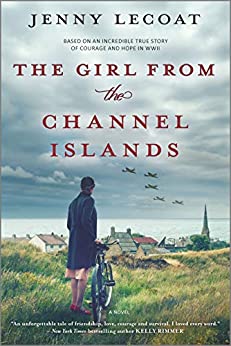
The Girl From the Channel Islands, by Jenny Lecoat

The Girl From the Channel Islands, by Jenny Lecoat

I listened to this historical novel on CD borrowed from the public library. I enjoy listening to a disc late at night, even though I have to deal with an occasional scratch on the disc which causes me to miss bits of the story.

Hedy Bercu, the protagonist in this novel, flees Austria in 1938 to escape the Nazis. She thinks she’ll be safe in Great Britain’s Channel Islands but, as World War II drags on and the islands are occupied by Germany, Hedy lives in constant fear that the wrong people will discover that she is Jewish.

The author, Jenny Lecoat, was born in the Channel Islands 16 years after some members of her family were deported by the Nazis and taken to concentration camps due to their resistance activities. This is Ms. Lecoat’s debut novel. I look forward to reading whatever she has in store for us next.


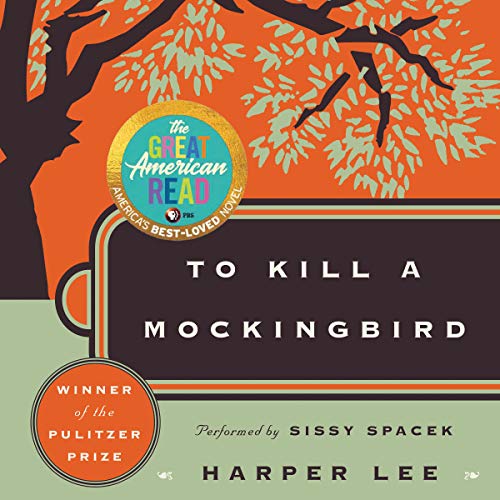
To Kill a Mockingbird, by Harper Lee

To Kill a Mockingbird, by Harper Lee

Although Banned Books Weeks is six months away, the increasing attacks on books in the United States prompted me to reread Harper Lee’s masterpiece. Instead of reading it in printed form this time, I decided to listen to Sissy Spacek’s performing of it on CD. I haven’t quite finished it, but I decided to include it in today’s post so The Girl From the Channel Islands wouldn’t have to stand alone.

It baffles me why people in 2023 want to ban To Kill a Mockingbird from school and public library shelves because it portrays the discrimination black people suffered in the 1920s or 1930s and, because at the same time, it portrays a white lawyer defending a black man who has been wrongfully arrested and charged.

I am against all book banning. One only needs to look at what happened in Germany in the 1930s to see what the results are.

If you don’t want your child to read a certain book, that’s your prerogative; however, you don’t have the right to dictate what anyone other than yourself and your children read.

Just because you are offended by a word in a book doesn’t make it a bad book. If you think you can erase the history of slavery, prejudice, and civil war in the United States by removing those references from books, you are mistaken.

If you think by removing sex education from school curriculum you will end all teen pregnancies, you’re only fooling yourself.

People who are afraid of knowledge and try to force their fears on the masses are the most dangerous people in the world.


Since my last blog post

I’ve tried to start overcoming the toll the challenges of the last eight months have taken on my limited energy.  Getting my two local history books published and working toward the publication of a family cookbook have been fun, challenging, frustrating, draining, and rewarding — all at the same time. April 25 will mark the 36th anniversary of when I first became ill with Chronic Fatigue Syndrome. Please don’t laugh. It’s a real illness. I have pushed myself too much since last July to accomplish some long-term dreams to get my local history writings published, and now I’m paying the price.

I’ll continue to push myself because that’s what I do and I don’t know how to live otherwise; however, in the coming weeks I’ll try to be a little kinder to myself and take some time to smell the roses.


Until my next blog post

I’ll start preparing for my Author Meet & Greet scheduled for April 15 at Second Look Books in Harrisburg, North Carolina.

I’ll reevaluate the family cookbook my sister and I have compiled. I’ve encountered a problem in the formatting for a paperback edition, so it might just be an e-book. That would be disappointing.

I hope you have a good book to read. If you’ve purchased Harrisburg, Did You Know? Cabarrus History, Book 1 and Book 2, I hope you’re enjoying them.

If you’ve subscribed to my newsletter and, therefore, downloaded a free copy of my southern historical short story, “Slip Sliding Away,” I hope you’ve enjoyed that small sample of my fiction writing.

Remember the three children and three adults murdered in that private school in Nashville, Tennessee. Remember how your local, state, and national politicians vote on assault-style weapons designed for war when the next election rolls around.

Remember the people of Ukraine.

Janet

Three Compelling Books I Read in February 2023

After a couple of months of not getting to read much for pleasure, February turned out to be just what I needed to get back in the habit of reading. My favorite genre, historical fiction, really came through for me last month.

The Diamond Eye, by Kate Quinn

The Diamond Eye, by Kate Quinn

I listened to this historical novel on CD. I was spellbound from disc one until the very end of disc 11. I yearn to write historical fiction so vividly. I long to captivate readers with fiction based in an era not their own. Kate Quinn has established herself as a master of the art and craft of writing historical fiction.

The Diamond Eye is based on a true story. Mila Pavlichenko lives in the part of the Soviet Union that is now Ukraine. She works at a library and adores her young son. When World War II transitions to the invasion of Russia by Nazi Germany, Mila does the unthinkable. She becomes a sniper for the Russian Army. And she excelled at it.

After her official kill count reaches 300, Mila becomes a national heroine and is sent on a tour of the United States to drum up support for the fight against Hitler. There, she meets President and Mrs. Roosevelt. Eleanor Roosevelt, seeing a bit of her own independent nature in the sniper, befriends Mila.

The book follows Mila through the war and how she constantly has to prove herself because she’s a woman and not automatically taken seriously. She’s called the usual names that men who are threatened by strong women call them.

It is a stunning novel and reminded me why I enjoy reading historical fiction. Yes, it’s fiction because conversations are imagined, but reading well-written historical novels is an enjoyable way to learn a lot of history.


The Home for Unwanted Girls, by Joanna Goodman

The Home for Unwanted Girls, by Joanna Goodman

This is another gripping historical novel. I was so impressed by Saskia Maarleveld’s reading of The Diamond Eye, that I looked for other books she had recorded. That’s how I found The Home for Unwanted Girls. I thought that was an interesting way to find another good book!

The Home for Unwanted Girls is about an unwed mother in Quebec in the 1950s who is forced by her parents to give up her baby girl. The book shines a light on the ugly history of the orphanage system in Quebec at that time. When the orphanage is turned into an insane asylum and the orphans are forced to take care of the patients, the outcome for the girls seems hopeless.

This novel follows the life of one of those orphans and the 15-year-old mother who wanted desperately to keep her. The mother never gives up on finding her child, even though she is told the girl died.


The Escape Artist: The Man Who Broke Out of Auschwitz to Warn the World, by Jonathan Freedland

The Escape Artist, by Jonathan Freedland

This book was spellbinding! It tells the stories of 19-year-old Rudolf Vrba and Fred Wetzler who did the impossible in April 1944. They escaped from Auschwitz! The book tells how Vrba studied the precision with which the Nazis conducted searches and exactly how long the guards searched when a prisoner was unaccounted for. He and Fred worked with two accomplices to plan the escape of Vrba ad Wetzler. Their two accomplices were to stay behind while Vrba and Wetzler escaped to take the truth of what was happening at Auschwitz out into the world.

It’s a fascinating read. It follows Vrba and Wetzler after their escape. The eye-opening part of the book was the aftermath of their escape. They testified and provided written descriptions of the horrors of Auschwitz. Their testimonies matched to the nth detail; however, their words and their physical conditions of malnutrition fell on deaf ears.

Winston Churchill didn’t want to bomb the rail lines going into Auschwitz because England bombed in the daytime. President Franklin D. Roosevelt didn’t want to bomb because it would be a diversion from plans. Jewish organizations in Europe refused to believe what was happening at Auschwitz because it was just too extreme. How can people do such things to their fellow human beings?

Along with the tragic murdering of Jews at Auschwitz, the fact that world leaders who had the power and where withal to do something about it in fact chose not to act is a gut punch.

My general takeaway from the book is that one’s life and future can be determined by someone else’s snap decision. Decisions were made on a whim by guards at Auschwitz every day that determined who lived, who died, and who escaped.

It’s a book that will haunt me.


Since my last blog post

I continue to try to get the word out about my second local history book, Harrisburg, Did You Know? Cabarrus History, Book 2.

I also continue to ask people to go to my website, https://www.janetmorrisonbooks.com and subscribe to my newsletter. Subscribers receive a free downloadable copy of my first historical short story, “Slip Sliding Away: A Southern Historical Short Story.”

“Slip Sliding Away: A Southern Historical Short Story,” by Janet Morrison

Until my next blog post

I hope you have a good book to read. I know where you can get a good historical short story to read!

Take care of one another.

Remember the people of Ukraine.

Janet

I just wanted a proof copy of Harrisburg, Did You Know? Book 2

This should have been a very short blog post. Two or three paragraphs should have covered the story. Actually, if that had been the case, I would have chosen a different topic for the post. I hadn’t planned to blog about this today.

When I started writing my blog more than 10 years ago, I set out to chronicle my journey as a reader and a writer. It’s been a bumpy ride and there have been detours, successes, and obstacles. I’ve tried to share my ups and downs.

Just three weeks ago in my February 6 blog post, What does a month in the life of a would-be author look like?, I described a particularly trying month I’d experienced. The things I ranted about in that post eventually all worked out.

Today’s post is about last week’s stress. Last week’s stress has lapped right over into this week. I’d like to think there’s light at the end of this tunnel, but after what I’ve been through, it’s hard to be optimistic.

Photo by Brett Jordan on Unsplash

Today’s post falls in the category of “you can’t make this stuff up.”

Here’s the timeline as tracked on Amazon.com:

February 19

Having submitted the formatted copy of Harrisburg, Did You Know? Cabarrus History, Book 2 to Amazon for publication, I ordered a proof copy. After having some technical difficulties with several photographs in the book, I especially wanted to be sure they were going to be oriented correctly in the printed book.

I also ordered two paperback copies of Slip Sliding Away: A Southern Historical Short Story, but those two books had to be purchased as a separate order.

Amazon chose to combine the orders and deliver (or attempt to deliver) the three books to me via the United States Postal System, otherwise known as “carrier facility.”

February 21

9:11 pm      Order left carrier facility, Concord, NC.

This is when I had a feeling that things had gone awry. Since Amazon does not print books at its facility in Concord, NC, which is about 12 miles from my house, I wondered why Concord was the first point of transit. The first point of transit should have been Amazon – not the US Postal Service. My books are usually printed either of Columbia, South Carolina or Indianapolis, Indiana.

February 22

Unspecified time   Carrier picked up package in Columbia, SC (about 90 miles south of me.)

8:18 a.m.     Package arrived at Amazon facility, Concord, NC (about 15 miles north of me.) [This is great! Maybe my proof copy and the short stories will arrive today or tomorrow at the latest! Life is good!]

February 23

6:18 a.m.     Package arrived at carrier facility, Walkertown, NC (about 80 miles north of me.) [What?]

6:32 p.m.    Package arrived at carrier facility, Harrisburg, NC (Post office is five miles from me. I live on a Harrisburg mail route.) [I’m not sure how it traveled 75 miles in 14 minutes, but okay. Whatever.]

7:47 p.m.    Package arrived at carrier facility, Greensboro, NC (about 85 miles northeast of me.) [Wait a minute! Something’s not right.]

But I don’t want a refund. I want my books!

You know you’re in trouble when Amazon tells you on Thursday that you can request a refund if your package doesn’t arrive by Tuesday.

A refund won’t do me any good. I need to receive the proof copy before I can give Amazon the go ahead to start selling it. More importantly, I can’t order author copies to supply Second Look Books in Harrisburg until the book “goes live” on Amazon. Then, it takes about four weeks for me to receive the author copies, and my “Meet & Greet” at Second Look Books is scheduled for April 15.

February 24

5:19 a.m.     Package left Amazon facility, Concord, NC (about 15 miles northeast of me.)

9:21 a.m.     Package arrived at USPS distribution center, Charlotte, NC (about 18 miles west of me.)

February 25

3:15 a.m.     After spending 18 hours at the USPS distribution center in Charlotte, the package left.

3:20 a.m.     Five minutes later, it left again. (I’m not making any of this up!)

7:07 a.m.     After traveling about 15 miles, package arrived nearly four hours later at the USPS in Harrisburg, NC.

7:18 a.m.     Package is out for delivery “by 8 p.m. tonight.”

3:20 p.m.    Package arrives at my house! According to the back page, the books were printed in Columbia, SC on February 20, 2023. There was only one 2×4-inch gaping hole in the package right over the cover of the Harrisburg book. These books have seen parts of North Carolina I’ve never seen. As far as I know, I’ve never been to Walkertown. I looked it up. It’s between Winston-Salem and Virginia.

Alas, I had the books in my hands.

I quickly turned to page 465 in the Harrisburg book to make sure Carl Higgins’ B-26 bomber was shown correctly; but, no! In the image, the plane is heading straight up instead of to the left.

Various subheadings in the book appear at the bottom of one page instead of at the top of the next page, although I painstakingly made sure that none of the subheadings were at the bottom of a page when I submitted the formatted manuscript to Amazon. Likewise, all images were oriented in the correct manner when they left my computer.

And did I mention that the cover is dark brown instead of red?

Photo by Taylor Deas-Melesh on Unsplash

I discovered, though, that the errors (except for the color of the cover) were my fault due to my lack of technical knowledge. If I’d been more in tune with general computer technology, I would have realized that I had created a problem… all the problems in the way the book was printed… except for the brown cover on the red book.

I still hold Amazon and the USPS responsible for shipping my book all over North and South Carolina for nearly a week. The best I can figure, the USPS transported it around 425 miles to get it 90 miles from Columbia, SC to Harrisburg, NC. If I could have received it five days ago, I’d probably have all the problems worked out in the formatting by now and would still be on schedule for publication.

Instead of giving Amazon the go ahead on March 1 to publish my book, I’m now working to correct errors. Then, I’ll submit the revised version. Then, with a great sense of foreboding, I’ll pay to get ANOTHER proof copy of the Harrisburg book. And I’ll wait who know how long for it to arrive. Then, if it is in good order, I’ll order author copies. Then, I’ll wait four weeks for them to arrive. Will they arrive in time for the “Meet & Greet” at Second Look Books on April 15th?

If I were a betting person, I wouldn’t bet on it.

Since my last blog post

Besides following the day-to-day saga of the trip the proof copy of my book has been on, I did some yard work. It’s been unseasonably warm here in North Carolina. I was surprised to see two black snakes on Wednesday. I’ve never seen a snake in February (or March!) before. It’s unusual to see one in April.

My email provider is a company called Windstream. There are many things I’d like to say about Windstream, but I won’t. Suffice it to say that on Saturday night, just five hours after I received the awful proof copy of my Harrisburg Book 2, Windstream downloaded into my inbox the last 4,449 emails I had already received. As we say in the South, “Bless their hearts!” Again, you can’t make this stuff up.

Until my next blog post

I hope you have a good book to read. I plan to write about the books I read in February.

If you’re looking for a good historical short story, just visit https://www.janetmorrisonbooks.com and subscribe to my newsletter. You’ll be rewarded with a free e-copy of a short story I had fun writing, “Slip Sliding Away: A Southern Historical Short Story.”

Also, hurry and subscribe before March 1, in order to receive my first newsletter!

I hope to have a corrected copy of Harrisburg, Book 2 completed, submitted to Amazon, and have a new proof copy of it in my hands by the time I blog again on March 6. I can only hope.

Thank you for reading my blog!

Don’t forget the brave people of Ukraine who have been under unwarranted attack by Putin for a year.

Janet