May 2024 – Not my usual month of reading!

I read bits and pieces of various books in May, but there were only two that I read from cover-to-cover or deserved a mention on my blog today. I went on a nice vacation and ended up not reading any of the books I took with me.


Building a Second Brain: A Proven Method to Organize Your Digital Life and Unlock Your Creative Potential, by Tiago Forte

Building a Second Brain, by Tiago Forte

I was intrigued by this book’s title after reading a reference to it in passing in a blog post. I was able to borrow it from the public library immediately.

If you’re like me, you feel like your brain is constantly overloaded. As a 71-year-old person trying to learn something new every day, honing my writing skills by reading what the “experts” recommend, and taking notes from the variety of history and other nonfiction books I read… whew! It just seems like too much for my brain to absorb and remember.

Building a Second Brain, by Tiago Forte gave me much to consider and some techniques to try. The “Second Brain” he is talking about is a digital way to record and store the things you wish you could remember. The method the author lays out that works for him is a tad more involved than I want to pursue at this stage of my life and my level of tech savvy, but I did pick up some helpful lessons and things I want to implement.

The book also talks about various apps, some of which I’ve looked for and others I haven’t gotten around to yet. Did you know there are apps that will automatically capture the things you highlight in an ebook? Learning that is probably my best takeaway from the book!

I was intrigued by the idea presented in the book about being able to capture all the lines I’ve highlighted in my Kindle books; however, as I pursued that it seemed no matter which route I took it was going to cost me. I looked into Readwise.io and Evernote.com. Readwise.io Lite is $5.59 per month. I’m not sure my limited budget wants to add that new expense. I need more information before I make that decision. Anytime a website says, “Get started for free,” I proceed with caution.

It was deeply instilled in me in high school to be ever-cautious to never ever, ever plagiarize. My high school term papers were probably nothing more than a string of quotes from my research sources because I was afraid to distill the information into any semblance of a summary. And heaven forbid I take my source material and have an independent thought!

As a writer now, I appreciate the laws and rules against plagiarism; however, the fear ingrained in me as a teenager has almost paralyzed me as an adult. When I take notes from a history or other nonfiction book, I tend to take meticulous notes because (1) due to Chronic Fatigue Syndrome I have memory problems and (2) if I ever want to quote from a book or even summarize it, I don’t want to plagiarize.

This book prompted me to start condensing the notes I’ve take from books about the craft and mechanics of writing and still have access to the original verbatim original notes I took. That was time well-spent.

One last point… As usual, I’m probably the last person on Earth to learn this: Did you know you can sign into your Amazon account and then go to read.amazon.com and see all the things you have highlighted in each of your Kindle books?


Outer Banks Mysteries & Seaside Stories, by Charles Harry Whedbee

Outer Banks Mysteries & Seaside Stories, by Charles Harry Whedlbee

This little book contains 15 stories from the Outer Banks and other coastal counties of North Carolina.

Here’s a sampling:

“The Dram Tree” is about a cypress tree that was in the harbor of Edenton, NC for hundreds of years. Every ship that came in would stop and a bottle of rum would be left at the tree. Every ship would pause by the tree as it left the harbor. A bottle of rum would be retrieved, and the crew would share a drink to fortify themselves for their voyage.

“The Gray Man of Hatteras” is about the apparition of an old man that has appeared to Coast Guardsmen and others. It is said he appears when a hurricane is approaching.

I enjoyed this book so much that I ordered a used copy of it and used copies of Mr. Whedbee’s other books.

Until my next blog post

I hope you have a good book to read.

Enjoy the simple pleasures in life.

Remember the people of Ukraine.

Janet

A Thriller, Hatteras in WWI, and Appalachian Memories

I had more to say about the six books I read in August than reasonably fit into last week’s blog post, so today’s post is about the three I didn’t get to last week. I’m a bit put off by long blog posts, and I doubt I’m alone in that. Without further ado, I offer my thoughts about the other books I read in August.

Here and Gone, by Haylen Beck

9780451499578
Here and Gone, by Haylen Beck

If books have a demeanor, Running on Red Dog Road and Other Perils of an Appalachian Childhood, by Drema Hall Berkheimer is at one end of that spectrum, in many ways Here and Gone, by Haylen Beck is at the other end of that spectrum. While Ms. Berkheimer’s book was a relaxing read, Mr. Beck’s thriller grabbed me by the throat immediately and never let me relax.

I thought I’d done well to read Ms. Berkheimer’s memoir in three days, but I read Here and Gone in 48 hours.

Wow! What a book! I made the mistake of starting to read the book late one night. I read until my vision blurred to the point that I could literally read no more without getting some sleep.

Audra Kinney fled New York with her young son and daughter to avoid her children being taken away by Children’s Services. Her husband had tried to prove she was an unfit mother.

The book begins in Arizona where Audra thought things couldn’t get any worse when the Elder County Sheriff pulled her over and discovered a bag of marijuana in the trunk of her car. Audra and the reader could not imagine all that would transpire over the next four days. What a thriller!

By the way, I thought I had picked up a debut novel by Haylen Beck, but it turns out that is the pen name of Stuart Neville! You may recall that I wrote about one of Mr. Neville’s Northern Ireland thrillers, The Ghosts of Belfast in my January 3, 2017 blog post (What I read in December.)

According to the author bio on the back inside flap of the book jacket, Haylen Beck’s books are set in the United States whereas Stuart Neville’s books are set in Northern Ireland. That tells me there will be more Haylen Beck books in the future. I can’t wait!

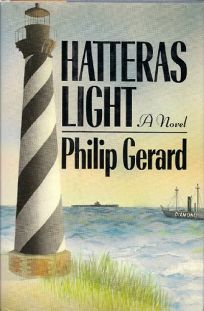
Hatteras Light by Philip Gerard

w204
Hatteras Light: A Novel, by Philip Gerard

Hatteras Light, by Philip Gerard, took me to the beautiful Hatteras Lighthouse on the Outer Banks of North Carolina during the tense days of World War I when German U-boats and submarines trolled the Atlantic coast of the United States. This book was the August selection for the Rocky River Readers Book Club.

Hatteras Light follows the lives of the few residents of Hatteras Island in the early 1910s, particularly the people associated with the maintenance of the Hatteras Lighthouse and their efforts to rescue people in peril on the sea.

This was hard and lonely work. It took a special kind of person to acclimate to the demands of the job. The waters off Cape Hatteras are known worldwide as “the graveyard of the Atlantic” because the treacherous clashing of the cold waters of the Atlantic Ocean and the warm Gulf Stream (from the Gulf of Mexico) cause constantly changing conditions that have resulted in the sinking of hundreds of ships.

The Germans had already torpedoed an oil tanker, the resulting blaze literally getting the attention of everyone on Hatteras Island. The US Navy was too busy protecting the more densely populated Mid-Atlantic coast to come to the aid of the keepers of the Hatteras Lighthouse who did double duty of going out to sea to try to rescue anyone in peril.

Tensions were coming to a head at a community meeting when Ham Fetterman said the following:

“ ‘ I have lived longer than ever I hoped or wanted,’ Fetterman said. ‘I have seen Yankees and pirates and bootleggers and a good deal worse. And now I’ve seen this, too. And I tell you:  this is different. This murderous lurking Teutonic bastard is hunting by the Light – our Light! He navigates by it, he ambushes by it, he kills by it…. With that Light, he is damn near invincible.’ ”

Fetterman was a true Hatterasman, meaning he was born and had lived on Hatteras Island all his life. He was someone others listened to because of his age and his experience as a Hatteras Islander.

Someone else in the meeting spoke up and suggested they rig up a false light like had been done at Nags Head years before. Then, Fetterman said their only choice was to turn off the Hatteras Lighthouse Light.

Did they? I suggest you read Hatteras Light, by Philip Gerard, to find out.

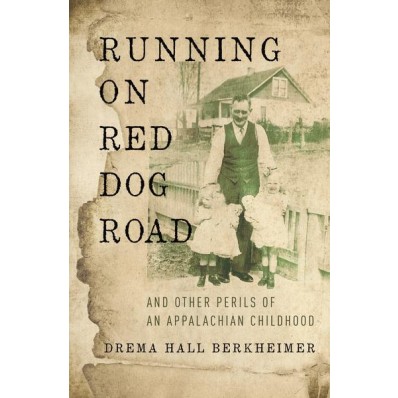
Running on Red Dog Road and Other Perils of an Appalachian Childhood, by Drema Hall Berkheimer

9780310344964.jpg.1442560708
Running on Red Dog Road, by Drema Hall Berkheimer

I need to start jotting down where or how I hear about a book I want to read. I can’t recall how I learned about this one, but I’m glad I did. I found it at the public library and devoured it in three days. It is just 200 pages, but I’m a slow reader. Any time I read a book in three days, take it as a compliment.

The author grew up in West Virginia and writes humorously but lovingly and respectfully about her childhood there in the 1940s. Although I grew up in the piedmont (not the mountains) of North Carolina in the 1950s, I could identify with many of the things she wrote.

I never had a grandmother, though, and Ms. Berkheimer writes a lot about the grandmother who pretty much raised her while her mother was off in New York helping to build airplanes for the World War II effort.

Ms. Berkheimer and I grew up in a simpler time than the one we’re living in now. Home-canned produce from the garden, lightning bugs, playing Red Rover, church being the center of one’s social life, and many old sayings used in the book – all these rang true with me and brought to mind fond memories of my childhood.

I loved her memory of church fans:

“Paper fans always stood ready in the wooden rack on the back of each pew, along with the hymnals. Each fan was the size of a small paper plate and had a flat stick attached as a handle. Sometimes you got a fan with a picture of Jesus on one side and Scripture verses on the other, while another time your fan might advertise a bank or a furniture store.” ~ Drema Hall Berkheimer

The church where I grew up always had those same fans, but the back side advertised one of the two funeral homes in the county. Hence, they were always referred to as “funeral home fans” at Rocky River Presbyterian.

If you’re looking for a book that harkens back to rural and small town American life a few decades ago, this is the book for you.

Until my next blog post

I hope you have a good book to read. If you’re a writer, I hope you have quality writing time.

Janet