Three Other Books I Read in January 2024

January brought me lots of books and time to read them. Last week’s blog post talked about three books I read last month. Today’s blog is about three other books I read. Next week, I’ll blog about the other four books I read in January.

The Woman in the White Kimono, by Ana Johns
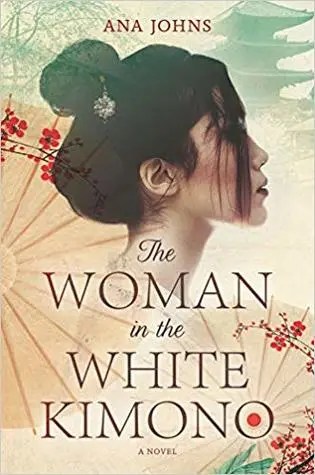
Photo of book cover for The Woman in the White Kimono by Ana Johns features a profile image of a Japanese woman with her hair up and her face partially hidden by her black hair.
The Woman in the White Kimono, by Ana Johns

It is not often I get to read a book that I hate to put down – one I just have to read “one more chapter” before stopping to do something else. The Woman in the White Kimono was one of those novels.

I learned about this historical novel by being a member of the Historical Fictionistas group on Goodreads.com.

This is one of the best historical novels I’ve read in a long time. Well-researched, it takes the stories of mixed-race babies born to Japanese women and American military personnel before, during, and after the post-World War II Allied Occupation of Japan. There were 10,000 such babies, and the ones that survived were ostracized.

This novel grew out of the author’s own father’s story. Hearing bits and pieces of his story spurred her on to do extensive research in Japan and weave a compelling piece of fiction.

This is a can’t-put-downable novel of racial prejudice and the power of love. I don’t usually like novels with alternating timelines, but this one worked – and maybe wouldn’t have worked well chronologically.

In additional being based on good research, I was captivated by the beautifully-written prose.


Sisters Under the Rising Sun, by Heather Morris
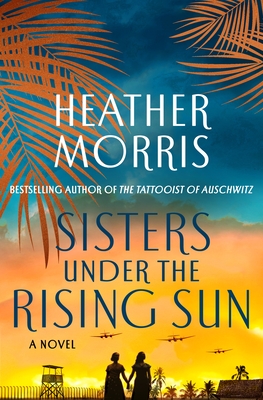
Photo of book cover for Sisters Under the Rising Su
Sisters Under the Rising Sun, by Heather Morris

If you have followed my blog for several years, you may recall that I have blogged about three earlier historical novels and one nonfiction book by Heather Morris. (The Tattooist of Auschwitz in Many Good Books Read in October! on November 5, 2018; Cilka’s Journey in I stretched my reading horizons in November on December 2, 2019; Three Sisters in Books Read in December 2021 on January 3, 2022; and Listening Well: Bringing Stories of Hope to Life in Spy Thriller, WWI Novel, Nonfiction, and Historical Mystery Read Last Month on October 10, 2022.)

I praised each of those books, and I recommend Sisters Under the Rising Sun to you, too.

Heather Morris, a New Zealand author, has a way of taking a great amount of information from historical research and in-depth interviews with the survivors of an event – or their descendants – and turning their experiences into unforgettable historical fiction.

Sisters Under the Rising Sun is the story of 65 nurses in the Australian military and some British, American, and Dutch civilians who were captured by the Japanese and held prisoner for three years and seven months on Sumatra, Indonesia during World War II. Although only 24 of the 65 nurses and an undisclosed number of civilians survived the war, this is the remarkable story of their heroism, tenacity, and dedication to each other. It is a story of sisterhood and self-sacrifice. It is based on real people and their experiences under horrendous conditions.

More than 65 individuals are mentioned by name in the narrative portion of this book, so I recommend that you keep a running list of characters as they are introduced because, unless you read the Author’s Notes at the end of the novel first, you won’t know which characters you need to remember.

There are a couple of biological sisters whose stories are woven throughout the book as well as the stories of the Australian nurses. It is the practice in Australia to refer to a nurse as “Sister,” so the title of the book has a double meaning.

There has been a spate of World War II novels published over the last few years, so you might be growing weary of them. I recommend you read one more: Sister Under the Rising Sun, by Heather Morris.


We Must Not Think of Ourselves, by Lauren Grodstein
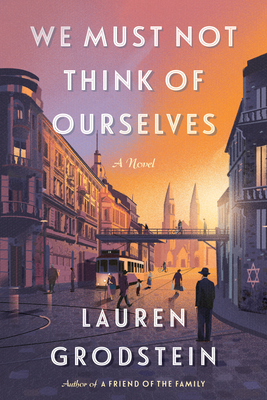
Photo of book cover for We Must Not Think of Ourselves: A Novel, by Lauren Grodstein. It is a downtown street scene and the Star of David is on one of the buildings.,
We Must Not Think of Ourselves, by Lauren Grodstein

Although a novel, the author bases this book on real life accounts she has researched. The premise is that certain Jews in Warsaw, Poland were selected to write notes about their treatment and what they observed starting in 1940 so, if they were survived by their notes, the world would eventually learn what persecutions the Jews endured under Nazi Germany. The project was called Oneg Shabbat.

The story follows a Jewish widower, Adam Paskow, who had been an English teacher and was fluent in five languages. The gradual persecution of the Jews is chronicled as one right after another is taken from them until their homes and businesses were confiscated and they were forced behind locked gates into crowded and deplorable circumstances in what came to be called the Warsaw Ghetto.

The author artfully takes written accounts from many people and turns them into Adam’s story and reflections. The narrative chapters are interspersed with interview-type chapters.

I liked how the author, through dialog at the Oneg Shabbat meetings, included bits of news about the war. For instance, by the spring of 1941 the Oneg Shabbat participants knew about the gas chambers at Auschwitz. That information filtered down from Polish resistance spies, POW escapees, and Russian soldiers captured by the British.

One thing that comes through in the book is how the people of Poland were wondering why the United States wasn’t yet willing in 1941 to send troops to help them. They reasoned that if they knew it in the Warsaw Ghetto, surely the United States knew it. They wondered why the US was willing to help convey ships across the Atlantic Ocean while unwilling to commit troops to the war.

Interwoven throughout the novel is the love story of Adam and his wife, Kasia. She dies before he is forced into the ghetto to live in a cramped apartment with strangers. Over time, he and Sala fall in love; however, Sala’s husband lives there, too, which creates an awkward situation. Adam and Sala’s story reflects the desperation and hopelessness the Jews lived with. It was a hopelessness that grew by the day.

The people in the ghetto survived by selling or bartering with their meager possessions. Adam carefully sold every item of his wife’s that he’d been able to take into the ghetto. Will he have anything of value left in the end to secure papers that will give him a chance to escape from Poland before he’d shipped to Auschwitz?


Until my next blog post

I hope you have a good book to read. I’m reading a novel and a nonfiction book.

Remember the people of Ukraine.

Janet

Books Read in December 2021

December brought me too many books. What a nice problem to have! By the last week of the month, I felt overwhelmed and decided to return several unfinished books to the public library.

Here are my takeaways from the five books I finished reading last month.


Three Sisters, by Heather Morris

Three Sisters, by Heather Morris

Three Sisters is the third in a series of historical novels by Heather Morris, and I’ve thoroughly enjoyed all of them. If you’re a fan of World War II-era historical fiction or, specifically, novels regarding the treatment of people of the Jewish faith during that era, you should try Heather Morris’ books.

In my November 5, 2018 blog post, Many Good Books Read in October!, I wrote about The Tattooist of Auschwitz. I wrote about Cilka’s Journey in my December 2, 2019 blog post, I stretched my reading horizons in November.

Like her first two novels, Three Sisters is about Jews surviving the Holocaust. Cibi, Magda, and Livia survive the horrors of Auschwitz and two of them go on to help build the new Jewish state of Israel after World War II.

Each of Ms. Morris’ books is a story of the indominable human spirit. Knowing they are based on true stories and real people make them all the more compelling. Two of the sisters in Three Sisters are still alive in their late 90s and living in Israel.


The City of Mist, by Carlos Ruiz Zafón

The City of Mist, by Carlos Ruiz Zafon

A cousin, Jerome Williams, introduced me to the writings of Spanish author Carlos Ruiz Zafón a couple of years ago.  I read The Shadow of the Wind by Señor Zafón in November 2019 and wrote about it in my December 2, 2019 blog post, I stretched my reading horizons in November. (Sound familiar? That’s also when I read Cilka’s Journey, by Heather Morris.)

Señor Zafón died June 19, 2020, at the age of 55. He wrote the 11 short stories in The City of Mist for intended publication after his death. The book was published in November 2021.

The stories are, for the most part, set in Barcelona and are set at various times over the last 600 years. They are more macabre than I usually read, but I’d liked The Shadow of the Wind. When I discovered The City of Mist quite by accident while searching the online public library catalog for short stories, I immediately checked it out. I listened to the audiobook on Overdrive. It was excellently read.

If you enjoy short stories and don’t mind if they’re much on the dark side, you’d probably like The City of Mist. Though dark and often dealing with death, Señor Zafón’s sense of humor did come out several times in the collection. An example of his ability to slide a bit of humor into an otherwise serious story is the tenth story in the book, “Gaudi in Manhattan” in which he has a bit of fun with the English language.


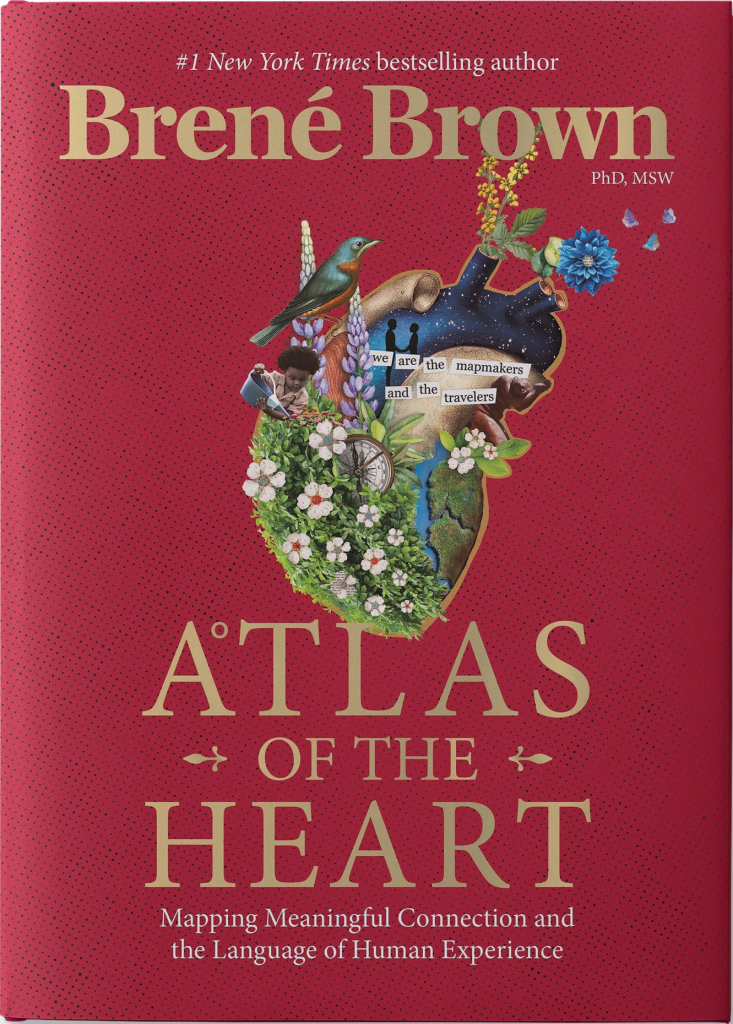
Atlas of the Heart: Mapping Meaningful Connection and the Language of Human Experience, by Brené Brown

Atlas of the Heart, by Brene Brown

Brené Brown has a way of getting down to the nitty-gritty and expressing her thoughts and research in a way I think just about everyone can relate. Her latest book, Atlas of the Heart: Mapping Meaningful Connection and the Language of Human Experience, helped me personally and helped me with my writing.

This book is about human emotions and behavior. She takes each one on individually, but the book is divided in chapters by groupings of those emotions.

The surprise for me was how the way she addressed certain emotions/behaviors played right into what I’m trying to convey in the novel I’m writing. I love when that happens.

Some of the things she writes about in this book shed light on some things going on in the political arena in the United States. She did this without calling names, but some passages helped me understand the actions of a certain past US President and his diehard followers. It didn’t make me feel any better about the recent past or the future, but it gave me some insight.


How to Write a Series: A Guide to Series Types and Structure Plus Troubleshooting Tips and Marketing Tactics, by Sara Rosett

How to Write a Series, by Sara Rosett

Fairly early on as I started working on my novel (working title either The Spanish Coin or The Doubloon), I started visualizing it as the first book in a series. Reading How to Write a Series…, by Sara Rosettlast month was quite helpful.

The book made me aware of a few things I hadn’t considered. One thing that has concerned me about the protagonist in my manuscript is that she doesn’t have a robust character arc. How to Write a Series made me see that it’s all right for a character to have a flat arc.

There are basically two kinds of series: (1) multi-protagonist and (2) single protagonist. I foresee my series – if I can pull it off – to be a single protagonist series. There are two types of single protagonist series: (1) flat arc protagonist and (2) robust arc protagonist.

One thing I’ve spent time contemplating in the last several weeks is how many books I think I can plot using the protagonist in my current manuscript and how I can make her strong enough to carry multiple books.

Just because I’m sitting, looking off in the distance, doesn’t mean I’m not working!


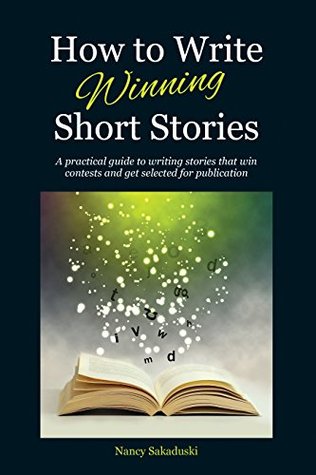
How to Write Winning Short Stories: A Practical Guide to Writing Stories that Win Contests and Get Selected for Publication, by Nancy Sakaduski

How to Write Winning Short Stories, by Nancy Sakaduski

I’ve written several short stories, two of which have been published. I’m working toward publishing a collection of short stories as soon as I have enough finished to make a good little e-book.

I happened upon this book at the public library and found it beneficial not only in writing short stories but in writing a novel. It’s a good “nuts and bolts” book of basics about writing fiction with an emphasis on short stories, but I found many useful tips and recommendations I can apply to novel writing.

Since my last blog post

I learned something about the celebration of Christmas that necessitated my moving a scene in the novel I’m writing from Christmas Day to New Year’s Day. It has to do with the Protestant Reformation and traditions in Scotland. I really should have known.

I’ve been going through my novel’s manuscript with K.M. Weiland’s writings about novel structure in mind, making adjustments here and there. Finishing that process gave me a sense of accomplishment.

When I checked some of the statistics for my blog on December 31, I was astonished to learn that people in 77 countries visited my blog in 2021. The most surprising was the 27 visits from within China.

Until my next blog pot

I hope you have a good book to read.

I plan to continue editing my novel. It’s been fun to get back to writing about trying to read too many books last month!

In 2022, let’s all seek peace and understanding.

Janet

I stretched my reading horizons in November

The books I read in November took me to Auschwitz, Barcelona, Boston, Philadelphia, a plantation in Virginia, and a gulag in Siberia. Today I’ll write about three of the seven books I read in November. Four of the seven were written by authors that were new to me.


The Shadow of the Wind, by Carlos Ruiz Zafόn

This author was recommended to me by my cousin, Jerome Williams. Actually, he recommended celebrated Spanish novelist Señor Zafόn’s latest book, The Labyrinth of Spirits. It being the fourth and final book in the Cemetery of Forgotten Books series, I thought it best that I read the first book in the series first – The Shadow of the Wind.

The Shadow of the Wind, by Carlos Ruiz Zafon

When I read reviews of The Shadow of the Wind, I discovered people either raved about it or hated it. People who didn’t like it wrote scathing reviews. Author Kristin Hannah gave it five stars on Goodreads.com and author Diana Gabaldon gave it four stars on that same website. I tend to trust Jerome’s judgment and that of Ms. Hannah and Ms. Gabaldon, so I downloaded the MP3 edition of the book onto my tablet.

I was immediately drawn into the book with its beautiful description of books! In fact, it was the author’s wit and descriptive language are what I liked most about the book. The book continued more off-color language than books I usually read, but the language suited the characters. I mention this, in case you are overly-offended by such language. You might not want to read it, if that’s the case.

Nevertheless, I enjoyed listening to the book and laughed out loud on numerous occasions. I wish I had mastered Spanish in high school and college so I could read The Shadow of the Wind in its original language.

What is the book about? It’s a coming of age tale that begins with a ten-year-old boy, Daniel. His father, a bookseller, takes him to the Cemetery of Forgotten Books. This secret “library” of endless shelves and twists and turns houses rare books – books that have been forgotten. Daniel is instructed to select a book to save. He chooses The Shadow of the Wind, by Julian Carax.

Daniel is obsessed with finding out everything he can about Julian Carax and, in particular, why his books weren’t well-known. This obsession leads Daniel into a string of dangers and a host of characters. It is believed his copy of The Shadow of the Wind is the last surviving copy of Julian Carax’s book because someone is methodically stealing and burning copies of the book. We eventually find out about the sad life of Julian Carax.


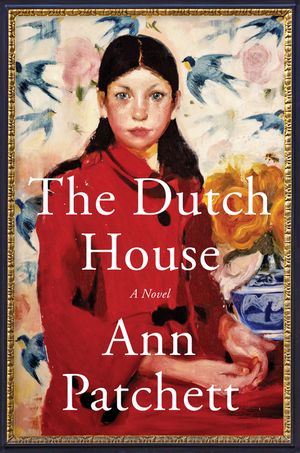
The Dutch House, by Ann Patchett

I started reading The Dutch House, by Ann Patchett and immediately liked it. Not far into it, the CD edition became available at the public library and I switched to listening to the novel. It was read by actor Tom Hanks. I should say, it was read to perfection by Tom Hanks.

The Dutch House, by Ann Patchett

The Dutch House is a novel about a dysfunctional family. The breaking point is when the mother leaves and doesn’t come back. There are two children. Maeve is the older of the two and is very protective of her younger brother, Danny. The story is told from Danny’s viewpoint from his childhood and well into his adulthood.

Things spiral downward when Maeve and Danny’s father remarries and brings his new wife and her two small daughters into The Dutch House. There are many layers to this novel as all the family dynamics are explored, as well as how the individuals who worked at the house played into the scenario.

The house in which Maeve and Danny lived as young children is called The Dutch House because it was built by a couple from the Netherlands. It is a grand house and it is as important in the story as any of the characters. The house is, in a way, the main character.

Although the overall plot is a sad and tragic tale, there are moments of humor which Tom Hanks presents as only he can. Reading the book is enjoyable, but I highly recommend the CD edition. That might be a first for me!


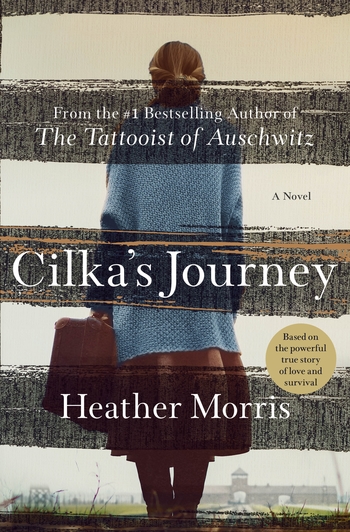
Cilka’s Journey, by Heather Morris

This historical novel left me in awe of the real-life Cilka as well as the author. You may recall that I read The Tattooist of Auschwitz, by Heather Morris, in October of last year. Here’s a link to the blog post in which I wrote about that historical novel:  https://janetswritingblog.com/2018/11/05/many-good-books-read-in-october/. That book really made an impression on me, so I jumped at the chance to read Ms. Morris’ new novel.

Cilka’s Journey, by Heather Morris

In Cilka’s Journey, the author expands on the life of a teenage girl being held at Auschwitz-Birkenau Concentration Camp in her earlier novel. Ms. Morris is a master of historical fiction and makes me wonder if I have what it takes to write in that genre.

Cilka spent three years in captivity at Auschwitz-Birkenau. At the end of World War II in Europe, [SPOILER ALERT:  instead of being set free by her Russian liberators she is charged with sleeping with the enemy (which was not by choice!) and is sentenced to 15 years in a gulag in Siberia!]

Cilka is a natural-born caregiver and learns the nursing profession while a prisoner. She lives a life of unbelievable loss, suffering, and abuse before being allowed to return to her native Czechoslovakia in the 1950s. (Czechoslovakia is, of course, now the Czech Republic.)

It is historical novels like this that remind me that I have lived a charmed and sheltered life compared to millions of other people in the world. I highly recommend Cilka’s Journey. I listened to it on CD. It was beautifully-read by Louise Brealey and contains lots of background information and an interview with the author at the end.

Lale Sokolov, the real-life Auschwitz survivor we learned about in The Tattooist of Auschwitz, said of Cilka, “She was the bravest person I ever met.”


Until my next blog post

I hope you have a good book to read. I’m reading Nothing More Dangerous, by Allen Eskens and listening to Talking to Strangers, by Malcolm Gladwell.

If you’re a writer, I hope you have productive writing time.

Thank you for reading my blog. You could have spent the last few minutes doing something else, but you chose to read my blog.

If you enjoy my blog posts, please share that on social media and with your real life friends. Don’t be shy about telling others about my blog!


Let’s continue the conversation

I’m always interested to know what you’re reading. Please tell me in a comment.

Janet