The Other Books I Read (or Meant to Read) in June 2023

June turned out to be a strange month of reading for me. If my blog post last week didn’t convince you of that, just wait until you read today’s post.


Yellowface, by R.F. Kuang

Yellowface, by R.F. Kuang

I heard R.F. Kuang interviewed about her new novel on “Friends and Fiction” on Facebook on May 24, 2023 – the same night Lee Smith was a guest. The New York Times called it, “a blistering satire about publishing.”

This novel might appeal more to writers than “normal” readers. It’s about two young women who barely know one another. One is an outrageously successful author, while the other on is living hand to mouth. When the successful writer chokes to death, the other writer steals her unfinished manuscript and gets it published under her name. No one will be the wiser… or will they?

One of the threads throughout the book is racism. Not the usual way we tend to think of racism: white versus black. The racism running through this book is white versus Asian.

There was an unexpected twist at the end of the book.

I Will Find You, by Harlan Coben

I Will Find You, by Harlan Coben

It had been a while since I’d read a Harlan Coben novel, so I decided to give his new one a try. I listened to it on CD. The nine discs last just a little more than 10 hours, so I was able to set aside time to listen to one disc per day.

In this novel, David Burroughs is wrongly imprisoned for killing his three-year-old son. But did his son really die? After five years in prison, David is determined to find his son.

Time Management for Writers, by Sandra Gerth

Time Management for Writers, by Sandra Gerth

I needed this! I have all the time in the world, and yet I don’t seem to get anything accomplished. This little gem of a book gave me some practical suggestions and a systematic way to organize my time. I read it the first week in June, so I’ve had almost month to work out some new scheduling ideas. I say “almost a month” because I spent five days in Georgia to attend the wedding of one of my great-nieces.

The book addresses such time killers as email and social media and recommended that those things only be checked twice a day. It suggested “bundling” similar tasks such as working on the content for several blogs on the same day, selecting the photographs to illustrate those posts another time or day, and scheduling the blogs another time.

I’ve always given myself goals for when to complete certain tasks involved in writing a book or short story, but this book was a strong reminder that I need to be serious about those “deadlines” and be accountable to someone else for meeting those goals.

If you feel overwhelmed, this book might help you even if you aren’t a writer.

Grow Your Own Herbs: The 40 Best Culinary Varieties for Home Gardens, by Susan Belsinger and Arthur O. Tucker

This is a book I checked out from the public library to look for some specific information I need for the historical novel I’m writing. I decided to include it in today’s blog post because some of my readers might be interested in the book.

I you have any interest in growing herbs and using them in your kitchen, I recommend this book. It contains detailed information for growing, harvesting, and using 40 herbs. It includes recipes for herb butters, pastes, oils, and vinegar infusions.

The 180-page section about those 40 herbs is beautifully illustrated and organized in a way that makes it easy to find specific information you’re looking for. It made me wish I could grow all 40 of them! Unfortunately, I don’t have much of a green thumb when it comes to growing herbs.

Three books I won’t elaborate on because I read them for research purposes:

The Ultimate Guide to Old-Fashioned Country Skills, edited by Abigail R. Gehring

Edible Paradise: How to Grow Herbs, Flowers, Veggies and Fruit in Any Space, by Vera Greutink

How to Write a Series: A Guide to Series Types and Structure plus Troubleshooting Tips and Marketing Tactics, by       Sara Rosett (Kindle) – This was a second reading of this book. I read it the first time in December 2021 and wrote about it in my January 3, 2022 blog post, Books Read in December 2021.

Books I didn’t finish reading in June and why:

Loyalty, by Jodi Picoult

I made the mistake of requesting this novel on CD from the public library. I eagerly popped the first disc into my CD player and settled back to enjoy another Jodi Picoult novel. Unfortunately, right off the bat, the narrator in his Italian accent (which should have been – and maybe was – a good match for a story set in Sicily) immediately read a list of the characters in the book along with their occupations or how they were related to the other characters.

After listening to a seemingly endless cast of characters whose names I’d never be able to understand or remember, I stopped the CD before getting to the first chapter.

I should have counted the characters. I’m guessing there must have been 20 or so.

Reading the novel might be easier than listening to it, but I don’t plan to try.

The Castle Keepers, by Aimie K. Runyan, J’nell Ciesielski, and Rachel McMillan

This book is a collection of three novellas written by Aimie K. Runyan, J’nell Ciesielski, and Rachel McMillan. When I first read about the book, I was under the conception that each author wrote one novella, and perhaps that’s true. My surprise, upon getting the book from the public library was to learn that it is not revealed which author wrote which novella in the collection.

The book follows one family. The first novella takes place in 1870. The second novella is set in 1917, and the last one is set in 1945. Most of the reviews I read mentioned that the first two novellas were better than the third one.

Due to the small print and my attention being pulled to historical research, I ended up returning this book to the public library unread. Maybe I can give it another try at a later date.

The Lost English Girl, by Julia Kelly and The Midwife of Auschwitz, by Anna Stuart

I returned these two historical novels to the public library after realizing I wasn’t going to have time to read them, even though the Julia Kelly book was large print. Maybe another time will work for me to read and enjoy them.

Since my last blog post

I was able to send out my Janet Morrison Books July 2023 Newsletter after overcoming some technical issues. I hope you received your issue via email. If you have subscribed, please visit http://www.janetmorrisonbooks.com and click on the “subscribe” button. As a bonus, you’ll receive a downloadable copy of “Slip Sliding Away: A Southern Historical Short Story” I enjoyed writing.

Yardwork keeps calling my name, but with the heat index of around 100 to 106 degrees F. nearly every day, I have to pick and choose the time of day and length of time I work. Progress has been at a snail’s pace.

I’ve been working on several historical short stories.

Until my next blog post

I hope you have a good book to read – one that will whisk you away from the stresses in your life, entertain you, educate you, and give you a new perspective. I’m reading Cradles of the Reich, an historical novel about part of Hitler’s plan for creating a master race, by Jennifer Coburn.

Cradles of the Reich, by Jennifer Coburn

Spend time with friends and family. Remember the treasure they are, even if they don’t agree with you about politics.

Remember the people of Ukraine.

Janet
What I Read in March 2023 & My Thoughts about Book Banning

After reading three good historical novels in February, I was disappointed that I didn’t get to read as much in March. That’s just the way it goes. As I try to do every month when I blog about the books I read the previous month, I repeat that I am not a book reviewer. I merely like to share with you what I read. Perhaps your interest will be piqued and you’ll decide to read some of the books I’ve enjoyed.


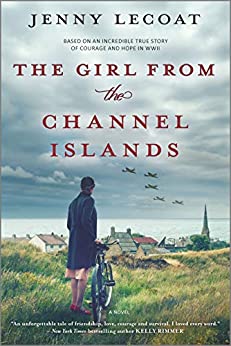
The Girl From the Channel Islands, by Jenny Lecoat

The Girl From the Channel Islands, by Jenny Lecoat

I listened to this historical novel on CD borrowed from the public library. I enjoy listening to a disc late at night, even though I have to deal with an occasional scratch on the disc which causes me to miss bits of the story.

Hedy Bercu, the protagonist in this novel, flees Austria in 1938 to escape the Nazis. She thinks she’ll be safe in Great Britain’s Channel Islands but, as World War II drags on and the islands are occupied by Germany, Hedy lives in constant fear that the wrong people will discover that she is Jewish.

The author, Jenny Lecoat, was born in the Channel Islands 16 years after some members of her family were deported by the Nazis and taken to concentration camps due to their resistance activities. This is Ms. Lecoat’s debut novel. I look forward to reading whatever she has in store for us next.


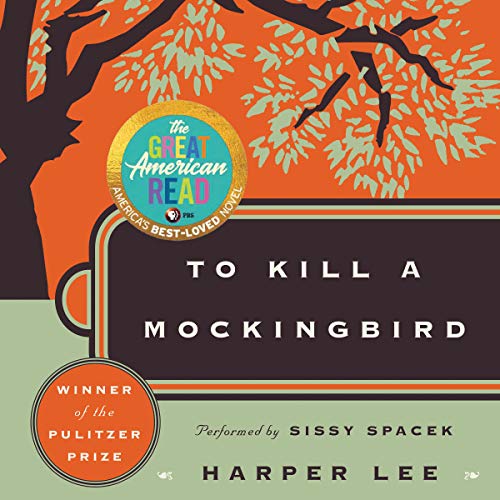
To Kill a Mockingbird, by Harper Lee

To Kill a Mockingbird, by Harper Lee

Although Banned Books Weeks is six months away, the increasing attacks on books in the United States prompted me to reread Harper Lee’s masterpiece. Instead of reading it in printed form this time, I decided to listen to Sissy Spacek’s performing of it on CD. I haven’t quite finished it, but I decided to include it in today’s post so The Girl From the Channel Islands wouldn’t have to stand alone.

It baffles me why people in 2023 want to ban To Kill a Mockingbird from school and public library shelves because it portrays the discrimination black people suffered in the 1920s or 1930s and, because at the same time, it portrays a white lawyer defending a black man who has been wrongfully arrested and charged.

I am against all book banning. One only needs to look at what happened in Germany in the 1930s to see what the results are.

If you don’t want your child to read a certain book, that’s your prerogative; however, you don’t have the right to dictate what anyone other than yourself and your children read.

Just because you are offended by a word in a book doesn’t make it a bad book. If you think you can erase the history of slavery, prejudice, and civil war in the United States by removing those references from books, you are mistaken.

If you think by removing sex education from school curriculum you will end all teen pregnancies, you’re only fooling yourself.

People who are afraid of knowledge and try to force their fears on the masses are the most dangerous people in the world.


Since my last blog post

I’ve tried to start overcoming the toll the challenges of the last eight months have taken on my limited energy.  Getting my two local history books published and working toward the publication of a family cookbook have been fun, challenging, frustrating, draining, and rewarding — all at the same time. April 25 will mark the 36th anniversary of when I first became ill with Chronic Fatigue Syndrome. Please don’t laugh. It’s a real illness. I have pushed myself too much since last July to accomplish some long-term dreams to get my local history writings published, and now I’m paying the price.

I’ll continue to push myself because that’s what I do and I don’t know how to live otherwise; however, in the coming weeks I’ll try to be a little kinder to myself and take some time to smell the roses.


Until my next blog post

I’ll start preparing for my Author Meet & Greet scheduled for April 15 at Second Look Books in Harrisburg, North Carolina.

I’ll reevaluate the family cookbook my sister and I have compiled. I’ve encountered a problem in the formatting for a paperback edition, so it might just be an e-book. That would be disappointing.

I hope you have a good book to read. If you’ve purchased Harrisburg, Did You Know? Cabarrus History, Book 1 and Book 2, I hope you’re enjoying them.

If you’ve subscribed to my newsletter and, therefore, downloaded a free copy of my southern historical short story, “Slip Sliding Away,” I hope you’ve enjoyed that small sample of my fiction writing.

Remember the three children and three adults murdered in that private school in Nashville, Tennessee. Remember how your local, state, and national politicians vote on assault-style weapons designed for war when the next election rolls around.

Remember the people of Ukraine.

Janet

To Nitpick or Not to Nitpick? That is the Question.

Are you as surprised as I am to learn that the word “nitpicking” first came into use in 1956? That means I’m older than the word nitpicking!

          It also means I can’t use “nitpick” or any form of the word in my historical fiction writing.

Nitwit

          One of my characters wanted to call another character a nitwit. That’s what led me to my discovery about nitpicking. It turned out that I can’t use nitpick, nitpicking, or nitwit in my historical fiction writing, unless I move my stories from the 1760s to the 1960s. That’s just not possible, unless I plunge my characters into a time warp.

          In case you care, “nitwit” wasn’t in common usage until around 1922. I don’t propose that you or I call people hurtful names, but I can’t help what my fictional characters do or say.

Guidelines for historical fiction

          There are words we use in everyday life without giving (or needing to give) any thought to their origins. That would make life beyond tedious. That’s not what I’m talking about here.

Photo by Brett Jordan on Unsplash

          As a writer of historical fiction, I must be careful not to include a word not in common usage at the time of my short story or novel. If one of my 18th century characters used the word “nitwit,” you might not notice; however, if one of my 18th century characters said “telephone” it would yank you right out of the story and it would ruin my credibility. It is through that process of checking on certain words that I’ve happened upon many surprises.

          My surprises fall all along a spectrum. There are words such as nitpick that I would’ve guessed had been in use for centuries. On the other hand, I didn’t expect that the term “fast lane” was in common use before the year 1050. (That’s not a typo. The year 1050.) After seeing that while I was looking up a different word, I began to doubt myself and wondered if I needed to look up every word I wrote.

          Of course, that’s not practical. By writing about this today I’ve probably opened myself up to a great deal of scrutiny when my historical short stories and my first historical novel are eventually published. Knock yourself out! I’m doing the best I can.

Concerted effort

          Today’s blog post falls into the same quirky category as an earlier one. In the title of one of my 2018 blog posts I asked if an individual can make a concerted effort. The point of that post was that by its very definition it takes two or more people working together to make a concerted effort.

          One of my blog readers took me to task on that one. She insisted that she always made a concerted effort in everything she did. She seemed insulted by my blog post and missed my point.

          It wasn’t my intent to insult anyone or hurt anyone’s feelings. I was merely pointing out a nuance in the English language. I’m attempting to be a writer. It comes with the territory.

          Words are fascinating!

Until my next blog post

Keep reading books.

When you read a good book, be sure to tell the author by writing a review or even writing a letter to the author. You should be able to reach them through their website.

Remember the brave people of Ukraine. It saddens me that only 49% of registered voters in North Carolina voted in the mid-term election last Tuesday. Democracy is a fragile thing. We don’t have to share a border with Russia to know that.

Thank you for reading my blog today! I hope to see you here again next Monday.

Janet
One Historical Fiction Misconception that Keeps You from Reading It

Not everyone wants to read historical fiction. I understand that. There are several fiction genres that I don’t enjoy, so I avoid them. There are too many books I want to read to take time to read genres that don’t appeal to me. For instance, horror.

I happen to like historical fiction, but there is one big misconception that might be keeping you from reading novels that fall in that category.

Okay, what is that misconception?

Since the word “fiction” is part of the name of the historical fiction genre, there is a misconception that novels in the genre are not historically accurate. If you read reputable historical fiction writers, you know that couldn’t be further from the truth.

The Ballad of Tom Dooley: A Ballad Novel, by Sharyn McCrumb

I had the privilege of hearing Sharyn McCrumb speak in conjunction with the publication of the ninth novel in her ballad series, The Ballad of Tom Dooley. Ms. McCrumb is a meticulous historical researcher. In her speech that day, she adamantly pointed out that some historical fiction books are better researched than history books.

That has really stayed with me more than a decade after hearing Ms. McCrumb speak.

When considering to read a historical novel, I suggest you turn to the back of the book and read the Author Notes. Very often there are several pages after the last chapter in the book in which the author explains her inspiration for the book and a bit of the research involved in writing the book.

The topic of literary license is often addressed in the Author Notes. Good historical fiction writers are transparent and quick to point out any instances in which they adjusted the time or place of an event to make the story flow more smoothly.

You might not be convinced yet to read historical fiction. You might think that just because historical novels contain conversations that cannot be documented, the book cannot be trusted as being true. If written by a conscientious writer, conversations and narrative in the novel will be true to the time and place to the best of the author’s ability. Keep in mind that it’s a work of fiction, and don’t get bent out of shape if some of the dialogue doesn’t ring true to you.

I write history and I write historical fiction. The research I do for the writing of historical fiction is just as detailed and important as the research I do for the writing of history.

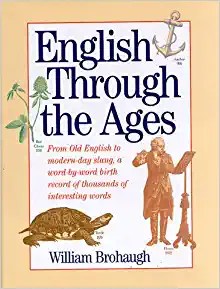
English Through the Ages, by William Brohaugh

You might be surprised to know that in the 1760s historical fiction I’m writing, I’m careful not to use words that were not in general use during that time. I keep English Through the Ages, by William Brohaugh within arm’s reach while I’m writing. Sometimes there is a perfect word I want a character to say but then I discover it wasn’t in general usage until later. I have to find another word.

And you thought I spent all my time just gazing out the window and eating bonbons!

Next week’s blog post topic

Next week I plan to blog about something that happened on October 31, 1849 in Cabarrus County, North Carolina. I wrote about it for a newspaper article a few years ago. I look forward to sharing a bit of that well-researched article with you on my blog.

Since my last blog

I’ve worked on my novel, The Heirloom, every day except yesterday. (I really try to set aside Sunday as a day of rest.) I feel great about how the manuscript is coming along. I’m really having fun with it, imagining myself on The Great Wagon Road in 1766.

I’ve made progress toward getting my website redesigned. I’m excited about that and will keep you posted.

I finished formatting Harrisburg, Did You Know?—Book 1 on Saturday. The proofreading will take another couple of weeks. By then, I hope to have a photograph to use for the cover. Everything seems to be falling in place within the publication schedule I set for myself. By this time next month, I hope to be close to it being available as an e-book.

A word about my blog

You might have noticed on my blog where it says “Join ___ other followers,” the number plummeted this week. I spent the better part of an hour in chat with WordPress tech support before they identified the cause.

The verdict was that the widget that enables me to show the number of followers on my blog changed last week without bloggers (or apparently tech support) being told.

On Wednesday it said, “Join 2,104 other followers,” but on Thursday night it said, “Join 988 other followers.” My heart sank! Tech support stayed on the case until it was determined that now the widget only displays the number of email and WordPress bloggers who follow me. It no longer includes the 1,000+ people who follow my blog on social media.

If you have a WordPress blog, did you notice this change?

Until my next blog

I hope you have a good book to read – and time to read it!

Remember the brave people of Ukraine.

Janet

Spy Thriller, WWI Novel, Nonfiction, and Historical Mystery Read Last Month

In addition to the three novels I blogged about last week, in September I read three other novels and one nonfiction book. It’s my pleasure today to blog about those four books. I hope at least one of them will appeal to you enough that you’ll decide to read it. Support your local public library and your local independent bookstore!


The New Neighbor, by Karen Cleveland

The New Neighbor, by Karen Cleveland

I read Need to Know, by Karen Cleveland in March 2018 and blogged about it in my April 2, 2018 blog post, More March 2018 Reading. I really enjoyed that novel, so I don’t know what it took me more than four years (has it really been four years since 2018?) to read another of her books.

The New Neighbor is a spy thriller. The main character and most of her neighbors on a quiet cul-de-sac work for the CIA. She’s been trying to identify and take down a spy who is working against the United States for 18 years of her career. The code name for this person is “The New Neighbor,” so it’s a constant play on words throughout the book – Is the new neighbor the actual new neighbor on the cul-de-sac, or is it one of her long-time neighbors and friends on the cul-de-sac, or is it someone who lives who knows where, or is it …?

I look forward to reading another of Karen Cleveland’s novels as soon as I pare down my current reading list. She is a former CIA Analyst.


Switchboard Soldiers: A Novel of the Heroic Women Who Served in the US Signal Corps in World War I, by Jennifer Chiaverini

Switchboard Soldiers, by Jennifer Chiaverini

This historical novel made me aware of the first women to serve in the United States Army. It was World War I and General John Pershing needed efficient telephone operators who were fluent in both English and French to serve throughout France – including the front lines.

It was taking male soldiers one minute to connect a call. That was unacceptable, so General Pershing did a radical thing. He put out a call for qualified female telephone operators. More than 7,600 women responded. The women could connect a phone call in ten seconds.

They proved themselves just as qualified and dedicated as any male American soldiers and were credited in helping the Allies win World War I. It’s a shame their story hasn’t been told for more than a century, but author Jennifer Chiaverini has down a wonderful job telling us their story now.

I learned in the Author Notes at the end of the book that, although they were considered soldiers in the US Army during World War I, took the oath of office, were issued uniforms, had to go through the rigorous gas mask training, had to obey all rules and regulations of the US Army, etc. – after the war they were not considered military veterans and were not eligible for any veterans’ benefits until 1977 when President Jimmy Carter proclaimed them to be veterans. Of course, by then fewer than 60 of the 7,600 women were still alive to enjoy any of the benefits.

The other novels by Ms. Chiaverini that I’ve enjoyed are Mrs. Lincoln’s Dressmaker (which I read in April 2013 before I started regularly blogging about the books I read); Resistance Women (see my September 2, 2019 blog post, 3.5 of the 5.5 Books I Read in August 2019; and Mrs. Lincoln’s Sisters (see my August 10, 2020 blog post, Two Other Books I Read in July 2020.)


Listening Well: Bringing Stories of Hope to Life, by Heather Morris

Listening Well, by Heather Morris

If you’ve been reading my blog for a while, you know I’ve read three excellent novels by Heather Morris.

To refresh your memory, I blogged about her first novel, The Tattooist of Auschwitz in my November 15, 2018 blog post, Many Good Books Read in October!; I blogged about her second novel, Cilka’s Journey, in my December 2, 2019 blog post, I stretched my reading horizons in November; and I blogged about her third novel, Three Sisters, in my January 3, 2022 blog post, Books Read in December 2021.

In Listening Well, Ms. Morris writes a lot about her life. She grew up in New Zealand and now lives in Melbourne, Australia. She writes about her growing up years as a way to tell us about the elders in her family and how they – especially her great-grandfather – taught her to listen.     

She recommends that we all practice listening actively and then she sets about to give practical tips of how to listen to elders and how to listen to children. She also encourages us to listen to ourselves and trust ourselves because if we can trust ourselves and be a friend to ourselves, we can be a good friend to someone else.

She writes about listening to Lale Sokolov, the tattooist of Auschwitz, and what an honor it was to listen to him.

Ms. Morris says that all too often we listen to someone only to think of what we can say and how we can turn the conversation about us and not the other person.

This is a good read. I imagine most of us can learn something from it.


Second Street Station: A Mary Handley Mystery, by Lawrence H. Levy

Second Street Station, by Lawrence H. Levy

I wanted to read this book because it is a categorized as historical mystery. I read about 60% of it. It was a bit of stretch for there to be a female detective in the 1890s, but I was willing to suspend disbelief and go along with it.

It was a bit of a stretch to think of Thomas A. Edison being a criminal, but I kept reading. Where the wheels fell off the wagon for me, though, was when Mary Handley was able to watch the trajectory of ricocheting bullets and roll out of their way.

Since there had been no reference to Mary Handley having such superpowers, I felt completely pulled out of the story at that point. I read a few more pages and decided to move on to other library books that were needing my attention. It suddenly felt like historical fiction meets sci-fi.

If the book had been publicized as such, that would have been fine – and probably would make an interesting genre; however, that wasn’t a direction I expected “historical mystery” to take. I’ve since read several reviews online that were also thrown off by this part of the novel.

All that being said, though, I hesitate to be critical of a novel since I’ve yet to publish one of my own. I have much to learn about writing historical fiction. If you enjoy historical mysteries, give Second Street Station a try and let me know what you think of it. I’d like to be proven wrong in my assessment.


Since my last blog post

I took a free 3-Day online “How to Write a Series” course offered by Carissa Andrews of The Author Revolution. It was very helpful. And did you hear me say it was free? It will probably be offered again next year, so if you aspire to write a book series, I recommend you check out The Author Revolution online.

The historical fiction series I’m working on just might be five books instead of four. Book 2, The Doubloon is written and put away. Book 1, The Heirloom is my work in progress. Books 3-5, The Betrayal, The Revolution, and The Banjo are in various states of being outlined. My body is telling me I should have started this project decades ago.

I continued to format the local history newspaper articles I wrote from 2006 through 2012 for publication as two Kindle books. Look for future announcements about Harrisburg, Did You Know?- Book 1 and Harrisburg, Did You Know? – Book 2.

I started working through the video modules in Tim Grahl’s “Launch a Bestseller” course last week. The modules have already helped me understand the marketing tasks I need to do beginning seven to nine months before I publish my first novel.

In terms of marketing, I’ll have to condense some of those early tasks into just a couple of months or so for Harrisburg, Did You Know? – Book 1 and The Aunts in the Kitchen.

Me thinks I have too many irons in the fire!


Until my next blog post

Today I start taking the five-week online “Sticky Blogging – Master Class: “Attract Your True Fans” Course. Who knows? Perhaps in the coming weeks and months I’ll write better blog posts. Maybe I’ll come up with more interesting and eye-catching post titles.

I hope you have a good book to read.

Remember the brave people of Ukraine, the grieving people of Uvalde, and the devastated people of Florida.

Janet

Books Read & Analyzed in September 2021

I dedicated the month of September to read books about the art and craft of writing. It’s slower than reading novels – that’s for sure!

At least, that was my plan. I had it all mapped out, down to how many pages I’d read each day. Then, that online writing course I’m taking began on September 6, and my plans went out the window.

Studying historical novels and historical mystery novels dominated my reading time in September. Weekly online course assignments included analyzing various elements of novels in our chosen genre. My genre is historical fiction, with an element of mystery in my first novel – the manuscript I’m currently working on. At least, I hope this turns out to be my first novel.

Today’s blog post might appeal more to writers than readers but, since it’s definitely part of my journey as a writer, I feel compelled to share it with you.

I evaluated one book I’ve read and five books I haven’t read. I was looking for such things as scene length, chapter length, sensory detail, point-of-view, tense, noun and verb strength, microtension, high moment, amount of narrative, amount of dialogue, and the action-reaction-processing cycle.

Until taking this “8 Weeks to Writing a Commercially Successful” online course by C.S. Lakin, I’d never tried to analyze the elements of a novel. I just read for enjoyment. I look forward to reading for enjoyment again someday, for I find analyzing novels a bit of a drag.

Even though today’s blog post takes a much different approach than my usual first blog of a month about the books I read the previous month, I hope you’ll bear with me a few minutes. My remarks about each of the following books might pique your interest, even if you’re not interested in the elements considered in the writing of a novel.

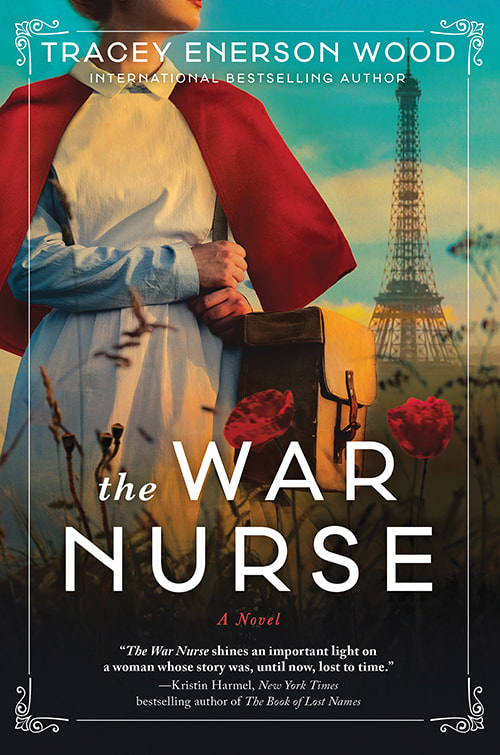
The War Nurse, by Tracey Enerson Wood

The War Nurse, by Tracey Enerson Wood

Published this year, I found The War Nurse to be an excellent example of historical fiction for me to evaluate. I’d read Tracey Enerson Wood’s first novel, The Engineer’s Wife, and liked it. The War Nurse is full of rich prose. She uses strong verbs and vivid adjectives. Writing like that has to be learned. It is hard work. I want to write like that. I wish I’d had time to read the entire book instead of skimming through it to look for specific writing techniques and elements.

The Kitchen House, by Kathleen Grissom

The Kitchen House, by Kathleen Grissom

This book was published in 2010. I read it in 2017. (See what I said about it and other books in my February 3, 2017 blog post, What I read in January 2017.) It was a novel that stayed with me for a long time and it’s one that still clearly comes to mind when I think back on historical novels I’ve especially enjoyed. I checked it out of the library last month just so I could analyze it in relation to my class assignments.

Like in The War Nurse, I found an Author’s Note, Acknowledgments, Book Club Questions, and “A Conversation with Kathleen Grissom” at the end of The Kitchen House. I think these are items that fans of historical fiction like to see – and expect to see.

Historical fiction readers like for Author’s Notes to tell them which characters and events in a novel are real and which ones are a creation of the author’s skill. I find myself reading the Author’s Note at the back of novels before I read the actual novel.

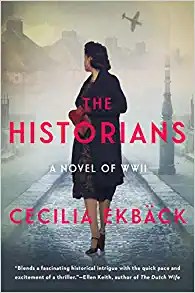
The Historians, by Cecilia Ekbäck

The Historians, by Cecilia Ekback

This is a 2021-published historical mystery. I didn’t get to read much of the book. I made note of how the book was organized and some of the features it included, such as a map of the setting, a preface, and “Cast of Characters.” All these were in the front of the book before the story itself began.
I found the list of 44 characters intimidating. I would never be able to keep up with so many people. The 19 or so introductory pages included sections like “Lapland, January 1943,” “Stockholm, February 1, 1943,” and “Blackäsen Mountain, March 31, 1943.”

The book is 431 pages plus a four-page “Author’s Note and Historical Background,” and a list of nine “Sources” in the back of the book.

Scenes varied from two to eight-and-a-half pages. Some paragraphs were half a page long. The story is told in an unbroken pattern of “Laura” chapters, “Jens” chapters, and “Blackäsen Mountain” chapters and ends with “Lapland, June 1943.”

The settings in this book are a refreshing change from all the World War II novels of recent years that have almost exclusively been set in France, Poland, or Germany.

I regret I didn’t have time to actually read this book; however, I was overwhelmed by the pages and pages of introductory material. One would have to be keenly interested in the settings and time period in order to read those 19 pages before getting to the story.

It was an eye-opening exercise related to the writing course I’m taking to analyze the elements of this historical mystery. This was the first recently-published historical mystery I analyzed.

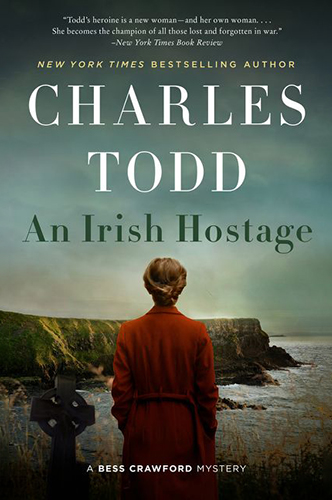
An Irish Hostage, by Charles Todd

An Irish Hostage, by Charles Todd

Charles Todd is the pen name for a mother-son writing duo. An Irish Hostage is the 12th novel in their Bess Crawford Mysteries. I haven’t read any of them. This is their 2021 novel, so I chose it to analyze.

Like The Historians, this is an historical mystery. Although I didn’t have time to read much of it, this novel appealed to me more than the other book. That’s just personal preference, and not a criticism of Cecilia Ekbäck’s book.

It’s written in first-person past tense and is set in Somerset, June 1919.

The opening narrative paragraphs set a pleasant tone with such phrases as, “the long windows open to a surprisingly mild spring evening, and a bit of a breeze pleasantly lifting the lilac curtains just a little.” But then the mood suddenly turns with, “The only thing that spoiled this charming scene were the expressions on our faces.”

Of course, the novel being categorized as “historical mystery,” the reader should already know the tide is going to turn.

I found the style of writing to be more to my liking than the “heavier” Ekbäck book. Chapters ranged in length from around four or five pages to about 20 pages.

There is a page of acknowledgments and a two-sentence “About the Author” page at the end of the book.

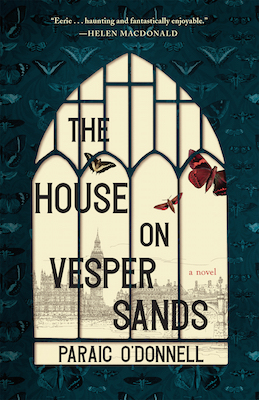
The House on Vesper Sands, by Paraic O’Donnell

The House on Vesper Sands, by Paraic O’Donnell

This is another 2021 historical mystery. It’s set in February through June of 1893. It begins with “I. Requiem Æternam” and the five succeeding sections also have Latin names. That technique in itself gives the reader a hint about the mood of the book.

The opening paragraph introduces Esther Tull feeling “the first gentleness of the snow.” In the second paragraph, Esther extends “a gloved hand to the railing…. The pain was returning, but it was not yet more than she could bear….”

Interesting wording there. The inclusion of the word “yet,” adds a level of intrigue for the reader. Every word matters in a novel – or should.

This novel is mostly narrative, with scenes averaging six or seven pages. There’s an Afterword and Acknowledgments on page 401.

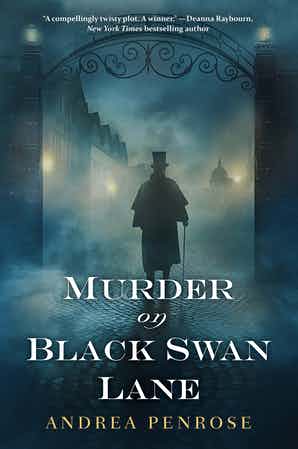
Murder on Black Swan Lane, by Andrea Penrose

Murder on Black Swan Lane, by Andrea Penrose

When I searched for best-selling historical mysteries, I noticed Andrea Penrose’s name coming up repeatedly in the top 50 or top 100. I borrowed her 2017 novel, Murder on Black Swan Lane from the library. It’s set in Regency London, which appears to be Ms. Penrose’s favorite era and location.

I’m not a fan of prologues, but hers was just four pages and I wanted to get a feel for her writing style. Her rich language using strong verbs and spot-on adjectives drew me in. For example, the prologue opened with, “A flicker of weak light skittered over the stone floor, followed by the soft scrapes of steps and the whispered whoosh, whoosh of mist-dampened wool.”

The book’s 27 chapters range from nine to 16 pages in length, based on the seven I counted. They’re followed by a two-page “Author’s Note” and then the prologue and first chapter of her book, Murder at Half Moon Gate.

The biography on the inside of the back cover reveals that “Andrea Penrose is a pseudonym for an author who has also written as Cara Elliott for Grand Central and Andrea Pickens for NAL.” Perhaps you’ve read one of her books under those other names. I haven’t.

I look forward to reading or at least perusing more of Andrea Penrose’s books. The rich language skills she has are something I’d like to emulate.

Since my last blog post

I completed the fourth week of my eight-week writing course, and have been busy editing my novel manuscript. Trying to work in all I’ve learned in the last month isn’t easy. I’m into the third chapter now. There will be many more revisions in my future. I enjoy the process of fiddling with words.

I’ve also worked on the notes from my local history research. I still hope to get those notes in book form eventually.

Until my next blog post

I hope you have a good book to read. I just finished reading Making Good Habits, Breaking Bad Habits, by Joyce Meyer. It was a nice diversion from all the books and scenes I analyzed for my class.

Making Good Habits, Breaking Bad Habits, by Joyce Meyer

Now that the deer have devoured the leaves on the hydrangeas and other plants and shrubs in our yard, this week they started eating the azaleas. Now they’ve gone too far!

It’s officially autumn in North Carolina. There are spots of leaf color here and there here in the southern piedmont. Many leaves seem to just be dying and falling off. Of course, it won’t be peak fall leaf season here for several weeks. There’s a hint of fall in the air at night and in the mornings, but our daytime temperatures are still mainly in the low- to mid-80s.

It’s warmer than it was last week when I mentioned being cold. None of my southern hemisphere readers took the bait last week when I volunteered to go down under and visit for a few months. I guess they’re enjoying spring now. I will be, too, in six months!

Janet

Taking Stock of Historical Fiction

I changed my topic for today’s blog post several times. In fact, I had it pretty much written and ready to go last Monday. Everything changed on Tuesday morning, when I checked for comments on my blog.

Last Tuesday, one of my blog readers who is Jewish left a heartfelt comment about what I had written about Pam Jenoff’s historical novel, The Woman with the Blue Star, in my July 12, 2021 blog post, 4 Other Books I Read in June 2021.

That reader has more intimate knowledge of the Holocaust than I have and, through an acquaintance who lived in the Krakow sewers, says that the premise of Ms. Jenoff’s book is impossible. I read Ms. Jenoff’s novel as a work of fiction, knowing the story was not true. I didn’t think about the possibility that some readers would be offended by the premise of the book. Prior to reading the novel, I wasn’t aware that some of the Jews in Poland had to hide for their lives in the nasty city sewers. For Ms. Jenoff’s bringing that fact to my attention, I am grateful.

This comment and my response to it served is a reminder about historical fiction – and it’s important to me as a fan of the genre and also a writer of it.

The Woman with the Blue Star, by Pam Jenoff

In fairness to Pam Jenoff, I heard her interviewed about her process in writing this novel. She did extensive research. It is a fact that some Jews took refuge in the sewers in Poland. There were many anti-Semitic people in Poland, but there were also sympathetic Poles who risked their lives to try to save Jews.

I heard Ms. Jenoff interviewed about this novel some weeks ago. I wish I’d taken some notes, so I could share them with you and with the reader who contacted me last week.


Admitting my own bias

I have lived my entire life in North Carolina. Two older ladies were friends of my family. By older, I mean older. Sisters, they were born in 1883 and 1888. Their father fought for the South in the American Civil War. Those sisters drilled it into me that it was “the War Between the States” and not “the Civil War.” That statement was always followed quickly with, “There was nothin’ civil about it.”

That really made an impression on me and even recently I’ve referred to the American Civil War as “the War Between the States.” I’ve written it that way in various things I’ve written and self-published.

I now see my bias. In the future, I will refer to it as “the American Civil War” or “the US Civil War.” It was a war between the Confederate States of America and the United States of America. For me to call it anything else is to twist history and reveal my bias.

I think it was Oprah Winfrey who said, “When you know better, you do better.” Those are words I try to live by. I hope I never get too old to learn new things and new ways to look at things.


The unwritten pact between fiction author and reader

A reader of historical fiction should always keep in mind that they’re reading fiction. Fiction is made up. It’s a story created in the author’s mind; however, there is an unwritten pact between the author and the reader. There should be enough factual information – whether in event or time and place – that the reader can trust that the story is plausible.

It is incumbent upon the writer of historical fiction to do due diligence in research. I heard author Sharyn McCrumb speak a few years ago about her research and writing methodology. As an aspiring historical fiction writer, I was impressed with all she said.

One thing Ms. McCrumb said, though, stood out and remains in the back of my head. I think about it as I’m doing my research, and I think about it every time I hear someone say they don’t read historical fiction. They often go on to say they only read history books.

Ms. McCrumb’s statement that stood out to me that evening was that (and I paraphrase) some historical fiction is better researched than some history books.


History books and their bias

We only need to stop and think about some of the history textbooks we had 50 or 60 years ago. (I can’t speak for the content of current school curriculum history textbooks.) Aside from the recitation of dates of birth and death of persons of alleged import and the dates of battles and the like, much of the way history was presented to students depended upon the author’s point-of-view. Textbooks are usually written from the winner’s perception.

For example, the textbooks I had as a student presented the white settlers’ “conquering” of the frontier as a positive thing. No time was spent trying to view the 1600s to the present through the eyes of a Native American. If the Cherokee Trail of Tears was even mentioned, it was only in passing.

Some Southerners still maintain that the American Civil War was fought over “states’ rights.” (Many of those same people still refer to that war as “the War of Northern Aggression.”)  I have relatives who still maintain that as the truth and will argue me down that it had nothing to do with slavery. Some people learned certain things about the Civil War and no facts today will change their minds.

If we are to be true students of history, I believe we should read both sides of the story. Both sides are tainted by the personal experience of the writer but, by the same token, both sides of the story probably contain some truth.

The antebellum American South has been romanticized to the hilt by such novels as Gone With the Wind. Confederate generals have been portrayed as dashing and religious Southern gentleman who fought for the honor of hearth and home. In some cases, that’s who they were. But they were basically fighting to maintain the status quo. Even if they didn’t own slaves, they didn’t have any quarrel with the institution of slavery. The economy was built upon it. What would happen if there were no slaves? They couldn’t imagine such a world.

Renowned historical novelist James Alexander Thom wrote a book called The Art and Craft of Writing Historical Fiction. In it, he wrote the following: “History contains many errors because each person sees the same incident differently or remembers it differently. History textbooks are biased depending on the agenda of the writer, the publisher, the state, the school board.”


What James Alexander Thom wrote about historical fiction

The Art and Craft of Writing Historical Fiction, by James Alexander Thom

Here are four quotes from The Art and Craft of Writing Historical Fiction, by James Alexander Thom:

But fiction is not the opposite of truth. Fiction means ‘created by imagination.’ And there is plenty of evidence everywhere in literature and art that imagination can get as close to truth as studious fact-finding can.”

“Most early American white men thought women should be seen but not heard. As a historical novelist, you might wish to make your hero ‘politically correct’ by today’s standards, but if you do that, you’ll be lying to your readers.”

To be really good historical novelists, though (and that’s what I want us to be), we have to take our obligation to historical truth just as seriously as the historians do theirs. But we don’t have to bear the burden of being the authority on every factual detail. Our disclaimer is right there on the cover: a novel.”

But here’s the key: Whether your historical story is ancient or recent history, what you want to do is re-create it in full – live, colorful, smelly, noisy, savory, painful, repugnant, scary, all the ways it actually was – and then set the reader down smack in the midst of it.”

I’ve referred to James Alexander Thom in a number of my blog posts over the years. One of them was my February 12, 2019 blog post, Two for Tuesday: Two Books that Helped Me Fall in Love with Reading.


Until my next blog post

Time will tell what my blog will be about next Monday. I hope you’ll come back next week to find out.

I’ll continue to read and write historical fiction. Mr. Thom says good historical novelists are respected by historians. That’s what I aspire to be.

Let me know what you like or don’t like about my blog. I’m especially trying to reach people who like reading historical fiction and have an interest in Early American history. I also enjoy exploring current events and discussing them with people from around the world. It amazes me every week to see that people from around the world have read my blog. In that respect alone, I think blogging and the internet are wondrous avenues for the sharing of ideas.

You never know. A comment you make about one of my blog posts might stop me in my tracks and force me to dig a little deeper into a subject or even admit I’ve been wrong.

Thank you for reading my blog. All comments, opinions, criticisms, and corrections are welcome.

Janet

5 Historical Novels I Read in April 2021

April brought me a boatload of good historical novels! I’m not sure what next month holds, but it will be difficult for May to match what I got to read in April. If you know me, you know that historical fiction is my preference in literature. It’s a joy when so many good new historical novels are released (or reach the top of my waitlist at the public library) at the same time.


Simon the Fiddler by Paulette Jiles

You may recall that I read News of the World, by Paulette Jiles in October 2017 and blogged about it on November 6, 2017 in Some Good New Books. Also, I blogged about a favorite quote from that book on May 14, 2018 in The Lampasas County Asylum. Perhaps you’ve seen the movie that’s been made by the same name, News of the World, starring Tom Hanks. I haven’t seen it yet.

One of the things I like about Paulette Jiles’ writing is how she manages to sneak in bits of humor. Simon the Fiddler is by no means a comedy, yet Simon’s sense of humor comes through and makes him a very likeable fellow.

Simon the Fiddler, by Paulette Jiles

The story takes place at the end of the American Civil War. Simon has managed to escape being conscripted by the Confederate Army until a barroom brawl in Victoria, Texas in March 1865. His life of flitting around making somewhat of a living playing his fiddle is briefly interrupted by a stint in a Confederate regimental band.

After the war, Simon sets his sights on buying land in Texas, building a house, and settling down to create a family. Along the way he meets up with a variety of musicians and a beautiful young lady from Ireland whose life in America is so awful she wishes she’d never left her home country. She steals Simon’s heart.

Every time you think things can’t get worse for poor Simon, something worse happens. Such is the bedrock of fiction, and so goes this tale.

I invite you to come along for the ride with Simon, his companions, and the love of his life. Does he get what he’s been seeking all his life by the time you reach the last page of the book? You’ll have to read it for yourself to find out.

I enjoyed listening to Simon the Fiddler on CD. The professional reader is Grover Gardner.


Yellow Wife, by Sadeqa Johnson

Sadeqa Johnson was inspired to write this historical novel after learning about the life of Mary Lumpkin. Mary Lumpkin was a 12-year-old slave of Robert Lumpkin in Virginia. She bore him at least five children.

Ms. Johnson did extensive research into the lives of Robert Lumpkin and Mary Lumpkin and has woven a gripping novel that will keep you turning pages and yearning for something good to happen to Mary. The book contains many scenes of unthinkable beatings and the torture of slaves. Mr. Lumpkin owned a jail where slaves were sent for punishment, and Mr. Lumpkin delighted in inflicting that punishment. He absolutely delighted in it. I didn’t know that slave jails existed until I read this book.

Yellow Wife, by Sadeqa Johnson

Ms. Johnson put herself in the body of Mary Lumpkin and, thereby, puts the reader there, too. As much as is possible, Ms. Johnson helps us to put ourselves in the shoes of a slave woman who is at the mercy of her master and is put in an awkward position with her fellow slaves because she is seen as the favored one. All the while, her heart is broken because she can’t be with the man she truly loves and who truly loves her. For Mr. Lumpkin, Mary is a wife of convenience.

Yellow Wife is not a pleasant read, but it is based on a true story – one we as Americans should know about and not forget. It’s part of our history.


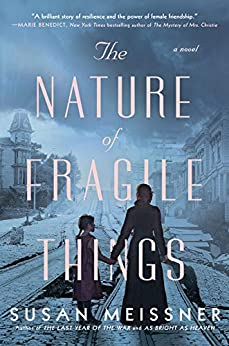
The Nature of Fragile Things, by Susan Meissner

I highly recommend this historical novel set in San Francisco in 1906 – the year of the Great San Francisco Earthquake.

Sophie lives in the north of Ireland and seeks a better life in America. She joins her brother in New York City, but he soon falls in love and moves to Canada. Sophie’s life as a single young female Irish immigrant in the big city leaves her desperate for a better life. She answers a mail-order bride ad and travels to San Francisco to marry a widower who has promised her a stable life and a ready-made family: a five-year-old daughter. Sophie’s dream has come true. She longs to be a mother, but she’s been told she can physically never have her own child.

From the beginning in San Francisco there are clues that her husband, Martin Hockings might not be all he’s cracked up to be on paper, but Sophie tries her best to adapt and be patient with him and his daughter, who won’t talk.

The Nature of Fragile Things, by Susan Meissner

From there, the book takes off in unexpected directions – and the earthquake hasn’t even occurred yet. Hold on for the ride as a pregnant stranger shows up at Sophie’s door one day asking for a Martin Hockings. Don’t jump to conclusions, though; it’s not what you’re thinking. Sophie’s life unravels quickly from this point. Her discoveries take her and Martin’s little girl through the harrowing earthquake and on a journey to Arizona see what they can find out about the girl’s dead mother.

I hope I haven’t told you too much. There are more secrets in this book than “all get out.”

(If the idiom, “all get out” leaves you scratching your head, please read my March 29, 2021 blog post for clarification: #Idiom: As All Get Out.)

If you are a fan of historical fiction, you’ll love The Nature of Fragile Things, by Susan Meissner!


The Lost Girls of Paris, by Pam Jenoff

I don’t know why it took me until now to read The Lost Girls of Paris, by Pam Jenoff. I added it to my To Be Read List after reading a good review of it on https://jennifertarheelreader.com/ way back in February 2019.

You might recall that I blogged about The Orphan’s Tale, by Pam Jenoff in my August 7, 2017 blog post, Late July Reading. I enjoyed that book, so that adds to the mystery of why I waited until last month to read The Lost Girls of Paris. Being historical fiction, Ms. Jenoff’s books are right down my alley.

The Lost Girls of Paris, by Pam Jenoff

The Lost Girls of Paris transports you to France in 1944. It’s about young women who volunteered to be radio operators behind enemy lines during World War II. Participants were carefully chosen and trained. They knew they were putting their lives on the line in the Allies’ attempt to defeat Nazi Germany.

A woman looks in an abandoned suitcase at Grand Central Station in New York City and discovers photographs of 12 women. She sets out on a mission to find the owner of the suitcase, and she wants to know something about the women in the photographs. Her research leads her to Washington, DC and on an on-the-ground search for the woman who trained and led the group.

There are twists, turns, courage, fear, loyalty, and betrayal in this novel that will keep you turning the pages.

By the way, Pam Jenoff has a new historical novel on the way: The Woman with the Blue Star is scheduled for release on May 4, 2021. I’m on the waitlist for it at the public library.


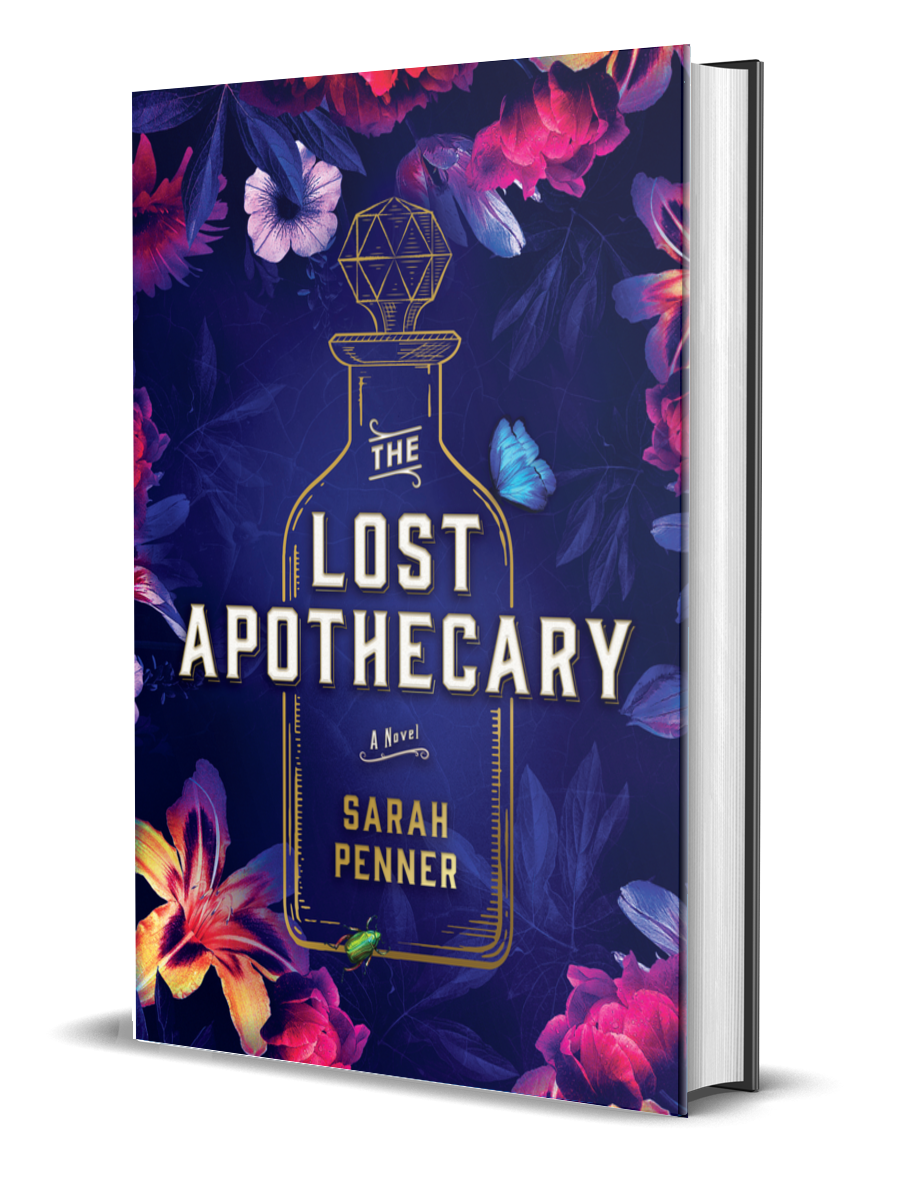
The Lost Apothecary, by Sarah Penner

I listened to The Lost Apothecary, by Sarah Penner on CD. I usually don’t enjoy novels that take two different timelines, but this one really held my interest. A secret apothecary in London in 1791 caters to women who need an herbal way to get rid of the oppressive men in their lives. An innocent mistake made by a 12-year-old girl who takes a serious interest in learning the apothecary trade turns the 18th century story on it’s head and threatens to be the end of the hidden business.

The Lost Apothecary, by Sarah Penner

In comes a present-day young woman, Caroline, from the United States. She has a variety of personal issues to sort out and, early in her visit to London finds an intriguing medicine bottle on the bank of the Thames. This launches Caroline on a mission to find out all she can about the apothecary whose stamp in on the bottle.

The novel is well-researched and is sure to be of interest to anyone with a curiosity about herbal remedies and herbal poisons used in secret in 18th century England.


Since my last blog post

I’ve been dealing with an allergic reaction to poison oak. It hasn’t been fun, but the prednisone injection is helping. I’d forgotten just how intense the itching sensation is once one is exposed to the innocent-looking plant.


Until my next blog post

I hope you have a good book or two to read this week. Maybe you’ll get to read one of the three books I wrote about today. Next Monday I’ll blog about the other books I read in April.

Make time to relax and enjoy a hobby.

Stay safe and well – and please wear a mask when necessary.

Note: May is Get Caught Reading Month! Have you been caught yet?

Janet

Two Other Books I Read in July 2020

Today’s blog is about two very different novels I read last month. In case you missed last week’s blog post about the other three books I read in July, here’s the link to that post: Three of the Five Books I Read in July 2020.

I like historical fiction because it lets me escape to another place and time. One of today’s books transported me to Washington, DC and the Midwest in the second half of the 19th century, while the other novel took me to Naples, Italy in the 1950s.


Mrs. Lincoln’s Sisters, by Jennifer Chiaverini

Mrs. Lincoln’s Sisters, by Jennifer Chiaverini

I knew that Mary Todd (Mrs. Abraham) Lincoln had some mental illness problems, but this novel shines a light on her illness and how it affected her only surviving son and her four sisters. It demonstrates how family members can become estranged when there is mental illness in their midst and how siblings and children (even adult children) can be shut out and left feeling helpless to get the sick relative the help they need. It was true in the 19th century. Sadly, it is still true.

The Todd sisters had always been close and relied upon one another even as adults. The American Civil War caused rifts in their relationships, as one or more of their husbands were part of the Lincoln Administration while the husband of another sister was in the Confederacy.

Mrs. Lincoln attempted suicide in 1875. Her sisters try to let bygones be bygones, even though she has slighted each of them on occasion. After spending time in an asylum, Mrs. Lincoln is determined to never return. She was a very resourceful woman. She would walk out of one facility she was in, hail a taxi, and go to pharmacies to try to get drugs.

She had a volatile relationship with her son, and her mental illness was demonstrated in the way she gave and withheld things from him.

It is the second novel I’ve read by Jennifer Chiaverini, the first being Mrs. Lincoln’s Dressmaker.


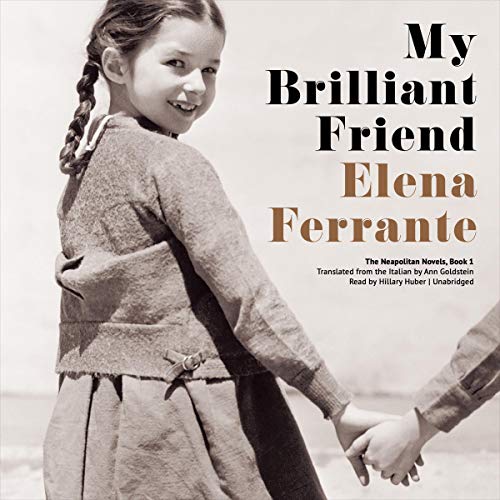
My Brilliant Friend, by Elena Ferrante

My Brilliant Friend, by Elena Ferrante

I heard that The Story of a New Name, by Elena Ferrante, was good, so I got on the waitlist for it at the library. Then, I discovered it was the second book in her Neapolitan Series, so I got on the waitlist for the first book, My Brilliant Friend. It took a bit of juggling and pausing my hold on The Story of a New Name so I could read My Brilliant Friend first.

My Brilliant Friend is beautifully translated from Italian into English by Ann Goldstein. The prose is lovely.

My Brilliant Friend has been made into a TV series on HBO, but I have not seen it. The book follows two young girlfriends (Lila and the narrator, Elena) from their meeting at the age of 10 through their adolescent years. Elena sees Lila as more intelligent than herself. This prompts Elena to try to do everything Lila does to the extent of “copying” how she does everything. It is a complex story of women’s friendships and power. Lila and Elena’s lives reflect life in Naples, Italy in the 1950s.

There are four books in Ms. Ferrante’s Neapolitan Series of novels.


Since my last blog post

Yesterday morning at 8:07 a.m. EDT, a magnitude 5.1 earthquake occurred near Sparta, North Carolina and was felt here. I live about 100 miles from Sparta. I was sound asleep at the time and the shaking of my bed woke me up.  We don’t have a lot of earthquakes of that magnitude in North Carolina. In fact, this was the strongest one in the state since a 5.2 near Asheville in 1916.

A good thing that has resulted from the changes we’ve all had to make in our lifestyles due to the pandemic is the new opportunities people like me have to watch and listen to authors on Facebook Live and Zoom. A special weekly thing I’ve become addicted to at 7pm Eastern Time on Wednesdays is a conversation among five novelists. Look online (friendsandfiction.com) for “Friends and Fiction.”

Authors Mary Alice Monroe, Mary Kay Andrews, Kristin Harmel, Kristy Woodson Harvey, and Patti Callahan Henry meet virtually every Wednesday evening to discuss reading and writing. Most weeks they have a guest author join them. From the website you can click on “Podcasts” and watch several of their earlier programs. It’s a great way to forget about the pandemic for an hour.

I’m still working my way through C.S. Lakin’s book and accompanying workbook that share the title, The 12 Key Pillars of Novel Construction as I continue to polish my historical fiction manuscript tentatively titled The Doubloon or The Spanish Coin.


Until my next blog post

I hope you have a good book to read. If you’ve never tried listening to an audio book, I suggest you give that a try. I’ve surprised myself this year and found downloadable audio books to be my format of choice. You don’t have to worry about getting Covid-19 germs from another library patron.

If you are a writer or other type of artist, I hope you get to immerse yourself in your craft this week.

Be safe. Be well. Wear a mask out of respect for other people. We’re all in this together.

Janet

Three Other Books Read in June 2020

In last Monday’s blog post, I wrote about three of the books I read in June. Today, I write about three other books I read last month.

The Splendid and the Vile, by Erik Larson

Having read and liked Erik Larson’s The Devil in the White City: Murder, Magic and Madness and the Fair that Changed America in February, I was eager to read his new book, The Splendid and the Vile. I listened to The Splendid and the Vile and thoroughly enjoyed it.

#TheSplendidandtheVile #ErikLarson
The Splendid and the Vile, by Erik Larson

This nonfiction book reads like fiction, and I mean that as a compliment. It doesn’t read like a history book. Erik Larson has a way of doing that. If you aren’t a fan or student of history – specifically World War II era – you might not enjoy The Splendid and the Vile as much as I did.

It follows Winston Churchill and his family and friends. His teenage daughter, Mary, plays an important role as she gives us a glimpse of how a teenage girl would perhaps react to the London Blitz. She very much just wanted to be a teenager.

Mr. Larson weaves a fascinating story of Mr. Churchill and his associates. Being Prime Minister of Great Britain, he was in a position to make friendships and acquaintances with people of power. There were some connections he had with Americans that I hadn’t been aware of. Churchill’s son was a constant source of concern, along with the son’s wife, to put it mildly.

Murder in Rat Alley, by Mark de Castrique

If you’re a mystery fan, you might want to check out Murder in Rat Alley, by Mark de Castrique. This is the seventh book in his Sam Blackman series, but you don’t need to have read any of the earlier books in the series to enjoy this one. If Mark de Castrique is a new author for you, this is a good novel to start with.

#MurderInRatAlley
Murder in Rat Alley, by Mark de Castrique

Set in Asheville, North Carolina and the Pisgah Forest area, Iraq War veteran and amputee Sam Blackman is a private investigator. His side kick and love interest is Nakayla Robertson. When a body is discovered on the grounds of the Pisgah Astronomical Research Institute, Blackman is called in to unravel a decades old mystery.

When they get too close to solving the murder, their lives are in more danger than they even imagine.

This novel gives interesting background information about the former space program monitoring facility that now collects weather data. It also brings in the flavor of the Asheville music scene. It is sprinkled with the humor that keep Sam and Nakayla together and which balances their private lives with the serious work they do.

If you like a good mystery and want to mentally escape to the North Carolina mountains, give Murder in Rat Alley a try.

The Engineer’s Wife, by Tracey Enerson Wood

The Chief Engineer for the design and construction of the Brooklyn Bridge, William Roebling becomes quite ill during the years it took to build the bridge. His wife, Emily, had taken a deep interest in his work and started studying his engineering books.

The day comes when William is no longer physically able to go to the worksite. Emily starts going in his place and takes on more and more responsibility for the construction of the bridge.

This is a work of historical fiction based on a bit of truth, but the majority of the novel is indeed fiction. I thoroughly enjoyed the book, but I was somewhat disappointed to read in the author notes at the end of the book that so much of it was fiction.

I still recommend it as a good read, but you might want to read the author’s notes before reading the book instead of afterwards like I did. For instance, P.T. Barnum plays a major role in the novel, but it turns out he was probably no more than an acquaintance of the Roeblings.

My apologies to the author, Tracey Enerson Wood, for not being able to insert an image of her book in my blog post today. This is her debut novel. I can’t wait to see what she writes next!

Until my next blog post

I hope you have a good book to read.

If you’re a writer or other artist, I hope you have good creative time this week.

Stay safe. Stay well. Wear a mask out of respect for other people until the Covid-19 pandemic is under control.

Janet