I write southern historical fiction, local history, and I've written a devotional book. The two novels I'm writing are set in Virginia and the Carolinas in the 1760s. My weekly blog started out to follow my journey as a writer and a reader, but in 2025 it has been greatly expanded to include current events and politics in the United States as I see our democracy under attack from within. The political science major in me cannot sit idly by and remain silent.
As I said in last week’s blog post in which I wrote about three books I read last month, I read a variety of genres in November. I hope you will find something of interest in the three books I’m blogging about today.
The Plot to Kill Hitler: Dietrich Bonhoeffer: Pastor, Spy, Unlikely Hero, by Patricia McCormick
The Plot to Kill Hitler: Dietrich Bonhoeffer: Pastor, Spy, Unlikely Hero, by Patricia McCormick
This book is a painful reminder of the evil wrought by Adolf Hitler and how a dictator like Hitler demands complete allegiance from all who live in their realm. It is specifically about the life of Dietrich Bonhoeffer. I have read quotes from Bonhoeffer, references to him in sermons, and things about him. This 150-page book pulls it all together from his childhood in the lap of luxury, to his struggles with the great questions of life and ethics, to the courage he demonstrated in the face of pure evil in Nazi Germany.
In The Plot to Kill Hitler, Patricia McCormick weaves together the many strands of history that resulted in some unlikely people finding a shared sense of right and wrong and the courage to stand up against the genocide of the Jews. Several attempts to murder Hitler failed for various reasons before the authorities put all the clues together in an effort to identify all the conspirators.
The parallels between Hitler and a recent past US president who is seeking reelection are startling and impossible to miss. I highly recommend this book.
If Patricia McCormick’s name sounds familiar to you, it might be because I wrote an entire blog post about Sold, by her, on November 13, 2023: One of the Most Banned Books in the US: Sold, by Patricia McCormick. Reading Sold prompted me to look for what else she has written.
The Exchange After the Firm (The Firm Series Book 2), by John Grisham
The Exchange: After The Firm, by John Grisham
The Exchange is the latest novel by John Grisham that all his fans are talking about. We get to re-engage with Mitch and Abby McDeere from The Firm. Mitch and Abby have tried to put the terrible memories of how things ended in Memphis behind them. Mitch swore he’d never return to that city but the head of the law firm’s health is failing and he needs Mitch to take a case in Libya. As one would expect, things do not go well. (If they did, it wouldn’t be a very interesting novel!)
If you read The Firm and have enjoyed scores of Grisham’s other novels, you’ll certainly enjoy The Exchange.
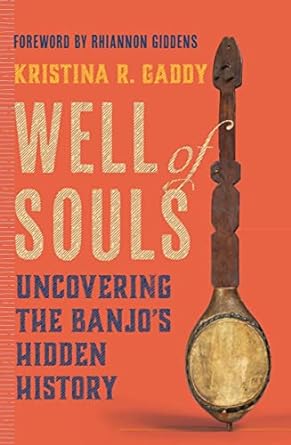
Well of Souls: Uncovering the Banjo’s Hidden History, by Kristina R. Gaddy. Foreword by Rhiannon Giddens
Well of Souls: Uncovering the Banjo’s Hidden History, by Kristina R. Gaddy
I was drawn to this book for two reasons. First, I needed to learn more about the history of the banjo because there is an early African-American constructed banjo in the historical novel series I am working on. In fact, a segment on the Public Broadcasting System’s “History Detectives” years ago about the early African-American banjos was one of two initial sparks that inspired me to write the novels I’ve been working on for more than a decade.
Second, when I saw that Riannon Giddens had written the foreword, I knew I had to read the book. If you have not discovered the musical talent of Riannon Giddens, please look for her music on YouTube and her CDs. My favorite concert of hers on YouTube is with Francesco Turrisi from October 4, 2019: https://www.youtube.com/watch?v=Ignhso0iv9U.
Since my last blog post
I continue to hone my skills at creating memes on Bookbrush.com to use for pins on Pinterest to publicize my writing. I enjoy doing it, but it consumes more of my time than I would like. I’m trying to create enough ahead each day to enable me to schedule at least one every day through the end of December when things tend to get hectic with holiday activities. I’d rather be writing than creating memes and pins, but it seems to go with the territory. No two days are the same, which keeps me motivated.
Until my next blog post
I hope you have at least one good book to read. I’m enjoying Dangerous Women, a political thriller by Mark de Castrique. It’s the second book in his Ethel Crestwater series.
Dangerous Women, by Mark de Castrique
Maybe it’s just me and/or the age I am, but it seems like there’s a lot of sickness going around. I wish you well.
What a great time I had reading books in October! Many books
are published in the fall of the year. I’d been on the waitlist for months for
some of those books as well as others. Of course, they all became available at
the same time. “Too many books, too little time” kicked in big time!
Today’s blog post is about what is possibly my new favorite
book and one of the other books I read in October. My blog post next Monday will
catch you up on the other books I read last month.
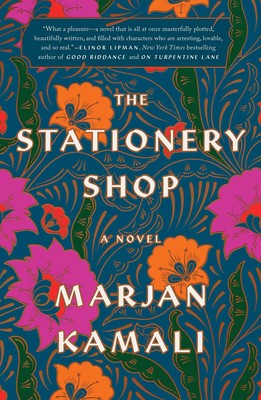
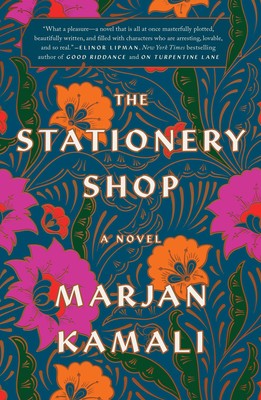
The Stationery Shop, by Marjan Kamali
I can’t say enough about this book! It just may be my new favorite novel. This is a story that will stay with me forever. It is a tragic story in many ways, but oh how lovely! I listened to it on CD. Mozhan Marno did a superb job reading it.
The Stationery Shop, by Marjan Kamali
This
historical novel takes us back to 1953 in Tehran, Iran. There is a chance meeting between a young man and a young
woman in a stationery shop where books are also sold. Since the young man’s
mother has already selected the woman she wants her son to marry, she is none
too happy when he announces his plans to marry this woman of lower economic
status he met at the stationery shop.
Marjan
Kamali includes just enough 20th century Iranian history to set the
stage for this story of love, betrayal, and a never-ending love between two
people. You will discover connections between different characters as you read.
It is a rich book, beautifully written.
I’m eager
now to read Marjan Kamali’s debut novel, Together
Tea, and I can’t wait to see what she writes for us next!
The Ragged Edge of Night, by Olivia Hawker
This book was a big surprise. I read that Olivia Hawker had a new book, One for the Blackbird, One for the Crow, coming out on October 8. I’m on the waitlist at the library for it. One for the Blackbird, One for the Crow sounded interesting, so I looked to see what else she had written.
I listened to her first book, The Ragged Edge of Night, on CD. It was beautifully written, and I learned from the notes at the end of the book that it was based on a true story from Ms. Hawker’s husband’s family. It was beautifully read by Nick Sandys and the author, Olivia Hawker.
The Ragged Edge of Night, by Olivia Hawker
This book contained some of the most moving and beautiful
prose of any novel I’ve read. The premise of the book is that Elisabeth Herter,
a widow with three children, is looking for a man to help her with the
responsibility of raising her three children. Along comes Anton Starzmann, a former
Franciscan friar who has been stripped of his occupation and his school by the
Nazis in 1942 Germany.
Elisabeth and Anton start corresponding. They meet in person
and agree to marry. Anton cannot father children due to an injury, but that
suits Elisabeth just fine. They will marry, be companions, and raise her
children. These are desperate times.
That’s the plot, and it’s a beautiful story. What struck me
about The Ragged Edge of Night was
how Olivia Hawker wrote Anton’s gut-wrenching fear that Hitler and the Nazis
were entrenched until the end of time so beautifully that I was brought to
tears. Through her writing, Ms. Hawker put me in Hitler’s Germany. Even though
I knew Hitler was brought down in the end, she put me in 1942 when I had no way
of knowing that.
That’s what good historical fiction does. It puts you in the
story and in the time and place, so you don’t know what the future holds.
I wish I could quote extensively from the book in order to
give you the true flavor of the prose, but I’ll settle for the following few
sentences from Anton’s point-of-view as he implores God to help him make sense
of what is happening in Germany in 1942. This prose I found so beautiful is in
chapter six. Here’s a chopped-up transcript from that chapter:
“The bells will ring, even after The Reich has fallen. Everything that is in me that is sensible, everything that is rational can’t believe it’s true. The Reich will never fall…. But when in moments of quiet, in my stillness of despair, I dare to ask what yet may be…. Christ Jesus, I always believed you were merciful, but this is a monstrous cruelty to make me dream of a time when evil may fall…. I cannot help but know it, against all sense, I believe somewhere beyond the ragged edge of night, light bleeds into this world.”
From Chapter 6, The Ragged Edge of Night, by Olivia Hawker
I hope those six sentences I pulled out of a long prayer I
transcribed from the CD entice you to read the book. Writers are advised to put
the reader in the scene. This, to me, is a prime example of just that.
My only criticisms of the CD are (1) Every time the children
in the story spoke, it was at full blast and (2) Some of the audio segments
were longer than 30 minutes. The wide range of volume is an irritating and
uncomfortable situation for people who are hearing-impaired. The excessively
long audio segments present a problem on some CD players. More than once when I
couldn’t listen to the end of a segment, I had to listen to the entire segment
a second time in order to get to the end of it.
Since my last blog
post
A fibromyalgia flare has knocked the props out from under me as we transition from summer into winter. (I think we often just skip right over fall here in North Carolina.) Eye pain has forced me to listen to books more than read them.
As you know, listening to books is not my reading format of choice. It’s going better than I expected, though. In fact, I believe listening to the CD recording of The Ragged Edge of Night possibly gave me a richer reading experience than I would have had if I’d read the words myself. That astounds me and gives me a new appreciation for audio books.
I want to read The
Stationery Shop and The Ragged Edge
of Night again. It’s rare that I find a book that I want to read a second
time.
Until my next blog
post
I hope you have a good book to read. I’m listening to Heads You Win, by Jeffrey Archer.
If you’re a writer, I hope you have productive writing time.
Thank you for reading my blog. You could have spent the last few minutes
doing something else, but you chose to read my blog. Don’t be shy – share this
blog post on social media.
Let’s continue the
conversation
I’m always interested to know what my blog readers are
reading. Please share that in the comments below or on my social media
platforms.
March brought a return of cooler weather than we had in February in North Carolina. It also brought a stack of good books. I blogged about some of them last Monday (Some March Reading), and today I’m blogging about the rest of those that I read last month.
Four Short Stories: In Need of Assistance, Saving the Unicorn, Faerie Blues, and Trophy Hunting, by Chris Andrews
Four Short Stories: In Need of Assistance, Saving the Unicorn, Faerie Blues, and Trophy Hunting — by Chris Andrews
Science fiction and fantasy are not my reading genres of choice, but Chris Andrews and I connected with each other in the blogosphere as two struggling writers. (Actually, I’m struggling. I’m not so sure about Chris.) We live in different hemispheres but I have learned a great deal from him about writing. He recently published an e-book of four short stories and I was eager to read them.
“In Need of Assistance” leads off the short story collection. Well written and suspenseful, this person (me) who never reads sci-fi got pulled into the story and thought it ended too soon. In other words, I wanted to know what happened next.
The second story in this e-book is “Saving the Unicorn.” It is about a magician who travels 4,000 years back in time to free the last unicorn…. or is it?
“Faerie Blues” is the third story in Chris’ book. The identity of the faerie is a surprise.
The fourth and last story in the book is “Trophy Hunting.” This story is survival of the fittest with a twist.
Following the four short stories are the first seven chapters of Chris’ novel, Divine Prey, which is due for release in May 2018.
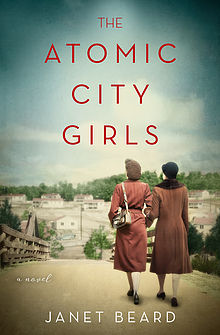
The Atomic City Girls, by Janet Beard
The Atomic City Girls, by Janet Beard
This historical novel was inspired by the creation of Oak Ridge, Tennessee during World War II and the top-secret work carried on there in the development of the atomic bomb.
Ms. Beard invented characters from all walks of like and guides the reader to like most of them and identify with them as much as is possible for we who live in a different time. I liked that she included the black people as well as the white people who lived and worked at Oak Ridge because, as much as they had in common, their housing and treatment by the US Army was quite different. It was in the racially segregated South and the book stands as witness to the prejudice and unequal treatment that existed legally at that time.
The author included not only Christians but an atheist and a Jewish physicist. This book’s cast of characters runs the gamut from redneck bigot to the Jewish scientist whose family had surely died in Germany during the War. True to the history of the facility at Oak Ridge, some characters are poorly educated while others are highly educated, but the emphasis is on the everyday people who worked there and did not know what they were working on.
Ms. Beard follows each character and through them she allows the reader to experience World War II on the home front in the USA and through the stress and struggles of the people who worked in complete secrecy at Oak Ridge. She brings to life the inevitable inner conflicts experienced by some of the scientists who worked there and at Los Alamos, New Mexico as they were simultaneously excited by the physics of the atomic bomb and yet horrified by the realities of what the unleashing of such a weapon would mean and the suffering it would cause for thousands of innocent people.
I never had really thought about how conflicted some of those scientists must have felt. I’d also never given much thought to how many thousands of people worked at Oak Ridge and the majority not knowing they were working on developing an atomic bomb until the day the first one was dropped on Hiroshima.
Need to Know, by Karen Cleveland
Need to Know, by Karen Cleveland
This is a debut novel by Karen Cleveland. It has received rave reviews from highly-respected authors, so I was eager to read this espionage thriller. After having read it, all I can say is, “Wow!”
Written by a former CIA analyst, this novel has a female CIA analyst working in a division studying Russia and looking for Russian sleeper cells in the USA. I don’t want to spoil the story for you, so I’ll just say her marriage and work ethic are tested to the limit.
This novel will make you wonder who you can trust. It is the story of betrayal on many levels, and it will keep you turning pages and wishing you didn’t have to stop to eat, sleep, or work. If you like to read espionage thrillers, you will love this book.
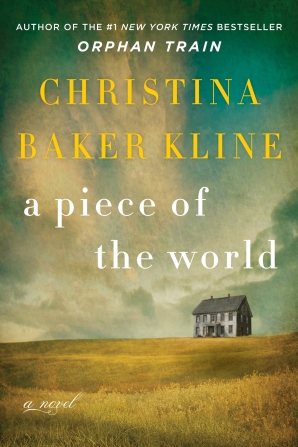
A Piece of the World, by Kristina Baker Kline
A Piece of the World, by Christina Baker Kline
We’re all familiar with Andrew Wyeth’s most famous painting, “Kristina’s World.” This historical novel is based on the imaginary life of the woman lying in a semi-prone position in the grass on the hillside below the house in that painting.
The author, who also wrote The Orphan Train, did a beautiful job developing the characters in A Piece of the World. They were so believable, the reader will forget the book is fiction. The woman in the painting, Kristina, becomes increasingly disabled due to an unknown condition affecting her legs. She lives in the grey clapboard house on the hill as depicted in the painting. Unable and unwilling to empathize with their daughter, Kristina’s parents do little to try to get her help.
Drawn to the feel and essence of the old house, Andrew, the son of artist N.C. Wyeth comes and asks if he can paint. He sketches and paints Kristina’s brother, but the brother has little patience for posing so Kristina becomes his most consistent model. He continues his work for years.
Kristina falls in love, but is it with Andrew? I’ll leave that for you to discover if you choose to read the book.
Another Ocean to Cross, by Ann Griffin
Another Ocean to Cross, by Ann Griffin
After reading Ann Griffin’s guest blog post on Writers in the Storm about how to or how not to use family history in your fiction (http://writersinthestormblog.com/2017/12/writing-fiction-using-family-history/), I pre-ordered her debut historical novel, Another Ocean to Cross. I followed her blog and she, subsequently, followed mine.
In Another Ocean to Cross, Ann Griffin weaves a compelling story about 18-year-old Renata Lowenthal, a Jewish woman desperate to escape Germany in 1938 as Hitler makes life ever-more tenuous for the Jewish population. Renata is an artist and her gentile boyfriend is in the military. He has to leave Munich, but he is smuggling Renata’s renderings of the Third Reich’s mistreatment of Jews to journalists in Switzerland.
No matter what the world throws at Renata, she meets the challenge.
The descriptions in this book are vivid and draw on all the senses. Being about the Jews who escaped to Egypt, this book enlightened me about an aspect of World War II that I hadn’t known much about.
Renata struggles to convince her parents that it is imperative that they get out of Germany and try to get to Palestine before it’s too late to escape. The tale Ms. Griffin spins will keep you turning the pages of this book and staying up at night to read just one more chapter. I will not give more details because you will want to read this novel and I don’t want to take away any suspense for you. It will take you and Renata to some surprising locations.
Reading Like a Writer: A Guide for People Who Love Books and for Those Who Want to Write Them, by Francine Prose
In case your eyes have glazed over, I’ll save my comments about this book until next Monday’s blog post.
Since my last blog post
I have continued to read about writing and study areas I need help with. I have worked on my outline for The Spanish Coin, the working title for what I hope will be my first novel.
One of my readers reported difficulty in getting my comments section below to work. If you have trouble with it, too, please send me a message through the contact form/newsletter sign-up sheet below. I’m sorry for any inconvenience.
My blog steadily attracts more readers and followers, which is gratifying. One new reader and follower, Neil, also signed up for my sometime-in-the-future newsletters. Thank you, Neil.
Until my next blog post
I hope you have a good book to read. I’m reading The Last Child, by John Hart, so I’ll be ready to read The Hush in a few weeks.
If you’re a writer, I hope you have productive writing time
If you haven’t signed up for my sometime-in-the-future newsletters, please do so by completing the form below.









 Janet's Writing Blog