I write southern historical fiction, local history, and I've written a devotional book. The two novels I'm writing are set in Virginia and the Carolinas in the 1760s. My weekly blog started out to follow my journey as a writer and a reader, but in 2025 it has been greatly expanded to include current events and politics in the United States as I see our democracy under attack from within. The political science major in me cannot sit idly by and remain silent.
Every weekend, I make to-do lists for each of the next seven days. I am a list-maker. I can’t help it. I get great satisfaction when I get to check an item off my list as “done.”
Some tasks on my list appear every single day. Some pertain to daily habits for my health, some pertain to social media, some are book marketing, some of writing, some are categorized as “household.” There is even a “decluttering” category.
Unfortunately, I haven’t checked anything off my decluttering list in several weeks. That section of my list is like a black cloud hanging over my head. Until I feel the urgency in checking those items off, they will continue to just be moved to the next day and then to the next week.
Photo by Glenn Carstens-Peters on Unsplash
It is the “writing” category on my to-do list that worries me the most. If I don’t finish the first draft of my historical novel, I will suffer with guilt feelings. I want to finish it, get it published, and move on to the next book. I have told people I’m writing a novel. They’re getting tired of asking me, “How’s your novel coming? When are you going to finish writing your novel?”
I enjoy writing, and I enjoy doing the research to back up my historical fiction writing. Where am I getting this wrong? Why can’t I finish writing that book?
I subscribe to Janice Hardy’s Fiction University Narrative Nuggets email. I trust her writing recommendations. She makes things easy to understand. Of course, the problem lies in putting them into practice.
Her “Narrative Nuggets” on Tuesday hit me between the eyes. She addressed the fact that all writers have slumps. We all hit a wall. We all get discouraged. We all get stuck. We all beat ourselves up when this happens; however, Janice Hardy said on Tuesday that “we” might not be the problem. The problem might lie in our process.
Most writers who write or speak about their writing process tell us that we must write every day. Some tell us that we should treat our writing as a job, putting ourselves on a daily 8 to 5 schedule with a lunch break, if we must.
That does not work for me. For one thing, at my age, I no longer want to maintain an 8 to 5 workday schedule. For another thing, chronic fatigue syndrome and other health issues have completely wrecked my circadian clock. Since I rarely go to sleep before 3:00 a.m., it would be useless for me to sit down at my computer at 8:00 a.m. sharp and expect to write anything worth reading.
Janice Hardy gave me permission to stop feeling guilty for not following someone else’s writing schedule. She said I need to find what works for me.
I’ve read that before, but it really resonated with me this time.
Ms. Hardy wrote:
“Do you swear you’ll write every day, then only produce on weekends? Maybe you’re a binge writer who needs longer stretches full of sprints, not daily sessions.”
Thank you, Janice Hardy! Thank you for taking away the guilt I feel when I move “Write Scene 48 – Sarah meets Betty Jackson” from today’s to-do list to tomorrow’s and even to next week’s list.
Ms. Hardy nailed it! I am a binge writer, and it’s high time for me to admit it, accept it, and go forward with it!
I hope you have a good book to read. If you are a writer, I hope you have learned what your writing process is so you don’t have to feel guilty for not following someone else’s schedule.
Janet
The government should be afraid of its citizens, not the other way around.
I recently took a free online personality test. It was an interesting way to spend a few minutes. It sized me up fairly well on some counts, but I still haven’t figured out how it arrived at the assessment that I have an adventurer’s personality.
The article I read talked about how a writer’s writing process should be designed based on his or her personality. With that in mind, I took the test on https://www.16personalities.com/free-personality-test and had the following results:
1. I’m 92% an introvert when it comes to how I interact with my environment. The only surprise there was that it wasn’t 100%!
2. I spend 55% of my mental energy observing.
3. I’m slightly more feeling than thinking by nature when making decisions or planning.
4. I’m evenly split between being “judging” and “prospecting” when it comes to my work, planning, and decision-making tactics.
5. I am 79% turbulent and 21% assertive in my confidence in my abilities and decisions. The test website said this is my identity and “this tract underpins all others.” That’s spot on!
The “bottom line” was that I have the personality of an adventurer. Say what? I read on because I really don’t see myself as an adventurer. Here’s the introduction to the explanation:
“Adventurer personalities are true artists, but not necessarily in the typical sense where they’re happy out painting little trees…. Rather, it’s that they see aesthetics, design and even their choices and actions to push the limits of social convention. Adventurers enjoy upsetting traditional expectations with experiments in beauty and behavior – chances are, they’ve expressed more than once the phrase, ‘Don’t box me in!’”
It goes on to say that adventurers seem unpredictable and they like risky behaviors.
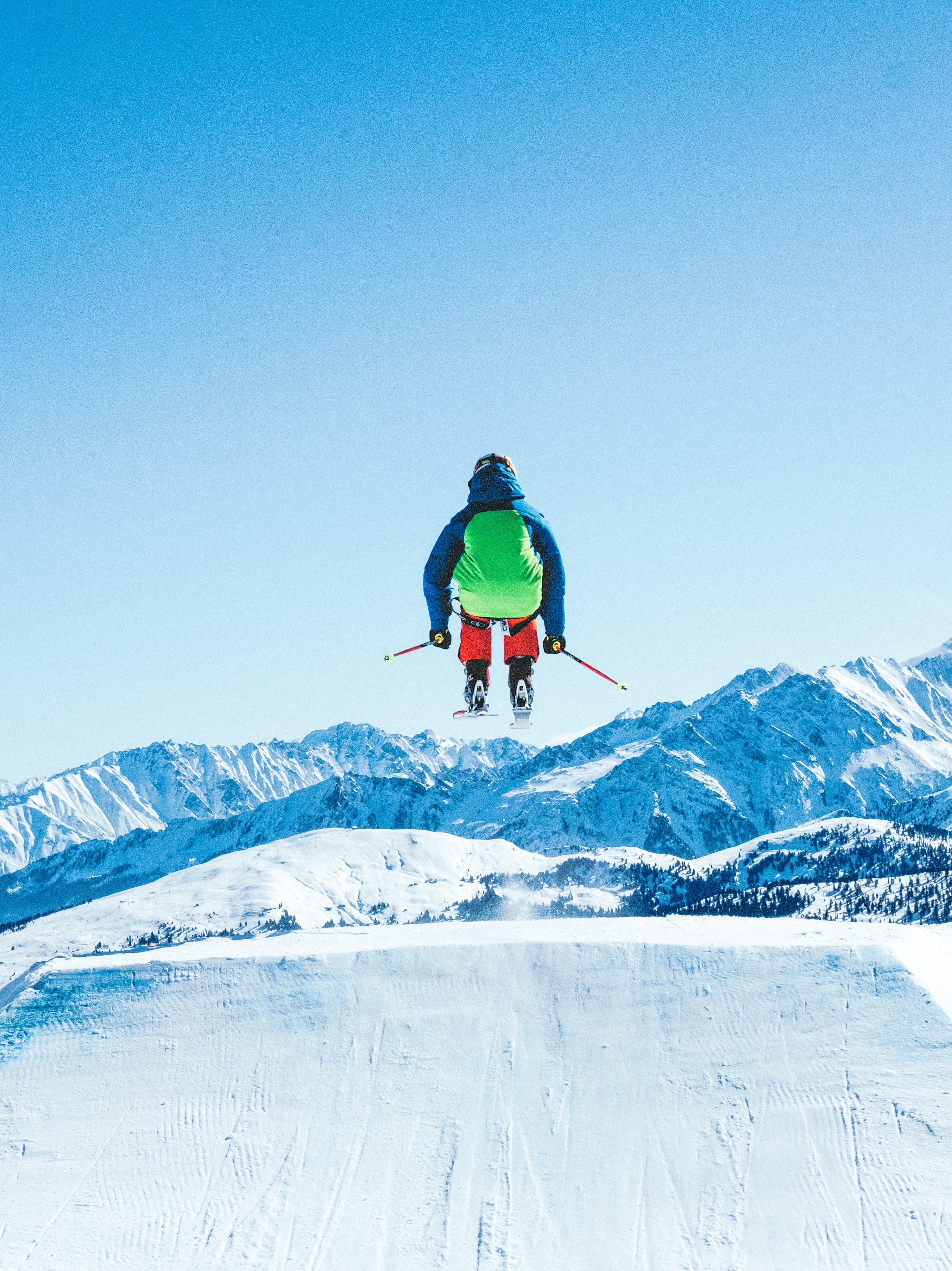
Photo by Maarten Duineveld on Unsplash
Risky behaviors? The examples given are gambling and extreme sports. No way! I don’t even know how to purchase a lottery ticket, and the most extreme sport I’ve played is basketball.
The website says adventurers don’t take biting criticism well. Yes, that’s me, and it doesn’t bode well for me as I try to get my novel published.
Photo by Lacie Slezak on Unsplash
It said adventurers need to take “time each day to understand their motivations” to allow them “to use their strengths to pursue whatever they’ve come to love.”
It seems, according to the website, I’m charming, sensitive to others, imaginative, passionate, curious, and artistic. I don’t know about charming.
An adventurer’s weaknesses
Now we’ll explore my supposed weaknesses. Apparently, according to the website, I’m fiercely independent, unpredictable, easily stressed, overly competitive, and have fluctuating self-esteem. I’m not sure about being unpredictable. I am independent and easily stressed, but I don’t see myself as overly competitive. Am I?
It says I’m spontaneous and not a good planner. That couldn’t be further from the truth. I love to plan trips down to the nth degree! As I mentioned in my blog post last week, https://janetswritingblog.com/2020/04/20/support-an-independent-bookstore-please/, I plan my blog post topics a year in advance. I make lists. I don’t always follow through with those lists, but I continue to make them. I’m a planner.
Other traits of adventurers
The website says adventurers abide by “live and let live,” but they need lots of personal space and freedom. Yes, that’s me.
It says adventurers make fun parents. I’ve always said God knew what He was doing when he didn’t give me children. I have never had the patience a good parent needs.
In career, it says adventurers are experimenters and trendsetters. That’s so not me! It says in the workplace, an adventurer does not like rules and is a risk taker. That’s not me at all! As a supervisor, it says an adventurer doesn’t like controlling others and often jumps right in to work on a project with subordinates. I think that was the kind of manager I was.
Quoting from Janice Hardy’s introductory remarks about Jacqueline Myers: Ms. Myers “coaches writers using a proprietary methodology that helps them overcome their debilitating creative blocks so they can write un-put-down-able books.”
This is very much an over simplification of Ms. Myers’ assessment of an introvert such as myself, but she recommends that writers who are introverts need peace and quiet and uninterrupted writing time. Introverts can’t be rushed when they’re writing. We like plans and outlines.
Thinking about myself, I agree with the uninterrupted part; I easily lose my train of thought if I’m interrupted. However, I usually have music or even the TV playing in the background while I work.
Ms. Myers recommends that an introvert “find a critique partner who understands you and your work. Make sure it’s someone you trust, who will be gentle and honest with you.” I haven’t looked for a critique partner because I have trouble concentrating on the details in someone else’s writing — and I don’t always see the big picture. I would be a terrible critique partner.
After stating her thoughts about many types of writers, Ms. Myers said, “…writers read, study, and listen to writing experts who may or may not be able to help. What we don’t recognize is that we each have our own magical method within us. But instead of trusting and embracing it, we think someone else must have a better system. When we let go of all the complicated and contradictive writing advice out there and tap into our own innate writing process, we can effortlessly write in a way that touches, informs, and entertains our audience.”
I’m still in the phase of reading “how-to” books about writing. I’m constantly learning more about the craft of writing, but I think I have to find my own writing process through trial and error. Sometimes I read conflicting advice but not often.
My conclusion
I will, no doubt, continue to read writing advice written by experts. I will, no doubt, continue to cobble that advice together into future #FixYourNovel blog posts. I will, no doubt, continue to second guess myself and doubt my abilities and talents. When all is said and done, though, I will settle into my unique writing process. Perhaps some day I will trust myself to write the way I want to write and what I want to write.
More about the 16personalities.com personality test
The 16 personalities website goes on to explore “why,” “how,” and “what if?” If you want to learn (or verify) which personality type you are and why you are the way you are, this is a free online test. I am in no way recommending or endorsing the website. In addition to the free test, you can purchase other personality packages on the website. I took the test for fun and that’s as far as I’m going.
Since my last blog post
Since last Monday’s blog post, I’ve accomplished very little. I’ve done some reading and worked on some future blog posts.
I’ve spent more time reading the blogs of other people than I’ve spent reading books. I learn a lot from other bloggers. Like books, many blogs can transport the reader to another world. I follow blogs of artists, poets, photographers, writers, book reviewers, cooks, storytellers, traveloguers, psychologists, pastors, quilters, political commentators, and others who blog about whatever is on their minds. The bloggers I follow live all around the world, and I enjoy the different perspectives each of them offers.
Until my next blog post
Read a good book.
I hope you have productive and creative time. If you’re a writer and you’re struggling with the writing process, perhaps you’re trying to fit a round ball in a square hole. Perhaps you’ve read “how to write” books and articles until you can’t read any more. Perhaps, like me, you just haven’t been able to get your mind off the pandemic long enough to concentrate on finishing that book you started writing a decade ago. Maybe this will be our week to “get our mojo back,” “get back in the groove,” or “get back in ‘the zone.'”
Stay safe and well. Continue to take necessary precautions during this COVID-19 pandemic. If your job is not considered “essential” during this time of staying at home, I hope you find rest. If you have lost your job due to the pandemic, I hope you have adequate food and shelter.
Let’s continue the conversation
Have you taken a personality test? Did it jibe with the way you see yourself? Have you taken the test I wrote about today? If so, did you agree with the findings?
If you’ve been in an artistic slump lately but found your way out of it, please share what you think triggered your motivation to get creative again.
Are the characters distinguishable, what are their motives, and are their arcs in the right places?
Photo by Kaitlyn Baker on Unsplash
I’ve been trying to get up the nerve to publish today’s blog post for months. Who am I to have the audacity to attack such a topic? I haven’t even published my first novel.
Perhaps I should have left #FixYourNovel #4: Characterization on the back burner until I had more writing experience. However, to be perfectly honest with you, I got tired kicking the can down the road. I got tired revamping my blog’s editorial calendar and shifting this topic further into the future.
I hope readers and writers will find something of interest in today’s post.
In my journey as a fiction writer, I’ve read about all aspects of the craft of writing. New articles and how-to books are published every day. It’s impossible to keep up.
Today’s blog post is a combination of the things I’ve read about characterization by people who know more about that skill than I do. It’s my job as an aspiring fiction author to wade through all the advice, discern what’s worth keeping, and try to put those gems into practice.
Author Kristin Lamb’s take on characters
I read a September 23, 2019 article by author Kristin Lamb several weeks ago and immediately added it to my resources list for today’s blog post. I love the title of Ms. Lamb’s article: “Characters: Audiences Read Stories, but Great Stories Read the Audience.” It pulled me right in. Her article can be found at https://authorkristenlamb.com/2019/09/characters-story-audience/.
Of course, I had to keep reading to find out what she meant. In a nutshell, Ms. Lamb said that every reader reads a book through their unique perspective. The character in a novel has “baggage,” but so does the reader. The reader brings her “baggage” with her but so does the reader. The reader brings her “baggage” with her into the story and that completes how an individual reader sees a character.
If there are three main characters in a novel and three people read it, it’s possible that each reader will identify with a different character due to the readers’ backgrounds and life experiences.
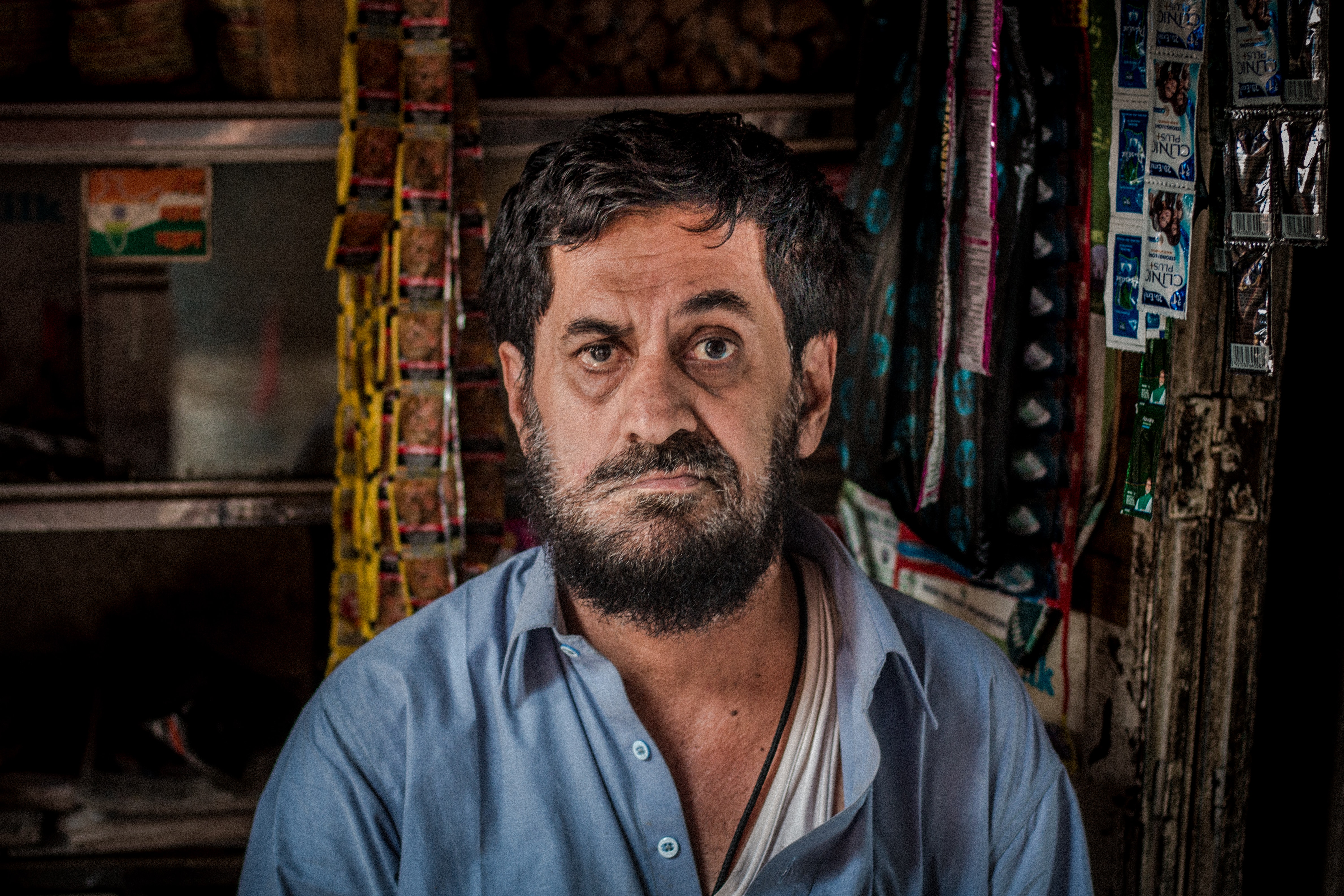
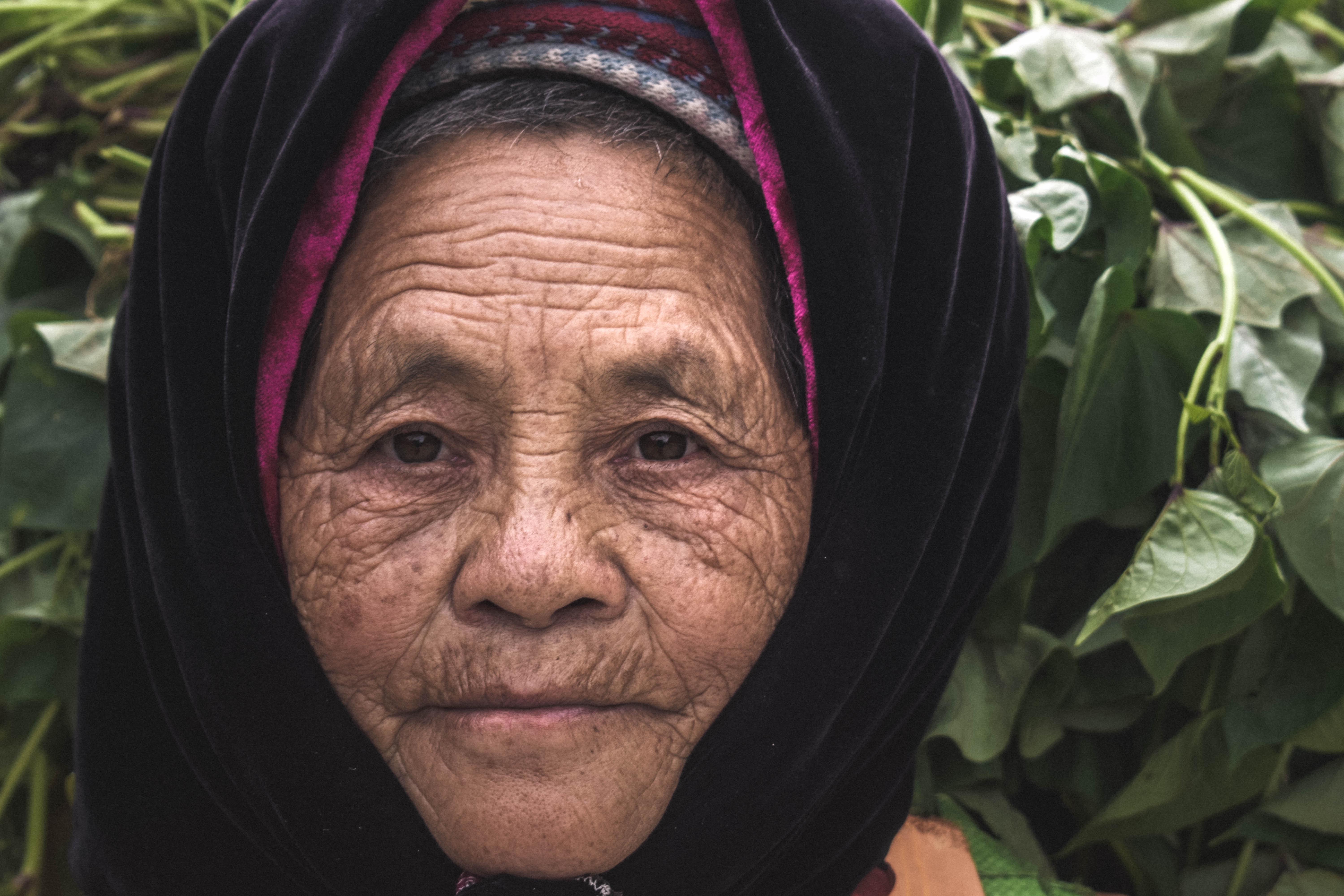
Photo by Frank Holleman on Unsplash.com.Photo by Etty Fidele on Unsplash.com.Photo by Pablo Rebolledo on Unsplash.com.
Also, I think “Great Stories Read the Audience” is an excellent way of saying a writer must know her target audience. I could try to write a novel that would appeal to everyone, but the finished product would probably appeal to no one.
One method is to do what Ms. Harnby suggests: let the viewpoint character describe another character, but don’t let it sound like a description in a police report. The reader doesn’t need to know every detail of how a character looks. Tell what is different about a character. Give each character a distinguishing physical or personality trait.
Author, editor, and writing coach Lori Freeland’s take on characters
Something Lori Freeland says in her June 3, 2019 blog post, https://writersinthestormblog.com/2019/06/down-with-the-rules/, also addresses a method a writer can use when describing their characters. It’s a twist on bending or breaking the writing “rule” that says a character shouldn’t describe herself or himself.
Ms. Freeland writes, “Main characters can describe themselves if they do it right…. Go ahead. Put your character in front of a mirror. But make it a funhouse mirror that emphasizes her faults and grows them larger than life.”
In this blog post, Ms. Freeland also comments about motivation. A writer needs to tell the reader what motivates a character. This clarifies the story.
To quote Ms. Freeland, “The internal journey of your character is as crucial as the external journey.”
Australian Fantasy Author Douglas W.T. Smith’s take on characters
Douglas W.T. Smith wrote about characters, voice, and dialogue in his April 9, 2019 blog post, https://dwtsmith.wordpress.com/2019/04/09/five-ways-to-improve-your-characters-voice-and-dialogue/. He states something important about characters and dialogue: “Remember, if the dialogue doesn’t advance the plot, give insight into characters, or show relationships between characters, it should be deleted.”
Mr. Smith goes on to talk about how a writer can make characters distinguishable by giving each one a unique speech pattern or word choice. From there he reminds the aspiring writer that all dialogue in a novel should be necessary and should move the story forward; otherwise, it is unnecessary.
Some things are better told through narrative. Mr. Smith writes, “Use dialogue when it’s needed – when it will show relationships or reveal character or plot the way no other tool will.”
Back to Louise Harnby
Related to that last quote from Douglas W.T. Smith, is this comment Louise Harnby made in https://www.louiseharnbyproofreader.com/blog/writing-dialogue-and-thoughts-8-problems-and-how-to-fix-them: “Dialogue should be purposeful. If you’re using it to introduce information, have the characters seek answers to questions they don’t know the answers to. Unveil backstory that’s known to the speakers through the narrator, not the speech.”
Author and Writing Instructor Janice Hardy’s take on characters
Janice Hardy’s April 30, 2014 blog post, http://blog.janicehardy.com/2014/04/five-ways-to-create-likable-characters.html, is titled “Five Ways to Create Likable Characters.” This brings up a whole other aspect of characterization. As if making each character look and sound different from every other character weren’t enough, a novelist needs to make most of their characters likeable.
Ms. Hardy prefaces her list of five ways to create likable characters by cautioning writers not make the characters perfect. She says, “There’s a fine–and often moving–line between likable and perfect, which can make it difficult to create a well-balanced likable character.”
Ms. Hardy’s blog post goes into detail about how to make a character likable and how to make each character distinguishable, so please click on the link above and read her entire post if you want to learn more.
Until my next blog post
At my own risk, I’m announcing that my blog post next Monday will be a continuation of today’s. If the topic doesn’t interest you, please check in again in two weeks when I’ll write about some of the books I’ve read in February.
I hope you have a good book to read. I’m listening to The Long Petal of the Sea, by Isabel Allende while I’m partially-incapacitated with my fractured leg.
If you’re a writer or other artist, I hope you have quality creative time.
Thank you for reading my blog post. You have many things vying for your attention and time, so I appreciate the fact that you took time to read my blog today. I hope you’ll visit it every week to see what I’m up to.
Let’s continue the conversation
Do you prefer to read plot-driven novels or character-driven novels? If you’re a writer, which do you prefer to write?
The Blue Ridge Mountains of North Carolina by Janet Morrison
I indicated that all the answers could be found in the vintage postcard book I wrote, The Blue Ridge Mountains of North Carolina. These trivia questions (and the answers supplied in today’s blog post) are my way of celebrating the fifth anniversary of the publication of the book by Arcadia Publishing on August 25, 2014.
Here are the questions and answers
1. Why was Grandfather Mountain named a member
of the international network of Biosphere Reserves in 1992? Because it supported 42 rare and endangered
species. Just on that one mountain!
2. What does
Linville Falls in North Carolina have in common with Niagara Falls? They are both caprock waterfalls, meaning the
top layer of rock is harder that the underlying stone. Erosion causes the
waterfall to migrate upstream over time. It is believed that Linville Falls was
once 12 miles downstream from its present location.
3. How did Edwin Wiley Grove make his fortune
which enabled him to build the Grove Park Inn in Ashevile, North Carolina? He sold Grove’s Tasteless Chill Tonic.
4. What part did the Civilian Conservation Corps
(CCC) play in the construction of the Blue Ridge Parkway during The Great
Depression? The men who were members of
the CCC assisted with the paving and landscaping of the Blue Ridge Parkway.
What a magnificent gift they left us!
5. When George W. Vanderbilt purchased Mt.
Pisgah in 1897, what grand plan did the mountain become part of
temporarily? The 125,000-acre Biltmore
Estate. (It’s no longer part of the estate.)
6. What groups of people were housed at Assembly
Inn in Montreat, North Carolina in 1942?
290 Japanese and German internees.
7. Jerome Freeman bought 400 acres of land in
Rutherford County, North Carolina that included the Chimney Rock around 1870
for $25. How much did the State of North Carolina pay for Chimney Rock Park in
2007? $24 million.
8. What new breed of hunting dog was developed
by a German pioneer family in the late 1700s in the Plott Balsams subrange of
the Blue Ridge Mountains? The Plott
Hound, which just happens to be the official State Dog of North Carolina.
9. What is an early 20th century feat
of engineering on the Newfound Gap Road in Great Smoky Mountains National Park?
The road crosses over itself. This
example of a helix is called “The Loop.”
10. How fast can a black bear run? 30 to 35 miles per hour.
11. It is illegal in Great Smoky Mountains
National Park to willfully get within how many feet of a black bear? 150 feet.
12. What is the name of the 57,000 acres of land
purchased by the Cherokee in the 1800s and held in trust by the United States
Government? Qualla Boundary
13. Is Qualla Boundary technically a reservation?
No, a reservation is land that the United States Government gives to an
American Indian tribe. The Cherokees purchased their land.
14. Did the Cherokee people lived in tipis in the
1700s and 1800s? No, they lived in
houses.
15. What forest contains one of the largest
groves of old-growth trees in the Eastern United States? Joyce Kilmer Memorial Forest
16. What hydroelectric dam was used in the 1993
Harrison Ford movie, The Fugitive? The Cheoah Dam
17. What is the tallest dam east of the Rocky
Mountains in the United States? Fontana
Dam.
18. One of the oldest postcards in my book is of
Cullowhee Normal School in the mid- to late-1920s. What is the name of that
school today? Western Carolina
University.
19. Started in 1935, the Blue Ridge Parkway’s
“missing link” was completed in 1987. What is the connecting one-fourth-mile
long piece that filled the “missing link” called? The Linn Cove Viaduct.
How did you do?
How many of the 19 questions did you answer correctly? I hope you enjoyed trying to answer the questions and seeing the answers today. If you want to learn more about the mountains of North Carolina and eastern Tennessee, please ask for The Blue Ridge Mountains of North Carolina, by Janet Morrison, at your local bookstore, online at Amazon.com, or purchase it directly from the publisher at https://www.arcadiapublishing.com/. It’s available in paperback and as an ebook.
The contract
I signed with Arcadia Publishing was for five years, so you’d better get a copy
of the book while it’s still being published. I don’t know if my contract will
be extended.
Since my last blog post
I’ve finally gotten into a rhythm for writing the scene outline according to C.S. Lakin’s template. It sounds backward to be writing the scene outline after writing the book, but the questions asked in the template, along with five questions I added after reading a couple of articles by Janice Hardy, are making every scene in the book stronger. It’s slow going, but well worth the time and effort.
Due to technical problems, I was unable to include images of any of the postcards from my book in today’s blog post.
Until my next blog post
If you’d like to follow me on Twitter, @janetmorrisonbk. If you’d like to follow my business page on Facebook, it’s Janet Morrison, Writer.
I hope you have a good book to read. I’m reading The Nickel Boys, by Colson Whitehead and still listening to Resistance Women, by Jennifer Chiaverini.
If you’re a writer, I hope you
have quality writing time.
Thank you for taking the time to
read my blog. You could have spent the last few minutes doing something else,
but you chose to read my blog.
Let’s continue the conversation
Feel free to
let me know in the comments section below or on Twitter or Facebook how you did
on the trivia questions. If you have any other comments or questions for me
about the Blue Ridge and Smoky Mountains, I’ll welcome and try to answer them.










 Janet's Writing Blog