This and That Out of Washington, DC This Week

It continues to feel like news items are coming out of Washington, DC like water from a fire hose. I can’t keep up. For my mental health, that’s a good thing.

Some things get more coverage by the media than others, so I try to include some things in my blog posts that might have missed your attention.

I thought about listing the following items in order of outrageousness or evilness, but I gave up. Here they are in random order.


I believe God is weeping

The Trump Administration Regime has ordered nearly 500 metric tons of emergency food that was intended for distribution in Africa and the Middle East through USAID to be burned. Let that sink in.

Photo of a fire
Photo by Caleb Kim on Unsplash

The $800,000 (You read that right: that’s $800 thousand) worth of food was specifically intended for children under five years old in war-torn and disaster-stricken countries. It would have fed 1.5 million children for a week. By the way, it will cost $130,000 to incinerate the food.

Since the Trump Regime shut down USAID, there was apparently no one in the Trump Government that had the authority, capability, or the moral courage to get the food distributed to anyone – not even here in the United States.

Another 60 metric tons of food already paid for by the American taxpayer sits in warehouses around the world. Without USAID workers, it is doubtful any of it will be distributed. Therefore, it will eventually have to be destroyed.

It seems to me on the political level alone this is a slap in the face of the American farmer. You know – that American farmer that Trump and MAGA folks claim to love so much. That farmer grew that food.

How dare Donald Trump accuse USAID or any current or former U.S. Government agency of being wasteful!


More deportations to third-world countries

CBS News reports that the Trump Regime admitted on Tuesday that a group of violent criminals had been deported to Eswatini. Eswatini used to be known as Swaziland. It is a tiny country in Africa.

Photo of a jet plan in the sky
Photo by John McArthur on Unsplash

The deportees were not from Eswatini. They were from Cuba, Jamaica, Laos, Vietnam, and Yemen.

The Trump Regime says they were deported to Eswatini because they were such violent people that their home countries refused to take them.

It has not been disclosed what Eswatini gets out of the deal. The U.S. Department of Homeland Security claims that the countries accepting our deportees promise not to persecute or torture them.

I suppose we can take them at their word on that. (By “them” I mean the United States and the countries accepting our deportees.)

The irony is that Trump has maintained for years that other countries were sending us their criminals and the worst scumbags of society. It appears he has learned from those countries, and now the United States is doing it. We’re just proudly announcing that we’re doing it. Somehow, this is supposedly making America great again.


Corn farmers will have to take one on the chin for Trump

Trump has decided he’d rather his Coca-Cola be sweetened with cane sugar (mostly imported, by the way) than from corn syrup made from corn grown in Iowa. I understand that’s the difference between the Coca-Cola recipe in Mexico and the one used in the U.S. Who knew Trump preferred Mexican Coca-Cola to American Coca-Cola?

Photo of corn growing in a field
Photo by Katherine Volkovski on Unsplash

The American Medical Association says there’s not much difference in the “nutritional” value of a Coke sweetened with corn syrup and a Coke sweetened with cane sugar. When you’re dealing with a beverage that has no nutritional redeeming value….

Anyway, Coca-Cola appears to be just the latest private corporation that Trump wants to strong-arm into submission to his whims. Some of us remember the last time Coca-Cola tried to tinker with its recipe in America things did not go well.


FICA Club World Cup Trophy

It was embarrassing enough that President Trump refused to get off the stage so the Chelsea 2025 FIFA Club World Cup tournament champions could celebrate their win on July 13, but he didn’t stop there. The 24-carat gold trophy designed by Tiffany and Company and valued at $230,000 is now in the Oval Office. The Chelsea team got to take home a replica.

You simply cannot make this stuff up. I thought it couldn’t be true – not even for Trump – but I verified it on snopes.com.

I saw online that the Chelsea team photoshopped Trump out of the picture of them receiving the trophy and celebrating on stage.

I shudder to think how much gold Trump will take from the 2028 Summer Olympics!


Covid-19

U.S. Attorney General Pam Bondi has dropped a case against a doctor in Utah who was accused of falsifying Covid-19 vaccination certificates and destroying $28,000 worth of government-provided Covid-19 vaccines.


Decrease in workforce at State Department

More than 1,300 employees of the U.S. State Department were let go last week. Waste, I guess?

Don’t you just hate it when diplomacy, time-honored relationship, goodwill, and mutual understanding get in the way of hate and war?


Rosie O’Donnell’s citizenship threatened

President Trump threatened to take Rosie O’Donnell’s U.S. citizenship away from her because she spoke out against his policies.

I had no idea the President of the United States could take away someone’s citizenship. (I’m being facetious… He can’t.)


The Federal Reserve

Trump continues to be critical of Jerome Powell, Chairman of the Federal Reserve. One day he’s going to fire him. The next day he isn’t going to fire him. On Wednesday he said he was surprised that Powell was appointed to the position.

Well, duh! Trump appointed him in 2017. Now he says Powell is a terrible person and claims that he was appointed by President Biden.


Firings at Department of Justice

U.S. Attorney General Pam Bondi fired 20 employees of the U.S. Department of Justice (DOJ). The 20 people worked on investigations into Donald Trump and his first administration while Joe Biden was U.S. President. In Trump’s 2024 campaign and in Bondi’s confirmation hearings, they both vowed to get rid of everyone at the DOJ who participated in investigations against Trump. The political firings at DOJ last week were made to get rid of the weaponization of the Justice Department. (You can’t make this stuff up.)

Photo on Unsplash

She also fired Joseph Tirrell, the Justice Department’s senior ethics attorney. He is a military veteran and has served his country in one way or another for nearly 20 years.

It is a sad day when the U.S. Department of Justice fires the top person looking out for ethics.


The IRS and the Johnson Amendment

The IRS announced on Monday that churches can now endorse politicians and not lose their tax-free status as a religious organization. My Baptist preacher Congressman sees this as a tremendous victory for our First Amendment rights of free speech.

Photo of a government building with the words "Internal Revenue Service engraved in the stone
Photo by Sean Lee on Unsplash

I don’t see it as a victory for anyone except pastors and churches that want to dictate how their congregants vote. It’s a shame their church members cannot be trusted to think for themselves.

I heard a audio clip of President Trump saying he didn’t see anything wrong with it if there is a candidate they like whose beliefs align with theirs. That shows how little he knows about religious organizations or Christianity. This is a slippery slope.

The Johnson Amendment was named for then U.S. Senator Lyndon B. Johnson. It became part of the U.S. Tax Code in 1954. It prohibits all 501(c)(3) non-profit organization from endorsing or opposing political candidates.

I’m a little puzzled over how the Internal Revenue Service can just wipe part of the U.S. Tax Code off the books, but apparently in the land of Trump it can.


Recission Bill – Cuts to Public Broadcasting Corporation & USAID

The U.S. Senate gave Trump a huge gift yesterday morning when they voted 51-48 (one Senator was in the hospital and missed the vote) to cut $1 billion from the Corporation for Public Broadcasting and $8 billion from foreign aid programs, including what little was left of USAID.

Although Senators Collins and Murkowski voted with the Democrats, Thom Tillis of North Carolina chose to vote for the cuts while at the same time making a speech on the Senate floor in which he said passing the bill was a mistake that the Senate would have to fix later.

What?

The bill was then sent back to the House of Representatives for that Republican-dominated body to rubber stamp it by today.

I am going to miss “NOVA,” “Finding Your Roots with Henry Louis Gates,” “Nature,” “BBC News America,” “Amanpour and Company,” “BBC News,” “PBS News Hour,” “North Carolina Weekend,” “Cook’s Country,” “Antiques Roadshow,” “Burt Wolf: Travels & Traditions,” “Rick Steves’ Europe,” “Doc Martin,” “My Music With Rhiannon Giddens,” every one of the Ken Burns documentaries, “Somewhere South,” “America’s Test Kitchen,” and “Lidia’s Kitchen.”

My sister will miss “Midsomer Murders” and “Death in Paradise.”

I’m sure others will miss “Sesame Street” and other children’s programming.

Photo by Meg von Haartman on Unsplash

Others will miss “This Old House,” “Woodwright Shop,” “Austin City Limits,” “Grantchester on Masterpiece,” “Miss Fisher’s Murder Mysteries,” and “Sit and Be Fit.”

I could go on, but you get the picture. I hope you took time to let your Senators and Representatives know that you did not want the federal government to end its support of the Corporation for Public Broadcasting. I did. It just fell on their six deaf ears.

Hearing U.S. Representative Randy Fine, a Republican from Florida, interviewed yesterday, it became clear that some of the members of Congress don’t know what they are voting on. Fine justified the elimination of money for the Corporation for Public Broadcasting Corporation (CPB) from the federal budget because “we have broadband and streaming now.”

First of all, if the public television stations don’t have the money to produce programming, no amount of broadband internet service or streaming capabilities will make non-existent programming available to people with broadband and/or streaming. In order to stream a TV program, it is my understanding that the program has to exist. However, I’m just a citizen, so what do I know?

Second of all, Mr. Fine, everyone does not have broadband internet service and everyone does not have internet service that is strong enough to enable streaming. I know that, because I’m one of them. I don’t live in a remote area; however, I do live on a road that does not have a high enough population for Windstream to upgrade our service. I can barely get so-called high-speed internet. Streaming? Forget about it.

Trump doesn’t like the Public Broadcasting Service (PBS) – “public TV” or National Public Radio (NPR). Therefore, Republicans in the U.S. House and U.S. Senate cannot like them. Congressman Fine repeated the Republican Party line yesterday about PBS and NPR: They are “woke left-wing radical propaganda.”

That’s what this week’s email from my Congressman, Mark Harris, said, too. I guess Trump, Fine, and Harris nailed it. After all, when I watch “Antiques Roadshow” or “This Old House,” all I see is “woke left-wing radical propaganda.”


Margaret Taylor Green’s new concern

I couldn’t help but laugh when I read that U.S. Representative Margaret Taylor Green of Georgia is afraid that passage of the GENIUS Act – a crypto currency bill pushed by Trump – could be a sign of the “End Times” referenced in the Book of Revelation in the Bible (Revelation 13:16-17).

Photo of a loose pile of bitcoins
Photo by Traxer on Unsplash

She fears it will be “the sign of the beast.”

That’s hilarious! I thought the red MAGA baseball caps might already serve that purpose as “a mark on their foreheads.”


Just a few things we’ve lost since January 20, 2025

We won’t fully grasp what we’ve lost due to Executive Orders and legislation in the United States since January 20 until next year and the years thereafter.

We’ve lost the sanctity of our national parks to name just one.

We’ve lost an estimated 90,000 children in Third World countries who have died of starvation or disease since January 20 because the Trump Administration halted food and medical aid programs.

We’ve lost medical insurance coverage for millions of our fellow citizens.

We’ve lost after-school literacy programs for millions of our children.

We’re rapidly losing the separation of church and state that was so very important to the people who fought in the American Revolutionary War.

We’ve lost much of our civility and respect for our fellow Americans.

We’ve lost the simple elegance of the Oval Office and seen it turned into a gaudy gold frame shop.

We’ve lost the beauty of the White House Rose Garden.

We’ve lost our position of diplomatic influence in the world and replaced it with a stance of bullying, intimidation, black-mailing, and strong-arming.


Just a few things we’ve gained since January 20, 2025

Oh… but we’ve gained the disrespect of the rest of the world.

We’ve gained a para-military masked national police force.

We’ve gained a concentration camp in the Everglades.

We’ve gained an ability to disappear people.

We’ve gained an ability to deport immigrants to remote war-torn countries of questionable motives.

We’ve gained two obscenely gigantic U.S. flags on the White House lawn. They block the view of the beautiful White House, but Trump says they are the most beautiful flag poles in the world. Those new flags at the White House remind me of the one at a huge RV park near the Charlotte Motor Speedway.

By cutting $1 billion from the Corporation for Public Broadcasting, that $1 billion saved can be used to start renovating the dilapidated prison on Alcatraz Island off the coast of California. To use Trump’s favorite adjective, what a beautiful use of that $1 billion instead of using it to support educational TV and non-commercial radio and the national and local emergency alerts those PBS and NPR stations send out – especially in the rural areas of the country!

We’ve gained the realization that our American democracy was as fragile as the paper the U.S. Constitution was written on almost 250 years ago.


Until my next blog post

Keep reading that book you checked out from the public library or purchased from an independent bookstore!

Remember the people of Ukraine, western North Carolina, and the Hill Country of Texas.

Janet

I did not plan to blog today

I was determined not to blog today. I had already planned a post for tomorrow, and I will leave it for then.

Last night I read an article by Lisa Desjardins, a correspondent for PBS NewsHour. I felt it was important to share with you what she reported. I received it in an email as a subscriber, so I cannot in good conscience copy it and post it here.

Here is the link she provided for the “Technical Supplement to the 2026 Budget Appendix” from the Office of Management and Budget: https://www.govinfo.gov/content/pkg/BUDGET-2026-APP/pdf/BUDGET-2026-APP.pdf?utm_source=PBS+NewsHour&utm_campaign=968c809e4c-EMAIL_CAMPAIGN_2024_05_14_COPY_01&utm_medium=email&utm_term=0_47f99db221-968c809e4c-504663930. It is 1,215 pages, but it includes an index. The table of contents gives the page numbers for each federal department.

A computer-generated photo of a stack of blue dollar signs
Photo by Nick Fewings on Unsplash

Lisa Desjardins’ email listed 46 agencies and programs President Trump wants eliminated. Some of them are:

Economic Development Administration.

Job Corps;

AmeriCorps;

Minority Business Development Agency;

NASA’s Office of Science, Tech, Engineering and Math Engagement;

Office of Federal Contract Compliance Programs (a watchdog to make sure there is no discrimination in federal contracts);

Chemical Safety and Hazard Investigation Board;

Administration for Community Living (which assists older adults and disabled individuals live independently);

Department of Health and Human Services’ Prevention and Public Health Fund;

Low-Income Home Energy Assistance Program;

Northeast Home Heating Oil Reserve; Legal Services Corporation (a funder of civil legal aid);

US Agency for Global Media (includes Voice of America, Radio Free Asia, and Radio Free Europe);

Corporation for Public Broadcasting (National Public Radio and the Public Broadcasting System);

Educational and Cultural Exchange Programs;

National Endowment for the Arts;

National Endowment for the Humanities;

Institute of Museum and Library Services;

Institute of American Indian and Alaska Native Culture and Arts Development;

State and Tribal Wildlife Grants Program;

Cooperative Endangered Species Conservation Fund; and

Marine Mammal Commission.

Lisa Desjardins’ email states, “Congress must pass the next funding bill by Sept. 30 to avoid a government shutdown.”

It’s unfortunate that the US Congress can only figure out a budget three months at a time. I should be so lucky.


Until my next blog post

Keep reading and watching reputable news reports.

Always have a good novel within arm’s reach.

Remember the people of Ukraine and western North Carolina.

Janet

4 or 5 Books I Read in May 2019

My reading was haphazard in May, to say the least. I read snippets of several books here and there. I read three books, listened to one book, and read 35% of another one before it had to go back to the public library. I’m having some issues with my computer, but here goes.

The First Conspiracy:  The Secret Plot to Kill George Washington, by Brad Meltzer and Josh Mensch

The First Conspiracy: The Secret Plot to Kill George Washington, by Brad Meltzer and Josh Mensch

I love learning things, and it’s amazing how much I don’t know at my age. One thing I learned from this book seems so basic I’m embarrassed to admit I didn’t know it. In my history studies I didn’t learn that the Continental Congress created the Continental Army in 1775. In my mind, I assumed the Continental Army was formed after the signing of the Declaration of Independence in 1776.

The First Conspiracy:  The Secret Plot to Kill George Washington, by Brad Meltzer and Josh Mensch is almost a day-by-day telling of American Revolutionary history with focus on the little known facts of the things that happened in the shadows – behind the scenes. I minored in history in college, but I didn’t know about the conspiracy to kill George Washington as Commander of the Continental Army.

Most of what I knew about William Tryon was how he robbed the citizens of North Carolina blind to build “Tryon Palace” in New Bern, North Carolina while he served as the colony’s governor. I knew he left that position to take the more lucrative office of governor of the New York colony.

One thing I learned from The First Conspiracy was how Tryon was ruthless in his dealings with the rebels in New York and how he continued on that mission even after taking refuge in a British ship in New York Harbor.

An amusing part of the book was the description of the arrest and questioning of the four men who had decided to print paper currency in secret for the colonies. They hadn’t agreed on an alibi, so each one had a different explanation than the others and, of course, one denied having any knowledge of the printing press in the attic.

I’d read about 70% of the book before it had to be returned to the public library because another patron was waiting for it. I’ll check in out again later in order to read the rest of the story.

The Waxhaws, by Louise Pettus, assisted by Nancy Crockett

The Waxhaws, by Louise Pettus with Nancy Crockett

I wish I’d known in 1983 to purchase a copy of this book when it was published. Now, if you can find a copy to buy, it will likely cost you more than $150. I was delighted to find a circulating library copy in May, and I devoured the content.

This book, more than anything else I’ve read, helped me get a feel for life in The Waxhaws just south of the North Carolina-South Carolina border in colonial times. I hope I’m able to communicate that sense of place and time in my historical novel, The Doubloon, which primarily takes place in that Carolina backcountry settlement in 1769-70.

Anyone interested in day-to-day life in colonial America owes Louise Pettus and Nancy Crockett a debt of gratitude for all the South Carolina history they preserved and shared with each other and their readers.

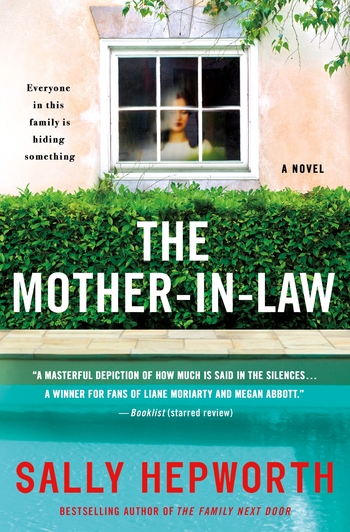
The Mother-in-Law, by Sally Hepworth  

The Mother-in-Law, by Sally Hepworth

I’ve become a fan of Sally Hepworth’s novels, so I got on the wait list for her latest book as soon as it showed up on the “on order” list on the public library’s online catalog. I’ve read all her novels except The Secrets of Midwives.

This novel will keep you guessing “who dunnit.” Everyone seems to have issues with the mother-in-law. Her daughter-in-law tells this story. She has issues with her mother-in-law. So does her husband, his sister, his sister’s husband. It seems like most people who come in contact with the mother-in-law have a hard time dealing with her quirks and aloofness.

There is a totally different side the mother-in-law shows the people she helps through her volunteerism, though. It’s difficult for her family members to understand this part of her life because it seems out-of-character.

As the reader begins to learn the mother-in-law’s backstory, he or she will understand what made her the way she is or was. She’s found dead in her home. Who killed her? You might be surprised.

The Personal Philosophies of Remarkable Men and Women, edited by Jay Allison and Dan Gediman in association with NPR (National Public Radio)

I listened to this book. It contains “This I Believe” essays written by people from all walks of life. Some are or were famous, others I had not heard of. Among those whose essays are in this current audio collection are Helen Keller, John McCain, Oscar Hammerstein II, William O. Douglas, Albert Einstein, Leonard Bernstein, Martha Graham, John Updike, Carl Sandburg, Jackie Robinson, Eleanor Roosevelt, Gloria Steinem, Colin Powell, Helen Hays, and Bill Gates.

The Afterword by Dan Gediman gives the history of This I Believe. The original book contained 100 essays and was done by legendary journalist Edward R. Murrow. The first of the essays was broadcast on radio on Easter Sunday in 1949.

In a nutshell, the This I Believe essays are supposed to be about “the guiding beliefs by which they live their lives.” They are short, being about five minutes long.

One of the goals of the This I Believe organization is “to facilitate a higher standard of public discourse.”

If you wish to know more about this international organization, visit

https://thisibelieve.org/.

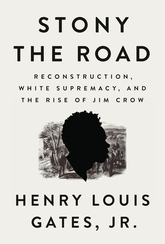
Stony the Road:   Reconstruction, White Supremacy, and the Rise of Jim Crow, by Henry Louis Gates, Jr.

Stony the Road: Reconstruction, White Supremacy, and The Rise of Jim Crow, by Henry Louis Gates, Jr.

I learned a lot from this book. I knew I would. Henry Louis Gates, Jr. is an icon when it comes to history. I only had time to read the first two chapters of Stony the Road: Reconstruction, White Supremacy, and the Rise of Jim Crow, before it disappeared from my Kindle and went back to the public library. (Don’t worry. I immediately got back on the wait list for it so I can continue reading it.)

Look for my blog post next Monday about the important lesson I learned as a writer while reading Stony the Road. It wasn’t a lack of interest that caused me to read only two chapters. It was a case of “too many books, so little time” and the fact that I dedicated most of my time to writing instead of reading in May.

Since my last blog post

Since last Monday’s blog post, we jumped right over spring and went into summer. Last week it was 95 degrees on five days and 94 on the other two. According to the calendar, summer begins in three weeks. We have gone from too much rain to no rain in about three weeks. I’d rather have heat and drought than flooding or tornadoes like they’re having in the central part of the US, so I’m not complaining.

I got some good feedback about last Monday’s blog post. Thank you, Jules Horne and all the others who took the time to comment on here and on my Facebook pages.

Until my next blog post

A couple of weeks ago I read that a blogger should use second person point-of-view instead of first person. There are too many rules. I’ll try to do better in the future.

If you’re a writer, I hope you have quality writing time and your projects are moving right along.

Thank you for reading my blog. You could have spent the last few minutes doing something else, but you chose to read my blog.

Let’s continue the conversation

Have you read any of these books? If so, please share your thoughts below. What are you reading?

Janet

How Listening to a Book and Reading a Book Differ

Photo by William Iven on Unsplash

Until I read Jules Horne’s guest post on Jane Friedman’s March 25, 2019 blog,https://www.janefriedman.com/writing-for-audio-understanding-attunement/ ­­­­­ , I had not considered how a listener of an audio book approaches a book as opposed to how a reader of the printed word approaches a book.

Jules Horne teaches method writing. She has even written a book about writing books for the audio audience:  Writing for Audiobooks:  Audio-first for Flow and Impact. I haven’t read it but maybe I should. If you’re interested in finding out more about Ms. Horne and her books, her website is https://www.method-writing.com/. Most of her work appears to pertain more to nonfiction than to fiction writing, but her guest post on Jane Friedman’s website gave me some things to consider as I write fiction.

I’m fairly new to listening to audio books. It’s a matter of personal preference, and it stems from how I learn things. I’m a visual learner, as a rule. A few years ago, having to listen to a book being read was torture for me. I felt like someone was talking “at” me and they wouldn’t shut up. It got on my last nerve. This became an issue because my sister is my traveling companion. She loves audio books and I hated them. That’s not a good combination on a vacation.

Over the past six or eight months I’ve made an attitude adjustment. I’ve listened to several books and enjoyed the experience for the most part. I am hearing impaired, so it is helpful to me for there to be few erratic changes in volume. That goes for people talking to me, the decibel levels on the TV, and very much so if I’m listening to an audio book.

All that being said, that’s not what today’s blog post is about. It’s about something called attunement. The above-referenced blog post by Jules Horne brought two important things to my attention as I learn the fine points of writing:

(1)          If the hook of your story is in the first several words of your book, the audio book listener might miss it. It takes a few words for a book listener to attune their ears to the sound of the reader’s voice – the volume, the pitch, the accents, and the cadence. A writer doesn’t want the book listener to miss the hook; and

(2)          The same thing applies to the transition into the next scene and the next chapter. The listener, more than the printed word reader, needs a few words of transition to ease into a new scene or point-of-view.

A comparison Ms. Horne makes is that of someone verbally giving us the news. Words like, “meanwhile” or “in other news” alert the listener to a switching of gears, a change in the story. Someone listening to a novel needs similar cues that give their brains a moment to prepare to hear something new.  

The current opening line in the manuscript for the Southern historical novel I’m writing, The Doubloon, is

“Sarah McCorkle dropped her sewing basket at the sight of her husband lying face down between the stone hearth and his desk, sending thread, needles, and thimbles crashing and scattering on the wide planks of the pine floor.”

After reading Jules Horne’s thoughts about writing for audio, I need to rethink that sentence as well as the opening sentences for each of my chapters and scenes. There are a multitude of things a writer has to keep in mind when editing the first (otherwise known as the “rough”) draft. I plan to address some of them in my blog post next Monday.

Since my last blog post

I let my rough draft of The Doubloon rest for several days, and then I started working on the second draft. I changed the timing of an event mentioned on the first page, and that meant adjusting references to that event throughout the rest of the book. 

Getting this book published is going to be a long process, but please stay tuned.

Until my next blog post

I hope you have a good book to read. I’m reading The Mother-in-Law, by Sally Hepworth and Stony the Road:  Reconstruction, White Supremacy, and the Rise of Jim Crow, by Henry Louis Gates, Jr. I’m listening to The Personal Philosophies of Remarkable Men and Women compiled by NPR (National Public Radio.)

If you’re a writer, I hope you have quality writing time and your projects are moving right along.

Thank you for reading my blog. You could have spent the last few minutes doing something else, but you chose to read my blog.

Let’s continue the conversation

Do you prefer listening to audio books or reading the words yourself?

Do you prefer holding a book in your hands and turning a paper page or reading a book on an electronic device?

What do you think of the current “hook” in my novel? Do you think it would work as well if you were hearing it instead of reading it?

Janet