I write southern historical fiction, local history, and I've written a devotional book. The two novels I'm writing are set in Virginia and the Carolinas in the 1760s. My weekly blog started out to follow my journey as a writer and a reader, but in 2025 it has been greatly expanded to include current events and politics in the United States as I see our democracy under attack from within. The political science major in me cannot sit idly by and remain silent.
As I said in last week’s blog post in which I wrote about three books I read last month, I read a variety of genres in November. I hope you will find something of interest in the three books I’m blogging about today.
The Plot to Kill Hitler: Dietrich Bonhoeffer: Pastor, Spy, Unlikely Hero, by Patricia McCormick
The Plot to Kill Hitler: Dietrich Bonhoeffer: Pastor, Spy, Unlikely Hero, by Patricia McCormick
This book is a painful reminder of the evil wrought by Adolf Hitler and how a dictator like Hitler demands complete allegiance from all who live in their realm. It is specifically about the life of Dietrich Bonhoeffer. I have read quotes from Bonhoeffer, references to him in sermons, and things about him. This 150-page book pulls it all together from his childhood in the lap of luxury, to his struggles with the great questions of life and ethics, to the courage he demonstrated in the face of pure evil in Nazi Germany.
In The Plot to Kill Hitler, Patricia McCormick weaves together the many strands of history that resulted in some unlikely people finding a shared sense of right and wrong and the courage to stand up against the genocide of the Jews. Several attempts to murder Hitler failed for various reasons before the authorities put all the clues together in an effort to identify all the conspirators.
The parallels between Hitler and a recent past US president who is seeking reelection are startling and impossible to miss. I highly recommend this book.
If Patricia McCormick’s name sounds familiar to you, it might be because I wrote an entire blog post about Sold, by her, on November 13, 2023: One of the Most Banned Books in the US: Sold, by Patricia McCormick. Reading Sold prompted me to look for what else she has written.
The Exchange After the Firm (The Firm Series Book 2), by John Grisham
The Exchange: After The Firm, by John Grisham
The Exchange is the latest novel by John Grisham that all his fans are talking about. We get to re-engage with Mitch and Abby McDeere from The Firm. Mitch and Abby have tried to put the terrible memories of how things ended in Memphis behind them. Mitch swore he’d never return to that city but the head of the law firm’s health is failing and he needs Mitch to take a case in Libya. As one would expect, things do not go well. (If they did, it wouldn’t be a very interesting novel!)
If you read The Firm and have enjoyed scores of Grisham’s other novels, you’ll certainly enjoy The Exchange.
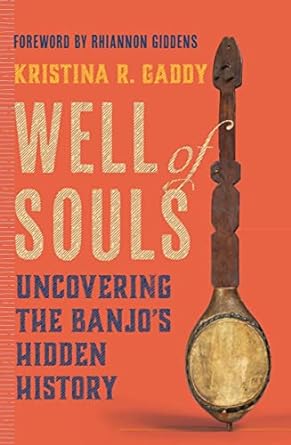
Well of Souls: Uncovering the Banjo’s Hidden History, by Kristina R. Gaddy. Foreword by Rhiannon Giddens
Well of Souls: Uncovering the Banjo’s Hidden History, by Kristina R. Gaddy
I was drawn to this book for two reasons. First, I needed to learn more about the history of the banjo because there is an early African-American constructed banjo in the historical novel series I am working on. In fact, a segment on the Public Broadcasting System’s “History Detectives” years ago about the early African-American banjos was one of two initial sparks that inspired me to write the novels I’ve been working on for more than a decade.
Second, when I saw that Riannon Giddens had written the foreword, I knew I had to read the book. If you have not discovered the musical talent of Riannon Giddens, please look for her music on YouTube and her CDs. My favorite concert of hers on YouTube is with Francesco Turrisi from October 4, 2019: https://www.youtube.com/watch?v=Ignhso0iv9U.
Since my last blog post
I continue to hone my skills at creating memes on Bookbrush.com to use for pins on Pinterest to publicize my writing. I enjoy doing it, but it consumes more of my time than I would like. I’m trying to create enough ahead each day to enable me to schedule at least one every day through the end of December when things tend to get hectic with holiday activities. I’d rather be writing than creating memes and pins, but it seems to go with the territory. No two days are the same, which keeps me motivated.
Until my next blog post
I hope you have at least one good book to read. I’m enjoying Dangerous Women, a political thriller by Mark de Castrique. It’s the second book in his Ethel Crestwater series.
Dangerous Women, by Mark de Castrique
Maybe it’s just me and/or the age I am, but it seems like there’s a lot of sickness going around. I wish you well.
It is seldom that a character in a book grabs me by the throat and won’t let me go, but that’s exactly what happened the moment I started reading Sold, by Patricia McCormick.
Sold, by Patricia McCormick
In case you don’t know, this is one of the most banned books in the United States. Knowing that makes me furious and heart-broken.
Sold, by Patricia McCormick was a National Book Award Finalist for Young People’s Literature.
This book is categorized as a YA (Young Adult) book. I think it should be required reading for “young adults” which includes teens. In fact, I think it should be required reading for ‘tweens.”
If a girl is old enough to be sold into the sex trade, by golly she is old enough to read this book!
I have blogged about book banning several times recently, and I will probably blog about it in the future. It is a practice I do not understand. It is a practice I abhor. It is a practice that, if left unchallenged, will destroy our democracy. Organizations such as Moms for Liberty are trying to take our liberty away under the guise of looking out for children.
Where I come from, you don’t look out for children by taking books away from them. If your narrow-minded self wants to take books away from your own children, you have the right to do that. However, you don’t have the right to take books away from all children.
According to PEN America, Sold, by Patricia McCormick is tied for the sixth most banned book in the United States. It is banned in 11 school districts in six states.
In Sold, Lakshmi, a 12-year-old girl in Nepal is sold by her stepfather. She is taken to India where she is locked in a brothel. She is tricked into thinking that if she works in the brothel long enough, she will eventually be able to pay off the “debt” she owes the madam.
This, of course, is a myth. It works sort of like the tenant farmer system in the United States. The farm owner keeps adding charges to the tenant’s account, so the tenant never gets out of debt. In Sold, the madam keeps adding charges for clothes, make up, electricity, etc. to Lakshmi’s account. Lakshmi thinks part of the money she is earning is going to her mother. She wants her mother to be able to replace the thatched roof on their house with a tin roof. Of course, none of the money she’s earning is being sent to her mother.
This book is written in a short pieces. Each piece gives the reader another glimpse into the miserable life Lakshmi endures.
There is a satisfying ending, in case you shy away from books that don’t resolve in a way you wish; however, most girls like Lakshmi do not experience a happy ending.
The author’s note at the end of the book gives the following statistics (among others) for the time of its writing (2006):
“Each year, nearly 12,000 Nepali girls are sold by their families, intentionally or unwittingly, into a life of sexual slavery in the brothels in India. Worldwide, the U.S. State Department estimates that nearly half a million children are trafficked into the sex trade annually.”
“It won’t happen to my child.”
If you don’t want your 12-year-old daughter to know there is such a thing as sex trafficking, that’s your prerogative. Bury your head in the sand and hers, too, while you’re at it.
That does not mean she won’t fall victim to this sickening crime one day.
Don’t you owe it to her to tell her there are dangerous people out there who are very charming — some are even women — but don’t have her best interest at heart? Just because she doesn’t know sex trafficking exists doesn’t mean she won’t learn about it the hard way.
Since my last blog post
I’ve worked to make my books more visible on Pinterest. Since a free workshop about Pinterest for authors offered by Bookbrush.com helped me realize that Pinterest is a search engine and not social media, I’ve tried to utilize the platform more than I have in the past to publicize my writing. Visit my boards and pins on Pinterest at https://www.pinterest.com/janet5049/.
I found another local independent bookstore that takes self-published books that are published by Kindle Direct Publishing on consignment! I hope to be able to announce in a future blog post that The Aunts in the Kitchen: Southern Family Recipes is available at Main Street Books in Davidson, North Carolina!
I continued to try to get back on Facebook, but there are several forces beyond my control working against me – including the iCloud. All this nearly six-month long saga started with a data breach at Windstream. I miss being able to publicize my blog, website, books, and short stories on Facebook.
Until my next blog post
If Sold is not on the shelf for circulation in your local library system, request that the system purchase it. That is exactly what I did. I hope it will soon be available in the Cabarrus County Public Library system.
Look for other often-challenged or banned books and make a point to buy them or check them out of the library. Together, we can make a statement louder than that of Moms for Liberty – just like voters across the nation did in last Tuesday’s local school board elections.
Spend time in person or virtually with friends and family, even if they have views that are different from yours. Try to find a way to engage them in conversation about those topics. Try to understand why they believe what they believe.
Last, but not least… remember the people of Ukraine and the Middle East who are victims of dictators, terrorists, and wars they didn’t ask for.
Ms. Story hit on some important points and helped me not to feel quite so intimidated by the whole author platform thing. Her article touched on the “whys” and the “wherefores” of an author platform. It boils down to anything and everything you do to attract readers.
She talked about five ways an author’s platform can help your career. They all made sense. Then she listed 14 examples of things a writer can do to attract readers. I was happy to see “Blog” on the list, but the wheels fell off my wagon when I got to “YouTube site.” Yikes! Moving on down the list (because, after all, I can’t do all 14 of them) I came to “Newsletter.” I’ve toyed with that idea, but I haven’t attempted that avenue yet.
When my redesigned website gets up and running (soon!), I will start asking people to sign up for my email list/newsletter. More to come on that in the coming weeks.
Ms. Story also had “E-books” and “Social Media” on her list. I’ve mentioned my lack of comfort with social media in many blog posts. There’s certainly more work for me to do there.
On the E-book front, I’ve written a southern historical short story that I plan to give away as an e-book to everyone who signs up for my mailing list. Stay tuned for my announcement about that when my new website is ready.
Blog and Social Media: Is it Both or Either/Or?
Photo Credit: Elena Mozhvilo on unsplash.com
I recently listened to a Penny Sansevieri of https://www.amarketingexpert.com on this topic. It unburdened me! I learned that more and more authors don’t have a desire or the time to be on social media. Whew! What a relief! I’ve read and heard a thousand times that authors have to be active on social media.
I’ve tried to be active on Twitter. It’s just not my thing. It’s a chore. It’s something I have to put on my to-do list, but usually it gets pushed to another day. And Instagram? I created an account several years ago, but I’ve never used it. By that, I mean I’ve never logged in to my account a single time.
I enjoy putting things on Pinterest, but I’m more likely to pin a recipe than something writing-related. Last week I read a theory that Pinterest might be an author’s best friend when it comes to social media. I like Pinterest, so that was encouraging.
When Penny Sansevieri said I don’t have to do social media, I wanted to jump up and down. If I blog on a regular basis (check!), update my website (check! Being done!) and stay active on Pinterest (fairly easy!), all I need to add is a newsletter.
With that in mind, I looked back at the “Next Steps” section in my January 30, 2023 blog post. I was tempted to strike through numbers 5 and 6 (find out where my target reader hangs out and hang out there), but I’m pretty sure historical fiction fans hang out on Goodreads. I like Goodreads. I just need to get more serious about it.
My takeaways from the podcast were (1) Since I blog every week, I don’t have to have a presence on social media; (2) I need to upgrade my author website; (3) I must have a newsletter with updates on what I’m doing and teasers about what’s coming; (4) I need a magnet to attract people to my newsletter; (5) I must have information in the back of my books with links to my website, blog, and any social media I want to participate in; (6) I mustn’t overlook local events and local media; and (7) I need to engage with influencers.
Where do I go from here?
With the new advice from Penny Sansevieri’s podcast that I just need to choose those activities I’m comfortable with and focus on them, I don’t feel overwhelmed now. (Well, not completely overwhelmed.) I will stop feeling guilty for not Tweeting every day.
You wouldn’t believe how much weight just got taken off my shoulders!
Photo Credit: Jacob Kiesow on unsplash.com
I’ve Been Part Way Down That Road Before
I could be the poster child for how not to build an author’s platform. I’ve given half-hearted effort in the past to everything on Kimberly Grabas’ list I shared in m January 30, 2023 blog post. I’ve let excuses like lack of technical expertise derail my good intentions.
Reading the articles I referenced today and two weeks ago and listening to the podcast I mentioned were extremely helpful. Those actions, plus taking Tim Grahl’s “Launch a Bestseller” course, prompted me to make a plan and set goals and deadlines for myself.
It’s all paid off. I put my nose to the grindstone last fall and self-published a 500-page local history book in November. I’ll have a revamped website later this month. Then I’ll be able to start compiling a mailing list. I’ll give away an e-short story. I expect to have my second local history book available by the first of April.
Since my last blog post
I’m still dealing with the problems I blogged about last week, but I’m trying not to be as upset about them. Several of you have reached out to me about the issues with suggestions and empathy. Thanks to each of you!
My sister and I continue to proofread the manuscript for Harrisburg, Did You Know? Cabarrus History, Book 2.
Harrisburg, Did You Know? Cabarrus History, Book 1 continues to sell well at Second Look Books in Harrisburg and on Amazon.
The daffodils are blooming, so spring must be on the way!
Until my next log post
Thank you for dropping by my blog. I truly appreciate the time you took to read my post today. If you have friends who might enjoy it, please tell them about it.
I hope you have a good book to read. I’m listening to The Home for Unwanted Girls, by Joanna Goodman. I recommend it. It’s historical fiction based on a real life experience and is set in 1950s Quebec. Saskia Maarleveld is the reader on the book on CD. She does wonderful work! I’m beginning to seek out books she’s recorded.
Remember the suffering people in Ukraine, Turkey, and Syria.
I’ve blogged before about my love/hate relationship with social media. Most of the forms of social media take me out of my comfort zone. Actually, that is an understatement.
Blogging
I enjoy blogging and interacting with people who read
my posts. I follow a lot of blogs and have benefited from them. I learn from
them, I’m inspired by them, and I’m entertained by them.
Facebook
Facebook comes in a distant second place. I really
don’t need to see a picture of what you ate for breakfast. The most redeeming
qualities of Facebook are that it gives me an easy way to stay in touch with
friends in Europe and family around the United States, and it gives me a way to
know the political leanings of some of my Facebook friends so I’ll know what I
can or cannot say to them in order to keep them as friends.
The down side is that I’ve learned things I wish I
hadn’t about some of my friends. Suffice it to say, if the topic of politics is
going to come up at my next high school reunion or family gathering, I don’t
want to be there.
Pinterest
I like Pinterest, but I haven’t put enough time into
it to make it a productive platform for my writing. I spend more time on
Pinterest than I should, but not necessarily to promote my writing. I pin many
articles to my “The Writing Life” board, but I use it more for the hobbies I
enjoy.
Twitter
I’m sure this sounds blasphemous to the young adults
who might read this post, but I’m not much of a cell phone person. I could
really do without it. I refuse to be ruled by a phone. I don’t want to be tied
to a phone. I don’t want a phone to monopolize my time, energy, or attention. I
want a phone available for emergencies – and I mean the old-timey understanding
of what an emergency is.
Instagram
I set up an account a couple of years ago and never
took the next step. Again, it’s related to my cell phone and its built-in
camera. I’m sure it’s convenient for many people. I just don’t get it.
All
the Social Media I’ve not heard of
I guess that’s self-explanatory.
Since my last blog post
I’ve had a net gain of 4,550 words to my The Doubloon manuscript,
bringing my current word count to 55,400. I get to start on Chapter 14 today. I
can’t wait!
Until my next blog post
I hope you have a good book to read. Nothing grabbed my attention last week.
I had to return The Irishman’s Daughter, by V.S. Alexander to the
public library without finishing it. I’m on the waitlist for it again so I can
finish reading it on my Kindle. Part of the problem is how tired my eyes get
reading regular size print. On my Kindle I can adjust the font size. This
historical novel is set in Ireland during the potato famine.
If you’re a writer, I hope you have productive writing time.
Look for my #TwoForTuesday blog post tomorrow: “Two Books that Encourage Change.” Thank you for providing the writing prompt, Rae, in “Rae’s Reads and Reviews” blog. Here’s a link to her April 1, 2019 blog post in which she listed all the #TwoForTuesday prompts for the month of April: https://educatednegra.blog/2019/04/. Thank you for reading my blog. You could have spent the last few minutes doing something else, but you chose to read my blog.
In my blog on Monday, April 29, 2019 I’ll explain what triggered today’s rant.
Let’s continue the conversation
What’s your favorite of all the social media? What’s your least favorite?
Share your thoughts in the comments section below.
A couple of weeks ago, it looked as if I would have no books to write about from my reading in June. As I blogged last week in Reading is not a contest!, reading is not a contest, but it was a competition of sorts I’d inflicted upon myself.
Every year I wanted to read more books than the one before. I was signing up for more annual reading challenges than I could easily complete. The good thing about reading challenges is that they prompt me to read books I wouldn’t otherwise read; however, the flip side is I don’t have time to read all the books I want to read.
The second half of June I got my reading juices going again, so today I will blog about the five books I read. (Don’t be too impressed; one of them was a small book of very easy reading.)
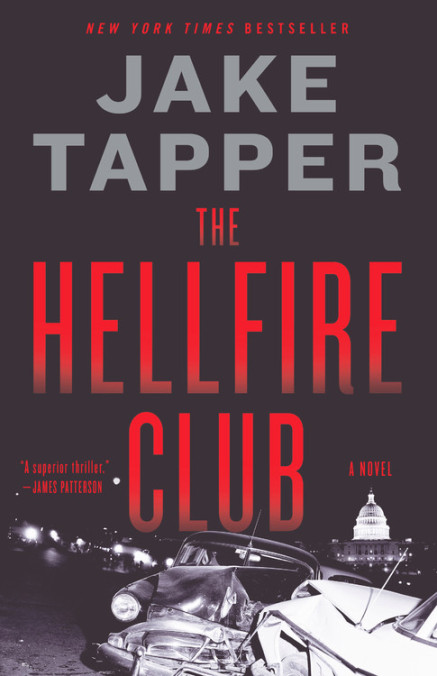
The Hellfire Club, by Jake Tapper
The Hellfire Club, by Jake Tapper
Jake Tapper is a well-known journalist and anchor for CNN. The Hellfire Club is his debut novel. Although I thought the first half of the book got too bogged down in the details of Washington, DC politics in 1954, the second half of the novel exploded and kept me turning the pages to see what would happen next.
Mr. Tapper did a marvelous job of giving 11 pages of his sources at the end of the book. A sign of a good historical novel is proof of research. In this list of sources Mr. Tapper is quick to remind the reader that the book is a work of fiction.
I couldn’t help but draw parallels in my mind between the ugly underbelly of politics in Washington, DC in 1954 and the mess we find ourselves in today. I don’t know if there is currently a hellfire club in the nation’s capital, but there is an alarming reticence on the part of members of Congress to speak up against the current barrage of lies coming from a house on Pennsylvania Avenue.
All-in-all, the subject matter of The Hellfire Club was a good read for me considering my background in political science and history.
Note to Self: Inspiring Words from Inspiring People, collected and introduced by Gayle King
Note to Self: Inspiring Words from Inspiring People, collected & introduced by Gayle King
This is a delightful collection of letters from the “CBS This Morning” TV show’s “Note to Self” project. Twenty-six of those letters are included in the book. Most of the contributors are famous people, but some were unknown to me.
It’s a great book choice for those times when you just have a few minutes to read, or when you don’t have the energy to remember the threads of an ongoing story. You can read each of the 26 letters in just several minutes.
The idea behind the project and this book is to have the adult you write a letter to your younger self. Anyone can do this. Why don’t you give it a try?
Summer Hours at the Robbers Library, by Sue Halpern
Summer Hours at the Robbers Library, by Sue Halpern
Sue Halpern is a journalist and novelist. This was the first of her books that I’ve read.
The title piqued my interest, since I’m an avid supporter of libraries. It is a story about a collection of unrelated people in a small town in New Hampshire who form bonds tighter than some people do with their parents and siblings.
The friends they all have in common are Kit (the librarian) and Sunny, who has been ordered to do community service at the library over the summer. Sunny is the “no-schooled” daughter of two free spirits, and this plays heavily in the book. Others in the book are primarily a group of retired men who pass their time at the library before going the cafeteria at the hospital for lunch. As the story develops, most of the characters are surprised by how close they’ve become.
This is not a gripping story, but if you’re looking for something light to read, you might consider checking it out at your local public library. Curious about the reviews it has received, I found that it averages three stars because readers have either given it five stars or one or two stars. Few people actually give it a solid three-star rating.
That made me realize that sometimes I’ll pick a book that has a three-star rating without looking more closely to see how that rating was determined.
Flat Broke with Two Goats: A Memoir of Appalachia, by Jennifer McGaha
Flat Broke with Two Goats: A Memoir of Appalachia, by Jennifer McGaha
At first I wasn’t sure I wanted to check out this book, but curiosity got the better of me. Once I started reading it, I wasn’t sure I would finish it. I like reading about strong, independent women – real or fictional. The author did not strike me as strong or independent early in this memoir, but I kept reading to see if she would become either.
I read the first five chapters. Jennifer and David lose their house to foreclosure and thousands of dollars in back taxes. Jennifer has no clue because David “handled” their finances. That’s when I started not liking the book.
Then Jennifer and David buy a 100-year-old mountain cabin. While Jennifer is back at the house packing some last minute things, a sheriff’s deputy arrives with a subpoena for David to appear in court. It turns out that David, unbeknownst to Jennifer (again), has borrowed thousands of dollars and failed to report the loan. That’s when I lost interest in the book. I also don’t particularly like books that portray Appalachia as a place on the back side of beyond.
I just got around to reading its reviews on https://www.goodreads.com and discovered that the book has received many one- and two-star ratings, so I’m in good company.
Look for Me, by Lisa Gardner
Look For Me, by Lisa Gardner
I started reading this book a couple of months ago but had to return it to the library before I had time to get very far into it. It is the second book I’ve read by Lisa Gardner. Look for Me is the latest book in her Detective D.D. Warren Series.
Look for Me is about a family that’s killed except for the 15-year-old daughter. She is missing. Did she escape? Was she kidnapped by the killer? Or is she the murderer?
The book delves into the foster child system in Massachusetts, as the Det. Warren works to try to find the missing teen and determine who murdered the girl’s family. When alcohol temporarily got the best of the mother a few years ago, Roxy and her younger siblings were placed in foster homes. The treatment they received in those homes and the gang activity they were exposed to at school enter into the investigation.
There are many twists and turns in this story, and you might be surprised when the murderer is revealed near the end of the book.
Look for Me did not hold my attention as much as the other novel I read by Lisa Gardner, Right Behind You from her FBI Profiler Series.
Since my last blog post
I’ve tried to lighten up on the demands I was making on myself. I returned a book to the library after only reading the first five chapters. That’s a big deal for someone who until recently thought she had to finish any book she started reading.
I’ve barely spent any time on Pinterest, and I’ve enjoyed the break.
I continue to declutter my life, letting go of lots of knitting, crocheting, and sundry handcraft instructions for projects that I no longer desire to make. Let’s face it. If the fashions from the 1960s-1980s come back in style, I really have no desire to learn how to make macrame plant hangers and belts or broomstick lace shawls.
Just for fun, I just searched for “macrame” on Google and the first image that came up was an $895 macrame dress that can be purchased at Saks Fifth Avenue. Perhaps I was too hasty in putting those instructions in the recycle bin! The odds of my making a macrame dress are less than slim to none, so I can only hope those instructions will get new lives as recycled paper.
I’ve done some additional research on several of the slaves who were members of Rocky River Presbyterian Church in Cabarrus County, North Carolina prior to and during the Civil War. More on that in a future blog post.
I also, in a roundabout way, got into the records of some local people who had to request a pardon from US President Andrew Johnson after the Civil War ended in 1865 and had to pledge their allegiance to the United States Government. More on that later, too. Interesting stuff with some surprising details.
The other day I revisited the 10-cents-per-item used book sale at the Harrisburg Branch of the Cabarrus County Public Library. I purchased several books I probably won’t ever read as well as a music CD that was apparently produced by First Union National Bank, which was my beloved bank until it was bought by Wachovia which was subsequently purchased by Wells Fargo. (Don’t get me started!) Anyway… This 10-cent CD is a fantastic collection of familiar works by Beethoven, Bach, Handel, Dubussy, Haydn, and Mozart.
Until my next blog post
I hope you have a good book to read and some interesting research to do. Stay tuned. I can’t wait to see what I get to read and learn in July!
If you’re a writer, I hope you have quality writing time.
Visit your local public library this week. You never know what you can walk out of there with just by showing your free library card or what music CD you might get to buy for just 10 cents!
Thank you for reading my blog. You could have spent the last few minutes doing something else, but you chose to read my blog. I appreciate it!
The prologue to Right Behind You, an FBI profiler thriller novel by Lisa Gardner, is in the head of an older Tally. The following first line in the prologue is very telling and sets the stage for the book:
“Had a family once.” ~ from Right Behind You, by Lisa Gardner
That first line packs a punch and insinuates that Tally no longer has a family. You have to keep reading to know the rest of Tally’s fictional story. He grew up in foster homes after his father was murdered. There are wonderful foster homes and there are not-so-good foster homes. Tally’s experience fell into the latter of those scenarios.
You may recall that I read Right Behind You, by Lisa Gardner last year and wrote about it in my April 1, 2017 blog post, The Authors I Read in March.
Since my last blog post
I continue to declutter my house and, hopefully, my life.
I made more infographics for my various boards on Pinterest, such as The Blue Ridge Mountains, Great Smoky Mountains, Historical Fiction, and Harrisburg (#TheBurgNC.) You can look at my Pinterest boards at https://www.pinterest.com/janet5049.
Until my next blog post
I hope you have a good book to read. I’m reading Note to Self: Inspiring Words from Inspiring People, collected and introduced by Gayle King.
If you’re a writer, I hope you have productive writing time.
Thank you for reading my blog. You could have spent the last few minutes doing something else, but you chose to read my blog. I appreciate it!
My first blog post of the month is usually about the books I read the previous month and sometimes a little about my writing. In recent months I’ve read so many books on occasion I’ve had to split the post in half. This is not the case today.
The Last Child, by John Hart
Knowing that John Hart’s sequel to The Last Child was being released, I got on the waitlist for the sequel at the public library and then hurriedly read The Last Child. It was awarded the Edgar Award in 2010 for Best Novel.
The Last Child was a good read. Mr. Hart made me really like the troubled 13-year-old boy, Johnny Merrimon, and the police detective, Clyde Hunt, who took a personal interest in Johnny and tried to guide him and keep him on the straight and narrow.
Johnny’s twin sister disappears and he takes it upon himself to find her. Everyone else thinks she’s dead, but Johnny is on a mission to find her when a second local girl disappears. Mr. Hart’s gift for descriptive writing puts the reader smack dab in the rural North Carolina setting of this book.
The Hush, by John Hart
I liked The Last Child. I liked the characters and I appreciated and enjoyed Mr. Hart’s writing style and talent. I couldn’t wait to get The Hush to see what happened to Johnny, Jack (Johnny’s friend), Detective Hunt, and Johnny’s mother ten years after The Last Child. I actually read 1bout 60 pages the first night I had it, but I struggled through the rest of the book.
It is my policy not to comment on books I read that I don’t like. I’m not a book reviewer. I just like to share books that I have enjoyed reading. The Hush, by John Hart just didn’t appeal to me. Since I’d enjoyed The Last Child and subsequently read its sequel, The Hush, I felt compelled to comment on it as well.
The writing was great, but mystical, paranormal stories just aren’t my cup of tea. I kept thinking the plot would move beyond the swamp which had bizarre effects on everyone who ventured into it, but it just got deeper into the weirdness. I read until the very end, but it was more work than pleasure. Again, I’m just not a fan of that type of book. Don’t judge it by me. You might like it.
The Family Next Door, by Sally Hepworth
The Family Next Door is the third of Sally Hepworth’s novels I’ve read. In case you missed them, here are the links to the blog posts in which I commented on The Mother’s Promise and The Things We Keep: What I Read in April (posted May 2, 2017) and You Must Read (Some of) These Books! (posted July 3, 2017).
The Family Next Door, by Sally Hepworth
Ms. Hepworth is from Australia and all her novels are set there. The Family Next Door is set in a neighborhood in Melbourne in which it is assumed every house will be bought and lived in by a young couple with children. When Isabelle, a single woman, moves in next door to Essie, she and all her neighbors speculate that Isabelle is a lesbian.
Since I am a single woman, this struck a nerve with me. Married people often assume that all single people are homosexuals. Another false assumption that many married women make – and which was demonstrated in this novel – is that all single women who are not lesbians are a threat to them because we want their husbands. This is also a myth.
Perhaps you can see why I was drawn into this book and had to keep reading to see how Isabelle’s life unfolded and what was going to happen to Essie and each of her neighbors. It turned out that each couple in the neighborhood harbored secrets. There wasn’t a perfect marriage in the bunch. I won’t spoil the book for you by telling you Isabelle’s story. I’ll just say there are some unexpected twists in the story.
Sally Hepworth’s 2019 novel is titled The Mother-in-Law. I’ve never had one of those, but you can be sure I’ll be on the waitlist for it at the public library as soon as it’s on order.
Until my next blog post
I hope you have a good book to read. I’m reading Divine Prey Noramgaell Saga Book 1), by Chris Andrews. Chris writes fantasy, which is another genre out of my comfort zone; however, Chris has been so generous with his writing advice that I really want to read his book. It’s his debut novel. If you’re a fan of fantasy, please look for it. Like Sally Hepworth, Chris lives in Australia. His book and several collections of his short stories are available from Amazon.
If you’re a writer, I hope you have quality writing time.
Feel free to share my blog posts on Twitter, Pinterest, Facebook, or with your friends via email.
Thank you for reading my blog! What book are you reading? Do you ever read something out of your comfort zone? If so, how did it make you feel? Perhaps you discovered a new favorite genre you didn’t expect. Or perhaps it turned you off to all reading for a while. Share you experience below in the comments section.
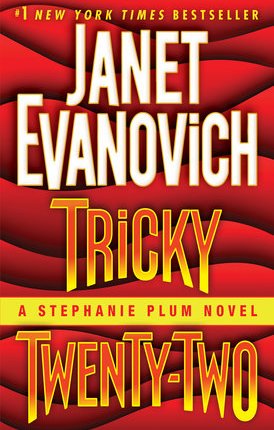
Do I have your attention? Good! That’s the purpose of a hook in a novel. I made a note of this one when I read Tricky Twenty-Two, by Janet Evanovich in 2015:
“Ginny Scoot was standing on a third-floor ledge, threatening to jump, and it was more or less my fault.” – Tricky Twenty-Two, by Janet Evanovich
Tricky Twenty-Two, by Janet Evanovich
After reading that opening sentence, you have to keep reading. The next sentence clarifies things a tad for any reader who has not read any of Ms. Evanovich’s previous 21 Stephanie Plum novels: “My name is Stephanie Plum and I work as a bounty hunter for my bail bondsman cousin Vinnie.”
I read Janet Evanovich when I want something light and amusing to read. She did a good day’s (years’?) work when she came up with the characters in her Stephanie Plum series. Great character development!
Fans of the Stephanie Plum series know there is a story to follow that hook, no doubt filled with numerous missteps by Stephanie and probably at least one blown-up car. The opening sentence introduces Ginny Scoot to you and tells you she is in dire straits. You wonder what has happened to push her to the edge. What in the world did Stephanie Plum do to cause this crisis?
A good hook grabs you. It gives you just enough information that your curiosity is piqued and you are compelled to keep reading. The first sentence doesn’t have to carry the whole load; however, if the reader isn’t hooked by the bottom of the first page, chances are he or she won’t read the second page. That’s a lot of pressure for a writer!
Since my last blog post
I was fortunate to find one copy of The Carolina Backcountry On The Eve Of The Revolution: The Journal and Other Writings of Charles Woodmason, Anglican Itinerant, edited by Richard J. Hooker in circulation in the Charlotte-Mecklenburg Library System. It has been useful in my research for the historical novel I’m writing.
More letters have been sent to independent bookstore owners to encourage them to place orders for my vintage postcard book, The Blue Ridge Mountains of North Carolina, as spring is finally approaching in western North Carolina.
I’ve continued to hone my new skill of creating graphics for Pinterest using www.Canva.com. In fact, someone at www.Canva.com saw my last blog post and contacted me. She was complimentary of my blog but requested that I give the whole URL (www.Canva.com) instead of “Canva.com” as I had in my blog. I corrected that in last week’s blog post.
Last week’s blog post, How Can a Writer Use Pinterest?, has only been liked by four other WordPress.com (or WordPress.org) bloggers, so Pinterest doesn’t appear to be a popular blog topic for me. I have gained several new followers via email, though, so perhaps it was of interest of a few people. I’ll be watching my Pinterest analytics to see if my original graphics get any attention.
I read on www.Goodreads.com that Jennifer Ryan is considering writing a sequel to The Chilbury Ladies’ Choir. I commented on how much I liked it in my April 1, 2017 blog post, The Authors I Read in March. I look forward to reading the sequel, if it comes to fruition.
Going off topic
The highlights of my week were seeing several birds that make rare appearances in my yard. First came a male scarlet tanager to get a drink of water on Sunday. Two days later, two male indigo buntings, and a rose-breasted grosbeak came to eat. The grosbeak usually stops by our bird feeder every spring, but he’s just passing through. The indigo buntings graze on the ground under the feeder.
Sometimes the rose-breasted grosbeak stays for two or three days, but this year I only saw him once. He feasted for a good 15 minutes before flying away. Other birds came and went, but he was not deterred. This is much different behavior than is displayed by the northern cardinal. The northern cardinal is the most skittish bird I’ve seen. We have them in abundance.
I’ve only seen indigo buntings a few times in my life, but this was only the second time I’d seen a scarlet tanager. I didn’t get any photographs this time, but I found it interesting when I looked back in my photo files that the indigo bunting and rose-breasted grosbeak showed up on the same day in 2007. I photographed them on May 9 that year. It was the first time I’d ever seen either species.
This year they showed up on April 24. Concluding that the two species apparently migrate together, I did a little research. I learned on https://www.allaboutbirds.org/guide/indigo_bunting (The Cornell Lab of Ornithology) that indigo buntings “migrate at night, using the stars for guidance.” Perhaps it is coincidental that they and the rose-breasted grosbeak both show up in my yard on the same day.
Male Indigo Bunting, photographed March 9, 2007.
Male Rose-Breasted Grosbeak, photographed March 9, 2007.
When I chose the topic for today’s post, I had no idea I would include a segment about birds. I selected the above photo of the grosbeak because it was the best picture I took of him. It just occurred to me that he sort of illustrates the title of this blog post. Okay, use a little imagination. Work with me here!
Until my next blog post
I hope you have a good place to watch a variety of birds.
I also hope you have a good book to read. I’m reading the 2018 Pulitzer Prize in Fiction, Less, by Andrew Sean Greer. I’m usually years behind in reading award winners, so I decided to jump right on this one.
If you’re a writer, I hope you have productive writing time.
Feel free to share my blog posts on Twitter, Pinterest, Facebook, or via email.
Thank you for reading my blog! What birds have you seen recently, and what are you reading?
I love to make plans. Ask me to plan a trip, and I’ll get into the minutiae of where you’ll be and what you’ll be doing every minute of the day.
My sister is my traveling buddy, and sometimes my attention to detail drives her crazy! On the other hand, she doesn’t enjoy planning trips so she doesn’t complain too much.
In my Reading Like a Writer blog post (“Reading Like a Writer”) on April 9, 2018, I told you that I had developed a social media plan. Making the plan was easy. The hard part came when I entered the implementation phase. Today’s blog post is about the Pinterest aspect of my plan.
Pinterest Best Practices
In the process of developing the plan, I learned the following from Amy Lynn Andrews’ Userletter Issue No. 234 (https://madmimi.com/p/9af10c/):
“Kate Ahl recently noted an addition to Pinterest’s own best practices for success: ‘The first 5 Pins you save each day will be prioritized for distribution. Save to the most relevant board first…that Pin will get distribution priority.’”
That was a revelation for me. No more willy-nilly saving pins to my Recipes: Cheesecake Board! Since reading Amy Lynn Andrews’ Userletter, I’ve made myself save five pins to my writing-related Pinterest boards every day before pinning any recipes, quilts, or Maxine-isms.
Old habits are hard to break, so there is definitely a learning curve involved in this.
“When I started deleting my boards, Pinterest’s algorithms better learned the content of my niche, and my traffic grew.”
and
“I deleted my boards about food and entertainment, for example. Pinterest will be more likely to show your pins to people if the algorithms know what your site is about.”
and
“I read you’ll get better visibility at Pinterest if it’s clear to the site what your niche is. This makes sense. Search engines show your blog to people when they’re clear what you specialize in.”
That second quote from Janice Wald is a hard pill for me to swallow. I don’t want to give up my recipe and quilting boards. I could make them secret board that only I can see, but I had hoped that when someone looked at one of those boards they’d also notice I wrote a vintage postcard book (The Blue Ridge Mountains of North Carolina) and I’m writing a historical novel (The Spanish Coin) set in the Carolinas in the 1760s.
I’ll have to give that some thought. For the time being, I have 80 boards on Pinterest.
What I’ve Accomplished on Pinterest since Last Monday
I’ve learned how to create my own pins for Pinterest on Canva.com. Those of you who know me, know that I am technologically challenged, so this was no minor feat for me. I am not getting compensated for mentioning Canva; however, I’ve been able to create some pretty cool graphics for free using that website, http://www.canva.com.
How to move graphics from Canva.com to Pinterest
I soon discovered that I didn’t know how to move the graphics I created on Canva.com and saved to my hard drive. A search on Google quickly brought up the instructions. You simply go to the Pinterest toolbar, click on the red “+” sign, and then click on “Upload an image.” (This just might be the first time I’ve been able to give any technology advice to anyone!)
Want to see what I’ve done on Pinterest?
Please go to my Pinterest page (https://www.pinterest.com/janet5049) and look at the graphics I created this past week for the following boards: The Spanish Coin – My Novel in Progress; Blue Ridge Mountains; Great Smoky Mountains; Books & Authors; and Rocky River Presbyterian Church.
Here’s a graphic I created about my vintage postcard book, The Blue Ridge Mountains of North Carolina, for my Great Smoky Mountains board on Pinterest:
One of the first graphics I made on Canva.com.
My mistakes
There are lots of things to keep in mind when making a graphic for social media. Looking at the one shown above, I realize using a color background would have made it more eye-catchy, although I think it shows up better on Pinterest than on my blog.
Also, at the bottom of the graphic, I should have included my blog’s URL, my website’s URL, and my handle on Twitter. I have edited it in light of that, in case I decide to reuse it at a later date.
My social media plan for Pinterest
Mondays: Pin link to my weekly blog post to Janet’s Writing Blog board (set up to post automatically by WordPress.com) and a colonial history factoid or A Spanish Coin teaser to The Spanish Coin – My Novel in Progress;
Tuesdays: Pin a factoid from my vintage postcard book to my Great Smoky Mountains;
Wednesdays: Pin a Rocky River Presbyterian Church history factoid from one of my church history booklets to my Rocky River Presbyterian Church;
Thursdays: Pin a factoid from my vintage postcard book to my Blue Ridge Mountains;
Fridays: Pin a Rocky River Presbyterian Church women’s history factoid to my Rocky River Presbyterian Church & Cabarrus-Mecklenburg boards; OR Pin a Rocky River Presbyterian Church history factoid to my Rocky River Presbyterian Church & Cabarrus-Mecklenburg boards with a link to the church’s website where a copy of Dr. Thomas Hugh Spence, Jr.’s book, The Presbyterian Congregation on Rocky River, can be ordered.
Saturdays: Create factoids/infographics for the following week(s).
This is a grand plan for someone with Chronic Fatigue Syndrome, so I know I will not accomplish this every week. I fell short last week even though I was enthusiastic about starting this new plan. I might miss some weeks altogether. The schedule gives me something to aim for, though.
80/20 Rule of Social Media Marketing
I have read in various sources that 80% of your posts on social media should inform, educate, or entertain and only 20% should promote your business. That rule prompted me to strive to shine a light on a book about the history of Presbyterian Women at Rocky River Presbyterian Church or Dr. Spence’s church history book on Pinterest on Fridays.
I wrote neither of the books, and the proceeds from their sales benefit the ongoing work of the Presbyterian Women at Rocky River and the church’s cemetery fund. (The church dates back to 1751 and has several very old cemeteries that have to be maintained.)
My social media plan for Pinterest looks a little out of whack in light of the 80/20 Rule; however, I hope all the pins I create will fall into the “inform, educate, or entertain” categories.
Since my last blog post
In addition to learning how to create my own Pinterest pins and pinning my creations last week, I have continued to work on the rewrite of my historical novel, The Spanish Coin.
Until my next blog
I hope you have a good book to read.
If you’re an avid reader who has never considered the possibilities of using Pinterest, you might want to check it out. You just might find that your favorite authors have pages there and boards about their books. After looking for your favorite authors on Pinterest, please let me know if this was an enjoyable experience for you and specifically what you liked about it.
If you’re a writer, I hope you have productive writing time. Please let me know what your experience has been on Pinterest. If you haven’t thought about using it as part of your writer’s platform, perhaps you’ll consider it after reading this blog post.
Don’t be shy about spreading the word about my blog. Feel free to use the buttons below to put today’s post on Facebook, Tweet about it, reblog it on your blog, or Pin it on Pinterest. Thank you!
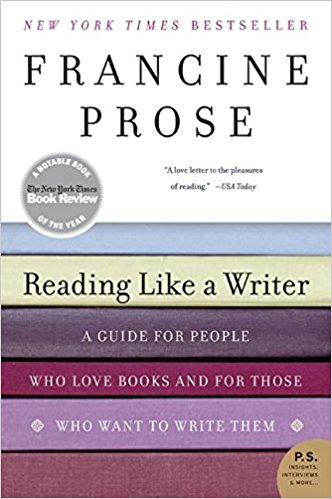
In my last two blog posts I’ve written about the books I read in March. Last Monday’s post was nearing 2,000 words, so I decided to save my comments about Reading Like a Writer: A Guide for People Who Love Books and for Those Who Want to Write Them, by Francine Prose, for today. I’ll just hit some of the highlights.
Reading Like a Writer, by Francine Prose
Chapter One: Close Reading
I read and took copious notes from the first four chapters of this book and perused the rest of it. As an aspiring author, I loved how the first chapter confirmed that I read like a writer. It’s called “close reading,” and it means reading every word for the pleasure of getting every phrase – being conscious of such things as style, sentence formation, and how the author creates characters.
Based on what Francine Prose wrote, I no longer need to apologize for reading slowly. I’m trying to hone my craft by reading published writers.
Chapter Two: Words
In the second chapter of Reading Like a Writer, the author recommends that you read slowly enough to read every word. She compares the language a writer uses to the way a composer uses notes and a painter uses paint.
To paraphrase Ms. Prose, reading to appreciate the writing is akin to not only admiring a beautiful painting from afar but also close up so you can see the brushstrokes.
I also appreciated Ms. Prose’s thoughts on the advice often given to writers, which is “Show, don’t tell.” Ms. Prose says this much-repeated advice confuses novice writers. I can vouch for that.
In editing my earlier manuscript for The Spanish Coin (before I started the complete rewrite), I took the “show, don’t tell” advice to the extreme. I was ruthless in cutting narrative, thinking I could best “show” through dialogue. It was all part of the learning process. Ms. Prose’s take on this is that showing is best done through “the energetic and specific use of language.”
Chapter Three: Sentences
If I had known I would someday want to be a writer, I would have paid more attention in the 8th grade when we had to diagram sentences. I wasn’t very good at it, and I really didn’t see the point.
I hadn’t thought about sentence diagramming in years until I got to the third chapter of Ms. Prose’s book. She wrote about the value of diagramming sentences, and what she said makes sense to me now.
She lamented the fact that students are no longer taught to diagram sentences. Her explanation that sentence diagramming provides for the accounting of every word and provides a way “to keep track of which phrase is modifying which noun” gave me a way of understanding the value of the exercise that I could not have appreciated as an eighth grader.
I probably couldn’t diagram a complex sentence today if my life depended on it, but Ms. Prose might just be onto something when she insinuates that having that skill would help a writer.
A word of warning, though, for those of you of “a certain age.” Reading the Huffington Post article, I soon felt like I’d entered a time warp. I don’t think our sentences had “complements” when I was in the 8th grade.
Chapter Four: Paragraphs
In the fourth chapter of the book, Ms. Prose quotes master short story writer, Isaac Babel:
“’The breaking up into paragraphs and the punctuation have to be done properly but only for the effect on the reader. A set of dead rules is no good. A new paragraph is a wonderful thing. It lets you quietly change the rhythm, and it can be like a flash of lightning that shows the same landscape from a different aspect.’” – Isaac Babel
In all the various English courses I have taken, I don’t recall any teacher or professor ever saying to break for a new paragraph “only for the effect on the reader.” I’m still letting that sink in. It’s refreshing and freeing to think about it. It is for the writer to determine which rules are dead as far as her editor is concerned.
Chapter Seven: Dialogue
Characters in a novel should “say what they mean, get to the point, avoid circumlocution and digression.”
Chapter Eight: Details
Another interesting observation Ms. Prose makes is about details and the truth. She observes that details persuade that the truth is being told.
She points out that a piece of clothing can speak volumes about a character’s circumstances.
Chapter Eleven: Reading for Courage
Continuing to fly in the face of common advice given to writers of fiction, Ms. Prose suggests that the trend in modern fiction that characters in a novel must be nice in order for the reader to identify with them is possibly not true.
She also says it’s not necessarily true that every loose end in a work of fiction needs to be tied up neatly by the end.
What a relief to read those last two theories! My characters don’t have to be nice in order for the reader to identify with them, and all the loose ends don’t have to be tied up at the end of the novel? This is in opposition to what I learned in fiction writing class back in 2001.
“Words,” by Dr. R. Brown McAlister
Chapter Two in Ms. Prose’s book brought to mind the title of the remarks made by one of the two guest speakers at my high school graduation. Dr. R. Brown McAllister, a beloved icon in Cabarrus County Schools at the time, had retired after many decades of teaching and working as a school administrator, and he had a dry but keen sense of humor. The printed program for the graduation ceremony listed “Words,” by Dr. R. Brown McAllister.
In his deadpan way, Dr. McAllister went to the podium and said something like, “I was asked to talk about words, so here I am.” That was in 1971 and I still don’t know to this day if he was asked to talk about words or to say a few words.
The more I attempt to be a writer and the more I read, the more I appreciate words.
Since my last blog post
I have made a social media plan and made an effort to do more on Twitter (@janetmorrisonbk), my writing-related boards on Pinterest (https://www.pinterest.com/janet5049), and my Janet Morrison, Writer page on Facebook. Implementing the plan will be a challenge but I’m told I must get my name out there if I hope to sell any copies of The Spanish Coin if and when it gets written and published.
I did not get much reading done last week, but I’m trying to learn that I can’t do everything I want to do. I can’t even do everything I need to do.
Until my next blog post
I hope you have a good book to read. I’ve just started reading Every Note Played, by Lisa Genova.
Every Note Played, by Lisa Genova
If you’re a writer, I hope you have quality writing time
If you haven’t signed up for my sometime-in-the-future newsletters, please do so by completing the form below.













 Janet's Writing Blog