Five of the Ten Books I Read in February 2019

Wow! Where do I start? Although it was the shortest month of the year, February was jam-packed with good books. I read a variety of fiction, nonfiction, memoir, and “how-to” books.

Truth be known, I started reading several of the books in January and finished them in February. Each one probably warranted its own blog post, but I’ve condensed my thoughts into two blog posts – today’s and the one on March 11.

Here’s what I thought of each book, in no particular order:


Before and Again, by Barbara Delinsky

Before and Again, by Barbara Delinsky

I enjoyed this novel by Barbara Delinsky about a woman, Mackenzie Cooper, who runs a red light and causes an accident in which her five-year-old daughter is killed. The event results in a divorce and an estrangement between Mackenzie and her mother.

In an effort to leave her sad past behind and start a new life, Mackenzie moves from Massachusetts to Devon, Vermont and adopts a new name. Things go well for her until her ex-husband shows up in the small town where Mackenzie lives. It turns out that Mackenzie isn’t the only resident of Devon living with a secret.

I gave this story of forgiveness four stars on Goodreads.com. I was surprised to see many two-star ratings for it on that site. With an average rating of 3.5 stars out of 5, from the reviews, it appears people either really like it or don’t.

Creating Character Arc:  The Masterful Author’s Guide to Uniting Story Structure, Plot, and Character Development, by K.M Weiland
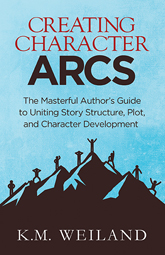
Creating Character Arcs, by K.M. Weiland

This book is an invaluable resource for anyone writing fiction. It helped me focus on the protagonist in the novel I’m writing and organize her journey step-by-step throughout her story. The questions Ms. Weiland included in her book helped me to know my main character better, which enables me to write with more confidence than I had before.

If you’re learning to write fiction, I highly recommend Creating Character Arc:  The Masterful Author’s Guide to Uniting Story Structure, Plot, and Character Development, by K.M Weiland. Or perhaps you are a fan of fiction and you’re curious about the structure of a good novel. Then, I think you’ll find this “how-to” book interesting.

A Week in Winter, by Maeve Binchy

A Week in Winter, by Maeve Binchy

This book was a bit of a surprise for me. A Week in Winter, by Maeve Binchy was the January selection for the Rocky River Readers Book Club. Since it’s not historical fiction, suspense, or a mystery, I didn’t expect to like it as much as I did. That’s one of the good things about being in a book club. Sometimes members are exposed to a book genre they wouldn’t usually select for themselves.

Although I rarely listen to an audio book, an episode of vertigo prompted me to borrow the book on CD from the public library. The accent of professional reader, Rosalyn Landor, was delightful and helped to keep the setting in Ireland clearly in mind. The fact that I enjoyed listening to a novel was a bonus.

The author, Maeve Binchy, was a master of characterization. Each character has such a unique backstory or quirk, you’ll have no trouble keeping them straight in your head. In A Week in Winter, each of the ten chapters tells the backstory of a different guest or pair of guests at The Stone House on the west coast of Ireland. Ms. Binchy weaves their stories together perfectly as she brings them all together as guests at the inn the first week the old house was open for business.

The Midwife’s Confession, by Diane Chamberlain

The Midwife’s Confession, by Diane Chamberlain

After enjoying listening to the Maeve Binchy book, I decided to give the audio version of The Midwife’s Confession, by Diane Chamberlain a try. Ms.Chamberlain weaves quite a complicated story and cast of characters together in this novel set in Wilmington, Chapel Hill, and Robeson County, North Carolina.

One of three close friends commits suicide, leaving the other two women trying to find clues as to why Nicole felt that taking her own life was the only option she had. Layer by layer they peel back the parts of Nicole’s past they knew nothing about.

There was a horrible accident with a baby Nicole delivered as a midwife. What choice did Nicole make after the accident that changed the course of not on her life but also the lives of other families?

Where the Crawdads Sing, by Delia Owens
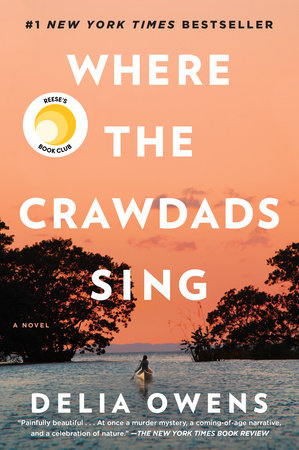
Where the Crawdads Sing, by Delia Owens

The prose in this book is beautiful. Delia Owens writes about the fauna of the marshlands of the North Carolina coast from a place of scientific expertise. This is her debut novel, but she has co-authored three nonfiction books about nature in Africa. She worked in Africa as a wildlife scientist but now lives in Idaho.

As an aspiring novelist, I’ve been cautioned about using dialect in my writing. A little bit of it can help put the reader in the location and time of the story; however, using it too much makes the reading more difficult and slow and also pulls the reader out of the story. Where the Crawdads Sing is a perfect example of this mistake.

I loved the descriptions of the wildlife native to the marshes of coastal North Carolina. Ms. Owens painted such a pictures with words that I could have visualized the marshes even if I’d never seen coastal Carolina marshlands.

I loved the story in Where the Crawdads Sing. I was interested in the main character, Kya, from the beginning. It was a real “page turner” due to the life Kya lived and the strong character she was. I devoured the book in 48 hours; however, the dialect was over the top. There was just too much Southern and African-American dialect. The dialect repeatedly slowed me down and pulled me out of the story.

If not for the excessive dialect and the Confederate battle flag being in the county courtroom in 1970, I would have given it six stars out of a possible five.

Until my next blog post

I hope you have a good book to read. I’m reading/listening to The Glovemaker, by Ann Weisgarber; Jacksonland, by Steve Instep; and Girls on the Line, by Aimie K. Runyan.

If you’re a writer, I have you have productive writing time and your projects are moving right along.

Look for my #TwoForTuesday blog post tomorrow:  Two Books with a Strong Female Lead. I’m pleased to participate again this month in the “Rae’s Reads and Reviews” blog #TwoForTuesday challenge. Here’s a link to Rae’s March list, in case you want to participate: https://educatednegra.blog/2019/03/03/two-for-tuesday-march-prompts/comment-page-1/#comment-2084.

Thank you for reading my blog. You could have spent the last few minutes doing something else, but you chose to read my blog.

Let’s continue the conversation

Have you read any of the five books I talked about today? If so, please share your thoughts with me. Have I piqued your interest in reading any of these books?

Janet

#TwoForTuesday: Two Books that Help Me Sleep at Night

I’ve enjoyed participating in the #TwoForTuesday blog prompts in February and can’t wait to see what Rae of Rae’s Reads and Reviews has in store for us in March. Today’s prompt was “Two books that Help you sleep at night.”

If you’ve followed by blog for a few months, you know that I suffer with insomnia. My sleep is way out of whack. I have trouble staying awake during the day and trouble going to sleep at night. My doctor has referred me to a sleep coach. Yes, it’s gotten that bad.

When challenged to write about two books that help me sleep at night, I was hard-pressed to come up with a response. The “two” I settled on are The Bible and just about any audio book. I know – that’s more than two actual books and not very specific, but they’re what I came up with.

1.  The Bible

The Message, by Eugene H. Peterson

This isn’t just the correct “Sunday School” or children’s sermon answer. This is my real answer. My nighttime insomnia aside, the book that allows me to give my troubles and worries to God so I’m not tossing and turning and wringing my hands is The Bible. I still do more than my share of tossing and turning, but it’s not because I despair.

I find The Message:   The Bible in Contemporary Language the easiest to understand and, therefore, the most comforting. The Message is a paraphrase of The Bible and was written by Presbyterian minister Eugene H. Peterson.

2.  Just about any audio book

Until recently, I swore off listening to any books. I found it stressful. I felt like someone was talking “at” me and wouldn’t shut up. Got on my last nerve kind of stress.

Then, I got vertigo. In fact, I had two kinds of vertigo. One has cleared up, but the other still has me in physical therapy. Using the computer and reading tend to trigger an episode. Therefore, I’ve listened to two audio books so far this month plus part of a third. Even the ones I enjoy, eventually put me to sleep.

That’s not what Rae meant!

The #TwoForTuesday challenge in Rae’s Reads and Reviews (https://educatednegra.blog/2019/01/08/two-for-tuesday-prompts/comment-page-1/#comment-1646) wasn’t “two books that put you to sleep.” It was “two books that help you sleep at night.” I understand the difference. I just couldn’t come up with a second book in addition to The Bible.

Let’s continue the conversation

What are two books that help you sleep at night?

Janet

The Hook in She Rides Shotgun, by Jordan Harper

Writing about a story’s hook, Karen Cogan stated in the closing paragraph of her post, “How to Set the Right Tone for Your Novel” on the Southern Writers: Suite T blog on December 19, 2018: 

“The point is that your reader should never be misled for the sake of an enticing beginning. Certainly, you want an interesting opening. All you must do is to think carefully about your genre for the hook that draws readers into your novel.” For instance, a romance novel should not begin with the gory details of a murder. (Here’s the link to that blog post:  https://southernwritersmagazine.blogspot.com/2018/12/how-to-set-right-tone-for-your-novel.html.)

If you’ve followed my blog for a few months, you know that I’m fascinated by the opening lines of novels. Although the “hook” can be more than just the opening line or paragraph, I can usually tell by the first sentence if I’m starting to read a book that I’ll finish.

Sometimes I’m fooled. Most of the time, I find that the opening sentence or paragraph is an invitation to a place or time I’ve never been – like a murder scene, the life of a person making a gut-wrenching decision, the colonial days in America, or perhaps the home front or battlefields of a great war.

As an aspiring novelist, I want to learn what makes a great hook and what doesn’t.

Today I’m highlighting the opening sentence in She Rides Shotgun, by Jordan Harper:

“His skin told his history in tattoos and knife scars.” ~ first sentence in She Rides Shotgun, by Jordan Harper

That hook describes Crazy Craig Hollington, president of the Aryan Steel prison gang. No surprise there. Chances are, this is not going to be a Sunday afternoon picnic kind of a story.

She Rides Shotgun, by Jordan Harper

This isn’t typical of my reading choices, but I was drawn to it when I read that it won the 2018 Edgar Award for Best First Novel. I wrote the following about the book in my June 4, 2018 blog post, “Reading in May 2018” (see https://janetswritingblog.com/2018/06/04/reading-in-may-2018.)

“After reading the opening description of a white supremacist gang in a prison in Chapter 0 (yes, Chapter 0), I wasn’t sure I could hang in there to keep reading. I continued to read, and I was soon invested in 11-year-old Polly.

“Polly is kidnapped at school by the father she barely knows and is suddenly thrown into a life of crime. The book takes the reader along for a rollercoaster ride as Polly quickly becomes streetwise in order to survive.”

I think, “His skin told his history in tattoos and knife scars” was a good indication for what was to come in She Rides Shotgun.

Since my last blog post

I’ve been racing against the clock to try to read or listen to umpteen books before they have to return to the library or disappear from my Kindle. Too many books, too little time. Look for my blog posts on March 4 and 11, 2019 to see what I read this month.

Update on Decluttering

In case anyone out there is interested, I’m continuing to do battle with clutter. I’ve been inspired this year by Mliae’s blog:  https://lifexperimentblog.com/2019/02/22/february-declutter-update/. She was kind enough to list my blog in her February 22, 2019 blog post, which prompted me to offer an update on my decluttering progress today.

Sometimes mail piles up. Opened, unopened, it doesn’t make a difference. I know the rule of thumb is to only touch a piece of paper once. Some days go well. I open the mail and immediately put it in the paper shredder, a file folder, or the recycle bin. Other days… not so much.

This month I’ve put 22 catalogs in the recycling bin. My goal is to get off as many catalog mailing lists as possible.

I’ve set aside 28 books to donate to the April 6 used book sale at my church. Granted, those 28 books are still piled on the hearth, but at least I know they’re getting new homes in April.

Until my next blog post

I hope you have a good book to read. I just finished listening to George Washington’s Secret Six:  The Spy Ring That Saved the American Revolution, by Brian Kilmeade and Don Yaeger. I’m trying to finish reading In the Woods, by Tana French before it disappears from my Kindle on Thursday.

If you’re a writer, I hope you have quality writing time and that you’re good at writing hooks.

Thank you for reading my blog. You could have spent the last few minutes doing something else, but you chose to read my blog.

Don’t forget to look for my #TwoForTuesday blog post tomorrow when I’ll reveal two books that help me sleep at night. That’s the assignment, anyway. I’m still working on it. (Writing prompt provided by “Rae’s Reads and Reviews” blog post on January 8, 2019 (https://educatednegra.blog/2019/01/08/two-for-tuesday-prompts/comment-page-1/#comment-1646)

Let’s start a conversation

How much time or how many pages do you give a book before you give up on it and move to another book?

Janet

This blog’s for you!

Sometimes I get carried away and forget my blog is for you. It’s not for me. You have a limited amount of time to read, so I’m flattered that you read my blog posts.

Photo by Fabrizio Verrecchia on Unsplash

If my blog doesn’t fill a need of yours, then reading it is a waste of your time. The pressure is on me every week to inspired you, make you laugh, give you something to think about, or at least put a smile on your face.

Although I’ve been blogging for almost nine years, I’m still learning. If there is something on my blog page that isn’t of benefit to my readers, I need to delete it.

Deleted national flags widget

In an effort to declutter my blog on February 4, I deleted the widget that showed the flags of all the countries in which my blog readers reside. I realized that showing those 93 flags was for my own edification, not yours. That widget was providing information that you probably didn’t care about. I’m a geography nerd, so I found it very interesting.

Actually, I found it shocking and a bit frightening to know that people in that many countries had looked at my blog at least once. The biggest surprise was when the flag of the People’s Republic of China first appeared.

My most popular posts

In place of the national flags widget, I added a widget that lists my 10 most popular blog posts. This should help my new reader find some of my best posts, and it will help me see at a glance the topics that garner the most interest.

An unexpected source

I knew my blog was for my readers, but it wasn’t until I started reading Building a StoryBrand:  Clarify Your Message So Customers Will Listen, by Donald Miller that I was prompted to try to view my website and my blog through the eyes of a first-time visitor.

Everywhere Building a StoryBrand says, “customer,” I mentally substitute “reader.” Sometimes it works better than others. Although Mr. Miller’s book targets business owners, it made me ask myself how my website and blog portray me as a writer. I’ll continue to make changes that help first-time visitors become loyal readers.

Mr. Miller says a person should be able to look at my blog or my website and know within five seconds what I’m about.

I’m reminded of Alan Alda’s book

If you read my February 11, 2019 blog post, https://janetswritingblog.com/2019/02/11/the-other-three-books-i-read-in-january-2019/ you know I read Alan Alda’s book, If I Understood You, Would I Have This Look on My Face?

That book prompted me to ask myself, “What does my reader need?” and “What is my reader hoping to gain by reading my words?” Mr. Miller’s book dovetails into Mr. Alda’s book and reinforces what Mr. Alda said about communication.

The purpose of my website and blog

Mr. Miller’s book prompted me to state the purpose of my website and blog in one sentence. When I got to the heart of what I’m trying to accomplish, this is what I concluded: 

The purpose of my website and blog is to show you that I write with authority and skill and, therefore, you can trust that my writing is worthy of your time.

If it sounds like I’m boasting, that’s not my intent. I’m setting the bar high for myself, and will read that purpose every day when I sit down at the keyboard.

Until my next blog post

I hope you have a good book to read. I just finished listening to The Midwife’s Confession, by Diane Chamberlain. (Audio books come in handy when a reader has vertigo.)

If you’re a writer, I hope you have productive writing time.

Thank you for reading my blog. You could have spent the last few minutes doing something else, but you chose to read my blog.

Don’t forget to look for my #TwoForTuesday blog post tomorrow when I’ll reveal two books that remind me of someone. (Writing prompt provided by “Rae’s Reads and Reviews” blog post on January 8, 2019 (https://educatednegra.blog/2019/01/08/two-for-tuesday-prompts/comment-page-1/#comment-1646)

Let’s start a conversation

What are you hoping to find in my blog? A smile? Humor? Something to ponder? Inspiration? My take on a book I’ve read? Samples of my fiction writing? A variety of these?

Janet

Two for Tuesday — Two Books that Taught Me Something

In “Rae’s Reads and Reviews blog post on January 8, 2019 (https://educatednegra.blog/2019/01/08/two-for-tuesday-prompts/comment-page-1/#comment-1646), Rae mentioned her idea of starting a “Two for Tuesday” tag.

I thought she was launching the idea, but I found a link (https://educatednegra.blog/2018/07/19/what-is-two-for-tuesday/) to her July 17, 2018 blog post in which she talked about it. She invited other bloggers to participate, and I took the bait. She supplies the writing prompts. All I have to do is share my thoughts. How hard can that be, right?

Today is the first day of this #TwoForTuesday adventure for me. The prompt is:  Two Books that Taught Me Something.” That sounded easy until I tried to narrow it down to two books.

The first 11 books that came to mind

I made a list of books that taught me something. I thought of the following 11 books right off the bat (in no particular order):

Whose Gospel?  A Concise Guide to Progressive Protestantism, by James A. Forbes, Jr.

Still Alice, by Lisa Genova

Killers of the Flower Moon:  The Osage Murders and the Birth of the F.B.I., by David Grann

Lessons from a Sheep Dog, by Phillip Keller

Unthinkable Choice, by Sampson and Lee Ann Parker

Picking Cotton, by Jennifer Thompson-Cannino and Ron Cotton

Left to Tell:  Discovering God Amidst the Rwandan Holocaust, by Immaculee Ilibagiza

The Third Reconstruction, by The Rev. Dr. William J. Barber

The Story of the Covenant:  Fifty Years of Fighting Faith, by T. Ratcliff Barnett

The Gift of Fear, by Gavin de Becker

Tears We Cannot Stop:  A Sermon to White America, by Michael Eric Dyson

Then, I narrowed it down to two books

Both books are nonfiction. Both books taught me that, with God’s help, people can withstand much more than seems possible and then come out stronger than they thought they could ever be.

Unthinkable Choice, by Sampson and Lee Ann Parker

Left to Tell:  Discovering God Amidst the Rwandan Holocaust, by Immaculee Ilibagiza

Unthinkable Choice, by Sampson and Lee Ann Parker

I personally know the authors of Unthinkable Choice. If you want to read a book by a couple who overcome the impossible and the unthinkable, this is the book for you. Sampson and Lee Ann take turns by chapter telling their story.

Sampson made an unthinkable choice and had Lee Ann’s support throughout his battle to survive the consequences of that choice. Sampson’s story begins with a horrendous farm accident. Lee Ann’s story begins the moment she is notified of Sampson’s accident. After reading this book, I think you’ll agree that Sampson has the right name.

Please read this book of true courage.

Left to Tell:  Discovering God Amidst the Rwandan Holocaust, by Immaculee Ilibagiza with Steve Erwin

I’ve seen Immaculee Ilibagiza interviewed on television. Hers is another jaw-dropping true story of courage and beating the odds. She survived the 1994 Rwandan Holocaust by hiding with seven others in the tiny bathroom of a Hutu pastor’s house for an astounding 91 days. She lost most of her relatives during the three-month slaughter of nearly 1 million Tutsis.

If you haven’t read Left to Tell:  Discovering God Amidst the Rwandan Holocaust, I highly recommend that you do so.

Until my next blog post

I hope you have at least one good book to read. Please consider Unthinkable Choice and Left to Tell. They are both true stories that will stay with you forever and, hopefully, inspire you to get through the hardest times in your life.

If you’re new to my blog, thank you for finding it. I blog on Mondays and, at least through the month of February, also on Tuesdays. Thanks for stopping by for #TwoForTuesday!

Let’s continue the conversation

What are two books that taught you something?

Janet