World Storytelling Day

Today is World Storytelling Day. I recently learned about this day’s designation, and it led me to do a little research.
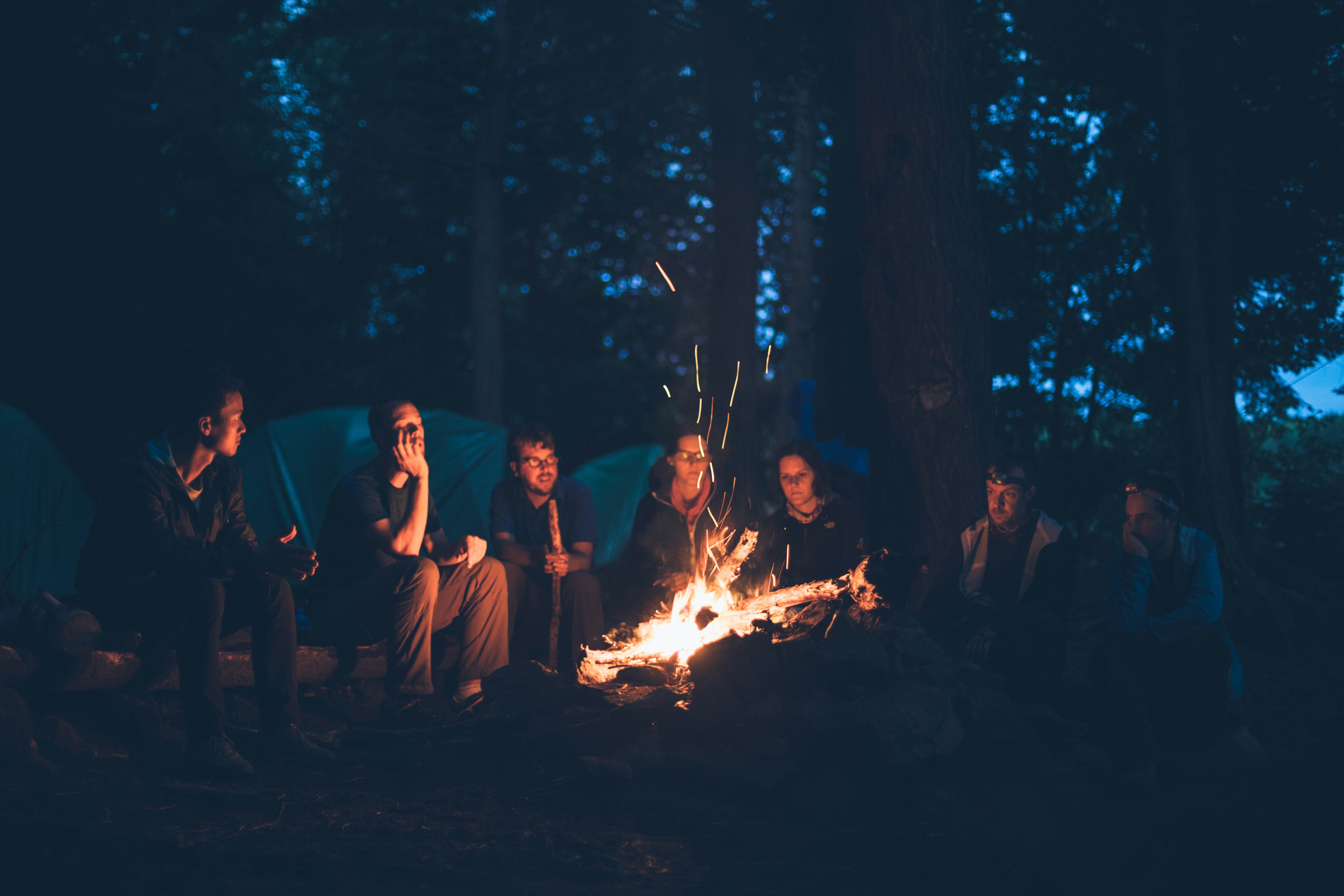
Photo by Mike Erskine on Unsplash

As a fiction writer, one of the hats I wear is storytelling, but I do not qualify or see myself as a storyteller – not in the true storytelling sense of the word.

Storytelling is an art form. It is a skill, and it is a gift. It is not an instrument in my toolbox. I would love to be a good storyteller, but I am not.

If called upon to tell a story, I will stammer, break out in the sweat, and present my audience with a lot of silent time. Unless those are attributes that a storyteller wants to incorporate into their presentation to enhance the experience for their audience, those behaviors have no place in storytelling.

The National Storytelling Network (https://storynet.org/) defines storytelling as follows: “Storytelling is the interactive art of using words and actions to reveal the elements and images of a story while encouraging the listener’s imagination.”

Taking the definition a step further, the National Storytelling Network explains that, “Storytelling involves a two-way interaction between a storyteller and one or more listeners. The responses of the listeners influence the telling of the story. In fact, storytelling emerges from the interaction and cooperative, coordinated efforts of teller and audience.”

See? Storytelling is technically a whole different thing than writing fiction. The fiction writer rarely gets feedback from the audience before publication unless you count the responses given by beta readers.

Even that feedback does not meet the definition of storytelling. Storytelling is in the moment. The feedback is instantaneous and the storyteller feeds off the energy and emotions of the audience.

Storytelling also often involves hand motions and variations in volume and tone. I can use an occasional exclamation point in writing fiction. I can use words to convey such states as happiness, despair, or surprise, but the storyteller has an advantage over me there. They can demonstrate mood and state of mind through facial expression, volume and tone of voice, and body language.

When I think of a good storyteller, I think of someone who holds my attention in their hand. Their storytelling puts me on the edge of my seat and immerses me in another world.

That’s what a fiction writer strives to do, but without the real-time interaction between the writer and the reader, I believe that level of give-and-take is not possible.

The National Storytelling Network’s website lists five components of storytelling:  It “…is interactive,” it “uses words” (including sign language), it “uses actions,” it “presents a story,” and it “encourages the active imagination of the listeners.” I invite you to visit the website for more details.

There is a calendar of events on the website, in case you want to look for storyteller performances and storytelling festivals in your area. Incidentally, in case you live in the Fairfax, Virginia area, a four-day Women’s Storytelling Festival began there yesterday.

The Patchwork Storytelling Guild is hosting a storytelling festival on Sunday in Philadelphia.

The Georgia Mountain Storytelling Festival is coming up on April 10-11 in Hiawassee. If you are interested but cannot attend in person, tickets for online listening are available. (Go to http://gamountainstoryfest.org for more information.)

Southern Appalachian Storyteller Donald Davis is appearing in Indianapolis on April 11 at a Talk of the Town fundraiser. There are online livestreaming tickets if you cannot attend in person. (Go to https://storytellingarts.org/event/talk-of-the-town-featuring-donald-davis for details.)

According to https://calendarcute.com, the theme for the 2026 World Storytelling Day is “Light in the Dark.” Storytellers are encouraged to offer stories of “hope, wisdom, and human connection into moments of uncertainty, difficulty, or fear” in connection with this year’s celebration.

“The theme was chosen collaboratively by the global storytelling community…. At the narrative level, it refers to story archetypes that feature illumination – characters or communities who bring clarity, warmth, or guidance to situations of darkness or confusion.”

I did not know where today’s topic would take me, but now I will start looking for a storytelling event in my area!

Janet

The government should be afraid of its citizens, not the other way around.

Three Other Books I Read in March 2019

I had so much I wanted to say about the books I read last month, I had to divide my thoughts between two blog posts. Last Monday I wrote about three of the books I read in March [https://janetswritingblog.com/2019/04/01/this-is-not-an-april-fools-day-joke/], so today I write about the other three books.

Jacksonland:  President Andrew Jackson, Cherokee Chief John Ross, and A Great American Land Grab, by Steve Inskeep

Jacksonland, by Steve Inskeep

I can’t remember how I became aware of this book, and I don’t remember what I expected it to be. What it turned out to be was a real eye opener! I consider myself a bit of a student of history, but I had never read the details of how Andrew Jackson speculated on land and grabbed it up by the tens of thousands of acres as a result of the inside track he enjoyed.

The main things I knew about Andrew Jackson were:

  • He was born near the North Carolina – South Carolina border, so both states claim him as theirs;
  • His father died just days before he was born;
  • He was delivered by his Aunt Sarah Hutchinson Lessley, who just happened to be my 5th-great-grandmother;
  • He became famous for his service in the Battle of New Orleans;
  • He was the 7th President of the United States of America;
  • His image appears on the United States $20 bill; and
  • He is blamed for the Cherokee “Trail of Tears” as he forced them off their ancestral lands in western North Carolina and northern Georgia and into a grim and often fatal march to the Oklahoma Territory.

The more I learn about Andrew Jackson, the more I wonder why North and South Carolina fight over him. Let’s just let Tennessee have him, since that’s where he chose to build his estate called The Hermitage. The more I learn about him, the more I wish my ggggg-grandmother had delivered a president of better character. I don’t blame her, though. Her sister, Jean Jackson was in need of a midwife.

What I learned by reading Jacksonland:  President Andrew Jackson, Cherokee Chief John Ross, and A Great American Land Grab, by Steve Inskeep was that President Jackson not only forced the Native Americans off their lands throughout the Southeast, but afterwards he personally gained financially from purchasing thousands of acres of those lands. So did his friends and his wife’s nephew. That’s just the half of it.

Ignorance is bliss. I almost wish I hadn’t read the book.

No, I’m glad I did. I wish I’d known about all this thievery and fraud earlier. It’s amazing the details that are not included or are just mentioned in passing in history textbooks!

The Island of Sea Women, by Lisa See

The Island of Sea Women, by Lisa See

I listened to this historical novel on CD. It is based on the women who live(d) on the island of Jeju off the coast of Korea. The book covers nearly 100 years of life and changes on the island, from the 1930s, through Japanese colonialism, through World War II and the Korean War, to the 21st century.

On Jeju, women learn from a young age how to dive deep into the ocean to harvest certain fish and other sea life. They can hold their breath longer than any other people in the world. They are known as haenyeo. The women do this dangerous work, and their husbands raise their children.

This is a story of friendship and betrayal against a back drop of war and military occupation. I was mesmerized by The Island of Sea Women, by Lisa See.

Due to spending so much time deep in the water, the haenyeo have hearing loss. For this reason, the older women speak loudly. It took me a while to get accustomed to the varying volume of this book on CD, as the narrator went above and beyond the call of duty in demonstrating how much louder the women spoke compared to the other characters. For that reason, it’s not the best choice if you like to listen to a book at bedtime or with ear buds. You, too, could suffer hearing loss!

Jackie Tales:  The Magic of Creating Stories and the Art of Telling Them, by Jackie Torrence

Jackie Tales, by Jackie Torrence

You might recall that I referenced this book in my March 12, 2019 blog post, “Two For Tuesday:  Two Books Written by Women of Color” (https://janetswritingblog.com/2019/03/12/twofortuesday-two-books-written-by-women-of-color/.)

I also referenced The Importance of Pot Liquor, by Jackie Torrence in my blog post on February 19, 2019: “ Two for Tuesday:  Two Books that Remind Me of Someone.” Here’s the link to that post: https://janetswritingblog.com/2019/02/19/two-for-tuesday-two-books-that-remind-me-of-someone/ .

Jackie Torrence was a master storyteller and a reference librarian in High Point, North Carolina. This book includes 16 folk tales along with Ms. Torrence’s stage directions and sidebar comments for each story. I’d never in my life considered being a storyteller until I read this book. I don’t know that this is something I’ll pursue, but the book is so inspiring that it made me entertain the idea!

Even if you just want to be able to read stories to your children or grandchildren with more enthusiasm, facial expression, and use of your hands in a demonstrable way, you can benefit from this book. An alternative title for the book could have been, “The Many Faces of Jackie Torrence” because there are numerous up-close photographs of her extraordinarily expressive face as she told the stories.

In Jackie Tales:  The Magic of Creating Stories and the Art of Telling Them, Ms. Torrence explains what makes a good Jack Tale and what makes a good story. She writes about adjusting stories depending upon the age of her audience and how to (and how not to) hold children’s attention.

If you have an appreciation for the art of storytelling, you will enjoy this book. Look for a copy in used bookstore and online at used bookstores or consortiums such as Advanced Book Exchange.

I read one story each night before going to bed, and I hated to see the book end. It’s one I’ll definitely reread and enjoy just as much the second and third times.

Since my last blog post

I had the pleasure of attending Anna Jean Mayhew’s reading and book signing at Park Road Books in Charlotte on Thursday night. What an enjoyable evening it was as she read from and talked about her latest historical novel, Tomorrow’s Bread. More on that in my blog post on Monday, April 15.

I’ve had a net gain of 8,325 words to my The Doubloon manuscript, bringing my current word count to 30,325. I get to start on Chapter 8 today. I can’t wait!

Until my next blog post

I hope you have a good book to read. I started reading The Irishman’s Daughter, by V.S. Alexander yesterday afternoon. After reading Mr. Alexander’s earlier novels, The Magdalen Girls in 2017 and The Taster last year, I was eager to read his recently-released novel, The Irishman’s Daughter. He writes extraordinary historical fiction.

If you’re a writer, I hope you have quality writing time and your projects are moving right along.

Look for my #TwoForTuesday blog post tomorrow: ­­­­­­­­­­­­­­­­­­­­­­­­­“Two Books with Flowery Language.”  Thank you for providing the writing prompt, Rae, in “Rae’s Reads and Reviews” blog. Here’s a link to her April 1, 2019 blog post in which she listed all the #TwoForTuesday prompts for the month of April: https://educatednegra.blog/2019/04/01/april-two-for-tuesday-prompts/.

Thank you for reading my blog. You could have spent the last few minutes doing something else, but you chose to read my blog.

Let’s continue the conversation

Have you read any of the three books I talked about today? If so, please share your thoughts with me. Have I piqued your interest in reading any of these books?

What are you reading, and would you recommend it?

Janet