A Recent Attack on an Historical Novel

Here I go again, blogging about book banning. It’s too important to sweep under the rug.

Today’s blog post is longer than most of mine, but this is a topic that is near and dear to my heart. It is a topic that is indicative of the trouble our world is in today.

A small but vocal segment of our society believes it is wrong to teach young people about slavery, the Holocaust, or any part of history that makes them uneasy. They start by asking that books be removed from public school libraries and classrooms. They complain if certain books and plays written by Shakespeare are read in the classroom or assigned as required reading. Then they move on to public libraries. Then they start attacking authors and book publishers.

They believe that their freedom of speech trumps my freedom to read. They believe they have the right to deny you and me the right to read anything we want. Some of them don’t mind using violence to get their point across.
Photo by Kristina V on Unsplash

As I stated in an earlier blog post, they have the right to regulate what their own children read, but they don’t have the right to deny my great-nieces the right to read what they want and need to read.

Where does it end? Just look at 1930s Germany, if you want to know. Just look at countries where groups like the Taliban have gained political control.

It’s time for reasonable people to pay attention

I hear too many people say, “I never use the public library. I buy the books I want to read.” As a writer, I want people to purchase my books. I also want public libraries to purchase my books. But that’s not the point.

The point is that public libraries are integral to the very foundation of our country and our society. I read an article last week that quoted the American Library Association (ALA) as reporting that book challenging at public libraries in 2022 amounted to 16% of all book challenges in the United States, but in 2023 public libraries are receiving approximately 50% of the book challenges in the US.

Let that sink in. Also, let it sink in that the Proud Boys have disrupted reading hours at public libraries and librarians have received death threats. Is that what you want at your local public library?

Well-meaning, misguided people are taking away your right to read. Many of them are even doing it in the name of God. It makes them feel good to say that. It makes them feel good to say they’re doing it “to protect the children.”

I understand the need for age-appropriate books; however, today’s right-wing activists are hiding behind that political campaign sound bite and are using it to nitpick and challenge every book that comes down the pike. Their “holier than thou” attitude is wearing thin with me.

They’re on a mission to dumb us down, to dictate what we can and cannot have access to, to limit our intellectual potential. They are on a mission to erase the ugly and uncomfortable parts of our nation’s history.

Many historical novels have been challenged and banned in various places over the years, and it seems like all fiction is fair game for the book banners today. In my blog post today I highlight three historical novels that have been challenged and banned in various locations.

These three immediately came to mind

To Kill a Mockingbird, by Harper Lee
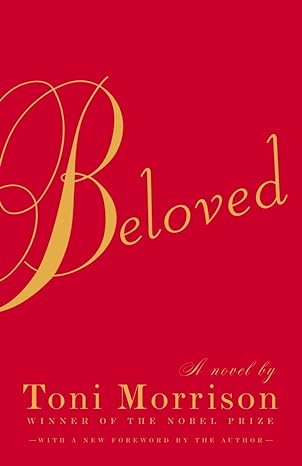
Beloved, by Toni Morrison
The Grapes of Wrath, by John Steinbeck

I have read each of those novels and not one of them warped my mind. Were you damaged by reading any of these novels? I doubt it. Were you moved to understand and see the world differently by reading these novels? Probably.

To Kill a Mockingbird teaches us about racial discrimination and injustice while also teaching us that Atticus Finch had integrity and maybe we should, too.

Beloved teaches us about the horrors of slavery and that the horrors did not end with the Civil War. It teaches us the lengths desperate people will go to prevent their children from being enslaved and living in horrible circumstances. That’s being demonstrated daily at the US-Mexican border.

The Grapes of Wrath teaches us what can happen after a decade of affluence and decadence and a time of drought as it illustrates a side of life during The Great Depression.

It’s one thing to read that thousands of people lost their farms and everything they had during the “Dust Bowl,” but it’s altogether different to read The Grapes of Wrath and live with the novel’s characters.

The Snow Forest, by Elizabeth Gilbert

In July of this year, an historical novel scheduled to be released in February 2024 was attacked on the author’s Goodreads account to the point that she chose to cancel its publication.

Elizabeth Gilbert, who wrote Eat, Pray, Love had written a novel set in Russia in the 1930s. With all the current interest in the war in Ukraine today, it would seem an opportune time to release a book set in 1930s Russia.

But author Elizabeth Gilbert learned that was not the case. She got so much blowback from her fans, that she pulled The Snow Forest even after some of her readers had pre-ordered the book. Her fans in Ukraine (or at least enough of them) said it was not the right time to release a book set in Russia. In response, the author suspended the publication of the book.

Author Alina Adams’s Thought on this

I read a blog post by author Alina Adams who was born in Odessa, Ukraine. Ms. Adams’ post maintains that historical fiction can make an important statement about the world and not just be a source of entertainment.

Ms. Adams wrote, “And as someone who loves to read historical fiction taking place all over the world in all sorts of different time periods, I am wary of a mindset which might lead to authors and publishers censoring themselves, shying away from setting stories in regions where there is ongoing political strife.”

In addition to specific examples of historical novels that have been challenged and banned, Ms. Adams’ blog post contained several succinct statements about the potential historical fiction holds, including the following: “Sometimes, historical fiction can tell a truth non-fiction isn’t equipped to deliver.” Also, “It doesn’t just make you think, it makes you feel. And it makes you empathize.”

My thoughts on this

Reading an historical novel might not change your political stance or religious beliefs but, if you give it a chance, it just might help you see the other side of an issue.

It might at least help you realize that people with views that oppose yours are not necessarily your enemies. They just might be human beings with a different perspective and life experience.

Please take a couple of minutes to read Alina Adams’ complete blog post from July 27, 2023 on M.K. Tod’s blog, A Writer of History: Why Historical Fiction Must Keep Tackling Controversial Topics | A Writer of History.

A quote from author Barbara Kyle

I printed this quote from Barbara Kyle and have it taped to my computer:

“The move to self-censorship for fear of ‘cultural appropriation’ is a sad state of affairs. Author Morgan Jones eloquently champions the opposite position: ‘Fiction remains the best means we have of finding connection where there seems to be none; and the novel, of all forms, encourages a search that’s deep and sustained. By reading (or writing) one, you’ve travelled somewhere else. You’ve moved, if only slightly, toward others. In a world that finds and increasingly exploits division and difference, this is an invaluable, precious exercise.”

Since my last blog post

Marie and I finished proofreading and creating the cover for our upcoming cookbook, The Aunts in the Kitchen: Southern Family Recipes. We submitted it to Amazon on Friday and requested a proof copy. It should arrive this week and, if we are pleased with it, we’ll give Amazon the go ahead to publish it. Look for an update and perhaps a cover reveal in next Monday’s blog post.

Until my next blog post

Be aware of what is going on in your community and state related to book challenges and book bannings. Speak up for books. Speak up for the freedom to read. Speak up for public libraries and librarians.

Have you ordered my American Revolution e-ghost story?  “Ghost of the Battle of Guilford Courthouse: An American Revolutionary War Ghost Story” is available from Amazon, along with my other books: https://www.amazon.com/dp/B0CH7JCP11/. It’s only available as an e-Booklet.

“Ghost of the Battle of Guilford Courthouse: An American Revolutionary War Ghost Story,” by Janet Morrison

If you don’t have a good book to read, visit your local public library. Or, from the comfort of your home, go to its website and search for books you would like to read or subjects you want to learn more about. You will be amazed at what is available at your fingertips!

Take time for friends and family.

Thank you for taking time to read this long blog post.

Remember the people of Ukraine, Maui, Libya,….

Janet

6 Books I Read in March 2021

I didn’t think March could match February in the books I got to read, but I was wrong. Good books just keep being published, and I’m having a wonderful time reading them.


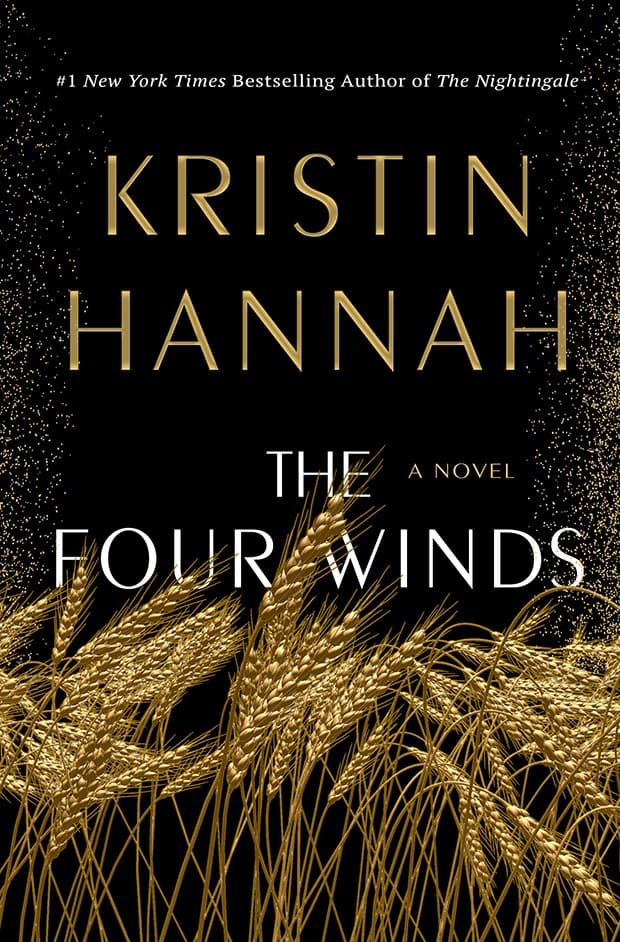
The Four Winds, by Kristin Hannah

The Four Winds, by Kristin Hannah

What a wonderful historical novel! In my opinion, The Four Winds is even better than Ms. Hannah’s 2015 novel, The Nightingale.

The Four Winds plunges the reader into the Dust Bowl and The Great Depression and never lets go. It’s been decades since I read The Grapes of Wrath, by John Steinbeck, but The Four Winds put me in the dust, grit, and terror of that time even more than the Steinbeck classic. Maybe that has something to do with my age when I read each book, but somehow The Four Winds made a stronger impact on me.

This novel follows Elsa, a young woman starved for love. She throws caution to the wind, for once in her life, and it turns out to have dire consequences. I don’t want to give the story away, so I’ll just say it follows Elsa through the Dust Bowl in Texas and a desperate journey to California in hopes of a better and a healthier life. The book illustrates the difficult lives of migrant workers and how promises and dangers of unionization in the 1930s. There are strong secondary characters in the book.

I blogged about The Nightingale, by Kristin Hannah in my June 2, 2017 blog post, You Need to Read These Books! and The Great Alone, by Kristin Hannah in my March 26, 2018 blog post, Some March Reading, in case you want to know what I thought about them.


Daylight, by David Baldacci

Does Atlee Pine find her sister?
Daylight, by David Baldacci

If you’ve been following David Baldacci’s Atlee Pine series, you’ll love this book. This novel reveals many details about Atlee’s parents and childhood. She continues to search for her twin sister, Mercy, who was abducted from their bedroom when they were six years old. Her journey takes her into some very dark places and danger lurks at every turn.

Will Atlee find Mercy in Daylight? You need to read it for yourself to find out! This is Baldacci at his best.


52 Small Changes for the Mind, by Brett Blumenthal

52 Small Changes for the Mind, by Brett Blumenthal

This is a self-help book that probably should be read a week at a time over 52 weeks, but I had checked it out from the library. I read it over several days and took notes so I can slowly absorb the points it makes that I can benefit from. Many of the recommendations are things I’m already doing, but several really stepped on my toes and got my attention.

Here are a few examples from the book:

Week 9 – “Kick indecision.” Don’t waste time trying to make the perfect choice.

Week 14 – “Silence your inner critic.”

Week 15 – “Go beyond your comfort zone.”

Week 27 – “Minimize screen time.” (I thought this just applied to teens and young adults who spend too much time on their cell phones, but this segment made me realize that I’m guilty of spending too much time on the computer and using my tablet.

Week 39 – Recognize your fears and confront them.

Week 49 – “Deal with [your] demons.”

There are helpful tools and resources at the back of the book.


Soul of a Woman, by Isabel Allende

The Soul of a Woman, by Isabel Allende

This turned out to be a surprisingly short book. I checked it out as an MP3 from the public library and listened to the entire book in an afternoon.

Ms. Allende begins the book with some experiences from her childhood and life in several countries, but the bulk of the book is about the status of women throughout the world.

She addresses all manner of abuses women endure at the hands of men and sometimes at the hands of other women. She writes about how tradition perpetuates the practice of female mutilation in parts of the world, how women are invisible in some regions due to Islamic law and practice, and how female babies are not valued and are sometimes killed in some cultures and countries simply due to their gender. She addresses human trafficking. She writes about how women the world over must struggle for every inch of progress they make in the business world.

Ms. Allende established The Isabel Allende Foundation in 1996 to pay homage to her daughter, Paula, who died at the age of 29 in 1992. The foundation works for the empowerment of girls and women through nonprofits in Chile and the San Francisco Bay Area. To read more about the foundation, go to https://isabelallende.org.


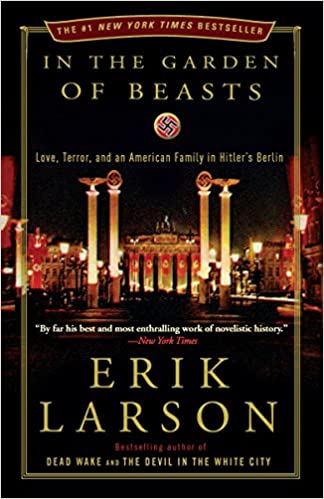
In the Garden of Beasts, by Erik Larson

In the Garden of Beasts, by Erik Larson

I think I’ve read all of Erik Larson’s books now, until Thunderstruck is released later this year. Yes, I’m on the waitlist for it at the public library.

My earlier attempt to read In the Garden of Beasts didn’t work out. I just couldn’t get into the book. Although the premise of this book should be equally as gripping as his other books, even the second time around it didn’t hold my interest quite as well as Isaac’s Storm (Three Books Read in December 2020) or Dead Wake: The Last Crossing the Lusitania (4 Books I Read in February 2021.)

In the Garden of Beasts is the story of William Edward Dodd, US Ambassador to Berlin from 1933 until 1937, during the rise of Adoph Hitler. His mid-20s daughter, Martha – who is estranged from her husband — accompanies him and becomes quite a liability as she soaks in the nightlife of the city and forms a romantic relationship with a Russian.

Dodd was a professor, a thrifty, unassuming man – much the opposite of his daughter. He was the butt of jokes among his peers in Berlin because he insisted on driving his old car and wearing the clothes he’d worn as a professor back in the Midwest. Martha inherited none of her father’s personality traits.

This is a nonfiction book, meticulously researched, as are all of Erik Larson’s books. I learned a lot from the book. It was interesting to get a glimpse of the rising of the Third Reich from the perspective of an American living in Berlin.


The Train to Crystal City: FDR’s Secret Prisoner Exchange Program and America’s Only

Family Internment Camp During World War II, by Jan Jarboe Russell

FDR's Secret Prisoner Exchange Program and America's Only Family Internment Camp During World War II
The Train to Crystal City, by Jan Jarboe Russell

You may recall that in my February 8, 2021 blog post, 4 Books I Read in February 2021, one the books I wrote about was the novel The Last Year of the War, by Susan Meissner.

As soon as news broke that Japan had attacked Pearl Harbor, the lives of all Japanese immigrants and Americans of Japanese descent were at risk. The FBI started arresting the men for no reason other than their ancestry.

I learned a lot from this book. One thing I hadn’t known about was the Asian Exclusion Act, passed in 1924, which made it illegal for Japanese immigrants to become US citizens.

Here’s a quote from pages 28-29 of the book about the steps President Franklin D. Roosevelt took to create a vehicle through which a hostage exchange program could be put into place in the event the United States entered World War II:

“On September 1, 1939, the day German tanks, infantry, and cavalry invaded Poland with 1.5 million troops, Roosevelt created a highly secretive division within the Department of State called the Special Division. He ordered this division to identify American civilians… who were currently in Japan and Germany and who would be in danger when the United States joined the war…. More than 100,000 American civilians were in harm’s way. A few months later, Roosevelt authorized the Special War Problems Division to find Japanese and Germans in America and in Latin America who could be used as hostages in exchange for the more valuable of the Americans…. In 1940, [FBI Director J. Edgar] Hoover installed the first group of FBI agents in Latin America. Based on the FBI reports, Roosevelt was convinced that Germans and Japanese in Latin America were a direct threat to hemispheric security.”

In addition, FDR formed an agreement with Peru that paved the way for 1,800 Japanese Peruvians with no ties to the U.S. to be brought to internment camps in Texas and other states. Pressure was put on other Latin American countries to do the same. All except Argentina, Mexico, and Brazil complied and deported Germans. Those three nations had internment camps of their own.

The men held in the internment camps were given an ultimatum. If they wanted to be reunited with their families — and these reunions had to take place inside the camp at Crystal City, Texas – they had to sign papers stating that they would relocate to their ancestral home country after the war. Imagine living for decades in the United States and then having to relocate to Germany or Japan as soon as World War II was over. Families were forced to make unimaginable choices in order to stay together.

I could go on and on, but perhaps I’ve given you enough detail that you will want to read the book for yourself. It was a real eye opener for me!


Until my next blog post

How is D.E.A.R. (Drop Everything and Read) Month going for you? I hope you have one or more good books to read this month.

Spend some time enjoying a hobby this week.

Keep wearing a mask, even if you’ve been vaccinated against Covid-19, so we can get back to doing all the things we like to do – like seeing relatives we haven’t seen in almost 18 months.

Note: National Library Week in the USA started yesterday. Support your local public library!

Janet