Four Books I Read in August 2023

Here it is, the first Monday in September. Where did the summer go? We still have some warm – probably even hot – days ahead, but school is back in session, today is Labor Day in the United States, and for all practical purposes, today marks the unofficial end of summer. I always hate to see it go, but that’s just me.

I read an assortment of books in August, and today I’ll tell you about them. I hope at least one of them will pique your interest. If you’ve read any of them, I’d like to know how you liked them.

The Paris Agent, by Kelly Rimmer

The Paris Agent, by Kelly Rimmer

I get excited when Kelly Rimmer writes a new book. She’s one of my go-to authors when it comes to historical fiction. The first novel of hers that I read was The Things We Cannot Say. I blogged about that novel September 9, 2019 (#BringBackOurGirls.) The next month I read Before I Let You Go (see my October 7, 2019 blog post: Thrillers and a Dark Novel I Read Last Month.)

I listened to Rimmer’s novel, Truths I Never Told You in March 2021, but I failed to blog about it after I finished it. I blogged about The Warsaw Orphan in my July 12, 2021 post, 4 Other Books I Read in June 2021. I read The German Wife by her last August and blogged about it on September 5, 2022 (Four of Eight Books Read in August 2022).

I didn’t realize I’d read six of Kelly Rimmer’s novels until I did a search of my blog posts. I guess you could say I like her writing.

I listened to The Paris Agent on CD from the public library. In her latest historical novel, Kelly Rimmer weaves a story involving two timelines. I usually don’t care for books that yank me back and forth between two different eras, but The Paris Agent was masterfully written and the format worked for me.

Noah Ainsworth was a British spy in France during World War II. In 1970, he is still struggling to make sense of his memories and the gaps in his memories caused by a head injury in the line of duty. His daughter, Charlotte, is determined to unravel the bits and pieces of his memory, official records, and memories of her father’s contemporaries.

The book takes the reader on a journey of questions, hope, love, misunderstandings, dead ends, and answers. As with Rimmer’s other novels, I recommend this one.

Darkness Visible: A Memoir of Madness, by William Styron

Darkness Visible: A Memoir of Madness, by William Styron

You might be familiar with the author William Styron. He wrote Sophie’s Choice, which was made into a movie. What you might not know is that he had a life-altering battle with severe depression.

Darkness Visible: A Memoir of Madness is the story of his depression. I have relatives who have and still are battling depression. It is a serious illness and deserves a more serious-sounding name. I have heard depression described by the people in the throes of their battles and I have read about it, but nothing has brought the wide scope of symptoms the disease can cast on a person’s mind and body like this book did.

Being a professional writer, Mr. Styron was able to express some of the things he endured with style and grace and carefully-chosen words. It is not a pleasant subject, but it is an illness that affects more people than we probably realize.

I encourage you to read this book, especially if someone you love is suffering with depression. Each case is unique, so the symptoms Mr. Styron had are not necessarily the symptoms your loved one has. But maybe reading this memoir will enlighten you and help you understand just a little of what your friend, co-worker, or relative faces every day as they try to put on a happy face and act like nothing is wrong.

Don’t ever belittle anyone who is depressed. Don’t ever say, “He is just depressed.” Don’t tell a depressed person to “just snap out of it.” Don’t ever minimize their suffering. Mr. Styron gives hope in the end. He got the professional help and medication he needed, and now he can look back on that horrible time and write about it.

Blowback: A Warning to Save Democracy From the Next Trump, by Miles Taylor

Blowback: A Warning to Save Democracy From the Next Trump, by Miles Taylor

I was reading this book on August 14, 2023 – the day the indictments came down from Fulton County, Georgia against Donald Trump and 18 others. The author, Miles Taylor, worked in the Department of Homeland Security in the Trump Administration. He hoped from the beginning that Donald Trump would “rise to the occasion” or that some adults would influence him. Neither happened.

Taylor thought by staying in the administration but publishing warnings under the pseudonym “Anonymous” he could bring enough exposure to the corruption in the Trump White House to prompt Congress and others in high positions of authority in the government to reign in the extremist radical ideas Trump espoused. It didn’t work out that way, and in October of 2020, Taylor went public and Trump was openly out for revenge.

Among other things, as “Anonymous,” Taylor had made it known that behind Trump’s back various Cabinet members were saying how incompetent he was.

Taylor explains in the prologue that “blowback” is the term used in national security circles “to describe unintended consequences, the failure to anticipate the repercussions when we make a choice.” Hence, the title of his book.

He says our generation of Americans will be known by future generations by the words, “They did not listen.”

He wrote the book to warn the American public about what is at stake if Trump is elected in 2024 or a more competent Trump-wannabe is ever elected. He addresses the various “guardrails” in place to safeguard our democracy and how they were weakened by the actions of Trump and his supporters.

I know what I write here won’t change any minds. Mr. Taylor probably knows his book won’t change any minds. The people who still support Trump apparently aren’t going to change their minds no matter what he says, does, or is convicted of. And they will go to the polls in 2024 and vote for him again even as they must hold their noses to shield themselves from the stench of his behavior – behavior they would not tolerate from their own family members or an employee.

If you want an inside look at what went on in the White House during the Trump Administration, you might be interested in this book. It is incumbent upon every American to pay attention to what has happened, what is happening, and what will continue to happen in the political arena. It is our responsibility. After all, ours is, to quote the Gettysburg Address, “…government of the people, by the people, and for the people….” We are the government.

Educate yourself before you vote. The depth of Trump’s incompetence illustrated by example after example in this book is mind blowing. From asking if hurricanes really spin to wanting to tell people in the path of a Category 4 hurricane to stay home and ride it out, to suggesting that fire trucks could be parked near the border with Mexico so cows could climb the ladders on the trucks to get over the border wall and graze along the Rio Grande…. You can’t make this stuff up.

Mastering Suspense, Structure & Plot: How to Write Gripping Stories That Keep Readers on the Edge of Their Seats, by Jane K. Cleland

Mastering Suspense Structure & Plot, by Jane K, Cleland

In this book about the craft of writing, Ms. Cleland starts out by remind writers to know their readers and give them what they want. She suggests that a writer look at six or more bestsellers in their genre and then analyze them based on such things as sexual content, violence, setting, and pace. She writes about the overarching thematic question posed at the beginning of a novel that must be answered by the end of the book. In terms of structure, she writes about linear and nonlinear structure, and she recommends that a writer select the best structure for the story they’re telling.

In the section of her book about creating suspense, she gives numerous examples of how that can be done. She says “The most common way to create suspense is to let your reader share a character’s anxiety.” It’s easier said than done, but she offers a lot of pointers.

In talking about settings, Ms. Cleland encourages writers to only include the things your point-of-view character sees, hears, touches, smells and only the kinds of places that character would go.

In the fifth chapter, Ms. Cleland writes about how to layer in two subplots. This was a helpful chapter for me, as I have a couple of subplots in one of the novels I’ve drafted. I hope I’ve woven them in appropriately.

She writes about isolating your characters. Each person reacts differently to be physically or socially isolated. She touches on red herrings and how to use them.

You get the picture. If you’re still learning the art and craft of writing fiction, I recommend Jane K. Cleland’s book.

Since my last blog post

I edited one of my short stories, created the cover for it on Bookbrush.com, finished formatting it on Atticus.io, and submitted it to Amazon for publication as an e-book only. It should be available today for $2.99. The name is “Ghost of the Battle of Guilford Courthouse: An American Revolutionary War Ghost Story.” I’m not a believer in ghosts, but please read the Author’s Note at the end of the story to find out what prompted me to write a ghost story.

Ghost of the Battle of Guilford Courthouse: An American Revolutionary War Ghost Story, by Janet Morrison

My sister and I finished proofreading the recipes in and wrote the introduction for The Aunts in the Kitchen: Southern Family Recipes. Getting the photography done for the front and back covers is next on our list. We hope to have the paperback and e-book available on Amazon by November.

I finished writing my September newsletter. I hope you’ve subscribed. It comes out every other month. When you visit my website, https://www.janetmorrisonbooks.com, you can click on the subscribe button and receive a free downloadable copy of my short story, “Slip Sliding Away.”

Until my next blog post

I hope you’re reading a book that is so engrossing you didn’t want to put it down to read my blog.

Don’t forget to order “Ghost of the Battle of Guilford Courthouse: An American Revolutionary War Ghost Story” on Amazon!

Make time for friends and family. They won’t always be here.

Remember the people of Ukraine, Maui, and Florida.

Janet

#BringBackOurGirls

Do you remember back when we all used the hashtag #BringBackOurGirls on social media in 2014 after 276 school girls in Chibok, Nigeria were kidnapped by Boko Haram?

Do you know that 112 of those young women are still held by Boko Haram?

Today’s blog post is longer than usual, but please take a few minutes out of your busy day to sit quietly and read it.

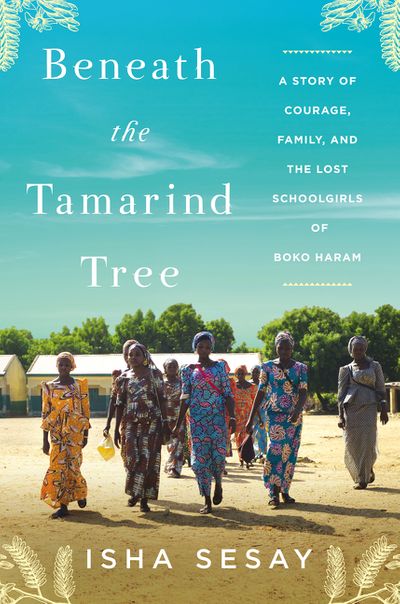
Beneath the Tamarind Tree:  A Story of Courage, Family, and the Lost Girls of Boko Haram, by Isha Sesay

The story of the 276 Nigerian school girls abducted by Boko Haram in 2014.
The Beneath the Tamarind Tree: A Story of Courage, Family, and The Lost Schoolgirls of Boko Haram, by Isha Sesay

Beneath the Tamarind Tree:  A Story of Courage, Family, and the Lost Girls of Boko Haram is not a pleasant or easy book to read, but I feel compelled to read books like that in order to better understand the world around me. You will, no doubt, recognize the name of the author, Isha Sesay, as a veteran journalist on CNN.

To refresh your memory, on April 14, 2014, 276 teenage school girls were kidnapped from their Government Girls Secondary School in Chibok, Nigeria by Boko Haram. Boko Haram is a militant Islamic group based in Nigeria. The group’s goal is to institute Sharia or Islamic law. Translated from the local Hausa dialect, Boko Haram means “Western education is forbidden.” Boko Haram adherents mainly live in the northern states in Nigeria.

In this book, Isha Sesay reconstructs the events surrounding that 2014 mass abduction, but also offers some brief historical backdrop which must be known in order to understand how and why such a thing happened.

Ms. Sesay explained the history as follows:  “Nigeria’s largely Muslim north and its predominantly Yoruba and Igbo Christian south” were combined to form the country of Nigeria by Great Britain in 1914. After numerous coups, it was decided after every two terms the presidency would alternate between the north and the south. However, political problems continued and Boko Haram was founded by Mohamed Yusuf in the early years of the 21st century. Unrest grew in 2014 when the two-term Christian president from the southern part of the country, Goodluck Jonathan, hinted that he was going to run for a third term.

With that political state of affairs in mind, let’s delve into the story of the abduction of 276 school girls on April 14, 2014. I don’t want to give too much away, in case you want to read Beneath the Tamarind Tree, so I’ll just hit some highlights from the book.

  • 57 of the 276 girls escaped early on and managed to get back home
  • When Ms. Sesay arrived in Nigeria three weeks after the kidnappings, she was shocked to learn that Nigerian President Goodluck Jonathan was spreading the word that the event was a hoax
  • When Jonathan’s successor, Muhammadu Buhari, was elected in 2015, Buhari said it was not a hoax. This gave everyone hope, but then when he was to meet with parents of the kidnapped girls and representatives from Bring Back Our Girls, he refused to meet with them. Eventually forced to meet with them, he took the opportunity to try to distract them with other issues and cast Bring Back Our Girls as the enemy of the government.
  • In October of 2016 – 2.5 years into the girls’ captivity – 21 of the girls were released to the Red Cross and lawyer Zannah Mustapha. Mustapha had taken it upon himself to broker a deal between the Nigerian government and Boko Haram. It is not known what concessions the government made that made the release of 20 girls (plus one as a “bonus) possible, but all along Boko Haram had demanded the release of some of their own who were imprisoned.
  • At the time of the release of the 21 girls, some 50 of the original 276 girls had succumbed to Boko Haram pressure and married Boko Haram men.
  • The 21 released girls were emaciated from more than 900 days of hunger and abuse. They had been uprooted numerous times by Boko Haram as the militants tried to hide them from anyone who was looking for them. One of the buildings they were housed in at one point was bombed by the Nigerian military.
  • On May 7, 2017, 82 more Chibok girls were released.
  • By January 4, 2018, 107 of the Chibok girls had escaped or been released
  • Boko Haram kidnapped 112 school girls and 1 boy from a school in Dapchi on February 19, 2018. All but one of those girls, a Christian who refused to convert to Islam, were released after a couple of week; however, that one girl was still being held by Boko Haram as of the writing of Beneath the Tamarind Tree, which was published July 9, 2019.
  • As of the writing of this book, more than 100 of the Chibok girls are still missing and assumed to still be held by Boko Haram.

I think the overriding thing I learned from reading this book – the thing I will most remember from this book – is the tremendous and abiding faith in God and Jesus Christ held by the vast majority of the Chibok school girls. It was their faith that sustained those who have escaped or been released.

In interviewing the 21 girls released in 2016, Ms. Sesay, a Muslim, was gobsmacked by the fact that the girls had forgiven their captors and even prayed for their captors. It was a reminder for me that Christianity, at its very core, is a religion of forgiveness. Forgiveness is, apparently, an idea that is foreign to other religions or at least some of them.

Update from Reuters new agency, since reading the book:  On June 12, 2019, 300 Boko Haram killed 24 people in an attack on an island in Lake Chad in Cameroon.

The Things We Cannot Say, by Kelly Rimmer

This is the first novel I’ve read by Kelly Rimmer, an Australian author. This book is a combination of today in the life of a woman whose son is on the autism spectrum and years ago when her grandmother was young and in love in Poland in the years just before World War II.

The grandmother is now confined to a nursing home and cannot verbalize her thoughts and desires. One of the interesting aspects of the story early on was how the grandmother was able to learn how to use the Augmentative and Alternative Communication (ACC) app on her great-grandson’s i-Pad to communicate her feelings, requests, and answers.

The grandmother’s early history is pretty much a mystery to her granddaughter, but there is something the grandmother persists in trying to communicate. It involves a man named Tomasz and what was so important about him. Will the granddaughter travel to Poland to look for this man in the country of her grandmother’s birth? I don’t want to give the rest of the story away, in case this sounds like a novel you’d like to read. Suffice it to say there are numerous twists, turns, and surprises in this novel.

Although it’s a book of fiction, the plot was inspired by the author’s grandmother’s story. She weaves a story of challenges, desperation, true friendship and devotion, and undying love. I highly recommend this book.

Since my last blog post

I’ve been reading!

Until my next blog post

I hope you have a good book to read. I’m reading ­­­­­­­­­­­­­­­­­­One Good Deed, by David Baldacci and listening to Before I Let You Go, by Kelly Rimmer.

If you’re a writer, I hope you have quality writing time and your projects are moving right along.

Thank you for reading my blog. You could have spent the last few minutes doing something else, but you chose to read my blog.

I might take a break from blogging next week. If you don’t see a blog post from me on September 16, rest assured I’ll be back online on September 23.

Let’s continue the conversation

Were you aware that more than 100 of the Chibok school girls are still being held by Boko Haram a numbing almost five and one-half years after the April 14, 2014 mass abduction? If my rough calculations are correct, today is Day 1,974 of their captivity.

On Saturday, September 7, 2019, a Nigerian film, “Daughters of Chibok” debuted at the Venice Film Festival and was named Best Virtual Reality Story. The intent of the film is to show how the Chibok community has been affected by the 2014 kidnappings and to remind the world that 112 of the 276 school girls are still held by Boko Haram.

Please share #DaughtersOfChibok, #BringBackOurGirls, #ChibokGirls, and other appropriate social media hashtags to remind the world that this story is ongoing and 112 of the girls are still held by Boko Haram.

For more on that film and the stories it tells, go to http://saharareporters.com/2019/09/08/nigerian-film-chibok-girls-wins-us-award and https://www.cnn.com/2019/09/08/africa/vr-daughters-of-chibok-intl/index.html.

Janet

A Wake-Up Call from Dr. Henry Louis Gates, Jr.

“Find Your Roots” with Henry Louis Gates, Jr. on PBS

I’ve enjoyed the various television series Dr. Henry Louis Gates, Jr. has done on PBS (the Public Broadcasting System in the United States.) With my interest in genealogy, I’ve especially enjoyed his “Finding Your Roots” series where he (and his assistants) do a thorough genealogical search for well-known Americans. Many times, the findings are surprising.

In my blog post last Monday, https://janetswritingblog.com/2019/06/03/4-or-5-books-i-read-in-may-2019/ , I wrote about the books I read in May. I mentioned reading the first two chapters of Henry Louis Gates, Jr.’s new book, Stony the Road:   Reconstruction, White Supremacy, and the Rise of Jim Crow.

Stony the Road:   Reconstruction, White Supremacy, and the Rise of Jim Crow, by Henry Louis Gates, Jr.

Stony the Road: Reconstruction, White Supremacy, and The Rise of Jim Crow, by Henry Louis Gates, Jr.

The events and facts Dr. Gates included in his book were not in the history textbooks of my youth. This period in our nation’s history was omitted from our textbooks, as were the dark decades which followed in which “Jim Crow” laws were enacted and strictly enforced. All this was swept under the rug and not talked about. The precious little I was taught about the Reconstruction Era could be summed up as, “After the Civil War the ‘carpetbaggers’ from “up North” came down here to tell us what to do.” This always had negative connotations. I grew up in North Carolina.

As a lover of history, even at a young age, I lamented the fact that every year in school we’d study the years up to the end of the American Civil War, the school year would end, and the same thing would happen the next year. It always came across as a lack of time to study anything that happened after that war but, with the perspective I’ve gained in the last several years, I now wonder if this was part of a grand design by the State of North Carolina. Perhaps it was by intention that we never studied the Reconstruction Era.

A snapshot of my school years

So you’ll know the background from which I speak, here are the highlights of my school years as far as race goes: I attended an all-white public school through the sixth grade; racial desegregation was optional in 1965 when I was in the seventh grade (meaning there were three children from a black family who desegregated our school of grades 1-12 with around 1,000 students); the historic black public schools in our county were closed at the end of my seventh grade year, so the schools were completely racially-integrated thereafter.

Can you imagine being one of just three students of color in a school of 1,000 white students? I cannot imagine how Carolyn Morris and her two siblings felt. I also cannot imagine how all the black students in our county felt the following year when their schools were closed and they had no choice but to attend the schools that had preciously been all-white. It was a blessing that five of the six county high schools were consolidated in 1967 into two new high schools, so Central Cabarrus High School and Northwest Cabarrus High School were never racially-segregated.

Back to Dr. Gates’ book

From Dr. Gates’ book I learned in greater detail than I had before that great strides were made for racial integration during Reconstruction; however, “Jim Crow” laws started popping up all over the country (yes, even in The North) to squelch that progress. One fact that epitomizes the century after the American Civil War is that the University of South Carolina was racially-integrated after the War, but then laws were instituted to prohibit black students. The university wasn’t desegregated again until 1963.

The most important thing I learned as a writer

Stony the Road: Reconstruction, White Supremacy, and The Rise of Jim Crow, by Henry Louis Gates, Jr.

The most important thing I learned as a writer from reading Dr. Gates’ book is about the use of “Plantation Dialect” in fiction. It is something I have wrestled with in the years I’ve written and re-written my manuscript for The Spanish Coin/The Doubloon. With every revision I’ve deleted words of dialect. I had it down to just a couple of words (nawsuh for No, sir; Yessum for Yes, ma’am) by the time I read Dr. Gates’ book. Now I realize how that use of dialect, no doubt, comes across to an African-American reader.

As a white Southerner, I don’t like it when someone mocks my accent. I’m proud of my accent, but to see it overdone in spoken or written word is demeaning.

I’m fascinated by the regional accents in the United States. It’s a subject I’d like to study. I think these regional accents are a beautiful warp and weft in the fabric of our nation. If we all spoke just alike, life would be boring.

In next Monday’s blog post, I plan to delve more deeply into this subject as Dr. Gates’ book prompted me to do additional research about the use of dialect and accents in fiction. Learning to write fiction is a journey.

Since my last blog post

For a variety of reasons, I’ve made only scant progress on my manuscript for The Doubloon; however, what I’ve learned about the use of accent and dialect in fiction is far more important than my novel’s word count.

Until my next blog post

I hope you have a good book to read. I’m reading The Things We Cannot Say, by Kelly Rimmer and The Book Woman of Troublesome Creek, by Kim Michele Richardson.

If you’re a writer, I hope you have productive writing time.

Thank you for reading my blog. You could have spent the last few minutes doing something else, but you chose to read my blog.

Let’s continue the conversation

What is your experience in writing or reading fiction in which dialect and accent were overdone? Have you noticed an evolution in how dialect and accent are handled in novels?

Janet