How much Regional Accent and Dialect is Too Much in Historical Fiction?

When it comes to using dialect or regional accents in a novel, there are no definitive rules. It depends on the writer’s voice, the genre, and personal taste. Personal taste is where the rubber meets the road.

Too much of something like dialect in a novel sort of falls into the “I know it when I see it” category.

The rule of thumb

The rule of thumb is to avoid using it to the point of making the novel difficult to read. If the reader finds it exhausting to decipher the words, it means you have crossed that imaginary line. If the reader must wade through so much dialect that they are yanked out of the story, it means there is too much dialect.
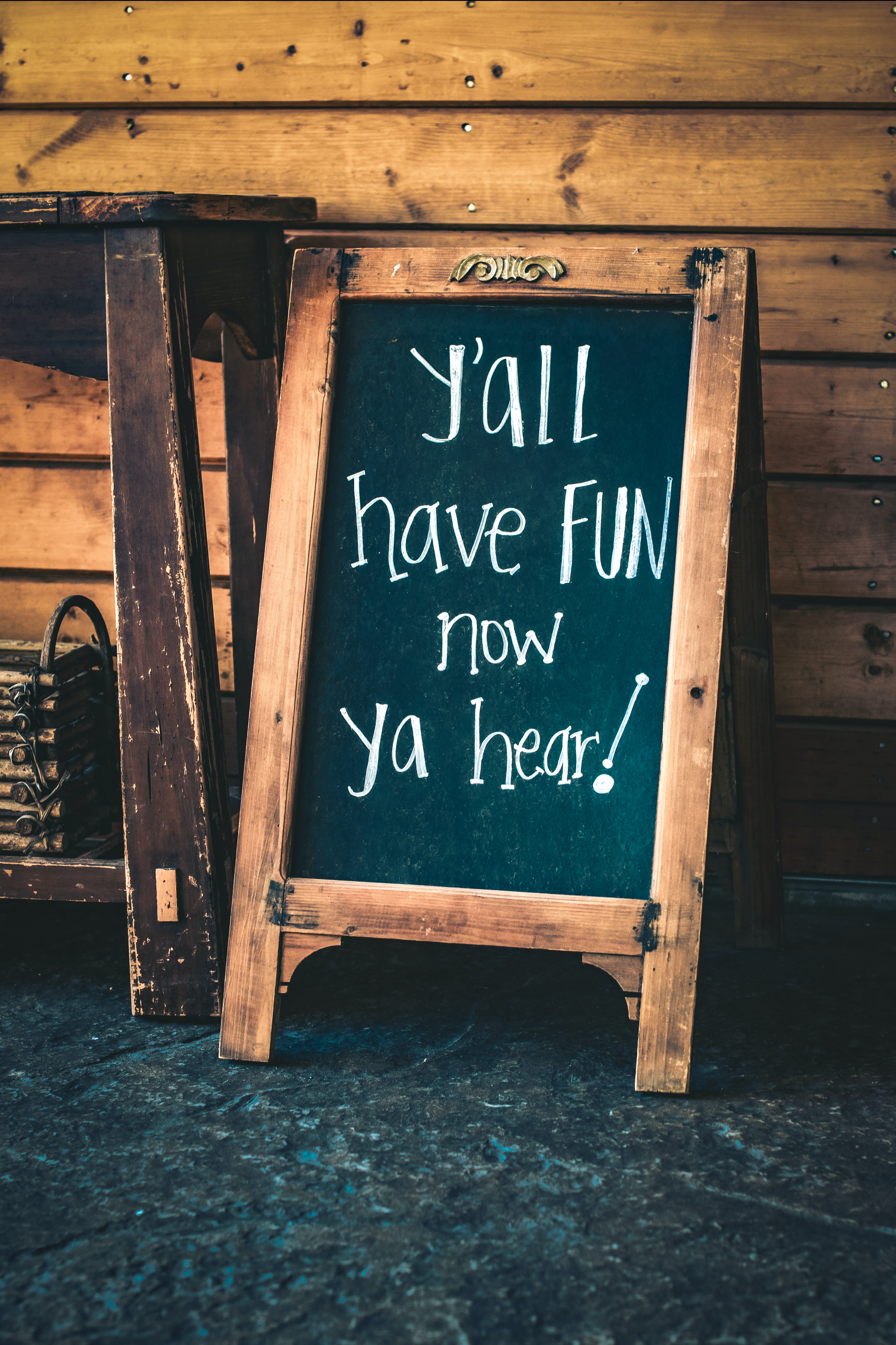
Photo by Tim Mossholder on Unsplash

My experience with “y’all” in “Slip Sliding Away”

In my early drafts of my historical short story, “Slip Sliding Away,” I set the plot in the late 1700s. Something kept nagging at me, though. I wanted to use “y’all” in the story.

If you have read the story and you are from the southern part of the United States, you know the funeral scene with the intoxicated pallbearers struggling to get up the hill to the cemetery just screams out for the use of “y’all.”

There was a problem, though. My trusty resource for determining when a word came into common usage, English Through the Ages, by William Brohaugh, failed me! I did not find ‘y’all” in the book.

My second resource for such dilemmas is Merriam-Webster’s Collegiate Dictionary, Tenth Edition, for it tells when words came into common use. I looked up “y’all” and to my great disappointment, the dictionary just said, “var [variation] of you-all.”

I cringed. Why would anyone say, “You all” when there is a perfectly good contraction that just rolls off the southern tongue?

While I’m airing my grievances about the use and misuse of “y’all,” let me just say that if one is going to write the contraction, please put the apostrophe in the correct place. Don’t make me cringe by writing, “ya’ll.” I see it on all kinds of southern merch and it’s just not right. But I digress.

I turned several pages beyond “y’all” in the dictionary and looked up “you all.” First, I discovered it is hyphenated. Who knew? Then I learned that “you-all” was in common use in 1824. That information was helpful. It told me that I had to move my late-1700s story to 1824 or later.

I never did find anything definitive telling me when southerners started taking the easy way out by addressing two or more people as “y’all.” I figure that surely by the 1870s the word was in use, so I set the final draft of “Slip Sliding Away” in that decade.

Did you have any idea about the minutiae writers of historical fiction have to deal with? (Yes, I know. I’m not supposed to end a sentence with a preposition; however, it just seems awkward to write – or read – “Did you have any idea about the minutiae with which writers of historical fiction have to deal?” My mother was an English teacher, and I think she would agree with me on this one.)

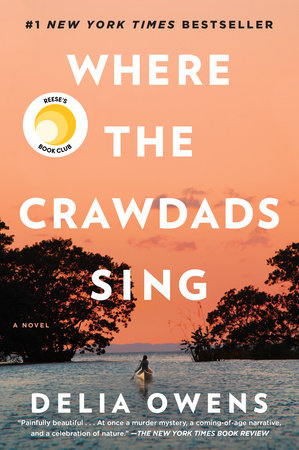
What about the dialect in Where the Crawdads Sing, by Delia Owens?

After reading Where the Crawdads Sing, I found myself alone in the world in saying that novel contained too much dialect. Everyone else who read it absolutely loved it. I liked it, too, but I was distracted by the amount of dialect used. Maybe I had read too many articles and books about the craft of writing and I was just hyper aware of the dialect.

With more than 617,000 reviews with an average of 4.7 out of 5 stars on Amazon and 18 million copies sold worldwide, Where the Crawdads Sing is obviously an amazing novel. Apparently, Delia Owens knew exactly how much dialect to include in it to please millions of readers. I wish I were talented enough to have written it!

Since my last blog post

It was a busy week and I got to check off one big task that has been on my to-do list for months. On Friday, my church friend who took the cover photograph for my two local history books, Harrisburg, Did You Know? Cabarrus History, Book 1 and Harrisburg, Did You Know? Cabarrus History, Book 2, took photographs for the cover of the family cookbook my sister and I have been compiling for a couple of years. With the formatting finally completed, I felt safe in getting the cover designed. Look for an announcement regarding the publication of The Aunts in the Kitchen: Southern Family Recipes in a future blog post and in my November newsletter.

My sister and I took a day trip that was a combination Revolutionary War/genealogy trip. It was a wonderful day. I’ll tell you about in my November newsletter.

Speaking of my newsletter, you can find out about the cookbook, my various other writing projects, and the historical “field trips” I take if you simply go to https://www.janetmorrisonbooks.com and click on the “Subscribe” button. You will immediately receive a free downloadable copy of “Slip Sliding Away” as well as my future every-other-month newsletters. Thank you to all 42 of you who have taken the time to subscribe.

Until my next blog post

What do you have to say about the amount of regional accent or dialect in a novel? I would like to hear your thoughts on the topic.

Have you ordered my American Revolution e-ghost story?  “Ghost of the Battle of Guilford Courthouse: An American Revolutionary War Ghost Story” is available from Amazon, along with my other books: https://www.amazon.com/dp/B0CH7JCP11/.

Take time for friends and family.

Thank you for taking time to read my blog post. Y’all come back now, ya hear?

Remember the people of Ukraine, Maui, Libya,….

Janet

Five of the Ten Books I Read in February 2019

Wow! Where do I start? Although it was the shortest month of the year, February was jam-packed with good books. I read a variety of fiction, nonfiction, memoir, and “how-to” books.

Truth be known, I started reading several of the books in January and finished them in February. Each one probably warranted its own blog post, but I’ve condensed my thoughts into two blog posts – today’s and the one on March 11.

Here’s what I thought of each book, in no particular order:


Before and Again, by Barbara Delinsky

Before and Again, by Barbara Delinsky

I enjoyed this novel by Barbara Delinsky about a woman, Mackenzie Cooper, who runs a red light and causes an accident in which her five-year-old daughter is killed. The event results in a divorce and an estrangement between Mackenzie and her mother.

In an effort to leave her sad past behind and start a new life, Mackenzie moves from Massachusetts to Devon, Vermont and adopts a new name. Things go well for her until her ex-husband shows up in the small town where Mackenzie lives. It turns out that Mackenzie isn’t the only resident of Devon living with a secret.

I gave this story of forgiveness four stars on Goodreads.com. I was surprised to see many two-star ratings for it on that site. With an average rating of 3.5 stars out of 5, from the reviews, it appears people either really like it or don’t.

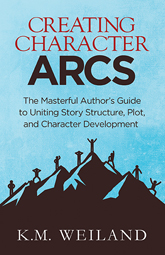
Creating Character Arc:  The Masterful Author’s Guide to Uniting Story Structure, Plot, and Character Development, by K.M Weiland

Creating Character Arcs, by K.M. Weiland

This book is an invaluable resource for anyone writing fiction. It helped me focus on the protagonist in the novel I’m writing and organize her journey step-by-step throughout her story. The questions Ms. Weiland included in her book helped me to know my main character better, which enables me to write with more confidence than I had before.

If you’re learning to write fiction, I highly recommend Creating Character Arc:  The Masterful Author’s Guide to Uniting Story Structure, Plot, and Character Development, by K.M Weiland. Or perhaps you are a fan of fiction and you’re curious about the structure of a good novel. Then, I think you’ll find this “how-to” book interesting.

A Week in Winter, by Maeve Binchy

A Week in Winter, by Maeve Binchy

This book was a bit of a surprise for me. A Week in Winter, by Maeve Binchy was the January selection for the Rocky River Readers Book Club. Since it’s not historical fiction, suspense, or a mystery, I didn’t expect to like it as much as I did. That’s one of the good things about being in a book club. Sometimes members are exposed to a book genre they wouldn’t usually select for themselves.

Although I rarely listen to an audio book, an episode of vertigo prompted me to borrow the book on CD from the public library. The accent of professional reader, Rosalyn Landor, was delightful and helped to keep the setting in Ireland clearly in mind. The fact that I enjoyed listening to a novel was a bonus.

The author, Maeve Binchy, was a master of characterization. Each character has such a unique backstory or quirk, you’ll have no trouble keeping them straight in your head. In A Week in Winter, each of the ten chapters tells the backstory of a different guest or pair of guests at The Stone House on the west coast of Ireland. Ms. Binchy weaves their stories together perfectly as she brings them all together as guests at the inn the first week the old house was open for business.

The Midwife’s Confession, by Diane Chamberlain

The Midwife’s Confession, by Diane Chamberlain

After enjoying listening to the Maeve Binchy book, I decided to give the audio version of The Midwife’s Confession, by Diane Chamberlain a try. Ms.Chamberlain weaves quite a complicated story and cast of characters together in this novel set in Wilmington, Chapel Hill, and Robeson County, North Carolina.

One of three close friends commits suicide, leaving the other two women trying to find clues as to why Nicole felt that taking her own life was the only option she had. Layer by layer they peel back the parts of Nicole’s past they knew nothing about.

There was a horrible accident with a baby Nicole delivered as a midwife. What choice did Nicole make after the accident that changed the course of not on her life but also the lives of other families?

Where the Crawdads Sing, by Delia Owens

Where the Crawdads Sing, by Delia Owens

The prose in this book is beautiful. Delia Owens writes about the fauna of the marshlands of the North Carolina coast from a place of scientific expertise. This is her debut novel, but she has co-authored three nonfiction books about nature in Africa. She worked in Africa as a wildlife scientist but now lives in Idaho.

As an aspiring novelist, I’ve been cautioned about using dialect in my writing. A little bit of it can help put the reader in the location and time of the story; however, using it too much makes the reading more difficult and slow and also pulls the reader out of the story. Where the Crawdads Sing is a perfect example of this mistake.

I loved the descriptions of the wildlife native to the marshes of coastal North Carolina. Ms. Owens painted such a pictures with words that I could have visualized the marshes even if I’d never seen coastal Carolina marshlands.

I loved the story in Where the Crawdads Sing. I was interested in the main character, Kya, from the beginning. It was a real “page turner” due to the life Kya lived and the strong character she was. I devoured the book in 48 hours; however, the dialect was over the top. There was just too much Southern and African-American dialect. The dialect repeatedly slowed me down and pulled me out of the story.

If not for the excessive dialect and the Confederate battle flag being in the county courtroom in 1970, I would have given it six stars out of a possible five.

Until my next blog post

I hope you have a good book to read. I’m reading/listening to The Glovemaker, by Ann Weisgarber; Jacksonland, by Steve Instep; and Girls on the Line, by Aimie K. Runyan.

If you’re a writer, I have you have productive writing time and your projects are moving right along.

Look for my #TwoForTuesday blog post tomorrow:  Two Books with a Strong Female Lead. I’m pleased to participate again this month in the “Rae’s Reads and Reviews” blog #TwoForTuesday challenge. Here’s a link to Rae’s March list, in case you want to participate: https://educatednegra.blog/2019/03/03/two-for-tuesday-march-prompts/comment-page-1/#comment-2084.

Thank you for reading my blog. You could have spent the last few minutes doing something else, but you chose to read my blog.

Let’s continue the conversation

Have you read any of the five books I talked about today? If so, please share your thoughts with me. Have I piqued your interest in reading any of these books?

Janet