Some March Reading

I usually wait until the first Monday of the next month to blog about books I read this month, but I’ve read so many good books in March I decided to split them up between today’s blog and my April 2, 2018 blog post.

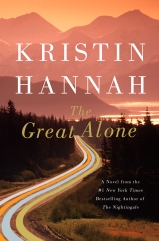
The Great Alone, by Kristin Hannah

After reading Kristin Hannah’s best-selling novel, The Nightingale, last year, I eagerly awaited the release of The Great Alone. What a masterpiece! I don’t want to spoil the story for you if you haven’t read it.

9780312577230
The Great Alone, by Kristin Hannah

I’ll just state the basic description – that it is the story of a troubled Vietnam War veteran and POW survivor who took his wife and daughter to Alaska to escape the craziness he saw in life in the lower 48 states.

Ill-prepared for life in the wilds of Alaska, things went from bad to worse for the family. Domestic abuse is a thread that weaves throughout the novel. Can love outlast the horrors this family lives with?

The Tuscan Child, by Rhys Bowen

This historical novel alternated between World War II and 1973. After the death of her father, 25-year-old Joanna travels from London to a remote village in Tuscany where her father’s fighter plane was shot down in 1944.

tuscanchild-200
The Tuscan Child, by Rhys Bowen

Since her father’s death, Joanna has found an undeliverable and returned-to-send letter he wrote to an Italian woman named Sofia. In the letter, he references “our beautiful baby boy” who is hidden away where no one but he and Sofia can find him.

Joanna had no knowledge of this woman named Sofia until discovering the letter in her father’s belongings after his death. Who was Sofia, and is “our beautiful baby boy” a half-brother Joanna knows nothing about?

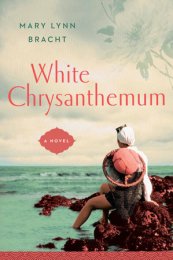
White Chrysanthemum, by Mary Lynn Bracht

This historical novel was a difficult read for me because the subject matter was so bleak, violent, and sad; however, I’m glad I read it. I learned a great deal of history.
9780735214439
White Chrysanthemum, by Mary Lynn Bracht

White Chrysanthemum is about man’s inhumanity to man – or more specifically, man’s inhumanity to woman. The novel was inspired by the plight of Korean girls and young women who were abducted by the occupying Japanese soldiers during World War II. The girls and young women were physically- and sexually-abused and were forced to be “comfort women” for the Japanese soldiers.

This is also a story of the human spirit and what it is able to endure due to the innate will to live. It is also about the love two sisters share for each other and how they long to be reunited.

It is not for the faint of heart, but I recommend it to anyone who wants to have a better understanding of the early- to mid-20th century history of Korean-Japanese relations. As recently as 2015, the treatment of Korean girls and women by Japanese soldiers from the late 1930s through the Second World War was being swept under the rug.

In 2015, the governments of Japan and South Korea agreed “to remove the Statue of Peace [in Seoul] and never speak of the ‘comfort women’ again” according to the timeline in the back of Mary Lynn Bracht’s book. Thanks to her novel, a whole new generation will learn about his piece of history.

The Nordic Theory of Everything: In Search of a Better Life, by Anu Partanen

I checked this book out because the title intrigued me. The author grew up in Finland but moved to the USA as a young adult. This book is her perspective on the social and governmental differences between the two countries.

NordicTheoryofEverything-bookimage
The Nordic Theory of Everything: In Search of a Better Life, by Anu Partanen

The prologue was interesting in that Ms. Partanen expressed her surprise in finding that Americans are less free and independent than the people of her home country. Her opinion is that

  1. the fact that most Americans’ health care is dependent upon their employer, we in the USA are tied to our jobs;
  2. Americans are sometimes forced to stay in unhappy marriages because the income tax laws are written to reward couples filing jointly;
  3. the tax laws in America encourage young adults to depend upon their parents for paying for college and supporting them financially in other ways past the age of 18; and
  4. the policies of the US government saddle parents with too much expense in the raising of children and saddle too many middle-age adults with the financial burden of caring for their elderly parents.


Ms. Partanen boiled all this down to what she calls The Nordic Theory of Love.

My brief summary doesn’t do justice to this 450-page book, but maybe I have piqued your interest. I enjoyed a couple of days’ break from reading depressing World War II novels, but about halfway through Ms. Partanen’s book I decided I’d rather read fiction. Some short stories and novels were vying for my attention.

Since my last blog post

I’ve worked on letters to send to 40 bookstores to encourage them to place spring orders for my 2014 vintage postcard book, The Blue Ridge Mountains of North Carolina, I’ve done a lot of reading, and I’ve studied book marketing and writing in deep point-of-view.

Until my next blog post

If you haven’t already signed up for my sometime-in-the-future newsletters, please fill out the form below.

I hope you have a good book to read. I’m reading A Piece of the World, by Christina Baker Kline. Perhaps you’ll want to read one of the books I wrote about today.

If you’re a writer, I hope you have quality writing time.

Janet

← Back

Thank you for your response. ✨

When Fiction Reflects Real Life

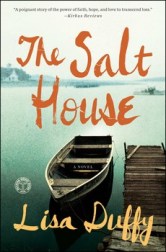
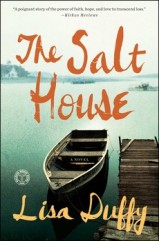
About once-a-month I like to blog about a line I like from a novel I’ve read. I’ve written down so many examples in the last couple of years that I had a difficult time this weekend selecting the one I wanted to highlight in today’s blog post. I chose the following line from Lisa Duffy’s novel, The Salt House.

the-salt-house-9781501156557_lg
The Salt House, by Lisa Duffy

“How many times can you argue about something before you decide that the argument is more destructive than the thing you’re arguing about?” – quoted from the narrative in The Salt House, by Lisa Duffy.

We live in contentious times here in the United States. Many politicians seem to be more antagonistic than ever before. At least, that’s how it seems on Twitter. It has become difficult for people with opposing views on an issue to converse in a civil way.

Most Americans tend to discuss politics only with people who agree with them. Worse yet, assumptions are often made about people’s political views based on where they worship, which region of the country they live in, or the color of their skin.

Are you caught up in an argument or misunderstanding that “is more destructive that the thing you’re arguing about?”

Since my last blog post

I wrote a new “About Me” page and added a “My Books” page on my blog site. I’ve read some good books, and I’ve watched some exciting and some disappointing NCAA (National Collegiate Athletic Association) men’s basketball tournament games on TV.

Until my next blog post

I hope you have a good book to read. I’m reading Need to Know, by Karen Cleveland, and I hated to put it down long enough to write this blog post.

If you’re a writer, I hope you have quality thinking, observing, and writing time.

If you haven’t yet signed up for my sometime-in-the-future newsletter mailing list, please do so by filling out the form below.

Janet

← Back

Thank you for your response. ✨

Blogger looks at Artificial Intelligence

Today’s blog post is a little longer than usual. If you have no interest in artificial intelligence, please scroll down to the sub-heading “Since my last blog post” to find out what I’ve been doing and to find several links to websites and video clips you might enjoy.

Social Media and me

If you don’t count blogging as social media, I haven’t blogged about social media since June 9, 2017 (6 Things Learned about Google+) and I must say that I haven’t missed it at all. I just don’t “get” some of it.

LinkedIn

I received an email from LinkedIn on Friday. It explained major changes in their newsfeed algorithm. Granted, they lost me at the word “algorithm” because I pretty much glaze over at any reference to math, but I kept reading. It didn’t take me long to learn that if I don’t mix up my posts on LinkedIn with video, images, and text, I’ll just be whistling in the wind. Sounds like I need to just close my account since I don’t do videos.

Google’s RankBrain

Even though I’m no authority on the topic of social media, occasionally I try to point you toward people who can help you better understand and utilize it. There is a blog about blogging by Janice Wald that I follow. I read her blog several times every week and have found it to be informative. Always. Her February 25, 2018 blog post, “RankBrain: This is Why You’re Doing SEO Absolutely Wrong” (https://www.mostlyblogging.com/how-does-rankbrain-work/) is a prime example of how helpful Ms. Wald’s blog posts are.

I had never heard of Google’s evolving algorithm called RankBrain. The name reminded me of humorist and inspirational speaker Jeanne Robertson’s nickname for her husband, Jerry. She affectionately calls him “Left Brain” in many of her routines. (More on that later.)

Ms. Wald’s blog post explains Google’s RankBrain as follows:

“It’s an artificial intelligence that tries to understand exactly what the Google user wants to find by analyzing important factors.” – Janice Wald

The changes RankBrain brings include a lessening of the importance of using long-tail keywords. I must admit that my brain glazed over when I read in Ms. Wald’s blog post, “Use only one (medium tail) keyword and then add LSI Keywords (Latent Semantic Indexing Keywords),” but I kept reading and so should you if you’re trying to be found on Google.

Since Janice Wald is much more computer savvy than I am, I refer you to her blog post if this is something you want to understand as things constantly change. Of course, now I’m more nervous than ever about choosing titles for my blog posts and making my posts interesting enough that people will not only find them on Google but will also click on them and read them before bouncing around to other search results.

The other side of the Artificial Intelligence coin

I’ve gotten some great tips from Janice Wald’s blog over the years, but the post by guest blogger, Nidhriti Bhowmik, on her August 12, 2017 blog (http://www.mostlyblogging.com/chatbot/) keeps ringing in my ears. Her February 25, 2018 blog referenced above brought guest blogger Nidhriti Bhowmik’s post to mind.

Mr. Bhowmik’s post prompted me to draft a blog post about my reaction last August, but I hesitated to post it because of its negative tone. I reread it a few days ago. Since it still struck a nerve in me, I decided to edit the post I’d drafted and include some it in today’s post.

I don’t doubt that Mr. Bhowmik is gifted when it comes to computers. It goes without saying that he knows much more about computers than I do. I just don’t think what he proposed in his August 12, 2017 blog post is the way I want to communicate with people. Maybe this works in other businesses, but I’m trying to establish myself as a writer.

A can of worms

Using artificial intelligence to discern what search engine users are looking for makes sense to me, but using it to communicate instead of speaking for myself is a whole different can of worms. I suppose it’s similar to the old-fashioned form letter, yet it’s different. A person actually wrote those form letters, but computer-generated tweets and other forms of communication just aren’t my style.

Mr. Bhowmik’s guest blog post was about a new “hack” designed to make my life simpler. As a middle-aged woman just trying to learn the art and craft of writing so I can write a novel, I could use some things that would simplify my life, but I guess I’m too old-fashioned to latch onto the one explained in Mr. Bhowmik’s post.

Mr. Bhowmik’s topic was something called chatbots. He is an “AI Evangelist.” Artificial Intelligence Evangelist.

I’d never heard of chatbots, but that’s not surprising to me or anyone who knows me. I read the post and it just made me sad. In a nutshell, it seems that a blogger can sign up to have a computer generate all their tweets, Instagram whatevers, etc. 24/7.

The clincher for me was the following sentence:

“To put it simply, a chatbot is an amazing piece of computer software designed to simulate conversations with a human user, usually via text.” ~ Nidhriti Bhowmik

Keywords there are “simulate conversations with a human user.”

I’ve already gotten caught in the web of something like that. I tried a free trial of a product I won’t name. Since it was free, I couldn’t seem to get rid of it for months. It sent messages to people who followed me on Twitter to thank them for following me AND encouraged them to sign up for the product I won’t name. I prefer to personally thank the people who follow me on Twitter. Let’s face it, there aren’t that many of them.

And this sentence from Mr. Bhowmik’s blog post:

“They bring everything about you in one place, package our content in an appealing format and interact with the world as you, 24/7 on all channels.” ~ Nidhriti Bhowmik

I don’t want a computer program interacting with the world as me around the clock.

Last, but not least:

“And the best part? Chatbots can start smooth flowing conversations, ask your readers what they are looking for and respond with high-value content relevant to their pain points.” ~ Nidhriti Bhowmik

It is possible that a computer program can generate higher-value content than I, but that’s just not the way I want to communicate. I don’t want you to feel valued because a computer program simulates conversation with you. I want you to feel valued because you are valued. And if you have “pain points,” I’m probably not the person you need to be dealing with anyway.

Have we completely lost our ability to talk to each other?

I enjoyed watching “The Jetsons” on TV when I was a child in the 1960s. The technology they used was science fiction then and it was fun to imagine living in such a universe. But you know what? Even the Jetsons talked to each other.

Since my last blog post

Sonni signed up to receive my sometime-in-the-future newsletters. Sonni has been generous with what she’s learned from experience since my early days as a blogger. Thank you, Sonni, for your continued support of my writing journey. In addition to daily advocating for reforms to the prison system in the USA, Sonni is a gifted writer, pianist, and composer. You can find her blog at http://mynameisjamie.net. Her improvisational music on the piano is amazing to someone (me) who took piano lessons and still can’t play well. You can find Sonni Quick’s music on YouTube at https://www.youtube.com/channel/UCv6dycDAXCytFYvf–Njxrw.

I’ve finished reading several novels since last Monday’s blog post. I enjoy reading fiction and seeing how published authors write. When I’m reading, it’s not just for fun. I’m looking at writing style, voice, point-of-view, plot, sub-plots, and always watching for a clever turn of a phrase.

That said, I admit I’ve spent more time reading than writing since my blog post last Monday. I continue to work on my character profiles. With the theme of my historical novel manuscript, The Spanish Coin, established, I’ve changed the first scene in the book. That shifts everything I’d already written in the outline. This is all part of the process, and I love it. I wrote 1,200 words one evening as I brainstormed my new hook. After using the same hook for The Spanish Coin for more years than I want to admit, it’s refreshing to start the story with a different incident.

I hit a milestone last week on my blog. I now have 1,401 followers, which I can’t quite get my mind around.

Until my next blog post

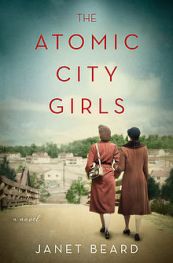
I hope you have a good book to read that wasn’t written by a computer. I’m reading The Atomic City Girls, by Janet Beard.

eab4a7_c9917d9d0c7541d78ad2e521dec6aa5d~mv2_d_1783_2700_s_2
The Atomic City Girls, by Janet Beard

If you’re a writer, I hope you have quality writing time using your own intelligence instead of the artificial kind.

Please take a minute to fill out the form below if you haven’t already, if you would like to be on my mailing list for my sometime-in-the-future newsletters. By the way, that is completely separate from signing up to follow my blog. Please do both, if you haven’t already. Thank you!

Getting back to Jeanne Robertson, if you don’t know who she is, please scroll up to the second paragraph under the “Googles’s RankBrain” subheading. If you haven’t been exposed to her North Carolina humor, you need to do yourself a favor and watch some of her video clips on YouTube, such as this one, https://www.youtube.com/watch?v=-YFRUSTiFUs. You’re in for a treat!

Thank you for spending a few minutes with me today.

Janet

← Back

Thank you for your response. ✨

Reading and Writing in February 2018

In my January 8, 2018 blog post (2018 Reading, Writing, & Living Plans) I expressed a need to be accountable to my blog readers. In order to do that, I said I’d set monthly writing goals. I gave you an embarrassing writing progress report in my February 5, 2018 blog post (Reading and Writing in January 2018). February was productive, but not in word count.

My goal was to write 6,000 words in the rewrite of my novel in February. That just didn’t happen, but I nearly finished the character profiles and settled on the location and the theme. That might not sound like much, but it wasn’t easy. More on that later.

Writing Goal for March:  Finish writing the scenic plot outline

My reading in February

Although I read six books in February, my “want to read” list had a net gain of ­­16. Like I wrote on February 5, this trend is unsustainable. With so many good books being written, though, I don’t know how to reduce my list. In my younger adult days I didn’t make time to read fiction, so I have a lot of catching up to do.

The Salt House, by Lisa Duffy

the-salt-house-9781501156557_lg
The Salt House, by Lisa Duffy

This was Ms. Duffy’s debut novel. It was published in 2017 and was recommended by my friend, Karen. Set in Maine, The Salt House follows each member of a grieving family the summer after the toddler in the family died unexpectedly. Each chapter is written from the point-of-view of a different family member. The father, the mother, and the two surviving daughters each handle their grief in their own way in this well-written novel. Grief can pull a family apart or pull them closer together. It can even erupt in violence.

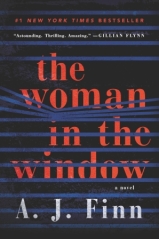
The Woman in the Window, by A.J. Finn

186105
The Woman in the Window, by A.J. Finn

This debut novel by A.J. Finn hit the bestseller lists and hasn’t slowed down in popularity. This psychological thriller will keep you guessing. It will even make you doubt what you think you see, think you hear, and think you know. In the process, it is a study in agoraphobia.

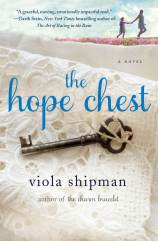
The Hope Chest, by Viola Shipman

9781250105073
The Hope Chest, by Viola Shipman

This is a novel about a woman with ALS and the items in her hope chest – items collected as far back as early childhood. Ill now with a terminal illness, she looks at each item and remembers what each one means and why she kept it. This was the book read by the Rocky River Readers Club in February.

Incidentally, The Hope Chest was written by Wade Rouse who adopted the pen name “Viola Shipman” to honor the memory of his grandmother.

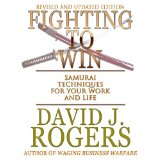
Fighting to Win:  Samurai Techniques For Your Work and Life, by David J. Rogers           

fighting-to-win-amazon
Fighting to Win: Samurai Techniques For Your Work and Life, by David J. Rogers

This book was instrumental in getting me back to work on my novel. I wrote an entire blog post about it on February 19, 2018 (Using Samurai Techniques in Writing), so I won’t repeat my thoughts on the book here. Please read that earlier blog post, though, and see if it sounds like this book could help you.

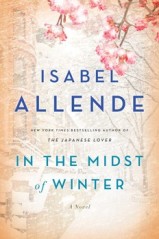
In the Midst of Winter, by Isabel Allende

in-the-midst-of-winter-9781501178139_lg
In the Midst of Winter, by Isabel Allende

I gave In the Midst of Winter, by Isabel Allende, five stars in my review on Goodreads.com. In the Midst of Winter weaves together the lives of strangers. Each of the protagonists have unfortunate backgrounds. They discover common ground and form a bond while getting deeper and deeper in covering up a murder.

Ms. Allende did a brilliant job gradually bringing in backstory that included revolution in Chile, human trafficking in the USA, the horrors many Latinos face as they desperately try to cross into the USA, and life in the shadows for people who have come to the USA illegally.

Many others on Goodreads.com have given this novel three stars, saying they were disappointed with it. Maybe it’s the history buff in me that prompted me to give it five stars.

In his November 21, 2017 review in The Washington Post, (https://www.washingtonpost.com/entertainment/books/its-a-snowy-day-in-brooklyn-and-theres-love-in-the-air–and-a-body-in-the-trunk/2017/11/21/bb8643d0-cda2-11e7-81bc-c55a220c8cbe_story.html?utm_term=.3b398baedf24) Ron Charles wrote the following:

“The emotional range of Isabel Allende’s new novel is stretched so wide that it’s a miracle the book’s spine doesn’t break. We’re used to dark comedies, the ironic mingling of humor and despair, but In the Midst of Winter is a light tragedy, an off-kilter mix of sweetness and bleakness held together only by Allende’s dulcet voice.”

In the Midst of Winter was translated from Spanish to English by Nick Caistor and Amanda Hopkinson.

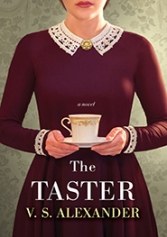
The Taster, by V.S. Alexander

9781496712271
The Taster, by V.S. Alexander

I read V.S. Alexander’s debut novel, The Magdalen Girls last March and got my name on the wait list at the public library for his second book, The Taster, as soon as it appeared “on order” on the electronic card catalog. (See my April 1, 2017 blog post, The Authors I Read in March, if you want to read my thoughts on The Magdalen Girls.)

As with Alexander’s first novel, I had to keep reminding myself that The Taster was a work of fiction. Alexander writes so convincingly that I felt as if I were reading an eyewitness account.

The Taster is the story of a young woman in need of a job and living in Hitler’s Germany. The job she got was not a job she wanted. She was selected to be a food and drink taster for Adolph Hitler. Hitler was mortified of being poisoned, so all his food and drink had to be tasted in advance by a replaceable woman. If a taster died, she could be replaced. Hitler, of course, did not see himself as replaceable.

Since my last blog post

I have received helpful feedback from friends in Australia, Scotland, and Belgium after they read my February 26, 2018 post, Hook in Charles Frazier’s Nightwoods. Thank you, Chris, Iain, and Beth!

Chris Andrews immediately recognized my blunder in summing up the theme of my work-in-progress, The Spanish Coin, in one word. Thank you Chris, for pulling me out of the ditch and putting me back on track!

Thank you, Ann, for signing up for my planned future newsletters.

Until my next blog post

I hope you have a good book to read. I’m reading The Great Alone, by Kristin Hannah and Four Short Stories: In Need of Assistance, Saving the Unicorn, Faerie Blues, and Trophy Hunting, by Chris Andrews. This is a collection of four sci-fi short stories by my Australian writer friend. For those of us in the USA, Chris’s e-book is available on Amazon.com.

51dWqbCdhOL._AC_US218_
Four Short Stories: In Need of Assistance, Saving the Unicorn, Faerie Blues, and Trophy Hunting — by Chris Andrews
9780312577230
The Great Alone, by Kristin Hannah

If you are a writer, I hope you have productive writing time.

If you have not yet signed up for my planned future author newsletters, please take a minute to fill out the form below. I promise my newsletters will be few and far between and your email address will not be used by anyone but me. Thanks!

Janet

← Back

Thank you for your response. ✨