“On a third-floor ledge, threatening”

“On a third-floor ledge, threatening”

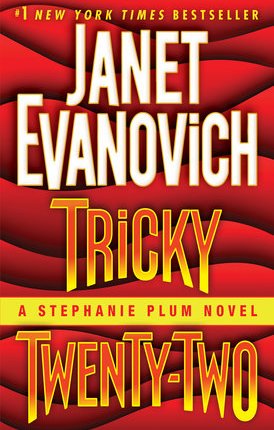
Do I have your attention? Good! That’s the purpose of a hook in a novel. I made a note of this one when I read Tricky Twenty-Two, by Janet Evanovich in 2015:

“Ginny Scoot was standing on a third-floor ledge, threatening to jump, and it was more or less my fault.” – Tricky Twenty-Two, by Janet Evanovich

TrickyTwentyTwo
Tricky Twenty-Two, by Janet Evanovich

After reading that opening sentence, you have to keep reading. The next sentence clarifies things a tad for any reader who has not read any of Ms. Evanovich’s previous 21 Stephanie Plum novels:  “My name is Stephanie Plum and I work as a bounty hunter for my bail bondsman cousin Vinnie.”

I read Janet Evanovich when I want something light and amusing to read. She did a good day’s (years’?) work when she came up with the characters in her Stephanie Plum series. Great character development!

Fans of the Stephanie Plum series know there is a story to follow that hook, no doubt filled with numerous missteps by Stephanie and probably at least one blown-up car. The opening sentence introduces Ginny Scoot to you and tells you she is in dire straits. You wonder what has happened to push her to the edge. What in the world did Stephanie Plum do to cause this crisis?

A good hook grabs you. It gives you just enough information that your curiosity is piqued and you are compelled to keep reading. The first sentence doesn’t have to carry the whole load; however, if the reader isn’t hooked by the bottom of the first page, chances are he or she won’t read the second page. That’s a lot of pressure for a writer!

Since my last blog post

I was fortunate to find one copy of The Carolina Backcountry On The Eve Of The Revolution:  The Journal and Other Writings of Charles Woodmason, Anglican Itinerant, edited by Richard J. Hooker in circulation in the Charlotte-Mecklenburg Library System. It has been useful in my research for the historical novel I’m writing.

More letters have been sent to independent bookstore owners to encourage them to place orders for my vintage postcard book, The Blue Ridge Mountains of North Carolina, as spring is finally approaching in western North Carolina.

I’ve continued to hone my new skill of creating graphics for Pinterest using www.Canva.com. In fact, someone at www.Canva.com saw my last blog post and contacted me. She was complimentary of my blog but requested that I give the whole URL (www.Canva.com) instead of “Canva.com” as I had in my blog. I corrected that in last week’s blog post.

Last week’s blog post, How Can a Writer Use Pinterest?, has only been liked by four other WordPress.com (or WordPress.org) bloggers, so Pinterest doesn’t appear to be a popular blog topic for me. I have gained several new followers via email, though, so perhaps it was of interest of a few people. I’ll be watching my Pinterest analytics to see if my original graphics get any attention.

I read on www.Goodreads.com that Jennifer Ryan is considering writing a sequel to The Chilbury Ladies’ Choir. I commented on how much I liked it in my April 1, 2017 blog post, The Authors I Read in March. I look forward to reading the sequel, if it comes to fruition.

Going off topic

The highlights of my week were seeing several birds that make rare appearances in my yard. First came a male scarlet tanager to get a drink of water on Sunday. Two days later, two male indigo buntings, and a rose-breasted grosbeak came to eat. The grosbeak usually stops by our bird feeder every spring, but he’s just passing through. The indigo buntings graze on the ground under the feeder.

Sometimes the rose-breasted grosbeak stays for two or three days, but this year I only saw him once. He feasted for a good 15 minutes before flying away. Other birds came and went, but he was not deterred. This is much different behavior than is displayed by the northern cardinal. The northern cardinal is the most skittish bird I’ve seen. We have them in abundance.

I’ve only seen indigo buntings a few times in my life, but this was only the second time I’d seen a scarlet tanager. I didn’t get any photographs this time, but I found it interesting when I looked back in my photo files that the indigo bunting and rose-breasted grosbeak showed up on the same day in 2007. I photographed them on May 9 that year. It was the first time I’d ever seen either species.

This year they showed up on April 24. Concluding that the two species apparently migrate together, I did a little research. I learned on https://www.allaboutbirds.org/guide/indigo_bunting (The Cornell Lab of Ornithology) that indigo buntings “migrate at night, using the stars for guidance.” Perhaps it is coincidental that they and the rose-breasted grosbeak both show up in my yard on the same day.

IMG_5092
Male Indigo Bunting, photographed March 9, 2007.
IMG_4992
Male Rose-Breasted Grosbeak, photographed March 9, 2007.

When I chose the topic for today’s post, I had no idea I would include a segment about birds. I selected the above photo of the grosbeak because it was the best picture I took of him. It just occurred to me that he sort of illustrates the title of this blog post. Okay, use a little imagination. Work with me here!

Until my next blog post

I hope you have a good place to watch a variety of birds.

I also hope you have a good book to read. I’m reading the 2018 Pulitzer Prize in Fiction, Less, by Andrew Sean Greer. I’m usually years behind in reading award winners, so I decided to jump right on this one.

If you’re a writer, I hope you have productive writing time.

Feel free to share my blog posts on Twitter, Pinterest, Facebook, or via email.

Thank you for reading my blog! What birds have you seen recently, and what are you reading?

Janet

How Can a Writer Use Pinterest?

I love to make plans. Ask me to plan a trip, and I’ll get into the minutiae of where you’ll be and what you’ll be doing every minute of the day.

My sister is my traveling buddy, and sometimes my attention to detail drives her crazy! On the other hand, she doesn’t enjoy planning trips so she doesn’t complain too much.

In my Reading Like a Writer blog post (“Reading Like a Writer”) on April 9, 2018, I told you that I had developed a social media plan. Making the plan was easy. The hard part came when I entered the implementation phase. Today’s blog post is about the Pinterest aspect of my plan.

Pinterest Best Practices

In the process of developing the plan, I learned the following from Amy Lynn Andrews’ Userletter Issue No. 234 (https://madmimi.com/p/9af10c/):

Kate Ahl recently noted an addition to Pinterest’s own best practices for success: ‘The first 5 Pins you save each day will be prioritized for distribution. Save to the most relevant board first…that Pin will get distribution priority.’”

That was a revelation for me. No more willy-nilly saving pins to my Recipes: Cheesecake Board! Since reading Amy Lynn Andrews’ Userletter, I’ve made myself save five pins to my writing-related Pinterest boards every day before pinning any recipes, quilts, or Maxine-isms.

Old habits are hard to break, so there is definitely a learning curve involved in this.

Advice from Janice Wald

Along the same lines, I learned the following from Janice Wald’s April 7, 2018, Mostly Blogging blog (https://www.mostlyblogging.com/social-media-manager/):

“When I started deleting my boards, Pinterest’s algorithms better learned the content of my niche, and my traffic grew.”

and

“I deleted my boards about food and entertainment, for example. Pinterest will be more likely to show your pins to people if the algorithms know what your site is about.”

and

“I read you’ll get better visibility at Pinterest if it’s clear to the site what your niche is. This makes sense. Search engines show your blog to people when they’re clear what you specialize in.”

That second quote from Janice Wald is a hard pill for me to swallow. I don’t want to give up my recipe and quilting boards. I could make them secret board that only I can see, but I had hoped that when someone looked at one of those boards they’d also notice I wrote a vintage postcard book (The Blue Ridge Mountains of North Carolina) and I’m writing a historical novel (The Spanish Coin) set in the Carolinas in the 1760s.

I’ll have to give that some thought. For the time being, I have 80 boards on Pinterest.

What I’ve Accomplished on Pinterest since Last Monday

I’ve learned how to create my own pins for Pinterest on Canva.com. Those of you who know me, know that I am technologically challenged, so this was no minor feat for me. I am not getting compensated for mentioning Canva; however, I’ve been able to create some pretty cool graphics for free using that website, http://www.canva.com.

How to move graphics from Canva.com to Pinterest

I soon discovered that I didn’t know how to move the graphics I created on Canva.com and saved to my hard drive. A search on Google quickly brought up the instructions. You simply go to the Pinterest toolbar, click on the red “+” sign, and then click on “Upload an image.” (This just might be the first time I’ve been able to give any technology advice to anyone!)

Want to see what I’ve done on Pinterest?

Please go to my Pinterest page (https://www.pinterest.com/janet5049) and look at the graphics I created this past week for the following boards:  The Spanish Coin – My Novel in Progress; Blue Ridge Mountains; Great Smoky Mountains; Books & Authors; and Rocky River Presbyterian Church.

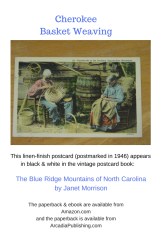
Here’s a graphic I created about my vintage postcard book, The Blue Ridge Mountains of North Carolina, for my Great Smoky Mountains board on Pinterest:

Cherokee Basket Weaving
One of the first graphics I made on Canva.com.

My mistakes

There are lots of things to keep in mind when making a graphic for social media. Looking at the one shown above, I realize using a color background would have made it more eye-catchy, although I think it shows up better on Pinterest than on my blog.

Also, at the bottom of the graphic, I should have included my blog’s URL, my website’s URL, and my handle on Twitter. I have edited it in light of that, in case I decide to reuse it at a later date.

My social media plan for Pinterest

  • Mondays: Pin link to my weekly blog post to Janet’s Writing Blog board (set up to post automatically by WordPress.com) and a colonial history factoid or A Spanish Coin teaser to The Spanish Coin – My Novel in Progress;
  • Tuesdays: Pin a factoid from my vintage postcard book to my Great Smoky Mountains;
  • Wednesdays: Pin a Rocky River Presbyterian Church history factoid from one of my church history booklets to my Rocky River Presbyterian Church;
  • Thursdays: Pin a factoid from my vintage postcard book to my Blue Ridge Mountains;
  • Fridays: Pin a Rocky River Presbyterian Church women’s history factoid to my Rocky River Presbyterian Church & Cabarrus-Mecklenburg boards; OR Pin a Rocky River Presbyterian Church history factoid to my Rocky River Presbyterian Church & Cabarrus-Mecklenburg boards with a link to the church’s website where a copy of Dr. Thomas Hugh Spence, Jr.’s book, The Presbyterian Congregation on Rocky River, can be ordered.
  • Saturdays: Create factoids/infographics for the following week(s).

This is a grand plan for someone with Chronic Fatigue Syndrome, so I know I will not accomplish this every week. I fell short last week even though I was enthusiastic about starting this new plan. I might miss some weeks altogether. The schedule gives me something to aim for, though.

80/20 Rule of Social Media Marketing

I have read in various sources that 80% of your posts on social media should inform, educate, or entertain and only 20% should promote your business. That rule prompted me to strive to shine a light on a book about the history of Presbyterian Women at Rocky River Presbyterian Church or Dr. Spence’s church history book on Pinterest on Fridays.

I wrote neither of the books, and the proceeds from their sales benefit the ongoing work of the Presbyterian Women at Rocky River and the church’s cemetery fund. (The church dates back to 1751 and has several very old cemeteries that have to be maintained.)

My social media plan for Pinterest looks a little out of whack in light of the 80/20 Rule; however, I hope all the pins I create will fall into the “inform, educate, or entertain” categories.

Since my last blog post

In addition to learning how to create my own Pinterest pins and pinning my creations last week, I have continued to work on the rewrite of my historical novel, The Spanish Coin.

Until my next blog

I hope you have a good book to read.

If you’re an avid reader who has never considered the possibilities of using Pinterest, you might want to check it out. You just might find that your favorite authors have pages there and boards about their books. After looking for your favorite authors on Pinterest, please let me know if this was an enjoyable experience for you and specifically what you liked about it.

If you’re a writer, I hope you have productive writing time. Please let me know what your experience has been on Pinterest. If you haven’t thought about using it as part of your writer’s platform, perhaps you’ll consider it after reading this blog post.

Don’t be shy about spreading the word about my blog. Feel free to use the buttons below to put today’s post on Facebook, Tweet about it, reblog it on your blog, or Pin it on Pinterest. Thank you!

Janet

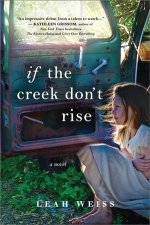
If the Creek Don’t Rise, by Leah Weiss

As an aspiring novelist, I keep a writing notebook. In one section I write down the “hooks” from the novels I read. In the other section, I write down my favorite lines (and sometimes paragraphs) from the books I read.

As I learned from reading Reading Like a Writer: A Guide for People Who Love Books and for Those Who Want to Write Them, by Francine Prose, it’s okay for me to do this. In case you missed it, my April 9, 2018 blog post (“Reading Like a Writer”) is about that book.

If the Creek Don’t Rise, by Leah Weiss

Today’s blog post highlights a couple of my favorite lines from If the Creek Don’t Rise, by Leah Weiss.

9781492647454_custom-d6c5521a37596d30f3f6530e34f92269c4e46367-s400-c85
If the Creek Don’t Rise, by Leah Weiss

The context of the following quote is that many volunteers went to the Appalachian Mountains in the 1960s and 1970s on the heels of the federal government’s emphasis on poverty in Appalachia. In this quote Kate Shaw, the new teacher, is paying Birdie Rocas a huge compliment while reading from one of Birdie’s “Books of Truths” in which the uneducated, eccentric Birdie writes her thoughts and observations.

Here are a couple of lines I really like:

“Do you know the saying, ‘Don’t throw the baby out with the bathwater?’” [Kate Shaw speaking.]

“The teacher in her don’t give me [Birdie Rocas] time to say so when she adds, ‘Well, you write about the baby while everyone else is writing about the bathwater.’” — from If the Creek Don’t Rise, by Leah Weiss

Since my last blog post

I’m excited to report that I’ve written more than 8,000 words in the rewrite of my historical fiction manuscript for The Spanish Coin! After getting bogged down in outlining and writing profiles for each of the novel’s characters, it was refreshing to get back to work on the rough draft.

After learning that the location of my fill-in format sign-up form for my sometime-in-the-future newsletter mailing list was causing confusion for readers wanting to leave comments on my blog posts, I tried to figure out how to move the mailing list form to a sidebar. The operative word there is “tried.” You know I’m not very computer savvy, so bear with me on this. I’m not a quitter.

To avoid confusion, I will not include the mailing list sign-up form in today’s blog post.

Until my next blog post

I hope you have a good book to read. I’m reading The Hush, by John Hart. It’s a sequel to his 2009 Edgar Award winning novel, The Last Child.

I’m also reading Look for Me, by Lisa Gardner.

If you’re a writer, I hope you have quality writing time, and I hope you and I will strive to write about the baby more than we write about the bathwater.

What are you reading?

Janet
“Reading Like a Writer”

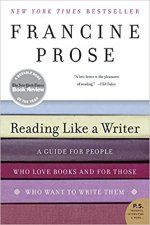
In my last two blog posts I’ve written about the books I read in March. Last Monday’s post was nearing 2,000 words, so I decided to save my comments about Reading Like a Writer:  A Guide for People Who Love Books and for Those Who Want to Write Them, by Francine Prose, for today. I’ll just hit some of the highlights.

Reading Like a Writer 5182EVgCeCL._SX330_BO1,204,203,200_
Reading Like a Writer, by Francine Prose

Chapter One:  Close Reading

I read and took copious notes from the first four chapters of this book and perused the rest of it. As an aspiring author, I loved how the first chapter confirmed that I read like a writer. It’s called “close reading,” and it means reading every word for the pleasure of getting every phrase – being conscious of such things as style, sentence formation, and how the author creates characters.

Based on what Francine Prose wrote, I no longer need to apologize for reading slowly. I’m trying to hone my craft by reading published writers.

Chapter Two:  Words

In the second chapter of Reading Like a Writer, the author recommends that you read slowly enough to read every word. She compares the language a writer uses to the way a composer uses notes and a painter uses paint.

To paraphrase Ms. Prose, reading to appreciate the writing is akin to not only admiring a beautiful painting from afar but also close up so you can see the brushstrokes.

I also appreciated Ms. Prose’s thoughts on the advice often given to writers, which is “Show, don’t tell.” Ms. Prose says this much-repeated advice confuses novice writers. I can vouch for that.

In editing my earlier manuscript for The Spanish Coin (before I started the complete rewrite), I took the “show, don’t tell” advice to the extreme. I was ruthless in cutting narrative, thinking I could best “show” through dialogue. It was all part of the learning process. Ms. Prose’s take on this is that showing is best done through “the energetic and specific use of language.”

Chapter Three:  Sentences

If I had known I would someday want to be a writer, I would have paid more attention in the 8th grade when we had to diagram sentences. I wasn’t very good at it, and I really didn’t see the point.

I hadn’t thought about sentence diagramming in years until I got to the third chapter of Ms. Prose’s book. She wrote about the value of diagramming sentences, and what she said makes sense to me now.

She lamented the fact that students are no longer taught to diagram sentences. Her explanation that sentence diagramming provides for the accounting of every word and provides a way “to keep track of which phrase is modifying which noun” gave me a way of understanding the value of the exercise that I could not have appreciated as an eighth grader.

I probably couldn’t diagram a complex sentence today if my life depended on it, but Ms. Prose might just be onto something when she insinuates that having that skill would help a writer.

This weekend I happened upon an article from the Huffington Post about diagramming sentences. Here’s the link, if you wish to take a look:  https://www.huffingtonpost.com/2014/10/01/diagram-sentence-grammar_n_5908462.html.

A word of warning, though, for those of you of “a certain age.” Reading the Huffington Post article, I soon felt like I’d entered a time warp. I don’t think our sentences had “complements” when I was in the 8th grade.

Chapter Four:  Paragraphs

In the fourth chapter of the book, Ms. Prose quotes master short story writer, Isaac Babel:

“’The breaking up into paragraphs and the punctuation have to be done properly but only for the effect on the reader. A set of dead rules is no good. A new paragraph is a wonderful thing. It lets you quietly change the rhythm, and it can be like a flash of lightning that shows the same landscape from a different aspect.’” – Isaac Babel

In all the various English courses I have taken, I don’t recall any teacher or professor ever saying to break for a new paragraph “only for the effect on the reader.” I’m still letting that sink in. It’s refreshing and freeing to think about it. It is for the writer to determine which rules are dead as far as her editor is concerned.

Chapter Seven:  Dialogue

Characters in a novel should “say what they mean, get to the point, avoid circumlocution and digression.”

Chapter Eight:  Details

Another interesting observation Ms. Prose makes is about details and the truth. She observes that details persuade that the truth is being told.

She points out that a piece of clothing can speak volumes about a character’s circumstances.

Chapter Eleven:  Reading for Courage

Continuing to fly in the face of common advice given to writers of fiction, Ms. Prose suggests that the trend in modern fiction that characters in a novel must be nice in order for the reader to identify with them is possibly not true.

She also says it’s not necessarily true that every loose end in a work of fiction needs to be tied up neatly by the end.

What a relief to read those last two theories! My characters don’t have to be nice in order for the reader to identify with them, and all the loose ends don’t have to be tied up at the end of the novel? This is in opposition to what I learned in fiction writing class back in 2001.

“Words,” by Dr. R. Brown McAlister

Chapter Two in Ms. Prose’s book brought to mind the title of the remarks made by one of the two guest speakers at my high school graduation. Dr. R. Brown McAllister, a beloved icon in Cabarrus County Schools at the time, had retired after many decades of teaching and working as a school administrator, and he had a dry but keen sense of humor. The printed program for the graduation ceremony listed “Words,” by Dr. R. Brown McAllister.

In his deadpan way, Dr. McAllister went to the podium and said something like, “I was asked to talk about words, so here I am.” That was in 1971 and I still don’t know to this day if he was asked to talk about words or to say a few words.

The more I attempt to be a writer and the more I read, the more I appreciate words.

Since my last blog post

I have made a social media plan and made an effort to do more on Twitter (@janetmorrisonbk), my writing-related boards on Pinterest (https://www.pinterest.com/janet5049), and my Janet Morrison, Writer page on Facebook. Implementing the plan will be a challenge but I’m told I must get my name out there if I hope to sell any copies of The Spanish Coin if and when it gets written and published.

I did not get much reading done last week, but I’m trying to learn that I can’t do everything I want to do. I can’t even do everything I need to do.

Until my next blog post

I hope you have a good book to read. I’ve just started reading Every Note Played, by Lisa Genova.

every-note-played-9781476717807_lg
Every Note Played, by Lisa Genova

If you’re a writer, I hope you have quality writing time

If you haven’t signed up for my sometime-in-the-future newsletters, please do so by completing the form below.

Janet

← Back

Thank you for your response. ✨

More March 2018 Reading

March brought a return of cooler weather than we had in February in North Carolina. It also brought a stack of good books. I blogged about some of them last Monday (Some March Reading), and today I’m blogging about the rest of those that I read last month.

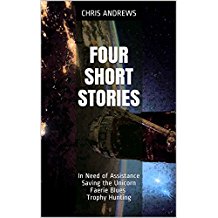
Four Short Stories:  In Need of Assistance, Saving the Unicorn, Faerie Blues, and Trophy Hunting, by Chris Andrews

51dWqbCdhOL._AC_US218_
Four Short Stories: In Need of Assistance, Saving the Unicorn, Faerie Blues, and Trophy Hunting — by Chris Andrews

Science fiction and fantasy are not my reading genres of choice, but Chris Andrews and I connected with each other in the blogosphere as two struggling writers. (Actually, I’m struggling. I’m not so sure about Chris.) We live in different hemispheres but I have learned a great deal from him about writing. He recently published an e-book of four short stories and I was eager to read them.

“In Need of Assistance” leads off the short story collection. Well written and suspenseful, this person (me) who never reads sci-fi got pulled into the story and thought it ended too soon. In other words, I wanted to know what happened next.

The second story in this e-book is “Saving the Unicorn.” It is about a magician who travels 4,000 years back in time to free the last unicorn…. or is it?

“Faerie Blues” is the third story in Chris’ book. The identity of the faerie is a surprise.

The fourth and last story in the book is “Trophy Hunting.” This story is survival of the fittest with a twist.

Following the four short stories are the first seven chapters of Chris’ novel, Divine Prey, which is due for release in May 2018.

The Atomic City Girls, by Janet Beard

eab4a7_c9917d9d0c7541d78ad2e521dec6aa5d~mv2_d_1783_2700_s_2
The Atomic City Girls, by Janet Beard

This historical novel was inspired by the creation of Oak Ridge, Tennessee during World War II and the top-secret work carried on there in the development of the atomic bomb.

Ms. Beard invented characters from all walks of like and guides the reader to like most of them and identify with them as much as is possible for we who live in a different time. I liked that she included the black people as well as the white people who lived and worked at Oak Ridge because, as much as they had in common, their housing and treatment by the US Army was quite different. It was in the racially segregated South and the book stands as witness to the prejudice and unequal treatment that existed legally at that time.

The author included not only Christians but an atheist and a Jewish physicist. This book’s cast of characters runs the gamut from redneck bigot to the Jewish scientist whose family had surely died in Germany during the War. True to the history of the facility at Oak Ridge, some characters are poorly educated while others are highly educated, but the emphasis is on the everyday people who worked there and did not know what they were working on.

Ms. Beard follows each character and through them she allows the reader to experience World War II on the home front in the USA and through the stress and struggles of the people who worked in complete secrecy at Oak Ridge. She brings to life the inevitable inner conflicts experienced by some of the scientists who worked there and at Los Alamos, New Mexico as they were simultaneously excited by the physics of the atomic bomb and yet horrified by the realities of what the unleashing of such a weapon would mean and the suffering it would cause for thousands of innocent people.

I never had really thought about how conflicted some of those scientists must have felt. I’d also never given much thought to how many thousands of people worked at Oak Ridge and the majority not knowing they were working on developing an atomic bomb until the day the first one was dropped on Hiroshima.

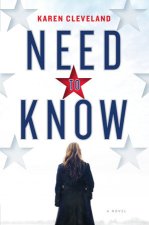
Need to Know, by Karen Cleveland

9781524797027
Need to Know, by Karen Cleveland

This is a debut novel by Karen Cleveland. It has received rave reviews from highly-respected authors, so I was eager to read this espionage thriller. After having read it, all I can say is, “Wow!”

Written by a former CIA analyst, this novel has a female CIA analyst working in a division studying Russia and looking for Russian sleeper cells in the USA. I don’t want to spoil the story for you, so I’ll just say her marriage and work ethic are tested to the limit.

This novel will make you wonder who you can trust. It is the story of betrayal on many levels, and it will keep you turning pages and wishing you didn’t have to stop to eat, sleep, or work. If you like to read espionage thrillers, you will love this book.

A Piece of the World, by Kristina Baker Kline

167463
A Piece of the World, by Christina Baker Kline

We’re all familiar with Andrew Wyeth’s most famous painting, “Kristina’s World.” This historical novel is based on the imaginary life of the woman lying in a semi-prone position in the grass on the hillside below the house in that painting.

The author, who also wrote The Orphan Train, did a beautiful job developing the characters in A Piece of the World. They were so believable, the reader will forget the book is fiction. The woman in the painting, Kristina, becomes increasingly disabled due to an unknown condition affecting her legs. She lives in the grey clapboard house on the hill as depicted in the painting. Unable and unwilling to empathize with their daughter, Kristina’s parents do little to try to get her help.

Drawn to the feel and essence of the old house, Andrew, the son of artist N.C. Wyeth comes and asks if he can paint. He sketches and paints Kristina’s brother, but the brother has little patience for posing so Kristina becomes his most consistent model. He continues his work for years.

Kristina falls in love, but is it with Andrew? I’ll leave that for you to discover if you choose to read the book.

Another Ocean to Cross, by Ann Griffin

Another Ocean to Cross by Ann Griffin
Another Ocean to Cross, by Ann Griffin

After reading Ann Griffin’s guest blog post on Writers in the Storm about how to or how not to use family history in your fiction (http://writersinthestormblog.com/2017/12/writing-fiction-using-family-history/), I pre-ordered her debut historical novel, Another Ocean to Cross. I followed her blog and she, subsequently, followed mine.

In Another Ocean to Cross, Ann Griffin weaves a compelling story about 18-year-old Renata Lowenthal, a Jewish woman desperate to escape Germany in 1938 as Hitler makes life ever-more tenuous for the Jewish population. Renata is an artist and her gentile boyfriend is in the military. He has to leave Munich, but he is smuggling Renata’s renderings of the Third Reich’s mistreatment of Jews to journalists in Switzerland.

No matter what the world throws at Renata, she meets the challenge.

The descriptions in this book are vivid and draw on all the senses. Being about the Jews who escaped to Egypt, this book enlightened me about an aspect of World War II that I hadn’t known much about.

Renata struggles to convince her parents that it is imperative that they get out of Germany and try to get to Palestine before it’s too late to escape. The tale Ms. Griffin spins will keep you turning the pages of this book and staying up at night to read just one more chapter. I will not give more details because you will want to read this novel and I don’t want to take away any suspense for you. It will take you and Renata to some surprising locations.

Reading Like a Writer:  A Guide for People Who Love Books and for Those Who Want to Write Them, by Francine Prose

In case your eyes have glazed over, I’ll save my comments about this book until next Monday’s blog post.

Since my last blog post

I have continued to read about writing and study areas I need help with. I have worked on my outline for The Spanish Coin, the working title for what I hope will be my first novel.

One of my readers reported difficulty in getting my comments section below to work. If you have trouble with it, too, please send me a message through the contact form/newsletter sign-up sheet below. I’m sorry for any inconvenience.

My blog steadily attracts more readers and followers, which is gratifying. One new reader and follower, Neil, also signed up for my sometime-in-the-future newsletters. Thank you, Neil.

Until my next blog post

I hope you have a good book to read. I’m reading The Last Child, by John Hart, so I’ll be ready to read The Hush in a few weeks.

If you’re a writer, I hope you have productive writing time

If you haven’t signed up for my sometime-in-the-future newsletters, please do so by completing the form below.

Janet

← Back

Thank you for your response. ✨