#OnThisDay: USS Indianapolis

I’m embarrassed to admit that I did not know anything about the USS Indianapolis until about a week ago. In an effort to try something new on my blog, I did a little research to find out what happened on this day in history. I learned that something noteworthy and gut-wrenching happened on this day in 1945. What a story I’ve pieced together for you today!

The incident I’m writing about today actually took place about five minutes after midnight, so the date is July 30, 1945; however, being so close to the midnight hour, the incident is often referred to as happening on July 29. By the time I discovered that detail, I was not about to let go of the story for my usual Monday blog post.

The greatest loss the US Navy has experienced at sea

The USS Indianapolis was a Portland-class heavy cruiser. It carried a crew of 1,196 men. After delivering crucial parts for the atomic bomb to Tinian Island, it was crossing the Philippine Sea en route to Okinawa. Plans were being made for the invasion of Japan by the United States and its Allies.

12:05 a.m., July 30, 1945

Generic photo of sharks. Photo by Jakob Owens on Unsplash.

At 12:05 a.m. on July 30, 1945, the ship was hit by two Japanese torpedoes. Some 350 crewmen died in the blast. It would be 84 grueling hours before the survivors were located from the air on August 2. By then there were only 318 remaining survivors. The other survivors of the initial attack had either drowned, died from drinking sea water, or been victim to the numerous sharks in the waters. I read that an estimated 50 sailors were killed by sharks every day until rescuers arrived.

What happened to the commanding officer?

In my research I found several follow-up stories about what happened to the commanding officer of the USS Indianapolis, Charles B. McVay. He was accused of putting the ship and crew in danger by not zig-zagging across the sea. He was threatened with a court-maritial, but in the end was given a reprimand. His conviction as being at fault in the attack continues to be fought against, as there are strong opinions that he was wrongly charged.

Annual survivor reunions

Every year since 1960, the survivors of the attack have held a reunion in Indianapolis, Indiana. This year was no exception. There are only 12 survivors alive today. Seven of them got together in Indianapolis last weekend to remember their World War II experiences and, no doubt, to count their blessings.

I found a wonderful account of this year’s reunion, including a video clip, on the website of the NBC affiliate in Indianapolis, WTHR:  https://www.wthr.com/article/uss-indianapolis-few-remaining-survivors-gather-reunion-indy. I hope you’ll take time to look at it.

As is indicated in that WTHR piece, the youngest living survivor is 92 years old, being just 17 at the time of the attack.

Wreckage located in 2017

The wreckage of the USS Indianapolis was found just two years ago in 18,000 feet of water. Andy J. Semotiuk wrote an article about that discovery in the August 21, 2017 edition of Forbes. Here’s a link to that article, https://www.forbes.com/sites/andyjsemotiuk/2017/08/21/the-story-of-the-uss-indianapolis-a-display-of-great-heroism-in-times-of-unimaginable-anguish/#1eea400a6f9e, which contains a link to a video of the discovery.

Additional sources of information about the USS Indianapolis

Another short video about the sinking of the USS Indianapolis can be found at https://www.smithsonianmag.com/videos/category/history/uss-indianapolis-crew-battled-sharks-and-hal/.

A 90-minute TV program aired here on PBS in January, but I missed it. Here’s a link to a source from which you can order the DVD:  https://www.pbs.org/video/uss-indianapolis-the-final-chapter-aabbsw/.

Additional sources of information about the USS Indianapolis include the following books:

 In Harm’s Way:  The Sinking of the U.S.S. Indianapolis and the Extraordinary Story of Its Survivors, by Doug Stanton;

Abandon Ship!  by Richard F. Newcomb;

Out of the Depths:  An Unforgettable WWII Story of Survival, Courage, and the Sinking of the USS Indianapolis, by Edgar Harrell USMC, with David Harrell;

Fatal Voyage:  The Sinking of the USS Indianapolis, by Dan Kurzman; and

 Indianapolis:  The True Story of the Worst Sea Disaster in U.S. Naval History and the Fifty-Year Fight to Exonerate an Innocent Man, by Lynn Vincent and Sara Vladic.

I haven’t read any of them, but they sound like good reading for anyone who wants to know more about this horrific incident during World War II.

Since my last blog post

I’ve completed Karen Cioffi-Ventrice’s online course, “Building an Author/Writer’s Platform.” Part of it really taxed my brain, but I learned a lot. Some of it I won’t be able to put into practice until I’m a little closer to getting my novel published, but a great deal of it I’ve already started working on or doing.

In case you’re interested in taking the course or other courses offered by Karen Cioffi or others through Women on Writing, here’s a link: https://www.wow-womenonwriting.com/.

I learned a lot of SEO (search engine optimization) and I even learned what black hat SEO and white hat SEO are. If you recall, I mentioned black hat SEO in my blog post on April 29, 2019 (https://janetswritingblog.com/2019/04/29/what-triggered-last-mondays-rant/) when I didn’t have a clue what it was. White Hat SEO is doing search engine optimization the ethical way. Black hat SEO is doing it unethically.

Until my next blog post

I hope you have a good book to read. I just finished listening to The Spies of Shilling Lane, by Jennifer Ryan. I thoroughly enjoyed it. Tune in next Monday for my blog post about the books I read in July.

If you’re a writer, I hope you have quality writing time this week.

Thank you for taking the time to read my blog. You could have spent the last few minutes doing something else, but you chose to read my blog.

Let’s continue the conversation

Do you enjoy occasional looks back at what happened on a particular day? If I get good response, I’ll plan other blog posts like this one. A post like this once a month might work for you and me.

Janet

P.S.  A new USS Indianapolis will be commissioned this fall.

Is it self-discipline or self-love a writer needs?

Is it self-discipline or self-love a writer needs?

Everyone needs self-discipline, and most of us learn it from an early age. Daily schedules must be met even by infants. At my age, one would think self-discipline would no longer be an issue.

I’m in awe of writers who also have full-time jobs. They have to be intentional in finding time to write. When I hear a writer say she gets up two hours earlier than is otherwise necessary every morning in order to write, I’m blown away. I’m not a morning person and the thoughts of getting up two hours earlier than necessary send shivers down my spine. Plus, there’s no way I could write a complete sentence in the early morning hours. My hat’s off to each and every writer who has to do this.

Being retired, I have “all the time in the world.” For that, I am the envy of every working person. If I only had “all the energy in the world” or the energy of an average child or teen, I’d be living in a perfect bubble.

Deadlines

Photo by Tim Gouw on Unsplash

I’ve always been motivated by deadlines. I finished term papers the night before they were due. I tend to finish (or not finish!) reading library books the night before they’re due. Self-imposed deadlines don’t usually work for me.

Every time I’ve tried to work out a writing schedule on paper, I’ve had limited success. I tend to over-schedule my days. Now that I have the freedom to do as I please, I want to do it all. I can’t do it all, and that’s a lesson I’m trying to learn. Everything takes longer than I think it will take.

Is writing my job?

Photo by LinkedIn Sales Navigator on Unsplash

Everything I’ve read about writing and self-discipline says a writer must have it. Without self-discipline, the writing won’t get done. I’ve read that I must treat my writing like it’s my job. I’ve taken these adages as truth, but I’m here today to rock the boat.

I never had a job I truly enjoyed, so the word “job” carries negative connotations for me. I love to write and I enjoy doing the research historical fiction calls for. When my writing or research becomes a job, I’ll probably lose interest and move on to something else. The problem with that is:  I can’t imagine not writing.

Self-discipline tips

I’m probably the last person who needs to give others self-discipline tips or advice; however, I can’t be the only person out there with the same or similar roadblocks. Illness happens, and age slows most of us down.

Trouble with self-discipline and things I’m feeling pressured to work on:

1.  Writing Time

2.  Building My Writer’s/Author’s Platform

3.  Sleep  

4.  Reading Time

5.  Weight

All five things I listed above require self-discipline. What I’m seeking is a balance of self-discipline and self-love. I must love myself and like myself before I can find productive self-discipline. What part does motivation play? If I’m happy with myself, I’ll be more productive.

Making time to write

Photo by Hope House Press – Leather Diary Studio on Unsplash

Instead of scheduling writing time each day, I think I’ll write better quality prose if I give myself the freedom to write when the mental and physical energy come together. That might not happen every day. Criticizing myself on the days those don’t come together is not productive. Most days I’m in a brain fog, and there’s no point forcing creativity.

Making time to build a writer’s platform

I’m taking an online course about building a writer’s platform. I’ve learned that I’m doing some things right, but there are many things I need to start doing. It seems overwhelming, but I’m learning a lot about what an author needs to include in his or her website and blog.

Photo by Jamie Street on Unsplash

I have a couple more weeks to complete the course. It will take longer than that to implement all the things I’ve learned. What I’m trying to learn is to not be too hard on myself about the things I don’t get done. Again, that’s not productive. I need to concentrate on what I do accomplish.

If you want to know more about the course I’m taking, here’s a link: https://www.wow-womenonwriting.com/. Click on “Classes” and then scroll down. The course I’m taking is Karen Cioffi’s “Build Your Author/Writer Platform.” It’s offered again in September and November.

Sleep

I have a medical condition that mess up my circadian rhythm. After 32 years of wrecked sleep, I’m going to a sleep coach. She’s helping me get on a regular sleep schedule.

Photo by Alexandra Gorn on Unsplash

The process involves getting a certain amount of full-spectrum sunlight for at least 30 minutes in the morning and in the evening, eating meals and carbohydrate snacks at prescribed intervals, dimming the lights and not sitting near the TV for three hours before bedtime, not looking at an electronic screen for two hours before going to bed, getting up and going to bed at the same time every day, and turning the lights out at an appointed time to make my bedroom so dark I literally can’t see my hand in front of my face.

Not looking at my computer or my tablet for two hours before bedtime and getting up at the same time every morning have been the most difficult facets for me.

As of last week, I’m supposed to drastically curtail my “to do” list and allow myself more time to accomplish each task. You see, each thing I’m feeling pressured about relates to getting my sleep regulated. Getting my sleep regulated will give me the opportunity to have a better quality of life and will make it easier for me to do the things I want to do.

Making time to read

Photo by Glen Noble on Unsplash

In order to be a good writer, I need to be an avid reader. For a couple of months now, I can’t seem to set aside enough time to read what I want to read, or I fall asleep with the book or e-reader in my hands. (Those “dim lighting for three hours before bedtime” and “no electronics for two hours before bedtime” rules aren’t helping!)

Since I report on my blog the books I’ve read, my reading is in some ways becoming a job. I don’t want to feel that way about reading, so I might lighten up on my TBR (To Be Read) list. If the books on my TBR were gathered together instead of just being a list, they would probably look something like the above photo!

Weight

Photo by i yunmai on Unsplash

I need to lose weight. I’m trying to limit myself to 1,200 calories each day. Most days I’ve succeeded, but I’ve only just begun. Counting calories is a time-consuming endeavor, but I need to do this before things get out-of-control.

Until my next blog post

The Spies of Shilling Lane, by Jennifer Ryan

I hope you have a good book to read or listen to. I’m listening to The Spies of Shilling Lane, by Jennifer Ryan.

If you’ve been following my blog for a while, you might recall that I first mentioned Jennifer Ryan and her debut novel, The Chilbury Ladies’ Choir, in my March 10, 2017 blog post (https://janetswritingblog.com/2017/03/10/11-things-ive-learned-about-social-media-since-february-21-2017/) and again in my April 1, 2017 blog post (https://janetswritingblog.com/2017/04/01/the-authors-i-read-in-march/) when I reviewed that book.

If you’re a writer, I hope you have the self-love, self-motivation, and self-discipline to finish your current WIP (Work in Progress.)

Thank you for reading my blog. You could have spent the last few minutes doing something else, but you chose to read my blog.

Let’s continue the conversation

Photo by Jessica Lewis on Unsplash

Do you schedule reading and/or writing time? If so, how is that working for you? What works for you?

Janet

#FixYourNovel #2: Scene Outline

From the beginning in June of 2010, this blog has generally been about my journey as a writer. It hasn’t been a smooth ride so far, and some days the destination doesn’t appear any closer than when I began.

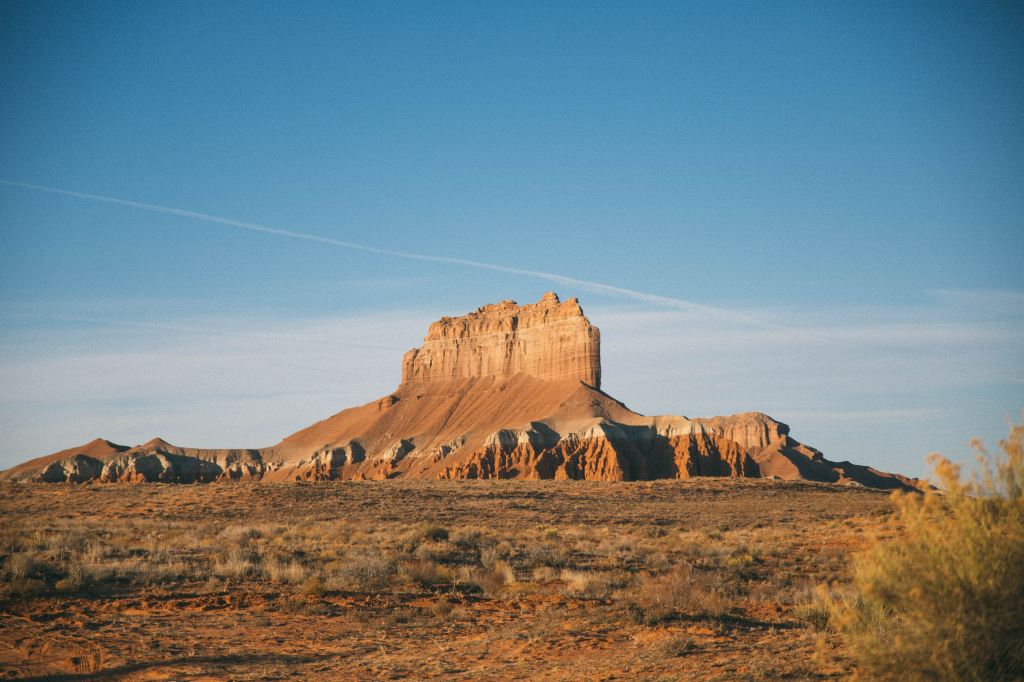
This reminds me of an experience my sister and I had on a trip to the western part of the United States a few years ago. We saw our first butte. It didn’t look more than a mile or two away, so we turned off onto a dirt road that looked like it would take us to the butte. We don’t have buttes in North Carolina, so we wanted to see one up close.

Photo by Greg Rakozy on Unsplash

After driving on this straight, flat road for a half hour or so, the butte didn’t look any closer than it had when we turned off the main highway. We gave up on reaching the butte and turned around.

As for the manuscript for my Doubloon novel, I haven’t given up and I haven’t turned around. I don’t think I could, even if I wanted to. I’m still learning about the work that has to be done after the rough draft is finished.

Scene Outlines

In my mind I thought I could evaluate every scene in my novel manuscript of more than 90,000 words by mid-July and be ready to send a detailed scene outline to a professional editor for a critique. In the meantime, I discovered a scene outline template on C.S. Lakin’s website.

(Ms. Lakin’s February 1, 2016 blog post, “Using a Scene Template to Craft Perfect Scenes” can be found at https://www.livewritethrive.com/2016/02/01/using-a-scene-template-to-craft-perfect-scenes/#more-7387, in case you’re interested in looking at her template. Click on “Resources” and scroll down to the clickable list of free writing resources she offers.)

I wrote an outline before writing the rough draft of the The Doubloon. After finishing the rough draft, I modified my outline into a scene outline for reference purposes. Then, I found Ms. Lakin’s template. It includes details and questions I hadn’t thought about being part of a scene outline.

Expanding my outline based on Ms. Lakin’s template has been a beneficial process because it makes me state how each scene drives the plot forward, what background details are revealed, and how the point-of-view character grows or changes. It might even tell me that one or more scenes aren’t necessary.

Novel readers won’t stand for boredom.

With today’s blog post topic in mind, I wanted to see what other writing experts had to say. My basic takeaway from K.M. Weiland’s June 17, 2019 blog post, https://www.helpingwritersbecomeauthors.com/how-to-write-interesting-scenes/ was that every scene needs to hold the reader’s attention.

Ms. Weiland goes on to list five things every scene should contain. She wrote, “Basically, the art of writing interesting scenes is the art of preventing reader boredom.”

Douglas W. T. Smith is an Australian fantasy author. In his blog post on May 29, 2019, “How To Bring Life And Fluency to Each Scene In Your Novel” (https://dwtsmith.wordpress.com/2019/05/29/how-to-bring-life-and-fluency-to-each-scene-in-your-novel/)  he gave four important tips for writing scenes.

My favorite takeaway from Mr. Smith’s blog post was “Each scene should stand alone, make it dazzling enough to inform your reader of the necessary plot information, exciting enough to create interest and interesting enough to cause the reader to keep going.”

I will continue to work on my scene outline. As a hope-to-be debut novelist with my The Doubloon manuscript, I think it’s a good idea for me to hire a professional editor to evaluate my scene outline. I’ll let you know when that happens.

In case you missed #FixYourNovel #1:  Read it Aloud

Here’s the link to my May 24, 2019 blog post:  https://janetswritingblog.com/2019/05/27/fixyournovel-1-read-it-aloud/.

Until my next blog post

I hope you have a good book to read. I’m still pulled between several books and not able to finish any of them.

If you’re a writer, I hope you have productive writing time.

Thank you for reading my blog. You could have spent the last few minutes doing something else, but you chose to read my blog.

Let’s continue the conversation

What are the “buttes” in your life – those things you want to accomplish that seem to always be out of reach?

Janet

Ride of a Lifetime!

One of my regular blog readers suggested months ago that I should put a sample of my writing on my blog. I couldn’t decide what to use. The short stories I’ve written are too long, unless I turn one of them into a series. That’s still a possibility.

That reader’s suggestion wouldn’t let me go. I finally ran out of excuses, so today I’m sharing a story I wrote a few years ago. It’s not fiction. It really happened. It was one of the most harrowing experiences of my life.

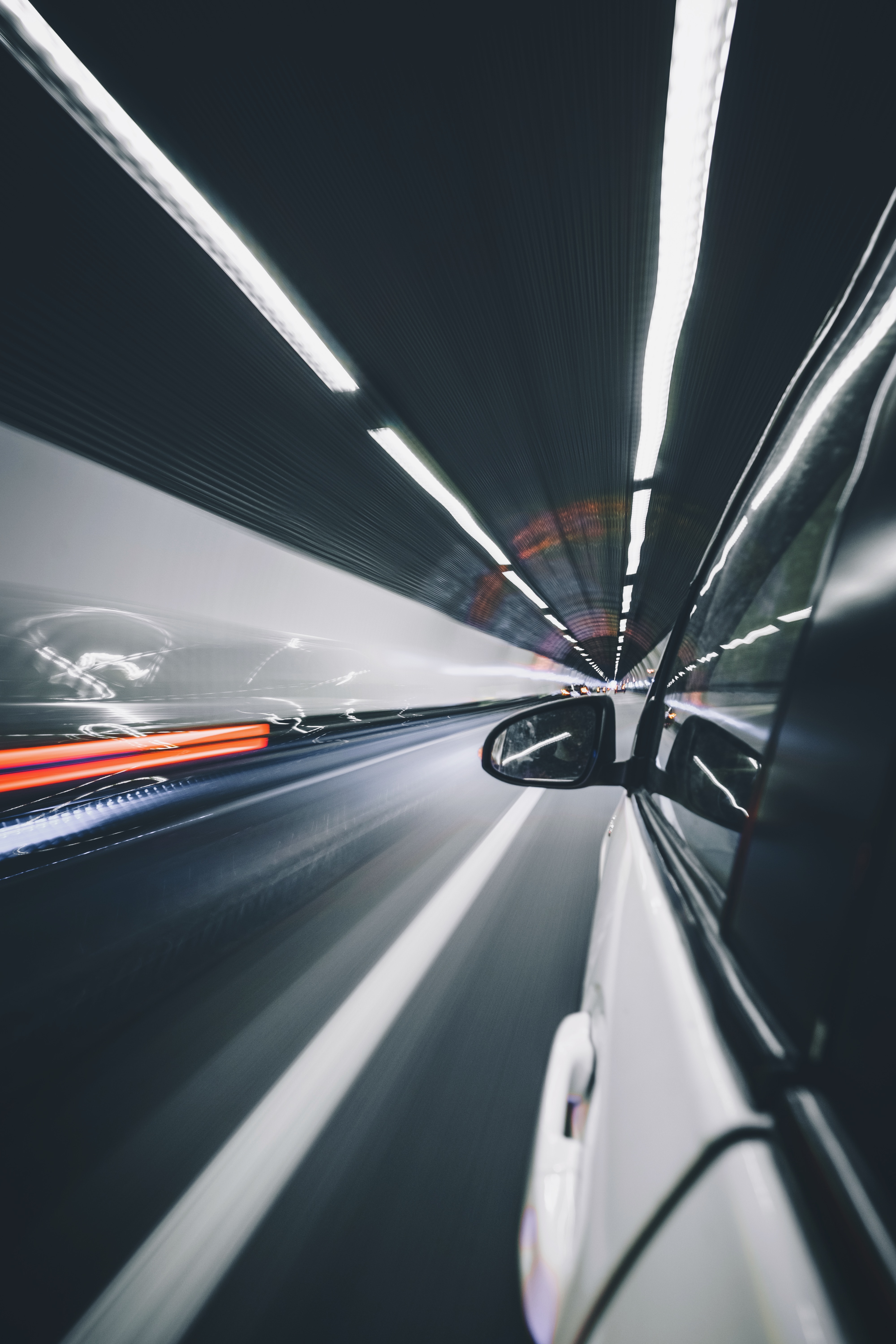
Photo courtesy of Alessio Lin on Unsplash.com.

“Ride of a Lifetime!” by Janet Morrison

                My morning did not get off to a good start. I had an 8:30 appointment to get my car oil changed, although I am not a morning person. It was one of the coldest mornings of the winter. I reached for my cell phone, only to discover the battery was dead. I plugged it into the charger and went out to start my car. It was going to be a typical Monday, or so I thought.

                I cranked up the engine so it could warm up while I scraped the heavy frost off the car windows. Vrooooom! The engine roared as if it would leap out from under the hood. The tachometer momentarily shot up to peak range, indicating the cold engine was racing at 5,000 revolutions per minute. But, as suddenly as the engine erupted at top speed, with a quick tap of my foot on the gas pedal, it dropped down to a normal idle.

                While I cleared the frost from the windows, the engine purred. I could not have anticipated the wild ride that lay ahead of me. I buckled my seatbelt, and eased out the gravel driveway. There was very little traffic that time of the morning on the country road. School traffic had long since passed, as had everyone needing to get to work in Charlotte by 8:30 or even 9:00 a.m.

                My car only reached 25 miles per hour before I got to the stop sign less than a quarter mile up the road.  I made a right turn.

                Suddenly, the car accelerated beyond my intentions. The gas pedal depressed and pulled away from my foot. The 45 mile per hour speed limit sign blurred as I sped by it going 60. I pumped the brake and slowed the car just enough to round a ninety degree curve. As soon as I let up on the brake, the speedometer again shot up to 60 miles per hour.

                Fortunately, I was familiar with every twist, turn, and pothole in the route that lay ahead. The road in front of me played in my head like a movie. Where could I safely get off the road? All the while, I pumped the brake in hopes the problem would correct itself. What in the world was wrong with my car? I wondered if I would live to tell the story.

                Just then I came up on a side road that met my way at a T-intersection. I guess the unsuspecting driver of the car that approached on the side road assumed I was traveling at the posted speed limit and was in control of my car. He pulled out in front of me.

                “If you only knew!” I screamed, still riding the brake to keep the car under 60 miles per hour.

                My luck held, as the other driver disregarded the posted speed limit and was soon a safe distance ahead of me. But, being familiar with the road, I knew my joy ride would end soon, one way or another. Five driveways and two subdivision entrances lay ahead before a hill and a traffic light at a four-lane highway.

                “Lord, please get me out of this predicament,” I prayed aloud, hands white-knuckled from gripping the steering wheel. My right foot continued to pump the brake. I visualized the wide but short shoulder on my side of the road at the coming intersection. Meanwhile, the engine continued to roar and the tachometer needle was all over the dial.

                I had both feet on the brake pedal and was practically standing up in the car as I crested the hill. The drivers of the cars in my path were blissfully unaware of the impending danger. The shoulder of the road was still narrow. A deep ditch dropped off beyond. The speedometer held in the mid-20s, but hitting the ditch at that speed would mean certain death in my compact car.

                “Please, Lord, help me get this car stopped!”

                The red traffic light came up fast. The line of cars sat motionless. Then, just when I had to turn the wheel and take my car off the road to avoid causing a six-car pile-up, I came to the wide section of road shoulder. Unable to get the car slowed below 25 miles per hour, I slammed the gear stick into “park.” The car made an awful noise before it stopped a few feet short of a utility pole.

                My ride lasted no more than three minutes and covered two and half miles, but it seemed to last an eternity with me not knowing what the final outcome would be. I was safe, though, and no one or their property had been injured.

                Another motorist let me use his cell phone to call the automobile club. In a few minutes my car was towed to the garage where they expected me for an oil change.

                I nervously waited for the mechanic to check out my car and tell me I had done major damage by stopping it the way I did. My car was old and I had visions of the repair estimate exceeding the value of the car. I braced myself for the bad news.

                It turned out that my transmission and engine suffered no damage and the cause of my runaway engine was an inexpensive and easy problem to fix. A squirrel had chewed a hole through my air filter and stored several cups of acorns on the engine. One of the acorns had fallen into the throttle and lodged there. The throttle was wide open and could not close. A squirrel and a tiny acorn could have cost me my life!

                A number of well-meaning people have asked me why I did not just turn off the ignition to stop the car in the road. Their insinuation is that doing so would have been the logical thing to do; however, my mechanic said I did the right thing. If I had turned off the ignition, I would have lost my power steering. My mechanic also said it is easy for others to speculate about what they would have done in my situation but, until you are hurtling down a country road with no way to stop your car, you do not know what you would do.

                For many months, I thought about that incident every time I got in my car. Would it happen again? Actually, it did, on a six-lane highway in Charlotte. But that’s a whole other story.

                For a long time, every time I saw a squirrel in the yards I wondered, Are you the one? I think the culprit moved on to bigger and better things, though. I could have sworn I saw him in a car insurance commercial. You know the one – two squirrels jump out in the road and force a car to wreck. There is something very familiar about one of those squirrels!

Janet

What I Read in June 2019

My reading was sporadic again in June. Perhaps it’s the nice summer weather that’s pulling me outside and into other activities. I listened to one complete book, finished reading a book I’d started reading in May, and I read a short story by Ron Rash. I started several other books, but you’ll have to wait and hear about them in August (if I finish reading them in July.)

Here are my impressions of what I did read.

Iron House, by John Hart

Iron House, by John Hart

In my June 17, 2019 blog post, https://janetswritingblog.com/2019/06/17/delving-deeper-into-dialects-and-accents-in-fiction/, I wrote about listening to Iron House, by John Hart and being distracted by the exaggerated Southern accent used by the professional reader on the audio edition of the novel. Since then, I looked at a print edition of the book to see how the dialogue was written. As I expected, it was written properly – not like it was portrayed on the audio. I should have read the book and skipped the audio edition.

I reread much of the book in printed form and got a lot more out of it than I did when trying to listen to it. The story is set in North Carolina. Iron House is the name of a reformatory school for boys. The story is primarily about the lives of two boys who were sent to Iron House.

Enough background is included for the reader to get a feel for the dreadful place, but then follows the one who got away, how his years at Iron House damaged him and turned him into a killer. He wants to turn his life around, but he soon finds out how difficult it will be to rid himself of the lowlifes he has associated with.

It is not a pleasant read. So far, it is my least favorite of John Hart’s novels. I will continue to give everything he writes a try, though. This hasn’t turned me against his writing. I just won’t listen to any of his future books.

The First Conspiracy:  The Secret Plot to Kill George Washington, by Brad Meltzer and Josh Mensch

The First Conspiracy: The Secret Plot to Kill George Washington, by Brad Meltzer and Josh Mensch

I read 70% of this nonfiction book in May, then had to get on the waitlist at the public library in order to finish reading it in June. I have a habit of trying to read too many books, so this happens more often than I’d like.

If you missed my comments about this book in my June 3, 2019 blog post, ­­­­https://janetswritingblog.com/2019/06/03/4-or-5-books-i-read-in-may-2019/ , I invite you to click on this link and read it if this true story interests you. I really liked this book. It filled in some gaps in my American history education.

Until I read this book, I had no idea there was a conspiracy within the ranks of the Continental Army to kill General Washington in the early summer of 1776! To tell you how far that conspiracy reached within the ranks of the army would give too much away. You’ll have to read it for yourself.

 “My Father Like a River,” a short story by Ron Rash

This short story by Ron Rash grabbed my attention from the opening line and held it to the end. In this story, Mr. Rash recalls a frightful day of fishing in the New River in Watauga County, North Carolina in 1962 with his father and brother.

Ron’s brother got caught up in the river’s currents. It is the story of how his father reacted and the example his father gave to his family in this horrifying event and throughout his life as he lost a good-paying management job and rebuilt a life for his family on a much lower income.

Since my last blog

I submitted two true stories for possible publication in future Chicken Soup for the Soul books. Writing fiction and writing real life are quite different. The writing I did last week proved to me that I prefer writing fiction. It will be months before I know if either of my submissions will be published, but you know I will announce the verdicts in my blog.

Until my next blog

I hope you have a good book to read. In addition to other books, I’m still reading ­­­­­­­­­­­­ Montauk, by Nicola Harrison.

If you’re a writer, I hope you have quality writing time.

Thank you for reading my blog. You could have spent the last few minutes doing something else, but you chose to read my blog.

Let’s continue the conversation

What are you reading? Would you recommend it?

While I still have your attention, please tell one other person about my blog either in person or via social media. Thank you!

Janet