Do you have a TBDWIROOSMTTL list?

Disclaimer:  Today’s post is just for laughs.

Photo by Zbysiu Rodak on Unsplash.

My head is exploding! Don’t get me wrong – I wouldn’t want to go back to the life my fore-mothers lived.

They cooked over an open fire, and they had no matches. They beat their clothes clean on a rock in a creek after making their own soap. They got their news when it was weeks or months old — or not at all.

Most of them back through the centuries couldn’t read or write. They had almost none of the things I take for granted; however, they weren’t bothered with social media. For that, many days, I envy them.

I remember the days before social media. My great-nieces are in high school and college. They do not.


Subreddits

I’ve whined about social media before, and I’ll probably whine about it again if I continue to write a blog. The latest thing that got my ire up about social media is something called Subreddits.

Actually, Subreddits themselves did not get my ire up, since I didn’t know what they were. What grabbed my attention and, for a while at least, served as the proverbial last straw for me, was they (i.e., Subreddits) were just one more thing about which I had been blissfully ignorant. One more word I didn’t know. One more thing that meant the world was whizzing past me.


My #TBDWIROOSMTTL List

I’ve had a vague idea about Reddit for a year or so. It was something on my ever-growing to-be-done-when-I-run-out-of-social-media-things-to-learn list. That’s my “TBDWIROOSMTTL” List.


Back to Reddits

I’m not picking on Reddit. I actually have no opinion about Reddit. I’ve never tried it. I have enough trouble keeping up with several social media outlets without adding one more to the mix. I just never gave much thought to Reddit.

Then, one day in October while I was on vacation, I explored some of the never-used features on my iPhone. I discovered that, if I had a clue how to work the thing, I could create a Subreddit. It was a new word for me. I didn’t have a clue what a Subreddit was or why or if I needed to create one.


Janice Wald’s blog post about Subreddits

Lo and behold, just three days later, Janice Wald’s “Mostly Blogging” blog post (https://www.mostlyblogging.com/r-nsfw-gif-hot-subreddits/) was about Subreddits. There was that word again, and I still didn’t know what it was.

Curiosity got the best of me. With a blog post title like, “These 26 Subreddits will Make You Know More,” by Janice Wald, how could I resist? I had to find out how Subreddits could “make” me know more. I’m sort of from the camp of people who say, “You can’t make me!” so that alone in the title intrigued me.

Right off the bat, the blog post said that I needed to use Subreddits if I expected to have any success online, but I still didn’t know what a Subreddit was. I read on.

Soon, more new words were being thrown at me. “Redditors” (Reddit users) to name one. I learned that there are more than 138,000 Subreddits. Boy, did I feel stupid!

Ms. Wald’s blog post listed four reasons why I should use Reddit:

                1.  Reference information for blog posts.

                2.  Learn about your content area.

                3.  Network.

                4.  Blog promotion.

That list was very convincing. As a blogger and an aspiring novelist, I need all four of those things. I read on.

Ms. Wald went on to list the 26 favorite Subreddits of the 26 Redditors she surveyed. The list ran the gambit from r/houseplants to r/Howard Stern, but somewhere in the middle I found a possible home for myself.

In the coming days I might explore Reddit and check out Subreddits like r/askhistorians and r/blogging. When I read that the r/blogging Subreddit already had more than 40,000 members, though, it made me realize how I will forever play catch-up when it comes to social media.


Until my next blog post

I hope you have a good book to read. I’m reading ­­­­­­­­­­­­­­­­­­­­­­ The Water Dancer, by Ta-Nehisi Coates and The Family Upstairs, by Lisa Jewell.

If you’re a writer, I hope you have quality writing time.

Thank you for reading my blog. You could have spent the last few minutes doing something else, but you chose to read my blog.


Let’s continue the conversation

Whining about social media doesn’t make it better. Whining about it doesn’t make it go away. Perhaps my whining about it today brought a smile to your face.

How do you cope with the ever-expanding world of social media? How do you keep up? How do you try to keep up? Do you try to keep up? Should I just stop while I’m behind? Do you have a “TBDWIROOSMTTL” list?

Janet

#OnThisDay: Time Zones, Mickey Mouse, Push-Button Phones, & Daguerrerotype?

Occasionally, I write about little-known facts in history. These sometimes fall on the anniversary of the event. Today’s blog post falls on the 136th anniversary of railroads adopting standard time zones in the United States. It’s Mickey Mouse’s 91st birthday, and it was 56 years ago today that the first push-button telephones went into service for the first time as an alternative to rotary-dial phones. This is the 230th anniversary of the birth of Louis Jacques Mande Daguerre.

Mickey Mouse

Walt Disney’s first animated cartoon talking picture, Steamboat Willie, debuted at the Colony Theatre in New York City on November 18, 1928. It was also Mickey Mouse’s debut. The rest, as they say, is history.

Push-Button Telephones

As stated above, push-button telephone service was introduced on November 18, 1963. There was a catch, though. That service was only available in Carnegie and Greensburg, Pennsylvania in the beginning. “Touch Tone” service was available for a fee.

It took a while for this new-fangled technology to reach rural North Carolina where I lived. In 1963, I think our family was on a 10- or 12-party line and we definitely still had a rotary phone.

Daguerreotype

Louis Jacques Mande Daguerre was born in France on November 18, 1789. He was a “Jack of all trades” or – perhaps more-accurately, a master of all trades. He was a physicist, a tax collector, a scene painter for theaters, and the inventor of the daguerrerotype photographic process.

Standard US Time Zones

Photo by Jon Tyson on Unsplash.com

In an era when time can be measured in nanoseconds, jiffies, zeptoseconds, and yactoseconds, I think the advent of standard time zones deserves a few minutes of our time today. It was on November 18, 1883 that the railroads in the United States put into practice the four time zones of 15 degrees each that Charles Ferdinand Dowd had first proposed.

Can you imagine what it was like before time zones were standardized? Even after the railroads adopted standard time zones in 1883, localities were not required to follow suit. In fact, it wasn’t until 1918 that the Standard Time Act was passed, setting four standard time zones in the United States.

Until my next blog post

I hope you have a good book to read. I’m reading ­­­­­­­­­­­­­­­­­­­­­The Dutch House, by Ann Patchett and The Water Dancer, by Ta-Nehisi Coates.

If you’re a writer, I hope you have productive writing time.

Thank you for reading my blog. You could have spent the last few minutes doing something else, but you chose to read my blog.

Janet

How to Visit Scotland, Aspen, Atlanta, Kentucky, Virginia, Syria, Turkey, and England in a Month by Never Leaving Home!

The books I read in October took me on a virtual world tour!

I’m a newsaholic, and October was packed with “breaking news” here in the United States every day. It was a juggling act for me to keep up with the news, write my blog posts, and read as many books as I could. I hope my remarks about the books I read last month will pique your interest in one or more of the books or authors.

I had such a pleasant time reading books in October that I had to break my blog post into two posts. In case you missed it, here’s a link to last Monday’s post: https://janetswritingblog.com/2019/11/04/a-new-favorite-novel/.


One Mile Under, by Andrew Gross

One Mile Under, by Andrew Gross

This 2015 environmental thriller by Andrew Gross started with a mysterious death in Aspen, Colorado and morphed into the story of a rural/farm area where a fracking operation had moved in, promised the residents more money than they could make farming under the current drought conditions. Andrew Gross’ serial protagonist Ty Hauck is drawn into the murder mystery by his niece, Danielle.

I’ve given away enough of the story to maybe interest you in reading the book. Is there a connection between a rafter’s death on the river and the growing conflict between the residents and the fracking company? Water – clean water – becomes a valuable commodity pitting residents against the fracking company, citizens against citizens, and citizens against the local government.

Other books I’ve read by Andrew Gross include The One Man, see https://janetswritingblog.com/2016/12/06/what-i-read-in-november/; The Sabateur, see https://janetswritingblog.com/2017/10/09/more-great-september-reads/; and The Fifth Column, see https://janetswritingblog.com/2019/10/07/thrillers-and-a-dark-novel-i-read-last-month/.


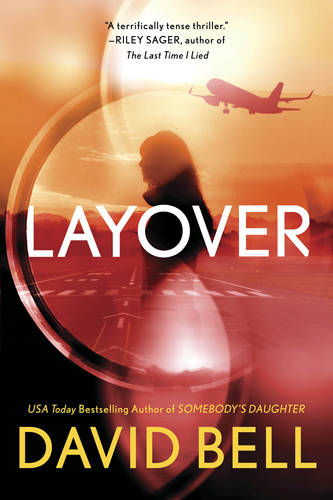
Layover, by David Bell

Layover, by David Bell

Layover, by David Bell, is based on the premise that a businessman who travels by air a lot in his work strikes up a conversation with a woman who is also traveling through the Atlanta airport. In a couple of hours they become romantically involved – or, at least the man does.

That’s when things start deteriorating. He changes his flight and follows the woman to her destination. Of course, this has trouble written all over it. He can tell the woman is running away from something, but she won’t tell him what it is. Then, she disappears.

If I tell you the rest of the story, it will spoil the book for you. Suffice it to say a dead body is involved, and everyone isn’t who you think they are.


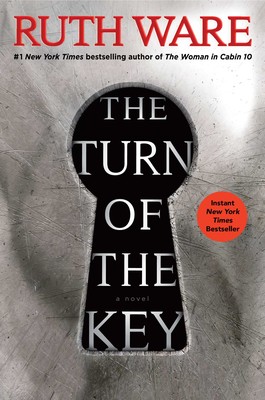
The Turn of the Key, by Ruth Ware                

The Turn of the Key is the third thriller I’ve read by Ruth Ware. The others were The Woman in Cabin 10, see https://janetswritingblog.com/2016/10/04/what-i-read-in-september/ , and The Death of Mrs. Westaway, https://janetswritingblog.com/2018/10/01/fiction-nonfiction-read-in-september-2018/ see.) She has written five novels.

The Turn of the Key, by Ruth Ware

In The Turn of the Key, a young woman in England quits her nursery school job in order to accept a position as a nanny to three children in a remote, isolated area in the Scottish Highlands. The description had me at “isolated area in the Scottish Highlands.” That’s all I needed to know.

Little does Rowan Caine know when she accepts the nanny job, she is entering a nightmare.

The book is written in the form of a letter that Rowan writes from prison to the lawyer she desperately wants to defend her in court. A child is dead, and Rowan is charged with murder.

This novel is unputdownable. It’s a tragic story on many levels and speaks to the dysfunction so prevalent in our society. There is nothing uplifting about this novel, so just know that ahead of time if you think you might want to read it. I’m not necessarily drawn to such novels, but I don’t avoid them either. I had to keep reading this one in order to find out which little girl was murdered and who murdered her. There was an additional twist to Rowan’s background that isn’t revealed until near the end. Maybe I’d slow, but I didn’t see it coming!


Burying the Bitter: A Boutique Series Short, by Tonya Rice

I “met” Tonya Rice online recently. We follow each other on Twitter and we follow one another’s blogs. Her blog about books, reading, and writing is “Front Porch, Sweet Tea, and a Pile of Books.” You might want to check in out. Here’s the link: https://tonyarice.wordpress.com/.

You might want to look for her short, Burying the Bitter: A Boutique Series Short on Amazon.com. It retails for $2.99 but, the last time I looked, it was available for free on Kindle. She also has a paperback book that includes this Burying the Bitter: A Boutique Series Short and other stories.

Ms. Rice’s other novels in the Boutique Series are Without Your Goodbye: A Novelette and Grand Opening: A Boutique Series #1 – A Novella, which I look forward to reading.

Burying the Bitter: A Boutique Series Short, by Tonya Rice

Ms. Rice’s Boutique Series stories and novels are set in her hometown of Richmond, Virginia. Burying the Bitter introduces us to Eveline, who grew up in Richmond and now lives in Atlanta. She is called home for Uncle Neville’s funeral. She and her female cousins are not enamored with this highly-thought of uncle because he molested them when they were young. Eden’s Jolie Boutique comes into play as that is where last minute clothing for the funeral must be purchased. An old love interest from high school days, Dodge Mallory, just happens to attend the funeral, and he and Eveline become reacquainted. I’m sure Dodge will show up again in Ms. Rice’s books and stories that follow this one.

After the funeral, Eveline confronts her mother about the sexual abuse she and her cousins suffered at the hands of Uncle Neville 20 years ago. How will her mother react?


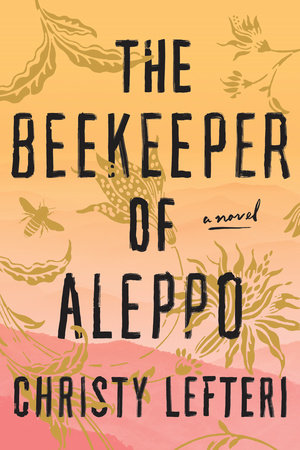
The Beekeeper of Aleppo, by Christy Lefteri

The Beekeeper of Aleppo, by Christy Lefteri

I was intrigued by the title of this book when I first heard about it. It was an interesting book, and it held my attention. The Beekeeper of Aleppo follows and man and his wife who have to flee Aleppo, Syria after the man’s livelihood of beekeeping and selling honey is destroyed and his wife is blinded by the bomb blast or the trauma of the bomb blast that kills their son. She is an artist, so losing her eyesight signaled the end of her career.

The novel follows the couple as they struggle to get to Great Britain where they plan to seek asylum. They go through many life-threatening events and stay in countless refugee camps as they cross Turkey and Greece in their effort to get to England.

The author has first-hand experience in the region working with refugees, so she is able to write with authority about the experiences such people endure. The people in this book were just average everyday people whose lives were torn apart by war. What surprised me in the book was the fact that some of the refugees had cell phones and were able to email relatives occasionally.


Until my next blog post

I hope you have a good book to read. I’m listening to Heads You Win, by Jeffrey Archer after having several days that I didn’t get to read anything.

If you’re a writer, I hope you have quality writing time.

Thank you for reading my blog. You could have spent the last few minutes doing something else, but you chose to read my blog.


Let’s continue the conversation

Have you read any of the books I talked about today? I’d love to know what you liked or didn’t like about them. What are you reading this week?

Janet

A New Favorite Novel?

A New Favorite Novel?

What a great time I had reading books in October! Many books are published in the fall of the year. I’d been on the waitlist for months for some of those books as well as others. Of course, they all became available at the same time. “Too many books, too little time” kicked in big time!

Today’s blog post is about what is possibly my new favorite book and one of the other books I read in October. My blog post next Monday will catch you up on the other books I read last month.

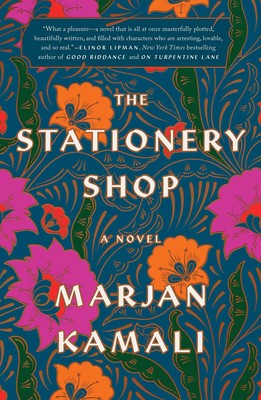
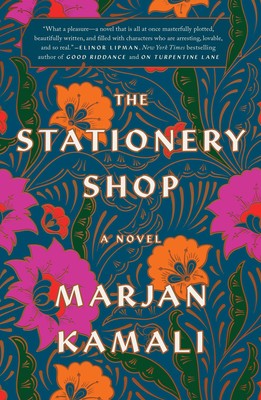
The Stationery Shop, by Marjan Kamali

I can’t say enough about this book! It just may be my new favorite novel. This is a story that will stay with me forever. It is a tragic story in many ways, but oh how lovely! I listened to it on CD. Mozhan Marno did a superb job reading it.

The Stationery Shop, by Marjan Kamali

This historical novel takes us back to 1953 in Tehran, Iran. There is a chance meeting between a young man and a young woman in a stationery shop where books are also sold. Since the young man’s mother has already selected the woman she wants her son to marry, she is none too happy when he announces his plans to marry this woman of lower economic status he met at the stationery shop.

Marjan Kamali includes just enough 20th century Iranian history to set the stage for this story of love, betrayal, and a never-ending love between two people. You will discover connections between different characters as you read. It is a rich book, beautifully written.

I’m eager now to read Marjan Kamali’s debut novel, Together Tea, and I can’t wait to see what she writes for us next!


The Ragged Edge of Night, by Olivia Hawker

This book was a big surprise. I read that Olivia Hawker had a new book, One for the Blackbird, One for the Crow, coming out on October 8. I’m on the waitlist at the library for it. One for the Blackbird, One for the Crow sounded interesting, so I looked to see what else she had written.

I listened to her first book, The Ragged Edge of Night, on CD. It was beautifully written, and I learned from the notes at the end of the book that it was based on a true story from Ms. Hawker’s husband’s family. It was beautifully read by Nick Sandys and the author, Olivia Hawker.

The Ragged Edge of Night, by Olivia Hawker

This book contained some of the most moving and beautiful prose of any novel I’ve read. The premise of the book is that Elisabeth Herter, a widow with three children, is looking for a man to help her with the responsibility of raising her three children. Along comes Anton Starzmann, a former Franciscan friar who has been stripped of his occupation and his school by the Nazis in 1942 Germany.

Elisabeth and Anton start corresponding. They meet in person and agree to marry. Anton cannot father children due to an injury, but that suits Elisabeth just fine. They will marry, be companions, and raise her children. These are desperate times.

That’s the plot, and it’s a beautiful story. What struck me about The Ragged Edge of Night was how Olivia Hawker wrote Anton’s gut-wrenching fear that Hitler and the Nazis were entrenched until the end of time so beautifully that I was brought to tears. Through her writing, Ms. Hawker put me in Hitler’s Germany. Even though I knew Hitler was brought down in the end, she put me in 1942 when I had no way of knowing that.

That’s what good historical fiction does. It puts you in the story and in the time and place, so you don’t know what the future holds.

I wish I could quote extensively from the book in order to give you the true flavor of the prose, but I’ll settle for the following few sentences from Anton’s point-of-view as he implores God to help him make sense of what is happening in Germany in 1942. This prose I found so beautiful is in chapter six. Here’s a chopped-up transcript from that chapter:

“The bells will ring, even after The Reich has fallen. Everything that is in me that is sensible, everything that is rational can’t believe it’s true. The Reich will never fall…. But when in moments of quiet, in my stillness of despair, I dare to ask what yet may be…. Christ Jesus, I always believed you were merciful, but this is a monstrous cruelty to make me dream of a time when evil may fall…. I cannot help but know it, against all sense, I believe somewhere beyond the ragged edge of night, light bleeds into this world.”

From Chapter 6, The Ragged Edge of Night, by Olivia Hawker

I hope those six sentences I pulled out of a long prayer I transcribed from the CD entice you to read the book. Writers are advised to put the reader in the scene. This, to me, is a prime example of just that.

My only criticisms of the CD are (1) Every time the children in the story spoke, it was at full blast and (2) Some of the audio segments were longer than 30 minutes. The wide range of volume is an irritating and uncomfortable situation for people who are hearing-impaired. The excessively long audio segments present a problem on some CD players. More than once when I couldn’t listen to the end of a segment, I had to listen to the entire segment a second time in order to get to the end of it.


Since my last blog post

A fibromyalgia flare has knocked the props out from under me as we transition from summer into winter. (I think we often just skip right over fall here in North Carolina.) Eye pain has forced me to listen to books more than read them.

As you know, listening to books is not my reading format of choice. It’s going better than I expected, though. In fact, I believe listening to the CD recording of The Ragged Edge of Night possibly gave me a richer reading experience than I would have had if I’d read the words myself. That astounds me and gives me a new appreciation for audio books.

I want to read The Stationery Shop and The Ragged Edge of Night again. It’s rare that I find a book that I want to read a second time.


Until my next blog post

I hope you have a good book to read. I’m listening to Heads You Win, by Jeffrey Archer­­­­­­­­­­­­­­.

If you’re a writer, I hope you have productive writing time.

Thank you for reading my blog. You could have spent the last few minutes doing something else, but you chose to read my blog. Don’t be shy – share this blog post on social media.


Let’s continue the conversation

I’m always interested to know what my blog readers are reading. Please share that in the comments below or on my social media platforms.

Janet