#ColonialAmerica: What’s a High and Dry?

If you look up “high and dry” in the dictionary, you’re likely to find a definition something like this:  being out of reach of the current or tide; being in a helpless position. My dictionary only identifies “high and dry” as an adjective that first came into common use in 1786. It’s first known use was in 1727.

You can find this and additional information about that use of “high and dry” by going to https://www.merriam-webster.com/dictionary/high%20and%20dry. (I hope that’s clickable. I’m having some problems posting this today.)


That’s not the “high and dry” I’m talking about in today’s blog post.

My introduction to the noun “high and dry” came from a docent at the Hezekiah Alexander House in Charlotte, North Carolina. I learned that it was the name of an enclosed tiny cupboard on the mantle of a fireplace. If memory serves me correctly from the tour I took 15 or more years ago, that particular high and dry was approximately eight inches wide and perhaps ten inches tall. It was made of wood and had a secure door. It was where the Alexander family would have kept their cone of sugar in the 1700s.

In the backcountry of the Carolinas, sugar was a precious commodity. In order to be of use, it had to be kept dry. It stands to reason, that a homemaker who had spent precious family resources to purchase a cone of sugar would have taken measures to keep the sugar protected from moisture and the high humidity associated with The South.

One of my handiest reference books as a writer of historical fiction is English Through the Ages, by William Brohaugh. It has saved me more than once when I was going to use a word in a short story or my work-in-progress novel, only to find out from Mr. Brohaugh’s book that the word I wanted to use was not yet in use in the time period of my story or novel.

Mr. Brohaugh’s book says the “high and dry” was in use as a noun “by 1825.” I had hoped for proof of its use in the 1700s, but seeing it in the Hezekiah Alexander House is proof enough for me. I wish I had a photo of the Alexanders’ high and dry to illustrate my blog post today.


An illustrative blog by Stephanie Ann Farra:  World Turn’d Upside Down

I was pleased to find the following blog post from 2013 that illustrates the form of sugar that was used in colonial America:  https://www.worldturndupsidedown.com/2013/05/how-to-make-colonial-era-sugar-cone-or.html. If you aren’t familiar with a cone of sugar, please look at the photographs Ms. Farra included in her blog post.

Just for fun, I decided last Wednesday to follow Ms. Farra’s instructions and try to make my own sugar cone. How did that go? Here’s a picture of my sugar cone. With the assistance of gravity for several hours and hot water, the cone was eventually released from the vase that served as my mold. I now have more of an appreciation for the making of sugar cones in colonial times.

Sugar cone made with water, sugar, and a vase as a mold.
My attempt at making a sugar cone.

Inheriting the Trade:  A Northern Family Confronts Its Legacy as the Largest Slave-Trading Dynasty in U.S. History, by Thomas Norman DeWolf

While writing this blog post, I was reminded of a memoir I read in 2008 (yes, I’ve kept a list of the books I’ve read since 1993) that is related to today’s topic about sugar. Inheriting the Trade:  A Northern Family Confronts Its Legacy as the Largest Slave-Trading Dynasty in U.S. History, by Thomas Norman DeWolf, is an eye-opening book about how the trading of slaves, sugar, and rum were intimately entangled in colonial America – the largest such family dynasty being in Rhode Island. I highly recommend this book to anyone who believes only Southerners were guilty of benefiting from the slave trade.

Quoting from the book jacket:  “In 2001, at forty-seven, Thomas DeWolf was astounded to discover that he was related to the most successful slave-trading family in American history, responsible for transporting at least 10,000 Africans to the Americas. His infamous ancestor, U.S. senator James DeWolf of Bristol, Rhode Island, curried favor with President Jefferson to continue in the trade after it was outlawed. When James DeWolf died in 1837, he was the second-richest man in America.”

In researching his family’s history, Thomas Norman DeWolf and nine of his relatives retraced the steps of their ancestors, going to Ghana, Cuba, and New England. I salute their honesty in revealing to us their family history. It puts a face on an important part of United States history that has been swept under the rug for far too long.


What was left out of my history textbooks?

When I was in school, I wasn’t taught much about the slave trade in colonial and early America. I grew up believing that The South bore all the blame for slavery in America. That’s how the history books of the day were written.

My textbooks did not tell me that Africans were enslaved in the northern states at all, much less for more than 200 years. They did not tell me that the majority of slave trading in America was done by people from the northern states.

It has only been in my adult years that I’ve learned more of the truth. It troubles me that I wasn’t taught the whole truth as an elementary and high school student. It troubles me even more that so little time is now allotted to the study of American history in the public schools of North Carolina that today’s students will graduate knowing even less of our nation’s history than I did. I hope conditions are different in the state in which you live.


Since my last blog post

When I select a topic for a blog post, I don’t necessarily know where it will take me. In today’s post, I set out to define a high and dry. Little did I know it would lead me into a reference to the slave/sugar/rum trade in America. The three are interwoven, though, and one cannot truly understand the one while ignoring the others.


Until my next blog post

I hope you have a good book to read. Tackling my to-be-read list, I’m listening to The Broker, by John Grisham.

If you’re a writer or other artist, I hope you have quality creative time.

Thank you for reading my blog post. You have many things vying for your attention and time, so I appreciate the fact that you took time to read my blog today. I hope you’ll visit it every week to see what I’m up to.


Let’s continue the conversation

I would love to know what any of my blog readers know about the “high and dry” as I’m writing about it today as a noun. Have you seen such a little cupboard as you’ve toured other colonial homes? Please share anything you’ve seen, read, or heard about this tiny piece of cabinetry.

Janet

#OnThisDay: Camcorder? Not.

Martin Luther King Day is celebrated today in the United States. It is one of our movable holidays, meaning it doesn’t always fall on January 20. It is celebrated on the third Monday of January.

The Rev. Dr. Martin Luther King, Jr. was born on January 15, 1929. This holiday in Dr. King’s memory and honor is a day on which Americans are encouraged to make a difference, just as Dr. King demonstrated through his life and example that one person can indeed make a difference.

Countless blog posts will be written today about Martin Luther King Day. Not being an expert on Dr. King, I chose to shine a light today on something well off the beaten path. I came to today’s topic in an unusual way.

Camcorders

I read that it was on January 20, 1982 that five corporations agreed to work together to develop the camcorder. When I planned my blog’s editorial calendar for 2020, I thought I might be able to work something out about that for today’s blog post; however, when it came time to expound on that, I found conflicting information. Since my main interest was the era of 8mm home movies and not the camcorder, it really didn’t matter.

Home Movies

Thinking about the advent of the camcorder brought back some warm and special memories of the days before that piece of photographic equipment arrived on the scene. I’d already committed to write about home movies in conjunction with the camcorder topic, so I’m going with that today.

When I was a child in the 1950s, my father had a movie camera that used 8mm film. The film came in round tin containers. It wasn’t cheap to buy the film and get it developed, so Daddy was extremely frugal in taking movies. It wasn’t unusual for him to start a roll of movie film with the January birthdays of my sister and myself and finish the roll on Christmas Day the following December.

By the time the roll of film was developed and we gathered round at night with all the lights off to watch this new “home movie” on the large and heavy projector which showed the movie on a grainy  screen affixed to a tripod, it was like taking a step back in history because a year had passed since the opening scenes of the movie had been taken. 

Occasionally, something would go awry with the film or the projector. The film would stop moving through its various sprockets and within a couple of seconds the heat of the projector’s light would burn a hole in the film if Daddy didn’t get it turned off fast enough.

Photo by Brandi Ibrao on Unsplash

Daddy isn’t in any of our home movies because he took all the movies. It’s a wonder the rest of us weren’t permanently blinded by the rack of lights he bought in order to make movies inside the house. Like with the flashbulbs on a still camera, we’d see spots for a fminutes after the movie camera lights were turned off.

That was life in the 1950s and 1960s. Technology gradually progressed so that a rack of four or five blinding lights was no longer necessary to take home movies.

In this day and time, when we can take videos on the spur of the moment with our cell phones, it seems like ancient history to recall the excitement cause by the old home movies and the invention of the camcorder

Until my next blog post

I hope you have a good book to read. I finished listening to The Devil in the White City:  Murder, Magic and Madness and the Fair that Changed America, by Erik Larson. It’s about the World’s Fair:  Columbian Exposition held in Chicago in 1893. I highly recommend the book to anyone who is interested in the progression of inventions and the engineering aspect of how things work.

If you’re a writer, I hope you have productive writing time.

Thank you for reading my blog post. You have many things vying for your attention and your time, so I appreciated the fact that you took time to read my blog today.

Let’s continue the conversation

Did you grow up with the blinding lights of home movies? Don’t tell me I’m the only one!

Janet

The Other Books I Read in December 2019

Today’s blog post is a follow-up to last Monday’s post, https://janetswritingblog.com/2020/01/06/three-books-i-read-in-december-2019/. I hope within the six books I read in December, I’ve sparked an interest in you to read at least one of them. Reading is one of the joys of my life, and I enjoy sharing the books I read with my blog readers.


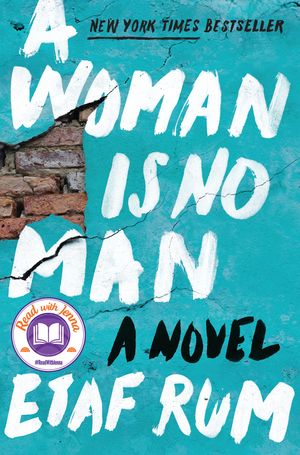
A Woman is No Man, by Etaf Rum

A Woman is No Man, by Etaf Rum

Maybe it’s just me, but I found the jumping back and forth from one decade to another confusing.

I hope all Arab families aren’t like this one with the emotional and physical abuse of women being carried on from each generation to the next. The book left me feeling like all Arab men beat their wives and no Arab men want their wives or daughters to be educated or think for themselves. In that respect, it was a very depressing book.

In an interview at the end of the book, Ms. Rum talks about her fear that the book will further the stereotype of Arab men as wife beaters, but she felt compelled to write from her own experience. My brain tells me that all Arab families aren’t like the one she described in her book, but it could easily leave that impression. I don’t want to stereotype Arabs or any other group of people, so I’ll try to take the book at face value as just an example. No ethnic group has a monopoly on domestic abuse.

Aside from the jumping back and forth in time, the writing was excellent and it held my attention once I got into my mind the year in which each chapter took place. The beginning of each chapter pulled me out of the story and I had to stop reading and mentally adjust to the generation being written about. Since nothing changed from one generation to the next, though, I suppose the year and generation didn’t matter.

All that said, though, I do recommend the book.


Beneath a Scarlet Sky

Beneath a Scarlet Sky, by Mark Sullivan

Like The Baker’s Secret, I’ve been meaning to read Beneath a Scarlet Sky for more than a year. I was initially drawn to the book by it’s brilliant red cover. I know they say to never judge a book by its cover, but in this case the book did not disappoint.

Based on the lives of real individuals who lived in Italy during World War II, this story gradually drew me in. Once I was “in,” I was “all in.” It is a story of espionage and reminds us that people who are spies aren’t necessarily ones we would readily assume were in that line of work. It is a story of people getting caught up in espionage even against their wills or life plans. It is a story of loyalty among friends and family, and the secrets that had to be kept for the greater good.

This was a book I hated to finish. Fortunately, the author included details at the end of the book that inform us of what happened to each of the characters after the war ended. I really appreciated how the author tied of all the loose ends, since these were real people.

If you’re looking for a World War II-era book to read that delves into the day in and day out lives of regular people, this is the book for you.


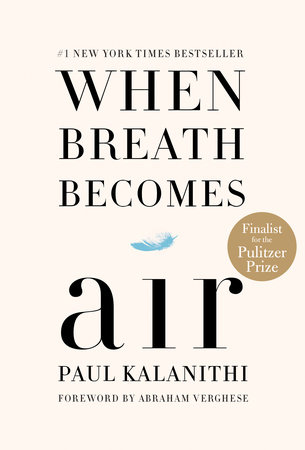
When Breath Becomes Air, by Paul Kalanithi

When Breath Becomes Air, by Paul Kalanithi

Aside from The Guardians and A Woman is No Man, all the books I read in December were ones that had been on my to-be-read list for quite a while. When Breath Becomes Air, by Paul Kalanithi, received a lot of good publicity when it was published in 2016. I didn’t read it then, but it was one of those book titles that nagged at me.

After bouncing around in several areas of study, Kalanithi is drawn to the field of medicine and neurosurgery in particular. He determines that there is more to medical science than facts. He discovers that relationships matter and that there is an important human aspect to medicine.

When Breath Becomes Air is a memoir written by Paul Kalanithi, a neurosurgeon who was diagnosed with cancer in the prime of his life and career. It is a gripping story of his feelings and physical hurdles as he battled stage IV metastatic lung cancer. The book was published after his death.

Although not an entirely upbeat book, it is a touching story of love, dedication, and the human spirit striving to overcome the worst of circumstances.


Since my last blog post

I read a blog post that offered advice about how to have a successful blog. (Success in blogging seems to be having thousands of readers and followers.) As I’ve read many times before, this post said I need to find my niche and blog only about that. It said I shouldn’t blog about this and that. Since I’m not an expert on any subject, though, for the foreseeable future I’ll continue to write about the books I read, history, and the things I learn about the art and craft of writing.

Thank you for sticking with me in spite of the fact that I don’t have a “successful” blog. If I hit on a topic occasionally that a few people find interesting, I’ll consider that my blog is successful. I’ve never been one to go along with the crowd.


Until my next blog post

I hope you have a good book to read. I just finished reading A Minute to Midnight, by David Baldacci, and have started listening to The Devil in the White City:  Murder, Magic and Madness and the Fair that Changed America, by Erik Larson. The introduction was intriguing. It will be interesting to see how I like the book. That probably depends upon how graphic the murder and madness are!

If you’re a writer, I hope you have quality writing time.

Thank you for reading my blog post. You have many things vying for your attention and your time, so I truly appreciate the fact that you took time to read my blog today.


Let’s continue the conversation

I’m always eager to know what you are reading. Feel free to share the titles of the books you’ve been reading and your thoughts about them.

Janet

Three Books I Read in December 2019

Once again, last month I read a good number of books and decided to split them up between my blog post today and my post next Monday.


Think you can't be fooled by a lair? Think again!
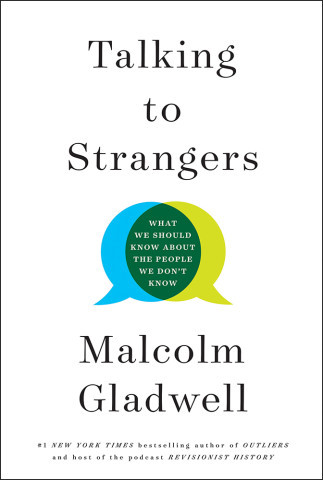
Talking to Strangers: What We Should Know About the People We Don’t Know, by Malcolm Gladwell

Talking to Strangers:  What We Should Know About the People We Don’t Know, by Malcolm Gladwell

Mr. Gladwell’s book says most of us default to thinking strangers are truthful until they prove us wrong, but we are not good at discerning a lie. This can lead to disaster; however, if the majority of people assumed everyone is dishonest, that will have even worse outcomes. It’s an interesting thing to consider.

After reading a pre-publication excerpt from the book, I got on the waitlist for it at the public library. I was intrigued by the idea.

In the book’s introduction, Mr. Gladwell relates the tragic story of Sandra Bland, a young African American woman pulled over by a police officer in Texas in 2015 for not signaling a lane change. Things rapidly escalated and Ms. Bland committed suicide in her jail cell three days later.

The book includes an interesting example from Russian folklore. It seems there is a yurodivy or “Holy Fool” in Russian folklore who is a misfit, an outcast, sometimes seen as mentally-ill, but this person “has access to the truth.” Because he isn’t part of proper society, he tells the truth. He calls people out for lying. He is the modern-day whistleblower.

In Hans Christian Andersen’s “The Emperor’s New Clothes,” the child is the “Holy Fool” who blurts out, “Look at the King! He’s not wearing anything at all!” Everyone else sees that the emperor’s magical costume is nothing at all, but the king has been convinced it is a real outfit and everyone but the child is afraid to call the king out – or perhaps many of them have been hoodwinked just like the king.

We need “Holy Fools,” but we can’t all be “Holy Fools.” They see liars everywhere. If everyone operated that way, commerce and interpersonal relationships would cease.

I can’t succinctly summarize this book. Mr. Gladwell gives numerous examples to illustrate how we are fooled every day by strangers. We think we are too smart to be tricked by a liar, but we are all susceptible to it.

He gives many examples where intelligence agencies, diplomats, and governments have been tricked by strangers to an unbelievable extent. Examples include “The Queen of Cuba,” Bernie Madoff, the Jerry Sandusky case at Penn State University, an episode of the TV series “Friends,” the Amanda Knox case in Italy, the case of British Prime Minister Neville Chamberlain being completely fooled by the personality of Adolph Hitler, and several other such large-scale examples. Mr. Gladwell goes into great detail about each of the cases he cites in his book.

The average person’s response to these examples is, “That would never happen to me!” and “How in the world did they get fooled?” Before we jump to such a conclusion, though, we need to keep in mind that we, too, can be fooled by strangers (and by people we think we know well.)

Talking to Strangers:  What We Should Know About the People We Don’t Know, by Malcolm Gladwell, is food for thought. It is a very interesting book.


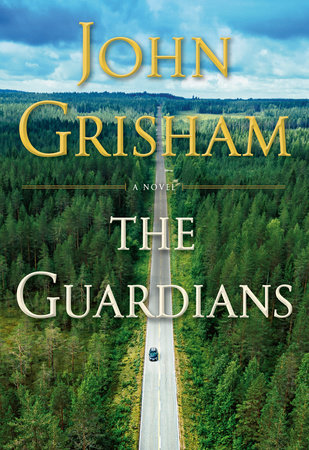
The Guardians, by John Grisham

People convicted of crimes they didn't commit
The Guardians, by John Grisham

This much-anticipated latest legal thriller by John Grisham did not disappoint. The name of the novel comes from a loosely-organized organization that works to get out of prison individuals who were wrongly convicted of a crime. The protagonist is a lawyer who got involved in The Guardians after he became disenchanted with the judicial system.

The overriding theme of innocent people being railroaded by the judicial system and spending decades in prison or given the death penalty should make us all stop and think.

In this book, Mr. Grisham takes us to death row and even to a condemned prisoner’s last meal, when we know the prisoner is not guilty of the crime of which he was convicted. The book follows several such cases.


The Baker’s Secret, by Stephen P. Kiernan

The Baker’s Secret, by Stephen P. Kiernan

This novel had been on my to-be-read list for a long time. I’m glad I finally got around to listening to it. It’s a captivating story of Emma, a young French woman who is ordered to become the German kommandant’s baker during World War II and what she did to fool the kommandant and to help keep her fellow citizens alive during the German occupation of France.

The story of Emma is beautifully told as D-Day approaches. She lives in Normandy and has given up on the Allies ever coming to France’s rescue. I especially enjoyed the way the author describes D-Day and the days that followed through Emma’s eyes.

More so than most any other novel I’ve read, The Baker’s Secret brings to life the everyday lives and struggles faced by the regular people in the countries that were under foreign occupation and attack during World War II. Something this book brings out is the very real hunger experienced by the citizens of France during the war.

Cassandra Campbell does a great job reading the book for the CD edition.


Since my last blog post

The holiday season is nearing an end and it’s time to start a new year. I’m trying to be optimistic about 2020, but the events of the last several days makes that more difficult than it was just a week ago. I am, of course, referring to US-Iranian relations.


Until my next blog post

As I stated in my December 30, 2019 blog post, I will continue to seek a higher level of peace and contentment in 2020. I wish that for you, also.

I hope you have a good book to read. I’ve just started A Minute to Midnight, by David Baldacci.

If you’re a writer, I hope you have productive writing time.

Thank you for reading my blog post. You have many things vying for your attention and your time, so I truly appreciate the fact that you took time to read my blog.


Let’s continue the conversation

What are you reading? Have you read an especially powerful or enjoyable book recently?

I look forward to your feedback.

Janet